Happiness in Marriage

A piece of speculative genealogy fiction
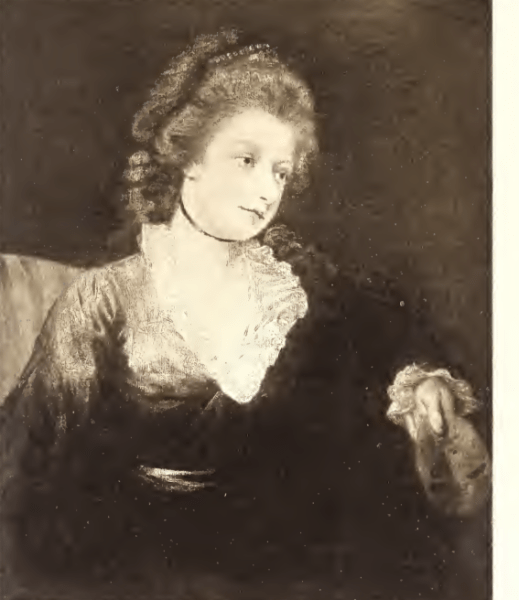
Antonia Willoughby, ancestor of Mr. Lumley Hodgson on his mom’s side.1


As is typical, I know little about the life of my great great grandmother, Ann Nesfield, a cook from North Yorkshire, UK except the basics: birth (1838), death (1912) marriage (1861) and children (10) but thanks to the Internet I know a great deal about her employer, Nathaniel Thomas Lumley Hodgson, a member of the landed gentry. So, just for fun, I have strung together this little fiction about my great great grandmother from some intriguing facts about Mr. Lumley Hodgson found online.

August 23, 1861. “Happiness in marriage in entirely a matter of chance.” I read that in a book by Miss Austen.

As it happens, I am getting married in less than a week to a tailor from the tiny village of Rievaulx, a man I hardly know, a Mr. Thomas Richardson. He visits my place of employ twice a year in the spring to make up my Master’s riding clothes.

Although most of my Master’s clothing is bought in London, he prefers Mr. Richardson, who lives only 12 miles away, for his country apparel.

My name is Ann Nesfield. For many years now, I have been engaged as a cook at Mr. Nathaniel Thomas Lumley Hodgsons’ farm estate, Highthorne, near Husthwaite. It is a leisurely employment. I feed his small family, the household staff and the three farmhands. It is rare that important visitors come to stay, and if they do they come on business and sup at the local inn where they can haggle in manly fashion.

You see, Mr. Lumley Hodgson is a breeder of fine horses, of field hunters and of race horses. He trades mostly in the strong reliable Cleveland Bay, a local breed of which he is reet fond.

The Cleveland Bay, he informs everyone, was originally bred centuries ago by the local Cisterian Monks as a pack horse. Later, after the dissolution, the Cleveland was bred with some fleet and graceful Turkman stallions.

Today the Cleveland Bay is used in the field, both to hunt and to plow.

Mr. Hodgson seldom fails to tell his customers how 30 years ago he rode his own Cleveland Bay the one hundred and seventy five miles to and from Cambridge where he attended university.

If that doesn’t impress, he then relates the story of how another local man rode his Cleveland mare 70 miles a day for a week for jury duty in Leeds. Or how another man once burdened his beast with 700 pounds and rode 45 miles to Ilkley and back.

“The breed is being ruined,” Mr. L.H. likes to say, “by the London fashion for flashy carriage horses of 16.5 or 17 hands. Leggy useless brutes they are. All action and no go.”
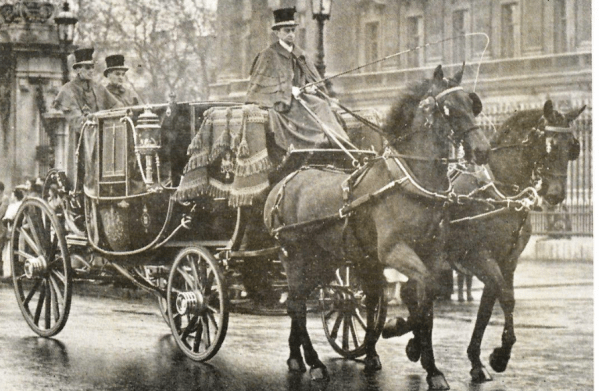
Leggy Cleveland Bay Carriage Horses.

Mr. L.H. calls himself a farmer but he is a gentleman-farmer with a pedigree as impressive as his osses’. At Cambridge he shared lodgings with the great scientist Charles Darwin. This is also summat he usually tells a prospective client, for Mr. L.H. is a canny businessman and this association can only help him, considering his occupation.
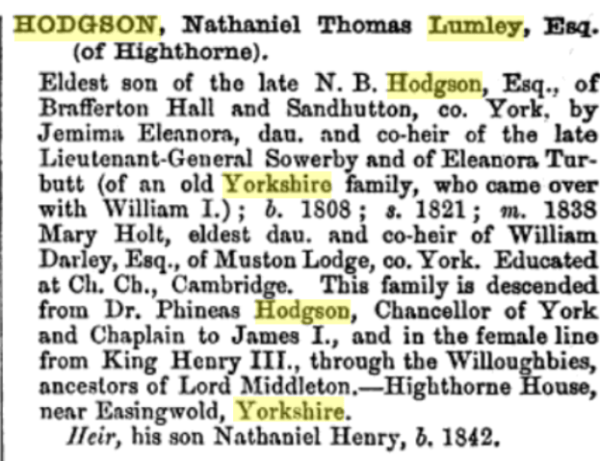
There are rows and rows of stables on his 107 acre farm near Husthwaite that sits on one of the seven hills in the area. The main house, they say, was given as a reward many years ago to one of William the Conqueror’s faithful knights.

As I said, my Master’s household is small, made up of his wife Mary Darley (whose family owns many yackers of land in Yorkshire) two daughters, Julia, 22 and Emma, 8, as well as a nurse, a housemaid and a cook, yours truly.

At 23, I have been summat of a sister to Julia, who is sharp-witted but shy in company. She is destined never to marry. At least, there is never any talk of it, not since 1857 and the bachelor’s ball at the Yorkshire Union Hunt Club. So, on fine evenings, I am the one to accompany Julia out riding. We take two bay mares who she says are descended from the Darley Arabian, the daddy of all Thoroughbreds.

I am told I have a better seat than she does, but only by the groom, a Mr. Jack Bell. At breakfast time he likes to call out to me “Mornin’ Milady, grand day i’n’it”- a bit of a jape – and then he laughs showing a great gap where his front teeth should be.

A signed copy of the Voyage of the Beagle lies in a place of honour in Mr. Lumley Hodgson’s private library and has for decades. You can be sure I have never read it, but Julia has and told me all about it. She is the one who had me read Pride and Prejudice. She likes to lend me her favourite novels so she can explain them to me.

Over the years, I have heard (mostly overheard) so much about this Beagle book I feel as if I have read it and even been on the great sea voyage myself to the GA-LA-PA- GOS Islands and seen with my own eyes the strange and colourful creatures there.

Mr. Darwin has lately published another book called, I think, the Origin of Species. A copy arrived by messenger to Highthorne late last year.

This new book of Mr. Darwin’s has caused quite a stir locally. At a Methodist church service a month ago the minister bellowed that Darwin’s theory of evolution is blasphemous. Flippin’ ‘eck! The theory says we all come from monkeys! Mr. Lumley Hodgson – not in attendance – later told the minister that the theories in the book apply only to animals not to humans, but the minister was not satisfied. He said the question of the origin of all species was decided long ago and by an infallible source. He meant the Bible, of course. “God made the animals of the earth after their species as explained by Noah’s Ark.”

So, my Master, who can’t escape this connection with Mr. Darwin now, has decided to quit the farm for a while.

A few days ago he assembled the staff in the south hall and told us he is selling off his best hunters and other stock (including Emma’s comely Cobb pony and his prize Nag stallion) and moving his family to town for the winter. His excuse is that some of his horses have the equine flu (two have already been put down) and he thinks it might be catchin’ to humans.

No matter what the real reason for his takin’ his family to town, the result is that I am left in the lurch with no employment and no place to stay.

But just yesterday, Mrs. L. H. called me into her sitting room, the one with all the paintings of Julia’s frightsome-lookin’ ancestors, and pronounced, “Ann, you must marry Mr. Richardson, the tailor from Rievaulx. He is a respectable man who needs a wife. His sister, who has been housekeeping for him, has suddenly left for abroad. He says he is comfortably settled now in his own cottage and ready to marry and raise a family.”
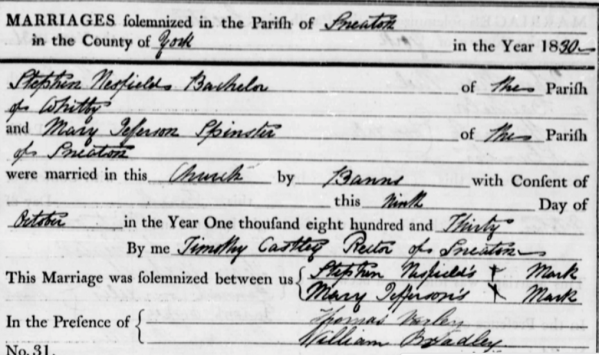
X marks the spot where my illiterate ancestors Mary Jeferson (Jefferson)of Sneaton and Stephen Nesfield of Whitby, Ann Nesfield’s parents, signed their marriage certificate in 1830.)

I must have looked very confused because she continued: “You remember Mr. Richardson from the spring? He waxed ecstatic over your Lamb’s Tail Pie and Tipsy Trifle.” (I did. Seems to me he had eyes for Julia back then.) “He says he needs a wife schooled in numbers to help him keep the accounts. And as Rievaulx is an isolated place, he requires a strong healthy girl who can walk the trails back and forth to Helmsley herself on market day. He is often on the road, so you will not have the use of his carriage as you do here to go to market in Easingwold. Yes, you must marry Mr. Richardson and very soon, too. We can have the ceremony right here in Husthwaite. But first you must visit him in Rievaulx. You can stay at our cousins the Lumleys who have a big farm there.”

So, it is set. My days of making simple Yorkshire meals for a small, ‘appy family in a reet bonnie setting near Husthwaite- and cantering over the dales at darkening with my almost sister Julia – are over.
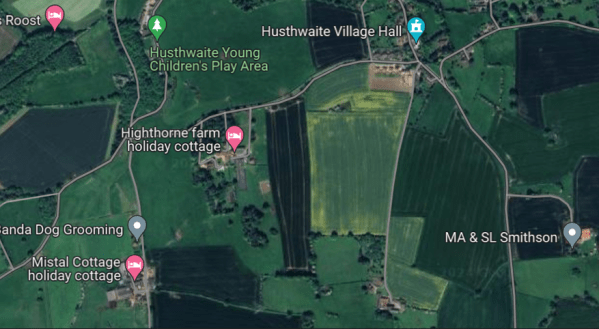
Highthorne Farm is now a holiday destination, as is Birdsall rectory Manor, near Malton, North Yorkshire where Emma and Julia Hodgson, both unmarried, spent their old age with their brother, Captain Lumley Hodgson, according to 1911 UK Census. Lumley Hodgson’s mother’s relations, the Middletons (Willoughby) owned that place. On that census, Ann Nesfield Richardson was a widow living with her youngest daughter at New Cottage, Rievaulx, running a grocery. She died a year later.

I am off to Rievaulx to marry and make childer with a stranger. Otherwise, all that is left for me is to flit home to Whitby and that I cannot do. My mother is long dead and my father is in line to finish off his days at the workhouse should none of my half-siblings take him in.

Mr. Lumley Hodgson, his ‘ead filled with other worries, has no objections and no opinions on the subject either, although he jokes, “It’s either Mr. Richardson or Mr. Bell for you, I fear.”

But, I ‘ave watched Mr. Bell as he slips the belly-band around the more skittish horses in his care with a firm but gentle hand, keepin’ his voice soft and melodious all the while and I ‘ave noticed how his muscular shoulders glisten after an honest day’s work and I do not think the joke to be as funny as that.

But Jack is a lowly farmhand and Mr. Richardson is a country tailor with a ready clientele and a sweet sunny cottage of his own, Abbot’s Well, with a fine prospect of the Rievaulx Monastery ruins. As I trot along on foot to Helmsley, my poke brimmin’ with dragonwort balm, tansy oil and other home-made potions to sell at market, I can watch from a distance as the Earl of Feversham’s family and friends go a-huntin’ o’er the heathery moors outfitted in all their finery on their own spirited Cleveland Bay/Thoroughbred crosses.
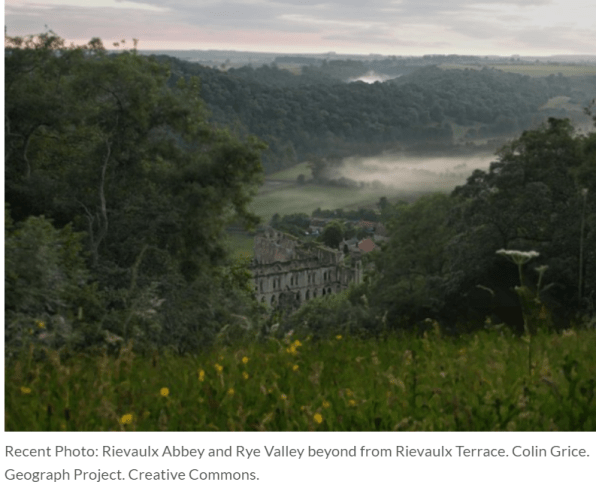
That is the selling point, according to Mrs. Hodgson: The cottage (complete with a little garden for growing my special herbs) and the mannerly profession.

But as Mrs. L. H. was quick to explain, this alliance is a major step up for me. I am but the daughter of a day labourer.

So, I hope Miss Austen is right, that it is ‘best to know as little as possible about the defects of your marriage partner,’ because I know almost nowt about this Mr. Thomas Richardson, except that he enjoys my tipsy trifle. (The trick is to use a lot of high quality whiskey). Still, that is as good a start as any, I reckon.

END

childer: children

Summat: something

Poke: bag

darkening: dusk

reet: very

nowt: nothing

Almost all of the entries for the Lumley-Hodgson’s in the press, mostly Yorkshire press, were related to Mr. L. H.’s businesses, horse and cattle breeding. By the 1870’s he was considered an expert ‘from the old school’ so his curmudgeonly opinions on the ‘horse question’ were much in demand and have left a long paper trail.

Yes, a notice in the paper in August 1861 said Mr. Lumley Hodgson was leaving Highthorne for ‘the health of his daughters.” (The girls were likely not frail, since Julia lived to a ripe old age and Emma was playing competitive doubles tennis in her thirties, I think.) And, yes, a week later, my great great grandmother, Ann Nesfield got married at Husthwaite.

There aren’t many entries in the ‘social notes’ for the ladies of the family despite their good breeding; In 1857, Julia Lumley-Hodgson attended the last? hunt and supper at the Yorkshire Union Hunt Club, (a horse-racing club) where the fashionable young could mingle.
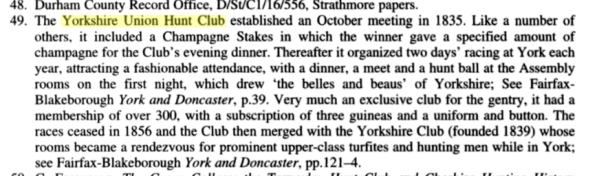
A hunt ball was given in 1867 at Highthorne. And in 1875, Mrs. Lumley Hodgson and Miss Hodgson (likely the much younger Emma) attended a bachelor’s ball in York.

Mr. Lumley-H died in 1886. A notice to creditors was put in the paper, his farm stock, ‘valuable hunters’, and effects put up for auction and his farm “in excellent condition” advertised for let… perfect “for a gentleman fond of rural pursuits.” In 1891 his wife (and girls?) were at Birdsall Manor near Malton (owned by Lord Middleton, a L.H. relation) and Mrs. L.H. was seeking a groom of good character, who must be single to work there. In 1911, her son Captain Hodgson, a widower, was at Birdsall Manor with Julia and Emma, both still single ladies with “private income’ listed where occupation should be.

  1. A few reports suggest Mrs. Lumley Hodgson dealt in fine art. The portait above was owned by her, found on Archive.org in A History of the Works of Sir Joshua Reynolds, Getty Museum publication. The weirdest entry about Lumley-Hodgson was that as an infant he sued his mother, Jemima, for land. Another online entry about Highthorne says he leased it in 1815. He would have been seven!

The Darley Arabian was brought to England from the East by the Alton, Yorkshire branch of Darley’s. Mary was from the Muston Lodge branch. They come from the same family originally.

Ste. Anne’s First Nation Heritage

Can the trajectory of Canada’s development be shown in miniature by looking at the life of a small community on the shores of the Seine River between Winnipeg, Manitoba and Grand Forks, North Dakota?

I hope so because the twists and turns in the nature of the town offer me hints about who my ancestors were and how they lived during a crucial period in the history of our country.

The town, which is now known as Ste. Anne, has served as a haven for Aboriginal, Métis, French, Immigrant, and Catholic peoples over the years. It changed its name to match the most important value held by a majority of its settlers and has been known as Oak Point, Pointe-des-Chênes, St. Alexandre, Ste.-Anne, Sainte-Anne-Pointe-des-Chênes and Ste.-Anne des Chênes.

I’m curious about the place because a family tree my grandmother left me says that my four-times great grandmother Marie Sophie (or Séraphie) Henault-Canada was born and died there. I haven’t found anything to confirm her data, but the 1870 Manitoba Census shows Sophie and her husband farming in the community. It also indicates Charles Enault was her father.[1] The Hudson Bay Company Archives show Charles Henault being in the community as of 1810.[2]

Ste. Anne’s location between the boreal forests of the Canadian Shield and the flat plains of the Red River always made it prime real estate for settlement. Nomads sought good hunting grounds and shelter from high winds close to the era’s key transportation infrastructure along the river and via trails. Later, the plains made for good year-round farming sheltered by high oak. Eventually, the area attracted entrepreneurs and became a bustling pioneer town. Gathering settlers attracted Catholic missionaries who turned the town into a full-blown Catholic parish. Today, the same community sits at the junction of two major highways and has become a suburban community of Winnipeg.

Sophie’s birth on April 6, 1818 may have taken place within a local First Nation. I’ve found traces of several in the area, including the Rouseau River Band, the Oak Point First Nation, the Saultaux First Nation and the Upper Fort Garry First Nation.[3]

It’s also possible that her father was a Voyageur who came to the area from another First Nation elsewhere in North America.

Her father and mother may also have been among Métis settlers known to winter in the area during that period.

As early as 1820, Métis families were wintering at Pointe-des-Chênes, southeast of St. Boniface on the Seine River. The area had a mix of mature forest and grasslands suitable for farming. The large oak groves served as a source of income for the settlers — lumber cut in the parish in 1820 was used for building a large chapel at St. Boniface.[4]

A combination of forests and plains enabled the family to pasture farmed livestock, cut timber for building materials and fuel, and hunt wild game.[5]

Scottish settlers who came under Lord Selkirk’s Red River Settlement plan were attracted by similar amenities, with many establishing farms and businesses in the region during Sophie’s childhood. Métis workers set up local farms after losing their jobs when the North Western and Hudson Bay companies merged in 1821.

Over the next thirty years, the lifestyles of the settlers and First Nations began to clash. By 1852, Oak Point settlers and the chief of the local First Nation, Saulteaux Chief Na-sa-kee-by-ness/ Na-sha-ke-penais/ ‘Flying Down Bird’/ Grandes Oreilles (son of Les Grandes Oreilles) had negotiated a treaty so that First Nations groups would move out of the area.[6]

My ancestors stayed put and continued to farm as the town grew rapidly. By 1856, when the Government of Canada chose to purchase Rupert’s Land from the Hudson’s Bay Company, it boasted a trading post, hotel, general store and jail.

The St. Alexander chapel opened in 1861 and began attracting Catholics. In the following decade, the town became the parish of Sainte Anne to attract additional settlers.

Still, my ancestors stayed and continued farming. The 1870 Hudson Bay Census shows Sophie and her husband Dominique Ducharme-Charron living on lot 27 with four of their children Johnny 19, Roger 17, Joseph 13 and Marie, 12. [7]

During the 1870s, Ste. Anne served as a stopover for travellers on their journey to Winnipeg along the famed Dawson Trail, a path linking Northern Ontario and the Red River Settlement. It was so heavily developed by 1881, Dominion surveyors maintained its traditional French-style long river-side lots instead of breaking it up into square lots.

If my grandmothers’ notes are accurate, Sophie died in Sainte Anne in 1882 at the age of 64 years, five months and ten days.

Today, 2,114 people live in her community and the land she once farmed has been paved over by the #12 and Trans Canada highways.


[1]1870 Census Of Manitoba, Library and Archives Canada – https://www.bac-lac.gc.ca/eng/census/1870/Pages/1870.aspx

[2] Hudson’s Bay Company Archives, E.6/1-16. Land records of the Red River Settlement sent to the Governor and Committee, 1811–1871.

[3]Barkwell, Lawrence J. “The Métis First Nation Band at Upper Fort Garry,” February 14, 2017, Louis Riel Institute, Manitoba,  https://www.scribd.com/document/337524184/The-Metis-First-Nation-Band-at-Upper-Fort-Garry, accessed Feb. 26, 2018.

[4] Hall, Norma J. Provissional Government of Assiniboia, Ste-Anne, https://hallnjean2.wordpress.com/resources/definition-provisional-government/the-people-electorate/ste-anne/, accessed Feb. 26, 2018.

[5] https://www.gov.mb.ca/chc/hrb/internal_reports/pdfs/crow_wing_settlement_groups.pdf, accessed Feb 26, 2018

[6] Hall, N. J. (2015, March 15). Ste.-Anne/ Point des Chêne/ Sainte-Anne-Pointe-des-Chênes/ Ste.-Anne des Chênes/ Oak Point/ St. Alexandre. Retrieved January 23, 2018, from https://hallnjean2.wordpress.com/resources/definition-provisional-government/the-people-electorate/ste-anne/

[7] Hudson’s Bay Company Archives, E.6/1-16. Land records of the Red River Settlement sent to the Governor and Committee, 1811–1871.

The Silver Spoon

In this article I refer to Robert Stanley Bagg by his middle name since it was the name by which he was best known. In other articles I have referred to him as RSB to differentiate him from his father, Stanley Clark Bagg (SCB) and his grandfather, Stanley Bagg.

My great-grandfather Robert Stanley Clark Bagg, or R. Stanley Bagg (1848-1912), was born with the proverbial silver spoon in his mouth, however, working in the family real estate business was not what he really wanted to do in life. It wasn’t until after he retired that he was able to follow his true passion: politics.

I never heard any family stories about Stanley, perhaps because he died several years before my mother was born. It wasn’t until Montreal’s two major English-language newspapers were digitized a few years ago that I learned about his various interests and activities. In fact, his name appeared in Montreal newspapers frequently, especially after the late 1890s when he became active in the Conservative party.  

Portrait of Robert Stanley Bagg by Adam Sheriff Scott. Private collection.

Stanley was the second child of Montreal notary and land-owner Stanley Clark Bagg (1820-1873) and Philadelphia-born Catharine Mitcheson (1821-1914). The couple’s first child died before Stanley was born. Three younger sisters, Katharine, Amelia and Mary, were born in 1850, 1852 and 1854, and a fourth sister, Helen, arrived in 1861. Even as a child, Stanley must have been told that he would have a leadership role in the family, not only as the eldest, but also as the only male.

According to his obituary in the Montreal Gazette,1 Stanley studied law at McGill University and passed the bar in 1873. He then left Montreal for England, intending to further his studies, however, his father died unexpectedly in August of that year and Stanley came home. For a short time, he was in partnership with lawyer Donald Macmaster, sharing an office on St. James Street, in the old business heart of the city, but he gave up his legal practice to concentrate on the administration of his late father’s real estate. Nevertheless, throughout his life, Stanley identified himself as a lawyer or an advocate, a term used to refer to the practice of Quebec’s civil law.  

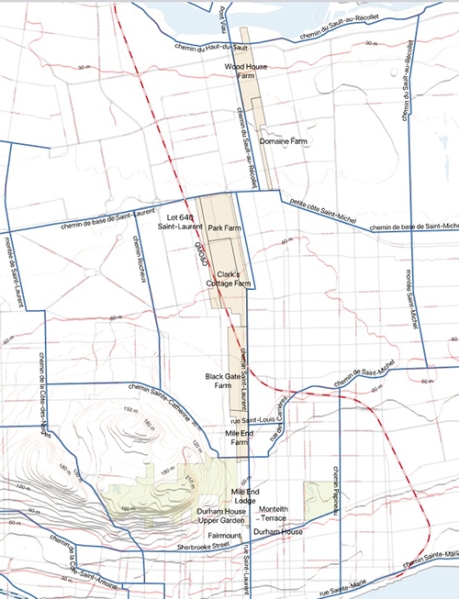
The job Stanley undertook as administrator of his father’s estate was not an easy one. Montreal was growing rapidly, with thousands of new immigrants arriving, manufacturing, railroads and industries expanding and construction of new residences ongoing. The farmland that comprised the vast S. C. Bagg Estate, mostly located on the west side of St. Laurent Boulevard in a corridor north of Sherbrooke Street, increased in value as the city grew. Sales, mainly of residential properties, became a profitable business.

This map shows the extent of the late Stanley Clark Bagg’s properties, shaded in beige, in 1875, when an inventory was made of his estate. These properties are overlaid over a modern map of the island of Montreal. At that time, the actual city of Montreal was south of Sherbrooke Street, extending down to the banks of the Saint Lawrence River. The eastern slope of Mount Royal is adjacent to the Mile End properties. Map created by Justin Bur, based on two open data sources: physical geography from CanVec, Natural Resources Canada and modern streets from Geobase, City of Montreal.

Stanley does not seem to have been interested in developing and promoting housing or commercial real estate projects himself, but he did decide which pieces of land to subdivide into lots and he supervised sales. The Estate also rented small residential and commercial buildings, and some of the land was sold to the city for civic projects such as parks.

He encountered many unexpected headaches over the years. He had to ask the provincial government to pass a special law in 1875 to override a provision in SCB’s will in order to make the lot prices competitive.2 There were misunderstandings in 1889-91 over which properties were part of the estate and which belonged to the five children. And sister Helen’s husband disappeared under mysterious circumstances in 1897, owing the family large sums of money.

Although Stanley was the main administrator of his father’s estate, several family members acted as advisors. His mother had a great deal of input, and sister Amelia kept track of some of the property sales. When a major decision had to be made, family members got together to discuss it, or if that was not possible, they communicated through letters.

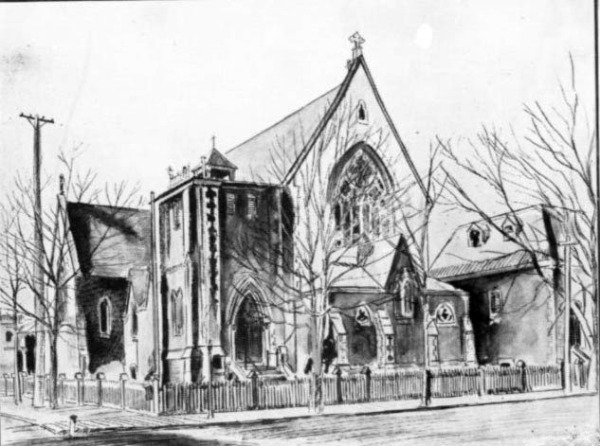
Robert Stanley Bagg and Clara Smithers were married in 1882 at St. Martin’s Anglican Church, on what was then the corner of Saint Urban and Bagg Streets. Bagg Street was later renamed Prince Arthur and the current Bagg Street is located several blocks further north. St. Martin’s never acquired a spire and it was eventually demolished. Image source: St. Martin’s Church, Historical Sketch of St. Martin’s Church : 1874-1902, Montreal, Canada, 1902?; Canadiana, https://www.canadiana.ca/view/oocihm.85997  Accessed June 14, 2023.

When Stanley announced his retirement as of January, 1901, his mother arranged to hire someone to succeed him, and she wrote Stanley a thank-you letter.3 She described her husband’s unexpected death as a calamity for the family, especially for Stanley who was “so young and inexperienced in the ways of the world.”  She commended him for the “able, honourable and efficient manner” in which he had performed his arduous duties for 27 years. She added, “I am most anxious that you should have a complete rest from all the worry and anxiety that is unavoidably connected with the responsible position you have occupied for such a long time – and while personally I shall greatly miss you, I hope that your absence and a complete change will allow you to regain your usual health and strength.”

One activity Stanley found helped to restore his health was travel, especially ocean voyages.  Perhaps he got the travel bug when he was 20 and spent a year exploring the highlights of Europe with his parents, his aunt and his sisters.

In 1875, Stanley visited England again with his mother and one of his sisters, and he returned to Europe with his new wife, Clara Smithers, on their two-month-long honeymoon in the summer of 1882.

In 1891, he and Clara spent an extended period of time in England, taking along their two young daughters. That year’s Census of England showed Stanley, Clara, the children, a governess and a cook staying in a lodging house in St. George Hanover Square, in central London. Ten years later, after his retirement, Stanley returned to Europe, this time touring for eight months.

While real estate management, legal training and travel seem to have been family traditions, so was military service. Stanley’s father had served in the military, and his grandfather had been a major in the 1st Battalion Loyal Volunteers during the Rebellion of 1837. His great-grandfather Phineas Bagg had served during the American Revolution ((1775-1783) before immigrating to Canada.

In 1877, the Canada Gazette reported that R. Stanley Bagg, gentleman, began his military service as an ensign with the 5th Battalion, Royal Fusiliers, Montreal. When he retired in 1882, he retained the rank of captain from what had become the Royal Scots Fusiliers. Although his military career was relatively short, it appears to have been a success. The Montreal Star quoted the following article about Stanley that had appeared in the paper 30 years earlier:4

“There are few better-known figures in Montreal than Captain Stanley Bagg. He was an enthusiastic volunteer and belonged to the old 5th Royals before and after they had become a kilted regiment. At the time of the ship labourers’ riots in Quebec, when several regiments of Montreal were sent to restore order and liberate the regular garrison, who were practically prisoners in the Citadel, the 5th Royal Scots were marched up Mountain Hill and the honour of leading them was conferred by the colonel of the regiment on Captain Bagg owing to his height and commanding presence. Captain Bagg has always been an ardent supporter of and participant in athletic sports. A good rider and one of the old Dowell school of boxers, he kept himself in such first-class condition that he can stand almost any fatigue.”

I had read the letter written by Stanley’s mother about his retirement many years ago, and it had left me with an image of my great-grandfather as a tired and anxious man. This newspaper article made me realize that he had indeed once been a strong leader and an good athlete.

This article is also posted on http://www.writinguptheancestors.ca

Footnotes:

1. “R. Stanley Bagg Died Yesterday,” The Gazette, July 23, 1912, p. 4, accessed June 9, 2024.

2. “38 Vict. cap. XCIV, assented to 23 February 1875”, Statutes of the Province of Quebec passed in the thirty-eighth year of the reign of Her Majesty Queen Victoria, part 1, p. 474, https://books.google.ca, accessed June 9, 2024.

3. Catharine Mitcheson Bagg, Correspondence, P070/B6.4, Bagg Family Fonds, McCord Stewart Museum, https://collections.musee-mccord-stewart.ca/en/objects/details/176488; classification scheme; personal documents; correspondence. Accessed June 14, 2024.

4. “From the Star Files 30 Years Ago Today” The Montreal Star, Sept. 17, 1909, p. 10, www.newspapers.com, accessed June 9, 2024.

See also:

Janice Hamilton, “Bagg Family Dispute part 1: Stanley Clark Bagg’s Estate”, Writing Up the Ancestors, Dec. 13, 2023, https://www.writinguptheancestors.ca/2023/12/bagg-family-dispute-part-1-stanley-clark-baggs-estate.html

Janice Hamilton, “The Bagg Family Dispute part 2”, Writing Up the Ancestors, Feb. 14, 2024, https://www.writinguptheancestors.ca/2024/02/the-bagg-family-dispute-part-2.html

Janice Hamilton, “Helen Frances Bagg: A Happy Exile”, Writing Up the Ancestors, Jan. 6, 2016, https://www.writinguptheancestors.ca/2016/01/helen-frances-bagg-happy-exile.html

Janice Hamilton, “Continental Notes for Public Circulation”, Writing Up the Ancestors, April 8, 2020, https://www.writinguptheancestors.ca/2020/04/continental-notes-for-public-circulation.html

Janice Hamilton, “Aunt Amelia’s Ledger”, Writing Up the Ancestors, April 26, 2023, https://www.writinguptheancestors.ca/2023/04/aunt-amelias-ledger.html

Clara Smithers Weds R. Stanley Bagg, Writing Up the Ancestors, March 2, 2014, https://www.writinguptheancestors.ca/2014/03/clara-smithers-weds-r-stanley-bagg.html

Janice Hamilton, “The Life and Times of Stanley Bagg, 1788-1853”, Writing Up the Ancestors, Oct. 5, 2016, https://www.writinguptheancestors.ca/2016/10/the-life-and-times-of-stanley-bagg-1788.html

Update to Heartfelt Losses

https://genealogyensemble.com/2024/03/28/heartfelt-losses/

For my last story, (link above), three children of my great grand uncle died within days of each other. I had tried to find which, if any, diseases were present in that year and area, but I could find none. Of course, diseases were present at all times in the 1800s with no vaccinations or protection available.

The only way to find out the cause of the girl’s deaths was to obtain their Death Certificates which did not arrive in time to add to my last story. Now, I have received the girls’ Death Certificates from The General Register Office (GRO) of England and Wales and I know that the three girls died of scarlet fever.

The first daughter to die was their eldest, Isabella O’Bray aged 13 years It states she died at the Infectious Hospital Gillingham, Kent on the 6th of March, 1890. The cause of death was written as:

“Malignant Scarlatina’ (or Scarlet Fever).

The term ‘Malignant Scarlatina’ is not used today, although I did find an article from 1846 in the New England Journal of Medicine which used the term ‘malignant’ (1)

Margaret was 11 years old and also died of Malignant Scarlatina at the Infectious Hospital, Gillingham, Kent.

Minnie, aged three, their youngest child, died of Scarlet Fever exhaustion, at home.

I noticed that the deaths were registered by the children’s Uncle who lived nearby. We can only imagine the shock the parents were suffering and registering not one but three deaths of their beloved girls must have been a task they were just not up to.

Images of Measles and Scarlet Fever

In 1946 (a year after I was born), penicillin became available for the first time in the UK for public use, it transformed medicine worldwide and ushered in the age of antibiotics.

I had Scarlet Fever as a child, however, I was fortunate as antibiotics were available to me. It is a bacterial illness that develops in some people who have had strep throat. Also known as scarlatina, the disease features a bright red rash that covers most of the body., which includes a sore throat and a high fever. It is most common in children 5 to 15 years of age.

Although it was once considered a serious childhood illness, antibiotic treatments have made it less threatening. Still, if left untreated, it can result in more serious conditions that affect the heart, kidneys and other parts of the body.

On 15 March 1945, Penicillin was made available over the counter in US pharmacies, although it would not be available to British civilians – as a prescription drug – until the 1st of June, 1946, a year after Howard Florey and Ernst Chain received a Nobel prize for their work.

These two doctors began work on penicillin in 1938 at Oxford University, England. Details of their work are here:

University of Oxfordhttps://www.ox.ac.uk › news › science-blog › 75-years-..

SOURCE

(1) https://www.nejm.org/doi/pdf/10.1056/NEJM184603040340501