Seaside Scientists

“10 Foreigners at Woods Hole: Summer Students From Europe, Asia.” This was the headline on a story in the Cape Cod Standard-Times, Thursday, June 19, 1947. The story added that seven of the 10 students were from Canada. My father, Jim Hamilton, was one of them.

World War II had been over for two years, and people were starting to put their lives back on track. My parents had been married for a year, and I wouldn’t make my appearance for another year, so this was an opportunity for him to study physiology for six weeks at the famous Woods Hole Marine Biological Laboratory on Cape Cod.

At the time, Dad was working on cancer research at the University of Western Ontario, in London, Ontario. Cancer research was in its early days then, and the aim of the project was to learn more about the fundamental character of cancerous cells. According to an article in the London Free Press describing the study he was involved in, “the methods employed in physical chemistry are to be used wherever they are applicable…. The services of a well-trained physical chemist, J.D. Hamilton, have been obtained for the research project.”

My father had an M.A. in physics, mathematics and chemistry from the University of Toronto, but he needed to improve his knowledge of the biological sciences, hence the summer course at Cape Cod.
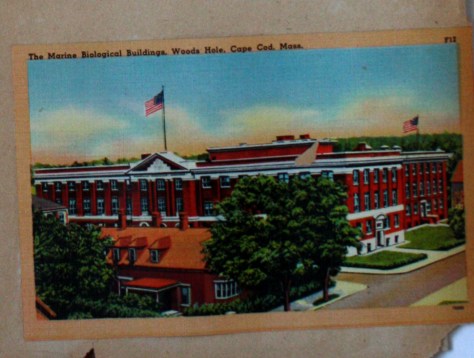
Woods Hole institute
A postcard showing the Marine Biological Buildings at Woods Hole from my mother’s scrapbook.

Every summer the Woods Hole Marine Biological Laboratory (MBL), founded in 1888, attracted graduate students, as well as some of the world’s best biological scientists, to carry out research and share ideas about invertebrate biology, botany, embryology and other subjects, focusing on the marine life found in the waters around the institute. (The MBL still exists today, affiliated with the University of Chicago, and its research and educational programs are now year-round.)

My father had endless curiosity about esoteric facts and was interested in everything from history, philosophy and psychology to mathematics. I can imagine him thoroughly enjoying himself as he dissected a starfish or watched a sea urchin egg multiply under the lens of a microscope, and the knowledge of physiology he acquired during that six weeks no doubt helped him when he studied medicine several years later.

My mother, Joan, accompanied him on this trip. Now that the war was over, she, like many other married women, had left the workforce, so she had the time to travel. Fortunately, the institute had accommodations for married couples and even children. She was also an intelligent and curious person, and she aspired to be a writer, so rather than just sit on the beach, my mother wrote her own article about the lab. It was never published, but she kept a copy of the draft article, along with clippings and photos.

She wrote:

“The lovely New England setting of Woods Hole provides a working example of the internationalism of science. In the lab mess hall you may hear Dr. Jean Brachet of Belgium discussing his experiences as a scientific hostage of the Nazis. At another table Dr. Dashu Nie may be telling some of his companions how scientific terms are described in the Chinese language. Still another group may hear Dr. Mohan Das, Professor of Ecology at the University of Lucknow [India], tell how marine life in India differs from that found on the U.S. Atlantic coast.

“On the beaches, in the dorms, or over a cup of coffee at Cap’n Kids, one hears shop talk. For students and research workers alike, the conversations with some of the best scientific minds of many countries provide tremendous inspiration and encouragement, and from a word dropped at such friendly conversations may come the germ of an idea which will lead to the answer to one more problem.”

Both my future parents found Woods Hole to be a stimulating place. They also enjoyed the social activities, which included Thursday night square dancing and Monday’s traditional record night, when, my mother recalled, “it is very peaceful to sit in the darkness, watching the lights come out across Vineyard Sound and listening to Bach or Beethoven.”

After the course ended, they drove up the coast to Boston and to Maine before heading back to Ontario.

This article is also posted on writinguptheancestors.blogspot.com

See also:

“Jim Hamilton, A Life,” Writing Up the Ancestors, Sept 30, 2015, http://writinguptheancestors.blogspot.com/2015/09/jim-hamilton-life.html

“My Mother’s Breakout Years,” Writing Up the Ancestors,   Sept. 12, 2018, http://writinguptheancestors.blogspot.com/2018/09/my-mothers-breakout-years.html

Original Arial Family of Western Canada

They sat and stood calmly for the formal portrait. No one smiled.

An accompanying photocopy with names scrawled on each person identifies the people. Four chairs in the middle hold Remi, Sophie, Joseph Gabriel and Pete. Billy, Augusta, Joe, Sophie, Aldous, Lucy and Eddy stand behind the chairs. Jean-Baptiste sits in front.

Notes from my grandmother cram the back, including her title “the original Arial family of Western Canada.”

These notes are useful, but they don’t include some of the basic things Grandma knew, so I’m flailing around trying to understand what she meant.

I’ve always known that Gabriel and Sophie Arial were my great great grandfather and grandmother, for instance, but it took me a while to discover that I’m also the great grandchild of “Pete.”

Combining the notes with an analysis of our family tree led to many other questions too. If these are the first Arial’s who migrated to Western Canada, why did they go? Did they fit within a trend? Were their lives difficult? What made my branch of the family move back east? How did Great Grandpa Pete die when he was only 46 years old?

Perhaps they were homesteaders?

Since I know that most of my ancestors were farmers, my assumption is that the formal portrait includes people who moved west to take advantage of homesteading land grants offered in Alberta under the Dominion Lands Act after 1870. This program surveyed Crown land to make it available for settlement. According to the Alberta Genealogical Society

…individuals could apply to homestead a quarter section (160 acres) of their choice. Then, after paying a $10 filing fee and ‘proving up’ their homestead claim (occupying the land for at least three years and performing certain improvements, including building a house and barn, fencing, breaking and cropping a portion of the land), the homesteader could apply for patent (title) to the land.[1]

Records exist for three Arials: Gabriel, Joseph V. and J.B, so those are the next documents I plan to check out.

Hopefully the Gabriel Arial in the homestead records matches the older Joseph Gabriel on my photo. He and his wife Sophie pioneered Western Canadian for my family. He came from St. Roch, Quebec and Sophie came from St. Paul, Minnesota. Everyone else’s birth took place in St. Boniface, Alberta.

Given my families’ predilection for confusing nicknames, however, Gabriel, Joseph V. and J.B. Arial could be just about anyone.

Multiple Nicknames

My great grandfather legally went by the name “Joseph Gabriel Antoine Remi Arial.” Only after I read the notes about his burial on the Ariaill family website did I discover his nickname “Pete.” The same notation led to his death certificate, which includes the name “Pete Arial” and the names “Joseph Gabrial Arial” and “Joseph Gabriel Arial.”

Now I know that there are two Joseph Gabriel’s in the photo: great great grandpa in the centre and great grandpa Pete to his left. There are two Sophies also, although the elder sitting woman’s legally went by Marie Sophie.

A source note on the back tells me when and how my grandma got the photo.

This picture was given to Marguerite and Joe (Gabe) Arial on their 50th Wedding Anniversary, April 6, 1992 by Happy and Dot Arial.”

I knew Happy growing up and he made the best barbecue spices I’ve ever tasted. I don’t remember asking about his nickname. He’s probably the fellow called Billy in the formal portrait. Billy legally went by the name of Wilfred, although one of the documents I have also shows a William, which would definitely explain how Wilfred became Billy.

I’m pretty sure Eddy is Edgar, but maybe not.

There’s no hint about when the photograph was taken either. I suspect it was in the early 1930s. Great grandpa Pete seems to be in his forties in the shot, and his birth took place on May 5, 1888 in St. Boniface, Manitoba. He died of acute myocarditis (heart failure) on January 30, 1935[2], so it’s definitely prior to that.

Death Certificate Hints

Pete’s death certificate says he caught rheumatic fever in 1931. Since he’s sitting in a chair in the photograph, I suspect the photo dates from sometime between then and Joseph’s death on December 7, 1933.

When rheumatic fever becomes acute, it not only causes heart valve damage, but it can also lead to skin rashes, swollen joints especially around the knees and ankles, lumps under the skin, a shortness of breath, chest discomfort and uncontrollable muscle spasms. No wonder the poor man needed to sit in a chair!

Rheumatic fever hardly makes the news in developed countries these days. That’s because penicillin and other antibiotics prevent scarlet fever and strep throat (streptococcal) infections from turning into rheumatic fever. All three of these diseases used to kill thousands in Canada every year, however, and a 2005 source shows 15 million, 244,000 deaths around the world. [3]

Dr. W.W. Eadie signed the death certificate placing Pete’s death in Spedden, Alberta. In another pen, someone else wrote that Pete regularly resided at 9632-107a Avenue in Edmonton, Alberta. His race was French. His father came from Quebec and his mother from St. Paul, Minnesota. Connelly and McKinley buried Pete in the R.C. Edmonton cemetery. He had been a bar tender and house painter before he contracted the disease. A third writer crossed out the words bartender next to last occupation and the address Spedden next to the length of time in the town or district where death occurred. That person wrote in “contractor” next to last occupation and specified that Pete had been in Spedden for “1 month” prior to his death.

School Picnic

The only other info I’ve found about my great grandfather’s life dates from a short newspaper article about a school picnic on the front page of the Medicine Hat News on Thursday, July 1896.

That brief mentions that Pete Arial won an “under 12” race at a Gleichen school picnic. He would have been 8 years old at the time. The reporter also listed Aldos, Sophie and Joe Arial winning prizes from other races the same day. Joe won both the three-legged and donkey races.[4]

Arial is an uncommon name. The chances another family with similar names lived in small-town Gleichen is unlikely.

Pete married Leonore Doucet on November 24, 1908, when he was 20 and she was only 16 years old. They had their first child, my grandfather Joseph Isidore Alfred Gabriel, four years minus a week later.

After that, I can find no more traces of Pete until he died.

Grandma’s Notes

Pete’s not mentioned at all in the tiny squished notes grandma made on the back of that formal photo, although her family tree shows him dying in Spedden, Cold Lake, Alberta.

She does identify Billy, Joe, Aldous and Remi as interior decorators, by which I think she meant contractor. Eddy had status as “a maintenance man, interior decorator, etc.”

She identified women by the people they married. “Augusta married Charles Turgeon,” she wrote. “Sophie married Brasseau, then he died and she married Auger.” “Lucy married James or Gibson.”

Only the elder Sophie had a personal identity of her own: “Grandma Arial was a Metis from the USA.”

The notes about Joseph Gabriel contain the most information.

Grampa Arial had a hotel in Saint Boniface where he had many meetings with Louis Riel in the basement in his hotel and in later years, he own the Palace Hotel in Gleichan, Alberta. After his hotel burned, they moved to Edmonton, Alberta.”

There’s no room for anything more.

I recently found the Find-a-Grave memorial page[5] for Pete’s burial place. He was buried with his father in Saint Joachims Cemetery in Edmonton on February 2, 1935. Less than 11 months later, his mother died too. Thanks to Alison for photographing their joint tombstone.

Sources

[1] https://www.abgenealogy.ca/1870-1930-homestead-project?mid=1155

[2] Alberta Vital Statistics Death Index # 402 556 for J Gabriel Arial ~ 30 Jan 1935 ~ Place of death ~ Spedden, Alberta, Medical Certificate of Cause of Death, form 6, February 28, 1935.

[3] Carapetis JR, Steer A, Mulholland E, et al. The global burden of group A streptococcal diseases. Lancet Infect Dis 2005;5:685-94

[4] Medicine Hat News, Thursday, July 1896, p1, https://medicinehatnews.newspaperarchive.com/medicine-hat-news/1896-07-09/, accessed May 21, 2019.

[5] Alberta Vital Statistics Death Index # 402 556 for J Gabriel Arial ~ 30 Jan 1935 ~ Place of death ~ Spedden, Alberta, Find A Grave, digital images (https://www.findagrave.com/memorial/156782821/joseph-gabriel_antoine-arial  : accessed May 21, 2019), memorial number 156782821.

To the Lighthouse Part 11

myfatherugby

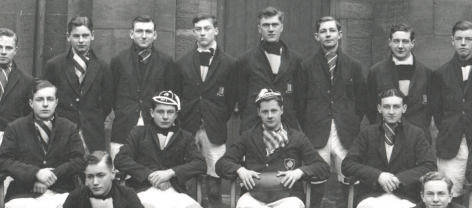
St Bees Senior Rugby XV  1939. Courtesy of St. Beghian Society website.

Read To the Lighthouse Part 1 here. What was it like to be a young man in prep school on the cusp of WWII?

I am so far ahead, now.  I can stop for a cigarette. We’re not allowed to smoke in front of the junior  students.

The  rugby match with the Geordies wears heavy on my mind, to divert from the other…  They are tough, those townies, built low to the ground, built for rugby and the claustrophobic confines of the coal mines.

I am Vice-Captain of the Senior XV, so it is a big responsibility. To lose to them would be an indignity, and yet they are so very hungry to beat us.

I draw on my unfiltered Player’s Navy Cut cigarette slowly, glacially, to try and stop time to stop thinking about my – our-  uncertain future.

But before I get two drags,  I  hear the sound of someone  huffing and puffing his way up the grassy path toward me, a small boy, a freckled red head. It’s Cowen, one of the new fellows, the asthmatic, courageously plodding toward me

I have to ditch this ciggy fast.  I toss it into the grass.

At the same time, the same grass rustles under my feet and I instinctively jerk to once side like a silly sock puppet. Did the boy see me?

Yes, he did. ‘Are you afraid of snakes?”  asks the boy, through his wheezes, in a non-judgmental matter of fact way.

I don’t answer.

“You were smart to get out of the way,” the boy persists. “It might be a poisonous adder. They can be found in a variety of habitats, including fields, meadows, hillsides and moors as well as coastal dunes.

“They have a grey or brown coloured body with a zigzag pattern along their back. Harmless grass snakes are mostly found in wetlands. They need frogs to eat.”

This Cowen boy, one of the new group from Mill Hill School in London that is being turned into a wartime hospital, is a small, copper-topped encyclopedia of nature, it seems.

“How do you know all this?” I ask Cowen. Mother’s mother is a Cowen from Bishop Auckland in Durham. The Cowans were shopkeepers, mostly. Or they worked in the lead mines in Alston, Cumberland.  Could we possibly be related? Well, we are all related around here. Especially the Border Reiving families: Forster, Nixon, Kerr, Armstrong, Bell, Johnson, Elliott, Graham, Scott.

This small wheezing boy replies, “My father told me.”

“I am afraid of snakes,” I admit to the younger boy. His naïve self-confidence has made me lower my ­­­­guard.

“But, I have good reason to be, “ I add, squinting menacingly at him.  I was born in Malaya and by the time I could walk I learned to watch out for the meter long orange necked keelbacks or die an agonizing death on the spot.” I grab my throat with both my hands and pretend to squeeze, bugging out my small blue eyes.

“I don’t know about Malayan snakes,” the boy soberly continues, unimpressed by my histrionics. I may be a member of the Shakespeare Club, but I am no accomplished thespian.

He continues.“ I know a bit about Indian snakes. I’ve heard stories.”

“Are you a child of the Raj as well?” I ask him with genuine interest.

“No, my father is a civil servant in  London. Foreign office.  But he loves the outdoors. He  takes me to Northumberland every summer on camping trips. While Mother visits her sister in Kent.”

This is getting far too personal, so I change the subject.

“Where are the others?” I ask authoritatively because I am supposed to care.

“They stopped  to raid the gulls’ nests even though I told them only a few gulls will have laid by now.  As the smallest in the group,  I knew they’d want to dangle me over the cliff to grab the eggs,  so I just kept on running. My lungs are burning.”

The boy admits this with no embarrassment, this plucky new boy with the asthma and caring father.

“We’ll never make it to the lighthouse at Whitehaven, at this rate,” I say, not that I care.

stbees

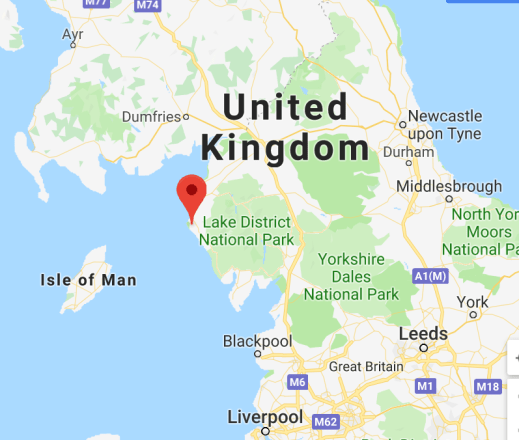
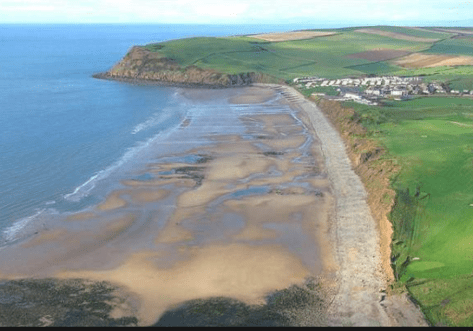
St Bees on the Coast of Cumbria.

“Too bad. I’d like to see the radar installation. If the war persists, I will likely be put in radar. I am a math’s major.”

I hardly hear him. The mere idea of fried eggs, however sketchy the source, thrills me. I am starving, what with these new war time rations.

 “It isn’t like being in  the Air Force,” he continues, “ but radar is important to catch the German subs when they attack. It’s too bad this war will be over soon, because I would like to work in radar, scanning for enemy submarines.”,

I had forgotten about the radar station at the lighthouse. I too am a math’s major destined, they tell me, for a desk job in statistics.  But I have the keen eyes and reflexes of a fighter pilot and that is where I want to end up, if I have to go. Dropping bombs on the enemy.

As if reading my mind, the boy says,

I know they say radar is for layabouts, but they’ll  never let me fly. I’m short-sighted.  “

Do you have good eyes?

“Twenty-fifteen, like Brian Sellers, the cricketer “ I say, bragging.  My long distance vision is, indeed, exceptional. Right now I can see two navy boats out on the grey waters of the Irish sea.

Warship sightings are commonplace these days.

Cowen lowers his eyes and opens up once again: “ I wish I were like you, an athletic stiff with spiffing eyesight, so I could get into the RAF and fly  exciting bombing missions.”

Here’s a boy who spends summers camping with his father, who teaches him all about snakes and nature, and he wants to be like me. I haven’t seen my father since I was five years of age – and that is a good thing from what little I remember.  My sister and I spend holidays with aunts who don’t want us around. They do it because of the money Grandmother Forster, aka Emma Cowen, left them.

Emma Cowen

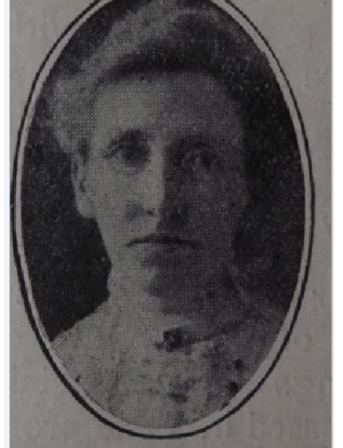
Peter’s Grandmother, Emma Cowen of Bishop Aukland, Durham in 1914.

I don’t tell Copper-top this, of course. There’s a pause in the conversation. I sweep the grass with my foot for my cigarette butt – and to pretend I am not afraid of anything as insignificant as an English snake.

“Are you going to enlist in the RAF – before they conscript you?” the boy asks after a few minutes. Maybe fly bombers over in Europe? The village boys who have turned 18 are already signing up voluntarily. They want to get the best missions.

“They would, wouldn’t they?” I reply. “What else do they have to do?”

And, I tack on for no good reason, “I assure you, you do not want to be like me.”

“What?” The boy wrinkles his freckly red brow. I have confused him, this sweet naïve boy with his happy loving family.

“Well,” I change the subject. “You won’t be spending this coming summer in Northumberland with your father. They are keeping the school open for LDV training for all of us, senior and junior school. LOOK, Duck and Vanish.

“Yes, I know about Land Defense. But everyone thinks it  will be safer here. That’s why Mill Hill pupils were sent up  to St. Bees,” says Cowen.  “More boys from London are sure to arrive if the war doesn’t end soon. Their mothers will insist.”

“Do these mothers know  that  Barrow-in-Furness is just down the coast and it is a ship building port and likely to be a target of German bombs?”

I say this to scare him. I want to be cruel at this moment.  Truth be told, I resent this happy wheezy boy with the unkempt shock of red hair sticking straight out of the top of his head. War or no war, St Bees is a spartan place and is all about teaching British boys survival skills, on the rugby field mostly.  Land Defense Volunteers Training is somewhat  redundant.

But, then again, what do we schoolboys, happy ones like Cowen or unhappy ones like me, know about true survival?

stbeeshead

St Bees Head courtesy of visitcumbria.org


Read To the Lighhouse Part 111 here

A Story of Tatting

My mother always tatted. She learned from her neighbour when she was 10 years old. If she would sit and tat for an hour on a Saturday, with Miss Proudfoot and her sister, she could then bring the funny papers home to her brothers.

Mom was never without a shuttle and thread. She tatted watching TV, waiting in line at the bank, in a doctors’ waiting room and even sat tatting with some fishermen in Portugal, as they fixed their nets.

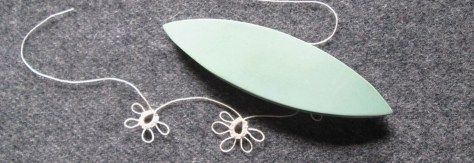
Tatting is handcrafted lace made of knots, rings and chains using a shuttle. Shuttles are small oval objects that thread is wrapped around and they fit easily in your hand. Tatting is la frivolité in French and the shuttle is a navette. It was very popular in the late 1800s when shuttles were almost jewellery. It used to be considered a dying art but the internet has reintroduced tatting to many people.

Shuttles come in many forms and materials. They have been made of silver, bone, ivory, carved from wood and moulded from plastic. Celluloid, one of the first plastics, was used for shuttles. Some of the newer ones have bobbins making winding the thread much easier. Some have pics on one end, some little metal hooks and some smooth ends. The hooks are needed to join rings but this can also be done with a separate crochet hook.

IMG_9778
The Aqua Celluloid Shuttle

Much of Mom’s tatting was for note cards she and Doris Ward made for the Catherine Booth Hospital. For almost 30 years, Mom tatted yards of little flowers and Doris drew, cut and pasted the cards. Mom was spotted tatting a lace edging for a hanky at an auxiliary meeting and the Brigadier thought tatted cards would be very salable items. When Doris retired at 93 other ladies volunteered to take her place. They weren’t as prolific or exact, still, many more cards were made. Mom kept count and made over 75,000. She also tatted many snowflakes. These dainty items hung on Christmas trees and in the windows of many friends and family.

img_9783.jpg
Some of the Hasty Notes

My mother tried many times to teach us how to tat but without much success. She even learned to tat left-handed to show me but I still couldn’t get it. Then one summer, at a Flea Market in Sutton Junction, I spied a box with a plastic shuttle, tatting thread and some other sewing stuff. The box was $5 but as I didn’t want everything she sold me the shuttle and the thread for just $2. My thought was to give it to my mother but my husband said, “You should keep it.” So with my own shuttle, I asked my mother to show me again and “Bingo” I got it!

If I was going to tat, I figured I would collect tatting things. In a booth at the St-Lambert Antique Show, an aqua celluloid shuttle caught my eye and as it only cost 50 cents, I bought it. It had thread in it, no removable bobbin and no hook but a pretty colour and it felt good in my hand.

IMG_9785
Snowflakes Mom Tatted

I put it in my pocket. We visited a few antique stores on our way to our cottage. When we got to Sutton I looked for the shuttle but it wasn’t in my pocket and I didn’t remember putting it anywhere else. I finally decided it had fallen out when I took out my car keys. My husband wanted to go and look for it but driving 20 km for a bit of plastic was silly. Still, I felt bad about losing it.

The next morning we were going to play golf at Cowansville and did retraced our steps. At Le Relais, the owner didn’t know what it was but would keep her eyes open. At the next stop, nothing in the parking lot or in the store. The last place wasn’t open but we looked around the ground and there in the grass was my shuttle.

In her last few years, my mother didn’t tat much. In the year before she died at 95, I took one of her shuttles downstairs to her. She took it and made one little flower, then handed the shuttle back to me and said, “That’s enough, you do it.

Notes:

My mother Dorothy Raguin Sutherland told me stories about learning to tat.

The Catherine Booth Hospital in Montreal sold the cards in their hospitality shop for almost fifty years. They were a very good money maker. After Doris Ward retired from card making Moira Reynolds and Eileen Rhead took it up.

Mom visited the Museum of Civilization in Hull, Quebec and in the craft sections didn’t see a tatting shuttle so she donated one complete with tatting

It used to be very difficult for my mother to find tatting thread. Thin 80 weight thread makes much finer lace. Everywhere we went we would looked for thread hoping to find new colours. Now one can find many, many colours of plain and variegated threads online.

I can make little flowers and I have made a number of snowflakes but mistakes are hard to fix as the thread is thin and the knots are tight. I don’t quite have my mother’s patience.

During my tatting item collecting I found this tatted christening dress in an antique store in Bromont, Quebec. I had never seen anything with so much tatting, so I had to have it.

IMG_9816
The tatted christening dress

IMG_9818

Finding Emerie

By

Claire Lindell

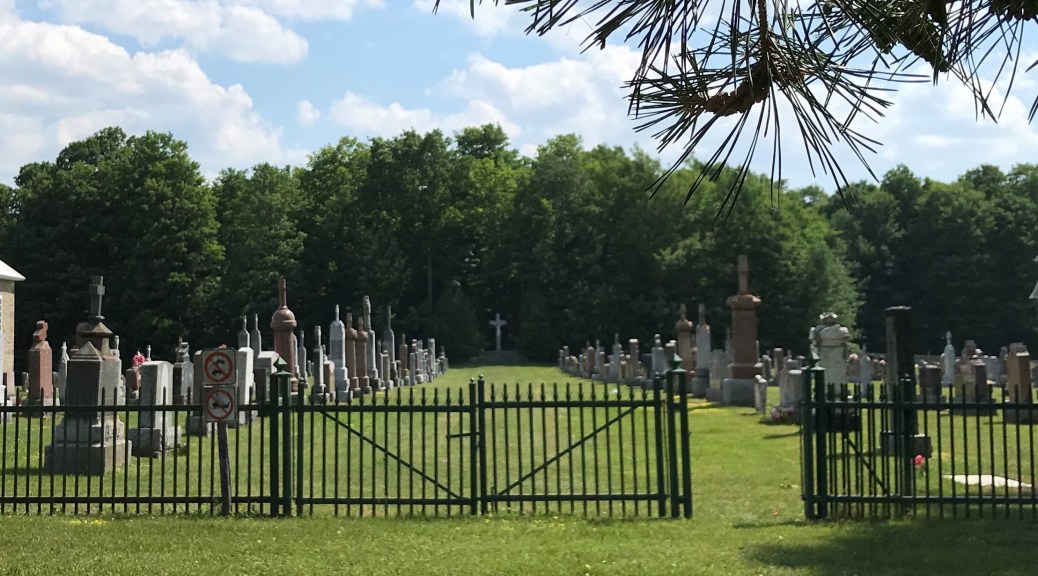
Several years ago, on a pleasant drive home from Ottawa, the thought of stopping in Rigaud to visit the cemetery seemed like a good idea with the hopes of finding Emerie Chevrier, one of my ancestors.

There were so many Chevriers in the cemetery it seemed impossible that one would find Emerie! Every second or third headstone was a Chevrier. It became apparent that more specific information would be required to find the father of my great-grandmother, Marie Philomene Adele Chevrier, one of Emerie’s twenty-one children.

Nos origins 1
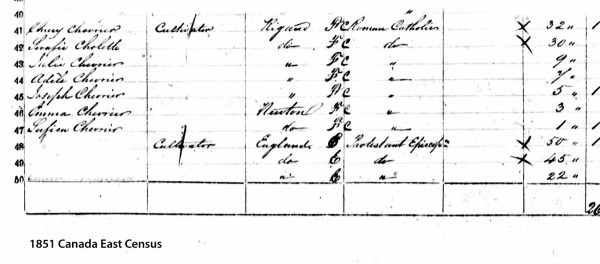
Census 2.

At the age of almost twenty, on the 20th of August 1839, he married young eighteen-year-old, Seraphie Cholet. Together they had fourteen children. One every year! In August of 1852, tragedy stuck and at the age of thirty-one she died, leaving him with a heavy heart, hands full, and a home filled with young children.

Upon Seraphie’s passing, Emerie realized he had a major problem that required immediate attention.  How could he tend to his farm and a home with fourteen children and no mother to care for them? One can surmise that the community came forward with a helping hand and introduced him to a new partner. It did not take very long before he was able to find a young woman willing to tackle the overwhelming task of helping him raise his family. She was one Mary McCarragher, almost twenty years old, of Irish descent. She and Emerie, still a young man of thirty-three, were married in the nearby village of Ste Marthe on January 11. 1853, less than six months after the death of his first wife.

Over the years Mary and Emerie had seven more children and he continued to farm the land. The family moved to Ste Justine de Newton, a small village near the Quebec-Ontario border not far from Rigaud.

After numerous searches to find information about Emerie’s death. 3 I was able to find his “sepulture”, the French church record of his death indicating where he is buried, a small burial ground, a fraction of the size of the Rigaud cemetery. This was the key to finding Emery. The headstone is situated beside the Catholic Church in Ste-Justine-de-Newton.

 Using Google Earth helped to determine the exact location of the cemetery. Armed with the details, with camera battery charged and ready for action, it was time to take a drive to the quaint village sixty kilometres from home.

Arriving in the small community, I parked near the church and walked to the graveyard, opened the gate and began the search. Much to my surprise, the headstone was about six paces to the left, inside the gate!

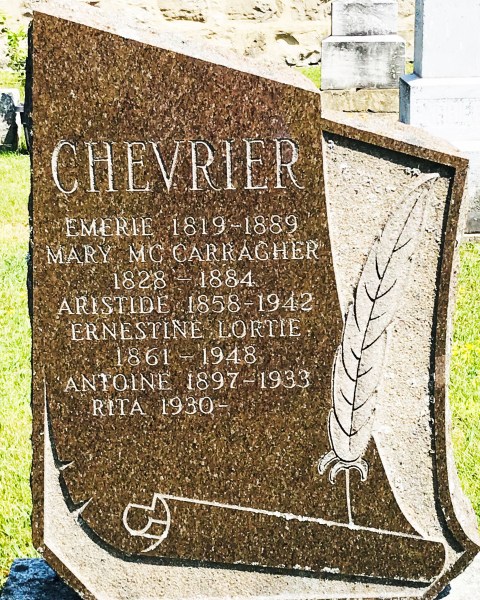
Although Emerie had passed away in 1889 and his wife Mary in 1884 their headstone was certainly not one that had endured the weather over one hundred years, but rather, it was a beautiful new headstone.4.Indeed, a fine tribute!

Footnotes:

1. https://www.nosorigines.qc.ca/genealogie.aspx

2. Ancestry.com, 1851 Census of Canada East, Canada West, New Brunswick, and Nova Scotia (Ancestry.com Operations Inc), Ancestry.com, http://www.Ancestry.com, Year: 1851; Census Place: Rigaud, Vaudreuil County, Canada East (Quebec); Ancestry.com

3. Ancestry.com, Quebec, Canada, Vital and Church Records (Drouin Collection), 1621-1968 (Provo, UT, USA, Ancestry.com Operations, Inc., 2008), Ancestry.com, http://www.Ancestry.com, Institut Généalogique Drouin; Montreal, Quebec, Canada; Author: Gabriel Drouin, comp

4. Photograph of Emery Chevrier’s headstone taken by the author.