My eldest Grandson is called Devon. His full name is Devon John Charles. Named after both his grandfathers. His parents initially, wanted to name him Even. However, there is already a cousin in our family of that name. His mum suggested Devon which suited both parents.
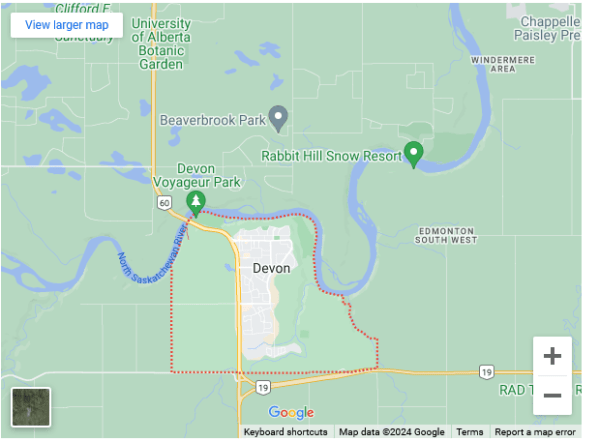
When Devon’s family moved to Alberta, we were surprised to learn he and his family were moving to Devon, Alberta! I was keen to learn the history of Devon, Alberta and here is what I found.
Devon, Alberta Canada
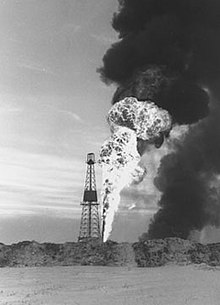
One of the largest oil discoveries in the world was discovered on February 13th 1947 (I would have been two years old). Leduc No 1 well struck oil and the new town of Devon was constructed by Imperial Oil to accommodate its workers.
Leduc Oil No. 1. Devon, Alberta Canada
The company wanted a well-planned town so Devon holds the distinction of being the first Canadian community to be approved by a regional planning commission.
‘The town was planned according to modern town-planning principles by the Edmonton District Planning Commission and CMHC. It was labelled “Canada’s Model Town” since it was the first municipality in Canada to be approved by a regional planning commission. The town grew extremely quickly, but because of planning controls, its development was orderly”. (1)
Devon was named after the Devonian formation seen in the strata tapped in the Leduc No. 1 oil well, which in turn is named for the county of Devon in England. Its economy is still based on the oil and gas industry; however, the addition of the Devon Coal Research Centre is helping to diversify the economy (2)
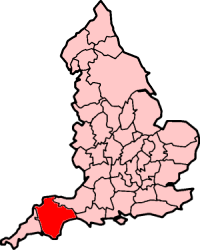
I was born in Plymouth, Devon but its history goes back millennia. Situated in South West England and bordering Cornwall, there is evidence of occupation from the Stone Age onwards. Recorded history begins in the Roman period when it was a ‘Civitas‘ (3) meaning a social body of citizens united by law. (3) It was then a separate kingdom for centuries until it was incorporated into early England. A largely agriculture-based region, tourism is now vital.
Ancient Extent of Devon, England
The name “Devon” derives from a tribe of Celtic people who inhabited the South-West peninsula of Britain at the time of the Roman invasion.
The last time I visited Plymouth, Devon I was tickled to be able to send my grandson a letter addressed to Devon, in Devon Alberta, from Devon, England. The lady in the Post Office even pointed out how amusing that was.
I used to hate Sundays. I had to go to Sunday school. I really didn’t understand why I had to attend because my parents just dropped me off. That’s right. They didn’t even go to church. And no one asked me if I wanted to go.
After they picked me up, things got worse. It was homework time until lunch. Of course, I could have done my homework on Friday night but Fridays were reserved for movies on the television and reading in bed with a flashlight until all hours.
And worst of all, some Sunday afternoons were for Visiting the Elderly Relatives. In my mind, my aunts and uncles were ancient. Plus my brother, being a boy and older than me, was apparently able to take care of himself, as he always seemed to be absent from these visits. So I would sit in the living rooms of my aunts and uncles, with no toys or any other amusements, and listen to the adults talk.
I now cherish the memories of these visits because they provided me with an appreciation of the social history of Montreal, as well as significant events such as the Depression and World War II.
The stories about the Depression are the ones that struck me the most. During the Depression, a quarter of Canada’s workforce was unemployed.1 My dad, Edward McHugh, was a young man out of work in Montreal and he joined his older brother and sister in Drummondville, to work for the Celanese. At the peak of the Depression, the Celanese employed 1,757 workers.2
None of the McHughs had cars in those days so they must have travelled back and forth to Drummondville by train. And Uncle Thomas McHugh married a local girl. I can just imagine the McHughs, from Verdun, arriving in Drummondville for the wedding. I doubt very many people spoke English in Drummondville at the time. The culture shock must have been intense.
My aunts and uncles, even into the 1960s, were thankful that they were able to have had some work during the Depression. Uncle Al Scott worked for the Northern Telecom for 40 years, although with reduced hours during the Depression. Luckily Uncle Frank McHugh worked for the Montreal Tramway Company so he was able to keep working during the Depression. He was a tram driver for tram number 24 that started in Montreal West and crossed the city on Sherbrooke Street. His job was safe.
Dad’s siblings loved to have a good time and the Depression did not stop them. My Aunt Elsie used to describe their card parties. There was only one bottle of scotch, some ginger ale, one can of salmon and one loaf of sliced white bread. My aunt was able to spread the salmon so thinly that she could make sandwiches out of the whole loaf of bread.
It was very clear to me that the Depression was a very frightening time in their lives. During this period, the future must have seemed bleak. Life was a struggle to make ends meet. But they made the most of it and persevered. Today I feel lucky to have listened and to remember their stories.
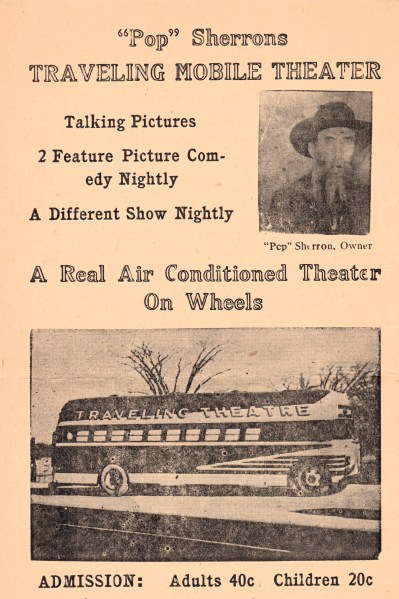
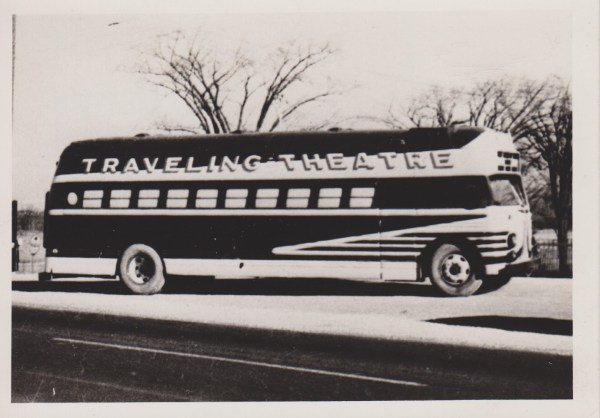
“Pop” Sherron and “Texas Betty” (his air-conditioned travelling mobile theatre bus) must have been a welcome sight whenever they pulled into small towns in and around Phoenix, Arizona, in the 1940’s.
Sherron, my great-uncle, charged admissions of 40 cents per adult and 20 cents per child to enjoy “two feature picture comedies nightly” and “a different show nightly” on his travelling mobile theatre bus.
Sherron’s Advertisement Flyer
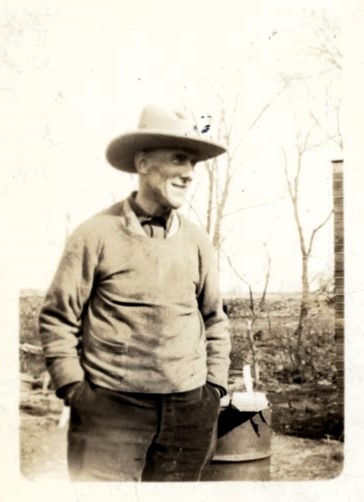
Roger Sherron (1895-1963) was a somewhat “reclusive” man or what one might consider a “hermit” and, according to a phone conversation with his nephew, his own family labelled him as “odd.” These opinions were supported on his WW1 registration (and rejection) in 1917 (age 22) with “arrested development mentally” entered by hand in the exemption section by officials.
Fortunately, we have come to better identify and understand mental conditions nowadays.
The Sherron family belonged to Philadelphia’s high society. Roger’s father owned and operated a wholesale grocery business while his mother and two sisters were frequently featured in the society pages of the local newspapers with their luncheons, tea parties, bridge games, fundraisers and such. This was not Roger’s “cup of tea” so to speak.
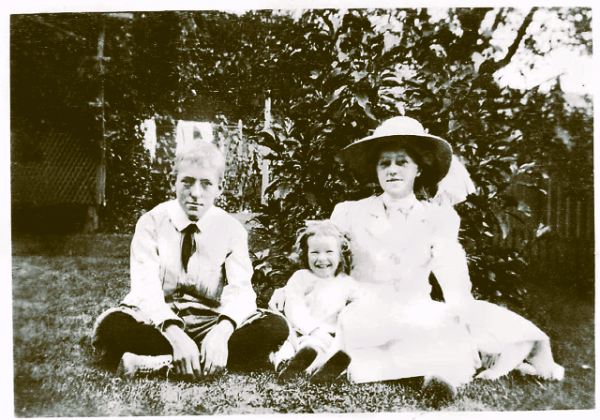
Roger, Alberta and Josephine Sherron (my grandmother) – 1906
Young Roger briefly attended the Wenonah Military Academy in New Jersey, a private secondary school “where a diploma entitled the graduate admission to West Point, Annapolis, or one of the best colleges or universities in the country, usually without qualifying tests.” He left school before he finished his studies but luckily could read and write by then even if his handwriting remained somewhat childish.
According to the censuses, Roger sometimes worked at odd jobs (in 1920 – grocery sales at age 25 and in 1930 – game warden for the State Government at age 35) but otherwise he was listed as “unemployed.”
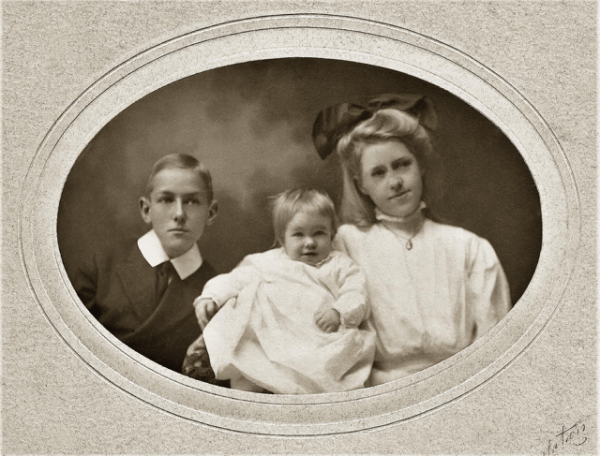
Roger and his sisters Alberta and Josephine circa 1910
He never married, living with his parents in Philadelphia until 1940 when his mother died. His father passed away in 1932. His younger sister Alberta also remained nearby with her family but his older sister Josephine (my grandmother) moved to Montreal, Quebec, with her stockbroker husband, Wendling Anglin, and her two sons (my father, Tom, and his brother Bill).
Roger was 44 years old when his mother died, alone in the world for the first time and without a place to live.
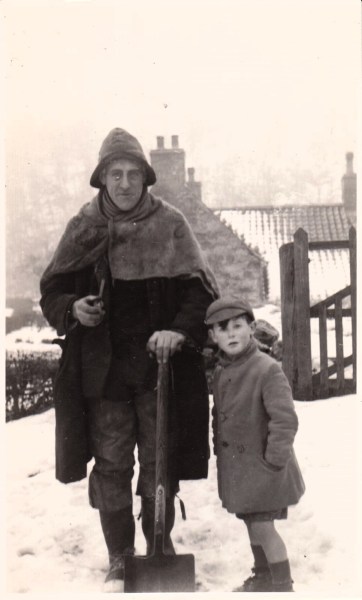
Roger and his nephew Donnie – 1932 – visiting his sister Alberta after his father died
Sometime, after the death of his mother, he moved west to a very different world and a warmer climate.
Once in Arizona in 1942, at 47 years old, and possibly homeless and jobless, he tried yet again to enlist with the WWII Draft. According to the registration form, he stood at 5’7” tall and 125 lbs with tattoos on his left arm. Unsurprisingly, Uncle Sam didn’t accept him this time either.
He must have inherited some money from his parents’ estate because this is where he acquired a retrofitted theatre bus he named “Texas Betty” which enabled him to start a rather unique business and support himself. At some point, it appears he might have attempted to expand his business as I have a piece of printed letterhead stating:
POP SHERRON’S FAMILY
Travelling Amusement Center and Big Free Circus
In Route – Pop Roger Sherron
Texas Betty Sherron
Owners
Texas Betty
Again, according to my phone conversation with his nephew, Roger’s home in Phoenix was just “a shack.” He lived in the Hispanic part of town and it is likely the entire neighbourhood consisted of similar housing.
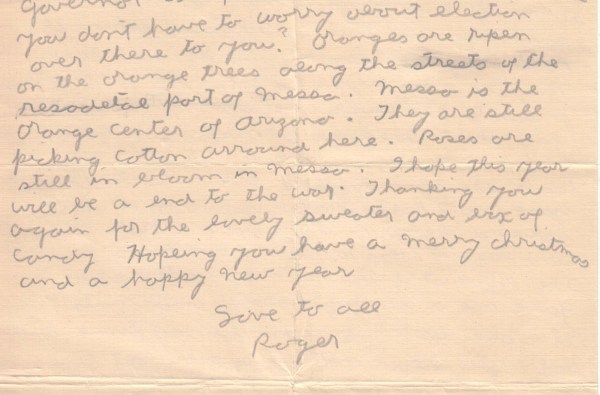
At the age of 50, some six years after he left Philadelphia, he wrote a Christmas letter to his older sister Josephine from Tempe, Arizona, which is half way between Phoenix and Mesa. He settled in this new community (and dare I say new family) who it seems wholeheartedly accepted him.
“I spent Christmas eve with some Spanish friends five houses down the road. They had tamales and Spanish food. They are nice people.”
“I got a lot of Christmas presents. The people next door gave me a fine shirt. The people three houses down gave me some handkerchiefs, a Coke, a comb, pen and ink and envelopes…the Spanish fellow who owns the store gave me a big bag of candy and nuts.”
“The television has come here now. The people next door have a fine set. It don’t hurt your eyes or nothing. Down at the bus station at Mesa, they have a set but it hurts your eyes.”
His neighbours might have struggled but they were rich in love and support for one another.
The letter continued with what might seem like “odd ball” concerns about the ongoing war, the atomic bomb and politics:
“I think the country will go Republican next election. I hope so. People are getting tired of this New Deal bussiness (sp). The Republicans will jump right in and fight Rushea (sp) and China. Lots of Chinese arround (sp) here in Phoenix and Mesa. They are aloude (sp) to run loose. They ought to put them in camps till after the war.”
Paranoia? No, just a typical American way of thinking at the time.
Roger, revealing his good prep school manners and poetic side, continued with a lovely description of his immediate surroundings: “Oranges ripen on the orange trees along the streets of the resodental (sp) part of Mesa. Mesa is the orange center of Arizona. They are still picking cotton arround (sp) here. Roses are still in bloom in Mesa.”
His letter ended with hope the war would end soon, another thank you for the gifts of a sweater and box of candy, and finally Roger wished his sister well and sent his “love to all.”
Roger died of a heart condition in 1963 at the age of 68. So he spent the last 20 years of his life in the Arizona desert with his one-of-a-kind air-conditioned cinema bus Texas Betty and his kind-hearted friends, no longer considered a hermit, reclusive or even odd.
Sherron in the Pocono Mountains, Pennsylvania in 1939
In the Part 1 blog of “Honesty Pays Off” In the following linkhttps://genealogyensemble.com/2024/05/15/honesty-pays-off/we learned of the first leg of my father’s trip to Finland in 1934. He sailed aboard the Empress of Britain and spent some time in London before embarking on the second half of his journey to Petsamo Finland where he was instrumental in opening a nickel mine.
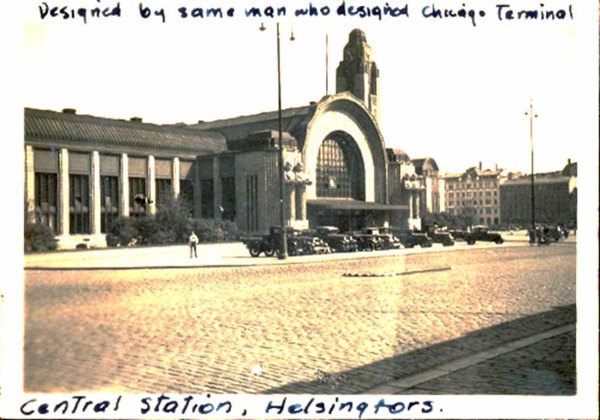
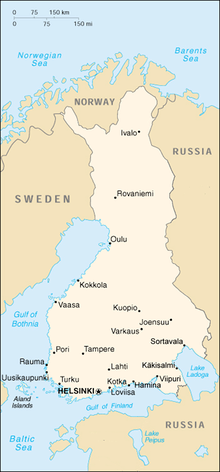
Once Mond Nickel had prepared all the necessary documents, my Dad set out from London to Helsinki, Finland, It would take two days by car, ferry, and train to reach Helsinki (where he most likely arrived at the station in the capital city of Finland.
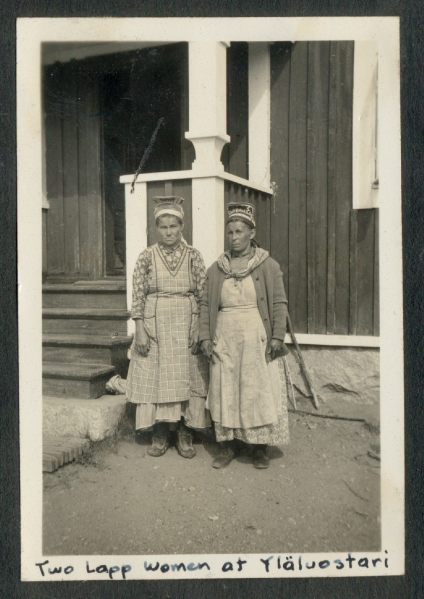
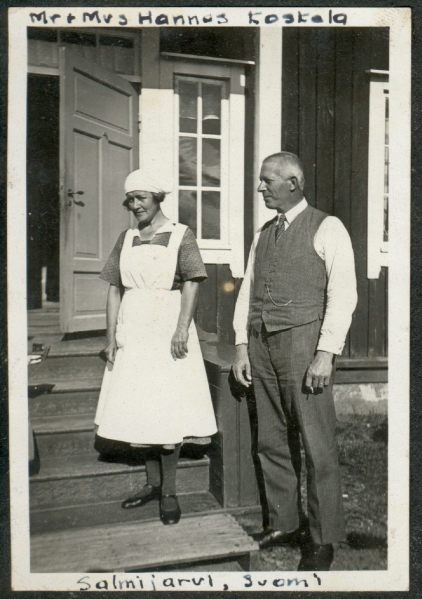
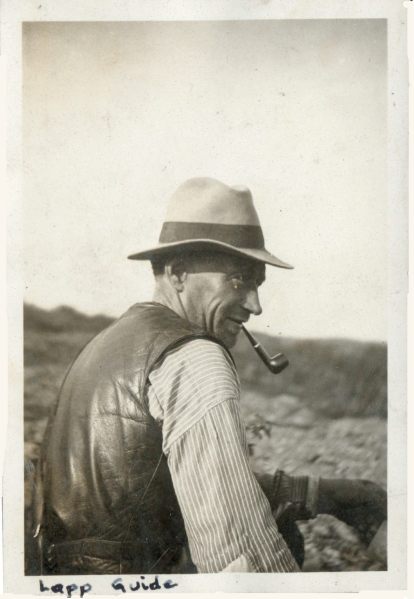
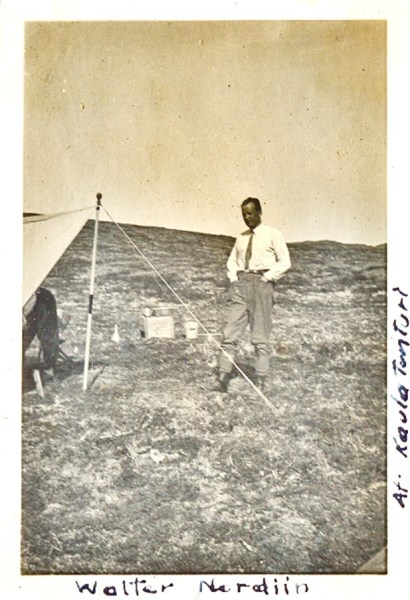
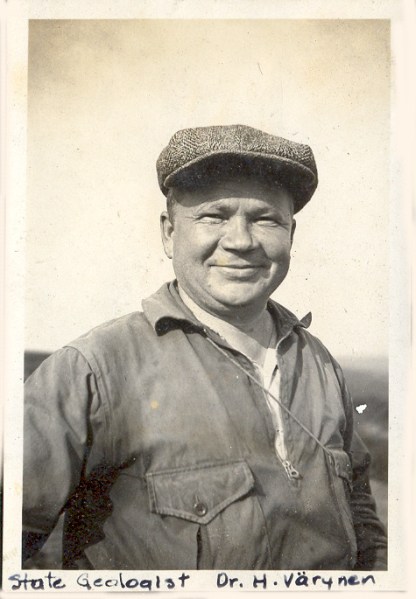
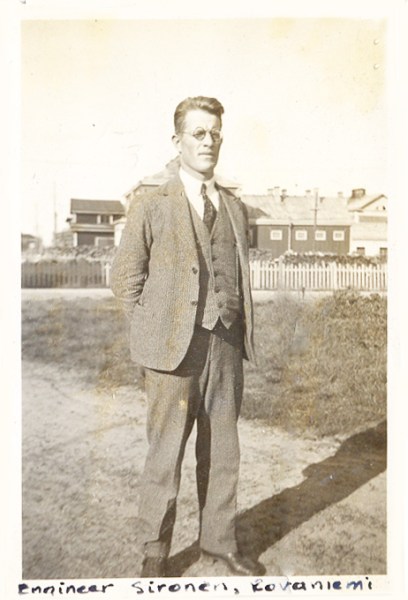
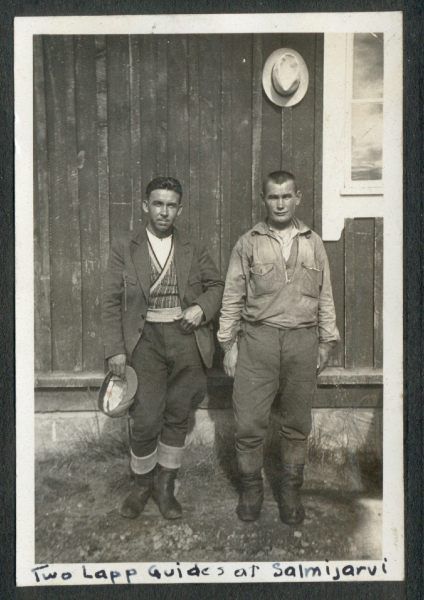
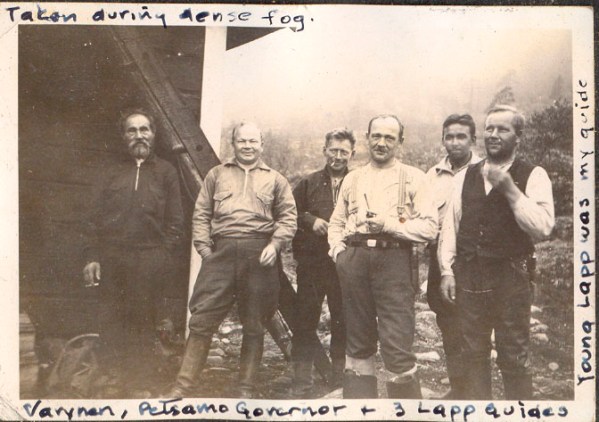
From Helsinki he headed to north through Lapland to the Petsamo area with numerous stops along the way. He took many photographs of the people he met and with engineers and workersthose who were involved in searching for the site to develop the mine, as noted in this photographic collection.
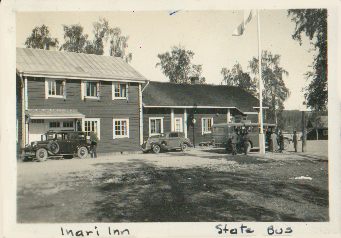
All the photographs in this blog were taken by Dad.
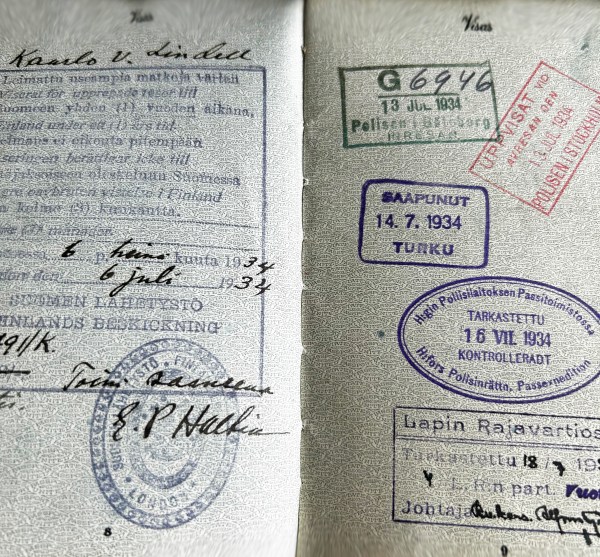
A page from Dad’s passport
State bus on the right.
Dad spent the entire summer of 1934 in northern Finland. In early September having accomplished the task set by Mond Nickel: that of opening a nickel mine in Petsamo. He then returned home to Canada.
The trip to England and Finland was the first of his many overseas trips. In some ways it may perhaps be the most important one of his forty year career as a mining engineer. (1930-1970)
Important Facts About Petsamo and the Nickel Industry in relation to Finland as noted in Wikipedia
Nickel had been discovered in 1921. In the 1930s Inco had invested several million dollars developing valuable nickel deposits in the Petsamo district of northern Finland. In 1934 the Finnish government awarded the mining rights to the British Mond Nickel Co , then a subsidiary of International Nickel ( Inco) that founded Petsamo. Nickel became commercially available in 1935.
“Petsamo nickel mine was the second biggest in the world.”
During WW2 (1941-1944 )the area of Petsamo was used for attacking Murmansk and then captured by the Red Army in 1944. In 1947 after the Paris Peace Treaty the area was incorporated into the Soviet Union and became known as Pechanga, As a result of this agreement Finland no longer had access to the Barents Sea, a body of water that did not freeze in wintertime. A huge loss for Finland.
Would my 19th-century ancestor Sophie Bruneau Huntley be posting pictures on social media, taking selfies and showing off her new purchases if she were alive today? I think the answer is, maybe yes!
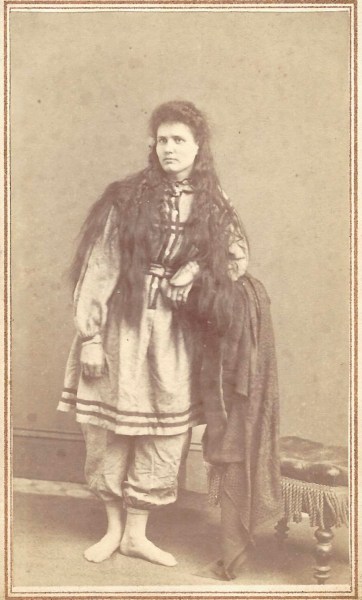
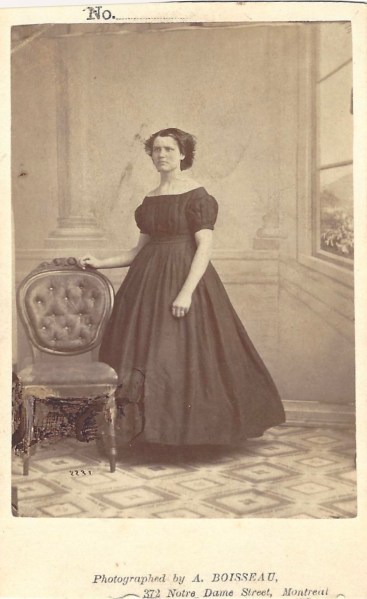
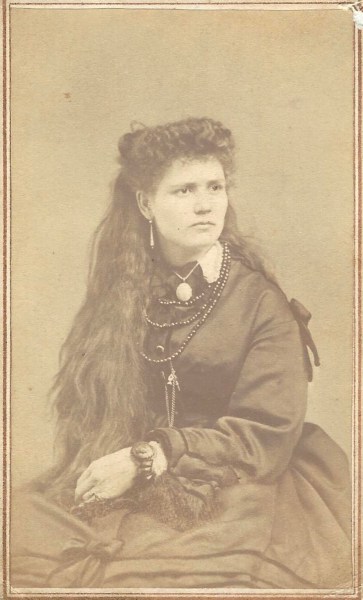
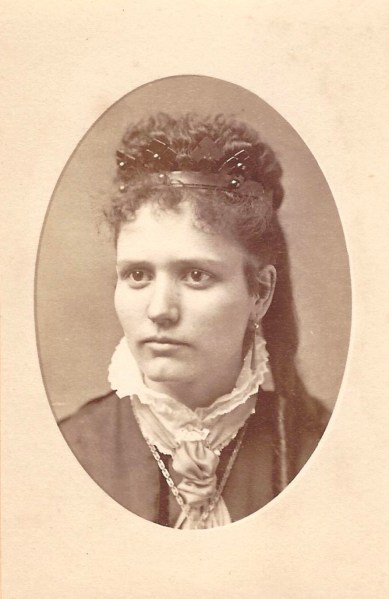
Sophie was born in 1847, so all her early pictures were taken in photographic studios. These were not spontaneous pictures but rather specific setups with long exposures. There are several pictures of Sophie in the family photo albums. Many were taken in New York. My favourite is Sophie in a bathing costume displaying her very long hair and bare feet. There were no mischievous smiles but rather hard stares. Still, it appears she had fun during her photo shoots.
Sophie Bruneau
My great-great grandparents Barnabe Bruneau and Sophie Marie Prudhomme had 13 children and Sophie was number eight. She lived with her parents on their farm in St. Constant, Quebec until after the 1871 census. Pictures from New York studios came soon after. I assume Sophie worked in New York as a teacher or a French governess like her sisters, Virginia and Elmire, when she arrived in the United States in 1875 at 27 years old.
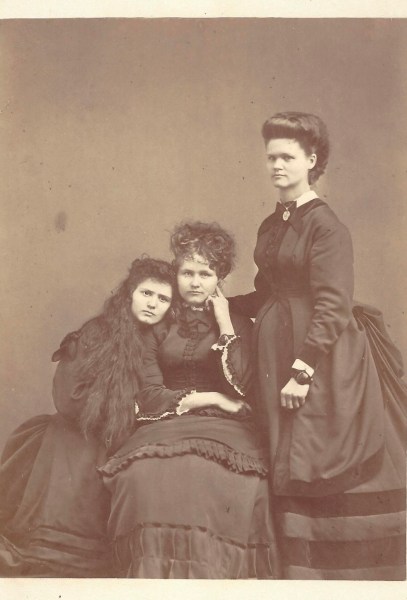
Sisters: Sophie, Helene & Mathilde
Sophie in New York
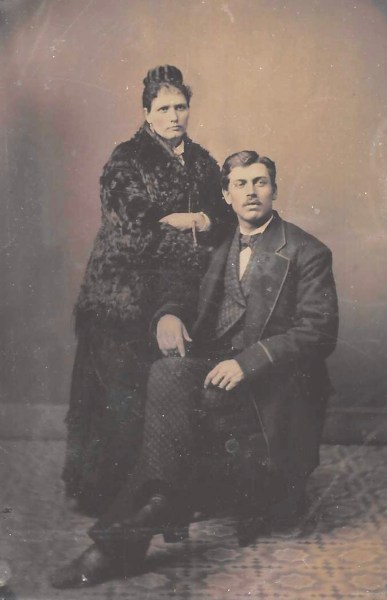
Sophie and her sister Elmire, married two Huntleys, Washington and Wallace? (Walworth). I assumed that they were brothers who married sisters. On family trees and photos he was called Wallace but it seems he was George Walforth Huntley (1854-1933), Washington’s younger brother and seven years younger than Sophie. Andrew Washington Huntley Elmire Bruneau’s husband was born in Mooers NY to Andrew Huntley and Calista Blodgett and there was a George Walworth Huntley in the family. If this is Sophie’s husband, they could also have met because her sister Aglae was living in Mooers Forks, New York with her husband.
Sophie and George W. Huntley
Sophie, Elmire, and their husbands lived in several places in the United States but ended up in Los Angeles.
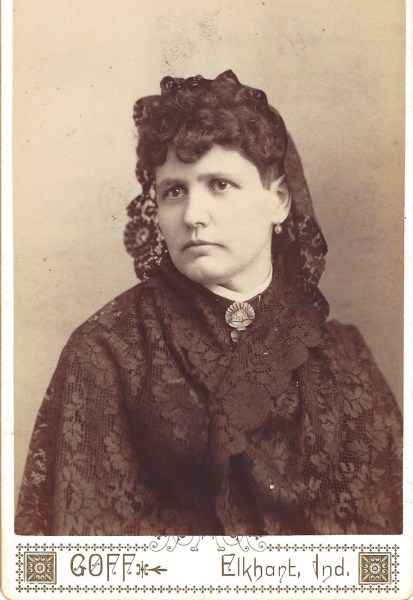
Sophie and Walworth lived in Elkhart, Indiana as Sophie is mentioned in the Personal and Society column of the Indianapolis Journal, “Mrs. George W. Huntley is spending a month in Montreal.” The beginning of the column discussed women’s dress which probably interested Sophie. “What with shirtwaist blazers, neckties and caps the women, middle-aged and young are fast becoming what Light facetiously denominated “self-made men.” George was a railroad conductor and owned his own house according to the 1900 census.
Sophie Huntley
They later lived in Toledo, Ohio where George was a customs collector and finally moved to Los Angeles, California. Sophie became a naturalized American because her husband was a US citizen.
They never had any children.
Sophie Bruneau Huntley
Her age was fluid in all the documents. Her husband was seven years younger but sometimes she was younger and sometimes the age difference was much smaller. Her death record in December 1921 said she was 68; in the 1920 census, she was only 63 while actually being 74.
A death notice in a Los Angeles paper, “Sophie B. Huntley died December 28, 1921, beloved wife of George W. Huntley, funeral from residence La Veta Terraces.” Her death notice was also in Elkhart, Indiana and Toledo, Ohio newspapers. George continued to live in Los Angeles with his housekeeper Mary Dietrick until his death in 1933.
Notes:
“Canada Census, 1871”, , FamilySearch(https://www.familysearch.org/ark:/61903/1:1:M4KT-F5V : Sun Mar 10 23:41:04 UTC 2024), Entry for Barnabe Bruneau and Sophie Bruneau, 1871. Sophie 23 at home no occupation.
California, County Birth and Death Records, 1800-1994″, , FamilySearch(https://www.familysearch.org/ark:/61903/1:1:QG49-NZN3 : Sat Mar 09 23:29:28 UTC 2024), Entry for Sophie B Huntley and Barnabee Barneau, 28 December 1921.

 Genealogy Ensemble