The Other Side of the Street: a story inspired by Lovell’s Directory

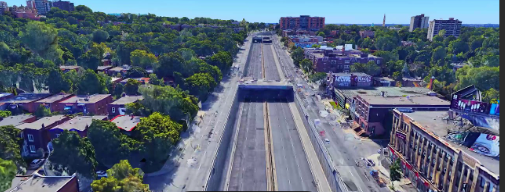
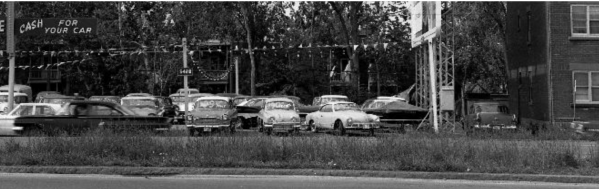
Decarie between Isabella and Dupuis, June 1961. Archives de Montreal VM105-Y-3 545 001-010. My back porch is somewhere in there.

I spent my elementary school years living on Coolbrook, a one-way street in the Snowdon district of Montreal, adjacent busy Decarie.

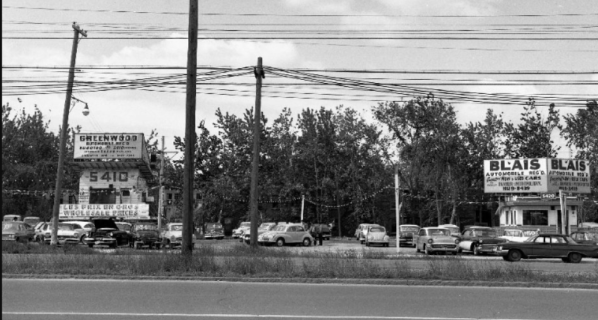
Before Decarie became “the trench” in time for Expo 67 it was a wide boulevard with a stretch of storefronts on the east side of my area including Young’s Vegetable Market and Green’s Pharmacy; and on the west side right behind my upper duplex apartment were a few used car lots as well as one empty lot where we children sometimes played. This lot, I remember, was strewn with dirty old toilet bowls and big baffling, almost supernatural chunks of quartz, but also sprinkled in between with enchanting pink hollyhocks and charming pussy willows. 1.

In those early days, I would cross Decarie at Isabella and skip down a few steps to the basement Decarie Handy Store to spend my 25 cent allowance on, usually, a MacIntosh Taffy or Cherry Blossom, ten cents each in those days. Any extra pennies would go to Lik-M-Aid, a sour powder in a paper tube.

My allowance didn’t permit me to buy the giant, perhaps healthier, Fruit and Nut bar I so craved. It cost 39 cents and I never thought to save up week to week.

The major commercial area in the neighbourhood was one and a half blocks south, up an incline on Queen Mary Road. There was a Woolworth’s on the corner of Coolbrook and Queen Mary with a lunch counter that featured enticing ads for banana splits for, yes, 39 cents. Again, too expensive for me although I imagine I could have always asked my Mom to buy the ingredients and make me one. She wasn’t cheap like my accountant Dad, who made us sign for our meagre allowance in a little booklet he kept for the purpose.
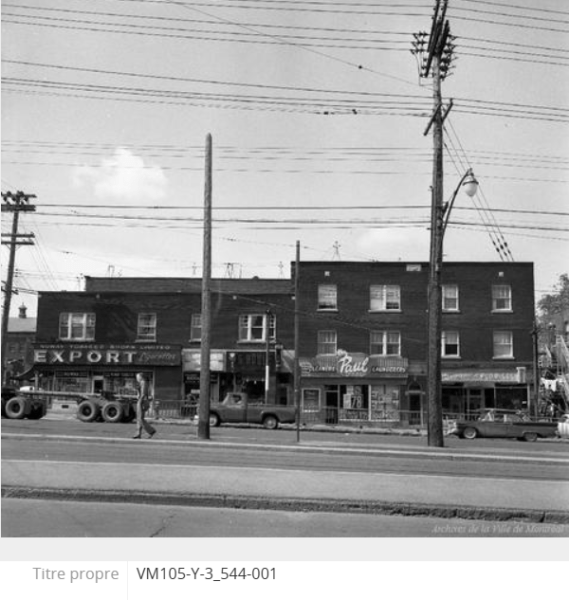
Nuway Tobacco Store with bit Export sign 1961, Montreal archives. There was a little hat shop tucked in beside it. An oddity in the 1960’s when hats were not in fashion especially among the young..

Every fall, we bought our school supplies at the Woolworth’s, sometimes a new pencil case. You could still get the old fashioned wooden ones with the sliding top or a newfangled plastic pouch with a zipper. I still get excited at the sight of an unsullied Hilroy scribbler.

The other stores of importance on Queen Mary was Black and Orange stationery shop, a dingy post-war style store but, still, all that potential in the pens and paper!

And the Zellers further up towards Cote des Neiges, also a bit of a dust bowl. Morgan’s Department store had a small shiny two story branch on Queen Mary, but that store was of no significance to me although my brother, fooling around with friends, once kicked in their showcase window.

And a little further up the street was the NDG library for boys and girls where I borrowed the horsey tome King of the Wind by Marguerite Henry over and over.

Yes, I remember the stores in my area with varying degrees of yearning, for sugar and for learning, but when it comes to the block of Coolbrook on which I lived, I only have half a memory of it.

That’s because I don’t recall one person, not one, who lived on the other side of the street. I suspect no children lived across the street in the 1960’s. Maybe whoever owned those duplexes refused to rent to families with children. And it was the baby boom era!
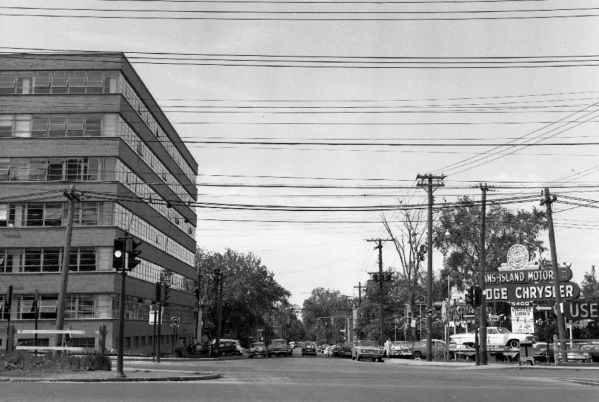
Corner Isabella and Decarie. Archives de Montreal. This was taken a few yards away to the right of the Decarie Handy Store.

Our duplex block of four homes, two lower, two upper, was one of a stretch of five or more owned by the same man, an unpretentious French Canadian, a Monsieur D. who dressed like a hobo. My mom also said he thought I was the loveliest little girl, so kudos to him. Monsieur D. was very cheap, it seems. He painted all the doors of his brown/red brick buildings dark brown and all the porches grey, casting a gloom over the entire block. He must have got a deal on paint, my mom said.1
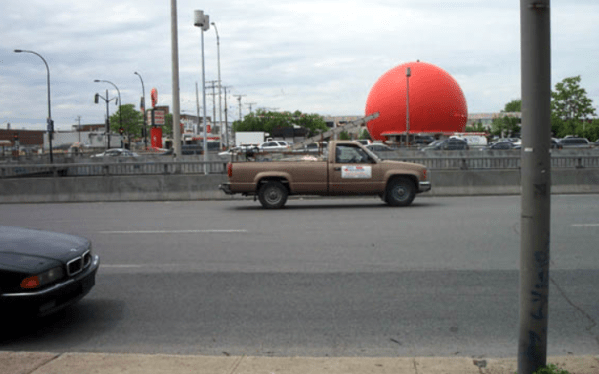
Gibeau’s Orange Julep from other side of the trench. wikipedia commons
I lived smack in between two of Montreal’s most iconic structures, the Orange Julep
and the Snowden Theatre, below, in an otherwise dreary-looking neighbourhood.
I visited Orange Julep but once. The drink tasted sulphury to me.
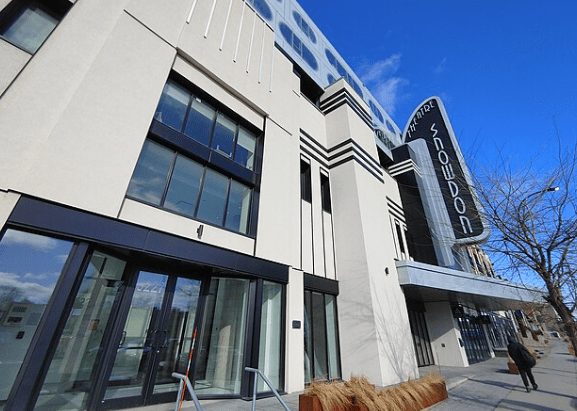
It’s a condo today after lying in disrepair for ages. I saw the Lippizanner movie there.
Also maybe Sound of Music. I didn’t see many movies as a child.
Children were banned from theatres until 1962 in Quebec due to the Laurier Palace Fire of 1927

It didn’t help that in those days no one bothered to decorate their upper or lower balconies with pots of flowers except for the Italian man a half dozen doors down living in a gaudy new duplex (Lovell’s reveals he was a landscaper) and an unknown family in one of the few stand-alone houses on my street, up near Queen Mary Road, who had a very splashy flower garden in summer. One year it snowed in the middle of May and I recollect the sight of a lovely row of red tulips with a cushion of white on top as I passed this tiny cottage on my way to the Nuway Tobacco Store at the corner of Decarie and Queen Mary to buy my mom a carton of Du Maurier cigarettes.

Luckily, the trees along my stretch of street were tall and leafy and during the hot, humid Montreal summers the setting sun dappled the baking macadam with light. I could reach out over my balcony and touch a branch of my very own mystic maple. I do suspect the tree’s leaves protected me – a bit – from the ubiquitous 1960’s air pollution and the lead-laden fumes of the pink, turquoise and fire-engine red Corvairs, Thunderbirds and Mustang convertibles idling on the street below. These automobiles belonged to visitors as few families on our side of the street actually owned a car. Kids cost money, after all.

A glance at Lovell’s Directory on BANQ reveals to me the familiar surnames of families living around us. I recognize, too, the phone numbers, as I dialed many of them over and over during my childhood. The family names from across the street are new to me, of course. Mostly French, some English and one Finn. The breadwinner of the family is the only one listed on Lovell’s, but had any children lived there, French or English or Finnish, I would have seen them playing on the short sloping driveways or on the sidewalk or at least walking to school.

Yes, we kids played out on the street in those days, chanting to skipping games like“double dutch” on those short sloping driveways, bickering over the rules of hopscotch or “yoki” on the sidewalk. The boys sometimes played ball hockey right on the road.2

However, when it comes to the other side of the street, I have no recollection at all. Ain’t memory funny.

I recall not one incident, not one visual. Nothing has imprinted itself on my brain for life, such as when my neighbour’s German Shepherd got hit by a truck late at night and my friend’s mom sobbed loudly on the street and there was leftover blood and sawdust on the curb the next morning.

I don’t recall one bit of gossip about anyone on the other side of the street. On our side plenty: “Did you know the L family’s kids are ONLY fostered? Did you know that in the S family, the Mom makes more than the husband?” Did you hear that the W sons went with two girls they hardly knew on a car trip out West? Real shameful stuff it was!

I don’t even remember seeing anyone out shovelling the walk across the street in winter. And I stared at that side of the street for seven years from my tiny bedroom window. No one picking up garbage strewn around by a stray dog. No one leaving the house in the early morning, rubbers on feet, leather briefcase in hand, felt fedora on brylcreemed head to take the brown and yellow No. 65 bus to some downtown skyscaper like Place Ville Marie.

I have to smile: the 1966 Lovell’s reveals that there were quite a few vacant homes across the street from us. Is it possible that it was harder to rent that block on that side of Coolbrook because of us? Because there were so many boisterous, loud, unruly children (I count about fifteen) playing out on our small section of Coolbrook Street.

As in happens, in 1967, Expo year, while my British grandmother was visiting us from Malaya for the first and only time, my brother was playing ball hockey with a friend when he knocked over one of the Italian man’s pretty flower pots, red geraniums, I think, with a errant slap shot. Supposedly the man was enraged and ran out onto the street and hit my brother with a leather strap, the one and only genuinely violent act I ever heard of on our street- and, yes, it was on our side!

My grandmother, who herself had complained many times about the “shrill” Canadian children playing on the street, convinced my father to move out of the district and within months we were living in a smog-free ex-burb north of the city in a house with a huge yard with at least two weeping willows and more fir trees than I could count.

One broken porch ornament – and a rather Felliniesque incident – and the trajectory of my life took a dramatic turn, for better or for worse, who knows. For sure, my current Facebook friends would be totally different had my brother’s ball just skipped off the railing and missed that freakin’ flower pot! Life, just like hockey, can be a game of inches.

But, as someone who has lived in sleepy suburbs most of her life, I carry that time in the west end of the city deep inside of me, even if it’s only half a memory.

END

1. Our backyard area was especially ugly. It was expansive with a floor of gravel and dirt. Each family had a little yard, yes, with a grey fence about 15 feet by 25 feet, with grass. Our plot contained a giant tree, so no light, and nothing grew there despite my efforts at a garden. We neighbourhood girls would sling blankets over the fence and tie skipping ropes to the wires and play ‘horse.’
Right behind my backyard. Soon the apt at right would be domolished, I think, and that became the vacant lot

A newlywed couple moved in for a while and I recall one time watching from my second story back balcony as the young wife was chased off the porch by her husband who was holding a bucket of water. He caught up to her and swung the bucket and poured the it over her head. I could feel their euphoria. Oh, to be in love.

Beyond the yard was an over-grown alley way, my black cat, Kitty Kat’s, private jungle, where we once saw a pheasant that had flown down from the mountain, so said my mother, and beyond that alley the used car lot. The moms would let kids run wild while at play, as was the usual in the 1960’s, but they would dutifully call their children in for lunch from the backyard porches. One Mom had a bell.

Once I and a friend came upon a ‘hobo’ sleeping in one of the used cars behind our house. He had one leg and he said he was a war veteran. I stole a rather large chunk of left-over roast beef for him, from my house. When my mom wondered what had happened to her leftovers, I told her that I had given it to a stray dog – and she laughed. No fool I.

2. I recall once and only once a huge slimy Norway rat scuttling past us into the drainpipe a we played.. How did that huge thing fit in that tiny hole? A favourite game was yoki ( I thought Yogi) also called elastics or Chinese skipping, where we used a sewing elastic and manipulated it around our lower leg to rhymes. Classic skipping was popular, too, double dutch, etc. “My mother and your mother were hanging out the clothes. My mother gave your mother a punch in the nose. What colour was the blood.” This rhyme sticks in my head probably because my French Canadian mother wasn’t friends with any of the other mothers on the block. She had little in common with them, being French and also a working mother who played competitive bridge at the tony Boulevard Club.

There was a definite pecking order among the children playing on our section of the block in the form of arguments, fights, churlishness, and a lot of one-upmanship. I was a passive observer type, definitely at the lower end of the hierarchy. A good thing too: I recall the two alpha-girls in my group viciously fighting and literally pulling out handfuls of each other’s hair.

My brothers did play ON the road, classic road hockey which was safe on our quiet one-way street. One day a car honked at them and just as they were about to give the guy the finger they noticed it was John Ferguson, the legendary Canadiens enforcer. A rather dishevelled looking man whom we sometimes saw around was related to a playmate of mine. It was Doug Harvey, the Canadiens legend.

Pierre Lalonde, a young teen idol at the time, lived in the Italian man’s place for a few years in the 1960’s. He seemed shy – but he owned two flashy convertibles, both neon aqua and two motorcycles. (I worked in the same building as he did in the early 80’s – a TV station – and lived in the same town as him, in the 1990’s, often seeing him at the pool – but never once spoke to him. I did walk his dog as a child.)

War-time Wedding

JeanMarie1915
Did they really get married on a Thursday?

That was the first question that ran through my mind as I began to try to verify what seems to be indicated by a wedding photo of Jean-Baptiste Hurtubise and Marie-Berthe Charette from my grandmother.

My grandmother’s handwriting below the picture indicates: “Mom & Dad Hurtubise, January 7, 1915.”

Census records from 1901 indicate that they were both 25 years old at the time,[1] another fact I wonder about.

Why would a young man of that age be free to marry and settle down when World War I was in full force? Perhaps this is an indicator of how remote the war seemed to Francophone families in Canada prior to the conscription crisis of 1917.

By that time my great-grandfather would have two children and wouldn’t be required to serve. My grandmother, their first child, was born twelve months after they married.

In addition to her parents’ wedding photo, my grandmother kept only two other pictures. One is a photo of a church, presumably where the wedding took place. The other shows four large church bells. Why are they important?

Turns out that the church in the photo still exists, and it still serves a Franco-Ontarian population! I found it by referring to the census showing Marie-Berthe, called Martha, living in Clarence Creek in 1911.

According to Kim Kujawski, Clarence Creek, which is near Ottawa in Ontario, was founded in 1853 by French Canadian farmers from St. Augusine Quebec. 

stefelicitedeclarencecreek

The Roman Catholic Church in that town is Ste-Félicité de Clarence Creek, and it originally opened on August 19, 1881.

At the time of Jean and Martha’s marriage, it had two steeples, but now the smaller steeple on the right side is missing. I know the church is the same one, however, because a duplicate of my grandmother’s photo appears on the history page of the parish website. [2]

I’m extrapolating from the facts, but it seems as though Martha’s family were among 170 that remained within the parish after 80 others left in 1908. The bells were part of a renewal show of strength two years later. The families expanded their church, bought the bells and hired famed Montreal decorator Toussaint-Xénophon Renaud[3] to renew the interior. His work can still be seen today.

Sources:

[1] Data from the 1911 Census of Canada: her birthdate appears on Enumeration District 21, Cumberland Township, Russell, Ontario, Sarsfield Village, Léonard Village, Bear Brook Village, page 7, line 48; his on Enumeration District 112, Cumberland Township, Russell, Ontario, Sarsfield Village, Léonard Village, Bear Brook Village, page 3, line 25

[2] Paroisse Ste Félicité – Ste-Félicité de Clarence Creek (1855) http://www.paroissestefelicite.ca/fr/Historique_30/Stefelicite-De-Clarence-Creek-1855_44, written in 2011, accessed on September 17, 2015.

[3] Webpage http://txrenaud.com/, by Marc Renaud in 2008, accessed on September 17, 2015.

Easter Celebrations

I am spending this week madly rushing around to get ready for Easter Sunday. My husband is Greek and we celebrate Easter with Greek traditions on this day. Forty guests are expected at our house for the celebrations.

The star of the show will be a lamb on a spit. The “lamb team” starts early in the morning to prepare the lamb, filling the inside cavity with herbs, onions, and lemon, and then sewing it up. It will turn on the spit for many hours. We used to take turns turning the lamb but now we have an electric motor to do the job.

Courtesy Greek Boston

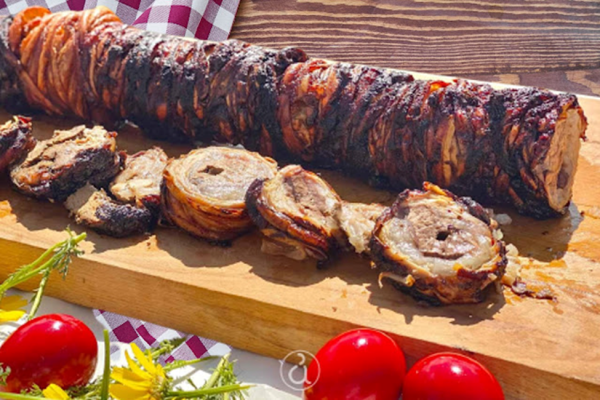
My husband and his uncle will also prepare the kokoretisi early Sunday morning. Kokoretsi is also roasted on the spit. Kokoretsi is a traditional dish of lamb intestines wrapped around seasoned offal, including sweetbreads, hearts, lungs, and kidneys.1 Everyone loves it, although I have to confess that I do not find it appetizing. Surprisingly none of the younger people in our family are interested in learning how to make it.  In a decade or so, kokoretsi may no longer be served.

I found a picture of kokoretsi on the My Greek Food Recipes blog, one of my favourite sites for Greek recipes:

Courtesy My Greek Food Recipes©. All Rights Reserved.

Of course, the lamb will be accompanied by many Greek favourites such as tzatziki, spanakopita, lemon potatoes in the oven, and more.

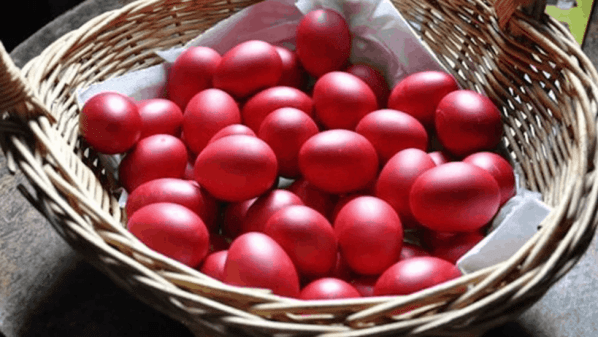
Another highlight of the day will be the Tsougrisma, a game played by bashing eggs together. Easter eggs are dyed red, representing the blood of Christ shed on the cross.2 Once dyed, red eggs are woven and baked into tsoureki, a three-braided Easter bread representing the Holy Trinity.3 The rest of the eggs are used as a table decoration and are used to play Tsougrisma, which means “clashing” and “cracking” in Greek. The cracking tradition symbolizes the resurrection of Christ and birth into eternal life.4

Courtesy Greek City Times

To play the game, each players holds an egg, finds another player and taps the end of the egg lightly against the other player’s egg. They then tap together the ends that are not broken. They then move on to other players until both ends of their egg are broken. The person who has an unbroken egg at the end wins the game.5

Of course, the Easter Bunny also visits us on this important day. The children are always very excited to hunt for Easter eggs in the back yard.

I am really looking forward to this day of celebration with our family and friends.

  1. Wikipedia, Kokoretsi, https://en.wikipedia.org/wiki/Kokoretsi, accessed 16 April 2025
  2. The Greek Food Shop, How to play the red egg game, 13 April 2019, https://greek-food-shop.com/2019/04/13/the-best-greek-easter-tradition-how-to-play-the-red-egg-game/?srsltid=AfmBOop0byvUV9-0uNZ0blsMeOGivhbWh8gIqWrTxx9w3PV9Rd6qTRcE, accessed 16 April 2025
  3. The Spruce Eats, Greek Easter Egg Game, https://www.thespruceeats.com/greek-easter-egg-game-1705738, accessed 16 April 2025
  4. The Spruce Eats, Greek Easter Egg Game, https://www.thespruceeats.com/greek-easter-egg-game-1705738, accessed 16 April 2025
  5. The Spruce Eats, Greek Easter Egg Game, https://www.thespruceeats.com/greek-easter-egg-game-1705738, accessed 16 April 2025

Remembering the Food Building at the Ex

I’ve never liked the taste of pink bubble gum, but I ate it anyway for years during my childhood and early teen years, just so I could blow bubbles and read the comic strips tucked inside.

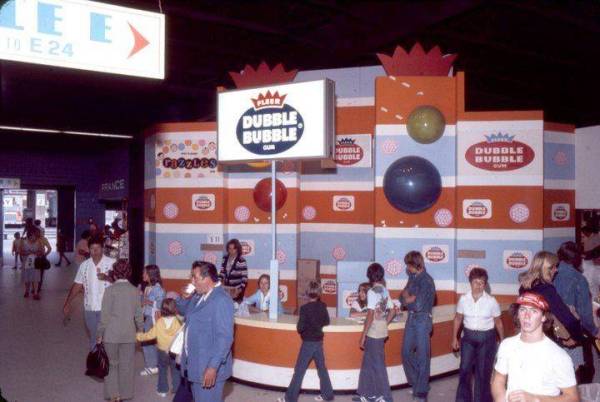
We used to get free samples from the Dubble Bubble booth in the Canadian National Exhibition (CNE, or the “Ex”) Food Building. I loved the experience so much that I insisted on eating only that type of gum for the rest of the year.

Early 1970’s: Dubble Bubble Booth in the CNE Food Building.
Credit: Old Toronto Series, https://www.facebook.com/groups/1579752435674910/posts/3588833604766773/

Same with chocolate bars. No one could get me to eat anything other than Neilson brands, because they gave me a whole bag full of samples one day a year. My then love for Crispy Crunch, Cinnamon Danish, Jersey Milk and various other sugary treats began at the Ex.

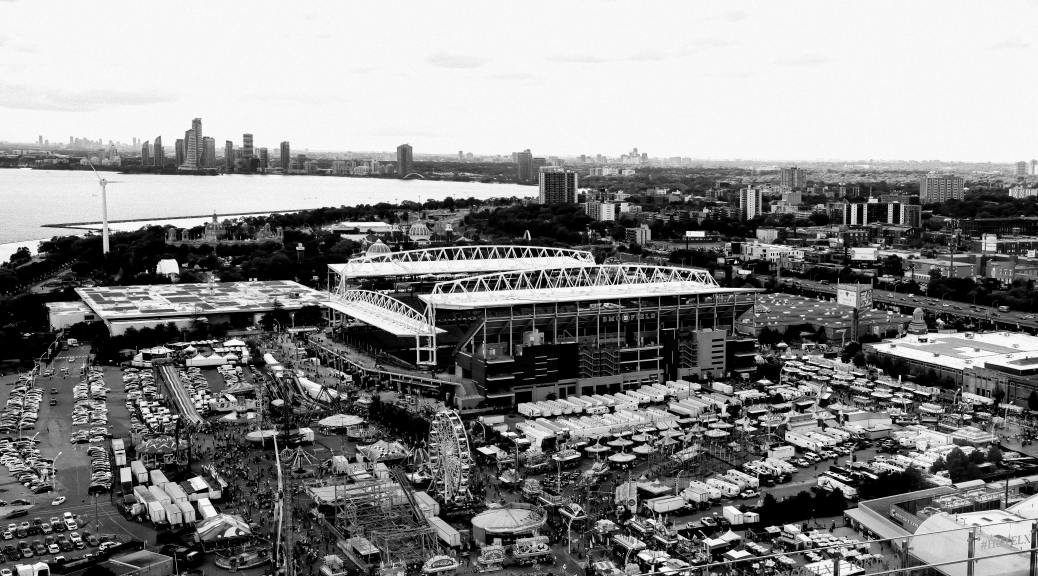
Wikipedia has a good summary of the fair, which still takes place every year.

“The Canadian National Exhibition (CNE), also known as The Exhibition or The Ex, is an annual fair that takes place at Exhibition Place in Toronto, Ontario, Canada, on the third Friday of August leading up to and including Labour Day, the first Monday in September. With approximately 1.6 million visitors each year, the CNE is Canada’s largest annual community event and one of the top fairs in North America. 1

We went to the Ex every September long weekend for four or five years in a row in the late 1960s and early 1970s because it was a cheap way for my very young parents to entertain two and then three young children. Most of the day was spent gorging our faces in the food building, but we also got to ride rides in the midway, see horses, milk cows and watch the air show.

I like to think that we also read some of the historical plaques on site. According to Jesse Munroe’s 2021 thesis, there are more than a hundred, but if we did, I don’t remember them. Munroe writes that I’m not missing much, given that they highlight a series of colonial events rather than the original people’s experiences that are most important.

The waterfront was always a gathering place where countless First Peoples came together to trade. Algonquian-speaking Anishnaabe held the lake and its islands in high esteem as a source for both food and spiritual renewal.2

My childhood memories of the food building certainly represented spirtual renewal, but looking back on it, I don’t think they encompassed anything that I now consider food. In those days, various companies offered samples of hotdogs, spaghetti, perogies, pizza, waffles and other meal-like substances, but most of the goodies I remember were candy or dessert.

We stopped going to the food building when my youngest sister was still so young that I’m not sure she even remembers it. Given that I used to leave with a massive bag of sugary substances that would last almost to Halloween, her long-term health is probably better off.

1https://en.wikipedia.org/wiki/Canadian_National_Exhibition, accessed April 9, 2025.

2Munroe, Jesse Allan. “Mistakes by the Lake: Making and Unmaking Space at the Canadian National Exhibition.” University of Toronto, 2021. http://central.bac-lac.gc.ca/.redirect?app=damspub&id=bc2d5a6c-953d-488a-9b0b-7b2d5eb8a1a9, accessed April 9, 2025.

Memories of Mom

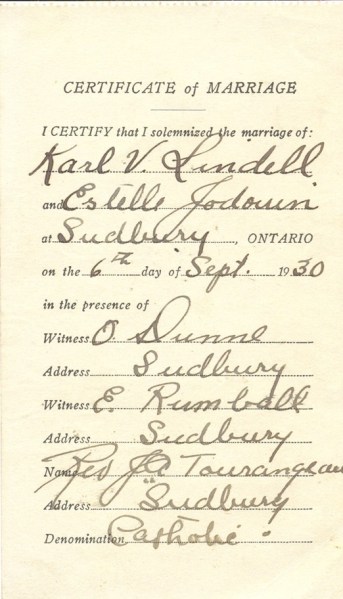
Over thirty years have passed since my Mom died. Lately, she has been in my thoughts as I ponder a sad part of her life. Estelle Anita Jodouin, the eighth child of Louis Joseph Jodouin and Louisa Seraphina Fortin, came into this world on January 22, 1909, in Sudbury, Ontario.

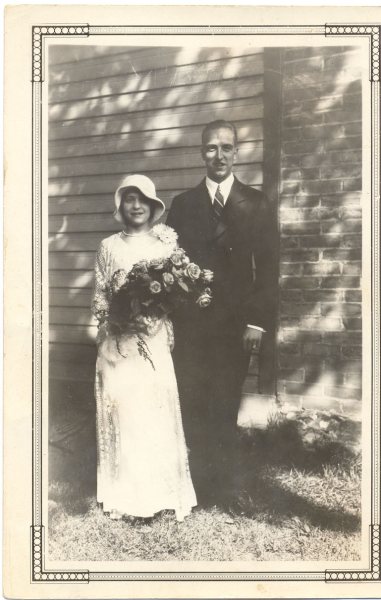
During Labour Day weekend of 1930, at the age of twenty-one, she married a young Finnish mining engineer, and they settled in the area. Over the next eleven years, they had five children. Aunts and cousins were always around to give a helping hand with caring for the children, and they were a tremendous support for Mom, as at the time, Dad was working shifts.

                          Mom and Dad on their Wedding Day                              

In 1945, Dad was offered a job in Asbestos, Quebec, a mining town in the rolling countryside of the Eastern Townships. It was a promotion for him. It meant he would no longer be working shifts, but, rather using his skill at designing a shaft for the development of underground mining. At that time, the company had been concentrating on open pit mining of asbestos, a fibre that does not burn and is used in firefighters’ gear, brake linings in cars and home insulation. It was a job for which Dad was well qualified.

It was a difficult move for Mom. She did not know a soul, and her family support system had vanished. She missed her parents, sisters and nieces.  Deep down, I do believe she was heartbroken and had difficulty coping with the move, far from family.

 In the summer of 1947, Granny, her mother, and Aunt Ted drove down to Asbestos for a visit. Mom was delighted to welcome them. Shortly after their visit, Mom was hospitalized in Montreal for an extended period. Dad visited her regularly and made arrangements for Mrs. Robinson, an elderly lady, to care for us. ( I never knew the reason for the hospitalization as I was 7 years old at the time, and I still do not know all these years later. Was the hospitalization a mental breakdown or perhaps the loss of a child?)

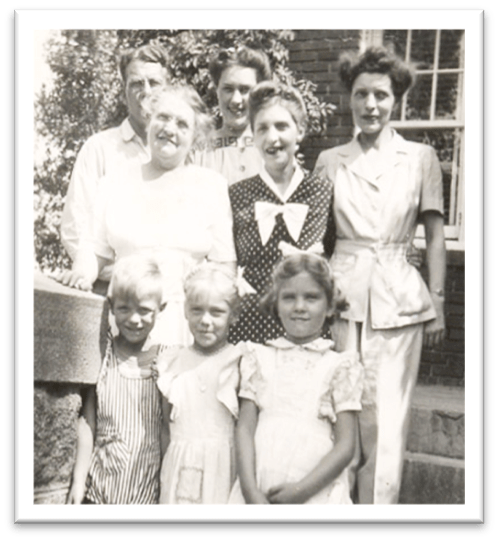
Uncle Leo, Aunt Dickie, Aunt Ted, Gran, Mom,

Paul, Claire,and Cousin Denise

In the summer of 1948, Mom drove my sister Ruth, brothers John and Paul, and me to Sudbury to visit family. On the way, we stopped in Pembroke and visited Mom’s spinster Aunts and continued to Sudbury. Mom had learned to drive at the age of fourteen and was undaunted when undertaking such a long drive. After seeing the scorched land and forests fires we arrived and greeted relatives with open arms and warm hugs. Mom had finally arrived home.

We spent time with Granny Jodouin, aunts, uncles and cousins which created many fond memories. Mom was happy.

On our way home, we stopped in Senneville and visited with Aunt Aline, one of Mom’s older sisters and Uncle George, an avid stamp collector, where I learned about stamp collecting. We then continued our way home.

Around this time, (1948-1949) I vividly remember Mom sitting at the typewriter in the solarium where Dad had a large desk with his CB (Citizen Band Radio). She would be typing letters to Gran and her sisters. At Christmas time she would be in the kitchen making fruitcake to send to family in Sudbury.

For a long time she hung on to her thoughts of home and the family members she had left in Sudbury, so far way.

Her life and our family’s lives were changed. In January of 1950, when at the age of forty-one, Mom gave birth to a little sister, Vicky, while at the same time, Dad received a big promotion. Life was taking on new challenges. These positive events were the beginning of a new outlook on life for Mom. Her loneliness was slowly disappearing. She now had new challenges.

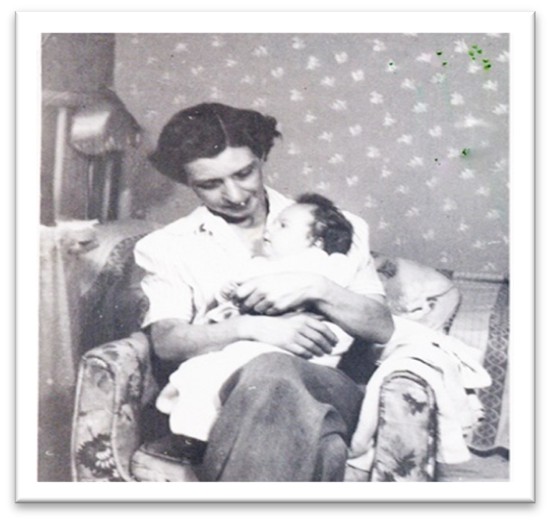
Mom and Vicky

Vicky’s arrival was a blessing for all of us. At 10 years old I now had a real live doll to care for.

Mom had help when a young girl, Ghislaine, came into our lives. She developed a close bond with Vicky, and Mom’s overall health was much better. Her loneliness no longer seemed to trouble her. Her health improved and before long she was able to travel. She visited New York City and attended Broadway plays , enjoyed shopping at Berdorf-Goodman, along with company jaunts to the Carribbean .

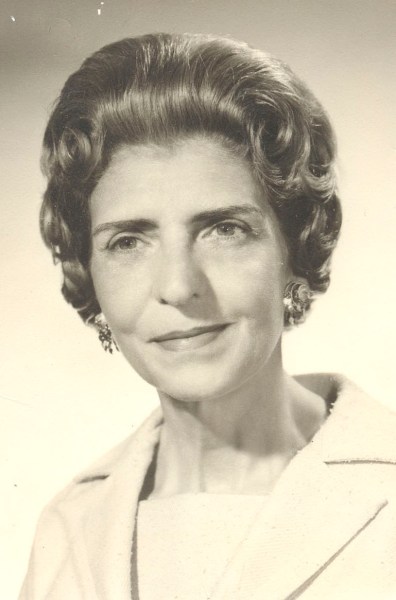
Mom in 1963

Over the years she visited Africa, Europe, Japan and became a world traveller with Dad.

Mom’s life was filled with many ups and downs, but with Dad’s support she overcame her difficulties. Her life had taken on a new look, and her loneliness was a thing of the past. She enjoyed life to the fullest!

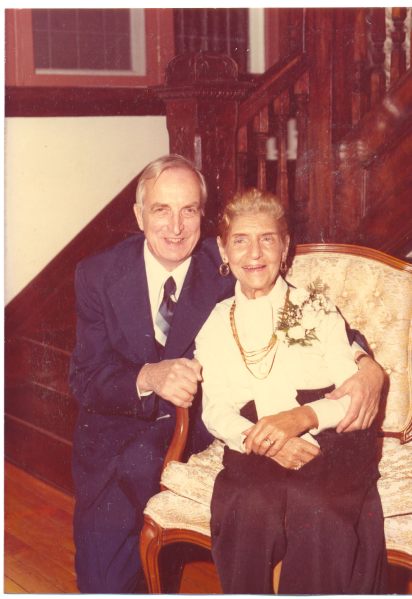
Mom and Dad on their 50th Wedding Anniversary in 1980