
Category Archives: Aboriginals

The Gaspé Peninsula

The Province of Quebec is breathtakingly beautiful.  I have been all over the province and I am constantly amazed.

One of my favourite trips was when, in 1982, after we had moved into our first house, we decided to leave all the angst of being a first-time home owner at a young age and go on a road trip. We decided to visit the Gaspé Peninsula. We simply loved our trip. The countryside was stunning and the Gaspésians showed us a warm welcome.
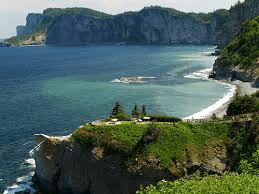
Courtesy Tripadvisor

Did your ancestors settle or live on the Gaspé Peninsula? The first European to arrive in the Gaspé was Jacques Cartier when he landed in Gaspé Bay in 1534 to plant a cross and claim the land for the King of France. The Iroquois occupied the area. It is believed that the name Gaspé derives from a Micmac word meaning “land’s end.” 1

When the Gaspé belonged to New France, there were only about 400 fishermen living there. Harvests were plentiful and the coastal high winds were excellent for drying cod. However, James Wolf and his forces attacked the residents in 1758, destroying their homes and possessions and sending them back to France.2

Still, some Gaspesians managed to hide from the authorities and remained on the peninsula until 1763 when it became a British territory. They were joined by Acadians who fled from the British who had implemented a compulsory deportation order for all Acadians in Nova Scotia. In 1784, a significant number of Loyalists, fleeing the American Revolution, settled on the Gaspé Peninsula.3

If your ancestors came from the Gaspé, here are some sites that can help you with your research:

The Quebec Genealogy eSociety has extensive links and resources (requires a membership). Some of the resources include births, marriages, deaths and some census records, and newspapers: https://genquebec.com/en

GoGaspé is a site devoted to the Gaspé Peninsula with a tab that directs you to history and genealogy links and resources. Local Gaspesian genealogists and historians have contributed to this site: https://gogaspe.com/

Jacques Gagné’s compilation about the Channel Islanders on this blog: https://genealogyensemble.com/2016/08/21/the-channel-islanders-of-eastern-quebec/

Jacques Gagné’s tips on researching your Gaspé ancestors on this blog:https://genealogyensemble.com/2019/01/20/tips-on-researching-gaspe-ancestors/

Musée de la Gaspésie: https://museedelagaspesie.ca/en/index.php

Sources for information about settlement of the Gaspé Peninsula.

  1. The Canadian Encyclopedia, Lee, David, 7 February 2006, https://www.thecanadianencyclopedia.ca/en/article/gaspe-peninsula#:~:text=In%201784%20about%20400%20English,dependence%20on%20the%20fishing%20industry, accessed 11 February 2025
  2. The Canadian Encyclopedia, Lee, David, 7 February 2006, https://www.thecanadianencyclopedia.ca/en/article/gaspe-peninsula#:~:text=In%201784%20about%20400%20English,dependence%20on%20the%20fishing%20industry, accessed 12 February 2012
  3. The Canadian Encyclopedia, Lee, David, 7 February 2006, https://www.thecanadianencyclopedia.ca/en/article/gaspe-peninsula#:~:text=In%201784%20about%20400%20English,dependence%20on%20the%20fishing%20industry, accessed 12 February 2012

Slavery in New France in the 17th & 18th Centuries

August 1, 2020, Emancipation Day in Canada

In 1734, a huge fire destroyed part of Montreal. Marie-Joseph Angélique, a black slave, was accused on setting the fire deliberately as she tried to escape from her owner. She was arrested and found guilty, then she was tortured and hanged and her body was burned.

Angélique was one of many slaves, some black, others Indigenous, in New France.  Slavery was legal in Canada for more than 200 years. The Slavery Abolition Act brought an end to chattel slavery throughout the British Empire, coming into effect on August 1, 1834 in Britain, Canada, and several other colonies.

The attached PDF  Slavery in New France   is a 23-page research guide to the topic of slavery in New France in the 17th and 18th centuries. It contains the following contents:

Page 2     A link to a complete online copy of the book L’Esclavage au Canada français – 17e et 18e siècles” (in French) Author: Marcel Trudel – 474 pages Publisher- Les Presses Universitaires Laval, Quebec, Canada 1960

Pages 3-17    A List of authors who have written about slavery in Canada

Page 17- 20       Repositories in Quebec

Pages 21-22     Various online sites

Pages 22-23     Publishers


The Trading Companies of New France

The fur trade between the First Nations people of North America and the Europeans was central to the history of Canada and the United States. The commerce in furs made fortunes, it changed the lives of the First Nations people forever, it encouraged the French to explore deep into the interior of the continent, and it gave work to hundreds of people.

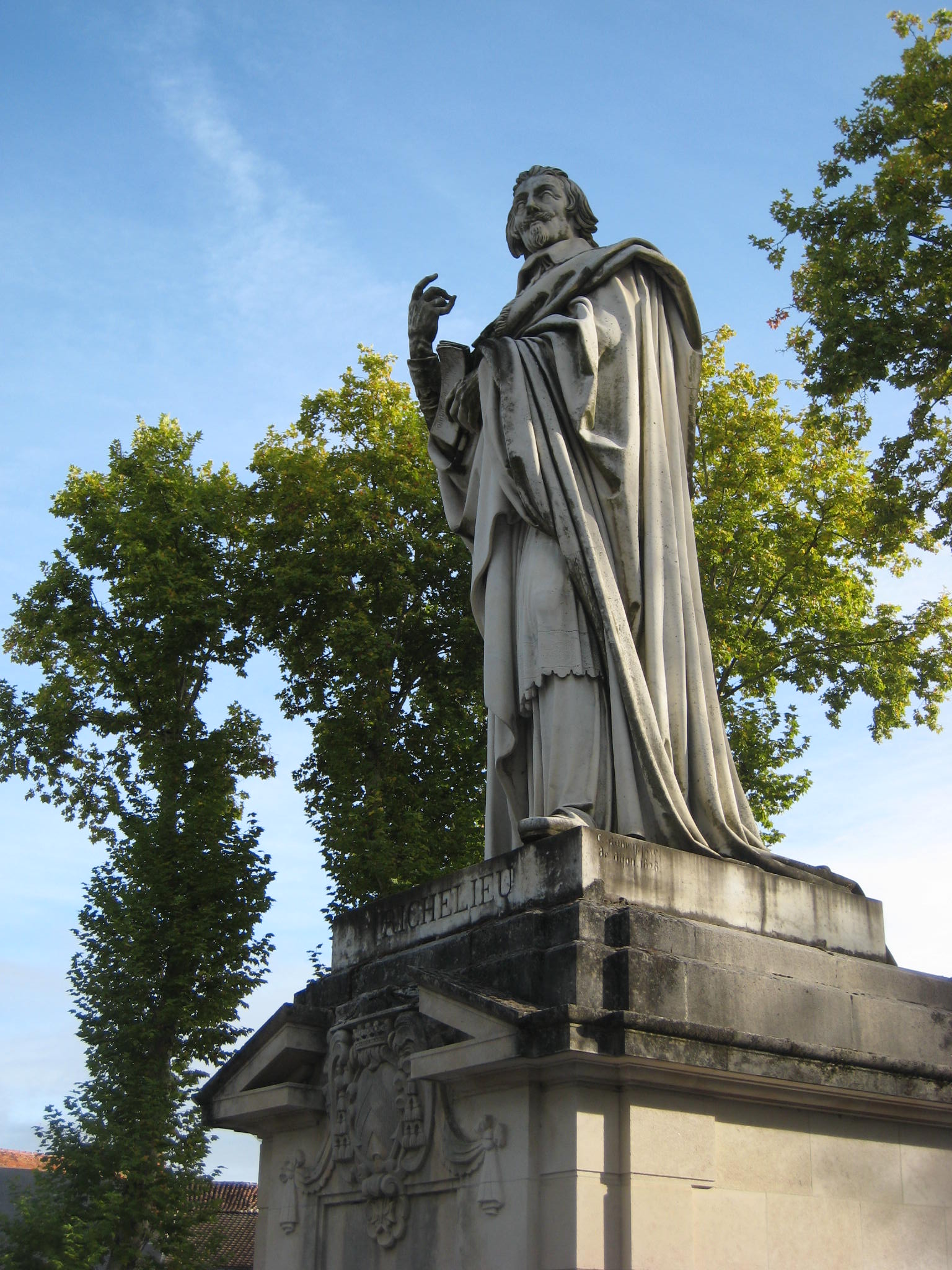
Cardinal Richelieu

The names of some of the companies that controlled the trade in beaver pelts are still remembered today. The early trading companies that operated as monopolies in the days of New France included the Compagnie des Cent-Associés (Company of One Hundred Associates), 1627-1645, and the Compagnie francaise des Indes occidentales (French West India Company), 1664-1674. Later, the North West Company, 1789-1821, and the Hudson’s Bay Company, 1670-1870s, competed for dominance.

The Company of One Hundred Associates was created in Paris in 1627 by Armand Jean Duplessis, better known as Cardinal Richelieu. Among the leading members of this trading company were explorers, fur traders, merchants, ship owners, bankers, governors of New France and Acadia. They included Samuel de Champlain, Martin Anceaume, Thomas Bonneau, Jacques Bulteau, Henry Cavelier, Antoine Cheffault, Sébastien Cramoisy. Charles Daniel, Jean David, Jacques Duhamel, Arnault Dumas, Thibault Dumas, Jean Guenet, Charles Huault, Pierre de La Haye, Gabriel Lattaignant, Claude de Launay-Razilly, Jean de Lauzon, Simon Lemaistre, Raoul L’Huillier, François de Magny, Adam Mannessier, Georges Morin, François Mouet, Antoine Nozereau, Jean Papavoine, Claude Potel, Guillaume Prévost, Isaac de Razilly, Claude de Roquemont, Jean Rozé, Charles de Saint-Étienne de La Tour, Jean Taffet and André Terru.

Perhaps your ancestor owned or helped to run one of these trading companies. Perhaps he was a coureur de bois who traveled by canoe into the interior of the continent to trade with the indigenous people, and perhaps he married an indigenous woman. Whatever your interest, the attached compilation can help you better understand the roles these companies may have played in your ancestor‘s life.

Click here: Trading Companies

Next week’s post will cover the ports of departure in France associated with the merchants who traded with New France. Following that, I will look at authors who have written about this period and archives where you can find more information.

See also:

“The Merchants, Fur Traders and Ship Owners of New France, part 1, A-G” https://genealogyensemble.com/2019/05/05/the-merchants-ship-owners-and-fur-traders-of-new-france-part-1-a-g/

“The Merchants, Fur Traders and Ship Owners of New France, part 2, H-Z” https://genealogyensemble.com/2019/05/10/the-merchants-and-fur-traders-of-new-france-part-2-h-to-z/

photo copyright Janice Hamilton