Dr. Joseph Workman, Pioneer in Treating Mental Illness

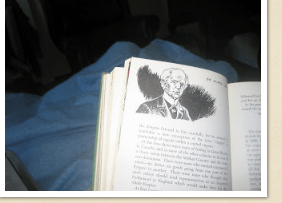
If you have been watching the miniseries “Alias Grace” on CBC television or Netflix, you may remember a scene featuring a grey-haired gentleman with long sideburns. That character was based on the real-life physician Dr. Joseph Workman, known as the Father of Canadian Psychiatry.

The television show is based on the book of the same name by Margaret Atwood, a fictionalized account of the life of Grace Marks, an Irish-born servant girl convicted in 1843 of a double murder near Toronto. Grace was held at the Provincial Lunatic Asylum in Toronto at about the time that Dr. Workman became superintendent of the asylum.

Neither the book nor the television show makes it clear whether Grace was insane, or whether she was guilty of murder. There is little doubt, however, that Joseph Workman was a kind and intelligent man who made important contributions to the treatment of mental illness. In fact, he came from quite an extraordinary family.

Joseph (1805-1894) was born in Ballymacash, near Lisburn, County Antrim, Ireland (now Northern Ireland). His parents were Joseph Workman Sr. (1759-1848) and Catherine Gowdie (1769-1872). Joseph Jr. was the fourth of nine children — eight boys and one girl. His only sister, Ann Workman (1809-1882), who married Montreal hardware merchant Henry Mulholland, was my direct ancestor.

The Workmans brought up their children to value hard work, education and Christian charity. Holding liberal views, they were members of the Non-subscribing Presbyterian Church of Ireland and they eventually became Unitarians.

The Workmans were not wealthy and they lived in a cozy cottage in the village, surrounded by fields and farmland. Joseph Sr. worked as a miller and as a teacher, then as land steward (manager) for a local landowner.

Joseph Jr. attended school around Lisburn and, after graduation, worked as a land surveyor for three years. In 1819, his oldest brother, Benjamin, immigrated to Montreal, where he became a teacher and newspaper publisher. Over the next 10 years, the Workman siblings, tired of the poverty, poor harvests and religious strife around them, all left Ireland for Canada. Joseph and his parents arrived in Montreal in 1829.

Joseph taught school and studied to become a doctor at the same time, obtaining a medical degree from McGill University in 1835. His thesis focused on the infectious nature of cholera (a radical idea at the time) after he watched the deadly disease sweep through the city in 1832 and 1834.

He married Elizabeth Wasnidge in 1835 and the couple eventually had 10 children, four of whom died young. In 1836, they moved to Toronto, where Joseph ran the Wasnidge family hardware business. For 10 years, he kept up his reading on medicine before finally leaving the business to concentrate on medicine. He built up a busy practice and taught at the Toronto School of Medicine.

He was appointed superintendent of the Provincial Lunatic Asylum in 1853 and remained there until 1882. At first, Joseph knew little about mental illness, but it was easy to see that the asylum was filthy and overcrowded, and that the patients were neglected. He improved the institution’s efficiency and made sure the patients had good food and generous amounts of alcohol. His treatment approach focused on moral therapy:  kindness, truthfulness, social entertainment and religious instruction. Although cure rates did not improve, he did make progress in the humane treatment of the mentally ill.

The Workman brothers all achieved success in Canada. Alexander Workman became mayor of Ottawa, William was a successful hardware merchant and mayor of Montreal, Thomas became a prosperous businessman, and Benjamin had several careers, including teaching and medicine. Joseph and Benjamin were instrumental in establishing the Unitarian Church in Toronto and Montreal.

But biographer Christine L.M. Johnston considered Joseph to be the greatest of them all “because he radically changed the whole field of psychiatry, and not just in Canada. He influenced as well American superintendents of Lunatic Asylums…. Like most pioneers, he did not claim to be totally original – he introduced the new ideas initiated in Europe. Yet he was constantly exploring new avenues on his own after that.”1

This story is also posted on http://writinguptheancestors.blogspot.ca

See also:

Janice Hamilton, “Henry Mulholland, Montreal Hardware Merchant,” Writing Up the Ancestors, March 17, 2016, http://writinguptheancestors.blogspot.ca/2016/03/henry-mulholland-montreal-hardware.html

Footnotes:

  1. Christine Johnston. “The Irish Connection: Benjamin and Joseph and their Brothers and their Coats of Many Colours,” CUUHS Meeting, May 1982, Paper #4, p. 6.

Other sources:

Christine I. M. Johnston, The Father of Canadian Psychiatry: Joseph Workman, Victoria: The Ogden Press, 2000.

Thomas E. Brown, “Joseph Workman,” Dictionary of Canadian Biography, vol. 12, University of Toronto Press/Université Laval, 1990, http://www.biographi.ca/en/bio/workman_joseph_12E.html, accessed Oct. 23, 2017.

The Digger, One Family’s Journey from Ballymacash to Canada, Lisburn.com, http://lisburn.com/history/digger/Digger-2011/digger-19-08-2011.html, accessed Oct. 20, 2017.

There is an extensive database of the Workman family online called A Family Orchard: Leaves from the Workman Tree, http://freepages.misc.rootsweb.ancestry.com/~database/WORKMAN.htm


What is a Limonadier?


When you are lucky enough to find original documents pertaining to your ancestors do you really read everything on them or do you just glance through them, copy them and file them for later? One thing I have recently learned is to thoroughly read all documents. What a novel tip for genealogy research!

I was sending information to a fellow writing about my grandfather, Rene Raguin. He told me that Rene’s father Marie Joseph Raguin had been a Limonadier. What kind of occupation is that I wondered? I wrote back and asked him how he knew that information. He responded that it was on my grandparent’s marriage licence.

I had never looked up their documents as I knew when and where they were married. One of my great uncles, Herbert Bruneau had done a lot of Genealogy research and I had his family tree. I was more interested in people I didn’t know and had put off confirming other’s research. The document was easy to find and there under “profession of father of husband” was “Limonadier”. There is a lot of information on Ontario, Canada marriage certificates.

What was this profession? It sounded like someone who made lemonade. The marriage was in 1912 when bottled soft drinks were not available. According to Wikipedia, a Limonadier made and sold lemonade, could also make and sell alcohol or run a cafe.

Aside from being an interesting occupation, this explained some of our family traditions. My mother had a recipe that we called “Grandfather’s Lemon Syrup”. It was a lemon syrup that when added to water made lemonade. My mother used to make it and on visits to my grandparents, we had the lemon drink in little glasses that once contained cream cheese and home-baked sugar cookies. My cousins called my aunt’s version of it, “Grannie’s Lemon Drink” but they were obviously wrong about the origin.

It is also possible that Marie Joseph did run a cafe in Fleurier, Switzerland. One story that we heard growing up was that grandfather used to take a big pan of plum pie to the bakery to have it cooked as the pan didn’t fit in their oven. Why would a family of four need such a big pie? So making it for a cafe makes sense. It was a simple dish, pie crust covered by half plums with sugar sprinkled on top, a dessert that my mother also used to make.

It is amazing how much information one can get from a single word.

Notes:

Ontario Marriages, 1869-1927,” database with images, FamilySearch (https://familysearch.org/ark:/61903/1:1:KS8D-G3N : 10 April 2015), René Emile Raguin and Cecile Béatrice Bruneau, 09 Jul 1912; citing registration, Cornwall, Stormont, Ontario, Canada, Archives of Ontario, Toronto; FHL microfilm 1,906,765. On Feb 22, 2017.

https://fr.wikipedia.org/wiki/Limonadier accessed Feb 22, 2017.

Sundays and the Great Depression

I used to hate Sundays. I had to go to Sunday school. I really didn’t understand why I had to attend because my parents just dropped me off. That’s right. They didn’t even go to church. And no one asked me if I wanted to go.

After they picked me up, things got worse. It was homework time until lunch. Of course, I could have done my homework on Friday night but Fridays were reserved for movies on the television and reading in bed with a flashlight until all hours.

And worst of all, some Sunday afternoons were for Visiting the Elderly Relatives. In my mind, my aunts and uncles were ancient. Plus my brother, being a boy and older than me, was apparently able to take care of himself, as he always seemed to be absent from these visits. So I would sit in the living rooms of my aunts and uncles, with no toys or any other amusements, and listen to the adults talk.

I now cherish the memories of these visits because they provided me with an appreciation of the social history of Montreal, as well as significant events such as the Depression and World War II.

The stories about the Depression are the ones that struck me the most. During the Depression, a quarter of Canada’s workforce was unemployed.1  My dad, Edward McHugh, was a young man out of work in Montreal and he joined his older brother and sister in Drummondville, to work for the Celanese. At the peak of the Depression, the Celanese employed 1,757 workers.2

None of the McHughs had cars in those days so they must have travelled back and forth to Drummondville by train. And Uncle Thomas McHugh married a local girl. I can just imagine the McHughs, from Verdun, arriving in Drummondville for the wedding. I doubt very many people spoke English in Drummondville at the time. The culture shock must have been intense.

My aunts and uncles, even into the 1960s, were thankful that they were able to have some work during the Depression. Uncle Al Scott worked for the Northern Telecom for 40 years, although with reduced hours during the Depression. Luckily Uncle Frank McHugh worked for the Montreal Tramway Company so he was able to keep working during the Depression. He was a tram driver for tram number 24 that started in Montreal West and crossed the city on Sherbrooke Street. His job was safe.

My aunts and uncles loved to have a good time and the Depression did not stop them. My Aunt Elsie used to describe their card parties. There was only one bottle of scotch, some ginger ale, one can of salmon and one loaf of sliced white bread. My aunt was able to spread the salmon so thinly that she could make sandwiches out of the whole loaf of bread.

It was very clear to me that the Depression was a very frightening time in their lives. During this period, the future must have seemed bleak. Life was a struggle to make ends meet.


Notes

1 https://en.wikipedia.org/wiki/Great_Depression_in_Canada

2 http://www.patrimoine-culturel.gouv.qc.ca/rpcq/detail.do?methode=consulter&id=14311&type=pge#.WSNY7Gg1-Uk


Mother-in-Law!

IMG_0414
John Sutherland

My great grandfather Donald Sutherland’s brother John was the only sibling I ever heard the family talk about. There were stories, but never any mention of a wife or children so I assumed he never married. I have recently discovered that not only was he married, but he was married twice and the second time to his mother-in-law!

Both my father and my Aunt remembered him as a slim and wiry old fellow, with a shock of white hair parted in the middle. He was hard of hearing but very chatty, unlike many of the other relatives. Words he had encountered since his deafness and had never heard distinctly, he pronounced according to some vague approximation. He drove a Ford sedan, which he referred to as his “sweden”.

I had trouble finding information on John Sutherland. I haven’t yet found his birth certificate and only know his approximate birth year (1864), from an early census. There are a lot of John Sutherlands and so no unusual name to help. The first information I found was his marriage in 1900 to a Mary Jane Gibson, which showed his parents to be William Sutherland and Elizabeth Mowat. I then found them on the 1911 census, Mary G with a Gertrude Sutherland 24 and Roy Sutherland 20. Whose children were they as they were born well before this marriage? Gertrude’s birth certificate from 1887 showed her mother was Elizabeth Gibson as did Roy’s in 1891. I then found Elizabeth’s birth certificate which stated her mother was Mary Jane Ramsey and at Elizabeth’s death she was the wife of John Sutherland.

John had married Elizabeth Gibson the daughter of William Gibson and Mary Jane Ramsey about 1886 and they moved in with her widowed mother. There, their two children were born.

In 1899 Elizabeth died of tuberculosis after several years struggling with the disease, leaving John with two young children. Perhaps it wasn’t seemly for her husband to continue to live with her mother but he needed help raising his children, so on March 9, 1900, he married his mother-in-law. At that time he was 37 and she was 49. In the 1901 census Mary Jane was still listed as the head of the household and John and his children as lodgers, but in 1911 she is the wife, Mary Jane Sutherland.

Interestingly, when his son Roy joined the army in 1918 he gave his next of kin as Mary Jane Gibson, his grandmother. Many questions can be raised about John and Mary Jane’s relationship. Was it merely a marriage of convenience or did they find love living closely together for years?

I have not found a record of either his death or Mary Jane’s. Although he lived for many years in Davisville on Merton Street, which borders on Mount Pleasant Cemetery, I haven’t been able to find if this is his final resting place. Most of his family members are buried in this cemetery. Elizabeth was buried in her father’s plot in the Toronto Necropolis, but John doesn’t appear to be there either. Are John and Mary Jane buried together somewhere, together through eternity?

Notes:

Small, Carol A. The McIntoshes of Inchverry. Denfield, Ont.: Maple Hurst, 2008. Print.

Elizabeth’s death Source Citation: Archives of Ontario; Series: MS935; Reel: 95.

Canada Census, 1901″, index, FamilySearch (https://familysearch.org/pal:/MM9.1.1/KHG1-YKN : accessed 12 Mar 2014), John Sutherland in an entry for Mary J Gibson, 1901.

Canada Census 1911″, index, FamilySearch (https://familysearch.org/pal:/MM9.1.1/27XF-XQY : (accessed 10 January 2015), John Sutherland, 1911.

Elizabeth Van Loben Sels, personal recollections sent to her brother Donald Sutherland abt. 1980.

“Canada, Marriages, 1661-1949,” index, FamilySearch (https://familysearch.org/pal:/MM9.1.1/F2KB-76N : (accessed 6 December 2014), John Sutherland and Mary J. Gibson, 09 Mar 1900; citing Toronto, York, Ontario, Canada, reference 44; FHL microfilm 230,899.

“Ontario, Toronto Trust Cemeteries, 1826-1989,” index and images, FamilySearch (https://familysearch.org/pal:/MM9.1.1/KH6H-8QC : (accessed 5 December 2014), Elizabeth Sutherland, 20 Nov 1899; citing Toronto, Ontario, Canada, section and lot I 62, line 27564, volume Volume 08, 1891-1900, Toronto Trust Cemeteries, Toronto; FHL microfilm 1,617,041.

THE KATHRYN LINE

By Barb Angus


Kathleen Willett, my mother’s sister, was the first of the Kathryn line. She appeared to have been born with a wanderlust, leaving her Gaspe village in her teens for Montreal and points beyond. She trained as a teacher and the summer vacation allowed for lots of travel time .She combined that travel with study opportunities: education courses at Columbia in New York and French lessons at the Sorbonne in Paris to name but two. She taught at an armed forces base in Germany for four years and added a third language. Her travels continued well into her eighties. A photo shows her sitting on the Great Wall of China on one of the last trips of her life. In her will she left an elegant red oriental china dragon to my son who had stared at it for hours as a child.


Kathleen never married. Her nieces and nephews were her children. When my mother was held up London on route to East Pakistan to join my father, Aunt Kay crossed the Channel from Germany, stuffed mum and three kids into her Volkswagen and toured us around the country side. Years later I found her slides from that summer neatly filed and labeled among dozens and dozens of slide trays.


My sister, Kathryn Angus, was named for Aunt Kay. She, too, had a wanderlust. She was born on May 29th, 1953, the day Hillary and Tensing were the first climbers to reach the summit of Everest. Certainly an auspicious date for travellers. Kathy was only four when the family went to East Pakistan, five when my parents took her to Darjeeling in the Himalayas. Tensing was so charmed with this child and her birthdate that he took her on a pony ride! Kathy loved to travel – to places in Europe, Japan, Newfoundland, New Mexico and most of all to the sun soaked beaches and tropical waters of the south. She claimed that life was meant to be spent on vacation. Just being in airports thrilled her with the promise of new adventures!


Kathy’s daughter is Annah Kay Michaud, a name derived from the Joanna Kathryn I named my own still-born daughter, each a homage to our Aunt Kay. She will be our shared daughter, promised Kathy, when I held Annah for the first time. Annah was raised in two languages, the English of her mother and the French of her father. Today she is married to a Montrealer with strong Italian roots. When Annah was fourteen, Kathy and I took her to Japan to visit my son Stephen. He and his Japanese girlfriend Madoka (now his wife) drove us to a variety of both famous and little known towns and sights across the country all the while sleeping and eating in local inns. That trip clinched Annah’s wanderlust. She has since worked in Australia and China and vacationed in Europe, Viet Nam, Thailand and Costa Rico. Like her mother, she too believes that life is meant to be spent on vacation.


Today the most recent member of the Kathryn line is Marisa Kei (pronounced Kay) Tarrant, Stephen and Madoka’s second daughter. Only two years old, she has already travelled from Vancouver to Japan twice with her big sister Evelyn Haruka. Both girls speak English and Japanese and at times can certainly be the fiery little dragons of Stephen’s childhood fascination! I suspect a good deal of travel is in their blood!

Reading Family History Stories at the Verdun Farmer’s Market

P1270366
Tracey Arial, Lucy Anglin, Dorothy Nixon and Janice Hamilton are four of the nine contributors to the forthcoming book Beads in a Necklace: Family Stories from Genealogy Ensemble. On Sunday, they read some of their family history stories at the Verdun Farmer’s Market as part of a series of cultural events sponsored by the City of Montreal.
P1270351
Tracey Arial talked about her ancestors who lived very close to the location of today’s farmer’s market.
P1270345
Lucy Anglin read an article about her grandfather who was an Anglican priest in Montreal.
P1270340
Dorothy Nixon talked about three generations of women in her husband’s family and what they fed their families.
P1270318
Janice Hamilton read about her ancestor who helped build the Lachine Canal in 1821-1824 to circumvent the nearby Lachine Rapids. This story will  be included in Beads in a Necklace.
P1270336
The Verdun Farmer’s Market is located on the shores of the St. Lawrence River, across from  Nun’s Island.
P1270299
Tracey Arial organizes this market weekly. This was the last Sunday market for the season.

Floods!! Then And Now

‘Here it comes’  Dad yells out and we all rush to the front door with our brooms. Sweeping frantically we try to stop the floodwater from creeping into the house but to no avail.

With all the news about the Harvey Irma and Jose hurricanes and the resulting floods and damage, I was reminded of our house when I was about 9 years old in 1954. We lived in Watts Cottages, St. Levan Road Plymouth in Devon England. There were four cottages situated in a small park, in a pretty grassy ‘dip’. and St Levan Road outside the park’s elegant metal railings was the main road for cars and buses. Upon opening our garden gate it led directly to the grass and the park. It was idyllic,  except for one thing…..It flooded when it rained heavily. Plymouth is a very hilly area and our cottages were situated in that dip.

Shortly after my father bought the house, our neighbours could not wait to tell Dad that the four cottages flooded when rain was particularly heavy. Of course, nowadays a sale like that would never happen but this was only 9 years after WW2 and housing in our Naval city was in crisis. Thousands of people lived in prefabs – prefabricated homes built quickly after the war, intending to last for 10 years –  and many families lived together, due to the bomb damage and shortages of homes, so for my Dad to find this pretty cottage, next to a recreation field and a main bus route was wonderful.

Side view of the Cottages in the park from the recreation ground, Our cottage was the third from the left.

We had lived in our home for about a year before it flooded. It had rained heavily all day and suddenly, the garden had a few inches of water in it, which rapidly became two feet. It crept towards the front door. When Dad had heard about the flooding from the neighbours, he had built a waist-high cement wall and a wooden door to slot in place when it rained. He was hopeful that this would keep the water out of the house – it didn’t.

After our frantic efforts to sweep the water out, it was obviously a useless exercise so my Dad made Mum me and my baby sister all go upstairs, whilst he waded out the front door to try and clear the sewer drain, which was outside our gate in the park area. He was over 6 feet tall, but soon, the water reached his chest. We all watched the drama unfold from our bedroom window. He managed to get the drain cover off, and a huge fountain of water shot up into the air! It kept going for ages and we waited for the floodwaters to recede but it did not happen and I must admit that at nine years old, it was kind of exciting to see! All the neighbours across the street were watching too. Buses stopped on the main road to watch the huge fountain of water cascading over the park. Such drama! What excitement!

The aftermath the next day was not so much fun though. No kind of help from anyone in those days. We just waited for the floodwaters to subside, and then started the usual clean up. No Fire Engines to help pump out the water, no help from the local city officials, no shelters no home insurance just us, Dad Mum and me sweeping out all the stinking mud and trying to dry everything out.

None of the surrounding homes (pictured below) suffered flooding as those four cottages did, and always afterwards, the place smelled of mould and dampness. No wonder I was always sick with bronchitis. It took many years – 18 actually – before those cottages were officially condemned and boarded up.

Long before then the residents including us had just moved out and left behind their dreams and investment. It took another 7 years before they were bulldozed and grassed over. Once officially condemned, the local council paid residents a nominal fee but nothing like the money put into our homes.

Front view of the site today, after the demolition of the Cottages, still a pretty site. for cottages. The bare green area was where the cottages were situated. You can see how the area slopes downwards.

I have to admit that when I went back to England one year and visited the park, it was a shock to see the houses gone and an empty spot grassed over. It did make me sad and although the victims of the recent Hurricanes had a far, far worse time of it than we ever did, I do know exactly what they went through afterwards…..

Five things we learned publishing our first book

“Someday I’m going to write a book!” How often have you said that, or heard a friend or relative make a similar statement? You probably didn’t hold your breath until it appeared.

So it comes as a surprise to the nine members of Genealogy Ensemble, the family history writing group of which I am a member, that we are actually doing it. In November, we will launch Beads in a Necklace, a book of collected short stories based on our family research.

These real-life stories include a young Scot who immigrated to Canada and became a famous gospel singer, memories of queueing up for food rations in post-war England, and a young girl who was kidnapped from her home in southern Maine by the Abenaki Indians in 1692 and spent the rest of her life in Quebec.

Now that it’s about to be published, I thought it would be worthwhile to look back at some of the lessons we learned that might help potential authors.

Grow Organically

The genesis of Beads in a Necklace goes back to 2012 or so when we decided to write about our families and share our stories. Since then, we have met once a month to critique each other’s work, improve our story-telling skills and gain confidence.

After a while, our stories were so good, we wanted to share them more widely. We began taking turns posting them on our blog, Genealogy Ensemble. The book authors among us kept talking about the possibility of publishing something, but the idea always seemed far away.

Last year, we got serious about the idea. With 2017 being the 375th anniversary of the City of Montreal, where we all live, and Canada’s 150th birthday, we decided it was time to publish a collection our stories: a 250-page book, with a proper binding and a beautiful cover, that we will be able to give to friends and relatives for Christmas.

Start with Structure

We started discussing the project last September. The first step was to each choose our five favourite stories. Each article had to be about 500 words long and include endnotes citing the sources of our facts. Apart from that, there were no rules.

After considerable debate, we agreed on the title Beads in a Necklace, and we came up with a logical way of organizing the stories into sections.

Collaborate

We all pitched in to help at various stages of the process, depending on our areas of expertise. I did most of the editing, with help from Tracey. I had worked as a journalist, and Tracey and Dorothy are also professional writers. That helped a lot: we know how to tighten a longwinded sentence, spot a good first paragraph and structure a story so it flows smoothly. Several members of our group have natural writing talent that they never knew they had, but they are still learning the skills that come from writing on a daily basis. And sometimes writers have to let go of their egos and allow changes. Of course, everyone could say yes or no to editing suggestions, and we always managed to find compromise solutions.

Sandra, who has experience preparing annual reports in the corporate world, did most of the layout, with Claire’s assistance. Claire also knows her way around digital photography and she cleaned up the often scratched or faded photos we wanted to use.

Ask for Help

We even got friends involved: one friend who is a proof reader is making sure there are no typos or missing punctuation marks, while another friend who is a graphic designer has agreed to do the cover.

There have been many details to consider. The people responsible for the layout had to decide on the size of the book and the fonts to use and get quotes from a local printer. Someone has to look after making a digital version available, and we have to crank up our marketing strategy. Last but not least, we had to find a place that is big enough but not too expensive for our celebratory book launch. We found a church hall that is perfect!

Persevere through glitches

Most of the glitches we have encountered have been computer-related. For example, we tried both Google Drive and Dropbox so we could upload files that everyone could edit. Both did the job, but we found Google Drive to be a bit unstable, while for a reason I still don’t understand, I can’t see many of the changes that Sandra and Claire have made to the layout in Dropbox.

This has been a long process. We were editing in January and the book will be launched in November. But we are all thrilled about it. Furthermore, I hope to apply the lessons I have learned from this experience when I write a book about my own family’s history. Just don’t hold your breath until it appears.

This article is also posted on writinguptheancestors.blogspot.ca


The Hometown Tourist

Summer is slowly waning, days are getting shorter, the sun is slipping below the horizon earlier each day and at times there seems to be  a slight chill in the wind. The playgrounds are silent. Schools are back in session.

Where did the summer go? How did you spend your summer? Did you travel to faraway places, relax on a beach, or stay right here in the city and enjoy some of the festivities while celebrating our 375th Anniversary?

The island of Montreal has been my home since the mid-60’s. This summer I became a tourist in my hometown. Several organized guided day tours were a pleasant way of seeing and learning about the many hidden gems tucked away in unusual places.

Did you know that there is a large piece of the Berlin wall in the International Trade Center in Old Montreal, or that there were guided tours of the Seminary?

Recently on a   Saturday afternoon, after a lengthy detour and a drive between orange construction cones another genealogist and I arrived   late   for a guided tour of the Seminary in Old Montreal. We joined the group in the courtyard adjacent to Notre Dame Basilica where the Sulpician Priests during this anniversary year have opened their doors to the public. The last time that happened was during Expo 67, fifty years ago.

The young guide, Gabriel, was describing the French clock, (from France) noting how the original mechanisms were made of wood. Over the years there were many changes and today it runs on electricity. The bells ring every fifteen minutes, although they are often drowned out by the bells of the Basilica.  French clock tower IMG_0884.jpg

The Priests of Saint Sulpice arrived in Montreal in 1657. From 1663 until 1840 were the owners of the island of Montreal. They were the Seigneurs. They began building the Seminary in 1685 and today it is the second oldest building on the island of Montreal and the oldest building standing that has retained its original purpose.

As you walk by the courtyard on Notre Dame Street it is possible to see where the restoration of the building is ongoing, beginning with the upper third floor which is currently vacant. The restoration team has done their utmost to retain the same look as the lower levels.

From the clock tower in the courtyard our group moved through a narrow passage between buildings and in to the garden, a large spacious area where for many years it provided produce for the Seminary. Today it is a quiet, serene wide expanse of grass, walkways and large trees, several that are over one hundred years old. Recently they planted almost two dozen young trees at the far end of the garden.

garden IMG_0893.jpg

The tour ended in the garden. However, because we arrived late and missed the visit to the museum we were permitted to go in and view the numerous artifacts found within. The main theme focused on the founding of the Sulpician priests and their mission in New France. One of the items that caught my eye was a hand drawn map of the island of Montreal dating back to 1702 that showed all the different settlements on the island.

Perhaps the most important part of the event was when several people asked about the archives and the possibility of visiting them. The response was surprising as it had always been noted that it was next to impossible to access the archives. The guide noted that there are two permanent archivists and two students working during the summer months. If someone wishes to visit the archives they must have a specific purpose, along with names and dates. The archivist will give your request consideration and inform you if they are able to assist you in your request or they may recommend where you might find answers. He also noted that there is much work to be done in the organizing of all the data they have.

Being a tourist in one’s hometown has been an interesting experience. A cruise on the St. Lawrence gave us a bird’s eye view of the port of Montreal.  A full day bus tour with six different stops along the way covered most of the prominent areas of the city, Old Montreal, up the mountain along Camillian Houde Parkway, a drive up to Mile End area, a brief stop in Welinsky’s and a visit to Fairmont Bagel, just to name a few.

Each of the day trips were rewarding. Although it was strange at first to be a tourist in one’s hometown there were many other Montrealers with the same idea.


Working together to help genealogists discover their ancestors