Tag Archives: Asbestos

Memories of Mom

Over thirty years have passed since my Mom died. Lately, she has been in my thoughts as I ponder a sad part of her life. Estelle Anita Jodouin, the eighth child of Louis Joseph Jodouin and Louisa Seraphina Fortin, came into this world on January 22, 1909, in Sudbury, Ontario.

During Labour Day weekend of 1930, at the age of twenty-one, she married a young Finnish mining engineer, and they settled in the area. Over the next eleven years, they had five children. Aunts and cousins were always around to give a helping hand with caring for the children, and they were a tremendous support for Mom, as at the time, Dad was working shifts.
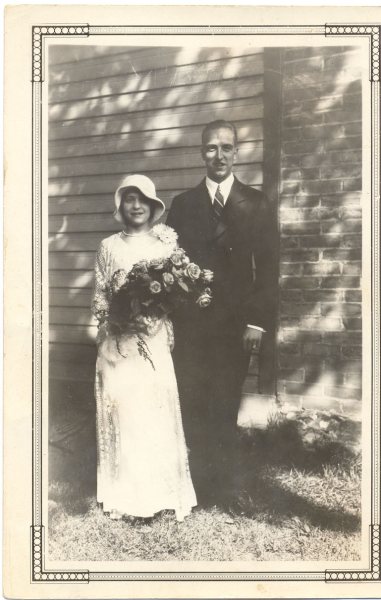
                          Mom and Dad on their Wedding Day                              
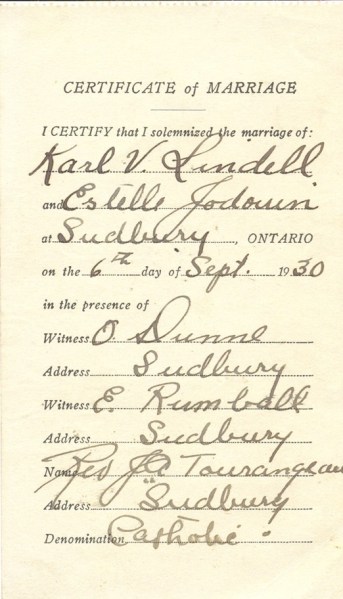
In 1945, Dad was offered a job in Asbestos, Quebec, a mining town in the rolling countryside of the Eastern Townships. It was a promotion for him. It meant he would no longer be working shifts, but, rather using his skill at designing a shaft for the development of underground mining. At that time, the company had been concentrating on open pit mining of asbestos, a fibre that does not burn and is used in firefighters’ gear, brake linings in cars and home insulation. It was a job for which Dad was well qualified.

It was a difficult move for Mom. She did not know a soul, and her family support system had vanished. She missed her parents, sisters and nieces.  Deep down, I do believe she was heartbroken and had difficulty coping with the move, far from family.

 In the summer of 1947, Granny, her mother, and Aunt Ted drove down to Asbestos for a visit. Mom was delighted to welcome them. Shortly after their visit, Mom was hospitalized in Montreal for an extended period. Dad visited her regularly and made arrangements for Mrs. Robinson, an elderly lady, to care for us. ( I never knew the reason for the hospitalization as I was 7 years old at the time, and I still do not know all these years later. Was the hospitalization a mental breakdown or perhaps the loss of a child?)
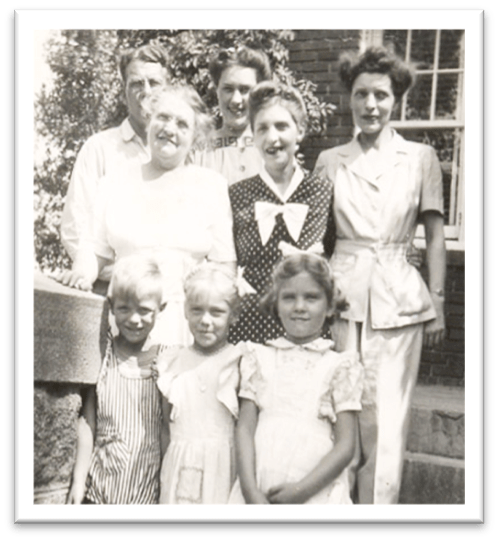
Uncle Leo, Aunt Dickie, Aunt Ted, Gran, Mom,

Paul, Claire,and Cousin Denise

In the summer of 1948, Mom drove my sister Ruth, brothers John and Paul, and me to Sudbury to visit family. On the way, we stopped in Pembroke and visited Mom’s spinster Aunts and continued to Sudbury. Mom had learned to drive at the age of fourteen and was undaunted when undertaking such a long drive. After seeing the scorched land and forests fires we arrived and greeted relatives with open arms and warm hugs. Mom had finally arrived home.

We spent time with Granny Jodouin, aunts, uncles and cousins which created many fond memories. Mom was happy.

On our way home, we stopped in Senneville and visited with Aunt Aline, one of Mom’s older sisters and Uncle George, an avid stamp collector, where I learned about stamp collecting. We then continued our way home.

Around this time, (1948-1949) I vividly remember Mom sitting at the typewriter in the solarium where Dad had a large desk with his CB (Citizen Band Radio). She would be typing letters to Gran and her sisters. At Christmas time she would be in the kitchen making fruitcake to send to family in Sudbury.

For a long time she hung on to her thoughts of home and the family members she had left in Sudbury, so far way.

Her life and our family’s lives were changed. In January of 1950, when at the age of forty-one, Mom gave birth to a little sister, Vicky, while at the same time, Dad received a big promotion. Life was taking on new challenges. These positive events were the beginning of a new outlook on life for Mom. Her loneliness was slowly disappearing. She now had new challenges.
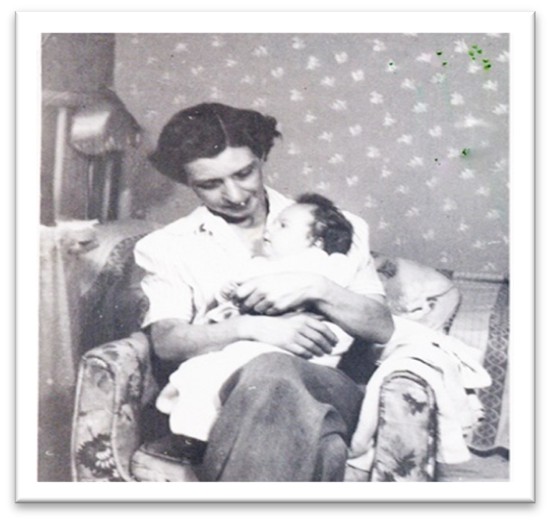
Mom and Vicky

Vicky’s arrival was a blessing for all of us. At 10 years old I now had a real live doll to care for.

Mom had help when a young girl, Ghislaine, came into our lives. She developed a close bond with Vicky, and Mom’s overall health was much better. Her loneliness no longer seemed to trouble her. Her health improved and before long she was able to travel. She visited New York City and attended Broadway plays , enjoyed shopping at Berdorf-Goodman, along with company jaunts to the Carribbean .
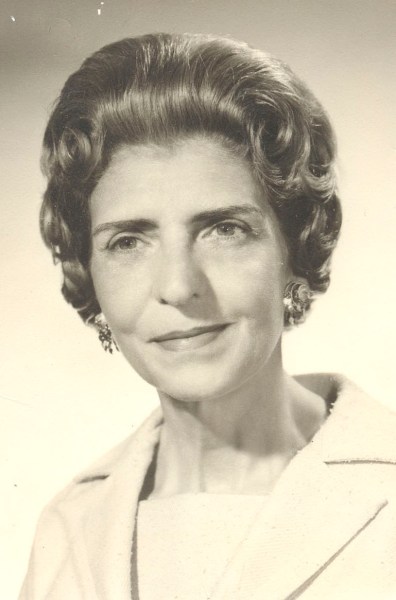
Mom in 1963

Over the years she visited Africa, Europe, Japan and became a world traveller with Dad.

Mom’s life was filled with many ups and downs, but with Dad’s support she overcame her difficulties. Her life had taken on a new look, and her loneliness was a thing of the past. She enjoyed life to the fullest!
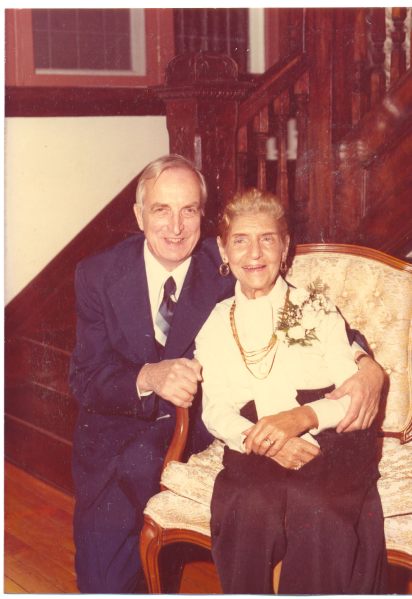
Mom and Dad on their 50th Wedding Anniversary in 1980
Remembering My Dad

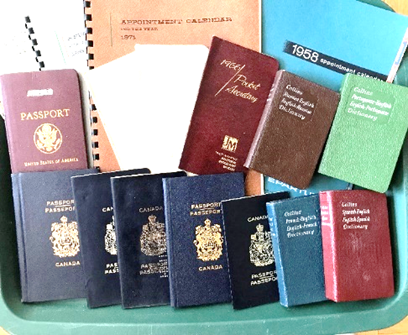
For the past twenty-five years since my Dad’s passing, a green bin containing documents he meticulously saved during his lifetime of ninety-two years have been carefully preserved. All these years it has been in my possession and carefully followed me during several moves. The photograph below shows some of these items including passports, monthly and pocket calendars.

With Father’s Day rapidly approaching it seemed fitting to prepare a story about one of my father’s many travels during his working career.

On a rainy dismal May afternoon, it was time to open the bin and gather some information about one story that came to mind about a trip he made to Russia many years ago. Amidst all his treasures, would it be possible to find what was needed to write the story I had heard? Upon opening the bin before beginning the search, a question arose, why had Dad so copiously preserved all these items? Did he plan to someday write his memoirs about all the wonders of the world he had seen over the years? Had time caught up with him and he was just too busy creating more stories and never had a chance to write them?  We will never know and so, it has come about that it is a task left for me to relate some of these stories about his life and travels.

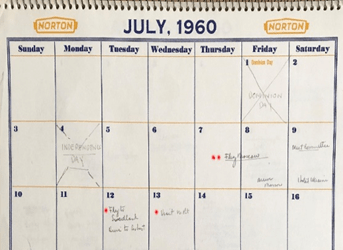
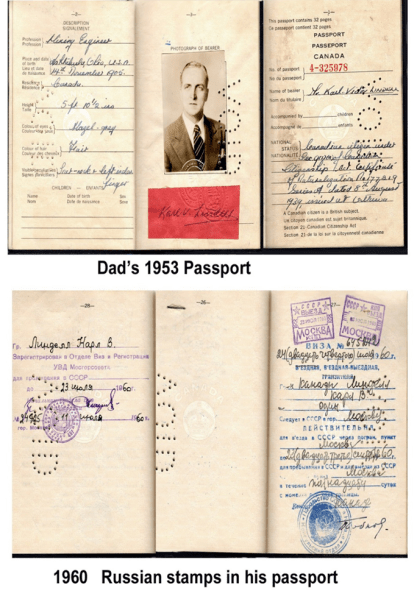
After searching through the passports, I found the one about his trip to Russia in 1960 and noted that it also appeared in his July calendar.

Having gathered the information and photographs, along with several Google searches it was time to begin writing.

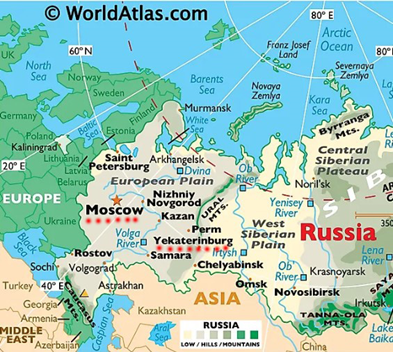
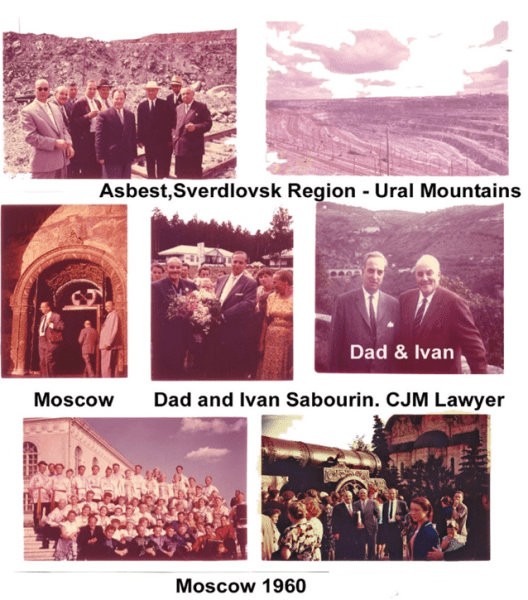
The map shows the area Dad and Ivan, the company lawyer visited.

Asbest, is in the Ural Mountains not too far from Moscow and relatively close to Ekatrinberg.

A portion of a map of Russia indicating the area of the open pit in Asbest, in the area of Sverdlovsk in the Ural Mountains.

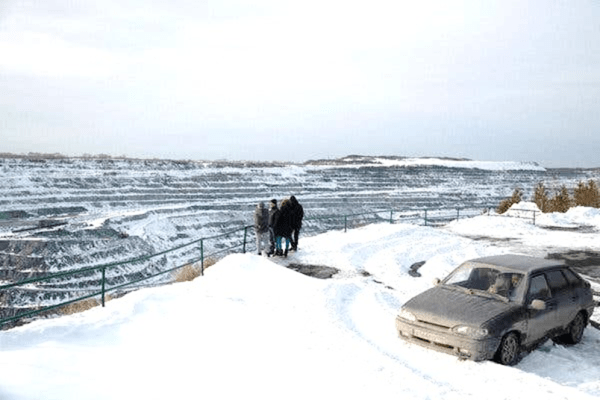
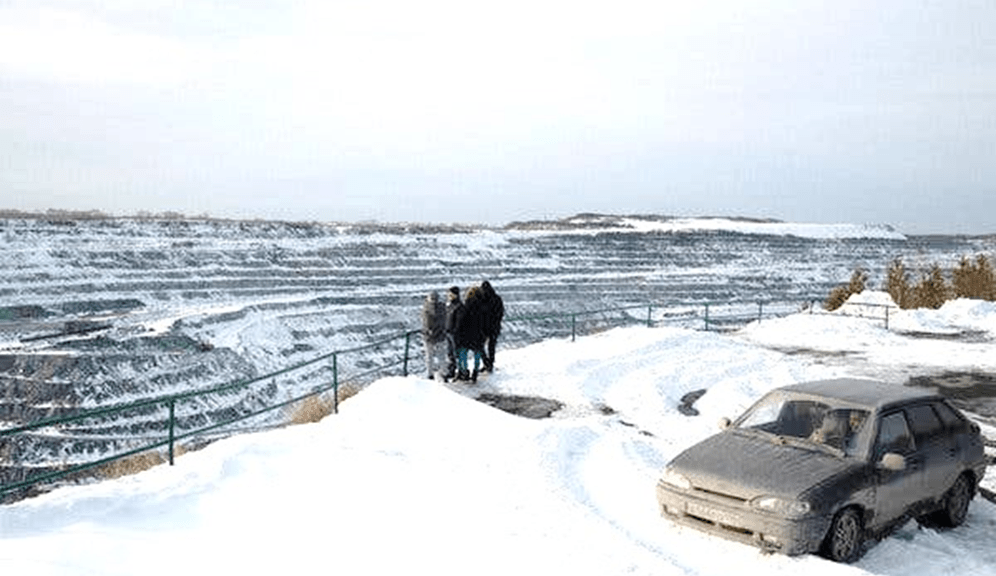
A viewing platform at the quarry that supplies Uralasbest, a leading maker of asbestos.      Credit…James Hill for The New York Times.

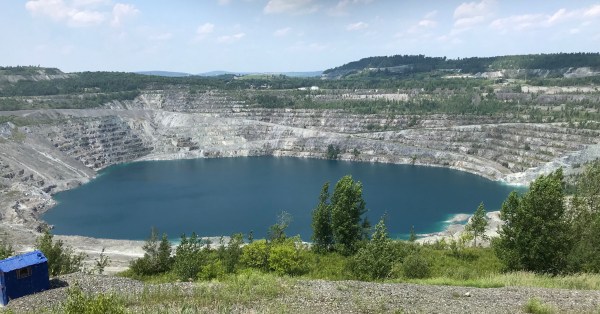
In the above photograph we can grasp the enormousness of the open pit.

In an article in the New York Times written by Andrew Higgins “In Asbest, Russia, Making Asbestos Great Again” Published in April 2019.

“Uralasbest last year increased its asbestos production to 315,000 tons, 80 percent of it sold abroad, from 279,200 tons.

The city of Asbest, after more than 130 years of intensive mining, still has enough chrysotile asbestos buried in the ground to keep Uralasbest in business for at least another century, providing its customers, mostly in Asia and Africa, do not take flight.”

“Uralskii Asbestovyi Gorno-Obogatitelnyi Kombinat” (Ural Asbestos Mining and Processing Plant), commonly known as “Uralasbest” is a Russian company headquartered in the city of Asbest in the Sverdlovsk region. The company has been incorporated in 1918. The main activity of the company is asbestos mining. The plant is the largest Russian manufacturer of non-metallic building materials, which are available fo road and rail construction. The annual capacity 12 million tons..

Dad, along with the Canadian Johns-Manville Company lawyer, Ivan Sabourin, and his Russian counterparts visited the open pit in Asbest which was most definitively the largest open pit Dad said that he had ever seen.

They also had the opportunity to visit Moscow and take in some of the country’s cultural heritage. This was at a time after WWII and Stalin’s passing, during Nikita Khrushchev’s leadership, when Russia was in the process of change, before Gorbachev, and long before Putin.

Dad pointed out while relating this story of his experience in Russia that we were always under the impression that Asbestos, Quebec maintained the status of the largest open pit in the world.

When Dad returned home, he noted that all the billboards, tourist, and marketing information would need to be re-evaluated. Asbestos, Quebec could no longer claim the title of the largest open pit in the world. New indicators were prepared and posted:

“The open pit in Asbestos, Quebec, Jeffrey Mine is the largest in the free world”.

   Jeffrey Mine, Asbestos, Quebec 2019: Claire Lindell

Canadian Johns-Manville Company ceased operations in 2012 due to a national ban on the sale of asbestos.

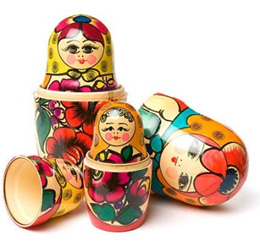
Dad often brought home souvenirs, and, on this occasion, it was the wooden stacking dolls, known as matryoshkas. They were a big hit among his grandchildren who over the years spent many an hour playing with them.

Matryoshka –wooden stacking dolls
         https://en.wikipedia.org/wiki/Matryoshka_doll
Matryoshka is often seen as a symbol of the feminine side of Russian culture.[14] 
        Furthermore, matryoshka dolls are used to illustrate the unity of body, soul, mind, heart, and spirit.
                     ***********************************************************

As Father’s Day approaches it is a good time to reflect on the many blessings we have received from our fathers. Although he spent hours, days, and weeks away from home on extensive trips, it never ceases to amaze me how he found time for his family. Many an occasion, one would have thought he was too busy with work, nevertheless, he found time and made it his business to be present at the special events in our lives. With six children, no doubt that took much juggling of his calendar to be present at these events.

Thank you, Dad.    Kiitos   

  Other Sources:

https://www.emis.com/php/company-profile/RU/Uralasbest_OAO__%D0%A3%D1%80%D0%B0%D0%BB%D0%B0%D1%81%D0%B1%D0%B5%D1%81%D1%82_%D0%9E%D0%90%D0%9E__en_2130114.html

Once The Largest Asbestos Mine in the World – Canada – Open Pit – YouTube video

https://www.history.com/topics/holidays/fathers-day#origins-of-father-s-day

https://asbest-study.iarc.who.int/about/about-the-study/

A Time of Prosperity

Asbestos Part 2

by Claire Lindell.

The Asbestos Strike of 1949 was a major historical event, that touched the lives of many. In a recently posted blog on Genealogy Ensemble, ‘A Turning Point in Quebec History, reflects the turning point through the eyes of a nine-year-old living in the town during the strike”. At the end of WWII created a huge boom in construction. There was a great demand for asbestos fibre products. These products were. fire-resistant. Insulation, outside shingles, roofing tiles, floor tiles and a myriad of other products were being used in construction. The company was thriving and continued to do so throughout the next twenty years.

My Dad, Karl Lindell, played a minor role behind the scenes throughout the five months the workers were off the job. When the strike was over and the workers resumed working in the pit, underground and the mill, management realized that changes in their operations were necessary.

The Canadian Johns-Manville Company (CJM)developed a long-term plan to enlarge the open pit. In doing so, they expropriated large portions of the town and expanded in new directions. Underground operations continued. As part of these changes, in January of 1950 Dad took on a major role and was named Mine Manager of Jeffrey Mine, the largest open pit in the Western hemisphere. His responsibilities within the company were to bring stability between the workers, the union and management while producing enough asbestos to meet customer’s orders.

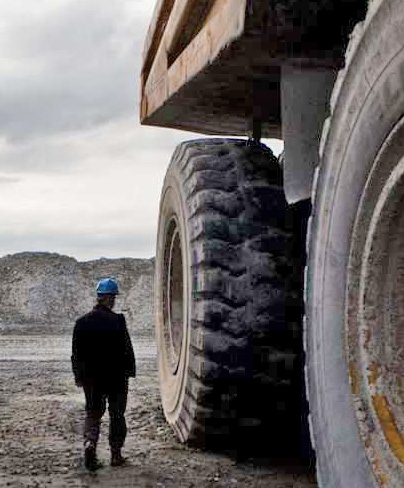
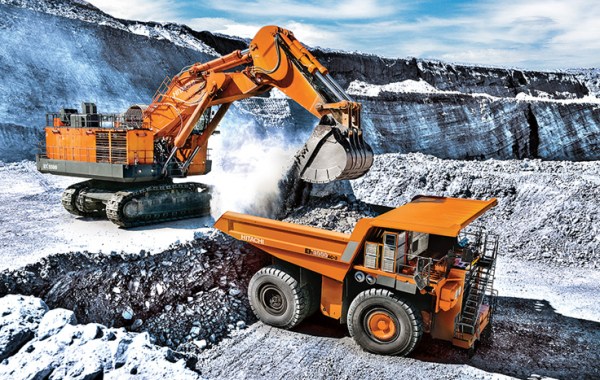
         Hitachi advertisement for a 200 ton truck 

 Enormous tires                                

Some of the major changes within the operations revolved around phasing out the old railway system that had been in use for many decades. The company invested in an efficient roadway within the pit and purchased several humungous 200-ton trucks to haul the crushed rock, the results of the blasting that took place several times each day. The trucks hauled their loads to the new Mill #5 to be processed removing the valuable veins of fibre in the mill where the company installed a huge dust filtration system that monitored the air quality. The fibre was extracted from the rock, bagged, ready for shipment to factories and countries around the world. The trucks were also used to haul away the residue (leftover crushed rock) often referred to as ‘tailings’, to a site outside of town.

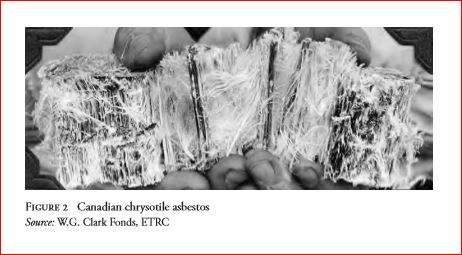
ETRC Townshipsarchives.ca Asbestos fibres

Dad was responsible for the many changes and the daily operations. It was noted in the minutes of a National Employees of the Mining Industry meeting in January of 19501. That at one of his first meetings with the employees after taking on his new position, he assured them that every employee was equal, no matter their position in the company. He noted that there were errors committed by both the company and the union during the strike.

He earned the respect of the workers and the Union. throughout his working days with CJM.

Operations ran smoothly. As time went on, there was a need to develop a specific division relating to the sale of products. The company created the Asbestos Fibre Division and Dad headed that operation. At the time he had an opportunity to move his family to Montreal where the Division had offices. He chose to remain in Asbestos. This permitted him to maintain a good relationship with the workers.

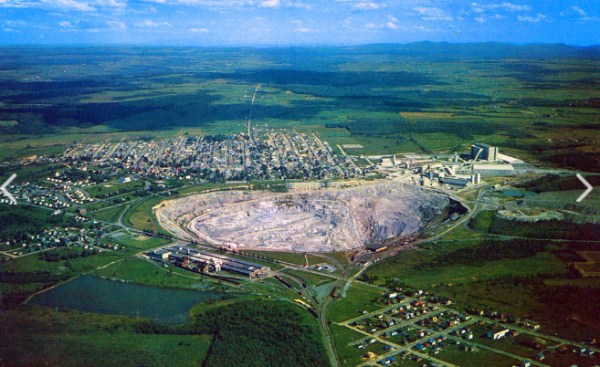
Aerial view of Asbestos circa 1980 Flickr

Dad retired after 25 years (1945-1970) of devotion to CJM and the Asbestos community. He had traveled the world on behalf of the Asbestos industry. His contributions to its growth and development were recognized by the industry and the citizens of Asbestos.

In the latter years of Dad’s time with the company, there were deep concerns about asbestos fibre being a health hazard. By the 1980s the industry declined at a rapid rate. For a time, the Quebec Government was supportive of workers, however, over time there was an outright ban on the production of asbestos fibre. This left may workers without jobs.

How would the town survive? Could the town survive?

Part 3 will highlight some of the ways the community coped with the lost jobs and the numerous strategies that have been used since the 70’s . Did Asbestos become a ghost town? Did it find new ways and means for those who lost their jobs when all operations shut down?

Sources:

1. SAHRA. Fonds de la Federation de la Metallurgie P5. Cahiers des process-verbeau des reunions de la federation Nationale des Employees de l’Industrie Miniere. Janvier 1950, p.99-100, Asbestos filons d’histoire 1899-1999, Lampron, Rejean, Cantin, Marc, Grimard, Elise, Imprimeries Transcontinental inc., Metrolitho 1999

www.mindat.org/loc-581.html Jeffrey Mine, Asbestos, Les Sources RCM, Estrie, Québec, Canada The geological map is copied from Horváth et al. (2013) Local Geology: .

www.ubcpress.ca/asset/13390/1/9780774828413… A Town Called Asbestos – UBC Press

https://www.thefreelibrary.com/%22A+faire+un+peu+de+poussiere%3a%22+Environmental+Health+and+the+Asbestos…-a0315506063

https://carnetsce2015.wordpress.com/category/1950-a-1960/

https://www.townshipsarchives.ca/etrc-p031-photographs-001-jpg      asbestos fibres

https://store.cim.org/fr/application-of-air-to-jeffrey-mill-of-the-asbestos-canadian-milling-johns-at-the-new-manville-company-limited-asbestos-que CIM Bulletin, 1955

Click to access 3r.pdf

https://www.thecanadianencyclopedia.ca/en/article/asbestos-que?fbclid=IwAR0305fX1YrnIFB2qyU0oXBBEQSHZg6JvUFTykpKoFqwYQUn0pSS0uVf8e0

https://www.asbestos.com/news/2016/11/07/asbestos-mining-town-canada-new-identity/