
As I approach my 80th birthday, I begin to think about the year I was born. What a year that was, a year of major global transitions and the historical year of my birth. I was fortunate to be born in November of that year, when most hostilities had ceased in the world and my home town.
However, the hardships in Britain and Europe were just beginning. Now, we had to think about rebuilding our shattered lands.

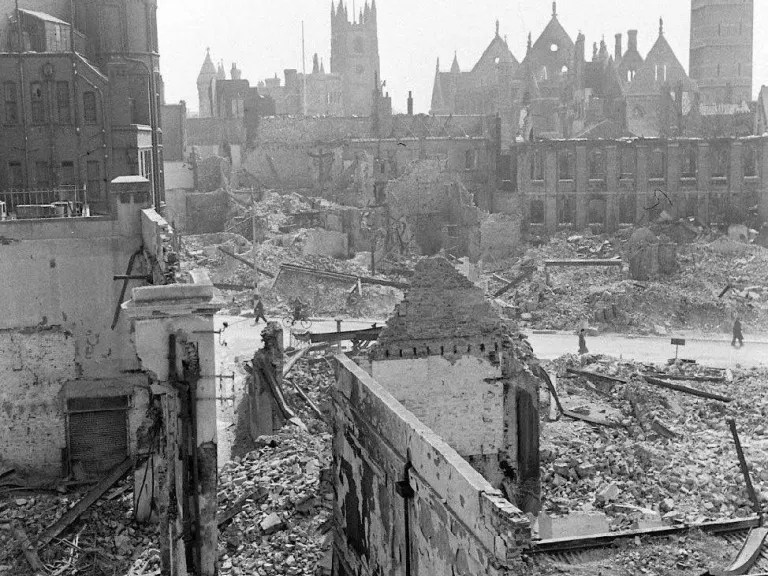
1945. Plymouth, Devon, England, after a Blitz Raid
I have an interest in the ‘Home Front’ events that occurred in Britain during the Second World War, rather than military stories. However, military stories cannot be ignored as 1945 was quite the momentous year in the military and home fronts. Here is a timeline of key events both at home and abroad that occurred in 1945.
January:
World War 2 is in its final phase, even though Germany is in retreat. The British military pressed onward in Germany and Burma. The Battle of the Bulge ended a major German offensive on the Western Front.
It was believed that Plymouth was being singled out for particularly ferocious attacks because it was home to Her Majesty’s Naval Base, Devonport, which was the largest Navy base in Western Europe and the Royal Navy’s repair and refuelling facility. The dockyard was staffed by women during the war, doing what was normally considered to be men’s work, as all the men were away fighting.
On the home front, Britain was impacted by V-2 rocket attacks.
Rationing, especially items like dried and canned fruit, was scarce. The Ministry of Food encouraged households to reduce waste and get creative with recipes. I still practice creating recipes and reducing waste to this day. This story is my 1950 Christmas with rations. Rationing in England lasted until I was 11.
https://genealogyensemble.com/2021/12/29/memories-of-a-1950-british-christmas/
February:
I was conceived!!
Allied bombers begin a major raid on the city of Dresden. Key events in February included the Yalta Conference between the Allied leaders, the beginning of the Battle of Iwo Jima and the final stages of the war in Europe.
The Soviets captured Budapest, Hungary, and also encircled Breslau, Germany (now the modern-day city of Wroclaw, Poland) as Allied forces pushed toward the Rhine in the west.
March:
The 10th British and Allied forces successfully crossed the Rhine, the first time a foreign army had crossed the Rhine since the Napoleonic era.
British forces pushed deeper into Germany with only scattered resistance.
On the 27th and 29th, the final V1 flying bomb fell on Britain.

Remarkable photo of a German V1 fully autonomous early cruise missile hitting the London area in 1945.
April:
1st The Battle of Okinawa continued for 82 days, resulting in heavy casualties for both American and Japanese forces. Japan launched ‘Kamikaze’ attacks against Allied naval forces.

Dr Fritz Klein, an SS doctor, among some of his victims, Belsen, 24 April 1945
Numerous Nazi concentration camps are liberated, revealing the full extent of the Holocaust to the world.
4th Ohrdruf concentration camp, liberated by U.S. Forces.
11th American troops discovered the Buchenwald concentration camp
15th Liberation of the Bergen-Belsen concentration camp, by the British, who found thousands of ill prisoners and corpses.
29th Dachau camp was liberated by U.S. Forces.
Also on the 29th, Adolf Hitler married Eva Braun in the underground bunker.
30th Adolf Hitler commits suicide, shooting himself at the age of 56 years old, whilst Eva Braun takes a poison pill.
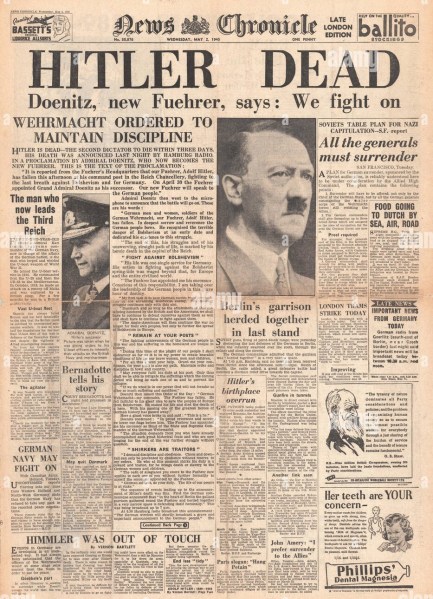
German forces, the last fighting force on the Western Front, surrendered en masse.
May:
7th Germany signs an unconditional surrender,
8th VE Day – victory in Europe – Day
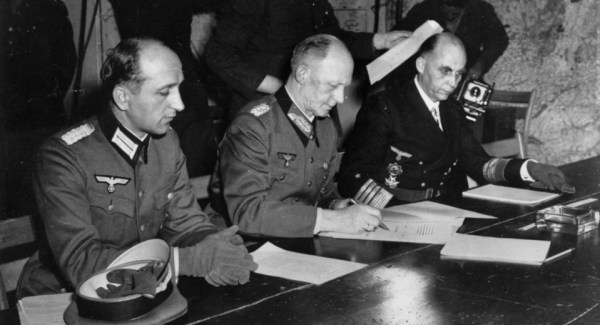
On May 7, 1945, Gen. Alfred Jodl signed the surrender of all German forces in Rheims, France. He is flanked by Wilhelm Oxenius (left) of the Luftwaffe and Hans-Georg von Friedeburg, representing Germany’s navy. | AP Photo
23rd Heinrich Himmler commits suicide while in British custody in Lüneburg, Germany.
June:
15th Wartime blackouts ended, and streetlights were turned back on.
The wartime coalition government, led by Prime Minister Winston Churchill, was dissolved, and a general election was held shortly after.
July:
The general election was scheduled to take place on the 5th of July, 1945, the first general election since 1935. However, the results were not announced until the 26th of July, 1945, to allow time for overseas military personnel’s votes to be counted. The Labour Party, led by Clement Attlee, won a landslide victory in the July 1945 election.
August:
The Family Allowances Act was passed to provide financial support to mothers.
15th was Victory over Japan – VJ – day. Celebrating Japan’s surrender after the atomic bombings of Hiroshima and Nagasaki, and the official end to over six years of global warfare
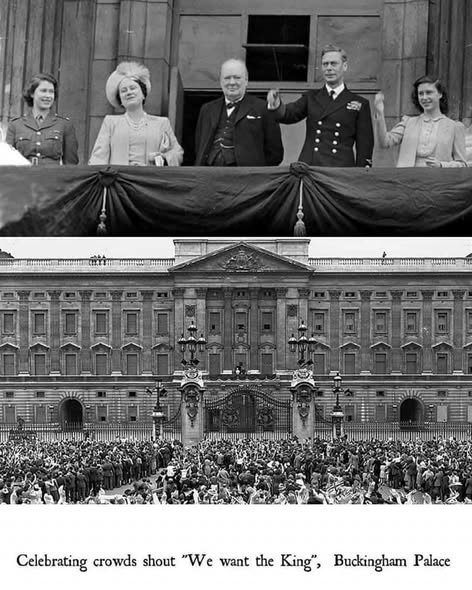
2nd Japan formally surrenders. Now, our country was focused on the return of troops, the beginning of domestic reconstruction and the promises of independence for its colonies.
September:
15th Parades were held in Britain to mark the fifth anniversary of the Royal Air Force’s victory..
16th Hong Kong was reclaimed, ending the four-year Japanese occupation.
The 17th Belsen Trial began for war crimes in Lüneburg, Germany, presided over by a British military court.
18th The Independence of India would be granted “at the earliest possible date”, was announced by Prime Minister Clement Attlee on a worldwide broadcast.
October:
Britain was now fully engaged in the complex aftermath of the Second World War, with the new Labour government pursuing major domestic reforms and the British Army dealing with global instability and the return of war prisoners.
4th An unofficial dock strike began in Britain.
7th The ocean liner SS Corfu docked at Southampton, carrying the first 1,500 prisoners of war to return from Japanese camps in the Far East. Also on the 7th, Rudolf Hess was transferred from Britain to Nuremberg, Germany, to face trial.
The 20th and the 5th Pan-African Congress were held in Manchester, where delegates from across Africa and the diaspora discussed and called for independence from colonial rule, a significant moment in the history of decolonisation.
This month was a period of substantial change as the nation grappled with domestic reconstruction, a new political direction and the challenges of managing a post-war empire and a new global order.
At the end of October, in Palestine, the Jewish Resistance Movement launched the ‘Night of Trains’, a coordinated attack on the British railway network, marking a rise in armed opposition to British authority.
November:
On the 20th, I was born at the Alexandra Maternity Home, below.
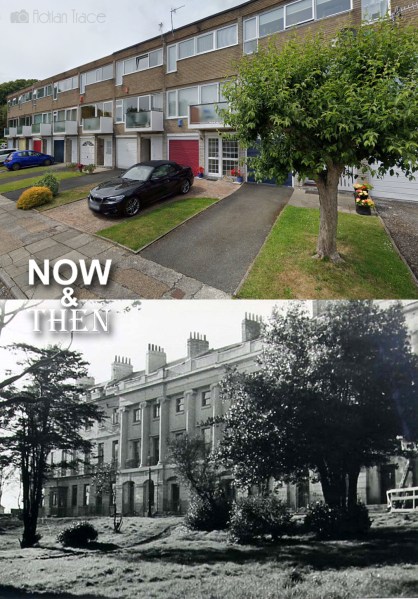
At the time, there was no National Health Service (NHS), so no free medical care. I must have been an expensive baby!
The Alex, as it was often called, admitted maternity patients for a period of not less than a fortnight. Fees were charged from 15 shillings (75P) to 42 shillings (£2.20P) per week.. These fees included nursing, food, laundry and all clothing and if necessary, the doctor’s fees. I have no idea of my weight, size or time of birth. Such things were not, unfortunately, recorded.
December:
The government announced its plan for a National Health Service (NHS) to provide free medical care.
1st British military police in occupied Germany arrested 76 Nazi industrialists.
9th, the United States granted Britain a low-interest reconstruction loan of approximately $4.4 billion (US). An additional Canadian loan was for $1.9 billion, scheduled to run for 50 years.
The final payments made in 2006, which settled the debt entirely, were for $83.25 million to the US and $22.7 million to Canada.
Throughout the rest of the year, Allied forces continued to liberate numerous concentration camps, exposing the extent of Nazi atrocities.
In 1945, post-war, Plymouth faced immense devastation from the Blitz, which had destroyed the city’s heart and left thousands homeless. Plymouth was one of the most heavily bombed British cities, due to its status as a major naval port with the large HMNB Devonport dockyard.
The city centre, two main shopping areas, almost all civic buildings, 26 schools, 41 churches, and 3,754 houses were destroyed, with a further 18,000 properties seriously damaged. Around 30,000 people were left homeless, leading to a critical shortage of accommodation. Temporary prefabricated houses were quickly erected to provide immediate shelter. I remember seeing the ‘pre-fabs’ still in use in the 1960s.
The most urgent efforts were to house the population, clear the bombed buildings – which, still, years later, were my playgrounds – and begin an ambitious pre-planned reconstruction project. All the while I was growing up, this building and planning went on. When I left Plymouth at 18, the rebuilding continued until the early 1970s.
Sources:
https://en.wikipedia.org/wiki/Battle_of_the_Bulge
https://www.thedevonseoco.co.uk/plymouth-in-the-blitz/ https://encyclopedia.ushmm.org/content/en/article/liberation-of-nazi-camps
https://collection.nam.ac.uk/detail.php?acc=1985-11-36-334
Facebook Page: ‘Old Plymouth Society’ Post by Gloria Dixon 7 July 2021
https://www.iwm.org.uk/collections/item/object/205021954
https://www.historic-newspapers.com/en-ca/blogs/timelines/a-year-in-history-1945-timeline?country=CA
 Genealogy Ensemble