Tag Archives: Brittany

My French Connection -or why my grandfather had a lot of GAUL

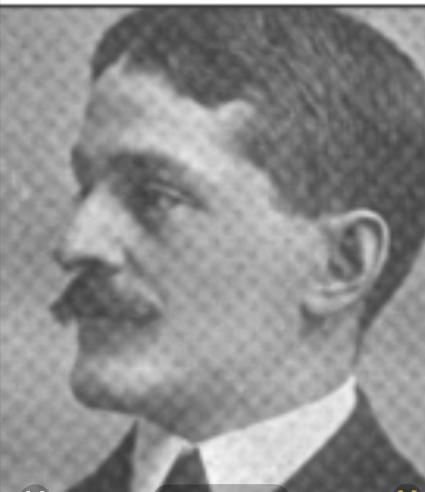
My very Gallic Grandpapa, Jules Crepeau (1879-1938) proud descendant of the Redones of Eastern Brittany in the Iron Age, among other Gallic Tribes.

Judging from her family tree, my late mother, Marie Marthe Crepeau was a bona fide French Canadian de souche.1

Her father, Jules Crepeau, son of an entrepreneur painter from Laval and her mother, Maria Roy of Montreal, daughter of a master-butcher, have trees that go right back to the boat in France – and yes, mostly to Normandy, Poitou and Ile de France. Classic!2

And yet, according to Ancestry’s (beta) chromosome browser, my mother was not 100 percent “French.”

I’ve provided my own spit to the platform and apparently chromosomes 3 and 12 on her side are English (but that does include the North of France) and chromosomes 17 and 18 are Norwegian (Norsemen -Northmen-Normandy, perhaps?) And a swath of chromosome 2 is indigenous American, making me less than one percent indigenous.

Lately, I’ve subscribed to an interesting infotainment3 website that really dives into a person’s ethnicity from all angles and over a slew of time periods: Ancient, Bronze , Iron and Modern Ages. Sure, I get Eure, Finistere and Vendee (Normandy, Brittany and Poitou) in spades, but I get just about every other area of France, too – as well as some Spanish, French Corsican and French Basque.4

My mom’s French Canadian family tree supports some of this. From the ten percent sample I traced back to France I get natives of Limousine, Aquitaine, the Mid-Pyrenees, Picardy, Bourgogne, Haute-Marne, Bayonne, Les Rhones Alpes, as well as the Canadian North (Innu).5

And let’s not forget my ancestor the legendary pioneer river pilot Abraham Martin dit L’Ecossais (he of the Plains of Abraham fame) who may have been from Scotland. My mom has him at least twice in her tree.

A while back, I figured out that my Mom’s paternal Crepeau line (father’s father’s father, etc.) can be traced back to Vendee but it is likely of Sephardic Jewish ethnicity and hails originally from Spain. 6
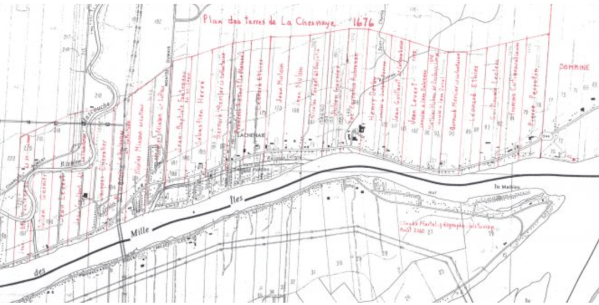
Lachenaye Seigneury 1676 (Claude Martel -historian)
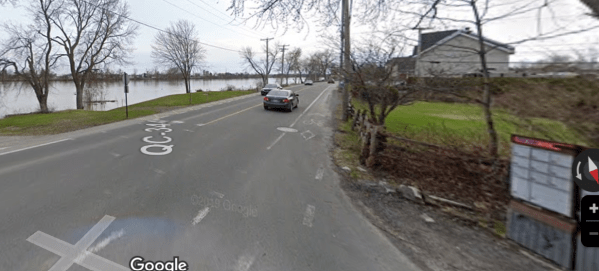
View from Hubou farm (or close). These pioneer farms on the North Shore of Montreal were a narrow stretch of river away from the Eastern tip of Laval Island, and just a bit more north of the Eastern tip (Pointe aux Trembles) of Montreal Island.

In New France, my grandpapa Crepeau’s maternal tree can be traced to the original families at the Lachenaye (Terrebonne) Seigneury (est.1673) north east of Montreal, four founding farmer families in particular: Ethier (Poitou-Charentes), Forget (Normandy), Hubou (Ile de France) and Limoges (Rhones Alpes). My mother’s DNA is largely a mish-mash of these families’ genes, for they inter-bred down through the centuries. Basil Crepeau my mom’s 4 x GG was a slightly later arrival at Lachenaye who moved in beside the Hubous.
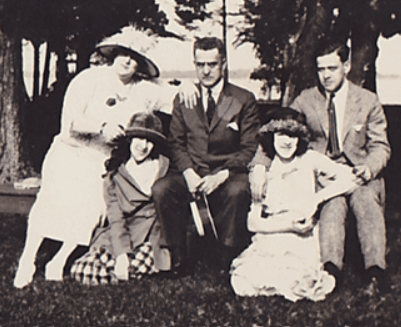
Jules and family before my mom was born circa 1920. Maria Roy (Gagnon) his wife was also connected to the Lachenaye tribe through Ethier.

Now DNA distributes down the generations in very complicated and irregular ways especially where endogamy or founder effect is concerned8 and judging from my many French Canadian ‘cousins’ on Ancestry, my mom may have gotten a disproportionate amount of her genetic material from the Hubou founder family at Lachenaye Seigneury. A great majority of my DNA cousins on that platform are connected to me through her 2nd great grandfather, Michel Hubou dit Tourville.9

As it happens, Michel’s pioneer ancestor was one Mathieu Hubou dit Deslongchamps, a master-armourer from Normandy who was married to one Suzanne Betfer who was…wait for it… a gal from Gloucester, UK.

Now, ain’t that fun! A bona fide English Fille de Roi!!

THE END

1. de souche a controversial label that means from the roots.

2. https://www.biorxiv.org/content/10.1101/2022.07.20.500680v1.full.pdf On the genes, genealogy and geographies of Quebec. According to: French Canadians come from 8500 founder families in 17th and 18th century, with only 250 of these founder families, the majority from Perche, leaving behind the majority of genetic disorders that passed down through the ages. https://www.jstor.org/stable/41464974

(Hereditary disorders in the population of Quebec II Contribution of Perche)

The very first pioneers, the 2,700 super founder families, 1608-1680, were 95 percent French. The later 17th and 18th century founder families were 80-85 percent French but the non-French includes Acadians.) The first 2,700 founder families contributed to 2/3rds of the modern gene pool of French Canadians, but geography and natural boundaries kept families within even smaller gene pools. Indigenous DNA contributed one percent of French Canadian DNA. Regions can have super-founder families that contributed even more to the modern gene pool.

3. Your DNA Portal

4.These ethnicity estimates are based on complex science but the various results have to be taken with a grain of salt. Even if the original science is spot on, these results depend on what sample of your DNA is taken and how far back the algorithm is examining. I liken it to making a complicated stew from various ingredients, letting it simmer for a long time and then trying to deconstruct what it was made from. Maybe you put parsnips, carrots and parsley in the recipe, but these ingredients are already related genetically so it’s not easy to pull apart. Still, taken as a whole the results I get are telling: My mother’s ancestors were mostly from Gaul, especially the tribes Redones and Veneti in Brittany. Hardly a surprise as that’s what my Mom had always been told, that her people were from Brittany. I also get Gaul Santones who lived in Charentes. So spot on!

5. Nos Origines and Drouin

6.My mother is no outlier French Canadian in this respect, at least according to a recent paper that maintains that the Huguenot and Acadian populations are largely made-up of Sephardic Jews escaping the Inquisition. Investigating the Sephardic Jewish ancestry of colonial French Canadians through genetic and historical evidence. Hirschman.

https://nameyourroots.com/home/names/Crespo (Spanish roots likely Sephardic) The name means Curly Haired One. My mom knew that. She did have very curly hair as did her father so that trait passed down through the ages.

The Crepeaus (Crespeaus, Crespo’s Crepspin) are not the only possible Spanish line my mother has in her tree. For instance, her mother’s maternal Gagnon line goes back to one Lily Rodrigue in Normandy, a surname some say is Spanish derived. Another line goes to a Domingo in Bayonne, near the Spanish border. That name is Spanish/Italian and found in Southern France. I also have Navarre or Navarro. ADDED August 2025. I recently got two distant cousins – not related themselves on Ancestry Crespo and Crespim. Both mostly Spanish (very little 2 percent French) with 3 percent Sephardic Jew. Seems to prove my point.

7. Roy is the second most common surname in Quebec. http://leroy-quebec.weebly.com/the-surname-leroy.html . Gagnon is the third most common name and my direct pioneering ancestor hails from Perche in the North of France where he was a leading citizen, apparently.

8. Supposedly, all things being equal, we have only a 47 percent chance of inheriting DNA from an 8th GG, and inherited DNA from 8th GG’s amounts to a fraction of 1 percent but a high degree of endogamy or ‘founder effect’ clearly changes that, judging from the info in the studies in the links I have posted here.

9. On Ancestry, 60 percent of my closer DNA cousins are connected to me through Michel Hubou Tourville and his wife, but it should be noted that a full 400 family trees on Ancestry contain his name. It appears that his descendants moved to the US and did their family trees! Also, these ‘cousins’ tend to have my other Lachenaye names like Ethier and Forget and Limoges in their trees, so impossible to parse.

“This article explains the very thing I’m talking about: https://www.legacytree.com/blog/dealing-endogamy-part-exploring-amounts-shared-dna?fbclid=IwAR1veE4wNTc9gLGtx33Z8qphXmRdtTH2fREANxrenVDgx2NRqs1SznCAV0 “In one of our research cases, we found that an individual descended 12 different times from the same ancestral couple who lived in the late 1600s in French Canada. Although they were quite distant ancestors in every case (within the range of 9th-11th great grandparents), he had inherited a disproportionate amount of DNA from them due to their heavy representation within his family tree.”

Endogamy or consanguity? I’ve discovered that my grandfather Jules Crepeau likely had some double first cousins: his mother Vitaline Forget Despaties married Joseph Crepeau and Vitaline’s brother Adolphe Forget Despatie married Joseph’s sister, Alphonsine. I wonder if this happened further up the line. Wouldn’t that have messed with the DNA estimates! If such cousins marry it is closer to consanguinity than endogamy.

https://www.historyfiles.co.uk/KingListsEurope/BarbarianRedones.htm

The Celtic Tribes in France were described by the Romans as the GAULS.
The Beginnings Of The Original Plymouth, Devon England

Previously, I wrote about the ancient Plymouth Gin Distillery located in Plymouth 1 in that story, I mentioned that Plymouth had been attacked, raided and ruled by many others many times.

Here is an account of only a fraction of some of the various raids, uprisings, invaders and wars that is the tumultuous history of Plymouth.

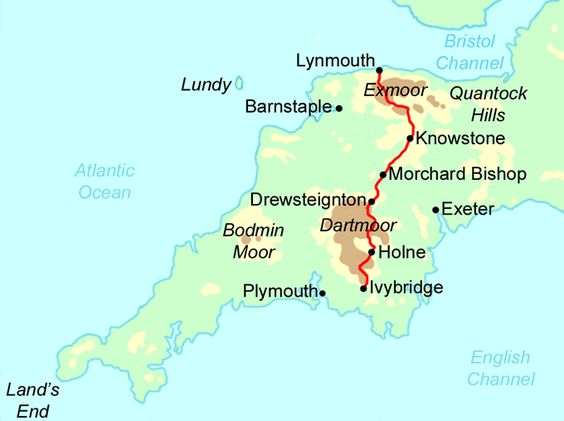
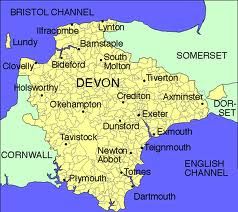
Plymouth is located in the South West Peninsula of England and consists of the counties of Cornwall, Devon, Dorset and Somerset. It is the furthest South and West of all of mainland England.

Map of The South West Peninsula

In 1866 a cave was discovered containing the bones of animals that no longer live on these islands. The bones included the lion, hyena cave bear, rhinoceros, and human remains. So man lived in this district as far back as the early stone age.

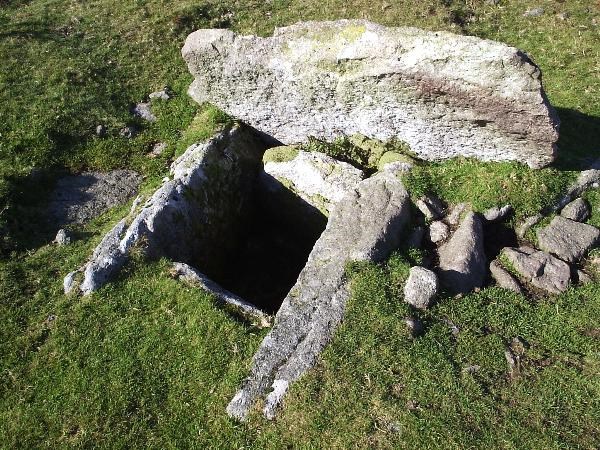
Most local finds in and around various areas of Plymouth have been of the Bronze Age, such as mirrors, daggers spearheads and coins up to 150 BC. In an area of Plymouth called Stonehouse, a burial chamber known as a kistvaen or kist was found. The name means a ‘stone chest’ 2

This is known as the Drizzlecombe Kistvaen Dartmoor, Devon

There are many kistvaens in the large area of the Dartmoor National Park just outside of Plymouth. However, the majority of the known Dartmoor kistvaens were opened at some time in the past, and whatever they used to hold is missing. The idea that ancient tombs might contain valuable items is a very old one; one of the first mentions of searching kistvaens in Devon dates back to 1324.

Location of Dartmoor National Park

We can tell that Saxons settled in the Plymouth area because of the names of places ending in ‘Ham, Ton, Leigh, Worthey and Stock. In fact by 926 AD Saxons ruled the whole of Devon. There is an unusual place name are in Plymouth that was once a Saxon lane. In the Doomsday Book of 1086, it was called Heche Bockland and the Saxons had a church there. By 1385 it was known as Ekebokland which over the centuries has evolved into ‘Eggbuckland’ which, as a child, often produced a smirk…

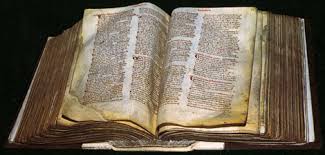
After the Normans conquered England William the 1st gave the Saxon Manors to his Norman Knights and in 1085 had a list made of all the estates in the country and this was called ‘The Domesday Survey’ – the Middle English spelling of “Doomsday Book”.

The Great Domesday Book Held at Kew Gardens, England.

By 1376 we first hear of a Mayor whose name was Maurice Bard. in 1377 the population of Plymouth was 7,000 and by this time, Plymouth was playing an important part in Naval affairs supplying ships for the fleet and was a busy port.

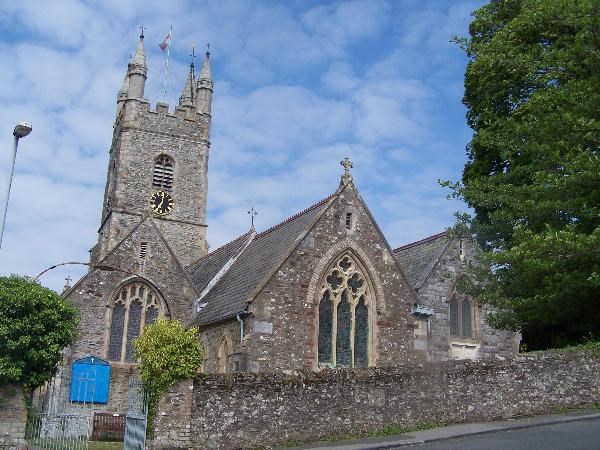
When King Henry VIII dissolved the monasteries in 1539 the priories had to surrender the tithes of Eggbuckland to the king. The present church is a stone building that dates from around 1420/30 called St. Edward. Its Parish registers date from 1653.

The Anglican church of St Edwards Church Road, Eggbuckland Plymouth Devon 3 Photography by Chris Downer

During the 14th Century, the South coast was attacked on several occasions by French pirates with many attacks on Plymouth, which caused a decline in trade and prosperity. Again, raids and attacks took place in 1377, 1400, and 1403. The most famous of all was the 1403 attack from the Bretons. They sent 30 ships and 1200 men at arms who came and anchored as the townsmen of Plymouth fired cannons at them but they landed and burnt 600 houses and plundered.

Later in the same year, an English fleet crossed to Brittany landed 4,000 men and laid waste to a large area. We seem to have had an uneasy relationship with the French ever since!

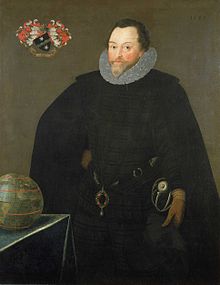
The famous seaman, Sir Francis Drake was born in 1541 near Tavistock, just outside Plymouth and was the eldest of 12 children. In 1581 Elizabeth I knighted him and the same year he was appointed Mayor of Plymouth. He was second-in-command as a Vice Admiral of the English fleet, in the victorious battle against the Spanish Armada, in 1588.

Sir Francis Drake
Portrait by Marcus Gheeraerts the Younger 1591

Early in July 1620 two vessels ‘The Mayflower’ and ‘The Speedwell’ set sail from Delfshaven in Holland. They were refugees who thought it would be safer in America. Both vessels reached Southhampton, but after leaving the Speedwell sprang a leak and they had to put into Dartmouth for repairs. Again, they set to sea but once more the Speedwell started to leak and so they put into Plymouth. On the 6th of September, 1620 the Mayflower left Plymouth with 102 pilgrims aboard and reached Cape Cod on the 9th of November 1620. The rest, as they say, is history.

In 1642 the civil war started in Plymouth. Most of the counties were Royalists whilst the towns were Parliamentarians. Plymouth, which was surrounded by Royalist country was the key to the West.

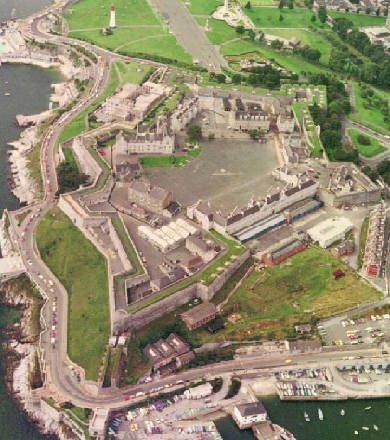
It had a harbour it was strongly walled and there was a fort on the Hoe. The word “Hoe” is derived from old English and appropriately means High Ground.

(This year, Facebook banned the word ‘Hoe” assuming it meant something else!) 4

The Royal Citadel on Plymouth Hoe

The Royalists asked the whole town to surrender but they refused, and so, on Sunday, December the 3rd, there took place ‘The Sabbath Day Fight’ The townsfolk rallied from all the neighbouring strongpoints and drove the enemy down a steep hill and into a creek. The rear guard of the Royalist Cavalry was thrown into confusion and the creek was full of drowning men and horses. This was the primary battle but not the end of the siege.

At one time, the King himself came down to Plymouth with 15,000 men but still the town held out. in 1646, the siege was eventually raised. During it, 8,000 people died in Plymouth from various cases a number greater than the normal population.

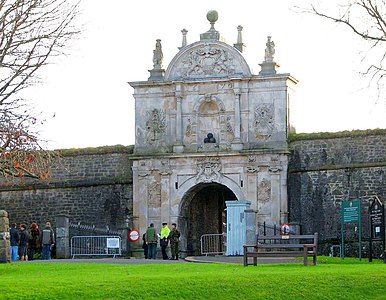
The Baroque main gate of the Royal Citadel. Note the date 1670 above the arch

Today, the following notable units are based at the Royal Citadel.

The Royal Artillery, Number 3 Commando Brigade and the 29th Commando Regiment 5

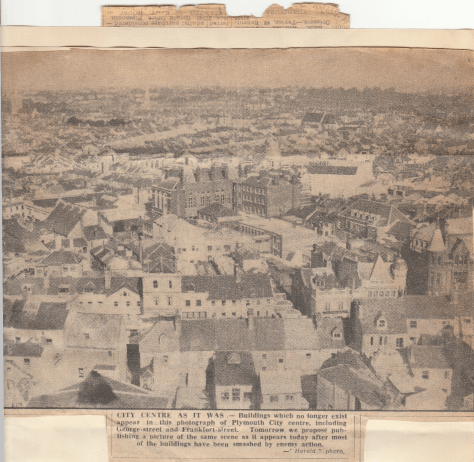
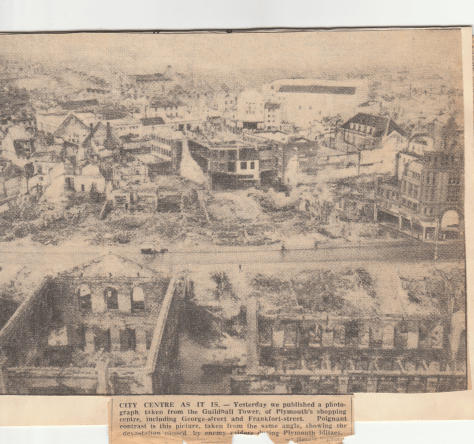
Centuries later, World War Two came to Plymouth. My grandfather saved the newspaper cuttings below. They are not too clear but give an idea of before and after a bombing raid on the city.

In the beginning, there were many small daylight raids. As the nights lengthened, these took place at night and in 1940, there were fairly heavy raids on December 29th and January 13th, 1941.

The caption reads: “The city centre as it was. Tomorrow, we propose publishing a photo of the same scene as it appears after most of the buildings have been smashed by enemy action”
The caption reads: “The City Centre as it is. Yesterday, we published a photograph taken from the Guildhall Tower of Plymouth’s shopping centre. Poignant contrast is this picture, taken from the same angle showing the destruction caused by enemy raiders during the Plymouth blitzes”

The worst raids took place in March and April 1941 and on the second of these raids in April, 106 high explosive bombs were dropped, 26 people were killed, 60 houses were completely destroyed, 400 were badly damaged and 2,000 were slightly damaged.

During those raids, the city centre was methodically destroyed in seven continuous nights of bombing. Plymouth lost all of its chief public buildings including the Guildhall, and the council chamber was wiped out.

In the last three years of the war, numerous raids were made. Plymouth lost its large stores and shops, 39 churches including its ‘Mother Church’ St. Andrews in the city centre, 20 schools, a theatre, eight cinemas, six hotels and nearly 30,000 homes completely uninhabitable and although many more raids took place, none were as bad as in 1941.

Although it took decades to rebuild today Plymouth is a vibrant holiday destination and describes itself as “Britain’s Ocean City” It has many holidaymakers visit and there is plenty to see and do. Plymouth boasts some spectacular scenery, a bustling town centre and some delicious dining options.

There is The National Marine Aquarium, The University of Plymouth, the Marine Biological Association, and the Blue Marine Foundation plus the City Centre and the Drake Mall. In addition, for any adrenaline junkie or marine life enthusiast, there are plenty of adventures to be had!

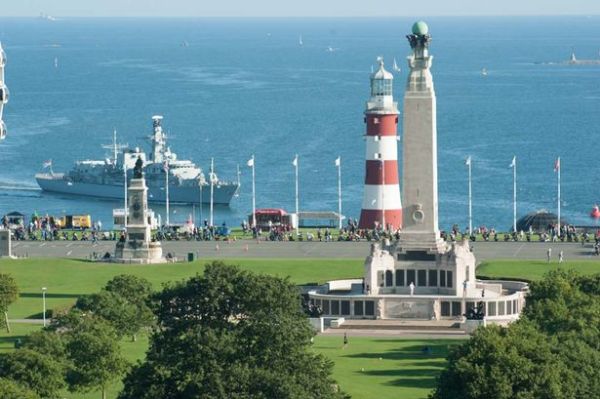
Plymouth Hoe view. with Smeaton’s Tower.

Smeaton’s Tower in this photo was built by an engineer named John Smeaton, constructed of Cornish granite and cleverly dove-tailed together. It has been a Grade 1-listed building since 1954.

It is open to visitors who can climb the 93 steps, including steep ladders, to the lantern room and observe Plymouth Sound – pictured – and the city. 6

Plymouth is now a modern city shaped by its past and steeped in history.

SOURCES

(1) https://genealogyensemble.com/2022/06/29/a-history-of-plymouth-gin/

(2) https://en.wikipedia.org/wiki/Dartmoor_kistvaens

(3) Thttps://commons.wikimedia.org/wiki/File:St_Edward%27s_Church,_Plymouth.jpg Photograph by Chris Downer

(4) https://www.plymouthherald.co.uk/news/plymouth-news/facebook-apologises-removing-posts-rude-4928078

(5) https://en.wikipedia.org/wiki/Royal_Citadel,_Plymouth

(6) https://en.wikipedia.org/wiki/Smeaton%27s_Tower