Tag Archives: Cartwright Labrador

Miss Lindsay’s Curtain Call (updated)

(Correction: I have been informed that is more likely that Reverend Henry Gordon took these photos, developed them and gave them to Miss Lindsay. The dog team photo would have been taken by Rev. Gordon during the winter and the fishermen in the boat must be south of Cartwright due to the lighthouse.)
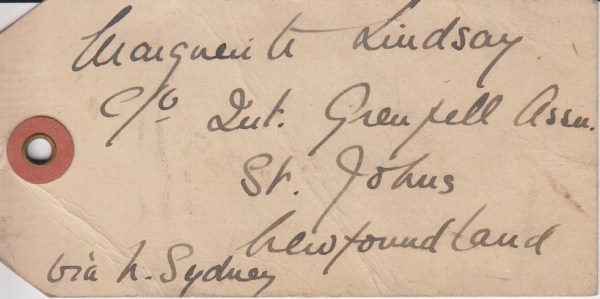
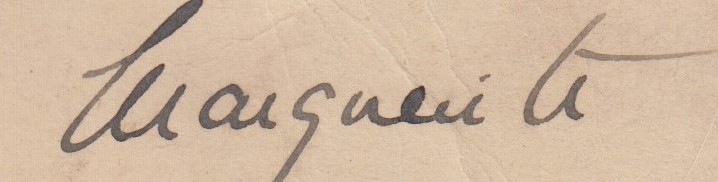
Miss Lindsay’s baggage tag- June 1922

Just over 100 years ago, my great-aunt volunteered as a summer teacher with the Grenfell Mission in Cartwright, Labrador, under Henry Gordon. In August 1922, just days before she was due to return home to Montreal, Quebec, she disappeared. Her body was found four months later, in December 1922, with a bullet through her heart.

I already wrote and published her story in seven parts (links below) and thought I had gleaned every bit of information possible from my “dusty old boxes.” But our ancestors want their story told and my great-aunt, Marguerite Lindsay (1896-1922), had quite a blockbuster to tell. Perhaps it was she who “tweaked” my cousin to finally look into his unopened boxes of family papers and memorabilia.

You can’t possibly imagine my excitement when I received his email:

Hi Lucy,

Apologies for taking so long to get to this. I attach scans of the small

black-and-white prints of Labrador scenes that I found in the box of

clippings and photos. I assume that this is from when Stanley (sic) visited

the area after Marguerite’s death but don’t know for sure. Only two had

writing on the back – the dog team at rest and the school house. I

scanned those too in case you recognize the writing.

Lots of love!

Doug”

Eureka!

It appears that Miss Lindsay had access to a camera while she was there! And yes indeed I recognized her handwriting! It matched the writing on the tag on her baggage that accompanied her when she travelled to Labrador in June 1922. She went there to look after the youngest students (orphaned by the Spanish Flu epidemic) along with another volunteer, Anne Stiles from Boston, while their regular teacher took their summer break. Between the two of them, they oversaw all the children’s lessons, meals and activities.

A few days before she disappeared that August, she mailed a letter to her brother Stanley in Montreal. That precious last letter shared a long and loving detailed description of her life in Cartwright. The five newly discovered photos seem to match several parts in her last letter.

1. The first photo is of Marguerite wearing a hat she fabricated to protect her from all the bugs. The cabin in the background was a family home as she shared a room with Anne Stiles in the school dormitory that summer. This photo along with the commentary in her letter helps me imagine being there myself.
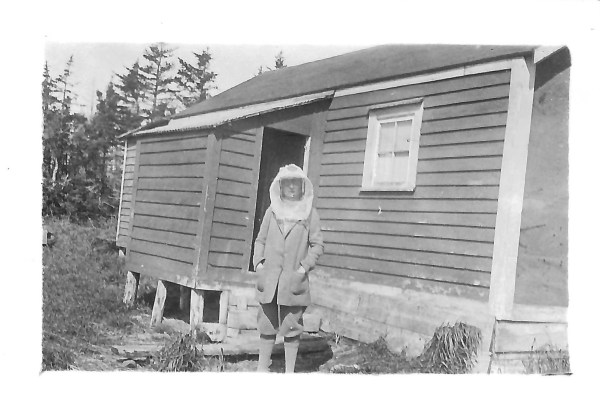
Miss Lindsay wearing her bug hat outside a family home beside the school in Muddy Bay

It is really cold here and foggy quite often, but very bracing, and I like it much better than heat; also when it is cold, there are no flies, and that means a great deal. I could compete with Sir Harry Johnson’s bugs in Africa, and match about even. The mosquitoes just swarm: at first you think it is fog or haze, lying low over the marshes, till you try and walk through them. We bathe in citronella. About 50 of them were getting free transportation on different portions of my anatomy, and I remarked to one of the natives, that the mosquitoes were bad; at which he laughed, and said to wait till they hid the sun, then I would call them bad.

The children are terribly bitten, and wail all night when they are extra bad. Well, there is a species of black fly, and their team work with the mosquito is extraordinary. They don’t bother to pierce your epidermis for themselves, but follow exactly in the footsteps of the mosquitoes, and they hurt. I could hardly turn my head for a day, the back of my neck was so bitten. I may have mentioned that there are no such things as screens on our windows; but we put up some surgical dressings, and tacked the gauze up as a slight protection. As little extras there are deer flies, flying ants and sand flies.


2. The second photo represents not only the local day-to-day fishing activities but other adventures like the exciting one she described in her letter.
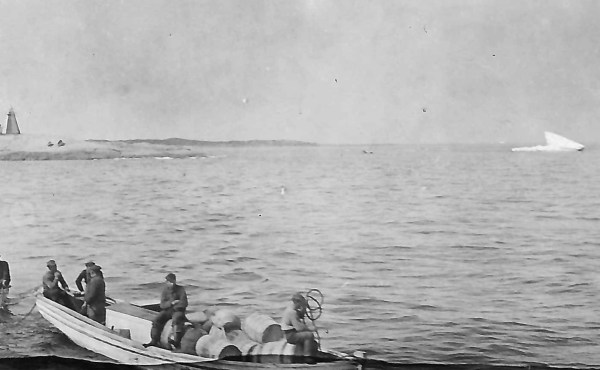
Local fishermen in boat with Iceberg, south of Cartwright (there were no lighthouses near Cartwright)

It would be a great help if we had ice; but none comes up the bay. Some of the men tried to capture a young iceberg, and tow it home from the outside coast—behind the motor boat, but the friction of the rope wore through the ice, so it never arrived. Last Wednesday, Mr. Gordon told us we had been working so hard, we had better take a day off, and go up the bay with one of the fishermen, on an expedition for wood. We started off in a motor boat, towing an empty scow: just Anne and I, four boys of about 12, and the fisherman.

It was a perfect warm sunny afternoon, and Anne and I were almost asleep on the sloping bow of the boat, when we came around the point into a heavy wind and all but rolled off. It blew up very strongly, and Anne and I and the boys got into the very bottom of the boat, under our rugs for warmth. I was wearing everything I possessed; about what I wear for skiing. The fisherman was having a very hard time with the scow. It looked once or twice as though water would come down on our heads, when our boat got between the waves and it rested on the crest.

It took us over three hours to reach our destination – the point at White Bear river. There we went up to the warm cottage of some very kind fisher-folk, just as it started to pour, and thunder and lightning. We had expected to sleep on the floor, so had brought rugs; but Anne and I were given a bunk in a room about the size of a dugout, which was really comfortable after we had skillfully removed a pane of glass with a knife, the window being purely for ornament. They provided us with a feather bed in the bunk and warm dry rugs and fed us with smoked salmon and caribou meat. It was loads of fun.


3. The third photo shows the eager faces of a few of her students by the water’s edge hoping for a swim with Miss Lindsay that afternoon.
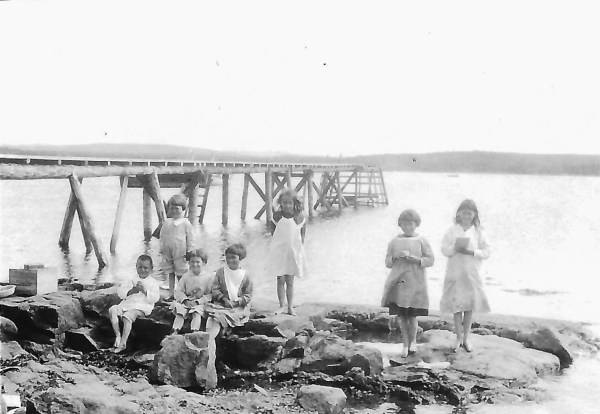
Some of Miss Lindsay’s summer pupils waiting for a swim

We are teaching the children to swim; the water is not so cold as you might think. There are some perfect walks around; nowhere are the trees too thick to push through; so though we have got lost once or twice, it is never for long. It is rather fun climbing the mountains; your feet get drenched, in the marsh, but we are used to that now. You would be amused to see me giving the children drill, and getting them to breathe through their noses.

We are going across the bay to hold nutrition classes, and persuade them to order whole wheat flour, instead of white.


4. The fourth photo is of a dog and sled team. According to her note on the back, it belonged to the Doctor from St. Anthony (about 570km away). She noted that two Labrador Huskies lead the team and made special mention of their curled tails and pointed ears.
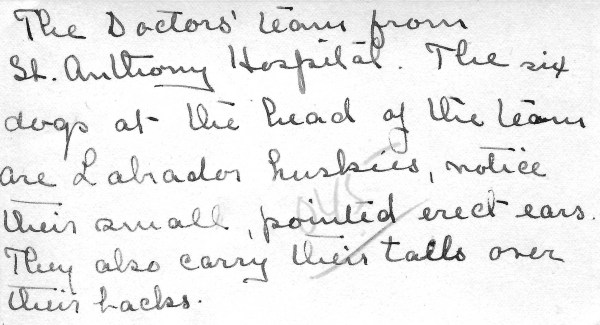
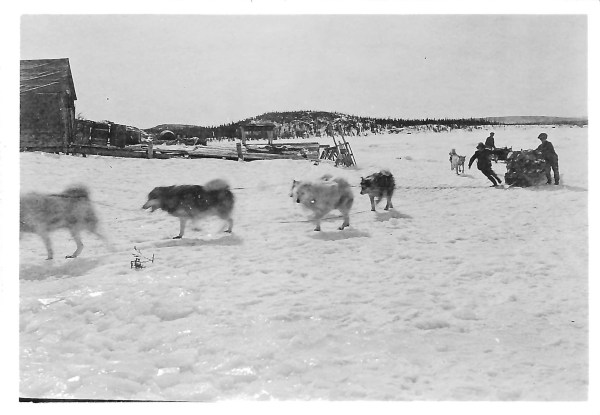
Local dog and sled team delivering wood in the winter time to the public school in Muddy Bay with a handwritten note on the back


5. The fifth and final photo is of the newly constructed Labrador Public School in Muddy Bay, near Cartwright, which later burned down. The school in Cartwright today was named after her superior: The Henry Gordon Academy. To this day, the children are told Miss Lindsay’s story. Her handwritten note on the reverse side of this photo makes it that much more special for me.
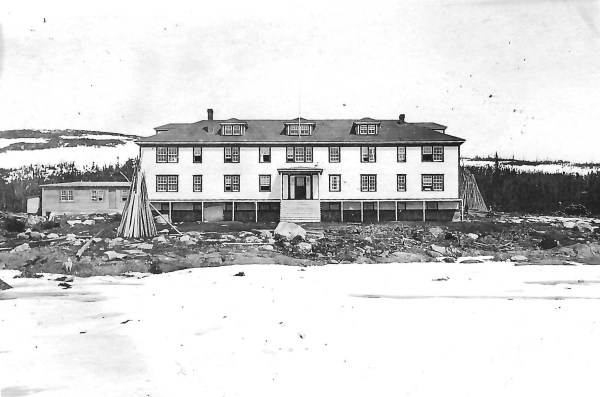
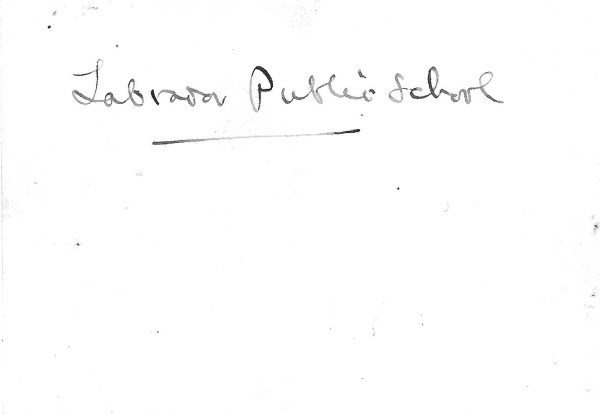
Labrador Public School in Muddy Bay with handwritten note on the back.


I am so delighted about the recent discovery of these photos and very grateful to my cousin for finding these gems! I remain eagerly optimistic for more of Miss Lindsay’s undiscovered treasures to appear someday!

Miss Lindsay – Part 1

Miss Lindsay – Part 2

Miss Lindsay – Part 3

Miss Lindsay – The Early Years

Miss Lindsay’s Last Letter

how i came to write miss lindsay’s tale

The Mothering Bureau

Dusty Old Boxes

Miss Lindsay’s Last Letter

Marguerite Lindsay wrote a letter from Cartwright, Labrador, to her brother in Montreal, Quebec. The letter was postmarked July 29, 1922. Six days later she was dead.

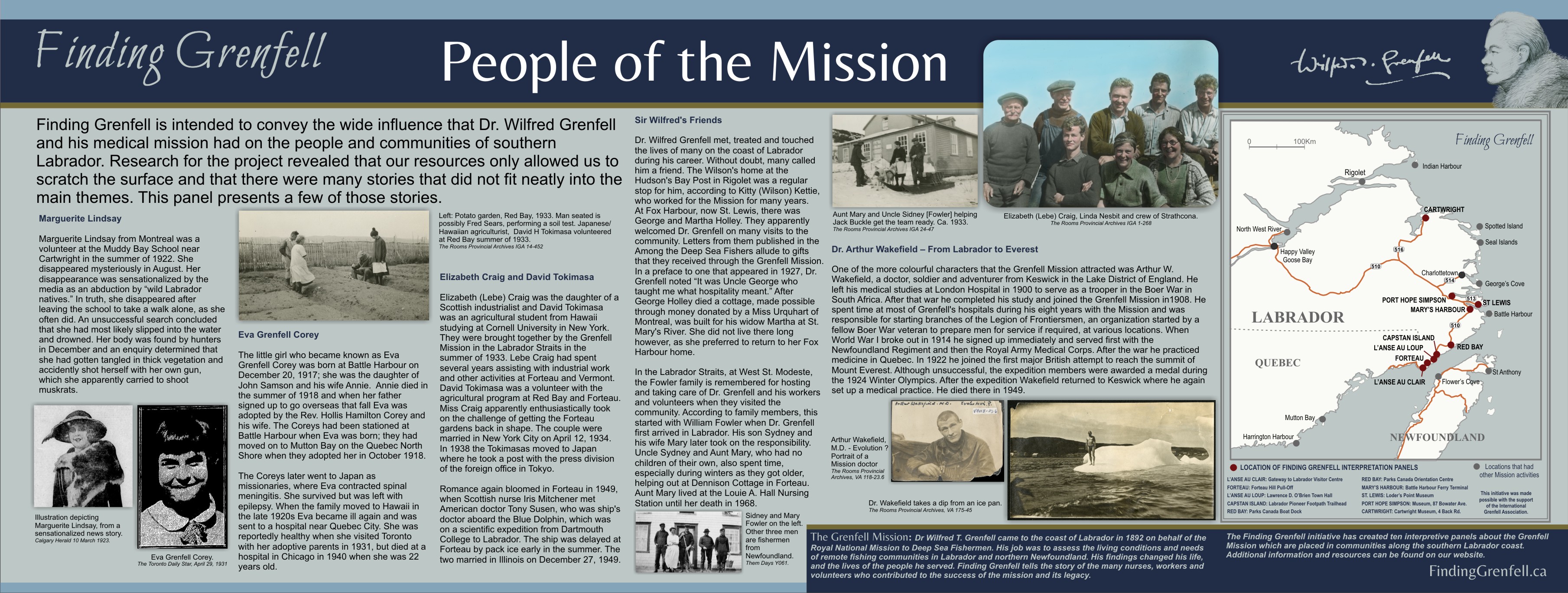
Marguerite, 26, volunteered as a summer teacher in 1922 with the Grenfell Mission1 at Rev. Henry Gordon’s orphanage school in Muddy Bay six miles from Cartwright. She ran the recreation program for Rev. Gordon and taught the older girls sports such as swimming and introduced the game of french cricket which the boys played as well.

In her long newsy letter to her brother, she mentioned the gunfire from the previous night which announced the arrival of the “Bayeskimo2” in Cartwright. It had taken the ship just a week to come from a very hot Montreal. She wrote: “It is really cold here and foggy quite often, but very bracing, and I like it much better than heat; also when it is cold, there are no flies, and that means a great deal.” Then she described the local bug problem with a delightful sense of humour:

“We bathe in citronella. About 50 of them were getting free transportation on different portions of my anatomy … and there is a species of black fly, and their teamwork with the mosquito is extraordinary. They don’t bother to pierce your epidermis for themselves but follow exactly in the footsteps of the mosquitoes, and they hurt. I could hardly turn my head for a day, the back of my neck was so bitten.”

Perhaps that explains the white hat with a neck flap she wore in the photo of the children and staff sitting on the steps of the school. In another effort to protect herself at night, she cleverly tacked up strips of cotton gauze in the screen-less windows.

1922 – Rev. Henry Gordon’s Orphage School in Cartwright, Labrador (top row L to R: Rev. & Mrs. Gordon, three others, Annette and Marguerite)

Annette Stiles, the other summer volunteer and nutritionist for the school, became close friends with Marguerite. In her letter, Marguerite wrote: “We were bewailing our inadequacies about things we had to tackle; but Annette very truly remarked, that anything we could do was an improvement.” Between them, they cared for about 28 orphaned children3 and gratefully “the children’s enthusiasm was very contagious – a great contrast to the boredom of some in more civilized places.”4

These unfortunate children had multiple health issues as well – many of them suffering from tuberculosis and/or scurvy and berri-berri5 – mostly due to their poor diet. It appeared that the boys were much brighter than the girls and the adult ratio in the community was four men to every woman.

She continued her letter with a brief description of her daily routine: “We are teaching the children to swim; the water is not as cold as you might think…and you would be amused to see me giving the children drill, and getting them to breathe through their noses.”

The friendly duo happily shared their combined duties. “We really have been working awfully hard, but Annette is amusing to work with. We are cooking for some 30 odd people… and some of the experiments would turn your hair grey!”

Overall she adapted to the local food: “The salmon is in now, and we get over 100 a day in the net just off the point. It is very good; am also getting used to condensed milk.” She lamented the lack of ice, but mentioned that any attempts to capture young icebergs were foiled, as it proved too difficult to tow them home behind a boat without them breaking free.

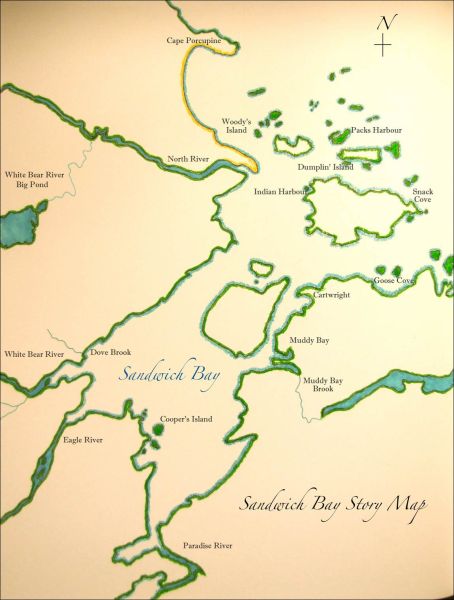
As a reward for all their hard work, Rev. Gordon gave the two volunteers the day off, to accompany a fisherman and some boys on an expedition for firewood across Sandwich Bay. It took three hours to cover the 18 treacherous miles across the stormy waters. The “fisherfolk” at the point of White Bear River welcomed them warmly upon arrival and kindly provided food and a place to stay.

White Bear River (west coast) 18 miles across Sandwich Bay to Muddy Bay (east coast)

“We had expected to sleep on the floor, so had brought rugs; but Annette and I were given a bunk in a room about the size of a dugout, which was really comfortable after we had skilfully removed a pane of glass with a knife, the window being purely for ornament. They provided us a feather bed in the bunk, warm and dry rugs, and fed us with smoked salmon and cariboo meat. It was loads of fun.”

The next morning, they walked up White Bear River for a few hours…”as pretty a place as you could find” before safely returning to Muddy Bay later the same night with ”a perfect run right into the sunset”.

A few days before Marguerite mailed her letter, she met Dr. Grenfell himself (the head of the Mission) when the year’s supplies arrived by steamer. He made such an impression on her that she wrote – “he certainly has a great personality and has accomplished more than would seem possible.” Although Rev. Gordon and the men were away Marguerite told Dr. Grenfell: “Oh we can work just as well as men. You must treat us as such.” and the two girls insisted on rolling barrels and carrying boxes with the rest of the crew.

Soon after Marguerite’s death, Dr. Grenfell wrote a letter of condolence to her mother and spoke of “…the pleasure of meeting and knowing the joyous spirit of your daughter and the full measure of energy she was so gladly giving to help others.”

On August 4, 1922, six days after mailing her last letter home, Marguerite died accidentally while on a walk in the nearby woods.

For the whole story on Marguerite please read:

Miss Lindsay – Part 1

Miss Lindsay – Part 2

Miss Lindsay – Part 3

how i came to write miss lindsay’s tale

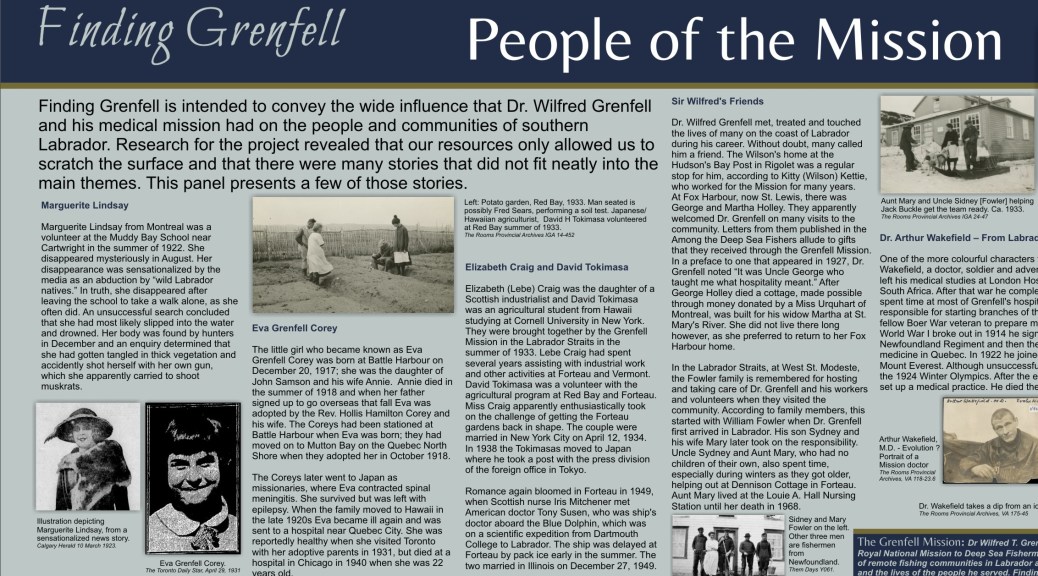
1https://www.findinggrenfell.ca/home/files/pg/panel-people-v4-large.jpg as referenced 2021-08-07.

2 Ship Bayeskimo – https://wiki2.org/en/Hudson%27s_Bay_Company_vessels as of 2021-07-15

3Most of the children were orphans due to the Spanish Flu Epidemic in the area

4Among The Deep Sea Fishers, The Cartwright Expert Cook by Annette Stiles, p. 127.

5Beriberi is a disease of the nervous system caused by a person not getting enough thiamine B(vitamin B1) in the diet

how i came to write miss lindsay’s tale

“Our ancestors want their stories told” said my third cousin and fellow genealogy writer. We are both related to my great aunt, Miss Marguerite Lindsay, and we were both told the same story growing up: Poor Marguerite Lindsay died tragically in Labrador, in 1922, at age 25. Period.

We never questioned the statement nor begged for gory details. Little did we know that she did indeed have a story to tell and she finally got her wish almost 100 years later.

I wrote a story about Marguerite’s mother, Mary Heloise Bagg Lindsay, and at the end of her story I listed the names of her six children, including her youngest daughter Marguerite.

Great Granny Bagg (Kittens on the Wedding Dress)

Shortly after the publication of her story on our website, I received an e-mail from a student at Memorial University in St John’s, Newfoundland. She wanted to know where Marguerite was buried. I found that to be a very strange question in response to a story about her mother. I replied hesitantly and asked why she wanted to know. What a delightful surprise to hear that not only had she researched Miss Lindsay’s story but also offered to send me copies of her findings and the 1922 newspaper clippings!

The media covered the tragic tale in great detail over an 18-month period including the final coroner’s report. The official report concluded that her accidental death occurred from a shot by her own pistol when she tripped and fell.

I devoured the newspaper clippings and finally knew the whole story that no one spoke of so long ago.

Research is not my forte but it seems everyone that I contacted had something to tell me. Several websites produced other glimpses into Cartwright, Labrador and Grenfell himself. What a thrill to discover a great deal of information about the International Grenfell Association preserved on microfilm at The Rooms Provincial Archives in St. John’s, Newfoundland.

That fateful summer in 1922, Marguerite worked as a volunteer school teacher with the Grenfell Mission in Cartwright, Labrador, under Reverend Henry Gordon. The local community named their school in Cartwright after him.

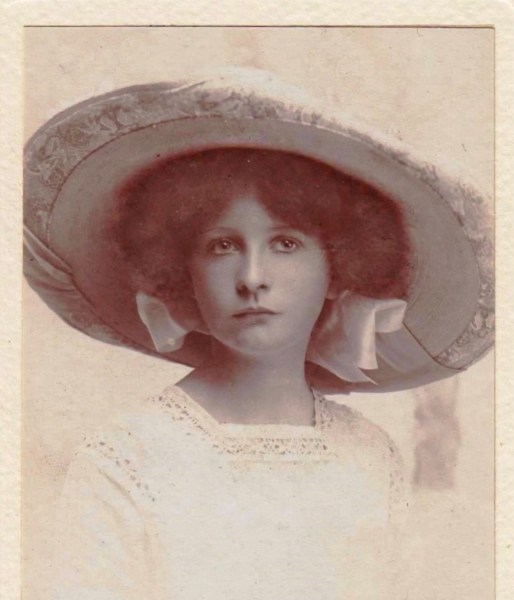
Miss Marguerite Lindsay Grenfell Mission Volunteer

When I contacted the assistant principal at Henry Gordon Academy, she seemed equally as excited as I to talk about Miss Lindsay. We decided to skip e-mails and speak directly over the phone instead.

Well, this is some of what she told me…They named the marsh where they found her body “Miss Lindsay’s Marsh”. An honorary plaque graces the local church and a memorial prayer said every Christmas. Some of the young students wrote her a poem and the new students are all told Miss Lindsay’s story. Miss Martin, a fellow teacher, recently retired from the Henry Gordon Academy and still has the sewing machine that her grandfather, John Martin, bought with his reward money for finding Miss Lindsay’s body that December back in 1922.

And just then…the music began to play over the phone, and I quietly listened to Harry Martin’s song “Somewhere Beyond the Hills” written for Marguerite.

“I can’t believe that I am talking to a descendant of Miss Lindsay!” said my new friend.

I could almost imagine Marguerite standing beside me soaking up all these loving tributes… her story finally told.

(Rumour has it that if I can make the 100th year anniversary of Miss Lindsay’s death in August 2022, there might be a potluck supper and memorial service at the church in her honour!)

Helen Frances Marguerite Lindsay 1896-1922

Edited by author 2020-07-13

Notes: Miss Lindsay’s three part story can be found below:

https://genealogyensemble.com/2019/10/30/miss-lindsay-part-1/

https://genealogyensemble.com/2019/12/18/miss-lindsay-part-2/

https://genealogyensemble.com/2019/12/25/miss-lindsay-part-3/

1. A summary of Miss Lindsay’s story can be found on the Finding Grenfell website under the People of the Mission section: (https://www.findinggrenfell.ca/home/files/pg/panel-people-v4-large.jpg).

Beautiful hooked rug by Grenfell Mission artisans – courtesy of Janice Hamilton

2. The famous Grenfell hooked rugs: http://www.grenfellhookedmats.com/and also, they continue to make and sell rugs, clothing, books and other items, or you can buy a membership in the historical society

Miss Lindsay – Part 3

Miss Marguerite Lindsay, working as a summer volunteer teacher, went missing from the Grenfell Mission in Cartwright, Labrador, in August 1922. Her body was finally discovered four months later, in December 1922.

The nearby authorities in Battle Harbour were notified immediately, as was her family in Montreal. When her body was gently pried loose from its frozen grave, they were stunned to discover a bullet wound in Miss Lindsay’s chest.

John Martin, the young trapper who found her body, was unable to provide any more information upon further questioning. When interviewed over 50 years later, he recalled his sad discovery that day by remarking: “Twas a remarkable place where she was found. There was a pool (Salt Water Pond) with two big junipers beside it. It was only about 15 minutes walk from the (Muddy Bay) boarding school.”1

Journalists suddenly had ample new fodder for their newspapers, and the story of Miss Lindsay dramatically bounced back into the headlines. Murder? Suicide? Accidental death?

In no time at all, a bullet wound in her chest evolved into riveting stories of “foul play,” a “love affair gone wrong,” or “shot through the heart” and other sensational headlines that sell newspapers. However, the possibility of a tragic and fatal accident was barely mentioned, as that version wouldn’t satisfy scandal hungry readers.

After three inconclusive investigations, Detective Head Constable Byrne was dispatched to Cartwright nine months later, in September 1923. Twenty-two local Cartwright people were interviewed in an effort to gather more information and rule out the rumours of foul play and murder.

Fifty years later, in 1976, Ida Sheppard recalled that time in another interview “I was workin’ at the Muddy Bay School when Miss Lindsay got lost. We were all cryin’ for her ‘cause we fair loved her, she was such a nice person.” This poignant statement seems to echo the sentiment of the people of Cartwright even to this day.2

Eventually Detective Byrne concluded the following in his statements to the press:

          “The presumption is that Miss Lindsay on her way to take a bath in Salt Water Pond into which the brook flows, stopped to shoot some muskrat which abound in the river, and that she fell on the firearm which she was known to have carried.”3

           “The postmortem examination held at Cartwright showed that a bullet had entered the left side, passed through the heart and out on the other side of the body. From this it is concluded that Miss Lindsay must have fallen on the weapon as it was almost impossible to turn it on herself in the direction.”4

In her coat pocket were a dozen bullets that would fit her Browning pistol, also supporting the accidental death theory.5

Detective Byrne terminated his investigation with the statement: “The postmortem disclosed nothing which would tend to indicate deliberate suicide.”6

Once the sea ice had melted in June 1923, permitting navigaton once again, Miss Lindsay’s body (preserved in salt) was transported to St. John’s, Newfoundland. There a funeral was held for Miss Lindsay before her body was taken by train back to her family in Montreal.

           “As the cortege wound its way to the railway station, citizens stood with uncovered heads evidencing their respect for the departed heroine and sympathy for the sorrowing relatives at home. Marguerite Lindsay will rank with the great women of the world who have given their lives for others”. 7

She was finally laid to rest in the family plot in the Mount Royal cemetery in Montreal where, as it happens, I went to visit her recently.

So whether someone today strolls by “Miss Lindsay’s Marsh,” fingers her name on the local church’s plaque8, listens to a song written in her honour9 or reads a poem written by school children… the Cartwright community continues to honour Marguerite’s memory almost 100 years after her death.

Now that’s a legacy!

The grave of Helen Frances Marguerite Lindsay

1“I found Miss Lindsay,” John Martin, 1976, Cartwright, Labrador. Researcher Doris Saunders.

2“We Fair Loved Her,” Ida Sheppard, 1976, Happy Valley, Labrador. Researcher Doris Saunders.

3Evening Telegram, “Miss Lindsay’s Death Accidental,” September 24,1923.

4Evening Telegram, “Miss Lindsay’s Death Accidental,” September 24,1923.

5Evening Telegram, “Miss Lindsay’s Death Accidental,” September 24,1923.

6Evening Telegram, “Miss Lindsay’s Death Accidental,” September 24,1923.

7Evening Telegram, “Miss Lindsay’s Death Accidental,” September 24,1923.

8St. Peter’s Anglican Church, Cartwright, Labrador

9“Somewhere Beyond the Hills,” words and music by Harry Martin

Notes:

Miss Marguerite Lindsay 

By: Adam Dyson and Brandon Cabot (Grade 4 – Henry Gordon Academy, Cartwright, Labrador)

Once on a summer day in 1922,

A fine young lady died and only a few know.

What happened to her is a mystery,

And will every be part of Cartwright’s history.

Harry Martin wrote a song, we really thank him.

They know that the chance she was alive was very slim.

The newspaper says a mystery was found,

The dogs found her body in a snowy mound.

She went for a walk 15 minutes away,

From a land she loved called Muddy Bay.

She never came back, not even the next day,

She was supposed to catch a boat heading far far away.

She was found by the edge of a big marsh,

The winters were violent an her death was harsh.

Miss Lindsay and her life at Muddy Bay,

Is a mystery that is unsolved today.

Somewhere Beyond the Hills 

Words and Music – Harry Martin of Cartwright, Labrador

Have you ever wondered, as you listened to the wind,
What secrets does she carry, what sad things had she seen?
Well, I’ve listened to her stories a thousand times before,
But still, I have to question her once more.

What happened on that summer’s day in 1922?
Has been talked about by many but the truth is known by few;
And those who knew the answer have been silenced by the years,
But suspicion on the wind have reached my ears.

Someone said somebody knew but when he spoke he lied,
Others said they saw them talking on the day she died;
When the darkness found her she was silent, cold and still,
And her body lay somewhere beyond the hill.

Somewhere in some city a grey-haired mother prays,
Please, God, protect my angel in that land so far away;
But tonight her youngest daughter lies asleep beneath the snow,
In a winter land so far away from home.

Then one cold December day a mystery was unveiled;
They found the poor young maiden there beside a trapper’s trail;
Her body, cold and lifeless, had a bullet through the breast,
Now, the reason why won’t let this poor soul rest.

I have often wondered, as I listened to the wind,
What secrets did she carry, what sad things had she seen?

But those who knew the answers are no silent, cold and still,

And the secret lies somewhere beyond the hill.