
Children the world over have been bullied at school and in their neighbourhoods. I was no exception. As a child in primary school, I remember kids calling me ‘Bullfrog’ which, of course, I hated!
Many years later, I am researching and doing genealogy, trying to find out the origin of the name I hated as a child. I always knew there was a camp in Wiltshire, England called Bulford Camp. Family members have visited the area, especially to take photos of the area name, posing proudly next to the sign.
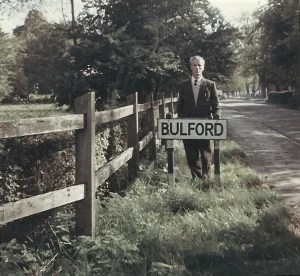
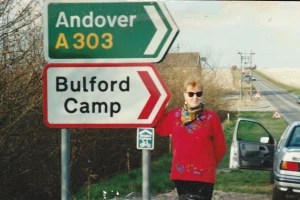
My Uncle Roy Bulford. Circa. 1960’s. Marian Bulford. Circa 1990’s
From a quiet country road to a major motorway
Less probably, the name may have come from a lost place called Bulford in Strensall (North Yorkshire), presumed to have been located at a ford of a river near Strensall. Yet another reason the name “Bulford” may have originated from is “Bull’s Ford”, a crossing point of the River Avon in Wiltshire, where bulls were driven across. (1)
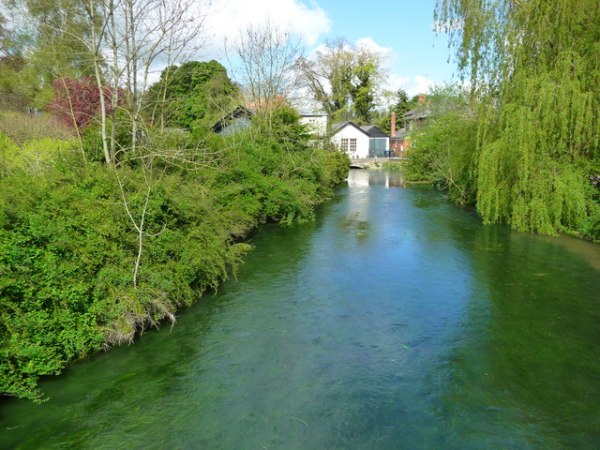
The River Avon Meanders Through Bulford
© Copyright Chris Talbot. Licensed for reuse under this Creative Commons License.
Bulford is a village and Parish in Wiltshire, England. It is near Salisbury Plain, close to RAF Upavon, where I was posted whilst in the WRAF (Women’s Royal Air Force). The Bulford Army camp is separate from the village but within the parish. It seems the Army camp is named after the ford that gave the village of Bulford its name. ‘Bulut ieg ford‘ is from an Old English phrase which means ‘ragged robin island ford” Why could we not have picked Robinford instead of Bulford?? (2)
Bulford is recorded in the Wiltshire Charter Rolls of 1199 as Bultiford and as Bultesforda in 1270. It is then recorded as Bulteforde in the Ecclesiastical Tax Records of 1291. (3)
The village of Bulford has a history of Roman and Saxon settlements. In the 1086 Domesday Book, there were 39 households at Bulford. However, there are not actually any Bulford family names, as seen below with a page taken from the Domesday Book. Only the religious and the titled were included!
Catalogue description Place name: Bulford, Wiltshire Folio: 68v Great Domesday Book: (4)
| Reference: | E 31/2/1/2046 |
|---|---|
| Description: | Place name: Bulford, Wiltshire |
| Reference: | E 31/2/1/2046 |
|---|---|
| Description: | Place name: Bulford, Wiltshire Folio: 68v Great Domesday Book Domesday place name: Boltintone People mentioned within entire folio: Abbess of St Mary of Amesbury; Abbey of Sainte-Marie of Bec; Abbey of St Mary of Amesbury; Agenulf; Alweard; Alweard the priest; Beorhtric; Canons of Church of Lisieux; Church of Brixton Deverill; Eadgifu; Earl Harold; Hugh d’Avranches, Earl of Chester; Roger de Montgomery, Earl of Shrewsbury; Edward; Father of Agenulf; Gerald the priest of Wilton; Gilbert; Godwine; Abbey of Sainte-Marie of Grestain; Hamo; Hearding; Ketil; King Edward as lord; Nuns of Abbey of St Mary of Amesbury; Osbern the priest; Osmund, thegn; Queen Matilda; Regenbald the priest; Robert, Count of Mortain; Siward; Turold; William |
| Date: | 1086 |
| Held by: | The National Archives, Kew |
| Legal status: | Public Record(s) |
| Closure status: | Open Document, Open Description |
Surnames in England were not used before the early Middle Ages, around the 11th to 12th centuries. Before that, people were known by a single name, usually according to their physical features, occupation, or their father (patronymic). To begin with, surnames were fluid and changed over time, or as a person changed his job. For example, John Blacksmith might become John Farrier as his trade developed. As the country’s population grew, it became necessary to distinguish between people.
Surnames in England began to be used during the early Middle Ages, around the 11th to 12th centuries. Before this, people were usually known by a single name. The earliest surnames were often derived from:
- Occupations – for example, “Smith” (blacksmith) or “Baker.”
- Geographical locations – such as “London” (someone from London) or “York” (someone from York). (I feel this is probably where my surname comes from.)
- Patronymics – surnames based on the father’s name, like “Johnson” (son of John).
- Physical features – such as “Brown” (for someone with brown hair or a darker complexion). (5)
Most of my paternal Bulford family live in and around Devon and Cornwall now; however, Ancestry.com tells me that from the 1700 Census and Voter lists, there were 127 Bulford surnames in America!
One of my paternal grandfather’s brothers, George, emigrated to work in the mines in Detroit, Michigan then ended his career working for the Ford Motor Company.
In 2016, I was in touch with his granddaughter, Barbara, my second cousin, on Ancestry. She invited me to her family tree, and we exchanged much information regarding her Bulford family. We had pleasant FaceTime and email exchanges, until her too-early passing in 2020 at the age of 66 years. I wrote about her here: https://genealogyensemble.com/2021/05/12/my-american-cousin/
SOURCES
(1) (2) (3) https://en.wikipedia.org/wiki/Bulford
(4) https://opendomesday.org/place/SE6360/strensall/
The link above is to the Open Domesday Book, which also states that “Hundred of Bulford. (The next largest division from a “hundred”, and the one most recognisable today, are Shires. Devonshire, Wiltshire, Lancashire, etc). Status: No longer exists as a named location but can be identified on the ground’ There were 85 places in the ‘hundred’ of Bulford in the Domesday Book”
 Genealogy Ensemble