
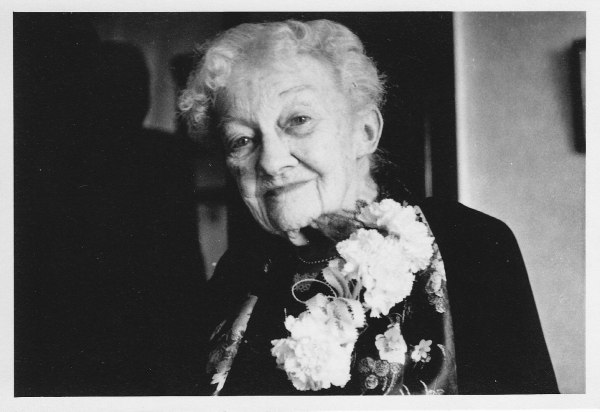
I recently discovered two photos of “Amy” in my dusty old boxes of family memorabilia. The first captured her elderly wrinkled face with a twinkle in her eye and a flower corsage adorning her left shoulder and the other portrayed a 29-year old Amy dressed in a formal gown complete with a silk fan also with a flower corsage on her left shoulder. Inscribed on the reverse side of this second photo, written in Amy’s scrawl, was “Bob with love Amy – Xmas 1894.”

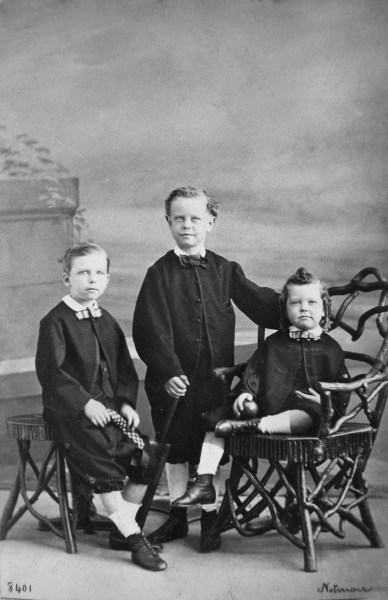
It turns out that Amy C. Lindsay (1865-1960) was my great grandfather Robert Lindsay’s (1855-1931) half sister. His mother Henrietta Dyde died within months of losing her fourth child and, a couple of years later, his father Robert A. Lindsay (1826-1891) married a young Charlotte Vennor (1843-1912) who became stepmother to his three boys – Robert, Charles and Percival – all under the age of ten. Over time, Robert A. and Charlotte had five more children, with Amy being their first born and ten years junior to Robert.
Who the heck was “Bob”?
Amy never married, so “Bob” could not have been a lost love in WW1, as she was 50 years old at that time. The most plausible explanation could be a gift to her older half brother Robert – “Bob” – and that’s the reason why the photo ended up in with my family.
My guess is that she idolized her oldest half-brother and gifted him that special photo which somehow survived the test of time to be found by me in my dusty old boxes. Mystery solved!
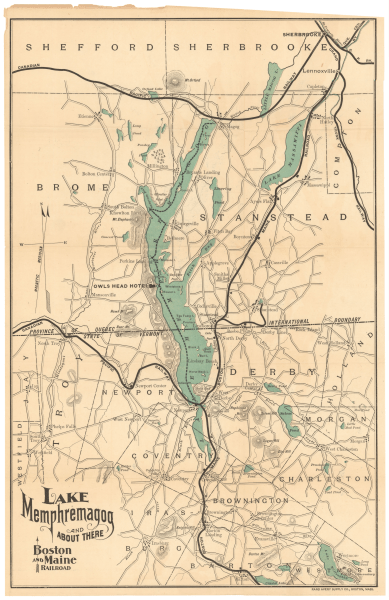
In 1873, when Amy turned eight, her parents bought a huge summer estate property called Woodland on Lake Memphremagog just south of Georgeville, Quebec. Lake Memphremagog1 is in the Eastern Townships just 72 miles east of Montreal, Quebec. It is 31 miles long, from north to south, spanning the international border between Quebec and Vermont but is predominately in Quebec.
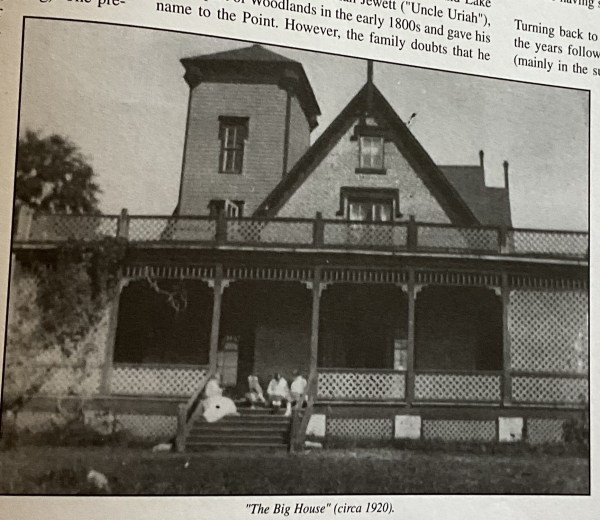
Amy’s father acquired “Woodland” from the original owner William Wood and it consisted of 280 acres of land bordering on the waterfront. William Wood had built a large red brick manor house that a neighbour described as a “barrack with a steeple.” Regardless of how it looked, it became home to several generations of the Lindsay family until the early 1960’s when it was replaced. They affectionately called it “The Big House.”
During this time, several other wealthy English speaking families acquired farm properties in the area and established their summer residences there as well. Woodland became a full functioning farm complete with livestock and crops all managed by hired hands. Over time, various third parties managed the farm until well into the 20th century, which left the family with plenty of free time on their hands.
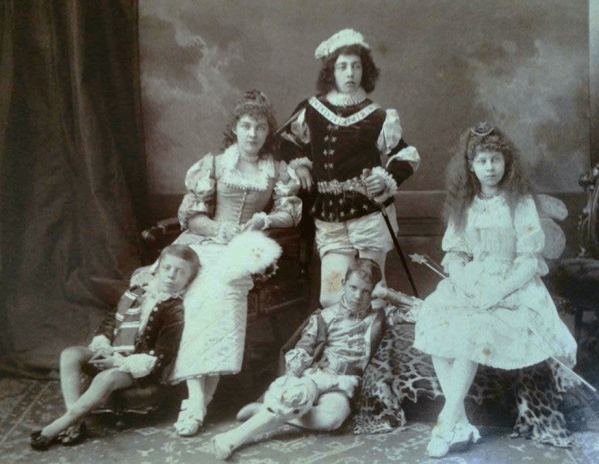
The Lindsay family took up residence in the Big House every summer. Amy’s father worked as an accountant for the Bank of Montreal and evidently could be spared for the long summer months to enjoy time with his family. “Apparently Robert Lindsay followed a daily routine of walking around the property with his entire family in tow according to size.” On another special occasion the whole family dressed up in fancy costume clothes for a party.
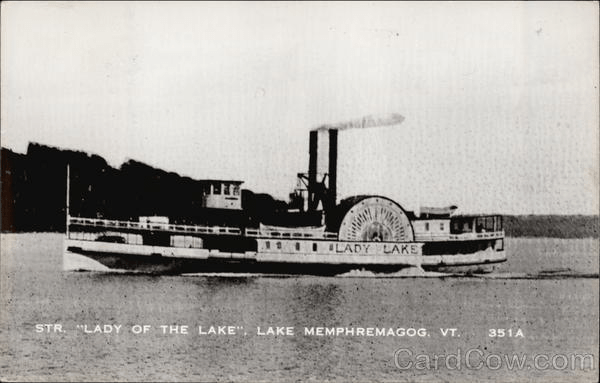
The grand “Lady of the Lake” steamer would sail twice daily on Lake Memphremagog stopping at private docks and thus providing the family with lake excursions right from the front doorstep of the “Big House.”
The Lindsay family (including mother-in-law Vennor who rescued Woodland financially in 1885) enjoyed the property until Robert’s death in 1891. Mrs. Vennor died four years after him and the property devolved to the four surviving grandchildren: Amy, Douglas, Cecil and Edith. (Their brother Sydenham died young while trying to save a drowning victim.)
According to her family, “Amy was a small lady, well liked and well respected by most… She loved the lake and Georgeville and spent almost all her summers there… She lived in the Big House and had a beautiful English country garden nearby where she liked to spend many hours puttering about.”2
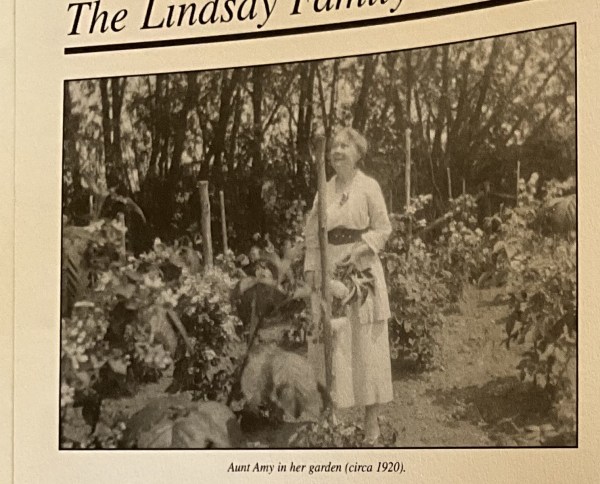
Although Amy never had children of her own, her many nieces and nephews doted on their “Aunt Amy.” After her mother died in 1913, her nephew took her to Paris and they stayed at the Hotel Pas de Calais, a four-star boutique hotel, right in the heart of tourist Paris. Nothing but the best for Aunt Amy!
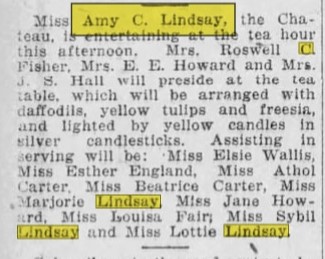
According to an article in the Montreal Star, when Amy hosted a social tea at The Chateau (across from the Ritz-Carlton Hotel), “the tea table was arranged with daffodils, yellow tulips and freesia and lighted by yellow candles in silver candlesticks.” What made it even more special were her five adult nieces assisting her in the serving of tea. She must have been very proud!
Woodland stayed in the Lindsay family until 2020 with several generations enjoying the spectacular property and family legacy. The road leading to their property was aptly named “Chemin Lindsay” and remains so today.
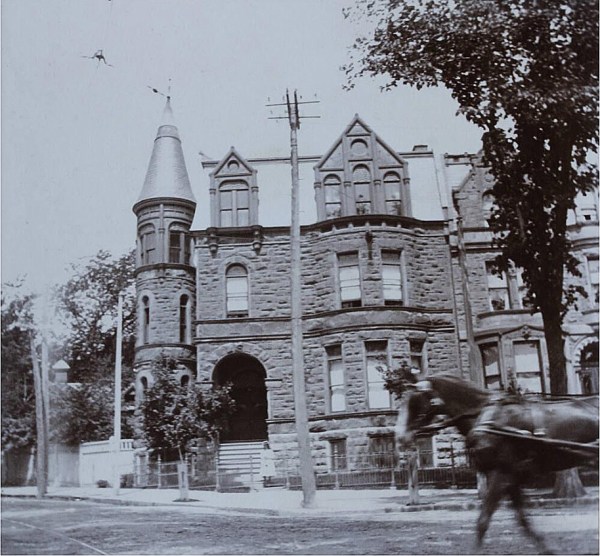
Although Amy spent extended summers with the multi-generational Lindsay family at Woodland, she lived the rest of the year in the downtown area in Montreal known as “The Golden Square Mile.”3 She seemed to move around quite a bit but always within the same area first staying with her mother until her death and then sometimes with her sister Edith (Carter) after that. Although in 1920 she enjoyed “wintering” at the Ritz-Carlton Hotel!
Amy eventually settled for her last 20 years in the Maxwelton Apartments on Sherbrooke Street near McTavish across from the McGill University campus while summering at Woodland until she died in 1960 at age 95.
According to the family, she obtained her first TV late in life and became an avid hockey fan! What a thrill it must have been to watch that first televised hockey game in 1952!
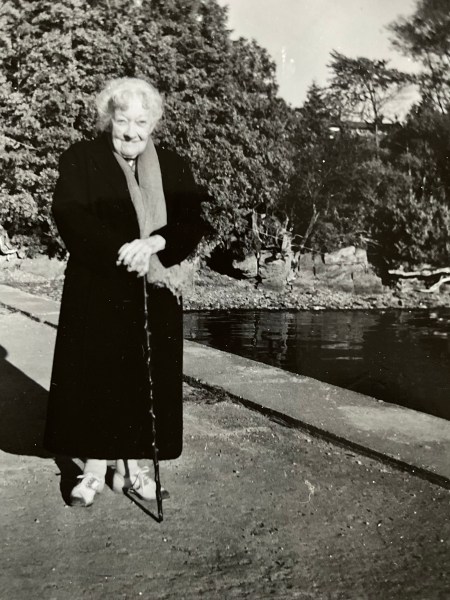
Amy on the Georgeville dock 1955 at age 90
In her last will and testament, written in 1896 when she inherited one quarter of Woodland, she bequeathed “Bob” her cherished set of Waverly books by Sir Walter Scott. He died long before her and, unfortunately, they were not to be found in my dusty old boxes!

1https://wiki2.org/en/Lake_Memphremagog – as referenced 2023-10-18
2The Lindsay Family and Woodlands – “Georgeville 200th”
1901 Lake Memphremagog map” by Rand Avery Supply Co. – Ward Maps. Licensed under Public Domain via Commons – https://wiki2.org/en/File:1901_Lake_Memphremagog_map.png#/media/File:1901_Lake_Memphremagog_map.png
3https://wiki2.org/en/Golden_Square_Mile?wprov=srpw1_0 – as referenced 2023-10-18
Notes:
A map of Grand Trunk Railway route Mtl to Portland, the train appears to have stopped in Sherbrooke:
https://digitalarchive.tpl.ca/objects/353690/map-of-grand-trunk-railway-system-and-connections
Archival photos of Georgeville:
https://www.townshipsarchives.ca/georgeville-quebec
Janice Hamilton’s story about the Baggs in Georgeville:
Summer in Georgeville
 Genealogy Ensemble
