
(condensed and revised from several articles that appeared on my personal family history page, Writing Up the Ancestors, around 2020)
In February 1841, my future great-great-grandfather wrote a letter to my future great-great-grandmother, explaining that his grandmother had asked him to write. It doesn’t take much reading between the lines for me to suspect that he was smitten. Perhaps his grandmother had also noticed.
Stanley Clark Bagg (SCB), 20, who lived in Montreal, wrote to Catharine Mitcheson, 18, in Philadelphia: “Grandmother not having received a letter from yourself or your respected parents for a very long time, felt desirous to hear from you or them, and requested me to write, hoping that you or someone of the family would have the goodness to write.”1
SCB and Catharine were first cousins once removed. SCB’s grandmother, Mary (Mitcheson) Clark (1776-1856) was the older sister of Catharine’s father, Robert Mitcheson (1779-1859.) Both Mary and Robert grew up in County Durham, England and immigrated to North America as adults, she to Montreal and he to Philadelphia. Mary married young, while Robert didn’t marry until he was around 40.
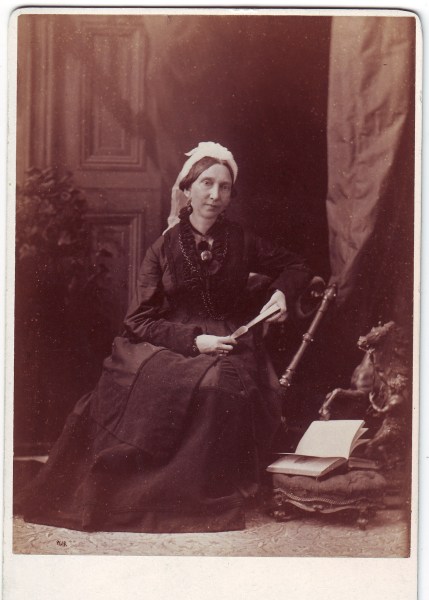
In the summer of 1840, Catharine and her brother Robert visited Montreal to attend another cousin’s wedding. That was probably when SCB and his future bride first encountered each other.
In his letter to Catharine, SCB wrote, “This winter is quite a gay one and scarcely anything is talked of but the parties and concerts, but still we are very lonesome and have been so since you and Robert left here, particularly after (cousin) Mary was married. We all regret very much that you and Robert are not here to participate in the pleasures of the season, but hope shortly to have the pleasure of again seeing you here. Father has gone a few days journey and now I am entirely alone, and can assure you that keeping ‘Bachelor’s Hall’ is not the most agreeable mode of living.” After adding some gossip, SCB ended the letter, “Wishing you every happiness that this world can afford. I subscribe myself, your affectionate cousin, SC Bagg”.
If anyone objected to the fact that SCB and Catharine were related, the couple must have overcome those objections. They were married on September 9, 1844, at Grace Church Episcopal Chapel, Philadelphia. Catharine’s brother, now Reverend Robert McGregor Mitcheson, performed the service.2
They signed a marriage contract several days before the wedding, stipulating that they were to be separate as to property.3 SCB pledged to pay all household expenses and expenses for their children. He stated that he had mortgaged one of the properties he had inherited from his grandfather. If he died before Catharine did, that money would be used to fund a $100-a-year annuity for her, however, if she remarried, she would no longer receive this annual payment. These clauses were designed to ensure she would live comfortably, and to protect her from his creditors, but also to protect his property from a second husband if she remarried.
SCB and Catharine settled in Montreal, where he worked as a notary and where he owned extensive properties. They spent their first year or two of marriage living with SCB’s father in his home, Durham House, while their own house, Fairmount Villa, was under construction nearby. Their first child, Mary Ann Frances Bagg, was born at Durham House on Aug. 19, 1845. She died at age two while they were visiting Catharine’s parents in Philadelphia.4 Twenty years later, SCB wrote a poem about losing his first-born daughter. 5
Eventually, the couple went on to have five children, one boy and four girls: Robert Stanley (1848-1912), Katharine Sophia (1850-1938), Amelia Josephine (1852-1943), Mary Heloise (1854-1938) and Helen Frances (1861-1935.) Fairmount Villa was a large house and it must have been filled with noise and activity. SCB probably had to get used to this because his own upbringing had been so different: he was an only child who lived in the countryside, his father was often occupied with business concerns, and his mother had died when he was 14.
SCB’s Career
SCB had graduated as a notary in 1842, about a year after he started corresponding with Catharine. After graduation, he and his father took a trip to England together, and SCB opened his practice after they returned. His first recorded notarial act was a rental agreement dated Nov. 1, 1842.
Through 1843 and 1844, clients hired him to write wills and leases and protest unpaid debts. For example, he prepared a lease for his grandmother, dated 17 Jan. 1844. His index described a “lease of a two-story stone house on the continuation of St. Lawrence Street, by Mrs. Mary Clark to P.R. Turner.” 6
He also managed his own properties, and perhaps he did not find being a notary very interesting. His index shows he took several long breaks in 1846 and 1847 and only prepared two or three notarial acts a year in the 1850s. He closed the practice completely in 1856. Three years later, he was named a Justice of the Peace in Montreal. Numerous Justices of the Peace had been named, so they shared the workload. It must have been his turn in 1865 because he heard almost 40 cases that year.7
Continental Notes
The family took a year-long trip through Europe in 1868-1869, and SCB wrote a small book about some of the places they visited, including Paris, Venice, Strasbourg, Waterloo and the ruins of Pompeii. Published in 1870, he called the book Continental Notes for Private Circulation.8 The irony is that, 150 years after this book appeared, it is far from private: it can be found in university libraries, and it is also available on the Internet.
I hoped to get to know my great-great grandfather better by reading his own words. At first glance, the book seemed dry and impersonal. This was disappointing, considering that SCB had made the trip with his wife, her sister and the five children, ranging in age from seven to 20. Surely there must have been some amusing incidents along the way that he could have described. But SCB explained in the introduction that the book was based on his personal notes, some of which were written before leaving Montreal.
On closer reading, however, it became clear that Continental Notes reflected his personal interests, which included history (especially the Roman Empire and the early history of Christianity) and archaeology.
He described the Hôtel de Cluny in Paris as one of the finest remains of the ancient mansions of Paris of the 16th Century, adding that the Palais des Thermes, once the residence of the Roman Governor of Gaul, was connected to Hôtel de Cluny and housed a collection of antiquities that was open to the public. That museum of medieval art is still there and is home to a famous series of tapestries, The Lady and the Unicorn.
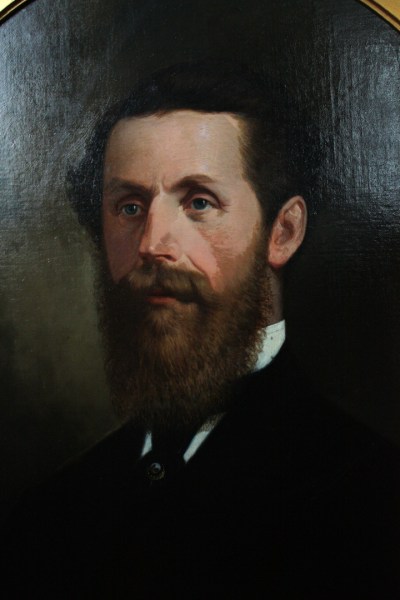
One of the other spots SCB mentioned was Hyères, a town located near the Mediterranean coast of France. It had been a winter resort for centuries, with French kings among its regular visitors. SCB mentioned its warm winter climate, which may have been one of its attractions, and went on to write, “The environs of Hyères abound in vineyards and olive gardens.… This reminds me of the good Samaritan who poured oil and wine into the wounds of the man that fell among thieves. Who can walk through these pleasant vineyards without thinking of our blessed Lord when he said, ’I am the true vine, and my Father the husbandman.’”
Many years later, I came across some notes that probably referred to that family trip to Europe. Someone had put them in the Bagg family Bible, perhaps so they wouldn’t get lost.9 These little reminders, including hints such as, “Do not fill trunks, nor take too many; read up references, prepare routine, currency, etc.; letter of introduction useful; a soft answer turneth wrath away; keep cool, be firm, good-tempered, polite.” probably reveal as much of SCB’s attitude about travel as his book does, and most of them remain good advice today.
The Coin Collector
When SCB’s name appeared in a Montreal city directory in 1866, he was not listed as a “gentleman,” as one might expect. Instead, he gave his occupation as President of the Numismatic and Antiquarian Society of Montreal, a voluntary position related to his hobby.10 In fact, numismatics, or the study of old coins, was probably his greatest interest.
In an article for the Society’s journal, he wrote: “In coins and medals, more than in any other monuments, the past is preserved and its heroes and great events are kept memorable, forms of worship, manners and customs of nations; titles of kings and emperors may thus be determined; — in fact, coins have been frequently of the greatest service, by illustrating doubtful points of history, and even by bringing to light circumstances and events unknown to us before.”11
He gave the example of the Roman Empire: while most of the statues, arches and palaces the Romans built have crumbled to dust, “paltry coins remain monuments of the might of the age; they represent, and record, fresh as the day they were coined …”12
A small group of English- and French-speaking numismatic enthusiasts started getting together around 1860. When they founded the 20-member Numismatic Society of Montreal on Dec. 8 1862, it became the first numismatic society in Canada and the fifth in North America. SCB was founding vice-president.
In 1863, SCB read the first paper before the Montreal society, an article titled “Notes on Coins.” His second presentation, given later that year, was “Coins & medals as aids to the study and verification of holy writ.” The society’s name changed in 1866 to the Numismatic and Antiquarian Society of Montreal. At that time, SCB was the organization’s president.13 He also served as an editor of the society’s quarterly journal.
In order to keep up with the latest discoveries about coins, archaeology and science, SCB was a member of several organizations, including numismatic societies in London and in Philadelphia. He was also a corresponding member of the State Historical Society of Wisconsin and a life member of the British Association for the Advancement of Science and the Natural History Society of Montreal.
His own coin collection was not exceptional, however. In his will, he left it to daughter Mary Heloise, and at some later time, the collection was sold. In 2016, a coin-carrying case that SCB had owned, as well as an inventory and about 40 coins and medals, came on the market. At that time I corresponded with the dealer, who sent me some photos.
Coin expert Ted Banning suggests that SCB’s most important contribution to the field was not as a collector, nor even as a writer, but as one of the founders of the Numismatic Society, because 20 years after his death, the society played an important role in saving one of Montreal’s most important heritage buildings, the Chateau Ramezay.14
Built in 1705 by Claude de Ramezay, a Governor of Montreal in colonial New France, over the years it had various owners and uses, including the offices of a fur trading company and the headquarters of invading American forces in 1776. When the government decided to sell the building in 1893, the Numismatic and Antiquarian Society of Montreal rallied public opinion to save it from demolition. The City of Montreal acquired the building and rented it to the society, which converted it into a museum. In 1929, the city ceded the building to the society and today it remains a museum and a UNESCO-recognized historic site.
As for SCB, he lived a charmed life, but it was not a long one. Montreal was an unsanitary city, with a high death rate, especially for the poor. Wealthy people like SCB fared better, but they were not immune. SCB died of typhoid fever on August 8, 1873, age 53, at Fairmount Villa, surrounded by family members.
Sources:
1. Transcription of SCB’s letter, plus notes, probably by grandson Stanley Bagg Lindsay; Lindsay family collection.
2. Historical Society of Pennsylvania; Philadelphia, Pennsylvania; Historic Pennsylvania Church and Town Records; Reel: 1078, database, Ancestry.com (http://:Ancestry.ca, accessed Dec. 22, 2019,) entry for Stanley Clark Bagg, 9 Sept. 1844; citing Historic Pennsylvania Church and Town Records. Philadelphia, Pennsylvania: Historical Society of Pennsylvania.
3. Nicholas-Benjamin Doucet, “Marriage entre Stanley Clark Bagg et Catharine Mitcheson,” notarial act # 30488, Sept. 5, 1844, BAnQ.
To learn more about the laws of Quebec regarding civil matters, including community of property in marriage, see Bettina Bradbury. Wife to Widow. Lives, Laws and Politics in Nineteenth-Century Montreal. Vancouver: UBC Press, 2011.
4. The child’s death is recorded in the Bagg family Bible, Bagg Family Fonds, McCord Museum, Montreal. She died in Philadelphia on Oct. 14, 1847. The funeral was held on Oct. 21, 1847 at Christ Church Cathedral, Montreal, (Ancestry.ca, citing Gabriel Drouin, comp. Drouin Collection. Montreal, Quebec, Canada: Institut Généalogique Drouin) and she is buried with her parents, grandparents and other family members in the Bagg family crypt, Mount Royal Cemetery.
5. Stella (pseudonym of Stanley Clark Bagg), Leisure Moments: A Few Poems, Montreal: printed by Daniel Rose, 1871. https://babel.hathitrust.org/cgi/pt?id=aeu.ark:/13960/t92819p4n&view=1up&seq=10
6. Bibliothèque et Archives nationales du Québec, “Archives des notaires du Québec, Montréal District judiciaire de Montréal; Stanley Clark Bagg, 1842-1856, CN601,S11” http://bibnum2.banq.qc.ca/bna/notaires/affichage.html?serie=06M_CN601S11 (accessed Dec. 31, 2019)
7. Library and Archives Canada; “Cases Before Justices of the Peace,” The Canada Gazette, vol. XXIV, no. 8, Published by Authority, Quebec: Feb. 25, 1865, p. 781, entry for Stanley Clark Bagg; http://www.collectionscanada.gc.ca/databases/canada-gazette/093/001060-119.01-e.php?image_id_nbr=55914&document_id_nbr=3045&f=p&PHPSESSID=oo3dok1snqetmppvat92ncmo44 (accessed Jan. 11, 2020).
8. Stanley Clark Bagg, Continental Notes for Private Circulation, Montreal, printed by Daniel Rose 1870. https://www.canadiana.ca/view/oocihm.02377/1?r=0&s=1 (accessed April 8, 2020)
9. I found these notes in the family Bible at the McCord Museum, Montreal and copied them then, but when I looked again a few years later, they were no longer there.
10. “Stanley Clark Bagg, JP, President of Numismatic and Antiquarian Society, Fairmount Villa, 583 Sherbrooke Street.” Mackay’s Montreal Directory, 1866; p. 76, entry for Stanley Clark Bagg; digital image, Ancestry.ca, Canada, City and Area Directories, 1819-1906, (database on-line, accessed March 17, 2020.)
11. Stanley C. Bagg, “Notes on Coins,” The Canadian Antiquarian and Numismatic Journal, p 4, Montreal: The Numismatic and Antiquarian Society of Montreal, October, 1873. https://babel.hathitrust.org/cgi/pt?id=aeu.ark:/13960/t77s8v32h&view=1up&seq=10 (accessed March 19, 2020)
12. Ibid p. 8., https://babel.hathitrust.org/cgi/pt?id=aeu.ark:/13960/t77s8v32h&view=1up&seq=15 (accessed March 19, 2020)
13. Warren Baker, “The First Twelve Years: Canadian Numismatic Publishing 1863-1875, an Annotated Bibliography,” Montreal, 1989.
14. Ted Banning, “Bagg helped bring social numismatics to Montreal,” Canadian Coin News, March 19, 2012.

