Tag Archives: Missionaries

Harry’s Story

I never met Harry Jolliffe. I never even knew Harry Jolliffe. So, why a story about an unknown man?

We met Hazel and Roger 35 years ago when they would regularly visit us as friends from our church until they moved from Beaconsfield to Salt Lake City, Utah to be with the family. As we are all British we have had a very comfortable friendship over all these years. We now keep in touch via FaceTime. During the last call, we got on to the subject of families and the Mormon practice of marriage being for the eternities and not ‘Till death do us part’.

In The Church of Jesus Christ of Latter-day Saints, the word sealing refers to the joining together of a man and a woman and their children for eternity. This sealing can be performed only in a temple by a man who has the priesthood, or the authority from God. (1)

Roger then told us a story about a conversation he had with a church member, Harry Jolliffe, back in England in 1975, which has haunted him ever since. I was so fascinated by Roger’s story I felt I had to write it down.

Our friends went to Harry Jolliffe’s home as a representative of their church in 1975, to establish if there were any needs. Harry was 79 years old and had only joined the church 3 months prior. He lived on his own and was still grieving the loss of his wife who had passed away the year before. Roger and his family had only been in the church for a year themselves and knew the challenges of embracing a new faith and wondered what had inspired Harry to join, particularly at his age. Harry then told Roger the harrowing story of his time in a Japanese prisoner-of-war camp

Although captured in Singapore – see below – I cannot read Japanese for the camp Harry was at or of him being sent to any other of the numerous Japanese POW camps on the island of Singapore.

Harry had joined the regular army in the early 1930s and rose to the rank of Warrant Officer in physical training. He was serving in Singapore when the war broke out with Japan. Harry, along with thousands of troops and civilians were swept up and captured.

Below is Harry’s record of his capture at the Racecourse, Singapore, on the 11th of February, 1942. (2)
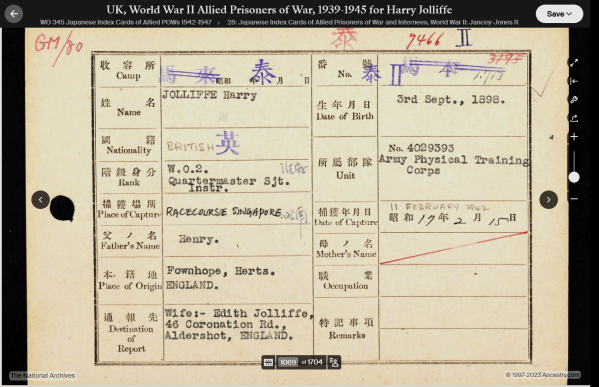
Harry’s Japanese Index Card of Allied POW 1942 – 1947

After his capture, Harry was then imprisoned in a very squalid Japanese prisoner-of-war camp where both British and Australian troops were prisoners. Starved and ill-treated, many died of neglect, abuse or forced labour.

However, because Harry was physically fit he was used as a boxing opponent for the prison guards to spar with and humiliate in front of their comrades and all the other prisoners. He was given slightly better food in order to keep him fit but was warned to always lose each fight so that the Japanese soldiers would not lose face.

While in the camp Harry became gravely ill and was so sick he went to the hut of an Australian prisoner who was a Doctor. This Doctor had previously removed his own appendix with no anaesthetic or suturing material. The Doctor told Harry, that he thought it may have been a gallbladder infection and to come back the next day. Harry returned the next day, with a fever, and feeling much worse.

The Doctor told him the gallbladder had to come out or Harry would die. As he said these words, four burly prisoners entered the room and held Harry down. The Doctor made the first incision. Harry fainted. When he came to, he looked down and saw all his organs displayed on his stomach, and he fainted again. He came to in his hut, his wound had been sutured with string!

He was at least still alive thanks to the skill of the unknown heroic Australian Doctor. He was weak, and all his fellow prisoners had to feed him, was rice water. Harry wanted to die and end his misery.

That night, Harry had a fevered dream. He was walking up the street to his home, in England. He opened the gate and knocked on the door. Harry’s wife, Edith said ” Oh! Harry! We missed you so much and we need you!’ Harry awoke and immediately felt a very strong will to live and survive. Singapore was liberated by Australian and US forces in 1945, as the war in the Pacific turned in favour of the Allies, and the prisoners were freed. Harry went home to England, via Southampton, where his wife, Edith, met the ship.

She rushed into his arms, and said “Before you say another word, what happened to you, on this date?” Edith continued ” I had a very vivid experience, I heard a knock on the door, and when I opened it, there you were! I thought I was dreaming but you disappeared as I opened my arms to you! I was fully awake. What happened, Harry”? So, Harry related the story, that on that date a gall bladder operation had been performed on him, and he nearly died, but he believed he survived because of that dream.

To our friends, he said “You asked me why I joined the church. The feeling I had during that dream, which stuck with me all my life, was the same feeling I felt when the missionaries were teaching me about the gospel of Jesus Christ”

He had such a strong desire to listen to these young missionaries and when they mentioned that he could be sealed to his wife for eternity, he readily accepted their teachings. Unfortunately, Harry never lived long enough to carry out his wishes to be sealed for eternity to Edith.

Roger believes the story has haunted him all these years because he is meant to do the sealing of Harry and Edith, vicariously. This is the purpose of the Latter-Day Saints temples, to seal together a family for eternity. Our friends have now done the sealing for Harry and Edith.

Below is a photo of British Prisoners of War after liberation in Singapore.
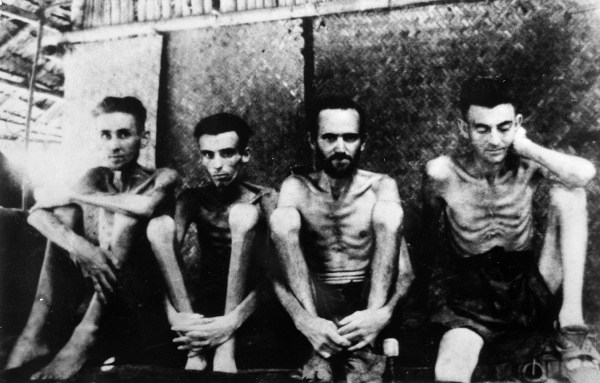
L0025435 Prisoners in Changi Jail, Singapore. Credit: Wellcome Library, London. Wellcome Images images@wellcome.ac.uk http://wellcomeimages.org Photograph of four skeletal soldiers. Photograph circa 1943 Published: – Copyrighted work available under Creative Commons Attribution only licence CC BY 4.0 http://creativecommons.org/licenses/by/4.0/

So, not only is Harry’s story inspiring in a spiritual sense, but also a reminder of the bravery of all those prisoners and civilians who endured the most wretched of circumstances.

I am grateful that Roger shared this story with me, thank you.

SOURCES

(1) https://newsroom.churchofjesuschrist.org/article/sealing

(2) https://en.wikipedia.org/wiki/Fall_of_Singapore

The Surrender of Singapore 1942
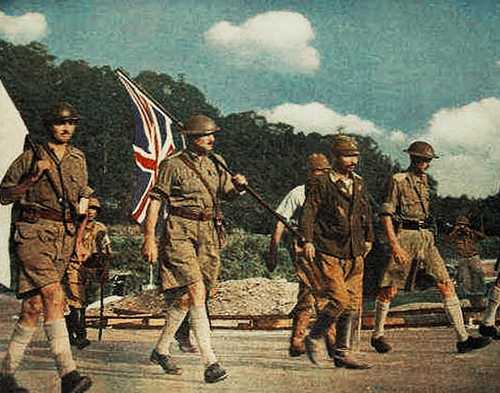
Lieutenant-General Arthur Ernest Percival, led by a Japanese officer, walks under a flag of truce to negotiate the capitulation of Allied forces in Singapore, on 15 February 1942. It was the largest surrender of British-led forces in history.
how i came to write miss lindsay’s tale

“Our ancestors want their stories told” said my third cousin and fellow genealogy writer. We are both related to my great aunt, Miss Marguerite Lindsay, and we were both told the same story growing up: Poor Marguerite Lindsay died tragically in Labrador, in 1922, at age 25. Period.

We never questioned the statement nor begged for gory details. Little did we know that she did indeed have a story to tell and she finally got her wish almost 100 years later.

I wrote a story about Marguerite’s mother, Mary Heloise Bagg Lindsay, and at the end of her story I listed the names of her six children, including her youngest daughter Marguerite.

Great Granny Bagg (Kittens on the Wedding Dress)

Shortly after the publication of her story on our website, I received an e-mail from a student at Memorial University in St John’s, Newfoundland. She wanted to know where Marguerite was buried. I found that to be a very strange question in response to a story about her mother. I replied hesitantly and asked why she wanted to know. What a delightful surprise to hear that not only had she researched Miss Lindsay’s story but also offered to send me copies of her findings and the 1922 newspaper clippings!

The media covered the tragic tale in great detail over an 18-month period including the final coroner’s report. The official report concluded that her accidental death occurred from a shot by her own pistol when she tripped and fell.

I devoured the newspaper clippings and finally knew the whole story that no one spoke of so long ago.

Research is not my forte but it seems everyone that I contacted had something to tell me. Several websites produced other glimpses into Cartwright, Labrador and Grenfell himself. What a thrill to discover a great deal of information about the International Grenfell Association preserved on microfilm at The Rooms Provincial Archives in St. John’s, Newfoundland.

That fateful summer in 1922, Marguerite worked as a volunteer school teacher with the Grenfell Mission in Cartwright, Labrador, under Reverend Henry Gordon. The local community named their school in Cartwright after him.

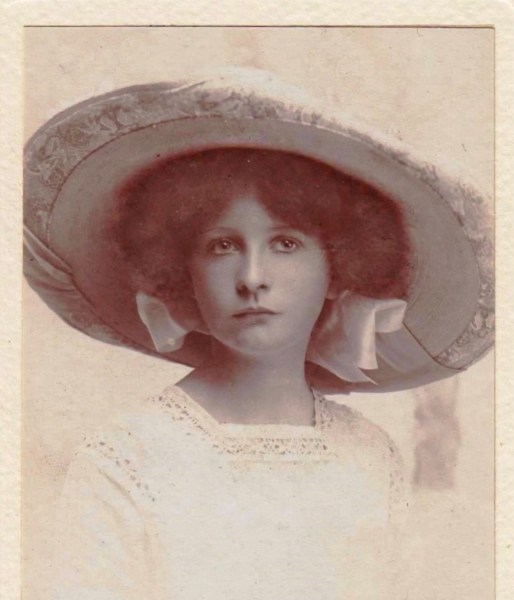
Miss Marguerite Lindsay Grenfell Mission Volunteer

When I contacted the assistant principal at Henry Gordon Academy, she seemed equally as excited as I to talk about Miss Lindsay. We decided to skip e-mails and speak directly over the phone instead.

Well, this is some of what she told me…They named the marsh where they found her body “Miss Lindsay’s Marsh”. An honorary plaque graces the local church and a memorial prayer said every Christmas. Some of the young students wrote her a poem and the new students are all told Miss Lindsay’s story. Miss Martin, a fellow teacher, recently retired from the Henry Gordon Academy and still has the sewing machine that her grandfather, John Martin, bought with his reward money for finding Miss Lindsay’s body that December back in 1922.

And just then…the music began to play over the phone, and I quietly listened to Harry Martin’s song “Somewhere Beyond the Hills” written for Marguerite.

“I can’t believe that I am talking to a descendant of Miss Lindsay!” said my new friend.

I could almost imagine Marguerite standing beside me soaking up all these loving tributes… her story finally told.

(Rumour has it that if I can make the 100th year anniversary of Miss Lindsay’s death in August 2022, there might be a potluck supper and memorial service at the church in her honour!)

Helen Frances Marguerite Lindsay 1896-1922

Edited by author 2020-07-13

Notes: Miss Lindsay’s three part story can be found below:

https://genealogyensemble.com/2019/10/30/miss-lindsay-part-1/

https://genealogyensemble.com/2019/12/18/miss-lindsay-part-2/

https://genealogyensemble.com/2019/12/25/miss-lindsay-part-3/

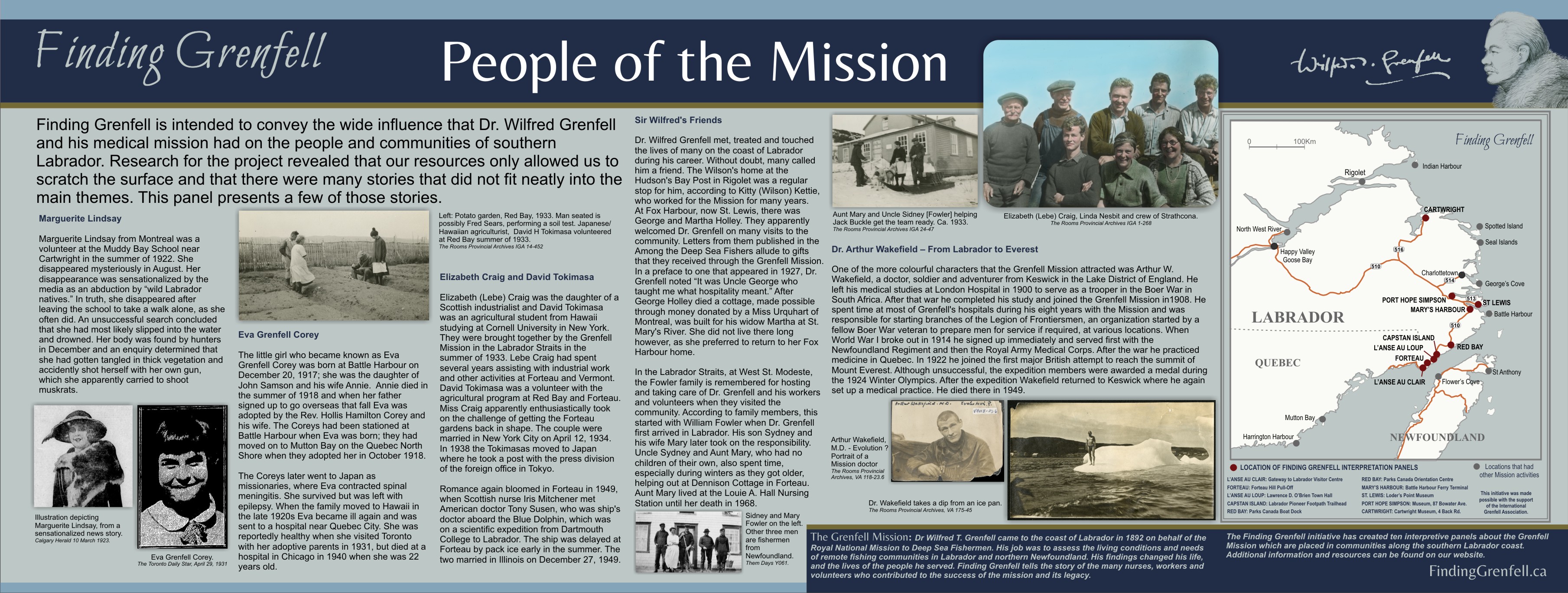
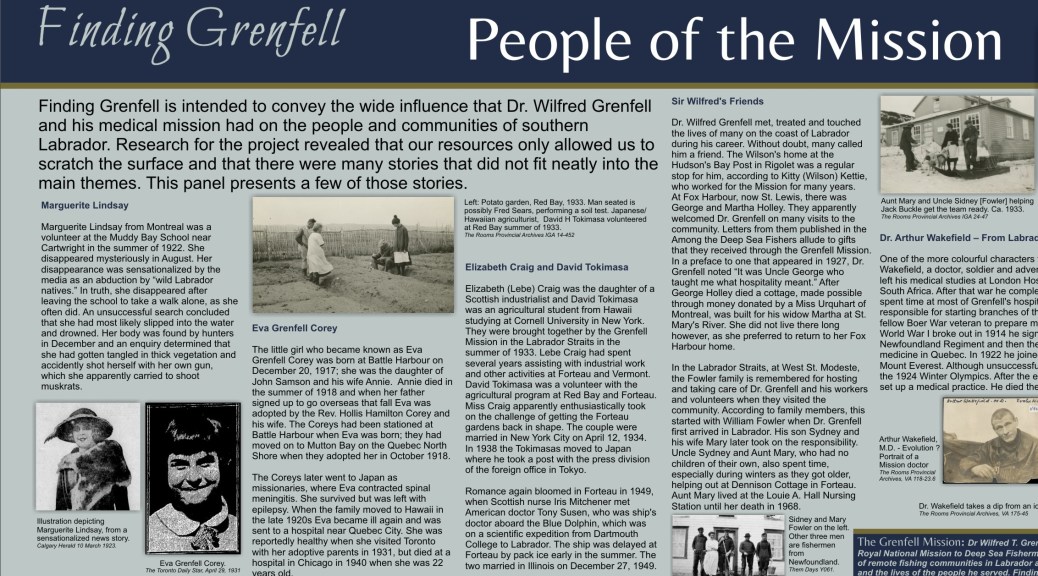
1. A summary of Miss Lindsay’s story can be found on the Finding Grenfell website under the People of the Mission section: (https://www.findinggrenfell.ca/home/files/pg/panel-people-v4-large.jpg).

Beautiful hooked rug by Grenfell Mission artisans – courtesy of Janice Hamilton

2. The famous Grenfell hooked rugs: http://www.grenfellhookedmats.com/and also, they continue to make and sell rugs, clothing, books and other items, or you can buy a membership in the historical society

First Brush

Morning came early at Hebron Academy. At six a.m., I would enter the bathroom, calmly pick up the basin with the snake curled up inside, and walk outside to dump it in the bushes. I was a border and this was not my first brush with snakes.

The school was in the village of Coonoor, high in the Nilgiri Hills of Southern India.1 Most of the students were the children of missionaries but a few like myself were “business kids”.2

Shortly after arriving at Hebron in 1957 I found two names in the front of an old text book: Margery Angus and Kathleen Angus. It was enough of a curiosity that I wrote home about it. Imagine my surprise when Dad wrote back that they were his cousins, cousins he had never met! Their dad, the brother of my grandfather, had been a missionary in Kuala Lumpur, Malaysia.

Now my curiosity knew no bounds!

How did they travel to Hebron? They could not have come like I did, four days from Calcutta on a train. Had they come by ship across the Bay of Bengal to Madras and then on the narrow- rail train up into the hills? At what age did they come? As teenagers? Or were they Kindergarten age and placed in The Nest? Did their parents join them for the May vacation or were they required to spend the holiday month with the school staff?

How did they feel about the school program? About tennis and field hockey? Art lessons, music, and drama? About being kept busy every minute of the day? In what academic subjects did they excel? I bet they had no trouble memorizing scripture or praying publicly in the daily prayer meetings being the children of missionaries. How did they feel sleeping six to a dorm on wooden beds with straw pallets? Or bathing in a tin tub twice a week in water heated over a wooden stove? Did they like the blue and white checked frock uniform?  And the navy tunic and tie on Sundays?  Were they as homesick as I, living for the daily mail distribution and letters from family?

This was my first brush with genealogy. Names were insufficient – I wanted stories, not just the knowledge that I walked in steps they had walked. I wanted these cousins to come to life for me! Today I want the same thing. The family tree I inherited from my dad was just a list of names and dates. Who were these people, where and how did they live?

Today the internet allows me to find some answers.

Margery and Kathleen’s father Thomas Angus was an Evangelical missionary from Glasgow.3 His wife was Eliza Simpson and they had five children: David, Robert, Joan, Kathleen and Margery.4. There was an Anglican school for girls in Kuala Lumpur but Thomas likely chose far-away Hebron to ensure that his daughters were educated in their own faith. 5 Perhaps his sons went to Breeks Memorial, Hebron’s sister school for boys. Or they may have been left at a school in Britain on one of the furloughs. Thomas’ final trip home was in 1940.6 He suffered from a heart condition and died in 1948.7 His son David took over his work in Malaysia until his interment by the Japanese during WW2.8

My work on Thomas’ family remains incomplete. I will likely never find answers to my questions about the girls’ years at Hebron. The school is now an orphanage, academic records and yearbooks likely lost to time. I have not yet been able to trace the remaining years of the girls’ lives. What is key for me today, however, is that this long ago first brush with genealogy led to my insatiable quest today for family stories.

 Notes and Sources

 http://en.wikipedia.org/wiki/Hebron_School

Hebron Gleanings 1958 (yearbook) – on file with author

Note: The school was surrounded by plantations growing the famous Nilgiri tea.

  1. My father worked for a Canadian mining company that was part of a NGO in East Pakistan, now Bangladesh. The job involved the construction and start-up of a newsprint mill in the village if Khulna south of Dhaka on the Ganges River. At the time, Bangladesh was under martial law.

 http://www.gospelhallkl.org/?page_id=14

“Mr. and Mrs T.R. Angus arrived to work with the Hakka tin miners and in October 1903 found “a crying need for the gospel on every hand” but few to meet the need. Training locals to serve the Lord proved difficult as the miners led a rather nomadic life and were unable to attend church regularly. Just before the Second World War engulfed the Pacific, the aging Mr. Thomas Angus returned to Scotland and was replaced by his son David Angus.”

  1. Eliza was listed as the wife of Thomas on his death certificate. To date (February 2015), I have been unable to find any other documentation. The children’s’ names are those provided by my father. The children may have been born in Kuala Lump, indeed Thomas and Eliza may have married there, but I have been unable to access Malaysian records.
  1. http://en.wikipedia.org/wiki/St._Mary’s_School,_Kuala_Lumpur
  1. Finding passenger lists (outgoing and incoming) have proven difficult. Angus is not an uncommon name in Britain, there are many British ports from which Thomas may have left, and a Malaysian destination is often merely a port–of-call on the way to a final destination like Australia. The lists I have been able to find sometimes show Thomas travelling alone, sometimes with his wife, or with his wife and children. The children’s names do not all match those given to me by my father. I have found a David, a Robert, a Margery, an Annie and a Frances. I have not found a Joan or a Kathleen. Were they younger than the others or did they go officially by other names?
  1. Death Certificate: http://www.scotlandspeople.gov.uk/
  1. http://www.preciousseed.org/article_detail.cfm?articleID=744

“In 1931 Mr. David Angus joined his father to continue the service the hallmark of which was grace and humility. During the war years Mr. Angus and other missionaries suffered imprisonment at the hands of the Japanese invaders. He survived the horrors of prison with fortitude and emerged with a new understanding of the people in the country of mixed nationalities he had come to serve”