Tag Archives: Royal Navy

The Life of a Sailor

My 2X great-grandfather, George Murray Boggie, born in 1826 in Old Deer, Aberdeen, Scotland,1 spent his whole life in the Royal Navy. This was a life of adventure, variety, and camaraderie, but also homesickness, hard work, long hours, and sometimes sickness.

George didn’t start out wanting to be a sailor. When he was 15, and perhaps earlier, he and his brother, James worked as apprentice writers in Peterhead, Aberdeenshire. They lodged with John Bradie, a newsroom keeper. 2 John probably worked at the same newsroom as George and James.

It turned out that writing was not the job for George. George started volunteering in the navy when he was 20. He served on about 14 ships between 1846 and 1854. In January 1854, he was serving on the HMS Euryalus. He then signed his indenture papers on 13 February 1854, which committed him to ten years of continuous service in the Royal Navy.3 The HMS Euryalus was commissioned in 1853 and soon after George joined the crew, it was deployed to the Baltic to take part in the Baltic Campaign as part of the Crimean War.4 The HMS Euryalus was part of an Anglo-French fleet that entered the Baltic to attak the Russian naval base of Kronstadt.5
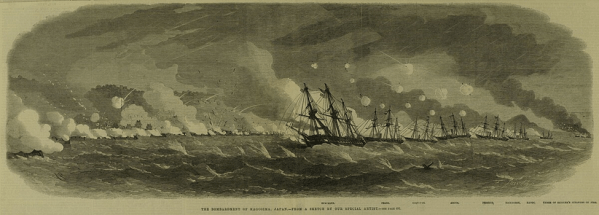
Euryalus leading the line of battle during the Bombardment of Kagoshima, 18636

While I do not have a picture of Great-Grandfather George, Royal Navy Form 95 says that he was 5 ft., 7.5 inches tall, with a ruddy complexion, dark hair, and blue eyes. He had a tattoo on his left arm, his initials: G.M.B. 7

George was already married and a father with two children when he started his indentureship. His daughter, Mary, was 4 and my great-grandfather, Henry was just two years old. His wife, Elspeth Milne would have had her hands full with a young family and an absent husband. Elspeth would also have been worried about George as he was in active military service. As George remained a member of the Royal Navy his entire working life, it is probable that he participated in many battles.

Sailors were constantly at work when at sea. All ships were dangerous workplaces and injuries and death as a result of injuries were common. Their sleeping quarters were cramped, the sailors’ sleep was often disturbed, and their meals were neither copious nor balanced. Although some ships did issue a daily ration of lime juice and sugar, but in quantities not exceeding one ounce of each, assumably to prevent scurvy. The ships were cold, damp, and uncomfortable and their clothes could be damp for months at a time.  Most ships did not have a physician or surgeon on board so some health conditions could not be addressed quickly. Sailors’ wages were usually paid in arrears as a deterrent to desertion.8

Sailors were susceptible to tropical diseases and while dysentery can be caught anywhere, It’s a more common condition in tropical areas of the world with poor water sanitation. The Royal Navy sailed the world over, often in tropical waters. Dysentery on board was common. It is contagious and can be contracted from eating food prepared in unsanitary conditions or by drinking contaminated water. 9

As George worked on 14 ships before he signed up for continuous service in 1854, he already had a good idea of what he was getting into. On 5 February 1847, George was admitted to the Dreadnought Seaman’s Hospital to treat dysentery.10 The registration indicates that he was victualled for 46 days which, I believe means that he was paid for the 46 days that he was in the hospital.

The Dreadnought Seamen’s Hospital provided seafarers with hospital care for 150 years. It started in 1821 as a wooden warship moored in the River Thames at Greenwich, England. After 1870, the hospital transferred to dry land at the former Greenwich Hospital Infirmary, and the hospital continued to treat sailors in Greenwich until its closure in 1986.11 In 1987, a Dreadnought Unit opened at St. Thomas Hospital in London.12
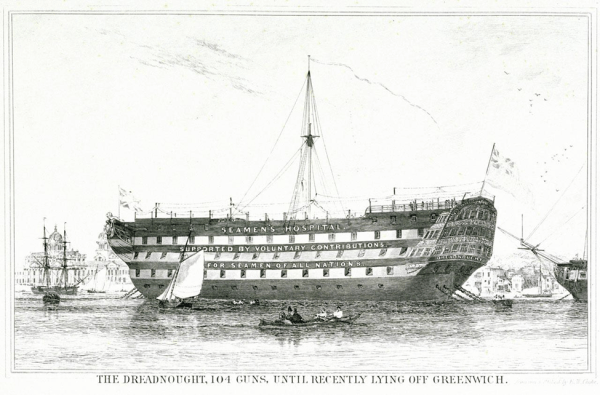
The ‘Dreadnought’, 104 Guns, At present Lying off Greenwich For The Seamen’s Hospital, ©National Maritime Museum

George was a member of the Royal Navy during the second half of the 19th century and, at that time, naval warfare underwent a complete transformation due to steam propulsion and metal ship construction. While Britain was required to replace its entire naval fleet, it managed to do so through unparalleled shipbuilding capacity and financial resources.13 When George started his career, he served on a wooden hulled steam frigate. By the time he completed his career, he would have seen great leaps of technological improvements.

  1. Scotland’s People, Old Parish Registers, Boggie, George Murray, 1826, Old Deer, Aberdeenshire, accessed 7 June 2024.
  2. Scotland’s People, 1841 Census, Boggie, George Murray, Peterhead, Aberdeenshire, accessed 12 June 2024.
  3. Form 95, Indentured royal navy papers, Boggie, George Murray, dated 13 February 1854, National Archives, accessed 3 July 2024.
  4. Wikipedia, HMS Euryalus (1853), https://en.wikipedia.org/wiki/HMS_Euryalus_(1853), accessed 20 November 2024.
  5. Wikipedia, Crimean War, https://en.wikipedia.org/wiki/Crimean_War#Baltic_theatre, accessed 20 November 2024.
  6. Wikipedia, HMS Euryalus (1853), https://en.wikipedia.org/wiki/HMS_Euryalus_(1853), accessed 20 November 2024.
  7. Form 95, Indentured Royal Navy Papers, Boggie, George Murray, dated 13 February 1854, National Archives, accessed 3 July 2024.
  8. The Old Operating Theatre, Life at Sea: The Working Conditions and Health of a Sailor, https://oldoperatingtheatre.com/life-at-sea-the-working-conditions-and-health-of-a-sailor/, accessed 13 November 2024.
  9. Cleveland Clinic, Dysentery, https://my.clevelandclinic.org/health/diseases/23567-dysentery, accessed 20 November 2024.
  10. Ancestry, Dreadnought Seamen’s Hospital Admissions, 1826-1930, Boggie, George Murray, accessed 13 November 2024.
  11. Royal Museums Greenwich, https://www.rmg.co.uk/collections/hms-nhs-nautical-health-service-transcription-project, accessed 20 November 2024.
  12. Seafarer’s Hospital Society, https://seahospital.org.uk/about-us/our-history/, accessed 20 November 2024.
  13. Wikipedia, The Royal Navy, https://en.wikipedia.org/wiki/Royal_Navy#:~:text=At%20the%20start%20of%20World,during%20the%20following%20four%20months

The Liverpool Lad

In my last story, https://genealogyensemble.com/2023/06/07/harrys-story/ I wrote about Harry Jolliffe and his trials and tribulations in a Prisoner of War Camp in Japan.

Relating this to my husband, John, he mentioned a memory of his maternal Uncle Ben and his Uncles’ time as a POW in Japan.

It was all second-hand because Benjamin Ronald Hughes died the year my husband was born, in 1948. However, John did have stories from his Mum, about her brother. According to her Uncle Ben suffered terribly during his 3 years as a prisoner.

Ben was born on the 27th of March 1910 the only boy in the family of six in the Toxteth area of Liverpool, Lancashire. His occupation was a messenger. That could have been for the Post Office delivering telegrams or perhaps riding a bicycle delivering groceries and goods.

When Uncle Ben was 15 years old, he joined the Royal Navy as a second-class boy entrant. When he reached 18 years old, in 1929 he was by then a Boy First Class and volunteered again, as an adult Able Seaman, and was posted to HMS Egmont II on 25 September 1931.

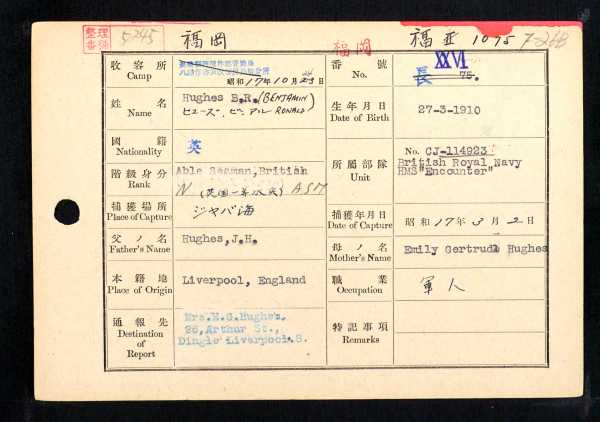
During his service, Uncle Ben served on 15 various Royal Navy ships. War was declared on the 1st of September 1939. On the 1st of March 1942, after three years of fighting, Uncle Ben was reported missing to his family. He was listed as a prisoner of war, by the Japanese. When captured and according to his Japanese POW file below, he was on HMS Encounter which had picked up allies from Malaysia and was scuttled (sunk) by her own crew, after being damaged by gunfire from heavy Japanese heavy cruisers in the Java Sea. (1)

Whilst researching I managed to find Ben’s Japanese POW information. There was not much on it, and I don’t read Japanese. I wanted to find the name of his camp and what he would have laboured at.

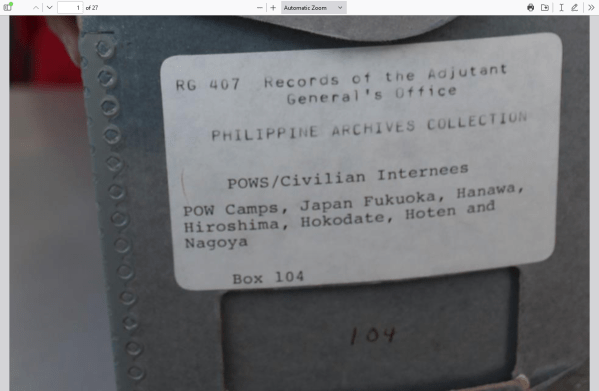
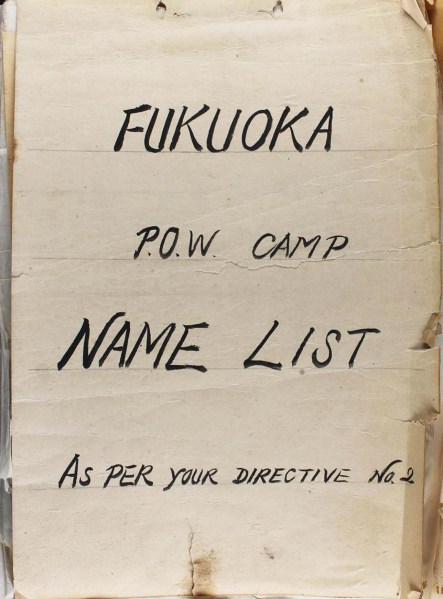
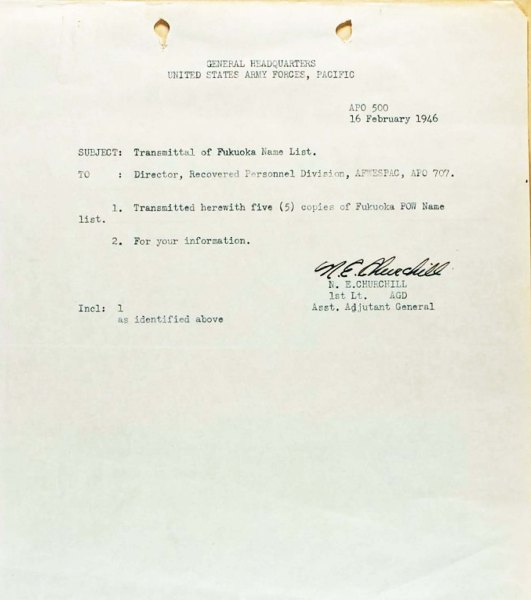
Eventually, I found that he was a POW in Fukuoka- Camp 26 prisoner number 51. The link (2) lists all the prisoners with information on nationality, name, age, and home address. it does make for interesting reading. There were British, Australian and two Dutch prisoners. The servicemen listed were Royal Navy and Army. ALL the men apart from eleven who had obvious illnesses, were listed as ‘Healthy’. The camp prisoners were used for labour in mines in this particular area of Japan.

The first pages of prisoners’ information.

At the war’s end, in 945, Uncle Ben was in the Royal Naval Hospital Chatham, in Kent. It states on his Service Record that he was Invalided out of the Royal Navy from RN Hospital Chatham on the 7th of August 1946. He would have spent time recovering from his terrible experiences.

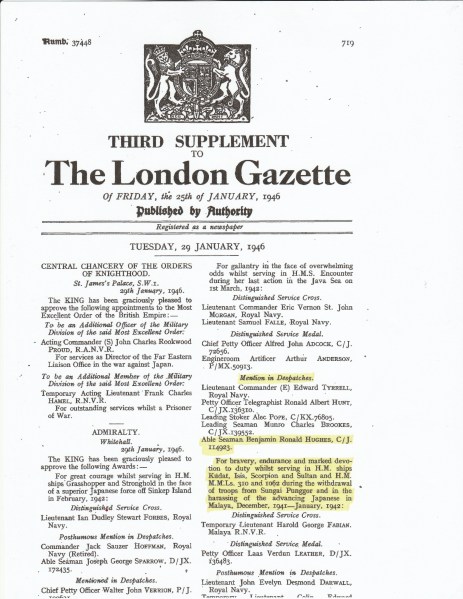
He was granted a war gratuity and a medal. Later, on the 25th of January 1946. Benjamin Ronald Hughes is ‘Mentioned in Dispatches in the London Gazette. It reads as follows.

Able Seaman. Benjamin Ronald HUGHES, C/J. 114923.
For bravery, endurance and marked devotion to duty whilst serving in H.M> ships Kuda, Isis, Scorpion and Sultan and H.M. M. MXS, 310 and 1062 during the withdrawal of troops from Sungai Punggor and in the harassing of the advancing Japanese in Malay, December 1941 – January 1942
“.

My mother-in-law told her son John, that when Uncle Ben returned to his home in Liverpool he was a wreck. Emaciated, haunted, ill and looking twice his age. He was 36 years old. Uncle Ben did not live long to enjoy life and died in 1948 at the age of 38. Because of his young age, a Post Mortem was performed and he was found to have died of bacterial endocarditis. RIP Uncle Ben.

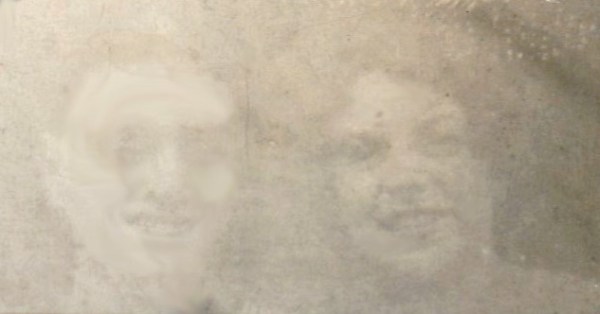
This ‘Ghost’ photo of Ben with his wife, Jessie, is the only photo we have.


(1) https://uboat.net/allies/warships/ship/4378.html

(2) http://www.mansell.com/pow_resources/camplists/fukuoka/fuk_26_keisen/FUK-26_Rosters_1946-02-16.pdf

NOTES

Keisen Yoshikuma Coal Mine Branch Camp (Fukuoka 26-B) Established as Fukuoka No.26 Branch Camp at Yoshikuma Coal Mine in Keisen-cho, Kaho-gun, Fukuoka Prefecture on May 10, 1945.

The POWs were used for mine labour by Aso Mining Company. The son and heir Taro Aso was a past President of Japan in 2008 and the controversy surrounding his family’s use of Korean and Allied POW labour clouded his term of office.

https://en.wikipedia.org/wiki/Aso_Mining_forced_labor_controversy

During the “White Rice Period”, lasting from January to October 1942, Allied prisoners were granted a maximum of ten ounces of rice per day, in addition to two ounces of rancid pork and four ounces of fish monthly. This official figure was often larger than that provided, with theft by Japanese soldiers, themselves suffering from starvation towards the latter days of the war, commonplace within the camps. Red Cross parcels, containing necessary essentials, were accepted by the Japanese authorities, but rather than being redistributed among the prisoners were kept by the Japanese soldiers themselves.

https://historycollection.com/20-horrific-details-about-japanese-pow-camps-during-world-war-ii/

A Policeman’s Lot Is Not A Happy One.

A policeman’s lot is not a happy one. When constabulary duty’s to be done, to be done, a policeman’s lot is not a happy one, happy one. [1]


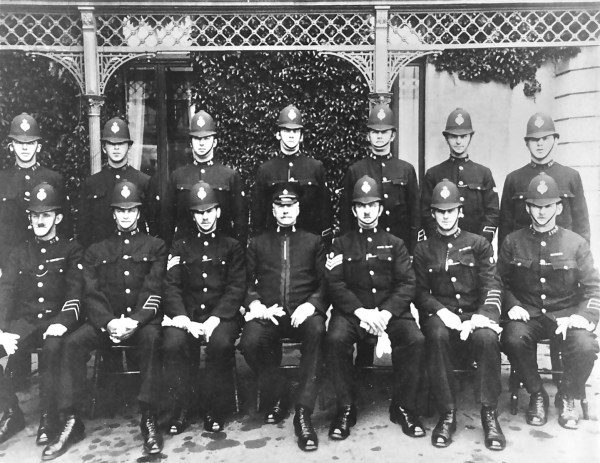
Francis Bulford (Front row, 2nd from the left) With Newquay, Cornwall Division 1929/30

(I can’t help but notice their enormous feet!)

My Grampy, Francis Bulford, was born in Devonport, Devon, England on 28th October 1884.

In 1905, he was a 20-year-old seaman in the Royal Navy when he decided to join the Cornwall Constabulary, and on the 1st November 1906, he was appointed to the force as Police Constable number 106. He retired in 1936 with 29 years of service.

After reading various newspaper clippings about the doings of my Grampy, I thought of the above verses by Gilbert and Sullivan as his duties were usually routine, but sometimes they were unusual, or even frightening.

His first posting was to Porthleven, a small fishing port not far from Helston. His ‘beat’ included the village streets, as well as the surrounding meadows, beaches and cliffs.

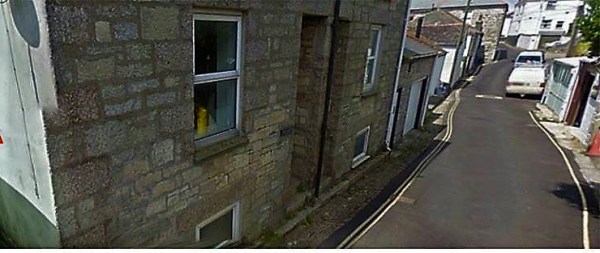
During Grampy’s time on the police force, he and his family lived at a three-bedroom rented property in a street known then as “Little Gue” at either number 14 or 15. My cousin Diane tells me her Mum (one of Grampy’s daughters) identified the building some 35 years ago. It was their home as well as the Police Station and the two small windows at street level were then barred.

This was where the cells were. The property is still standing, and the photo shows the modern window frames.

The house in Little Gue Street

Diane also told me about a time early on in his career when he was tied to a rope around his waist and was lowered down the cliffs to bring up a dead body at a place called Hell’s Mouth, on the north cliffs of Cornwall. Even the name sounds frightening.

It was Monday evening, January 1916 and Constable Bulford was doing his ’rounds’ at 10:30 pm when he happened upon a dead body, washed ashore on the rocks at Breageside, Porthleven.

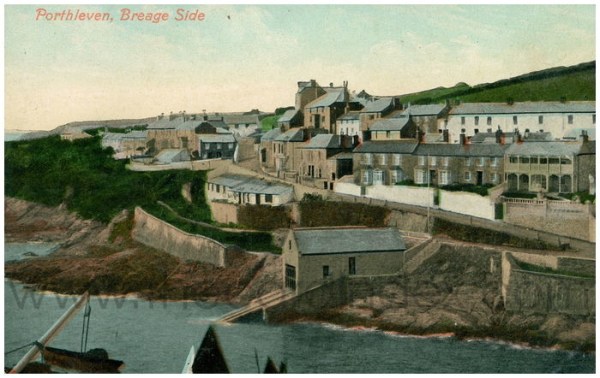
Porthleven 1906

When PC Bulford was interviewed by the local newspaper, The Cornishman, a month later, he described the bodies as follows: [2]

The first body found was a big body, about 6′ 6″ stoutly built, badly cut upon the rocks with no clothing and decomposed, and headless. PC Bulford sent for a stretcher and the local doctor, Dr Spaight.

The next day, Tuesday, at about 9:30 a.m., a second body was found by PC Bulford on the Sithney side of Porthleven. This body was about 5 feet in height, slightly built, with no identifying marks except cuts from the rocks, decomposed, nude and again headless.

The local doctor examined the bodies, but there was no possibility of identifying them or finding the cause of death.

The newspaper suggested that these were two of the crew of the SS Heidrun, a Norwegian collier ship that had departed from Swansea, Wales with coal for Rouen, France. It was wrecked on December 27th, 1915, four miles off of Mullion, with the loss of all 16 hands.

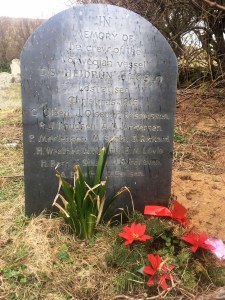
The crew members whose bodies were found are buried at Church Cove, The Lizard Landewednack, Helston, Cornwall. The church overlooks the English Channel, so it seems this was a fitting resting place for these sailors.

Headstone for the crew of the SS Heidrun
(Photo Credit: https://www.wrecksite.eu/wreck.aspx?181509)

Sources:

[1] https://www.gsarchive.net/pirates/web_op/pirates24.htm Opera, The Pirates of Penzance by Gilbert and Sullivan

[2] “The Cornishman” 27th January 1916. Newspaper cutting in the Bulford Family archives

Notes of interest about Porthleven, Cornwall England.

Porthleven was the home town of the ‘Dambusters’ Commanding Officer Guy Gibson, and there is a road named in his memory.

http://www.helstonhistory.co.uk/local-people/wg-cdr-guy-gibson-raf-vc/

It is a town, civil parish and fishing port near Helston in Cornwall and was originally developed as a harbour of refuge when this part of the Cornish coastline was recognised as a black spot for wrecks in the days of sail.

Porthleven has exploited its location and exposure to powerful swells to become one of the best-known and highly regarded surfing spots in Britain and has been described as “Cornwall’s best reef break”. Waves often exceeding 6.6 feet (2.0 m), break on the shallow reef that was shaped by blasting the harbour. Kayaking is also popular. RNLI lifeguards patrol the beach during the holiday season. The beach is separated from the harbour by a granite pier, which stands in front of the Porthleven institute and clock tower. When the tide is out it is possible to walk east along Porthleven beach for approximately three miles.

Read more about this wonderful part of Cornwall, England here:

https://en.wikipedia.org/wiki/Porthleven

Two previous stories about my Grampy and his police adventures in Porthleven can be found here;

https://genealogyensemble.com/2018/10/10/all-in-a-days-work/

https://genealogyensemble.com/2018/12/12/plucky-police-constable/

The Family Secret

By Marian Bulford

My Gran told me that her mother Lilian, did not like her very much and was not very nice to her, and consequentially for some peculiar reason Lilian did not like my mother or me, either.

I remember Lilian as a very stern presence so I steered clear of her. She did live with my Gran for a time, but by the time I was a teen, she had moved to another daughter’s house to live, so I never had much contact with her.

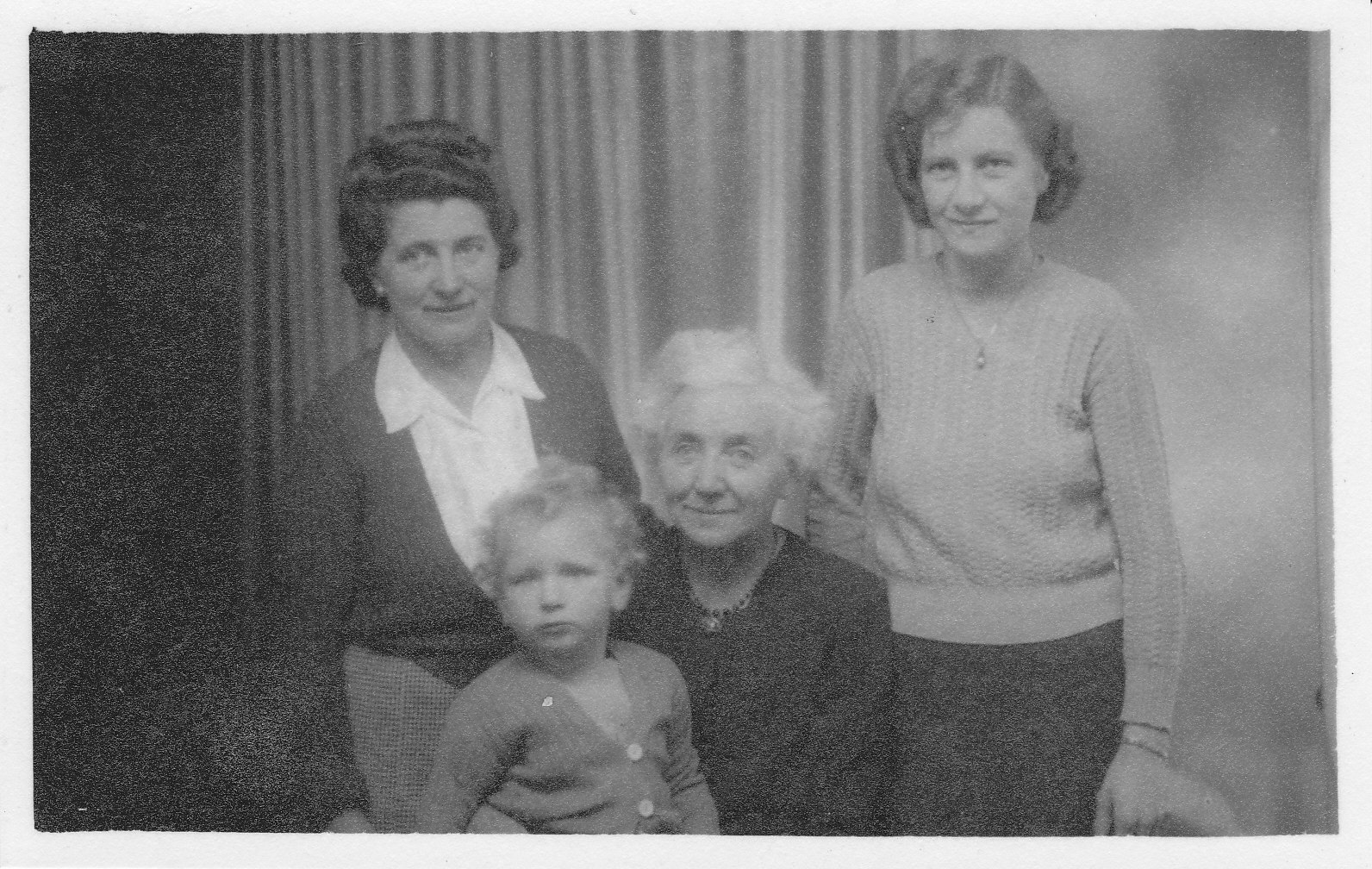
A photo below shows the four generations myself, Gran Mum and Lilian and I do not look very happy to be in this photo!

When my mother found out she was pregnant with me, 2 years after being married, she told me that Lilian said “Well, you made your bed now you have to sleep in it” Not a very nice thing to say about becoming a Great Grandmother! I never did understand why she did not like us and what she meant by that remark but years later, I was to find out.

For a while, I lived with my Grandparents from 11 years to 14 years. They were very strict but loving and Gran and I went everywhere together, to church the church fétes and shopping trips. Gran taught me to cook and bake.

One day, Gran wanted to go and see her mother who was living in Okehampton, Devon, a train ride away from us in Plymouth.

A train ride, what a treat! I was about 14 and we lived a very quiet life. Off we went, sandwiches and tea packed for the two-hour train journey to visit great-grandmother Lilian.

After my  Gran’s meeting with her mother lunch with the cousins and visiting, it was time to go. We had the train carriage to ourselves.

‘That was a lovely day, wasn’t it Gran?’ In answer, Gran burst into tears I was astounded, my Gran crying? She never cried.

I put my arm around her and asked her ‘Gran! What is the matter are you sick?” she cried some more, blew her nose and then said “I am a bastard”

Well! You could have knocked me down with a feather. Gran NEVER swore let alone say THAT word.

Eventually, she calmed down and I asked her what she was talking about. She must have been very very upset to divulge her mother’s secret to her young grand-daughter.

Apparently, Gran wanted to be baptized in the Church of England, and needed her birth certificate and to eventually claim her Old Age Pension, she also needed this document. That was the purpose of our visit.

When Lilian heard that Gran wanted her Birth Certificate SHE burst into tears and said that she hoped she would be dead by the time her secret came out.

Then, she had to reveal the reasons why she was so upset. Lilian was by then in her late 80’s and told Gran that she had given birth to her in the Leicestershire work house, because she was an unmarried mother. When she received Gran’s birth certificate it had stamped across it, in very large letters the word ‘ILLEGITIMATE’  Lilian had ripped it up and threw it away.

Lilian had, like many before and since, become pregnant at 17. The father Thomas was a Royal Navy Cooper a master carpenter. They met and she became pregnant. My Gran told me years later, that Lilian told her that she ‘fell off the style (or kissing gate) and never got up’ When Thomas did eventually come home from sea, they married. Gran was then three years old so yes, she WAS illegitimate for a while, but the parents had married, just a little late!

This seemed to be the reason Lilian did not like my Gran very much and Lilian did show a great deal of resentment towards Gran, my mother and me.


The four generations

IMG_0002
Standing, left Gran. Standing right my mother Front: Marian and Great Grandmother Lilian, 1948

This article is a continuation of a previous story, called “Illegitimate”

https://genealogyensemble.com/2015/07/13/illegitimate-2/


Illegitimate

Illegitimate
by Marian Bulford

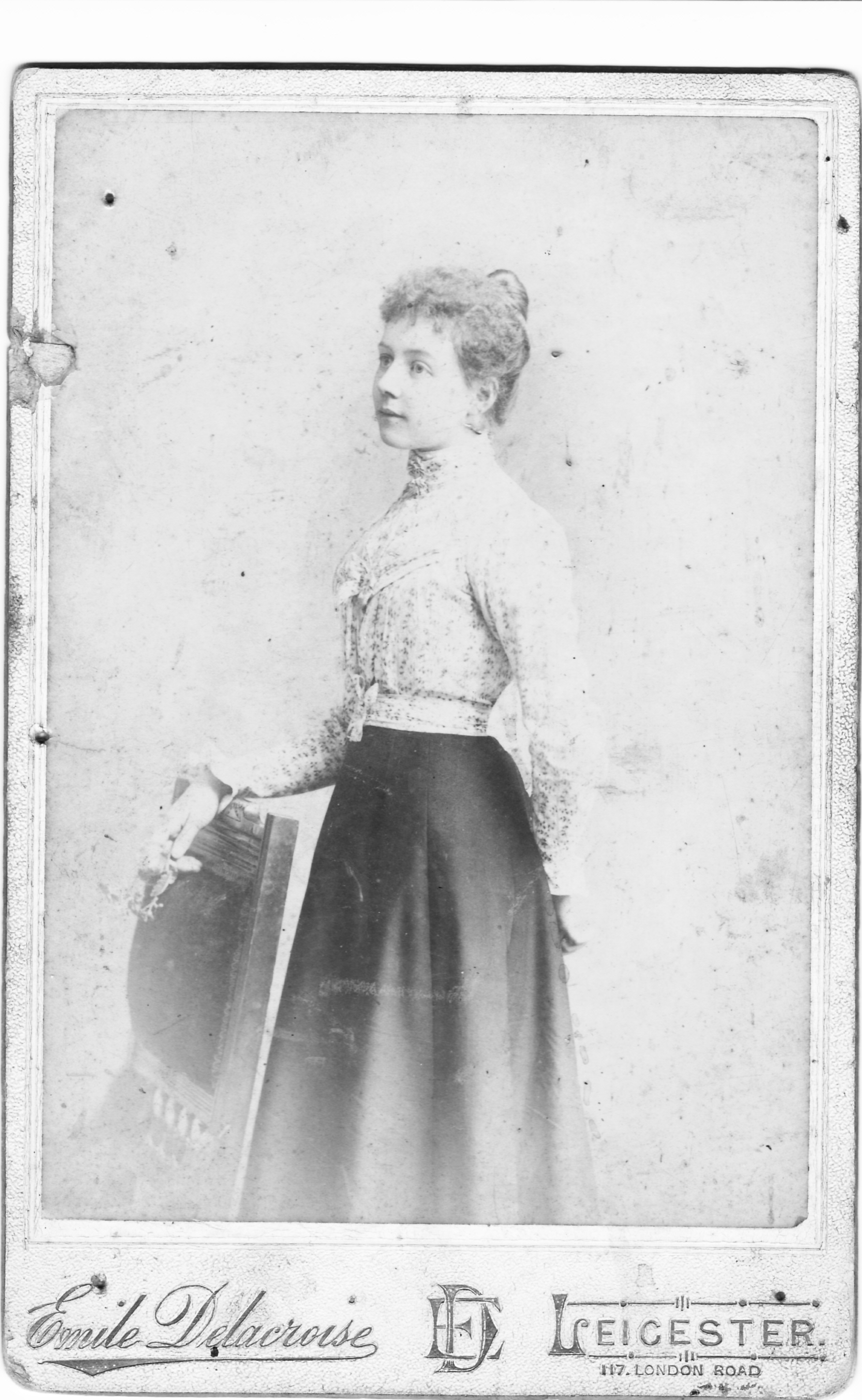
In the March 31st 1901 UK Census Lilian Mary Symons was listed as a ‘servant girl/domestic’ in Leicester, Leicestershire in the employ of Mrs. Mary Whatnall, ‘Retired Lunatic Asylum Matron’ Mrs. Whatnall’s niece also lived in the house.¹

The 18 year old Lilian had, the previous November 25th given birth to a daughter. The father of the baby was a Royal Navy Cooper and master carpenter Thomas Bevan whom Lilian met when she was 17. They had started to court, but neither of them realised she was pregnant when Thomas left for sea. He was gone not knowing he was to be a father and Lilian had no contact with him for the next three years.

Lilian was the oldest in a family of five. Her father was a jobbing gardener and her mother a housewife so they would have had no means to take care of Lilian and another child.

How Lilian must have felt at that time, being pregnant and unmarried is not known, but I can only imagine how she would have had to approach her family and tell them. She also had to tell them that she did not know where Thomas, the father was.

Lilian’s father Thomas Symons unsuccessfully searched for Thomas and he also wrote to the Royal Navy regularly to find out the father’s whereabouts, but to no avail.²

In the 1900’s in the United Kingdom, unmarried pregnant women were often disowned by their families and the work house was the only place they could go during and after the birth of their child. There were no fees, but hard work was expected of the inmates. ³

According to my family, although Lilian was not ‘disowned’ by her family she did give birth to her baby and her child’s birth certificate states the child was born in the ‘Leicestershire Workhouse’.

In addition, the original birth certificate also had the words ‘ILLEGITIMATE’ in large letters stamped over the entire certificate. Lilian immediately tore it up and threw it away. 4

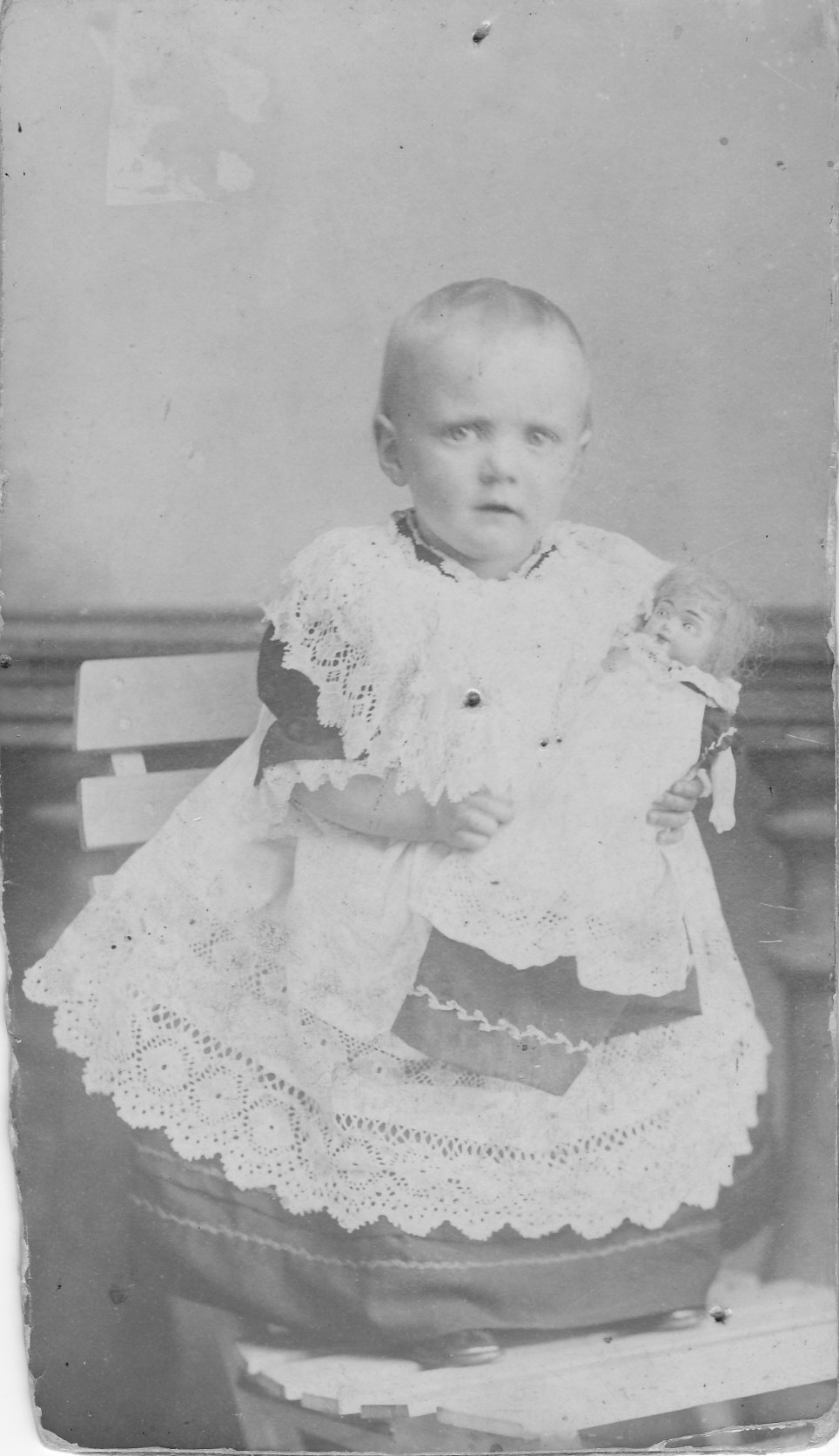
Lilian’s circumstances definitely changed, as I have a wonderful photo of the child at two years old and she is dressed in a very attractive dress with a matching dolly. These are not the usual working attire for someone living in a 1902-era work house and tape recordings of family told me her parents looked after the baby daughter and Lilian went to work for Mrs. Whatnall.

Thomas Bevan did eventually return from sea and Lilian and he got married on 25th April 1904 when the child was three and a half years old.5

In the 1911 Census 10 years later, Lilian is the ‘head’ of a household with three additional children. They lived in the Royal Navy Port of Plymouth, Devon England and Thomas was once again, back at sea.6

The couple went on to have four more children, who all lived to adulthood, including my grandmother, Edith, who had no idea she was born out of wedlock until she was 65 years old, but that is another story!

 Sources:
1 1901 UK Census at Ancestry.com
2 http://www.workhouses.org.uk/life/entry.shtml
3 Family tape recordings
4 Certified copy of a Birth Certificate, Leicestershire City Council, England
5 Registered marriages in April, May and June 1904 Leicestershire, England at Ancestry.com
6 Family tape recordings

Photos Below:

Lilian Mary Symons b. 1882

Lilian Mary Symons 1899

Edith Bevan 1902

Edith Symons Bevan 1902

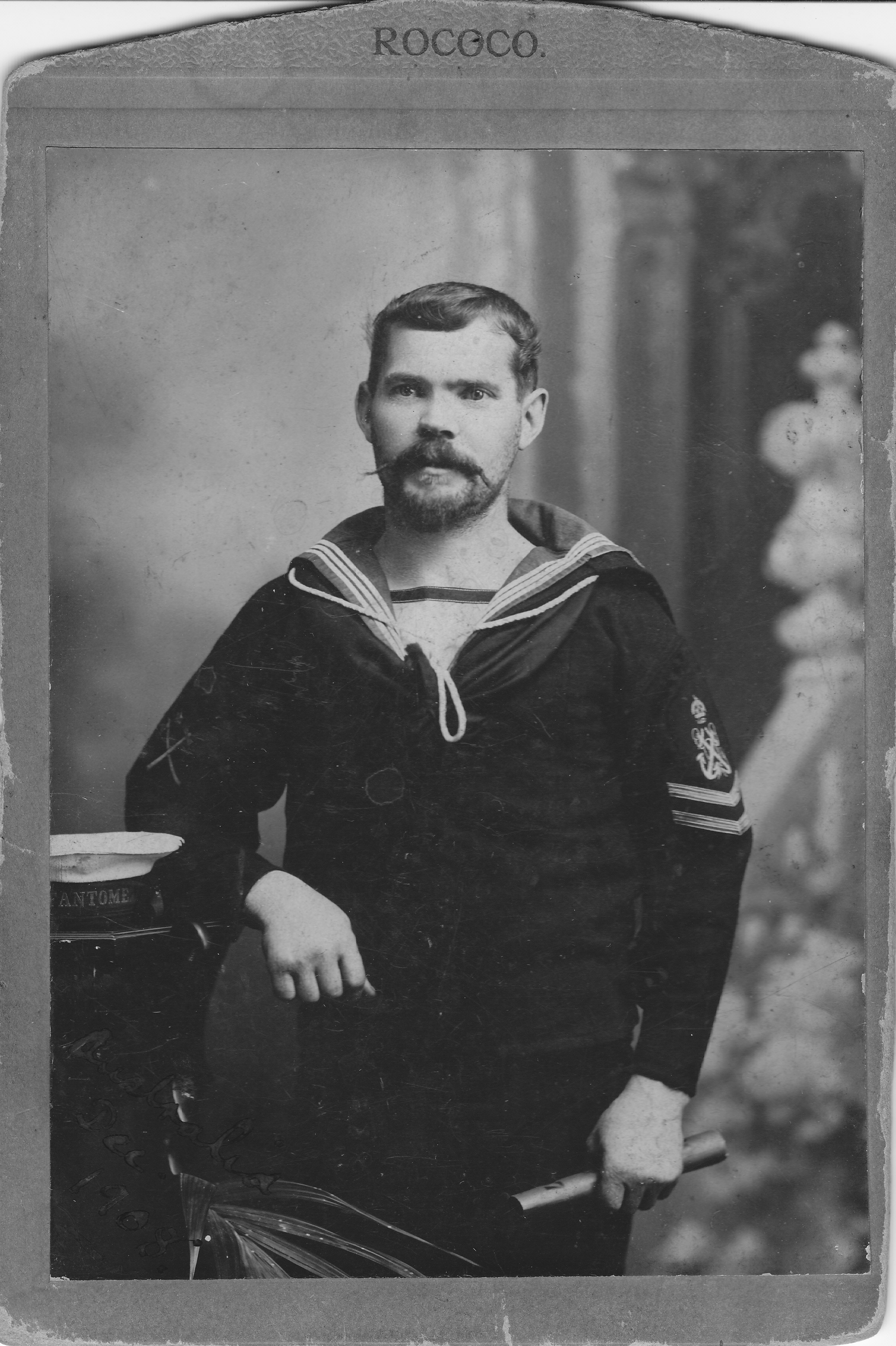
Thomas Bevan b. 1876

Thomas Bevan, RN

Australia, 1908