Tag Archives: Singapore

Parallel Lives

In April, 2008 I received an unsolicited email from a Mrs. Joan Hague of Montreal with just one word in the subject line: Changi.

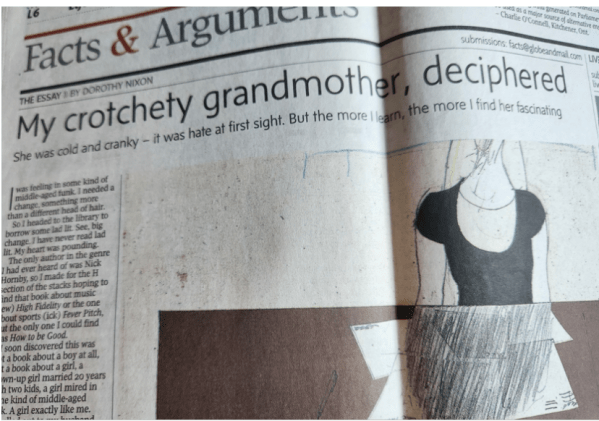
She had seen an article I had written about my grandmother  in the Facts and Arguments1section of the Globe and Mail. She wanted to tell me about her father, Thomas Kitching, who had been interned at Changi Internment Camp in Singapore during WWII, just like my grandmother Dorothy Nixon.

I visited the gracious Mrs. Hague (recently deceased at the ripe old age of 99) only to discover something extraordinary: Mrs. H. and my own father, Dorothy’s first son, Peter, had led parallel lives!

My father, Peter, was born on October 24, 1922 in Kuala Lumpur, to a Selangor planter, Robert Nixon of North Yorkshire and his wife, Dorothy Forster of  Teesdale, County Durham. Mrs. H. was born in Batu Gajah, Malaya in early November, 1922, to Thomas Kitching, the Surveyor of Singapore and his wife Nora.

As was the custom for British Colonials in the era, Mrs. H. was sent away at age six to go to school in England. She attended Harrogate Ladies’ College in North Yorkshire. My father was sent away at age five to go to a school in Maryport, Cumberland and then he went on to St. Bees prep school on the coast of Cumberland.
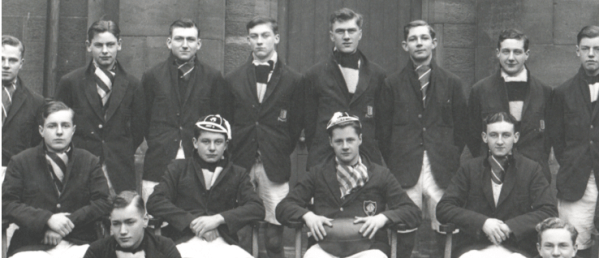
Senior Rugby St Bees School, Cumberland. My father at top, fourth from left. Courtesy St. Bees School Website.

Mrs. Hague told me she spent her holidays with a loving grandmother in Lancashire. My father and his even younger sister, Denise, were shuttled on vacations between random relatives who resented having to care for them.

Mrs. Hague’s mother, Nora, a nurse by profession, filled the void in her life with sports, golf mostly. She also scored cricket for Singapore. My grandmother, Dorothy, became the librarian at the Kuala Lumpur Book Club and she was Selangor’s official cricket scorer.
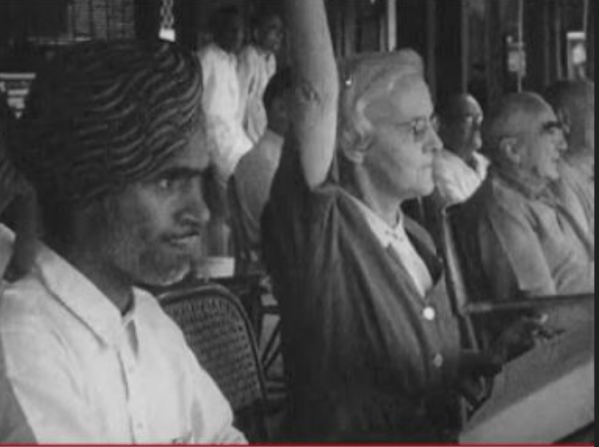
My grandmother, scoring cricket at Royal Selanor Club in K.L in 1952. Courtesy of a March of Time Newsreel. She was the ‘grand dame’ of Malayan cricket apparently. She told a reporter that she got into cricket because her husband, my grandfather, was one of the finest players in Malaya in the 1920’s and 30’s.

In 1939, when the phony war broke out in England, my father was about to go to Oxford. Mrs. H.  was in her last year at her ladies’ college. The Harrogate students were evacuated to another town. Mrs. H’s parents, in England for a time, brought her back to Singapore because they thought she would be safer. After two years at Oxford’s St Edmund Hall (where he was awarded ‘colours’ for rugby) my father signed up with the RAF and went to train in Saskatchewan, Canada.

The Japanese invaded Malaya on Boxing Day, 1942.The Japanese planes bombed “the green” at the center of KL, the site of many government buildings. My grandmother’s library building, adjacent the legendary Royal Selangor Club, was hit. During the bombing my grandmother hid under a desk. Later, she helped dig  four dead bodies from out of the rubble.

On that ominous day, Mrs. H and her mom were safely in “fortress” Singapore. They joined up as VADs, tending to the severely burned survivors of two navy ships that had been blown up by the Japanese in Singapore Harbour.  Mrs. H. had a vivid memory of unfolding the hospital cots that were all covered in a sticky goo to prevent rusting.

Kuala Lumpur soon fell. My grandmother was commanded to take a noisy, unlit night train to Singapore. Upon arriving, she immediately joined the ‘resistance’ at the Malaya Broadcasting Corporation.2
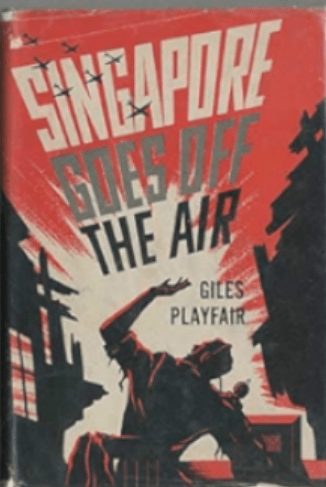
Giles Playfair, a reporter, wrote Singapore Goes off the Air in 1943, so it was likely a bit of wartime propaganda. He oft mentions my grandmother and seems to like her, but he disparages Colonial Wives as lazy and living above their station.

To everyone’s surprise and to Winston Churchill’s embarrassment Singapore soon fell as well. Mrs. H. escaped to Batavia and made it back to England but tragically Nora, her mother, took another boat, the Kuala, with 500 others including 250 women and children, and was lost at sea when her ship was bombed by the enemy.

Mrs. H. trained as a physiotherapist at St Thomas Hospital, London and volunteered at the Canadian Camp.

Mrs. H’s father, Thomas Kitching, was interned at Changi Internment Camp, as were my grandmother and grandfather, Dorothy and Robert Nixon. (Upon the fall of Singapore, Dorothy had stubbornly refused to escape to Batavia, staying instead to support wounded soldiers. A good thing, perhaps.)
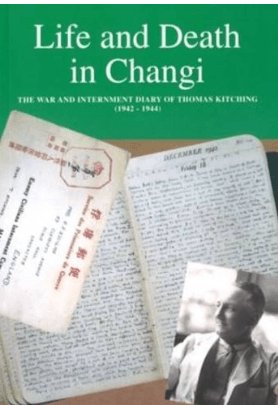
Thomas Kitching’s diary was published posthumously. Mrs. H. lent me a copy.

Kitching died of throat cancer in the men’s section of Changi prison in 1944 but he kept a diary of his time there that was later published. For a six month period my grandmother was Commandant of the Women’s Camp and according to her own unpublished memoirs she liked sneaking into the men’s camp, which was strictly against the rules, to gather information. The men had secret radio sets, you see, and she was an amateur radio enthusiast.

Malaya Straits Times 1936. The only woman among men. From what I have learned, that’s how “Granny,” educated at a co-eductional quaker school, liked it. This is why she just had to sneak into the men’s camp, a very dangerous act, I think. it certainly got her into trouble! Here she is described as Mrs. Dorothy Nixon. In those days and well into the 1960’s in newspapers in North America women were referred to as Mrs. John Smith.” They had no first names.

On October 10, 1944 many of these men and a few women were accused of spying in the infamous Double Tenth incident and taken by the Japanese Gestapo to a room in the basement of the local YMCA to be harshly interrogated, some men horribly tortured. My grandmother stayed in that stifling, bug-infested room with the crazed, half-starved men for a month, enduring a kick in the ribs on occasion, and then she was put in solitary confinement for another five months.

She survived her ordeal, but barely.

My father, meanwhile,  was posted to the Ferry Command based in Dorval, Quebec, a suburb of Montreal. A member of both the RAF and RCAF, he flew planes around the world, mostly mosquitos he told me.

A range of Mosquitos were manufactured to do everything from reconnaissance to bombing. Some were made in Downsview, Ontario. Ferrying planes from Canada to Europe was dangerous and many planes didn’t make it, but, hey, it was war.

In Montreal he met my mother, a French Canadian stenographer at RKO Radio Pictures probably at a party at the Mount Royal Hotel. They married after the war in 1949  once my father  had finished his war-shortened math degree at Oxford.
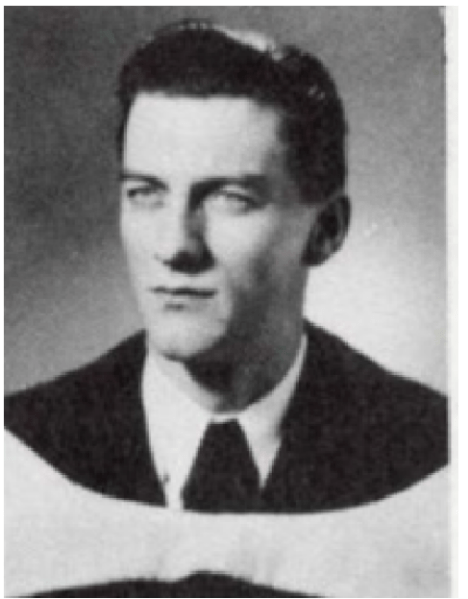
My father’s Sir George Williams grad pic, 1952, that I recently found online. Sir George Williams University night school was designed for returning soldiers, many of whom already had families.

In Montreal, my father added on a night time Commerce Degree from Sir George Williams University and a CA from McGill while working full time and raising a family.

Mrs. H. met her future husband, Mr H., the son of a prominent Westmount banker, during the war in London at a party for Canadian soldiers. The invitees brought with them a big juicy turkey apparently. The couple married in Morecambe Parish Church and moved to Montreal on the war bride scheme.

It is too bad I never got the chance to introduce Mrs. H. to my father as he succumbed to Alzheimer’s in the St. Anne de Bellevue Veteran’s Hospital in 2005. They certainly would have had a great deal to talk about!

Indeed, they may have already met. They both sent their sons to Lower Canada College on Royal Avenue in NDG in the 1960’s.

1. My Crochety Grandmother Deciphered.

2. Chronicled in a 1945 book Singapore Goes off the Air by Giles Playfair. The author wrote fondly of my grandmother, although he held the common belief (from back then) that Colonial women were indolent parvenues, ‘who would be sweeping out a four bedroom cottage back home’ were they not in Malaya attending fancy liquor-oiled soirees and waited on at home by a slew of servants.

3. Joan Hague obituary, chronicling her ‘interesting’ life with portrait young and old. I wrote this piece years ago and posted it on my personal blog after passing it by Joan Hague but also added two tidbits from her online obituary: Her marriage details and her work details.LINK HERE
Harry’s Story

I never met Harry Jolliffe. I never even knew Harry Jolliffe. So, why a story about an unknown man?

We met Hazel and Roger 35 years ago when they would regularly visit us as friends from our church until they moved from Beaconsfield to Salt Lake City, Utah to be with the family. As we are all British we have had a very comfortable friendship over all these years. We now keep in touch via FaceTime. During the last call, we got on to the subject of families and the Mormon practice of marriage being for the eternities and not ‘Till death do us part’.

In The Church of Jesus Christ of Latter-day Saints, the word sealing refers to the joining together of a man and a woman and their children for eternity. This sealing can be performed only in a temple by a man who has the priesthood, or the authority from God. (1)

Roger then told us a story about a conversation he had with a church member, Harry Jolliffe, back in England in 1975, which has haunted him ever since. I was so fascinated by Roger’s story I felt I had to write it down.

Our friends went to Harry Jolliffe’s home as a representative of their church in 1975, to establish if there were any needs. Harry was 79 years old and had only joined the church 3 months prior. He lived on his own and was still grieving the loss of his wife who had passed away the year before. Roger and his family had only been in the church for a year themselves and knew the challenges of embracing a new faith and wondered what had inspired Harry to join, particularly at his age. Harry then told Roger the harrowing story of his time in a Japanese prisoner-of-war camp

Although captured in Singapore – see below – I cannot read Japanese for the camp Harry was at or of him being sent to any other of the numerous Japanese POW camps on the island of Singapore.

Harry had joined the regular army in the early 1930s and rose to the rank of Warrant Officer in physical training. He was serving in Singapore when the war broke out with Japan. Harry, along with thousands of troops and civilians were swept up and captured.

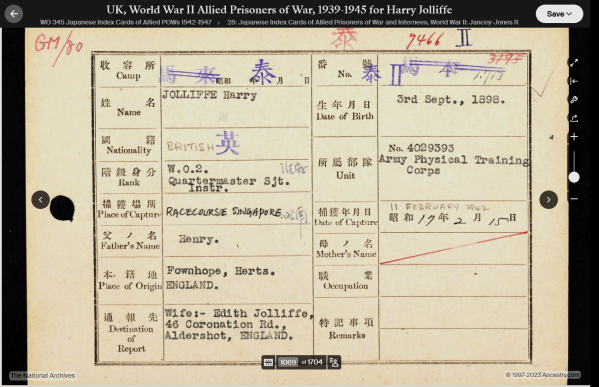
Below is Harry’s record of his capture at the Racecourse, Singapore, on the 11th of February, 1942. (2)

Harry’s Japanese Index Card of Allied POW 1942 – 1947

After his capture, Harry was then imprisoned in a very squalid Japanese prisoner-of-war camp where both British and Australian troops were prisoners. Starved and ill-treated, many died of neglect, abuse or forced labour.

However, because Harry was physically fit he was used as a boxing opponent for the prison guards to spar with and humiliate in front of their comrades and all the other prisoners. He was given slightly better food in order to keep him fit but was warned to always lose each fight so that the Japanese soldiers would not lose face.

While in the camp Harry became gravely ill and was so sick he went to the hut of an Australian prisoner who was a Doctor. This Doctor had previously removed his own appendix with no anaesthetic or suturing material. The Doctor told Harry, that he thought it may have been a gallbladder infection and to come back the next day. Harry returned the next day, with a fever, and feeling much worse.

The Doctor told him the gallbladder had to come out or Harry would die. As he said these words, four burly prisoners entered the room and held Harry down. The Doctor made the first incision. Harry fainted. When he came to, he looked down and saw all his organs displayed on his stomach, and he fainted again. He came to in his hut, his wound had been sutured with string!

He was at least still alive thanks to the skill of the unknown heroic Australian Doctor. He was weak, and all his fellow prisoners had to feed him, was rice water. Harry wanted to die and end his misery.

That night, Harry had a fevered dream. He was walking up the street to his home, in England. He opened the gate and knocked on the door. Harry’s wife, Edith said ” Oh! Harry! We missed you so much and we need you!’ Harry awoke and immediately felt a very strong will to live and survive. Singapore was liberated by Australian and US forces in 1945, as the war in the Pacific turned in favour of the Allies, and the prisoners were freed. Harry went home to England, via Southampton, where his wife, Edith, met the ship.

She rushed into his arms, and said “Before you say another word, what happened to you, on this date?” Edith continued ” I had a very vivid experience, I heard a knock on the door, and when I opened it, there you were! I thought I was dreaming but you disappeared as I opened my arms to you! I was fully awake. What happened, Harry”? So, Harry related the story, that on that date a gall bladder operation had been performed on him, and he nearly died, but he believed he survived because of that dream.

To our friends, he said “You asked me why I joined the church. The feeling I had during that dream, which stuck with me all my life, was the same feeling I felt when the missionaries were teaching me about the gospel of Jesus Christ”

He had such a strong desire to listen to these young missionaries and when they mentioned that he could be sealed to his wife for eternity, he readily accepted their teachings. Unfortunately, Harry never lived long enough to carry out his wishes to be sealed for eternity to Edith.

Roger believes the story has haunted him all these years because he is meant to do the sealing of Harry and Edith, vicariously. This is the purpose of the Latter-Day Saints temples, to seal together a family for eternity. Our friends have now done the sealing for Harry and Edith.

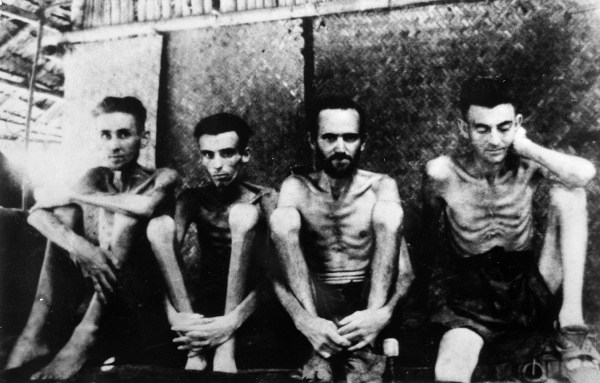
Below is a photo of British Prisoners of War after liberation in Singapore.

L0025435 Prisoners in Changi Jail, Singapore. Credit: Wellcome Library, London. Wellcome Images images@wellcome.ac.uk http://wellcomeimages.org Photograph of four skeletal soldiers. Photograph circa 1943 Published: – Copyrighted work available under Creative Commons Attribution only licence CC BY 4.0 http://creativecommons.org/licenses/by/4.0/

So, not only is Harry’s story inspiring in a spiritual sense, but also a reminder of the bravery of all those prisoners and civilians who endured the most wretched of circumstances.

I am grateful that Roger shared this story with me, thank you.

SOURCES

(1) https://newsroom.churchofjesuschrist.org/article/sealing

(2) https://en.wikipedia.org/wiki/Fall_of_Singapore

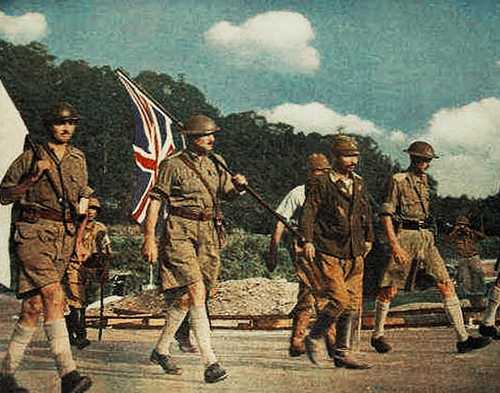
The Surrender of Singapore 1942

Lieutenant-General Arthur Ernest Percival, led by a Japanese officer, walks under a flag of truce to negotiate the capitulation of Allied forces in Singapore, on 15 February 1942. It was the largest surrender of British-led forces in history.