
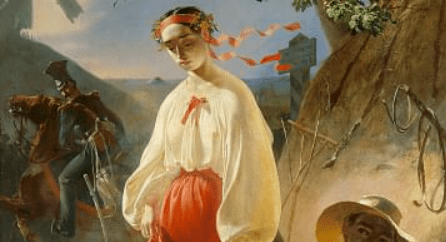

Yes, the street in Lasalle is named after this celebrated Ukrainian painter/poet!
Exploring your genealogy is something of a luxury. You need the knowledge to do it, the time to do it, sometimes the money to do it. And you need the ancestors to do it, that is to say ancestors who came from relatively stable, peaceful places; countries where good records were kept.
People in North America and Western Europe sometimes have this luxury, the rest of the world, well, not so much.
My ‘official’ family tree is half French Canadian and half North of England, so easy to put together. My biological tree is half French Canadian and, let’s say, something not Western European, something very, very complicated and sometimes hopelessly obscure.
On Ancestry, the record makes clear that most of my mother’s people hail from the Lachenaie seigneury, north of Montreal. That’s a very small area. There are hundreds of cousin trees to prove this.
My unknown bio-father’s side is from all around the Black Sea and Eastern Mediterranean. That’s the crux of it, anyway.

We’re talking an enormous area that for centuries was home to myriad populations, myriad cultures that for economic and/or political reasons moved around a lot.
On Ancestry, my mother’s side has 28,000 matches, none of them that close, but that doesn’t matter because I know who my mother is.
My bio-father’s side has but 1,800 matches, only one match at 60 centimorgans, likely a third cousin, and the rest at 20 centimorgans and below. 1
Still, using Ancestry’s various tools to analyze my paternal side’s origins, my best guess is that my bio father was half Protestant Black Sea German (maternal side) and half Pontic Greek (paternal side.)2

Incredibly, it has taken me a full seven years to figure this out. I must have the equivalent of a Master’s degree in Black Sea Studies. 🙂
I won’t make fun of you if you don’t know what a “Black Sea German” is, although some of the descendants of these people now live in the Dakotas in the United States and in Western Canada.3
They were people from Baden-Wurrtemburg and Alsace (many winemakers) who took their horse drawn wagon trains to Southern Russia (sometimes by way of Galicia, that is the Poland/Ukraine border or Swabia, the Hungary/Romania border) in the late 18th century at the invitation of Catherine the Great who offered them free land, no taxes, and no conscription in order to re-populate areas formerly held by Turks. Catherine didn’t want those nasty Turks coming back. Later, Alexander I opened up Bessarabia (today’s Moldova) to Germans, offering similar incentives.
It was a difficult life (if you survived the journey) but many of these disciplined, hard-working farmers prospered – until they didn’t. Many ‘extra’ sons or cast-outs were constantly on the move looking for a benevolent, fertile piece of land to call home. Young unmarried women sometimes moved away for work.
Some Black Sea Germans, Protestant and Catholic, moved on from Southern Russia/ Bessarabia to settle in the Crimea on land once held by Tatars.4 In later years, Bessarabian German settlers spread out southward to Dobrucha in today’s Romania at the invitation of the Turks who were still in charge there. Ironically, this is where the displaced Crimean Tatars were now living.
The North American descendants of these Black Sea Germans have done a remarkable job chronicling their ancestors’ migrations and daily lives on various websites and databases. This information includes village censuses.
The most intriguing documents, I think, are the anecdotal “village histories” written down by a leading citizen and/or self-styled local historian. Apparently, there was lots of praying as these people were pious; also lots of drunken brawling, as most every town had a tavern; and lots of hardship, too, death from disease and famine, earthquakes and plagues of all kinds. Meeting your end at the bottom of a well was quite common. Hmm.
Initially, there were a handful of ‘orderly’ villages, 25 to 100 and that number grew to around two to three thousand. Although overwhelmingly populated with Germans in extended family clusters, many Besserabian villages also harboured a few Turks, Bulgarians, Romanians and Jews.
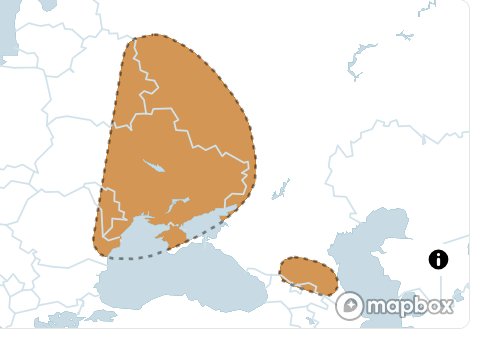
Black Sea German citizens were so mobile they often named the last village in which they lived as their ‘homeland.’
Since the borders in Austria-Hungary changed so often, even an officially listed nationality like Polish or Austrian means little.
Nationality back then was very fluid.
That’s why delving into the ‘Germanic’ side of my unknown bio-father’s genealogy, although illuminating in one sense, usually sends me down a dizzying rabbit hole.5
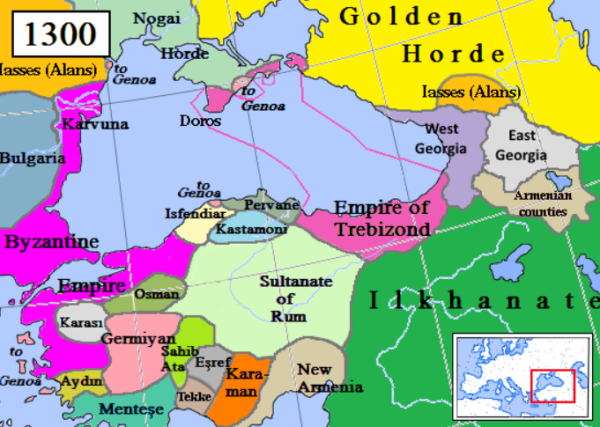
This map goes a long way towards explaining my wonky heritage.
The Pontic Greek side is even more obscure. Pontic Greeks are people who believe they are descendants of the original Greek settlers on the Black Sea in the Classical period. 6
They practised Eastern Orthodox Christianity brought in from Byzantium at a later date, lived in vibrant port cities like Samsun and Trabzon in North Eastern Anatolia, and spoke either a form of Greek or sometimes even Turkish. They mixed up their genes with Armenians. Some dressed like Tatars. Many converted to Islam.
Post WWI, these Christian Greeks were forced by the Turks to leave the Pontus, as it is called, in a series of expulsions and death marches, mostly pushed to the Anatolian interior or towards the Caucasus. (This coincided with the Armenian genocide.)
In 1923, Greeks in Turkiye (mostly Pontic) were exchanged for Muslims in Greece. These Greeks primarily went to Thessaloniki in Northern Greece.7
I know I am derived from Pontic Greeks because I have over fifty matches on Ancestry with that particular “journey.”8 Some of these matches live in Turkiye and have Turkish names and when I contact them they seem very upset to discover they are even a small part Greek. Others are merely perplexed.
Many of my Pontic cousin matches have the tell-tale suffix IDIS at the end of their surnames and identify as Greek. They live in the United States and their immediate ancestors hail from Thessaloniki or southern Russia. 6
A handful have Russian surnames.13
Southern Russia! I have a theory. My male Pontic Greek ancestor from Samsun in Northern Anatolia (where I almost certainly have antecedents) took a boat across roiling Black Sea waters to the Crimea, maybe by way of Sochi, where I have a tree match, and met up with my female Black Sea German ancestor. The mountains of southern Crimea had a climate good for growing grapes. I have many sure-fire ancestors in the village of Huffnungstal, near Odessa. Some of these Hoffs, Bollingers, Lutz’s, and Berreths went on to Crimea.
This is more than a stab in the dark. Call it an ‘educated guess.’
The essential point is this: Because of the complex history of Eastern Europe and the Black Sea area, my bio father back in 195412 Montreal may have identified as a Ukrainian (most likely) or a German or a Greek or maybe even a Turk or a Tatar. Or perhaps a Pole or a Hungarian, or even a Romanian Jew14. Or just a Canadian. His ancestors might have been Steppe nomads, serfs or slaves, farmers, vintners, blacksmiths, soldiers,sailors, shopkeepers, shipping magnates, Romani gypsies, noblemen – or all of the above.
Yes, researching genealogy is challenging for most people but next to impossible for people in my situation, with roots around the Black Sea, even if you know who your parents are.
In Soviet society, post WWII, elders kept family history and stories AWAY from their descendants rather than passing the stories on, according to an academic paper I read.9
This was for their protection.
“The less people knew about their family history the better.”
The Pontic Greek diaspora in Europe and North America now struggles to keep its cultural identity. Persons who went to Thessonaliki or other parts of Greece in the 1923 exchange were often slighted by natives and not considered ‘true’ Greeks, so they didn’t showcase their past.
The other surviving descendants of the citizens of the once dazzling Empire of Trebizond now live in Ukraine (Mariupol) and Kazakstan and Turkiye and many likely don’t know (or want to know) their ethnic heritage.
It’s no wonder I can’t figure out who my bio-father is – and probably never will. His relatives, if they exist at all, reside in places where they don’t do DNA – and sometimes for good reason. But, thanks to modern science and copious online sources, I do know an awful lot about his very mixed-up ethnic heritage.
THE END SON Кінець Das Ende Τέλος Koniec Sfârşit
Footnotes
1. I only get one or two new matches on that side a week, or maybe a month. Most are Americans or Brits with some Romani. (I’m 1 or 2 percent Romani) or distant descendants of Black Sea Germans (Eberhard from North Carolina!) and an occasional Pontic Greek.
2. I only know this because I have a twin who did his Y DNA and the one match had a Turkish name. J2A.. My 3rd cousin match, a Turkish woman, is a stand-alone match, with no mutual matches. Her ethnicity profile mirrors my bio-father’s, though, suggesting to me Crimean Tatar roots. See Note 4. Bob Dylan, apparently has a similar ancestry.
3. I am almost certainly related to the Hemmerlings of Gimli, Manitoba. Are you?
Most Black Sea Germans were repatriated to Germany or Poland during WWII. As the borders changed during the war some had to go back to Russia. A few of these Germans lobbying to return to Germany had ‘mixed marriages,’ according to records kept by the Germans. The mates were mostly Russian, but quite often Moldavian (sometimes referred to as Gagauz, a kind of Christian Turk native to Romania) and but rarely Hungarian, Polish, Bulgarian or Greek.
4. Ancestry doesn’t acknowledge Tatars or Crimean ‘journeys’ but on many other platforms the algorithms give me Crimean Mountain Tatar, at least way back. These people were a mix of Northern Italian (Genoa) Southern Italy and Greece, (Sicily), Allans (Persia) and Goths (Germany) with Nogai, as in Steppe Tatars who in turn have Central Asian and Mongolian. (I have all of these things 🙂 I have only one distant match with a tree totally from Crimea and, yes, the surnames are Tatar.
5. I have a cluster of family trees with people from a town called Hoffnungstal in Bessarabia (Odessa area). I also have a cluster in Galicia (Poland-Ukraine border)in a town called Bruckenthal. There was a trade route between these two areas and smack in the middle was a town called Botosani, Northern Romania, where I also have a tree match- a Jewish match with people who moved to Montreal. Yikes! (Any ideas? Contact me, please!)Added a week later: The immigration path of the Black Sea Germans in my trees seems to go from Baden area to Poland down to Galicia north of Lviv, around Moldova to that bit of Ukraine west of Odessa where Hoffnungstal and Kloestitz (my villages) are. The researcher says there were many long stops along the way. Works perfectly. Bruckenthal Rava Ruska is north of L’viv.
6. The Euripides play Iphigenia in Taurus speaks to this. Iphigenia, daughter of Agamemnon, is saved from death by the goddess Artemis and hidden in the land of the Taurians (Crimea). The Greeks have a long history in Russia. Rich shipping families from the Aegean ran the grain trade there in the 1800s. Many of these rich Greeks assimilated into Russian society. At the founding of Odessa, that became a bustling multicultural economic center, there were already many Greek families, who often were the wealthiest citizens there. At one point the Mayor of Odessa was a Greek.(Odessa Recollected; The Port and the People. Patricia Herlihy. 2018 Boston)
7. According to one online source, the Asia Minor and Pontus Hellenic Research Centre at Chicago, Illinois: In the city of Samsun, where I very likely have some ancestors, 72 Greek community leaders were arrested and sentenced to death in 1921. Other Greek men were killed, imprisoned or conscripted into the army and the women and children sent into exile or deeper into Turkiye where they were forced to change their Greek surnames to Turkish ones.
8. Ancestry gives me no journey on the paternal side, but there is a function that allows me to see the journeys of my paternal matches. These include: all parts of Germany; Black Sea Germans/ Leibenthal Beresen Enclaves; Pontic Greek; Eastern European Roma; North Eastern Hungary/Slovak Border. (That’s on edge of Ukraine near L’viv.) I appear to be connected to Szekelers, a sect of Hungarians who moved to Northern Romania, Bukovina.
9. A. Pahl and Thompson. 1994. Family history was dangerous even for families who left for North America.
10. https://www.grhs.org/pages/Villages A concise list of Black Sea German villages. Many descendants of Black Sea Germans and of French Canadians mixed it up in the Dakotas or Western Canada later on, so I have hundreds of distant ‘unassigned’ matches with both these heritages.
12. In 1954 Crimea was returned by the Russian Soviet Socialistic Republic to the Ukraine SSR. The Russians felt that the Crimea fit more naturally with them.
13. In Family Tree’s public Pontian Greek Y database, the vast majority of subscriber surnames are Russian. This appears to show the extent these people were absorbed into Russian society.
14. MDLP algorithm, that is supposed to be best for people of my bio-father’s ancestry, is unequivocal. I am Romanian. And sometimes a Romanian Jew or Gagauz (that’s the Turkish bit). Lots of Romanian Jews immigrated to Montreal. That would mean perhaps that my closest community is not Black Sea German but Danube Swabian, Wurrtemburg Germans who lived for generations in Romania, Serbia, until expelled after WWII.
 Genealogy Ensemble