Tag Archives: West Germany

Travelling Alone

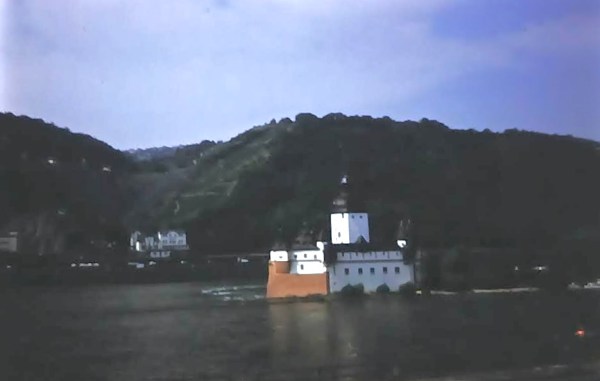
Along the Rhine 1973

After two months working on the Knorzer’s chicken farm, they drove me to the train station in Osterburken, where I boarded a train to Heildelburg and then Frankfurt. I had a suitcase, a red vinyl shoulder bag, a little yellow nylon backpack and a map of Western Europe. I certainly wasn’t equipped for backpacking around Europe. My return flight from Frankfurt was in 30 days.

I had no plans for travelling in Europe that summer in 1973. Although I had applied to the Canadian German Academic Exchange Society, I didn’t expect to be chosen. I had an offer of a summer job at F.W. Horner’s, a pharmaceutical company in Montreal, where I had worked the previous summer. That job would look good on a CV. So, I hadn’t been looking at maps, planning a route, finding places to visit, or searching for accommodations.

The seventies were a different time with no cell phones, internet or social media. Your every minute wasn’t being recorded. Even making a transatlantic phone call took preparation.

My only previous experiences of travelling alone were train trips from Montreal to Kingston, to and from University. Getting off the train in Frankfurt was a big deal. 

A little man on the train offered to take my suitcase off, then buy me coffee, then his apartment for 5-10 days, then to come to Canada and marry me and then to just go to a hotel for the night.”

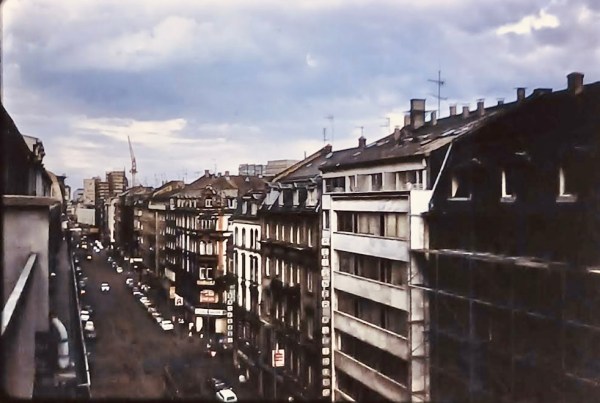
A view form my hotel window 1973

That was my introduction to travelling alone. I kept walking, holding my suitcase and luckily he didn’t follow. I found a hotel near the station for 24 DM per night. The next day I walked around Frankfurt in cold rain. I had seen enough so the following morning, I began travelling north. 

“ Took the train from Frankfurt to Cologne. Got on a first-class train and when the conductor came around, had to pay 25DM extra. Left my suitcase in Frankfurt. Need 50 DM to claim it again.” 

A British fellow in the car tried to console me by saying I would get to Cologne quicker with no stops. I had all the time in the world, but limited cash. I found a hotel in Cologne through the tourist information. 

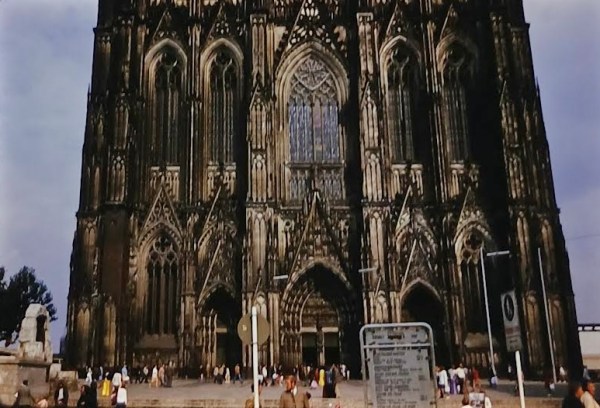
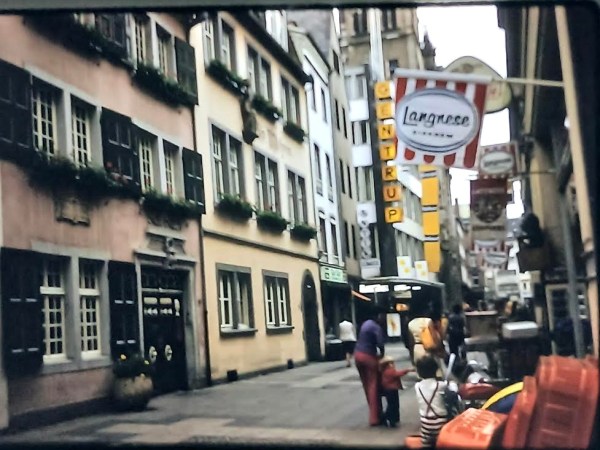
Cologne Cathedral 1973

Walked along the Rhine. Went to the Botanical Gardens. Didn’t go to the zoo as you had to pay. Went to the Youth Hostel but no one was there. Will try again tomorrow.”

I figured staying at Youth Hostels would be less expensive and more fun than staying in a room in a cheap hotel. Most of the hotels I stayed at had single rooms without a private bathroom but breakfast was included. It was usually just crusty rolls, butter, jam and coffee or tea but good enough. I don’t remember there being lots of people in the hotels I stayed in so communal bathrooms weren’t a problem. I would spend the days walking around the different cities. I would buy food for dinner and take it back to my little room. I never went out at night. I had already begun thinking about going home early. 

Still, I continued north and on the train to Amsterdam, I met two Norwegian girls and two Dutch boys. On arrival, the boys bought us Dutch hot dogs and gave us an abbreviated tour of Amsterdam in the pouring rain.

“ They then took me to a student hotel but as it was full, waited til I got a reservation at another hotel. In a room with eight, six English girls and an American from Connecticut.”

Amsterdam was an easy walking city. I walked over bridges and canals, went into museums, saw original Rembrandts and bought souvenirs but thought more and more about going home. I began retracing my steps and taking trains south. 

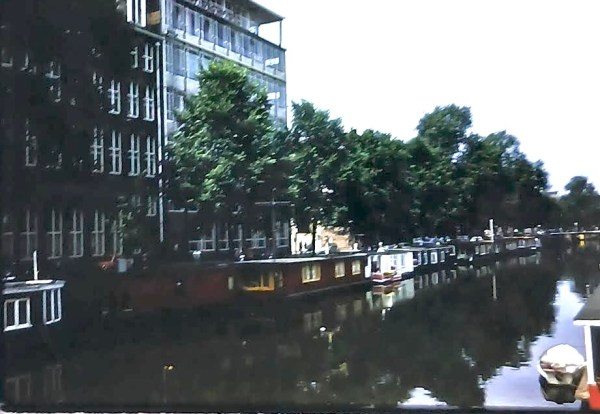
Amsterdam Canal 1973

The train to Bonn was late so I came to Dusseldorf. Staying in the Diana Hotel. Rooms get worse as you go higher up. My room is about the size of the bed. Costs 22DM. Still can’t decide whether to stay.”

The next day I did travel to Bonn and spent two days there in a hotel that looked like a mausoleum but only cost 15DM. I spent my time walking around, stumbled on Beethoven’s birthplace and ended up walking along the Rhine. That was my favourite thing to do.

Beethoven’s Birthplace the pink house in Bonn 1973

Took the train to Frankfurt. Had decided I would go home. Went to a travel agent and found it cost 1800 DM one way so I decided I would stay in Europe for another three weeks!” 

This was an easy decision because I didn’t have that much money. I couldn’t believe how much it cost and kept saying, it’s only one way. The agent said, that’s more expensive. With the money I brought with me and with my chicken farm salary, I only ever had 1300 DM. It never even crossed my mind to phone my parents and have them send me money. So I was stuck in Europe for three more weeks.

Notes:

In 1973, one Canadian dollar equalled 2.67 DM

I took all the pictures with my first camera. My first attempts at photography. I used slide film, so I only saw the results after I got home.

My Chicken Farm Summer

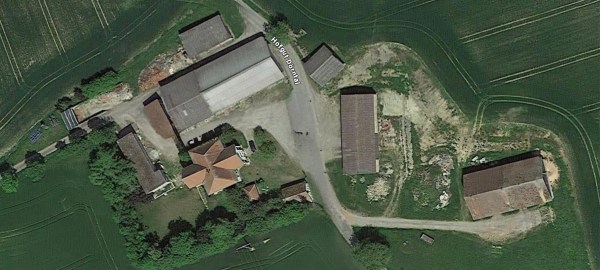
Hofgut Dorntal as seen on Google Maps 2026. The big grey building housed the chickens

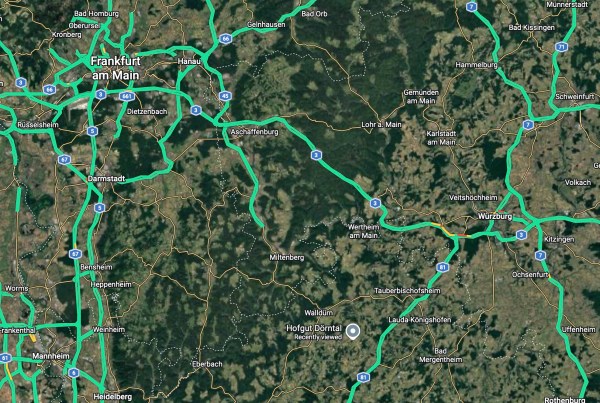
A strange clomp, clomp, clomping woke me up. I looked around a strange room, from a strange bed, in a strange country. It was 1973 and I had arrived in West Germany the day before on a Canadian German Academic Exchange Society trip. I was going to a farm to work for two months, but the only location I had was Hofgut Dorntal. I knew it was in West Germany, but I had no idea where. 

The clomping was the farmer, Herr Leo Knorzer going downstairs on his artificial leg. I assumed he lost it during the war and never asked him about it. It turned out it was in a car accident. His leg was broken and the cast was put on too tight. By the time his brother, a doctor visited, gangrene had set in and the leg couldn’t be saved.

I had just finished my third year at Queens University in Kingston Ontario. I had taken German as an elective, although majoring in biology. One day, the professor announced that we should all apply for a summer exchange in Germany, so I thought, why not! We could apply to study or to work. I didn’t expect to be chosen but when another student dropped out, I was offered a place.

We flew to Frankfort and picked up train tickets to our final destinations. My ticket said Eubigheim. I boarded a train to Munich, but had to change in Lauda. I sat alone on a bench outside the Lauda station in the cold and wet, thinking I would rather be home! I When the Eubigheim train arrived, it was only a two-car commuter train. All the seats were full, so I sat on my suitcase. I hadn’t slept, so I dozed as the train rumbled on. I kept jolting awake, hearing strange words around me. I knew they were German but some sounded like out-of-context English. I had to keep alert so I wouldn’t miss my station.

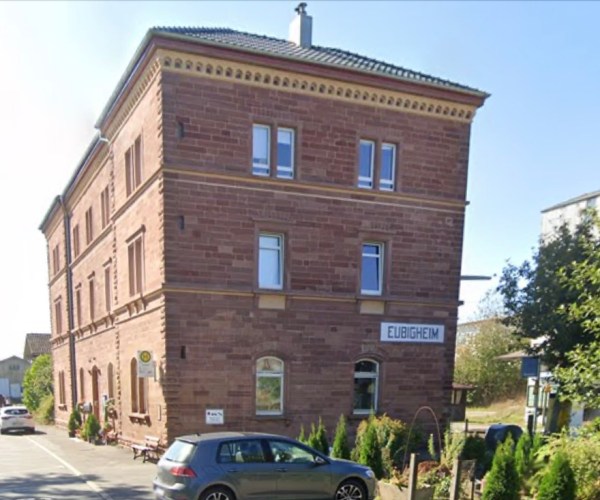
Eubigheim Station Google Maps 2026

When we arrived at Eubigheim, I gathered my luggage and followed the commuters off the train. They hurried through an empty station and out the other side. With no one to ask, I wandered around outside the station and found a man in a little office. With some difficulty, I made him understand that I wanted to contact Herr Leo Knorzer at Hofgut Dorntal. He called and soon their son arrived in his little Porsche sports car. I was expected, but not that day. His parents were out at a farmer’s meeting. Ekkehard spoke good English but said this was the only time he would speak English, as I needed to learn German to communicate with his parents.

Ekkehard and his wife Gutrune had their own apartment in his parents’ house. Gutrune was expecting a baby, so they needed help with the chickens. They gave me supper of rye bread, cheese and salami while we watched Bugs Bunny cartoons on TV in German. What was I doing there! They showed me to my room on the other side of the house and I slept, to be awoken by the clomping. I had forgotten the alarm clock I had purchased for the trip, so Frau Knorzer had to wake me with a knock on my door. 

My main job was collecting eggs. They had a large barn with two sections of hens. One section, the horse stalls, was up steep cement steps where I collected the eggs by hand into buckets and carried them down. I always worried about falling down the stairs with all the eggs! The other section was on the ground floor and automated. They had conveyor belts which carried the eggs into the grading room where they would be sorted by size and weight. Any dirty eggs had to be washed and misshapen eggs broken into a bucket. Those eggs were frozen sent to make egg noodles. The conveyor belt worked well until an egg broke. Then, with the call gelbe, gelbe (yellow, yellow) the conveyor was stopped and Herr Knorzer had to go into the hen house and clean it up so not all the eggs would need to be washed. 

Conveyor belts under the cages carried away the poop and others supplied food. Pipes carried their water and the dispensers often leaked.

“ Today I washed all the egg racks and pails. Then I swept and removed cobwebs in the cellar. Then I washed the whole wash kitchen. When I collected the eggs there was water dripping. One of taps was gone and the feeding tray was full of water. I held my fingure over the hole while Gurtrune tried to block it. Then I carried out the wet feed.”

Most hens lay an egg a day. When their production falls, they are crated and sent away. That was tough work as the hens didn’t cooperate, resulting in scratched and pecked hands. The Knorzers didn’t raise hens from chicks but would buy a new set of laying hens.

“ The new hens came today, all 2000 of them. The men came at 7 am. What a stinking mess. Shit all over the place from the frightened birds. I took out the birds while Frau K. put them in cages. I got more bruises on my poor arm.”

These new hens laid lots of eggs. One morning I collected 3261 eggs or 27 pails full that all had to be carried down the stairs. 

Most evenings, Frau Knozer would deliver the eggs to customers. So Herr Knorzer and I often ate, just the two of us. He was very interested in how everything worked in Canada: farms, hospitals, schools and transportation. With my rudimentary German and his only English words, grandfather and grandmother one would think we would have trouble communicating but he could always find another way to say something so I would understand. Because of his patience, I learned quite a bit of German. 

Frau Knorzer, on the other hand, had no patience. She would get very frustrated when I didn’t understand what she wanted me to do. “Die Mary this and die Mary that!” she would say with a sigh. She did everything quickly but one vacuumed slowly. She always told me, “Immer langsam.” I still hear her, “always slowly,” every time I vacuum. I did learn to clean the house to her satisfaction and weed the garden while only pulling out some of the lettuce.

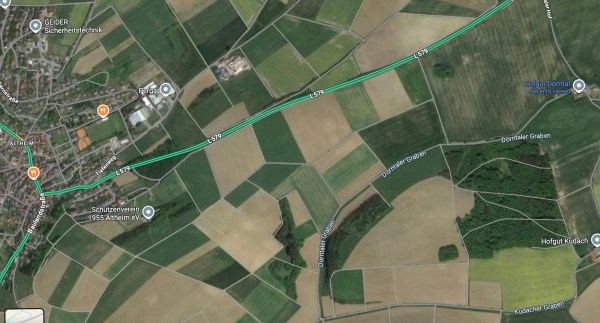
Town of Althheim on the left and Hofgut Dorntal on the top left Google Maps 2026.

The farm was a few miles from anywhere, so at night we would just watch TV. They took me most places they went, including to their next farmers’ meeting. We walked into a room with about twenty people sitting around a large table. They introduced me, and I had to walk around and shake everyone’s hands. They treated me as one of the family so much so that after their two daughters and their families left after a visit, Frau Knorzer said she was tired of entertaining them and glad it was just us!

My last day wasn’t a good day. Overnight visitors came and I am sleeping on a lawn chair in the sewing room. After the eggs, I had to clean out my room, help change the beds, vacuuum, make a cake with 20 minutes beating sugar and eggs, clean Soren’s room, clean up the kitchen, sweep, then lunch, clean the car, wash the floors and then I was finished!”

I left at the end of July after two months of work. I then had a month to travel before meeting up with my exchange group in Frankfurt for a trip to Berlin, before we flew home. I left the farm without any real plans. The Knorzers said that if I had any problems or for any reason, I was welcome to come back. They drove me to Osterburken, where I boarded a train to Heidleburg on my way to Frankfurt to begin another adventure.

My parents didn’t know where I was going or even if I had arrived. I sent a postcard soon after I arrived. 

“ I got 2 letters today. One from Mom and one from Dad. They just got my postcard on the 27th. That took over a month to get there. I think they were kind of worried.”

Hofgut Dorntal in relation to Frankfurt

Notes:

Fast forward to 2026. I Googled Hofgut Dorntal and Google Maps took me right to the farm. I could see the house and the outer buildings.

I also couldn’t find Eubigheim, but when I Googled Altheim, the town nearby, Eubigheim appeared on the map, right on a railway line. It was the closest station to the farm, but not the most convenient. There is a three-story building where the Banhof should be, but on the side of the building is a big sign “Eubigheim,” so it appears that it is the station. 

All the quotes are from a journal I kept during the summer of 1973.

I looked up Leo and Erna Knorzer on the internet and found their final resting places.

Gravsten: Friedhof Osterburken (Neckar-Odenwald-Kreis) Germany.

Knorzer Erna Hofmann 1922-2007.  Knorzer Leo 1911-2006.