My Grandmother’s Vacation Photos

Before 1900, photography was the domain of the expert. Cameras were complicated, film was bulky. That year, the Eastman Kodak company introduced the Brownie camera, a simple box with a lens, loaded with a roll of film, and photography became available and affordable to the general public. My grandmother’s family were early adopters of this new technology, and my grandmother, Gwendolen Bagg (1887-1963), became an enthusiastic photographer.

One of her first subjects was her own house in Montreal’s Golden Square Mile. She photographed not only the exterior, but also the drawing room (living room), with its ornate mantelpiece and heavy drapes.

The majority of photos were taken during summer vacations with the family. Many Montrealers left the city in the summer, not only to escape the heat, but also to avoid the outbreaks of disease that plagued the city in those years. In the early 1900s, the Bagg family went to Cacouna, on the shores of the St. Lawrence River, and they also spent time at a lake near Ste. Agathe, in the Laurentians, north of Montreal.

Gwen photographed her father stretched out on the lawn at Cacouna, her mother in a wide-brimmed hat, and her older sister on horseback and in a canoe. Her little brother, Harold, was a favourite subject. In one picture, taken when he would have about five years old, he posed with his two girl cousins. According to the custom of the day, he had long hair and was dressed exactly like the girls in what appears to be a dress. The following year, his blonde hair remained long, but Harold wore a sailor suit.

Harold's sailor suit
Gwendolyn Bagg, “Harold Bagg, Cacouna, 1903”, McCord Museum, Bagg Family Fonds, P070, http://collections.musee-mccord.qc.ca/en/collection/artefacts/M2013.59.1.62

In her late teens, Gwen photographed her friends, wearing elaborate bathing costumes on the beach near Kennebunk, Maine. On the porch at the hotel where they stayed, all the young women wore light dresses that reached the ground and covered their arms to their wrists. They must have been very hot.

In 1913, Gwen photographed her mother, by now a widow and dressed in black, leaning up against a big log at Kennebunk Beach, chatting with a friend. By this time, her sister Evelyn was married, and Gwen liked to photograph her little niece, Clare.

The camera must have been a good one, and whoever Gwen shared it with (probably her mother), was also a good photographer. All these photos were in focus, well exposed and tightly composed. Most importantly, Gwen put her photos into albums and identified most of the people, places and years they were taken. She got married in 1916, and after that, although she continued take family photos, the prints ended up in a box, loose and unidentified.

Gwen kept these albums and my mother inherited them and then passed them on to me. Several years ago, I asked the McCord Museum in Montreal whether they would like them. The McCord already had a collection of letters and business ledgers that had belonged to the Bagg family, so these photos shed light on another aspect of their past. The albums are now part of the Bagg Family Fonds, and a few of them have been digitized and can be viewed on the McCord’s website at http://collections.musee-mccord.qc.ca/scripts/explore.php?Lang=1&tableid=18&tablename=fond&elementid=31__true (go to the very bottom of this page).

This article is also posted on http://writinguptheancestors.blogspot.ca

Notes:

I cannot say for certain that my grandmother had a Brownie, but she certainly had some type of simple box camera. The square photos in her album are approximately 3 ½” x 3 ½”, corresponding to the Kodak film sizes 101 and 106.  This chart on the Brownie website describes the different sizes of film that Brownie cameras used over the years: http://www.brownie-camera.com/film.shtml. If she did have a Kodak, it was probably similar to the camera described on this website: http://www.historiccamera.com/cgibin/librarium/pm.cgi?action=display&login=no2bullet



The Driving Lesson

I pace the floor nervously. Where IS he? How much longer do I have to wait? He is already 30 minutes late!

It is 23 January 1979 and I have been in Quebec, Canada for all of three months and today is my first driving lesson – EVER. I have never even sat behind the driving wheel of a car. In England, I walked everywhere pushing the children in my Silver Cross upright pram and later, we caught a bus. In Geneva where we had been living previously, we had a small VW Beetle and my husband drove it. Here, we have what to me is a huge car, and I am supposed to learn how to drive it? I am a nervous wreck. My son Owen, aged 5 has to come with me, as I do not know anyone to care for him, and the thought of Owen in the back seat with ME and my first driving lesson has me really worried.  My appointment was for 10 am. At 10:30 I call the school to ask where he is. They tell me he should be there, and to make alternative arrangements when he arrives.

WHAT? All that worry and a sleepless night to make alternative arrangements?! My fear makes me angry. The driving instructor eventually arrives 40 minutes late, claiming to have been ‘ringing the bell’ and I was not answering. I tell him he is very late and I called the school to ask where he was. Then, HE gets annoyed and informs me he has to go or the other client will be ‘tearing his hair out’ plus, I cannot expect him exactly on time in ‘these conditions’ These conditions being heavy snow, wind and ice which is not ideal  for a first ever driving lesson, but what do I know?

I tell him to leave and I am going to cancel future lessons with this school. I shut the door and cry and cry I feel like a failure. I’ll never learn to drive. Eventually, I mop up and call the school and demand a refund. The director was very kind and said the instructor was wrong trying to justify his lateness.  He would make another appointment. ‘Not with HIM’ I rage. No, another person he soothes. I put the phone down, have another cry. I feel so frustrated, angry nervous and very alone. I wept for most of the day. Two days later, after 2 and half hours of snow clearing another strange ritual, I have my first driving lesson.

The instructor this time is a Welsh man and he is very patient telling me to relax. Ha! relax? No way! The sweat is actually running down my back and I can’t stop trembling. How do I work the window wipers in this snow? Put the heater on? Which side of the road am I supposed to be on? Why is there a ‘Stop’ sign at every corner? I manage to get to the next street and it is covered in thick ice. A water main has burst, and the street is like an ice rink or what I would imagine an ice rink to be, having never seen one. Oh! the anxieties and fears of being a newcomer.

Eventually, I do get my driving license, and today I love to drive but those few fraught months of learning is something I will never forget but the bonus is, that driving in snowy icy weather here in Quebec is a breeze for me now! I have no fear.


A Dedicated Life

We were sitting on a bench at a short par three at our local golf course, waiting for the green to be free. Louise and I struck up a conversation that turned out to be serendipitous. We had known each other for more than seven years. The name of Soeur St. Emile had never been mentioned. She began talking about her great aunt, Tante Soeur St. Emile, a Grey Nun of the Cross in Ottawa., also known as the Sisters of Charity of Ottawa. Hearing this, my curiosity was piqued.  My mother often talked about her aunt, Soeur St. Emile, a grey nun who was the Superior of the boarding school in Alymer where she had been a student. Could it possibly be the same person? What were the chances of that?

Louise and I chatted and came to the conclusion that her grandmother and my grandfather were brother and sister!  Soeur St. Emile was their sister.  Indeed it was the same person and we were related.

Marie Louise Jodoin  (Soeur St. Emile) was born November 16th, 1862 in Montebello, Quebec, a community on the Ottawa River not far from Hull. As a youngster she attended the local convent school where the Grey nuns taught. Her family moved to Hull and she remained in Montebello as a boarder until the new school in Hull was completed in 1870.

Louise was eight and a half years old when her mother died and a year later her father remarried. No doubt this must have had a strong impact on the little  girl. Music became her passion at this very young age.  She took piano and singing lessons and had a talent for both. At the age of sixteen she entered religious life through the doors of the Mother House of the Grey Sisters of Ottawa  on Bruyère  Street  and for the next 75 years she lead a  life of prayer and dedication along with  an active life devoted to teaching piano and singing lessons. She was also called upon to serve as a Superior during 37 of those years in various schools and hospitals under the jurisdiction of the community.

Mother House
Mother House –  Bruyère Street, Ottawa

August 15th, 1940 after 62 years of active service to the community she walked through the same door as day the she had  entered the convent. She had come full circle. She was coming home. On April 14th 1942 the community rejoiced as they celebrated her Diamond Jubilee.

Through out her latter years, Soeur St. Emile devoted much of her time to prayer, however, she continued to maintain contact through correspondence with many of the people whose lives she had touched. “La petite Estelle”, my Mom, was one of those people and even after all those years she would always ask her about the children.

She was truly an intelligent and  remarkable women who excelled at everything she did. She died in her 91st year and in her 75th year of religious life.

I would be remiss if I did not tell you the following: When I saw my parents shortly after my conversation with Cousin Louise on the golf course that summer afternoon  of 1984, I asked them a few questions. My mother was a little perplexed and my father piped up and told me the story about meeting Soeur St. Emile in September of 1930 while he and my Mom were on their honeymoon. They had stopped in Hull to see her on their way to Quebec City. Dad pointed out that she was a  rather buxom lady who took him in her open arms and welcomed him in to the family. Needless to say, it was a very meaningful gesture he never forgot. He made a gesture of open arms and said, “ Elle ma embracé.”He then proceeded to tell me the names of all the relatives he had met during that visit and this was almost 50+ year later!

Soeur St. Emile left a lasting impression with him and most likely with many of the people she had met over the years.

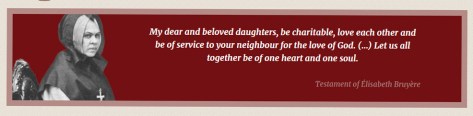
bruyere
Words to live by — Elizabeth Bruyère

Source:

With gratitude to my cousin, Louise Pinault for giving me a copy of a short biography that was written a year after the death of our Great Aunt. It was penned  by a member of the Grey Nuns of Ottawa on the 8th of August 1953.


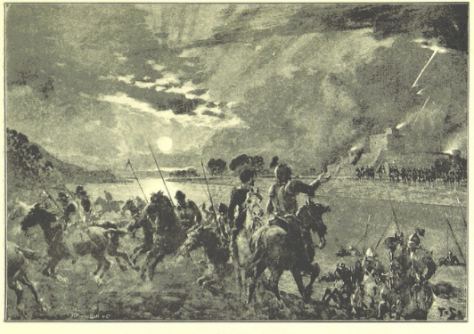
Border Raiding Ruffians

Border Raider and Reivers Public Domain

  Border Reivers: They were often romanticized in art.*

Growing up in Montreal in the late 1960’s and early 70’s, I was often asked, “Are you related to HIM?”  They were referring to Richard Nixon, President of the United States from 1969 to 1974, also a Vice-President from 1953 to ’61.  To this I would reply an emphatic “No! I’m English.  He’s Irish.” I always wanted to add, “Do you ask everyone named Johnson if they are related to Lyndon?”

My father was the one who insisted we were not related to Richard Nixon. Dick was an Irish Nixon, Daddy said. Our Nixons were English. My father also told me, with a sly self-effacing wink, that our Nixons were sheep stealers.  It all sounded a bit cockeyed to me.

Today, 50 years on, I am engaged in working out my genealogy. I’ve had my DNA tested at Ancestry and I’m growing a tree. It seems that my dad was right on two points, about the sheep and, possibly, about Richard Nixon’s Irishness, but not about our family’s relationship to the late American President.

We probably do come from the same ancient stock.

I’ve just learned the Nixons of Northern England are descended from Border Reivers, families from the lawless, burnt out Scottish/English border regions of the British Isles  (Cumberland and Northumberland) who raided other people’s livestock for a living. If you are a Nixon, Forster, Graham, Armstrong, Bell, Eliot, Robson, Crozier, Kerr, and yes, Johnson, you might be descended from these 13th to 17th century outlaws.  Apparently, the Nixon Administration was full of them.

As it happens, I am both a Nixon and a Forster.  An alleged ancestor of mine, illustrious Border Reiver Sir John Forster of Northumberland, was knighted for his service to Queen Elizabeth I in 1557. Sir John was lucky to be on the winning side of two key battles. His castle was in a strategic location on the “middle march” section of the border, so, apparently, he enriched himself with his share of the spoils from all local cattle raids, in England and Scotland.

The Nixon Clan has an even sketchier reputation. According to some accounts, they were “rude borderers” from Carlisle, Cumberland, who held no allegiances (except to the Armstrong Clan) and felt at home on either side of the border.  They were real baddies who were exiled to Ireland and, then, kicked right back to England. Many in the clan were hanged for their transgressions at Carlisle Castle.

That is likely where my father got the idea that Richard Nixon was an Irish Nixon.  I suspect my great grandfather, Robert Nixon ( 1863-1937), a sawmill worker in Helmsley, Yorkshire in the 1920’s, filled his young grandson’s head with many a grand, romantic tale of their burly, bearded ancestors, skilled light horsemen on  fleet-footed stallions, engaging in strategic, daring cattle raids on the Scottish border.

It appears that these Border Reiver families can be described as reckless ruffians on horseback and/or heroic defenders of the monarchy; scoundrels or heroes; charming rascals or organized crime. It’s only point of view.

Just don’t blame these people for their wild way of life.  In the 13th to 17th centuries, the area around the English/Scottish border was ravaged by warfare and not suitable for farming. Raiding sheep and cattle was just a way to earn a living. Also, the exact location of the border was disputed.

The BBC paid homage to these Border Reiver families with a TV show in 1968 called “The Borderers,” featuring a young and handsome Michael Gambon. The adventure series never came to North America, but I have found it on YouTube. If the BBC series had come to Canada back in 1968, when I was 13, I doubt it would have appealed to me any more than any other small screen horse opera.

But my father would have been mightily impressed.

* Illustration at top from book  Border Raids and Reivers, Robert Borland. Available on Archive.org and in the public domain.

Here’s  Sir John Forster’s Wikipedia page.

https://en.wikipedia.org/wiki/John_Forster_(soldier)

You can read more about the Border Reivers on the Historic UK website, where I got some of my info.

http://www.historic-uk.com/HistoryUK/HistoryofScotland/The-Border-Reivers/

Read about their connection with the Nixon Adminstration here.

http://articles.latimes.com/1996-02-11/news/mn-34692_1_border-reivers