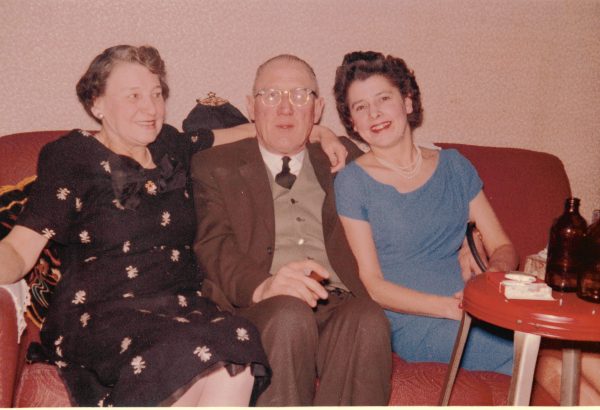
Charlotte and Arthur’s War-Time Wedding

I never asked my great granny Charlotte about her wedding, but the records I’ve found hint at lots of intrigue.

Did they plan a summer wedding and then rush things to avoid conscription? Had they initially hoped to marry in the church next to her home but lost the opportunity due to community infighting?

Probably, but not yet proven.

What I do know is that my great grandparents—then 23-year-old groom Arthur Johnson and his 22-year-old bride Charlotte Charbonneau—chose to marry on Friday, February 9, 1917 in an unfinished church basement blocks away from her home instead of in the church right next door.

The direct information I have about that day appears in an affidavit filled out by Arthur on January 22, signed by the witnesses and solemniser, and turned in to the Registrar on February 17.[1]

When looking at it, I couldn’t help wondering two things: why then and why there?

Why February?

She wasn’t pregnant—their first son wouldn’t be born for another two years.

Money would be tight later, but at that point both had jobs. Arthur worked as a machinist and Charlotte served as a fore-lady, probably supervising women at a factory producing something for the war.

Did the impetus to marry early in 2017 have something to do with federal government musings about conscription at that time? Prime Minister Robert Borden promised publicly that he’d send 500,000 Canadian soldiers to Europe by the end of 1916. Only 300,000 men volunteered by December 2016, and numbers dwindled as horrific details about the Battle of the Somme reached Canada.

Borden passed conscription in August the summer after Arthur and Charlotte wed. Had they married after July 6, 2017, Arthur might have been conscripted. I might not exist.

I’m not sure why Arthur didn’t serve. He certainly had close ties with Europe having immigrated to Canada from Lancashire England ten years earlier. He came to Canada with his brother Albert and his parents, Mary Young and William Johnson.

Neither Arthur nor Albert volunteered for the Armed Forces and the family remained close. Albert and his wife Amie served as witnesses at Arthur and Charlotte’s wedding.

I also wonder how they selected the location of their marriage.

Both families worshipped in the Presbyterian faith. At the time, Charlotte still lived with her parents on Cross Street in Weston, right next to a Presbyterian Church called the Old Kirk at 11 Cross Street.

Why didn’t the couple get married in the Old Kirk?

Turns out that the building couldn’t offer a legally-sanctioned marriage between March 2013 and June 2017, despite more than 200 of the 247 congregation members working hard to keep the place open.

The problem began in March 2013, when fewer than 38 people voted to close the facilities and sell the Cross Street building. Given that the snow kept 209 people at home that day, I suspect that the meeting in question took place in the Main Street building purchased for Sunday School services a year earlier.

The sordid affair appears in a wonderful history of the Church in Weston called “From Then to Now.”

At a congregational meeting in March 1913, bad weather kept attendance to 38 out of 245 members. A majority of the 38 voted to hold all future services at the new facility and to sell the Cross Street site. Westminster Presbyterian Church was then fully established on the new site and the Cross Street site was sold.

The church on Cross Street was then re-purchased by some of the old members and services resumed on January 18th, 1914. Presbytery refused to recognize this congregation though, so it operated as an independent Presbyterian Church known as The Old Kirk The group continued to worship steadfastly and endured three failed petitions to Toronto Presbytery asking to be recognized as a second Presbyterian congregation in Weston (one petition was signed by 259 members). They appealed to the General Assembly, held in Montreal in June 1917, and the appeal was sustained. The church was then named The Old Presbyterian Church. From June 1917 to 1925 there were two official Presbyterian Churches in Weston.

In 1925 Westminster Presbyterian voted for church union and The Old Presbyterian Church opted to remain Presbyterian. It was then named Weston Presbyterian Church and Westminster became Westminster United Church. [2]

I haven’t yet found definitive proof that Charlotte and her family took part in the purchase or petitions of the Cross Street building. Given that Arthur and Charlotte married within a completely different congregation, however, it’s likely that they did.

Perhaps the couple hoped to be the first marriage in the renewed building, but then chose to wed rapidly so Arthur could avoid conscription. They needed a legally-sanctioned marriage.

They Chose St. David’s Church in Toronto

Arthur’s affidavit provides the address. It indicates that Reverend Charles A. Mustard presided over Charlotte and Arthur’s wedding ceremony at 38 Harvie Avenue, a building at the corner of St. Clair Avenue.

Information contained within a Presbyterian Museum article[3] about the Church after it was torn down in 1999 gives context. The St. David’s Church congregation purchasing the Harvie site in 1911. They began operations by moving an original frame church from the south side of St. Clair Avenue opposite McRoberts to the new site. That building opened in 1912.

The community grew rapidly. By 1914, they hired Toronto architect Herbert George Paul to incorporate their original wood frame structure into a new larger building. He finished constructing only the basement, however, when the bank pulled the Church loan due to World War I.

A speech by John Barron in June 1918 describes what happened.

In the year 1911 the present site was secured. Seventy-two feet of the frontage being presented by Westminster Church, to which the Church building was moved and alterations made. This building was opened on Nov. 12, 1912.

The congregation outgrew this accommodation, and in the year 1914 plans were prepared and the present building was commenced, but owing to conditions brought about by the war, the basement only was finished and used for services to the present time.

So, instead of getting married in a perfectly good building on Charlotte’s street, community infighting and a war forced the couple to wed in an unfinished basement in St. David’s Presbyterian Church.

[1] Johnson, Arthur. Affadavid, 022461, loose paper, Office of the Registar General Ontario. Rec. Date: Jan 22, 2019. Ontario Canada Select Marriages. Archives of Ontario. Toronto. MS932, Reel 440, Ancestry.com and Genealogical Research Library (Brampton, Ontario, Canada). Ontario, Canada, Marriages, 1801-1928 [database on-line]. Provo, UT, USA: Ancestry.com Operations, Inc., 2010. Ancestry. http://www.ancestry.ca : 2010.

[2] From Then to Now, 1847 to 2007, a history by the Weston Presbyterian Congregation, http://westonpresbyterian.ca/wp-content/uploads/2016/04/WestonPCHistory.pdf

[3] http://presbyterianmuseum.ca/files/2014/09/PCC-National-Presbyterian-Museum-Museum-Musings-St-Davids-cornerstone_revised.pdf
The Trading Companies of New France

The fur trade between the First Nations people of North America and the Europeans was central to the history of Canada and the United States. The commerce in furs made fortunes, it changed the lives of the First Nations people forever, it encouraged the French to explore deep into the interior of the continent, and it gave work to hundreds of people.

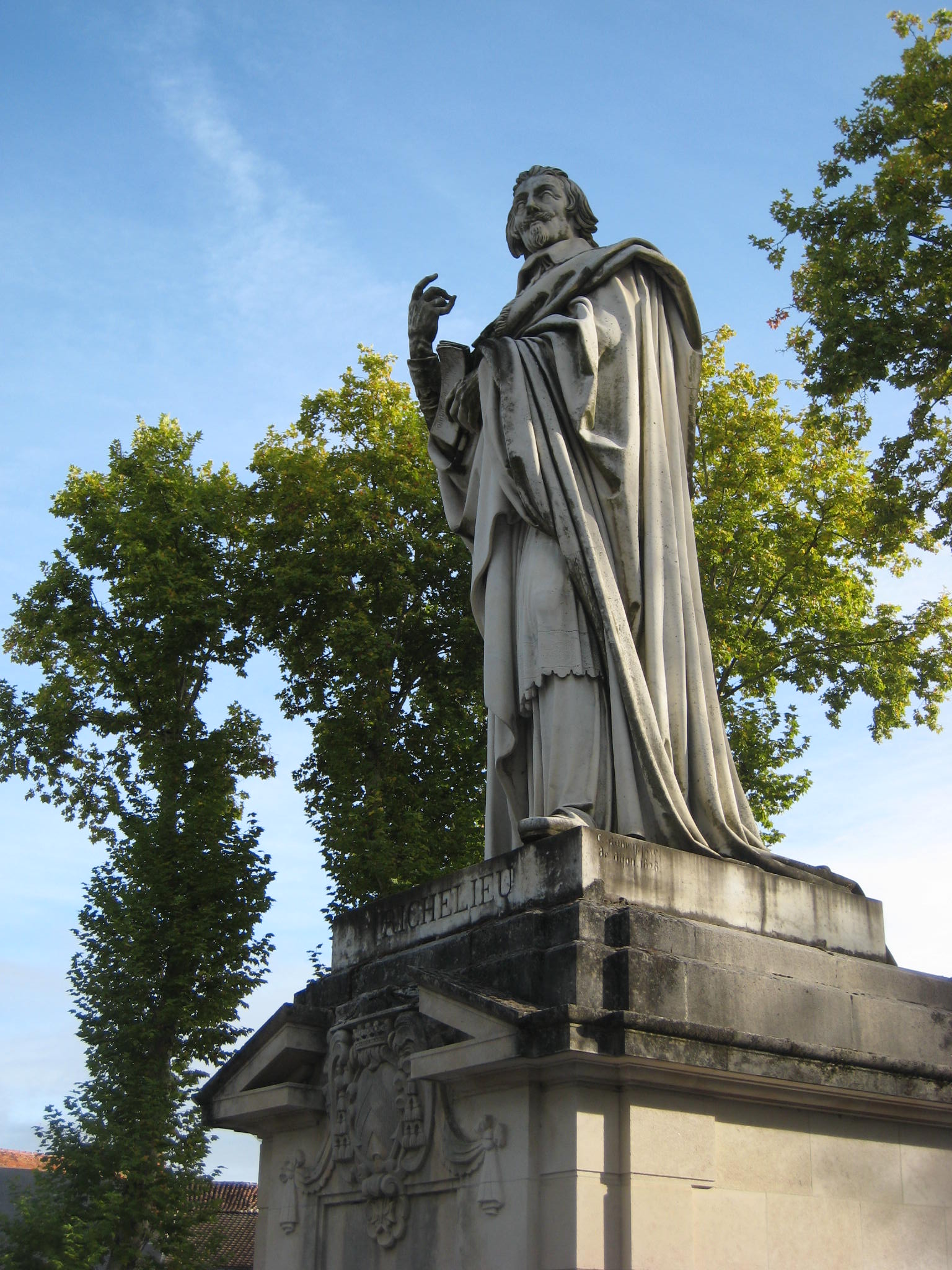
Cardinal Richelieu

The names of some of the companies that controlled the trade in beaver pelts are still remembered today. The early trading companies that operated as monopolies in the days of New France included the Compagnie des Cent-Associés (Company of One Hundred Associates), 1627-1645, and the Compagnie francaise des Indes occidentales (French West India Company), 1664-1674. Later, the North West Company, 1789-1821, and the Hudson’s Bay Company, 1670-1870s, competed for dominance.

The Company of One Hundred Associates was created in Paris in 1627 by Armand Jean Duplessis, better known as Cardinal Richelieu. Among the leading members of this trading company were explorers, fur traders, merchants, ship owners, bankers, governors of New France and Acadia. They included Samuel de Champlain, Martin Anceaume, Thomas Bonneau, Jacques Bulteau, Henry Cavelier, Antoine Cheffault, Sébastien Cramoisy. Charles Daniel, Jean David, Jacques Duhamel, Arnault Dumas, Thibault Dumas, Jean Guenet, Charles Huault, Pierre de La Haye, Gabriel Lattaignant, Claude de Launay-Razilly, Jean de Lauzon, Simon Lemaistre, Raoul L’Huillier, François de Magny, Adam Mannessier, Georges Morin, François Mouet, Antoine Nozereau, Jean Papavoine, Claude Potel, Guillaume Prévost, Isaac de Razilly, Claude de Roquemont, Jean Rozé, Charles de Saint-Étienne de La Tour, Jean Taffet and André Terru.

Perhaps your ancestor owned or helped to run one of these trading companies. Perhaps he was a coureur de bois who traveled by canoe into the interior of the continent to trade with the indigenous people, and perhaps he married an indigenous woman. Whatever your interest, the attached compilation can help you better understand the roles these companies may have played in your ancestor‘s life.

Click here: Trading Companies

Next week’s post will cover the ports of departure in France associated with the merchants who traded with New France. Following that, I will look at authors who have written about this period and archives where you can find more information.

See also:

“The Merchants, Fur Traders and Ship Owners of New France, part 1, A-G” https://genealogyensemble.com/2019/05/05/the-merchants-ship-owners-and-fur-traders-of-new-france-part-1-a-g/

“The Merchants, Fur Traders and Ship Owners of New France, part 2, H-Z” https://genealogyensemble.com/2019/05/10/the-merchants-and-fur-traders-of-new-france-part-2-h-to-z/

photo copyright Janice Hamilton

John Clark, 19th Century Real Estate Visionary

Clark Street in Montreal’s Mile End neighbourhood features two-storey row houses, most of them red brick or grey stone, set back a few feet from the sidewalk. Two hundred years ago, this now densely populated street was just a gleam in the eye of my four-times great-grandfather John Clark (1767-1827), who owned that land. Today, Clark Street looks remarkably similar to the way he envisioned it.

John must have foreseen that his farmland would someday get swallowed up by the expanding city. He wanted to see it developed properly, and he wanted his descendants to profit from it. Thus, he carefully outlined his development vision in his last will and testament.

A native of County Durham in northeast England, John Clark1 immigrated to Montreal with his wife, Mary Mitcheson, and their young daughter around 1797, and he became a butcher and an inspector of beef and pork.

He probably had a nest egg of cash because he soon bought property here. In 1799, he purchased a property on Montreal’s La Gauchetière Street. Perhaps the Clark family lived there. When he sold it 11 years later, the deeds showed it to be a double lot including two houses and several other buildings..2

Between 1804 and 1814, John purchased several neighbouring farms north of the city limits of Montreal.3 He purchased these properties from French Canadian farmers, then named them Mile End Farm, Blackgate Farm and Clark Cottage Farm.  The land, including several houses, barns, stables and outbuildings, was on the west side of Saint Lawrence Street, now known as Saint-Laurent Boulevard and one of the city’s major arteries. At the time, this was the main road to the countryside, leading past the eastern flank of Mount Royal to the Rivière des Prairies on the north side of Montreal Island.

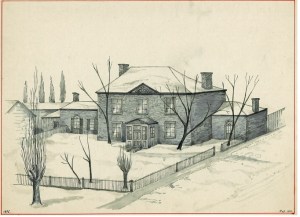
Mile End Lodge

The area was rural, consisting primarily of fields of wheat, oats and peas, as well as pastureland, fruit orchards and woodlots. Both John and Mary had grown up in rural England, so they preferred to live in the countryside rather than in the crowded city. The Clarks’ grey stone house, called Mile End Lodge, was built around 1815 on Saint Lawrence Street, between what are now Bagg and Duluth streets. They had few neighbours: most Montrealers, especially recent immigrants from Britain like them, lived in town.

Land ownership was important. It conferred social status, it carried the right to vote, and land was a financial tool, commonly used as security for loans. I do not know for sure why John purchased so much land, but even in the short term, it was a smart decision: the soil was fertile and the area was close to the city, where there was a growing demand for meat and produce. John no doubt wanted to graze his own cattle on that land, and to grow timothy hay for them. Meanwhile, in 1816, he placed an advertisement in the Montreal Herald saying he was willing to pasture cattle on his property for between eight and 10 shillings per cow.4

John probably collected rental income from these farms. It was not uncommon for members of the city’s elite, and for skilled tradesmen such as John, to purchase land and rent it to local farmers. He went one imaginative step further and, in 1810, leased a two-storey house on the Mile End Farm to father and son Phineas and Stanley Bagg to operate as a tavern.5 The building was located at a major intersection on St. Lawrence Street, so it was in an excellent location for thirsty travellers.

Phineas and Stanley ran the Mile End Tavern until 1818. The following year, Stanley married John’s daughter, Mary Ann. As a wedding present, John gave them a lot on St. Lawrence Street, including a two-storey house he named Durham House, that he had purchased in 1814.6

John may have had an emotional attachment to the Mile End Farm and Durham House, but he certainly saw his land as a long-term investment. The population of Montreal had increased from about 6000 in 1780 to 20,000 in 1820, and he foresaw this area would eventually be developed.

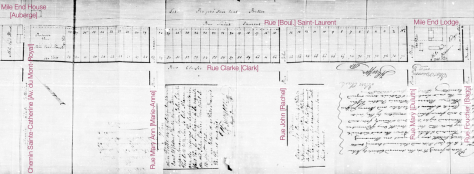
The names of modern streets have been superimposed on this diagram; computer graphics by Justin Bur. Plan for proposed subdivision of a part of Mile End Farm.

In 1825, at age 58, John wrote his will, leaving his properties to Mary Ann and to his young grandson, Stanley Clark Bagg.7 He added a codicil a few months later that included a plan for housing lots on St. Lawrence Street and on the yet to be created Clark Street, one block west. He specified that the lots should be 44 feet wide by 90 feet deep, and that the buildings should be built of stone or brick and set back from the road.8

John’s codicil also specified that the sale of the lots were subject to a rente constituée, meaning that, in addition to the initial cost of the property, the buyer was to pay the vendor an amount every year, usually about 6% of the property’s value. This was a common practice in Quebec, designed to provide funds to the seller’s family members for several generations. However, when Clark Street was finally developed decades after John’s death, buyers were not interested in this old-fashioned practice and the rente constituée was eliminated.9

Meanwhile, most of the property lines and all of the street rights-of-way shown on the plan in John’s will are still in effect today. Also, the specifications for building quality were respected, and similar conditions were imposed by neighbouring landowners.

 See also:

“Mile End Tavern,” Writing Up the Ancestors, Oct. 21, 2013, http://writinguptheancestors.blogspot.com/2013/10/the-mile-end-tavern.html

“A Home Well Lived In”, Writing Up the Ancestors, Jan. 21, 2014, http://writinguptheancestors.blogspot.com/2014/01/a-home-well-lived-in.html

“John Clark, of Durham, England,” Writing Up the Ancestors, May 29, 2014, http://writinguptheancestors.blogspot.com/2014/05/john-clark-of-durham-england.html

“A Freehold Estate in Durham,” Writing Up the Ancestors, May 3, 2019, http://writinguptheancestors.blogspot.com/2019/05/a-freehold-estate-in-durham_92.html

Image Credits:

Mile End Lodge, watercolour by John Hugh Ross, copyright Stewart Museum, 1970, 1847

Codicil to the last will and testament of John Clark, December 1825, BAnQ, CN601 S187.

 Notes and Sources:

  1. John Clark is usually identified as an inspector of beef and pork. There was another John Clark, a master butcher, living in Montreal at the same time. That John Clark made a will in 1804, while my John Clark made a first will in 1810 and a final one in 1825.
  2. Thomas Barron, notarial act #2876, “Deed of sale John Clark to William Scott,” 18 Oct. 1810, BAnQ.
  3. These properties are listed in John Clark’s will, (Henry Griffin, notarial act #5989, “Last Will and Testament of Mr. John Clark of Montreal,” 29 August 1825, BAnQ) and in the inventory of his grandson’s estate (Joseph-Augustin Labadie, notarial act #16733, “Inventory of the Estate of the Late Stanley Clark Bagg Esq.” 7 June, 1875, BAnQ.)
  4. Jennifer L. Waywell, “Farm Leases and Agriculture on the Island of Montreal 1780-1820,” Dept. of History, Faculty of Graduate Studies and Research, McGill University, 1989, p. 88; https://central.bac-lac.gc.ca/.item?id=TC-QMM-59553&op=pdf&app=Library (accessed May 14, 2019)
  5. J.A. Gray, notarial act, “Lease for five years John Clark to Phineas and Stanley Bagg,” 17 Oct. 1810, BAnQ.
  6. Records for lot 110, Saint-Laurent Ward, Montreal, p. 395, Registre foncier du Québec online database.
  7. Henry Griffin, notarial act #5989, “Last Will and Testament of Mr. John Clark of Montreal,” 29 August 1825, BAnQ
  8. Clark Street as laid out in the plan attached to John’s codicil ran from just south of the city limits (Bagg St. near Duluth) to Saint Catherine Road (now Mont-Royal Ave). Clark Street was developed in segments throughout the 19th and 20th centuries, with the first part, around Mile End Lodge, subdivided in 1873. In the early days, a section of Clark Street was called Mitcheson Street (Mitcheson was John’s wife’s name), but by 1912, it became Clark Street along its length.
  1. The rente constituéewas often used in France, England and French Canada. In those days, there was no modern money-lending system, so people could rent land for an annual sum. The borrower/purchaser could redeem the rent, however, the capital value of the property was not reduced by previous rent payments. John Clark and his grandson Stanley Clark Bagg complicated things by using testamentary substitutes to require that their real estate be subject to such arrangements far into the future. Their wills specified that the actual beneficiary was three generations down, while the intervening generations were responsible for keeping the estate in good shape for their children. When the Bagg and Clark properties were subdivided in the late 19th century, the Quebec legislature passed an act to end the substitution.

Further Reading:

Justin Bur, Yves Desjardins, Jean-Claude Robert, Bernard Vallee and Joshua Wolfe, Dictionnaire Historique du Plateau Mont-Royal, Montreal, Les Éditions Écosociété, 2017.

Yves Dejardins, Histoire du Mile End, Québec: Les éditions du Septentrion, 2017.

Justin Bur, “À la recherché du cheval perdu de Stanley Bagg, et des origins du Mile End,” Joanne Burgess et al, Collecting Knowledge: New Dialogues on McCord Museum Collections, Montreal: Éditions MultiMondes, 2015.

Sherry Olson and Patricia Thornton, Peopling the North American City, Montreal 1840-1900. Montreal: McGill-Queens University Press, 2011.

Alan M. Stewart, “Settling an 18th-Century Faubourg: Property and Family in the Saint-Laurent Suburb, 1735-1810,” Dept. of History, Faculty of Graduate Studies and Research, McGill University, 1988, http://digitool.Library.McGill.CA:80/R/-?func=dbin-jump-full&object_id=64109&silo_library=GEN01 (accessed May 20, 2019).

This article is also posted on https://writinguptheancestors.blogspot.com


Jacques Archambault, Ville-Marie’s First Well Digger

When the well is dry, we shall know the value of water.

Benjamin Franklin

If your last name is Archambault there is a good chance you, too, are a descendant of Jacques Archambault of Charentes Maritimes in southwest France, a 17th century pioneer who emigrated to New France in 1645 and built Montreal’s first well and participated in North America’s first health insurance scheme.

In 1605 Antoine Archambault and Renée Ouvrand gave birth to their son Jacques, my 10th great grandfather.1. On January 24th, 1629 he married Françoise Tourault at Saint Phillbert du Pont-Charault and they had 7 children.2.

He was a laborer and a wine maker by trade. About 1645 at the age of forty, Jacques, Françoise and six of their children left France for New France. One child had died prior to their departure.

At that time, it was extremely unusual for entire families to emigrate, the cost being prohibitive. One might ask what the reasons were behind this exodus? However, around that time in their home country, Cardinal Richelieu had been persecuting Huguenots. Is it possible that Jacques and his family fled to escape these events?

The family was presumably sponsored by Pierre Legardeur de Repentigny, Director of the  Compagnie des Habitant. They set sail, most probably on Legardeur’s ship ‘Le Cardinal’.3 They arrived in Quebec City and stayed there for several years. Unfortunately, Jacques was indebted to the ship owner for the exorbitant amount of 898 livres and 10 sols. At the time 1 livre was equal to 1-pound sterling silver.

 To pay off his debt Archambault became responsible for taking care of Legardeur’s farm where Jacques also lived with his family.  In 1651 Quebec Governor Louis d’Ailleboust granted Archambault a concession of 4 arpents of frontal land “on the great river Saint Laurent in the place called le Cap Rouge”.4. a small settlement to the west of Quebec. Legardeur de Repentigny died on one of his own ships while returning to New France.

Soon thereafter, when his contract tending the farm was nearly over Jacques was contacted by Paul de Chomedy, Sieur de Maisonneuve, Governor of Montreal. There was a growing need for colonists to settle in Montreal. On November 18, 1652 de Maisonneuve gave Jacques 500 livres with a promise from him that he would live in that colony. Archambault also received large strip of land in Ville Marie, in the area that is referred to today as Old Montreal near Place d’Armes.5.

This is when Jacques Archambault enrolled in North America’s first health insurance scheme.

“During the winter of 1655 Jacques and several residents of Ville-Marie made a deal with the master surgeon, Etienne Bouchard, who was hired on March 30 to dress and give medications for all sorts of things, illnesses both natural and accidental, except for the plague. To the signers and their families for the yearly amount of 100 sols or 5 livres. If Archambault was part of the scheme, it is because he had decided that it was very useful for his family living in the territory.”5                                                                                                                                                                                             

It was in October of 1658 that de Maisonneuve agreed that Jacques would dig that historic first well in Montreal. It was to measure five feet in diameter with a guarantee of two feet of water in the bottom and was promised 300 livres and 10 pots of eau de vie (brandy). Having accomplished the first well he was asked to dig another in the garden of the hospital. His former career as a wine-maker was far behind him. He became proficient at dowsing and digging wells and was asked to construct many more.

“Near here at the Place d’Armes of the fort, Jacques Archambault (1604-1688), sole ancestor of the Archambaults of America, in 1658 constructed the first well on the Island of Montréal at de Maisonneuve’s request”.6

The first well of Ville-Marie certified by notary, 8 and dug by Jacques Archambault

Nº 58 Contract for a well

between M. Paul de Chomedey and Jacques Archambault

Dated Octobre 11, 1658

De MaiSonneuve, Bouchard L. close , BaSSet with paraphe Clerk of the court


Success in business came naturally to Jacques, winemaker turned well digger, however, he did experience several setbacks. The first being the death of his oldest son, Denis. He was killed in 1651 as a result of a canon explosion while fighting the Iroquois.9 On December 9, 1663 his wife of over thirty-three years, Françoise died at the age of 64.10

After a lengthy period of mourning, June 6. 1666 in Cap-de-la-Madeleine, Canada, New France  Jacques married, his second wife, Marie Denot de Lamartinère, the widow of Mathieu Labat.11. (The brewers). They settled in Verdun. At the age of 74 Jacques was no longer able to work. His children showed deep gratitude toward their father and gave him a yearly allowance of 100 livres for life.

On February 15, 1688, after 84 years of active life, of which more than half was in New France, Jacques Archambault was buried in the Notre-Dame de Montréal Cemetery.

Extracted from the Death Registry of Notre-Dame of Montréal, dated February 15th, 1688.12

Sources:

 1. https://www.nosorigines.qc.ca/genealogie.aspx

 2. Ibid.

 3. http://www.lesarchambaultdamerique.com/francais/histoire/histoire_qui%20sommes%20nous_fr.htm

 4. https://www.geni.com/people/Jacques-Archambault/6000000000175720204

 5. Ibid.

   6.  www.sophocles.com/duval/page10.html

   7.  www.lesarchambaultdamerique.com/francais/histoire/histoire_qui%20sommes%20nous_fr.html

 8.  http://www.mdharnois.net/documents/Jacques%20Archambault.pdf

 9. https://greenerpasture.com/Ancestors/Details/928

10. https://www.geni.com/people/Jacques-Archambault/6000000000175720204

11. Ibid.

12.https://www.nosorigines.qc.ca/GenealogieQuebec.aspx?genealogie=Archambault_Jacques&pid=2403

Notes:

https://pacmusee.qc.ca/en/

A plate in the back of the Pointe-à-Callière Museum of Montreal commemorates Jacques Archambault’s digging the first water well, near what is now known as Place-d’Armes, on October 11, 1658, upon request by Paul de Chomedey de Maisonneuve.

Important facts about water:

  • Civilization has historically flourished around rivers and major waterways.
  • Currently, about a billion people around the world routinely drink unhealthy water.

https://en.wikipedia.org/wiki/Water

The Merchants and Fur Traders of New France, part 2, H to Z

In the days of New France and Acadia, a merchant, fur trader, private banker or ship owner was sometimes called a négociant, or dealer. Some négociants were based in Canada, but most had their headquarters in France, especially in La Rochelle, Bordeaux, Rouen and Caen. Other French port cities with connections to the new world included Brest, Calais, Cherbourg, Dieppe, Dunkerque, Fécamp, Le Havre, Lorient, Rochefort, Royan, Saint-Malo and Vannes, while a few ships sailed from Marseille in southern France.

Rich merchants from La Rochelle, Bordeaux, Caen and Rouen often sent young family members to the French colonies of New France, Acadia and Louisiana to manage their North American investments.

Most such dealers, especially those who settled in New France and Acadia, were Catholics. Some were Protestants (Huguenots or Calvinists) and a few from the city of Bordeaux were Jewish. Following the 1759 British conquest of New France, the number of Huguenot merchants increased slightly, at least in Montreal and Quebec City.

These négociants were the people who opened communications between Europe and ports located in the American colonies. Many of the French traders also dealt with associates in South America, Africa, the Middle East and the Far East.

Hundreds of dealers were in business over the approximately 250 years that New France existed. In the compilation attached below, I have only selected a fraction of them, addressing primarily the French traders who dealt directly with family members or associates in New France, Acadia or Louisiana. In regard to the fur traders, I have tried to identify those who had a place of business in Montreal, Trois-Rivières, Quebec City or Louisbourg. I have also included a few well-known explorers who were associated with merchants in these four towns.

Many of the French traders who were associated with Quebec, Louisiana or the Great Lakes regions are profiled in the Dictionary of Canadian Biography. If your ancestor was a fur trader, banker or ship owner, you may find a great deal about his life in this publication, available online or in many libraries. See http://www.biographi.ca/en/index.php or http://www.biographi.ca/fr/index.php for the French-language edition.

This post is the second in a series of compilations focused on these négociants during the period of colonial New France in the 16th, 17th and 18th centuries. The series will include brief biographies of these merchants, background on the French port cities where they were based, information about the trading companies they were associated with, the names of historians and other researchers who have written about this people, and a list of archives where you can obtain further information.

To see last week’s post introducing the merchants, fur traders, private bankers and ship owners of New France with last names beginning A to G, go to https://genealogyensemble.com/2019/05/05/the-merchants-ship-owners-and-fur-traders-of-new-france-part-1-a-g/

To read this week’s compilation on the merchants, fur traders, private bankers and ship owners of New France and Acadia with last names beginning H to Z, click on this link: Merchants, Fur Traders and Ship Owners of New France, H-Z Merchants, Fur Traders and Ship Owners of New France, H-Z

Throwing Rocks

My Swiss grandfather became enthralled with curling when he came to Canada. Curling is a game invented by the Scots but my Scottish ancestors never took up the sport.

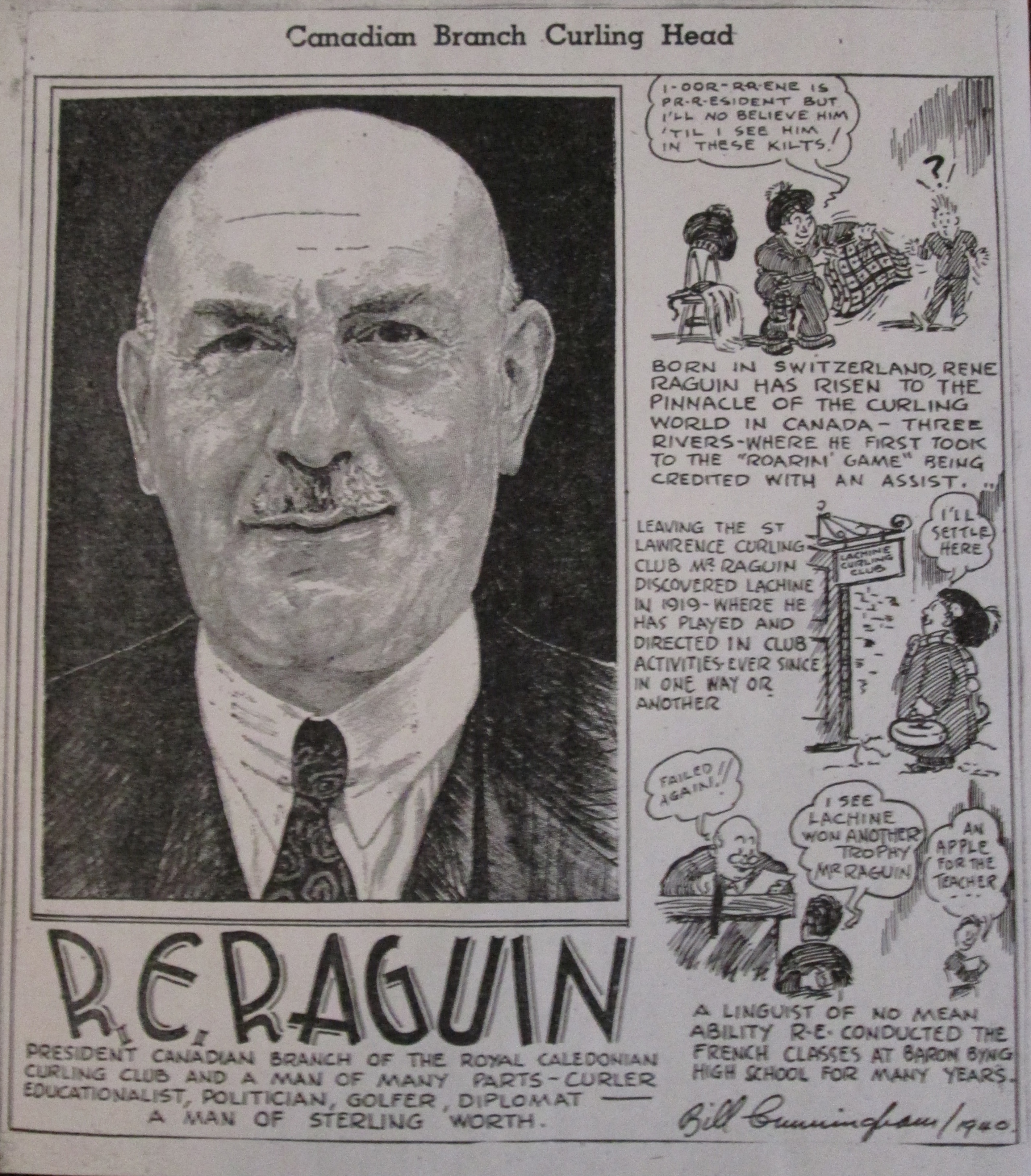
René Raguin came to Canada from Switzerland in 1910 to teach school. He knew all about winter and cold weather sports. He had skied, sledded and climbed in his homeland. Once, he cut his leg on a bobsled runner and didn’t realize the extent of the injury until until he was at the bottom of the hill. All of his trips down hill weren’t on sleds with sharp runners, some for fun were on metal trays. I am sure he thought throwing “irons” on ice would be easy when he first tried curling in Trois Rivière. 

IMG_9695
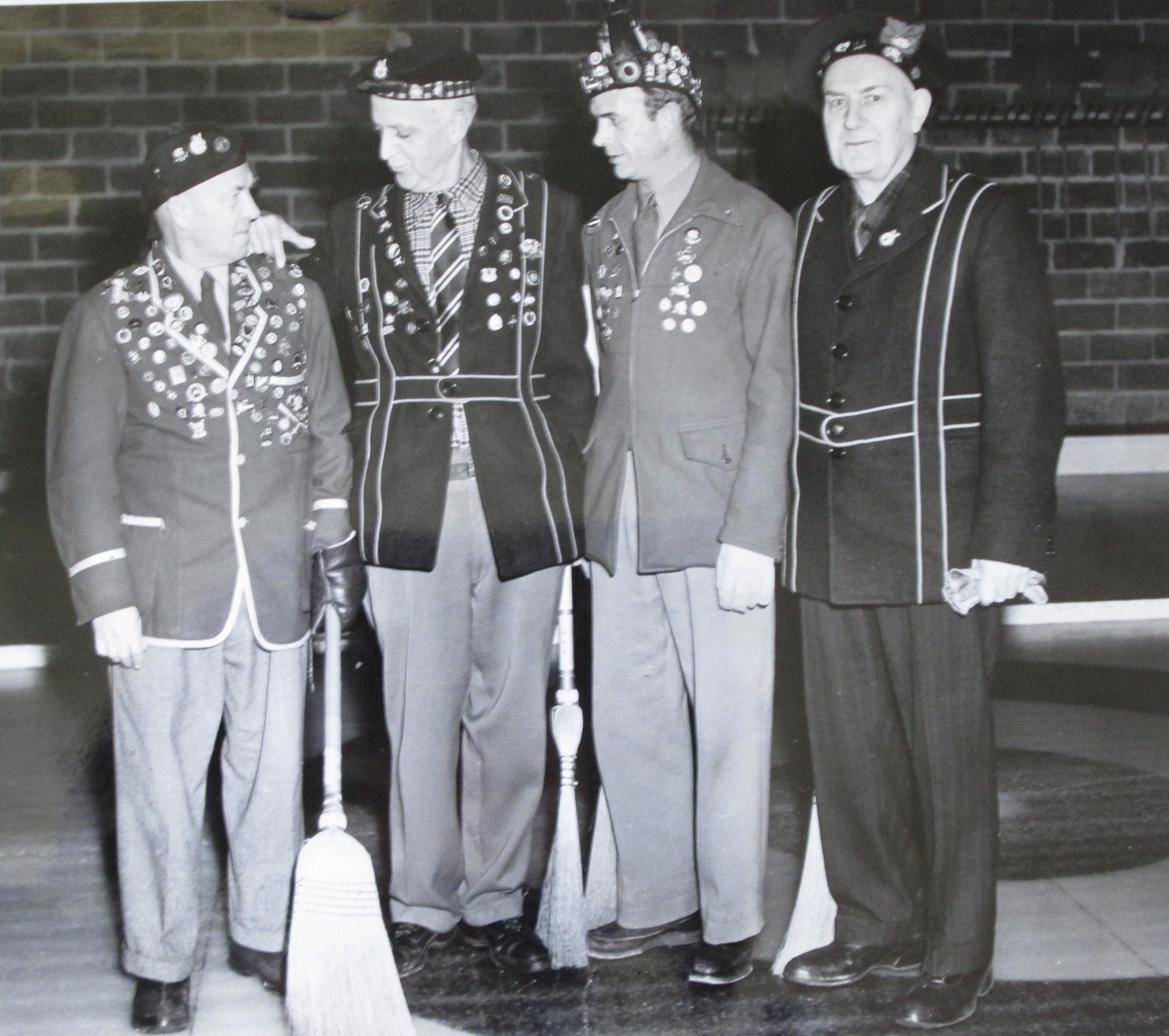
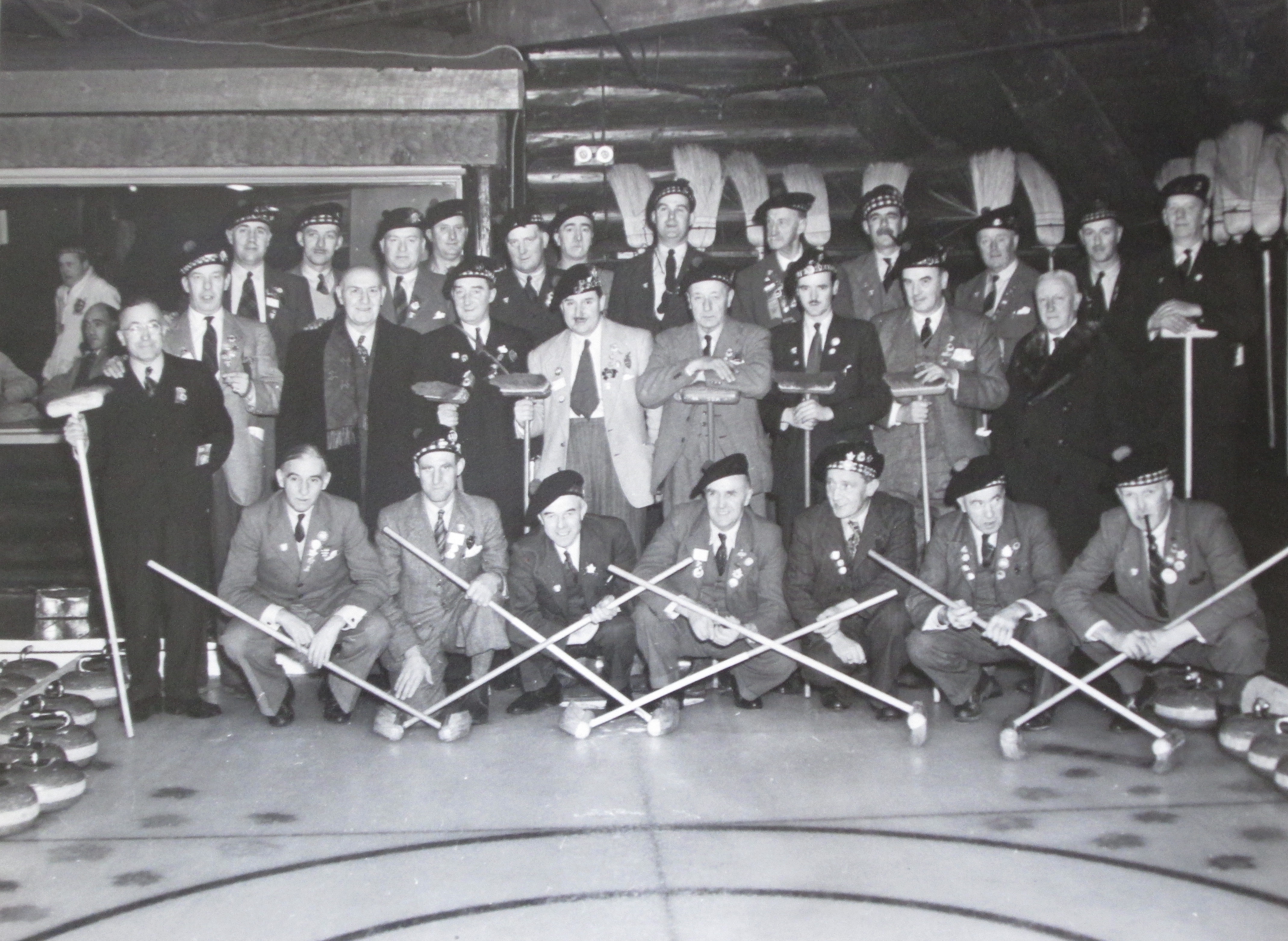
Rene Raguin on the right with some of his curling buddies. Well pinned!

Curling is a game played on a sheet of ice where rocks are thrown from the hack to the rings at the other end and one tries to get closer to the centre or button than one’s opponents. Lakes and ponds hosted the first games, played with granite stones which were plentiful in Scotland. The stones are now carved and polished so they glide over the ice and a twist of the handle gives the curl.

The Grand Caledonian Curling Club was formed in 1838 to regulate this ancient Scottish game. Apparently many rules were needed for throwing rocks on ice. The club later received its royal charter from Queen Victoria and became the Royal Caledonian Curling Club (RCCC), the mother club of the sport.

It is generally accepted that the 78th Fraser Highland Regiment brought curling to Canada in the mid 1700s. The soldiers melted cannonballs to make iron curling “stones” and curled in Québec City. Curling then moved to Montreal where men first played on cleared patches of ice on the St Lawrence river before it moved indoors. Quebecers continued to curl with “irons” until the early 1950s while the rest of the country played with granite.

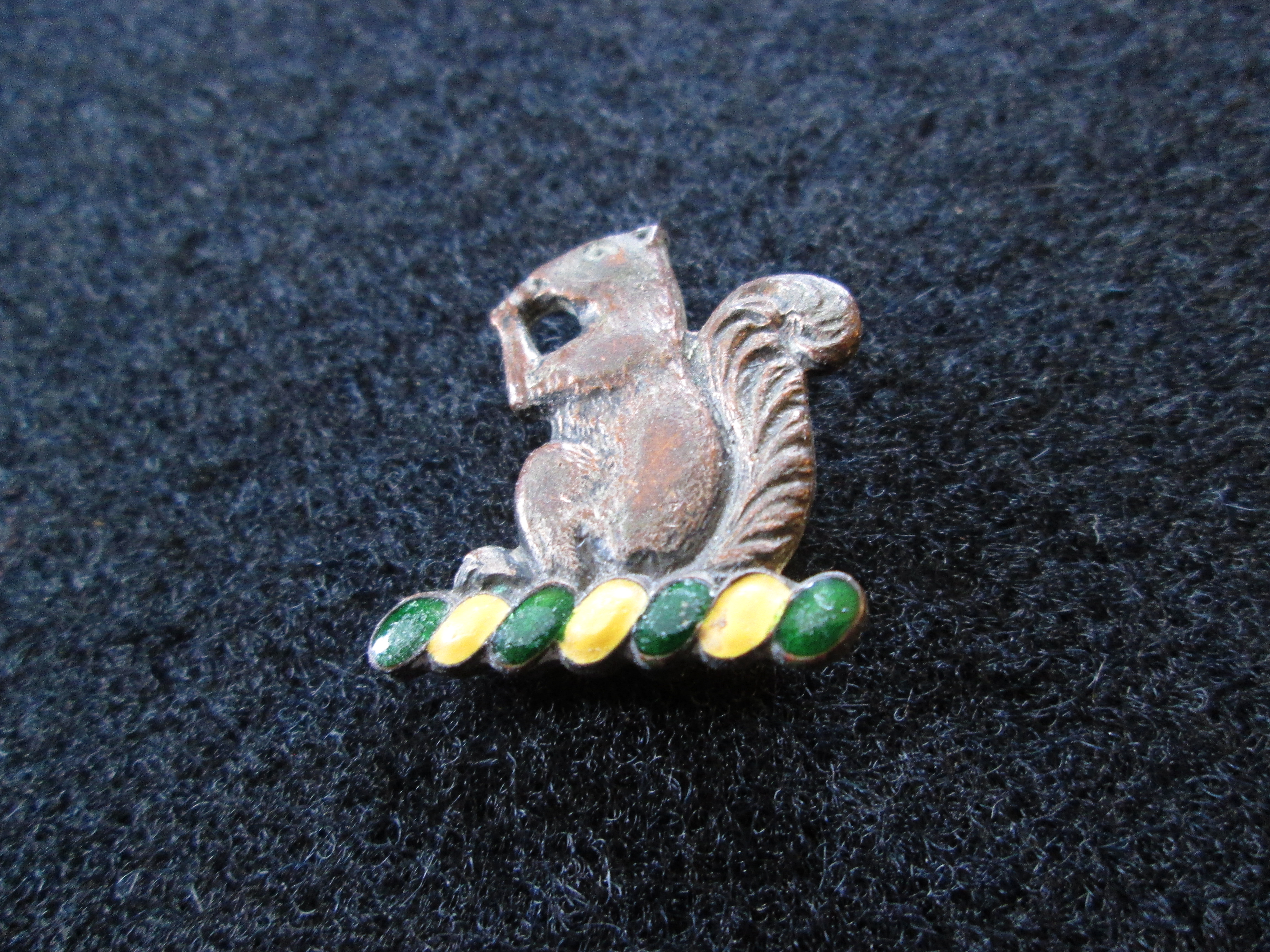
When René moved to Montreal he didn’t give up curling. He first joined the St Laurence Curling Club, downtown on St Urbain Street and when he moved to Dixie, now part of Dorval, he joined the Lachine Curling Club. There he stayed. He played in bonspiels at clubs all over Quebec, Ontario and the North Eastern United States. Bonspiels are tournaments with many games played over a number of days and lots of drinks to celebrate the winners and the losers. Curlers collected pins from all the clubs where they played. Some would cover their their jackets or their hats with their pins. My grandfather had a coffee table that intrigued me as a child. Under its glass top sat many curling pins of all shapes and colours.

IMG_9647
A Squirrel Pin from The Country Club in Brookline, Massachusetts

He excelled at curling and skipped teams in many matches. He could easily take out his opponents stones and slide his rocks to the button. He gave back a lot to the sport which resulted in him being elected President of the Canadian Branch of the Royal Caledonian Curling Club in 1939. René was then honoured at a dinner with speeches praising his curling, his character, his tact and diplomacy with many toasts to his good health!

IMG_9623

He never traveled to Scotland but hosted the Scots on their curling tours of Canada. He became an honorary vice-president of the RCCC, the highest office available to a Canadian, for his promotion of all the traditions of curling and especially for the expansion of the game into the northern United States.

IMG_9694
The Scottish Curlers in Canada in 1950s

René enjoyed curling for the camaraderie, the skill needed and the drinks after the games. In out of town excursions he was said to be the life of the party. His son would drive him to all the area curling clubs for the New Years Levees where he would have a drink with the members and toast the coming year, “Good health and good curling.”

Notes:

https://www.bac-lac.gc.ca/eng/discover/sports/bonspiel-history-curling-canada/Pages/curling-canada.asp

The minutes of the occasion of the election of Rene Raguin to the office of President of the Canadian branch of the Royal Caledonia Curling Club December 15, 1939 by J.J. Sophus.

The History of the Lachine Curling Club http://www.lachinecurling.com/history_en.php

Cartoon by Bill Cunningham in The Montreal Gazette in 1940.

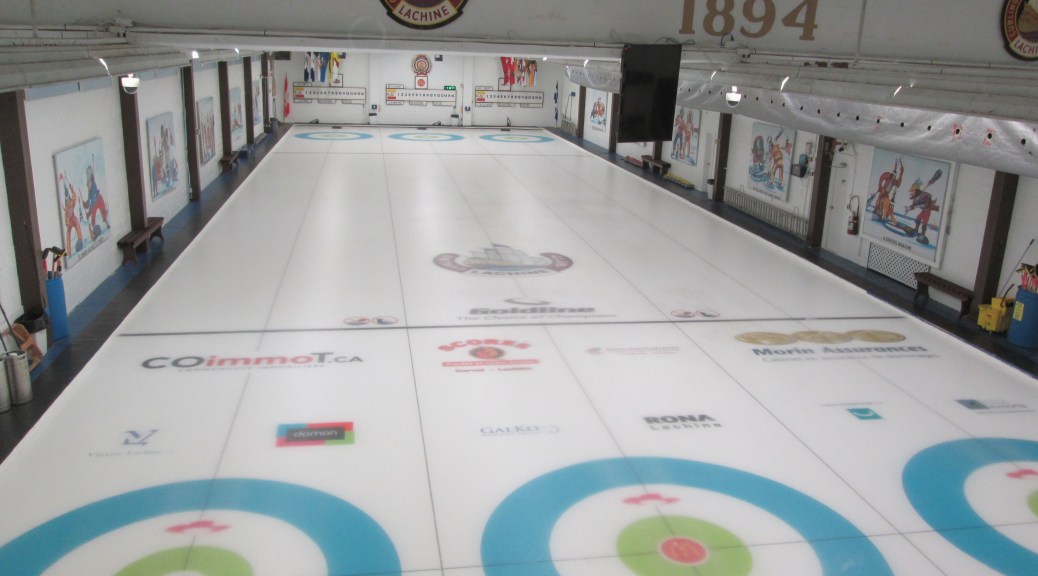
The Heading photograph is of the Lachine Curling Club taken in 2019 by the author.

Some of Rene Raguin’s family curled a few times but I am the only family member to take up his game.

The Merchants, Ship Owners and Fur Traders of New France, Part 1, A – G

There are a couple of versions of this story: in 1539, someone told the King of France that explorer Jacques Cartier had found gold and silver along the shores of the Saguenay River. Another source says that Cartier had only suggested there might be gold and silver in the Saguenay region. (It turned out to be fool’s gold.)

According to both sources, however, Cartier suggested that trading beaver pelts and other wild animal furs could become a great source of income for the king. Needless to say, the fur trade turned out to be a lucrative business that lasted for almost 250 years.

Eventually, many types of traders established operations at the ports of Quebec City, Montreal, Trois-Rivières, and Louisbourg. All these merchants were associated with fellow merchants at various port cities of France, including La Rochelle, Bordeaux, Rouen and Caen. And in the days of Louis de Buade, Count of Frontenac and Governor of New France between 1672-1682 and 1689-1698, merchants in New France and its territories held a special place among the elite of the French colony.

Some of these traders married in North America, or brought their wives and children with them. They became the ancestors of many French Canadian or Acadian families, but, as of today, few family history researchers have searched for these early merchants, traders, private bankers, ship owners or tannery operators.

If you think you might have merchant ancestors, and you enjoy research online in France and Canada, try searching for the following term: Name of Ancestor (family name only, négociant du 17ème et 18ème siècles en France et Nouvelle-France. You can also try replacing Nouvelle-France with Acadie. This may bring you surprising search results.

First, however, you must determine on the spelling of the family name in France in the 16th, 17th and 18th centuries. For example, my Gagné brothers who settled Château-Richer near Quebec City in the 17th century were Gasnier in France – same pronunciation, different spelling.

This is the first in a series of weekly posts about these merchants, fur traders and ship owners during the period of Colonial New France (until around 1760.) It will include:

two compilations including very brief biographies of these merchants and usually including their wives’ names;

links to information about the port cities in France with which they traded;

links to information about the trading companies they were associated with;

a list of authors, historians and academic researchers who have studied this period, with links to some of their publications;

a list of the archives and other repositories where you can learn more about this subject.

Click on the link to read Merchants, Ship Owners and Fur Traders A-G


To the Lighthouse – Part 1

A fictional homage to my father – and his northern English genealogy

whitehaven to st bees cliff walk

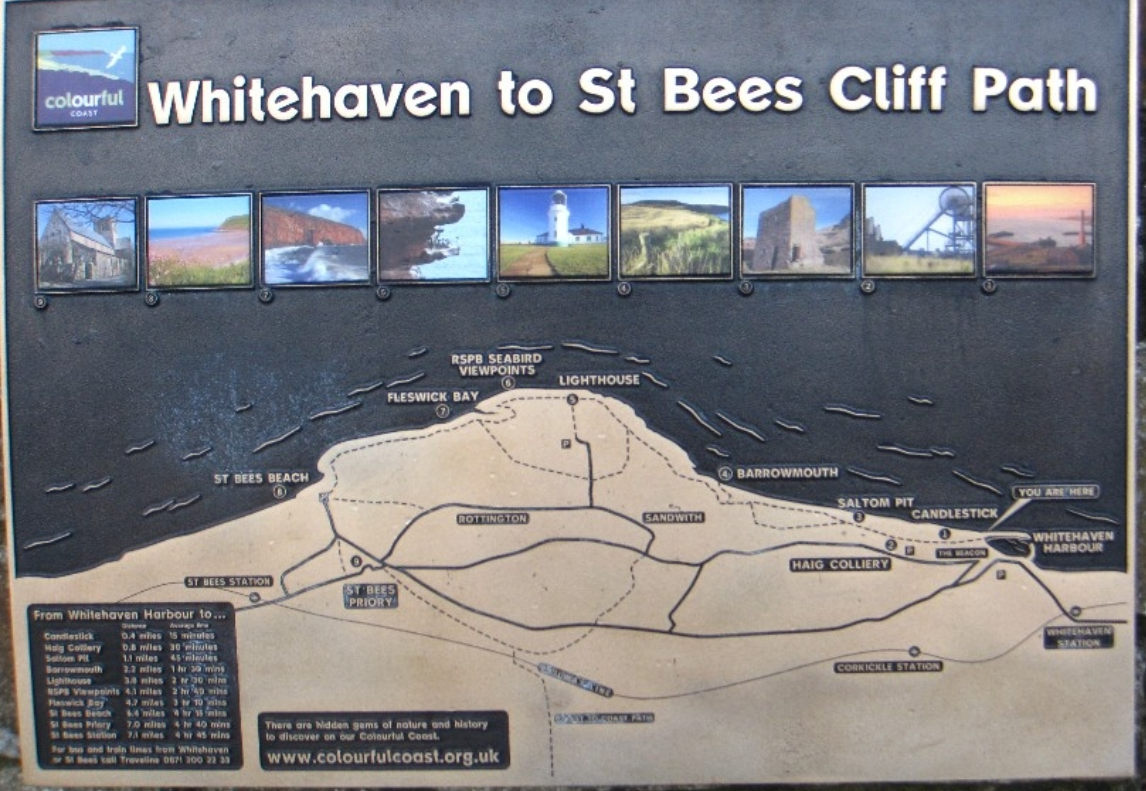
Plaque at St. Bees (from http://josweeney.net/the-cliff-path-from-st-bees-to-whitehaven/ 7 miles to Whitehaven but this is the start of a 192 mile Coast-to-Coast walk that will take you all the way to Robin Hood’s Bay in North York.

(Sound Effects)  heavy breathing, feet pounding earth.

I am Peter N F Nixon, scholar at St. Bees Prep School in Cumberland, and I am running, running away back in time.  So stated the boss-eyed academic in the school library last evening, the guest lecturer from the Northern England Geological Society.

“If you take the coastal path,” he said, “from St Bees Head to Whitehaven Lighthouse,  it is as if you are going back in time as the youngest rocks are at Seacote. Early Triassic Age, just 250 million years old.”

Funny how I remember that. I was preoccupied with next week’s big rugby match against the tough cads from the colliery. The geordies.  The coal miners. I attended the lecture only because I knew there’d be a fire lit in the library. Although it’s my right as head prefect to sit on the radiator in my freezing dorm room (with windows always open) it is slim consolation this early in spring.  I could see my breath as I crossed the quad last night to get to the library.

Yes, funny how the geology lecture is all coming back to me as I run and run back in time along the windy coastal path to the lighthouse at Whitehaven on the Cumbrian coast where the seabirds are engaged in their noisy mating rituals.

I am leading a penal drill with a few miscreant lower classmen who flung their gas-masks out the window to celebrate the war with Hitler being over.  Who told them the war was already over, just a few months after it was declared?

I am the house prefect and it is my duty to drill good sense into my younger charges’ heads by making them run long distances, whatever the season.  It’s no punishment for me – mickeying-off like this – or for most of them, to be honest. We are battle-hardened prep school pupils here at St Bees. Classes in the morning and sports in the afternoon, every day, rain or shine or snow.

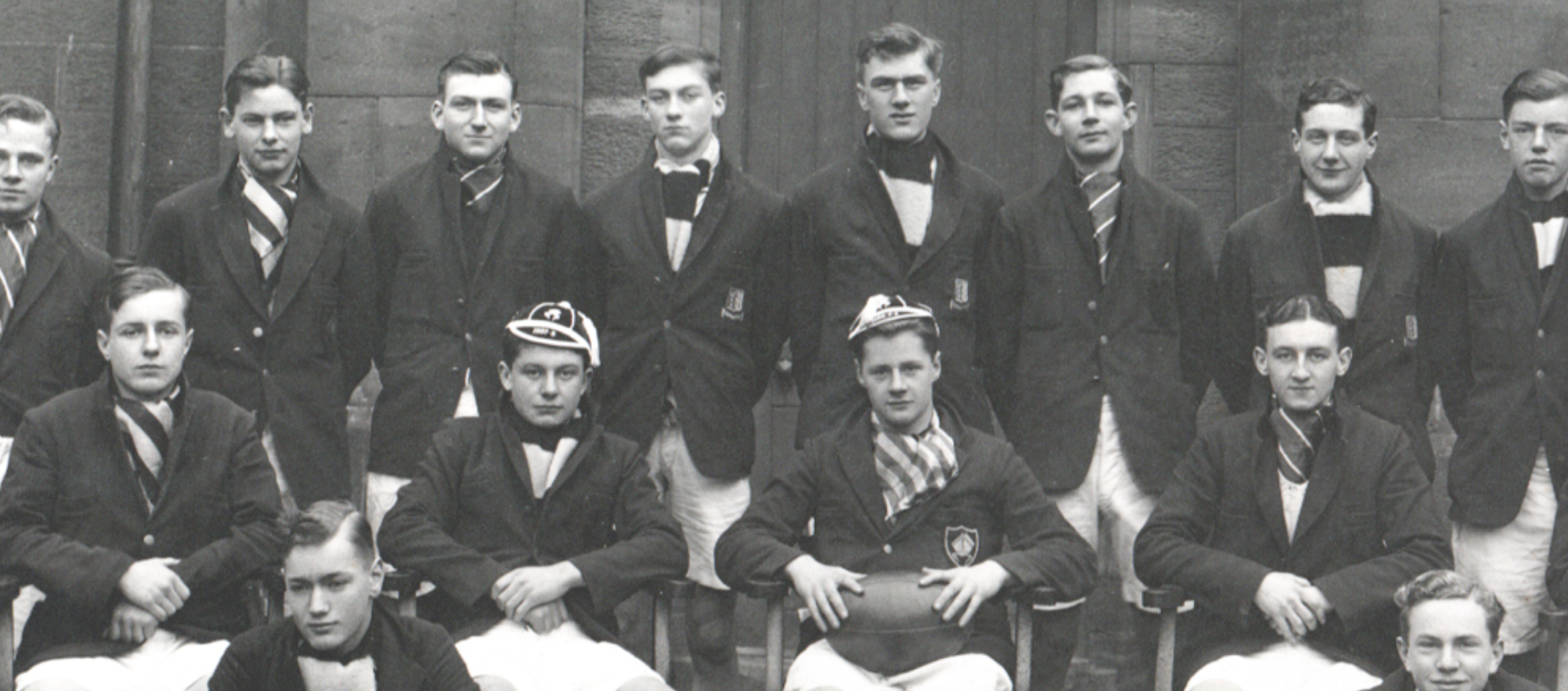
We all wear short pants at St. Bees. It’s our uniform. I run and run and run in my short pants.17 years old, 6 foot 3 and a half  and still in short pants.

myfatherugby

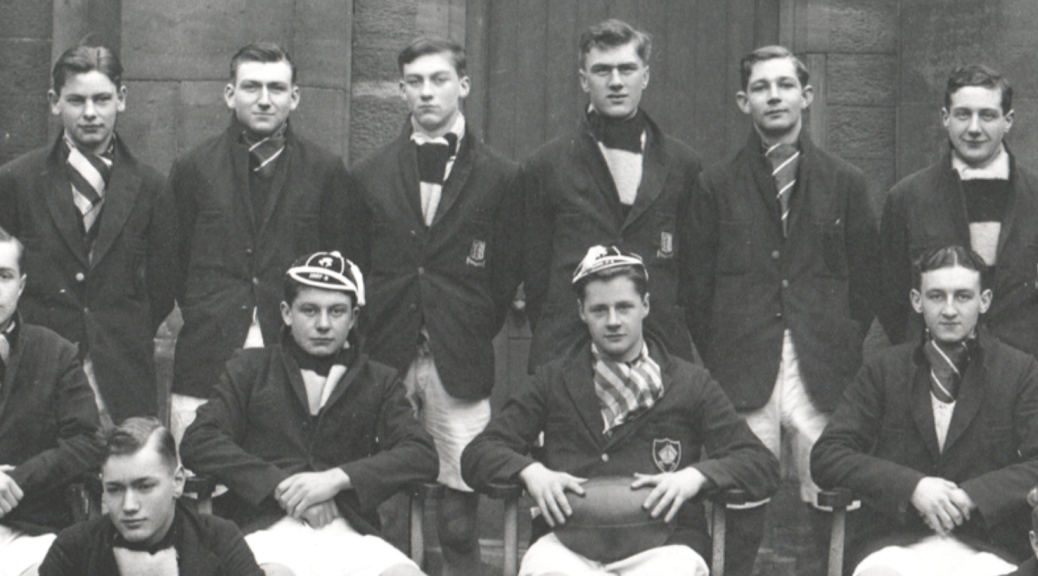
Senior XV Rugby 1938-39. Webpage of the Old Beghian Society (see link below). My father is top row, 4th from left.  The scarf must represent his house.

I’m far ahead of the pack.  Truth be told, I am no leader of men. More of a loner at heart. So, I leave the kids to their own pace. I get no pleasure in being a prefect.  I don’t like minging on them. I don’t look for trouble or for a reason to cane.

Let’s see, what else did the lecturer say? “ North of St. Bees there are carboniferous-age coal outcrops and limestone outcrop, south of St. Bees permo-Triassic red sandstone. Moulded through the eons by glacial processes. Glacial means slow, doesn’t it?  Very slow.

I want it all to slow down. This war, despite the rumours to the contrary, is just starting. I can sense it. I am to turn 18 soon. I will have to sign up.

I am running back in time to slow things down, geologic time, historical time – but at a good clip, leaving my younger charges behind. I am one of the school’s finest middle distance runners, but the county record holder at javelin. Vice Captain of the Senior Rugby. I can swim with the best of them, but it’s golf I really enjoy, though, alone on the links of our school’s golf course.

I am running, running into the past.

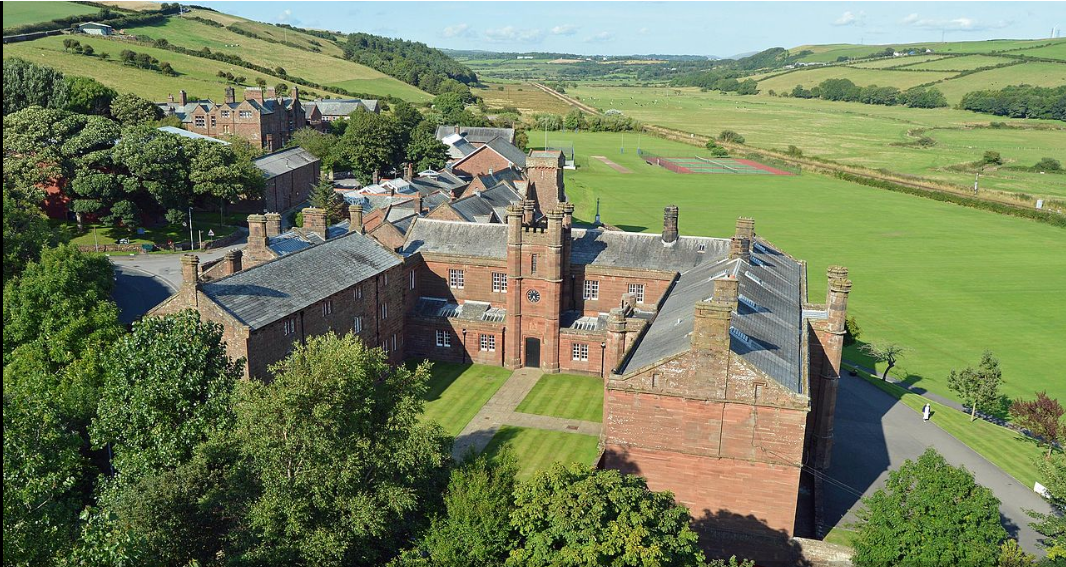
The Normans, the Norse, the Anglo-Saxons, the Romans, the Briton Voltadini and the Celtic Brigantes tribes. Castles up, monasteries down, crusades to the east, crusades to the north. Saint Bega, for whom our school is named, founding the religious site about 1000 years ago by fleeing a forced marriage in Ireland. Or so the story goes.  And then 100 years later the Lord Egremont, the Norman, building the Benedictine Priory, the town parish, over it.

All around me there are fossilized strips of former medieval field systems and other remnants of the ghostly, gory, glorified past. It all weighs one down. Wouldn’t it be nice to live somewhere new with no past, no history, no weight?

If I never hear another lecture on Emperor Hadrian and his infernal wall I will be thrilled.  That meandering  Roman monument has only unfortunate connotations for me. I can still hear my grandfather, the Reverend John Forster, a self-educated farmer’s son, berating me at 6 years old for slacking on a long walk, “You are no Border Reiver, no bairn of mine if ye can’t walk the 7 miles from Brampton to the Birdoswol Roman Fort.”

Wouldn’t Gramps be surprised to see me now, one of the school’s most respected athletes, as I run and run, away, swiftly back in time with the myriad sea birds swirling over head riding the fickle coastal air currents coming off the Irish sea on the rugged, austerely beautiful coast of Cumberland, at St Bees Head?

This place is truly in my blood. I have border reiving ruffians on both sides of my family tree, my mother’s Forster and my father’s Nixon side. Brave scoundrels and fearless outlaws, they were raiders of cattle and sheep at the Scottish border in late medieval  times and beyond. Grandfather Nixon bragged about some outlaw Nixons hanged at Carlisle Castle back when he was a boy.

Geologic time, historical time, genealogical time, family memory and family myth.

It was my first week at St Bees. Mr. McFayden, the history teacher, asked me what my middle initials N.F. stand for. “Nesfield and Forster, Sir,” I replied, embarrassed to be singled out. “Ah, Nesfield, he says. “You are then descended from Dagobert, the Merovingian Prince who married Imagne de Nessfield, a Saxon landowner. By the 17th century they were living in Yorkshire. You are then related to William Andrews Nesfield  who designed the gardens at Castle Howard and Kew.”

I wrote home to my mother, in Malaya, all bristling with pride but she failed to take the bait. “Your great-grandmother, Anne Nesfield was the cook in the home of a Yorkshire solicitor, I think.”

Oh, the sin of pride.

Her father, John, socialist and pacifist – and a despiser of comfort  and weak grandchildren– taught her well.

Yes, I can see and hear the seabirds swirling and dipping overhead, over those formidable yet fragile orange sandstone cliffs, home to many colonies of breeding gulls: razorbills, cormorants, guillemonts, fullmars and kittiwakes.

It’s the start of nesting season.  I run and I am comforted by the birds’ loud squawking. I do love nature, her apparent simplicity here on the wild Cumberland coast; not like the bountiful Malayan landscape where I spent my first five years, as my father is a rubber planter, where there was so much fabulous flora and fauna to admire- and to fear – where I once confronted a leopard cat while tricycling near the tennis courts with my little sister.

St Bees. Wikipedia. Photo by Doug Sim

I am running, running back in time which is better than going forward in time.  It is May  9, 1940 and war was declared in September, 1939. The beach is cordoned off with barbed-wire. They have installed radar at the Whitehaven Lighthouse and barrage balloons in the town. I’ve lost 2 stone with the rationing.  New students from London are pouring into St Bees, because they feel it is a relatively safe place to be.  But, everyone over 18 has had to register for this war.  I turn 18 in October.

I am far ahead of the pack now and I like it that way. I am a loner at heart, not a leader of men. And I will soon have to sign up.

I really doubt the war is already over. I suspect it has just begun.

my father and denise

My father and his sister, Denise, in 1978, sent to England to go to school in 1926, as many colonial children were. She was the one who told me the story about the leopard cat.


PeterNixonandme

January 1955


To Be Continued..

To the Lighthouse Part 11


School boy lingo, specific to St Bees (apparently)


Minging: Prefect looking for trouble

Boss-eyed: cross-eyed

Mickeying off: to run away

Geordies: Miners

Cad: village boy


Resources :


http://www.st-beghian-society.co.uk/Picture%20Gallery.htm

St. Beghian Society Magazines


http://josweeney.net/the-cliff-path-from-st-bees-to-whitehaven/

7 Mile Walk from St. Bees to Whitehaven with many wonderful photos of the Cumbrian Coast.


https://www.bbc.co.uk/history/ww2peopleswar/stories/47/a3856647.shtml

Growing up in WWII Cumbria BBC


https://core.ac.uk/download/pdf/29816760.pdf

William Andrews Nesfield bio


Border Reivers and Sir John Forster

https://wwwborderreiverstories-neblessclem.blogspot.com/

The Geologic Story of West Cumbria

http://www.westcumbriamining.com/wp-content/uploads/26-Geological-Story_C.pdf