Brush with a (Messy) Icon

Marion1FIXED

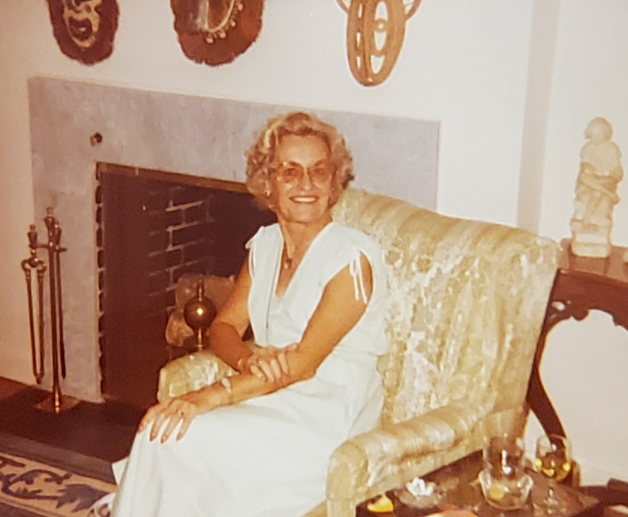
Marion Blair, my mother-in-law, 1990s

There were no teenagers back in the old days, my mother-in-law, Marion Blair, used to say. You were a girl one day and a woman the next – at least when it came to the way you dressed and the way you arranged your hair.

Somewhere, I have a black and white studio photo of Marion looking rather glamorous wearing what appears to be bright red lipstick, (it’s hard to tell for certain) taken in 1929.

I find the photo a bit freaky, because Marion was born in 1917! At a mere 12 years of age she certainly had achieved that polished ‘movie-star’ look and she maintained that impeccably groomed image right up until her death in 2002.

So it was no surprise to me when my husband came into the room a while back as I was watching an old Bette Davis movie on TCM and said, “That woman looks just like my mother.”

“Your mom didn’t look at all like Bette Davis,” I replied. “But, I can see your point. The movies, back then as now, instructed girls – and boys – on how to be grown up.”

Now, this was doubly ironic as here in Quebec in the 1930’s children under 16 were banned from the cinema because of the 1927 Laurier Palace Theatre Fire where 72 children had died in a crush to the exit.

So what did these deprived Depression Era English Quebec children do to bend the rules and partake of some healthy Hollywood escapism? According to my mother-in-law, they sneaked into the movie theatres and comported themselves like adults. That meant no shouting and no jostling. Girls often applied make-up to enhance the illusion.

Marion Blair was the middle of three sisters, so it is no surprise, really, that her appearance meant a lot to her, especially since her sisters were, let’s face it, much better looking. Think Rita Hayworth and Merle Oberon.

She was the skinny sister with the slightly wonky left eye and a wild boy-crazy “biker chick” personality that had to be tamed with two years at Trafalgar all-girls school. (Hmm. Maybe, there were ‘teenagers’ in the 1930’s after all.)

The 1930’s Hollywood Dream Factory inspired more than Marion’s hair and makeup. She was a wannabe thespian. At McGill in the late 30’s she got to play comedic parts in the famed Red and White Revue.

Somewhere, I have some clippings from the early WWII McGill Daily. In one of them Marion is flying in the air attached to cables with a giant wand in her hand and an enormous toothy grin on her face.

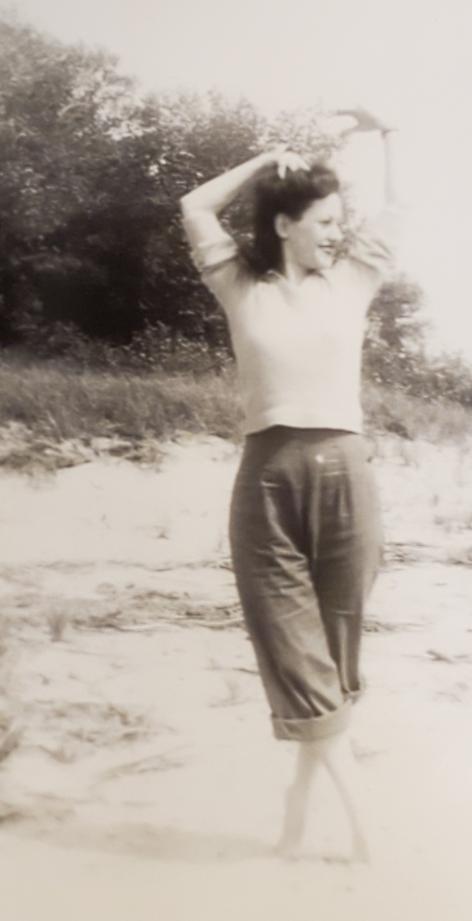
Marion Blair was a natural for the theatre, but in 1941, with war raging, she chose a domestic existence and married Thomas Wells, a Westmount boy who had played semi-pro  hockey with her brother and who had recently enlisted in the RCAF.

mariaondancefixe

Marion, ballerina, 1942, Dunville, Ontario RCAF training base.

As a young mother in the 1950’s, Marion continued to act in local amateur theatre out in the suburbs with the Hudson Players Club. (I guess the stage was the only place she felt safe ‘letting her hair down.’)

Her own mother, Marion Nicholson Blair, had been widowed in 1927, when Marion Jr. was just 10 years old. Mother Marion had been cut out of her husband’s family lumber fortune, but instead of remarrying one of her many suitors she went back to work as a teacher at the Montreal Board and also got involved with the Protestant Teachers Union, rising to President during WWII.

The Nicholson/Blair female-run family had little money to spare but being a natural wheeler-dealer, mother Marion found patrons to send her children to university which is why daughter Marion could swing from the rafters at McGill’s Morris Hall.

Which brings me to another related story – about another photograph, one I actually have on hand to show you.

My mother-in-law’s patron was a friend of her mother’s, a Mr. Dean from the local Westmount Church. One summer in 1936 he took them to Saranac Lake, New York on a vacation.

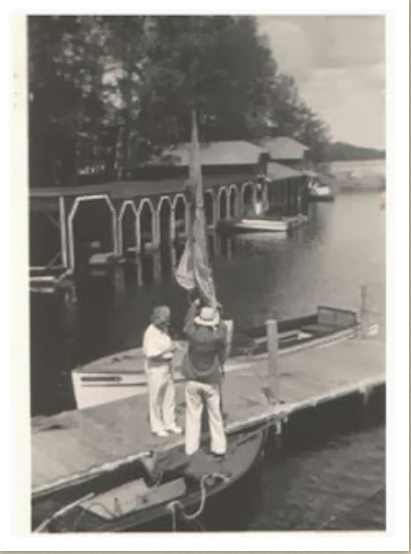
One morning,  as they walked on the waterfront, at the marina, Marion spotted a portly older man with very disheveled hair on the pier beside a small sailboat. “What messy hair that man has,” said Marion to her companions. “Disgraceful.”

Mr. Dean would have no part of it. “That, my dear,” he told her, in a hushed and reverent tone, “is Professor Einstein.”

So my mother in law snapped a photograph – and here it is.

Saranac Lake

This picture is more than mere family memorabilia.

With a little online research I soon figured out that my mother in law caught the Man of the Century setting up for a famous AP photo shoot. (Or perhaps shutting down from it.)

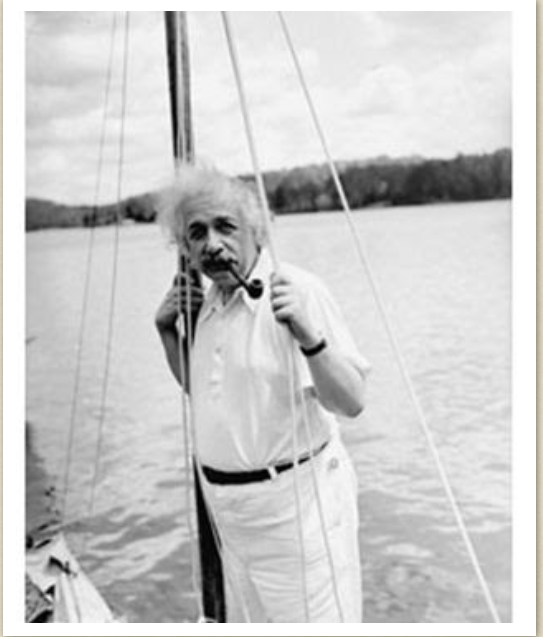
Here’s that photo “Einstein at Play” taken a few minutes before or after my mother-in- law snapped the photo of the physicist icon with the famously messy head of white hair.

EinsteinatPLAY


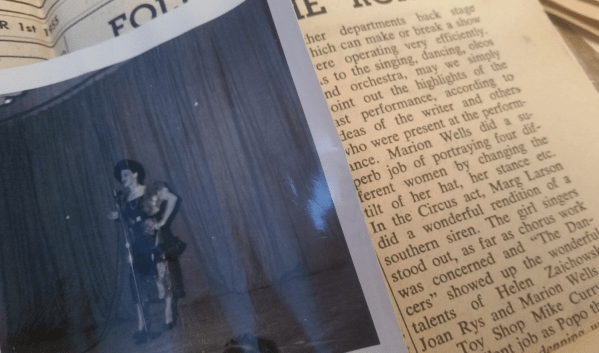
A pic of Marion on on stage and a clip from the December 1955 Lake of Two Mountains Gazette.

My Prudhommes

How do you get to be you? First you must have your parents, then your grandparents and as you trace back through your family trees you find all the coincidences needed for people to come together at a time and place for you to be who you are.

When Louis Prudhomme arrived in New France around 1640 I am sure that he never thought his seven times great-granddaughter would live there almost four hundred years later. He was an early settler in Ville-Marie (Montreal), a brewer, churchwarden and a member of the Montreal Militia. I descend from Louis and his wife Roberte Gadois. This marriage almost didn’t take place. Roberte came to New France as a child with her parents Pierre Gadois and Louise Mauger. Then when just 15, a marriage contract was drawn up between Roberte and Cesar Leger with the ceremony happening four days later. After six years, the marriage was annulled, most likely because there were no children. The survival of the colony depended on couples having children. On the same day her first marriage was annulled, Roberte married Louis Prudhomme. This wasn’t a quick decision as their marriage contract had been drawn up a year earlier. Roberte proved her fertility by soon giving birth. Their first child, son Francois-Xavier Prudhomme (1651 – 1741) is my ancestor.

Finally, well into his thirties, Francois Xavier married Cecile Gervais, only 13 at the time. This marriage too might not have taken place. Cecile’s parents were Jean Gervais and Anne Archambault. Her mother Anne had previously been married to Michel Chauvin. Michel had owned the property next to Louis Prudhomme. Louis, on a trip back to France, learned that Michel had a wife and children still living there. On his return to New France, he accused Michel of bigamy and reported him to the Governor Paul Chomedey de Maisonneuve. Michel, expelled from the colony, went back to France leaving Anne free to marry again and give birth to Cecile. Francois Xavier Prudhomme and Cecile eventually had nine children.

Their first child Francois Prudhomme (1685 – 1748) married Marie-Anne Courault. This couple appeared to have lead uneventful lives except for having eight children.

One of their children, Nicolas Prudhomme (1722 – 1810 ) married Francine Roy. This couple had at least five children before Francine died at age 34. Their youngest child Eustache was just two at the time so not surprisingly Nicholas soon married again.

It was the marriage with his second wife Helene Simone Delorme that produced Jeramie Marie Prudhomme (1766 – 1846) my three times great grandfather. Seven years had past before this child entered the world. Helene must have been busy raising her step children. In 1818 Jeramie is listed by the Sulpicians as one of the twenty family heads living and farming in Côte Saint-Luc, west of the original settlement but still on the Island of Montreal. He married Marie Louise Décarie (1769-1855), from another important farming family. Jérémie and Marie Louise had seven children. Their last child Sophie Marie Louise married Barnabé Bruneau. The Prudhommes had lived on the island of Montreal since the 1640s. Sophie left her ancestral home and moved south across the St Lawrence River to St. Constant.

It is with Sophie Marie Prudhomme that my direct Prudhomme line ended. Other branches of the Prudhomme family continued to flourish. My Great Grandfather Ismael Bruneau chose the middle name Prudhomme in honour of his mother.

Notes:

7th Great Grandfather Louis Prudhomme (1611- 1671) married Roberte Gadois (1628- 1716)

6th Great grandfather Francois Xavier Prudhomme (1651-1741) married Cecile Gervais (1671-1760)

5th Great Grandfather Francois Prudhomme (1685-1748) married Marie Anne Courault (1689-

4th Great grandfather Nicolas Prudhomme (1722-1810) married Helene Simone Delorme (1730-

3rd Great Grandfather Jeramie Marie Prudhomme (1766-1846) married Marie Louise Decarie (1769- 1855)

Two times Great Grandmother Sophie Marie Prudhomme married Barnabé Bruneau

Jean-Jacques Lefebvre http://www.biographi.ca/en/bio/prud_homme_louis_1E.html accessed May 13, 2020.

https://www.geni.com/people/Fran%C3%A7ois-Xavier-Prud-homme/6000000002352538874 accessed May 13, 2020.

Making Lime: http://www.minervaconservation.com/articles/abriefhistoryoflime.html accessed May 24, 2020.

https://csllibrary.org/the-prudhomme-family/ accesses May 12, 2020.

The Antoine Pilon Home Part 2

Antoine Pilon arrived in Ville Marie in 1668 and by 1707 he was a land owner in the growing village of Pointe-Claire, on the shores of Lake St. Louis.

In a recent blog there is a biographical sketch of Antoine, my 7th great grandfather. He sailed from Normandy, France to New France. His family were among the first residents of Pointe-Claire. When he died at the age of fifty, the home he built in 1707 remained in the family for 120 years.

The Antoine Pilon Home Part 1, https://genealogyensemble.com/2020/05/06/the-antoine-pilon-home/

The home is still standing, thanks to the tireless efforts of André Charbonneau. It is the oldest home in Pointe-Claire and one of the oldest on the island of Montreal.  Records indicate the many owners over the 300+ years.

Capture.JPGAP HOUSE Googlw

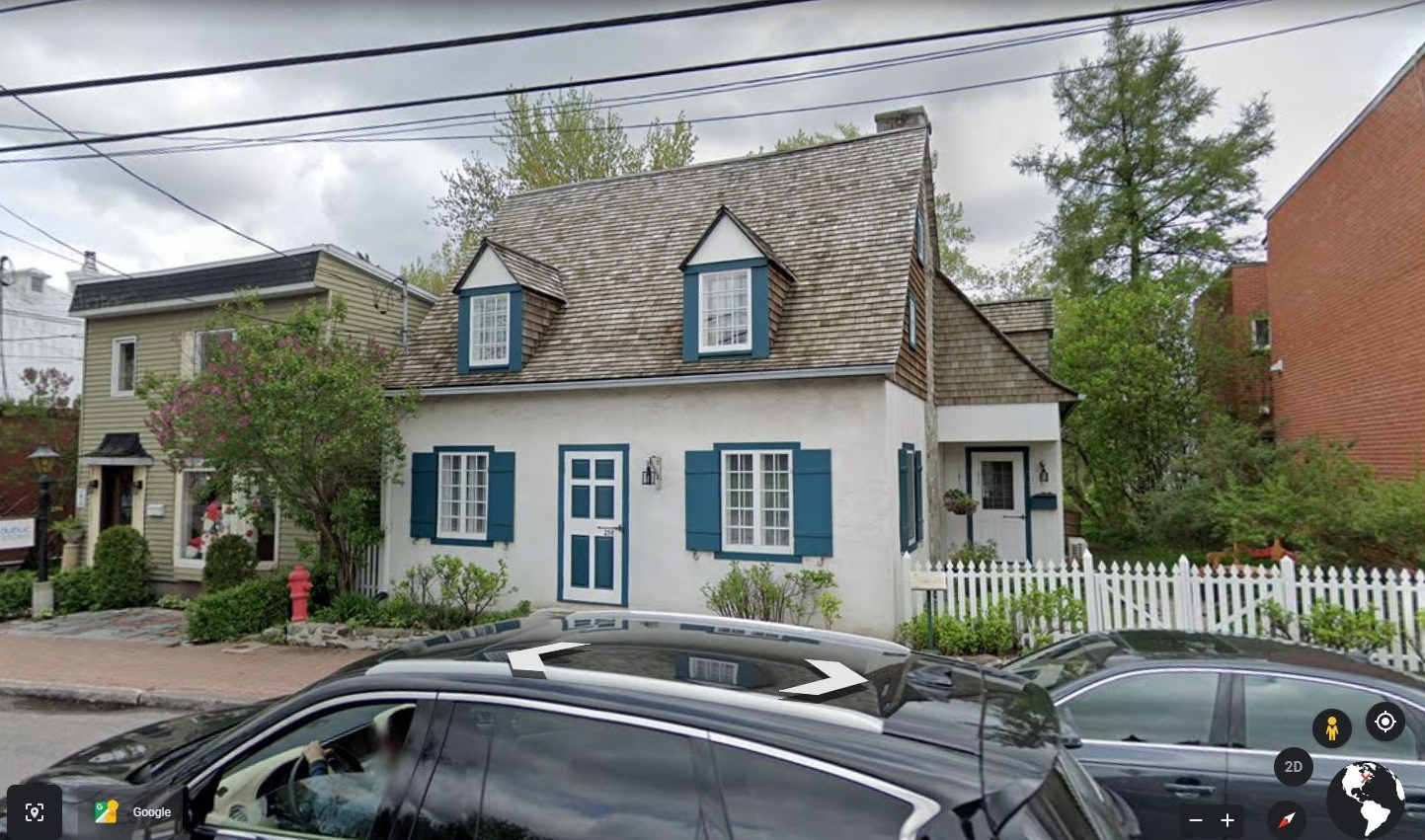
A Google Earth street view of the Antoine Pilon House 258 Bord du lac Pointe-Claire

History of the Owners and the Land Transactions 1.

1707 -2020

Below is a list of the many landowners who lived in the Antoine Pilon house over the years. Several owners inherited the property, while others purchased theirs.

The house lies on lot 88 of the present survey, forming a part of lot number 154 in the original land registry of the Island of Montreal.2

  • Lot 154-D was conceded by the Sulpicians to Pierre Sauvé dit Laplante on November 24th, At the time it was property of 3 acres of frontage and 60 acres deep, on the shore of Lac Saint-Louis.
  • Pierre Sauvé and his wife Marie-Michel sold this land to Jean du Tartre dit Desrosiers on October 27th,
  • Du Tartre gave the concession to Madeleine LeMoyne, widow of Jean-Baptiste Beauvais, September 19th,
  • Dame LeMoyne immediately sold lot 154-D September 19th,1706 to Antoine Pilon, who had already purchased from her the adjoining lot 155-D
  • Antoine Pilon built his house in 1707 on this property
  • Marie-Anne (Brunet) Pilon’s widow gave the land to her son Mathieu on January 22nd, 1729, land of 5 acres of frontage to 20 acres deep, consisting of lots 154-D and 155-D.
  • Gabriel Pilon, son of Mathieu and Marie-Josephte Daoust, became the next owner purchasing it from his parents’ – lot 154-D measuring 3 acres by 28 acres.
  • Pierre Pilon, the farmer and inn-keeper son of Gabriel and Suzanne Meloche, inherited the land on December 7th,
  • The Pilons left the property for good on July 1st, 1826 after 4 generations of family ownership. The home passed from mother to son and then father to son during 120 years.
  • W. Glasford, Carpenter purchased the property on July 1st, 1826.
  • Félix Amesse, carpenter, husband of Marguerite Pilon purchased it on March 1st,1832
  • Francois Larivée, shoemaker, became the new owner on April 5th,1834
  • Jean-Baptiste Legault dit Deslauriers, son, painter obtained the home May 11th,1865
  • Damase Alexandre Valois bought the property July 19th,1873.
  • Isidore Valoix inherited it in 1914.
  • Charles-Benoît Valois acquired the property December 31st,1921.
  • Joseph Duhame, next owner purchased the property on February 21st,1944.
  • André Charbonneau bought the property in 1968 and is the current owner- (2020).

There was a total  of 18 landowners over nearly 320 years.

Pilon property


The area in green indicates the extent of the Pilon Property right to the shore line.                   Capture.JPG map text

Capture.JPG current map of village

Current map of Pointe-Claire Village

André Charbonneau purchased the large property when he was 25 years old. At the time he was a young hairdresser living in Pointe-Claire.3. He is now retired and has hopes and dreams that his efforts to refurbish the 300+-year-old home could become a museum or an interpretation center. If so, this would promote the history of the area. André is also the founder of la  Société pour la Sauvegarde du Patrimoine de Pointe-Claire, https://patrimoinepointeclaire.org/ and has spent time educating the citizens about the history of their community3. Over the years Charbonneau has attempted to have the home declared a Heritage site.  He has approached the City of Pointe-Claire to develop the home.

Funding for a  project of that type is usually based on the following percentages:

25% Municipality,     25% Private donations.           50% Federal funding.

Several years ago, a feasibility study estimated the cost of the project would be approximately $1 million.

Charbonneau lived in the home for a short time until 1973. Time was spent researching, notably at the National Archives, with the aim of restoring the house and having it classified by the Ministry of Cultural Affairs. His request for classification was denied. Despite the refusal, he chose to restore the home to the original plans according to the French Regime, using the building methods of that era.4.

Andre in house

Owner, André Charbonneau

The better part of Andre’s life has been focused on reconstructing the Pilon home to its former glory. He began using an architectural technique of numbering all the stones and wooden planks to rebuild the house.5.

The original size of the house is 25’ x 23’ and he added an extension of 20’ x 18’  He took great pains to research minute details such as the nails used in the new roofing and the flooring on the first floor, made from new wooden beams giving the appearance of the wood of the time. He left no stone unturned, including as noted, enlarging the home . He has maintained the original appearance of the first floor, a single open room. Behind the fireplace there was an oven, over the years had been condemned and hidden. The major work on the home was done by reliable,  workers, carpenters, and a blacksmith. They all worked using the same skills as those of 17th century craftsmen.

André Charbonneau has received numerous awards and recognition for his dedication and ongoing efforts in his attempt to establish a heritage site. In 2002 he received the Distinguished Heritage Award and in that same year won the Heritage Emeritus Prize for the neighbouring house that he also owns. There have been other awards over the years, but, his main goal  is yet to be accomplished.

La  Société pour la Sauvegarde de la Patrimoine de Pointe-Claire continues to this day to find a way to showcase this home that has been so painstakingly restored. If you have an opportunity, take a drive through the Village of Pointe-Claire and note the many homes that have been lovingly preserved.

Sources:

  1. http://www.piloninternational.ca/international/histoires/maison/maisonantoinf.html
  2. https://www.wikitree.com/photo/jpg/Pilon-239.
  3. https://patrimoinepointeclaire.org/
  4. https://www.lapresse.ca/maison/architecture/maisons/200711/12/01-871145-la-maison-pilon-revit-grace-un-proprietaire-tenace.php
  5. https://montrealgazette.com/news/world/trying-to-keep-a-piece-of-pointe-claire-history-alive

Notes:

http://home.globility.com/~pilon/photos.html – contains several interesting photographs

https://shariblaukopf.com/2015/07/09/the-garden-at-antoine-pilon-house/ -an artist’s point of view


Antoine Pilon Google earth

Google Street View – Pilon Home 258 Bord du lac. Pointe-Claire, Québec https://earth.google.com/web/data=Mj8KPQo7CiExX2c2cFNQNjR2SlhwODBIZTI3R0Vtc2ZyN2UwVzVENUESFgoUMEE3OTk3NjlGNTE0NUY0M0VCMTM

Capture.JPG Aerial Google Pilon House

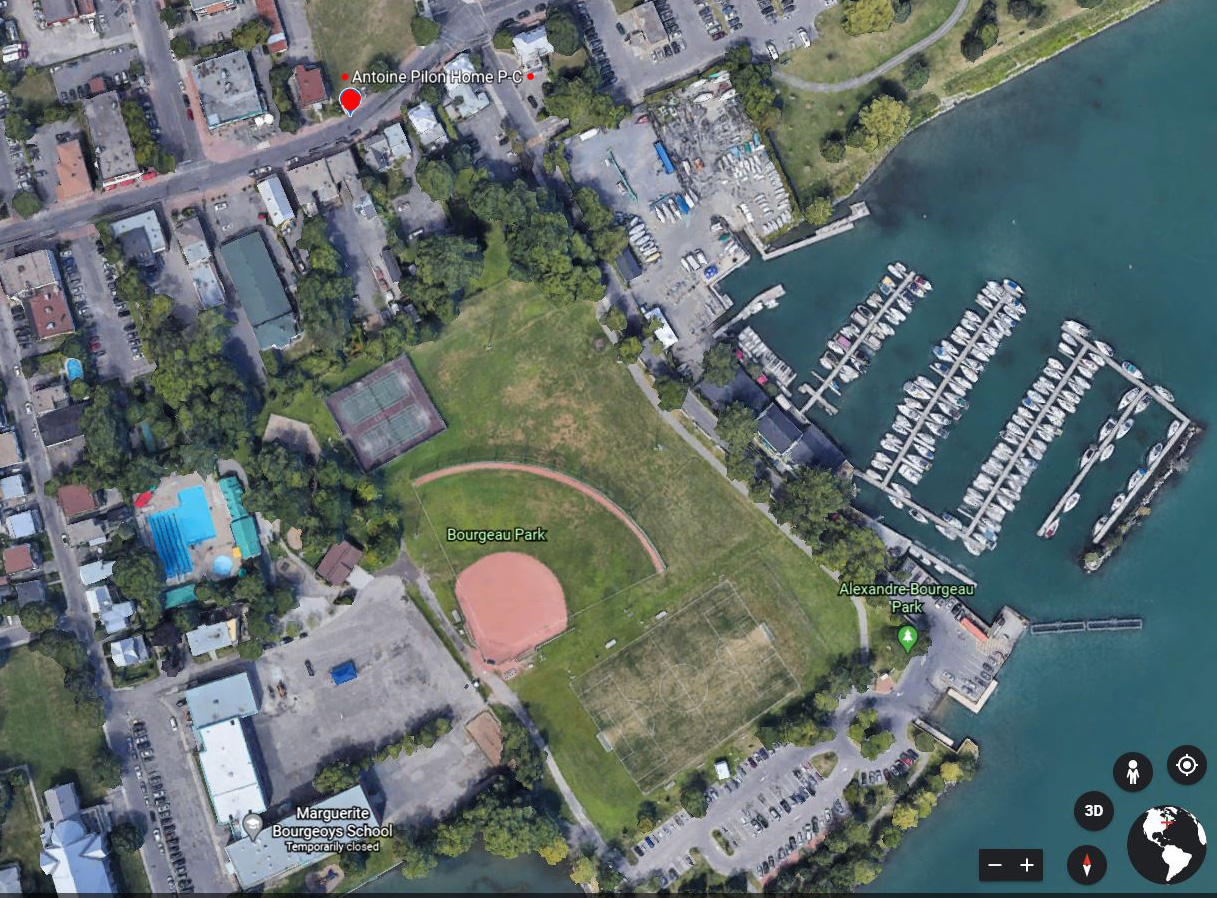
Google Aerial View of Antoine Pilon Home

https://earth.google.com/web/@45.42828134,-73.82327819,19.97449138a,670.74299124d,30.00000005y,0h,0t,0r/data=MicKJQojCiExX2c2cFNQNjR2SlhwODBIZTI3R0Vtc2ZyN2UwVzVENUE

Dear Miss Bulford – Part Four

RAF Upavon Crest

In the first three parts below, of “Dear Miss Bulford” I describe my [1] entry into the WRAF – Women’s Royal Air Force, [2] the basic training [3] posting to a trade training camp, and this part four, my first posting as a trained Medical Assistant.

  1.   https://genealogyensemble.com/2020/01/02/dear-miss-bulford/

2.   https://genealogyensemble.com/2020/04/22/dear-miss-bulford-part-two/

3.  https://genealogyensemble.com/2020/04/29/__trashed-4/

Arriving in Salisbury, Wiltshire by train, I made my way to the bus station. wearing my ‘best blue’ uniform.  As I was searching for the camp bus,  two army men also in uniform approached me, and asked if I was going to RAF Upavon? [1] I said yes, so they offered me a lift in their car. They were stationed a few miles from RAF Upavon, at the Larkhill Army Garrison.  I accepted their offer. Something I now think was not too wise, but it was the 1960’s. However, they were very polite and pleasant and I enjoyed the ride to the camp. They said they often came to our mess to dance and drink so I would see them in the future,  which I did.

Arriving at RAF Upavon the Duty Officer at the main gate, directed me to the arrival office where I waited for someone to take me to my new quarters. RAF Upavon was small compared to my last posting. Only one block for the WRAF and one for the men,  each side of a parade square. From the window of my new single room-  wow! this was great- I could spot the mess hall.

The sergeant of our block, two-storied as usual but only three or four to a room, came and introduced herself, and offered to take me to the mess for tea. On the way, she told me about the SSQ (Station Sick Quarters)  I would be working at and who made up the staff. There was a  civilian Doctor, who drove up from the Upavon village each day,  a Sergeant, two Senior Aircraft men, and a civilian nurse who was retiring. I was to take her place.

Next morning, dressed in my nurses uniform, I nervously made my way to the SSQ. I met the civilian nurse, Mrs Bowes who showed me her routine. Unlike her, I would be ‘on-call’ a shared duty with everyone else in the SSQ.  (Which was why I had the enviable single room!).
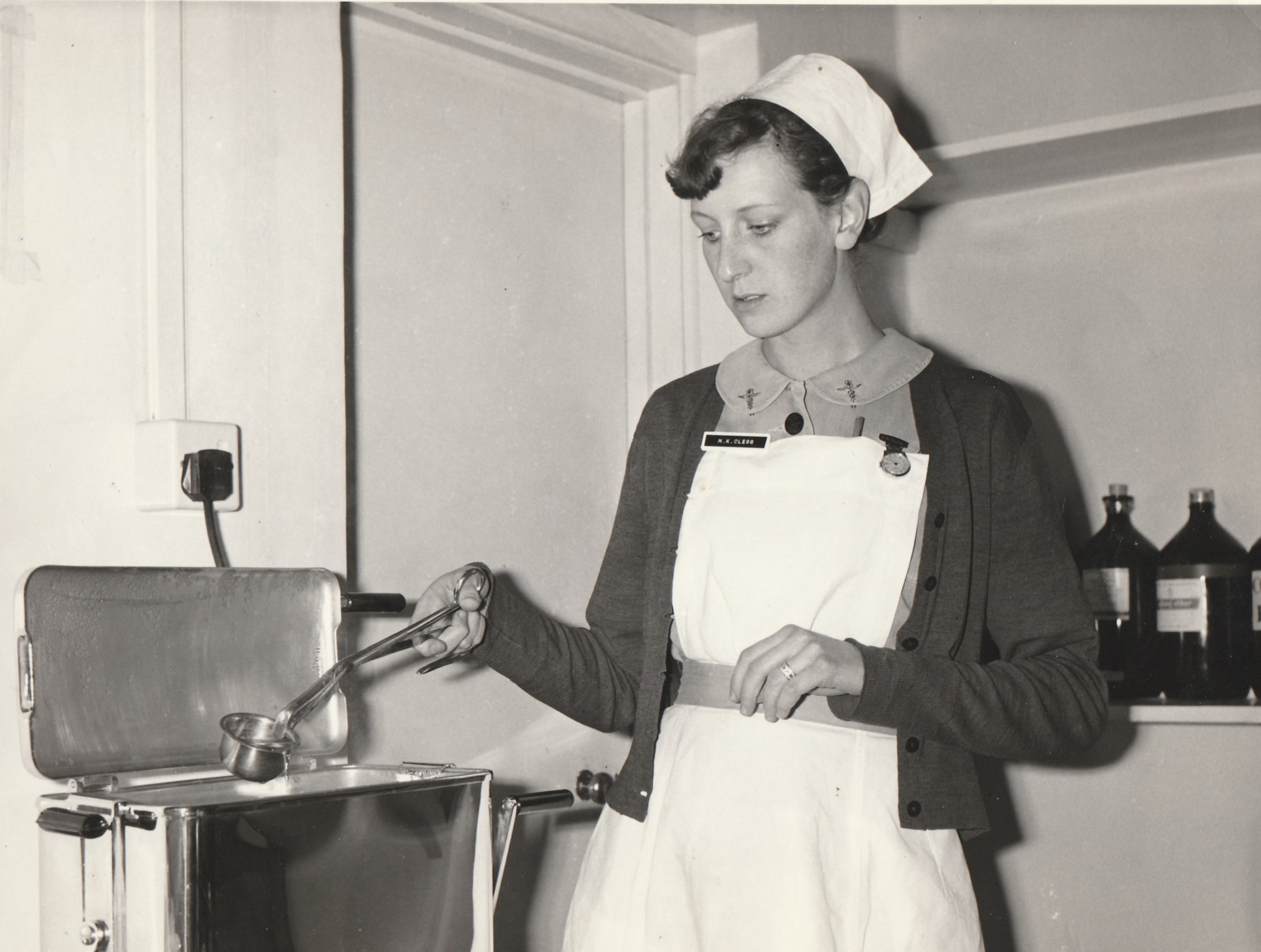
Me at RAF Upavon SSQ

A few months after I arrived I went to the weekly ‘hop’ a Saturday night dance drinks and general fun. There, I met John, who had only just arrived on camp himself. He was an admin assistant and worked in the HQ (Headquarters) for Sir Thomas Prickett, RAF Upavon’s Commanding Officer. He walked me back to my barracks and we arranged to meet at breakfast in the mess, the next morning. We spent the weekend together, getting to know one another walking around the camp and talking about our lives so far.
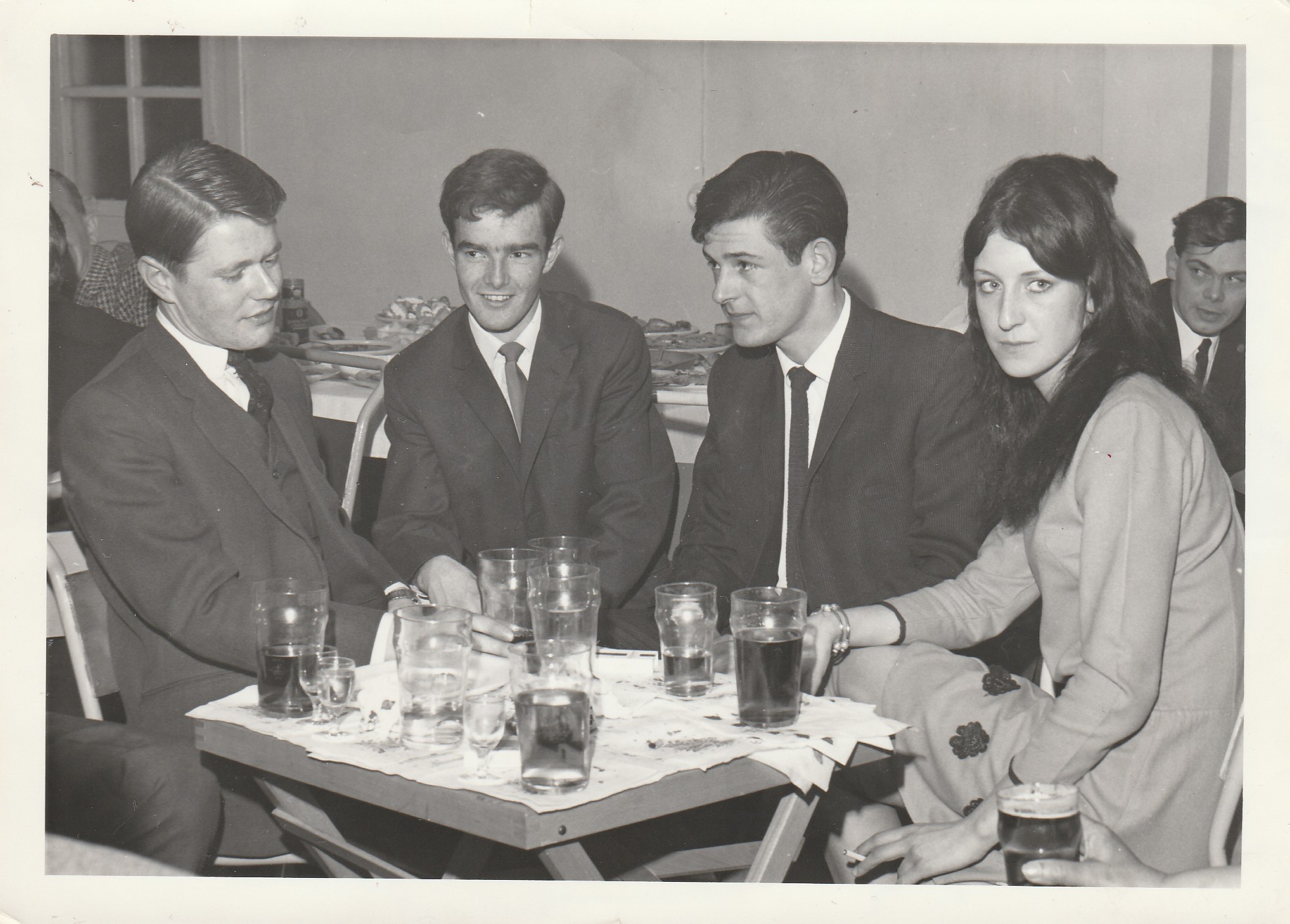
Saturday night dance. John on the far left, shortly after we met, with SSQ staff Dave and Mick, and me.

On Monday morning, when I went to the waiting room, there sat John! In he went in to see the Doctor. When he came out, his medical notes said ‘Mononucleosis’ (otherwise known as the kissing disease!). We sent him to sickbay and put him on antibiotics. The male nursing assistant stayed the night with him.

After one night in sickbay, John had not improved and now had a high temperature, so he was sent to the RAF Wroughton Hospital [2] by ambulance.  I accompanied him on the ambulance trip. I told him he would be spending time in isolation at the hospital but that we could meet again when he got back to camp. We had a date that night!

Seven days later he returned to RAF Upavon and we resumed our getting to know each other routine.  We would see each other at breakfast, lunch and tea, so we got to know each other pretty quickly and very well. We would take the bus to Salisbury on Saturdays to shop and come back in time for the Saturday dance.  We babysat for the local personnel on the camp and spent our days off, together. We took leave and went to my home to visit my parents and up to Liverpool where John was born to meet his Mum.

One year later, on the anniversary of the day we met, March 2nd 1965, we got married. in Plymouth Devon. John’s Commanding Officer, Sir Thomas Prickett sent us a Congratulatory Telegram, as was usual in the days of snail mail and telephones.
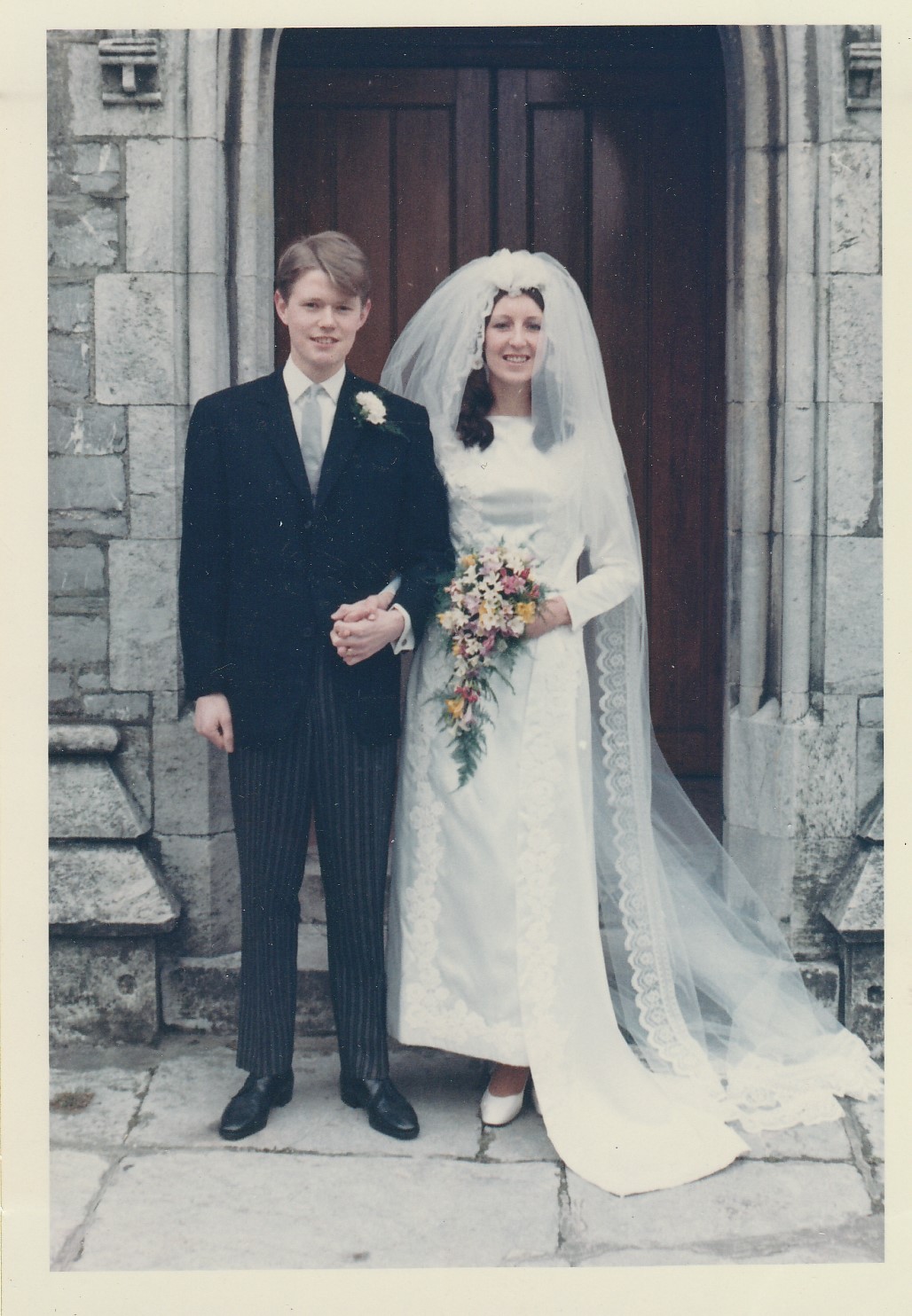
Wedding Day 2 March 1968

Telegram from John’s Officer In Command,  Air Marshall Sir Thomas Prickett and Lady Prickett.

After our marriage, I stayed on in the WRAF and RAF Upavon. After all, what was I going to do in the middle of Salisbury Plain for a job? Besides, I was enjoying my life at RAF Upavon. Here, I was photographed demonstrating a new lightweight stretcher for the RAF Magazine – so light even a woman could lift it!
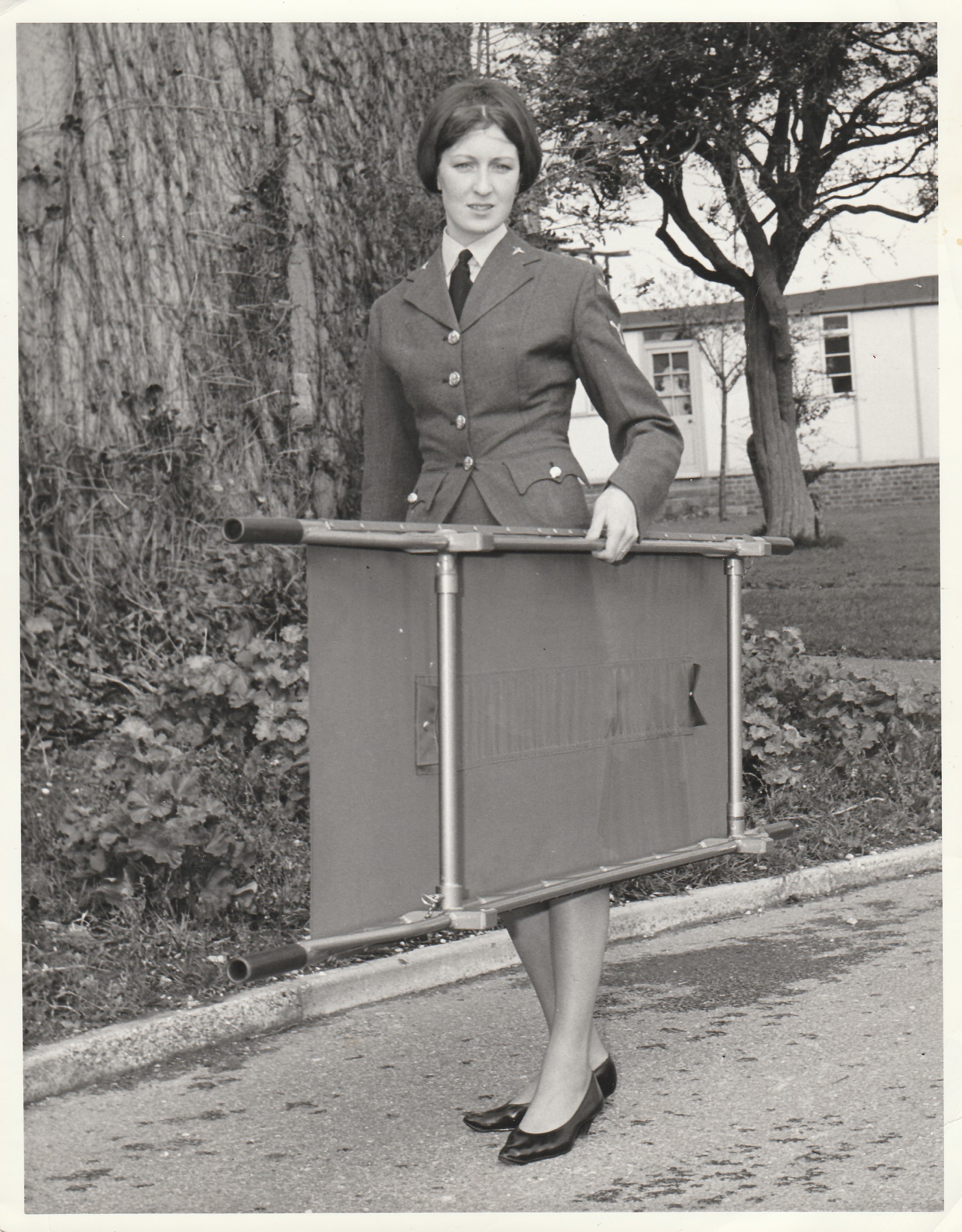
It was considered very unusual for me to continue in the WRAF, as most girls got married to ‘escape’ the WRAF.  However, I loved it so we applied for married quarters, completely forgetting that John was not 21 years of age yet, so he was not eligible!  Whilst I was certainly eligible being a little older than John,  nobody had ever experienced a married 22-year-old WRAF applying for married quarters before, so my request was denied. We just took in  our stride, but today I would have strongly questioned it.

So, for a few months, we lived on camp in our separate barracks and looked around for a place to rent close by. We were lucky to find ‘Dairy Cottage’ an early 19th century run-down, thatched cottage but rental affordable in the village of Upavon, just a bus ride from the camp. We lived there, for 18 happy months. We did some house painting and a few repairs on the inside. There were pheasants and various birds in the overgrown garden and we had get-togethers with our friends.

Our first home together, Dairy Cottage

The SSQ I was posted to was small and intimate and I quickly learned the routine. The staff were very helpful. I soon realised that I was the only female nurse at the camp. Soon, everyone called me Florence, as in Florence Nightingale! I was flattered. As the SSQ was right in the middle of Salisbury Plain, I was not too thrilled as I am a city girl and this place was very ‘country’.  Still, I made some great friends and soon settled in.

We treated the RAF personnel on camp and the civilians from the Village and so the daily ‘surgery’ was usually full.  We did all the necessary vaccinations for overseas postings and dealt with minor sicknesses. We took and developed x-rays and had our own dispensary, where we dispensed medicines and pills. We had a four-bed ‘sick bay’ for things like flu or contractible diseases. The RAF Hospital Wroughton was an ambulance ride away for more serious problems.

One night I was on ‘call’ and my first problem was at 9 pm. The Duty Officer called to alert me to the fact two Army men were at the guardroom, injured. I opened up the SSQ and waited for them. Both men had injuries. They had been on night manoeuvres and had fallen in the dark.  They undressed and I examined them. One had difficulty breathing so I diagnosed a fractured rib. The other man had the same problem but head scratches and a bloody nose.

As I was dressing their wounds and binding their ribs two more men showed up! At that point, I called the other two medics on camp with an urgent tannoy (public address system) message and they also arrived to assist me.  We sent them by ambulance to RAF Wroughton Hospital.

After our marriage,  John decided to change trades and become an Air Cartographer, so he was posted to RAF Northolt to learn his trade.  I tried for a posting there, but no luck. However, I did get a posting to RAF Uxbridge in the SSQ in the same area. So here we were, John at RAF Northolt and me at RAF Uxbridge! Once again we hunted for accommodation and a few months later, found a bed-sitter in Uxbridge for rent. Now, John was ‘of age’ for married quarters and entitled to payment of the rent until we could get a married quarter home at RAF Northolt. I finished my 6 happy, enjoyable years in the WRAF and found a job at a doctors office in the area until I became pregnant with the birth of our first son. This year we have been married 52 years.

Post Script:  When I told my family where I was to be posted, my Gramps told me, that in WW1, he had been at RAF Upavon for his training as an air gunner. However, HE was –  in his own words – ‘under canvas’ What a coincidence!

[1] A Short History of RAF Upavon 

The station motto was In Principio Et Semper, and translated from Latin means “In the Beginning and Always”. The station crest had a pterodactyl rising from rocks, which symbolised the station’s connection with the early days of flying, and was also a reference to the location of the station near to the ancient monument Stonehenge.

Smaller camps such as these were fully functioning  RAF Stations with small Medical Centres and a few beds plus an RAF Hospital nearby in case of emergencies. The nearest hospital to RAF Upavon was RAF Wroughton a Royal Air Force airfield near Wroughton, in Wiltshire, England, about 4 miles south of Swindon.

RAF stations in post-war England were many, and quite historical as most were built in the early 1900s. Unfortunately, most of them, have now closed or like my posting to RAF Upavon, taken over by the Army.  The station opened in 1912 and closed in 1993 when it transferred to the British Army and became known as Trenchard Lines.

[2] A Short History of RAF Wroughton

RAF Hospital Wroughton was part of the station and stood near the eastern boundary of the site, about 1 12 miles (2.4 km) west of Chiseldon. The RAF General Hospital (as it was known) opened on 14 June 1941 and by the end of March 1944, its bed capacity was 1,000. Wroughton continued as a General Hospital treating military patients, and from 1958 took NHS (National Health Service) cases as well to relieve backlogs in the Swindon area.  Following a visit to the hospital by  Princess Alexandra on 4 July 1967, the Queen conferred the prefix “Princess Alexandra’s” on the hospital on 4 October 1967.

The hospital was the primary destination for returning casualties of the Falklands War in 1982. When the hostages from Beirut were released in August 1991, Wing Commander Gordon Turnbull, a psychiatrist based at Wroughton, with his team, debriefed John McCarthy, Terry Waite and Jackie Mann and provided the counselling necessary to ease them back into freedom.  The hospital closed on 31 March 1996 as part of the Conservative Government’s defence cuts at the end of the cold war. The hospital was demolished in 2004 and the site, called Alexandra Park, used for housing and a conference centre; a memorial commemorates the former hospital.