
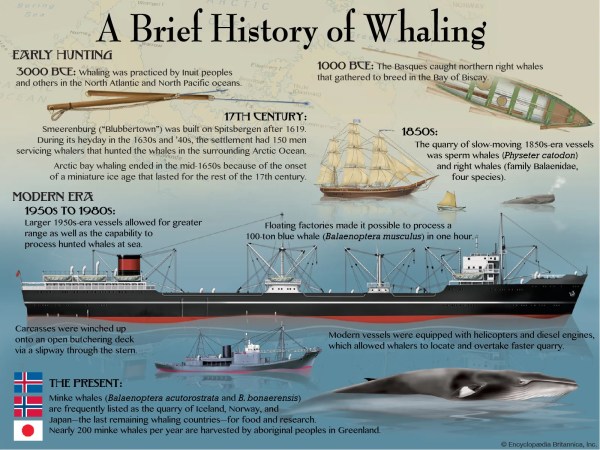
https://www.britannica.com/topic/
An excerpt from https://www.patrimoine-culturel.gouv.qc.ca/rpcq/detail.do?methode=consulter&id=74&type=imma
“Introduced around 1804 by the Loyalists established in Gaspé Bay after the American Revolution (1775-1783), whaling played a leading role in the regional economy and even on the Canadian scale for nearly a century. Gaspé and Saint-Jean, New Brunswick, were the only two ports in the country to have a total fleet of a dozen whaling schooners in 1846. But nothing to do with the American fleet, which then had 635 whaling ships. tracking cetaceans on the seas of the world. On the other hand, Gaspé stands out as the leading Canadian port with a fleet of seven schooners which supply 80% of the country’s demand for whale oil.
In Gaspé, whaling is a family affair. Originally from Nantucket and New Bedford, the main whaling centers on the American east coast, the Coffins and the Boyles were the first families to perpetuate the practice of whaling in Gaspé. Oral tradition attributes to the Coffin family, settled in Anse-aux-Cousins, the role of precursor of the profession of whaler. However, the Boyle family turns out to have a head start in oil production. In 1809, the whaling captain Boyle produced 90% of the local oils.”
************
The following database prepared by Jacques Gagné consists of various documents and books written about whaling in the Gaspe.
Below is a link to a map of the Gaspe Coast
https://www.tourisme-gaspesie.com/images/Upload/cartes/carte_routiere_gaspesie_2023.pdf
 Genealogy Ensemble