Woodland’s Nymph

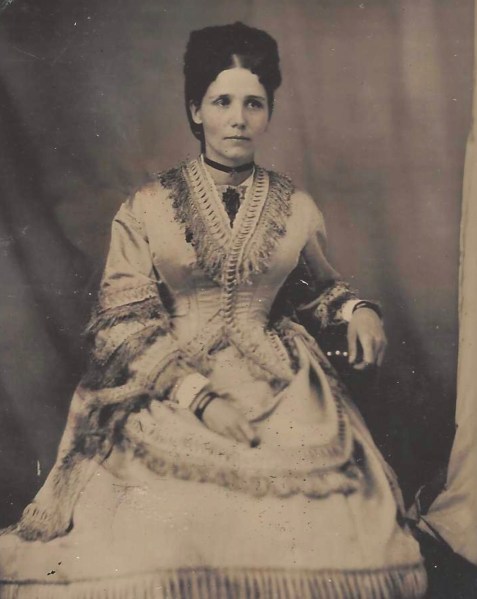
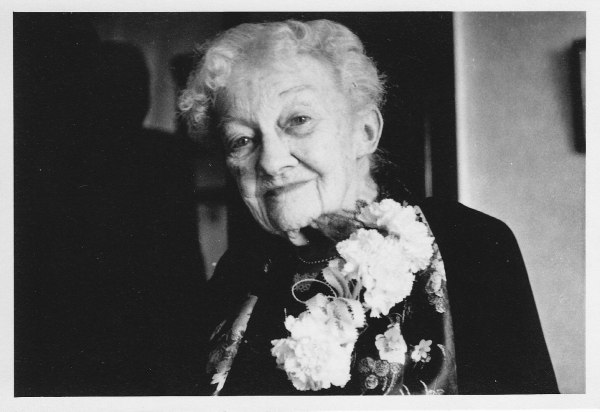
I recently discovered two photos of “Amy” in my dusty old boxes of family memorabilia. The first captured her elderly wrinkled face with a twinkle in her eye and a flower corsage adorning her left shoulder and the other portrayed a 29-year old Amy dressed in a formal gown complete with a silk fan also with a flower corsage on her left shoulder. Inscribed on the reverse side of this second photo, written in Amy’s scrawl, was “Bob with love Amy – Xmas 1894.”

It turns out that Amy C. Lindsay (1865-1960) was my great grandfather Robert Lindsay’s (1855-1931) half sister. His mother Henrietta Dyde died within months of losing her fourth child and, a couple of years later, his father Robert A. Lindsay (1826-1891) married a young Charlotte Vennor (1843-1912) who became stepmother to his three boys – Robert, Charles and Percival – all under the age of ten. Over time, Robert A. and Charlotte had five more children, with Amy being their first born and ten years junior to Robert.
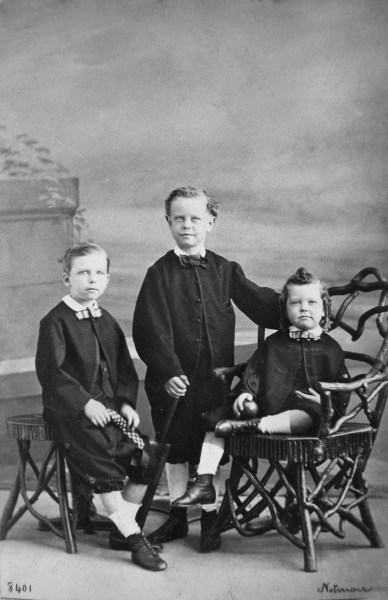
Who the heck was “Bob”?

Amy never married, so “Bob” could not have been a lost love in WW1, as she was 50 years old at that time. The most plausible explanation could be a gift to her older half brother Robert – “Bob” – and that’s the reason why the photo ended up in with my family.

My guess is that she idolized her oldest half-brother and gifted him that special photo which somehow survived the test of time to be found by me in my dusty old boxes. Mystery solved!

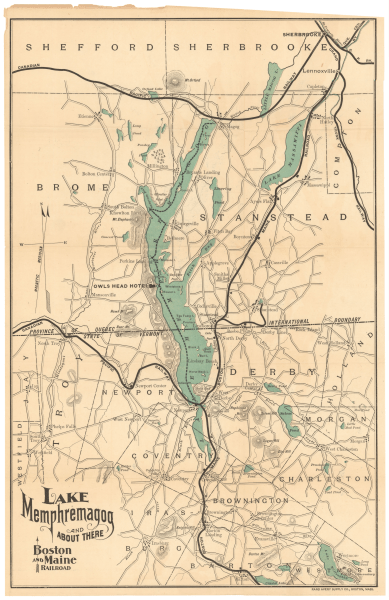
In 1873, when Amy turned eight, her parents bought a huge summer estate property called Woodland on Lake Memphremagog just south of Georgeville, Quebec. Lake Memphremagog1 is in the Eastern Townships just 72 miles east of Montreal, Quebec. It is 31 miles long, from north to south, spanning the international border between Quebec and Vermont but is predominately in Quebec.
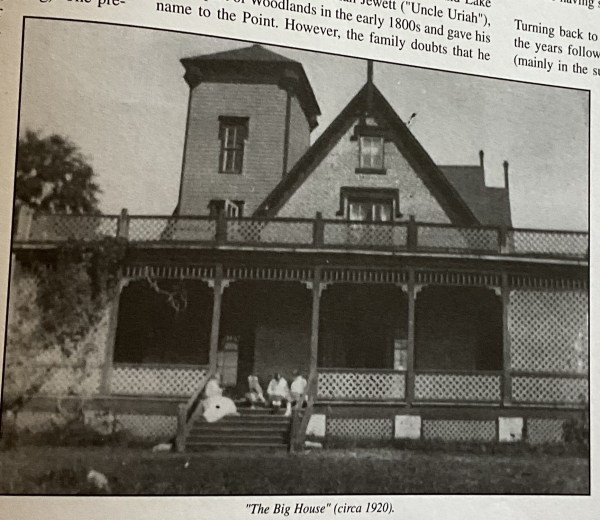
Amy’s father acquired “Woodland” from the original owner William Wood and it consisted of 280 acres of land bordering on the waterfront. William Wood had built a large red brick manor house that a neighbour described as a “barrack with a steeple.” Regardless of how it looked, it became home to several generations of the Lindsay family until the early 1960’s when it was replaced. They affectionately called it “The Big House.”
During this time, several other wealthy English speaking families acquired farm properties in the area and established their summer residences there as well. Woodland became a full functioning farm complete with livestock and crops all managed by hired hands. Over time, various third parties managed the farm until well into the 20th century, which left the family with plenty of free time on their hands.

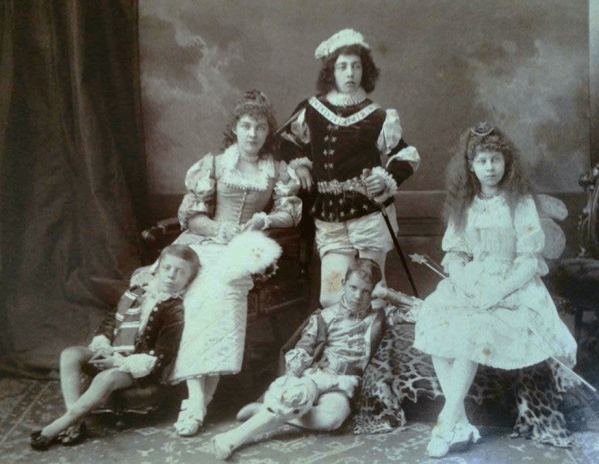
The Lindsay family took up residence in the Big House every summer. Amy’s father worked as an accountant for the Bank of Montreal and evidently could be spared for the long summer months to enjoy time with his family. “Apparently Robert Lindsay followed a daily routine of walking around the property with his entire family in tow according to size.” On another special occasion the whole family dressed up in fancy costume clothes for a party.
The grand “Lady of the Lake” steamer would sail twice daily on Lake Memphremagog stopping at private docks and thus providing the family with lake excursions right from the front doorstep of the “Big House.”
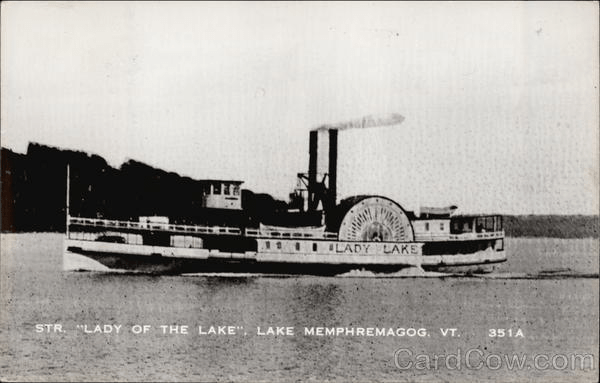
The Lindsay family (including mother-in-law Vennor who rescued Woodland financially in 1885) enjoyed the property until Robert’s death in 1891. Mrs. Vennor died four years after him and the property devolved to the four surviving grandchildren: Amy, Douglas, Cecil and Edith. (Their brother Sydenham died young while trying to save a drowning victim.)

According to her family, “Amy was a small lady, well liked and well respected by most… She loved the lake and Georgeville and spent almost all her summers there… She lived in the Big House and had a beautiful English country garden nearby where she liked to spend many hours puttering about.”2
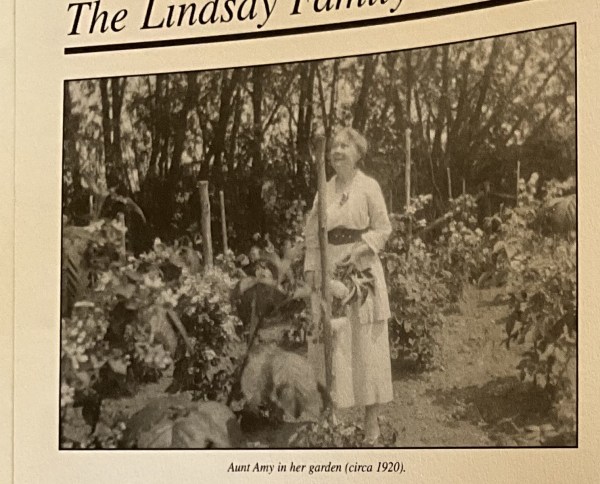
Although Amy never had children of her own, her many nieces and nephews doted on their “Aunt Amy.” After her mother died in 1913, her nephew took her to Paris and they stayed at the Hotel Pas de Calais, a four-star boutique hotel, right in the heart of tourist Paris. Nothing but the best for Aunt Amy!

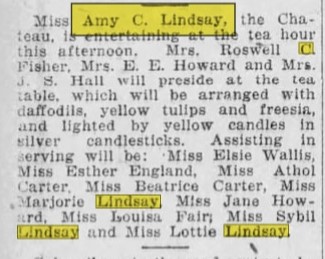
According to an article in the Montreal Star, when Amy hosted a social tea at The Chateau (across from the Ritz-Carlton Hotel), “the tea table was arranged with daffodils, yellow tulips and freesia and lighted by yellow candles in silver candlesticks.” What made it even more special were her five adult nieces assisting her in the serving of tea. She must have been very proud!
Woodland stayed in the Lindsay family until 2020 with several generations enjoying the spectacular property and family legacy. The road leading to their property was aptly named “Chemin Lindsay” and remains so today.

Although Amy spent extended summers with the multi-generational Lindsay family at Woodland, she lived the rest of the year in the downtown area in Montreal known as “The Golden Square Mile.”3 She seemed to move around quite a bit but always within the same area first staying with her mother until her death and then sometimes with her sister Edith (Carter) after that. Although in 1920 she enjoyed “wintering” at the Ritz-Carlton Hotel!

Amy eventually settled for her last 20 years in the Maxwelton Apartments on Sherbrooke Street near McTavish across from the McGill University campus while summering at Woodland until she died in 1960 at age 95.

According to the family, she obtained her first TV late in life and became an avid hockey fan! What a thrill it must have been to watch that first televised hockey game in 1952!
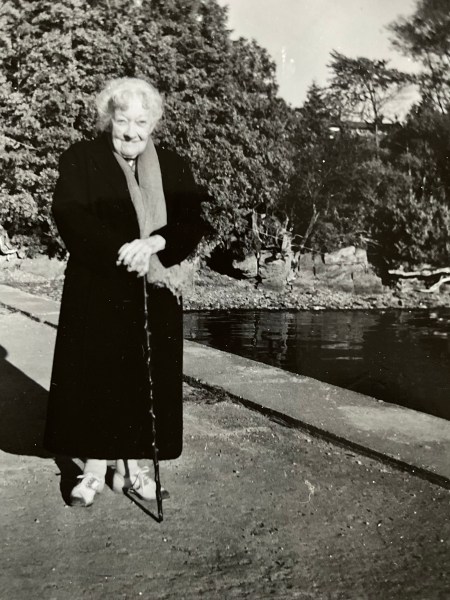
Amy on the Georgeville dock 1955 at age 90

In her last will and testament, written in 1896 when she inherited one quarter of Woodland, she bequeathed “Bob” her cherished set of Waverly books by Sir Walter Scott. He died long before her and, unfortunately, they were not to be found in my dusty old boxes!

1https://wiki2.org/en/Lake_Memphremagog – as referenced 2023-10-18

2The Lindsay Family and Woodlands – “Georgeville 200th”

1901 Lake Memphremagog map” by Rand Avery Supply Co. – Ward Maps. Licensed under Public Domain via Commons – https://wiki2.org/en/File:1901_Lake_Memphremagog_map.png#/media/File:1901_Lake_Memphremagog_map.png

3https://wiki2.org/en/Golden_Square_Mile?wprov=srpw1_0 – as referenced 2023-10-18

Notes:

A map of Grand Trunk Railway route Mtl to Portland, the train appears to have stopped in Sherbrooke:

https://digitalarchive.tpl.ca/objects/353690/map-of-grand-trunk-railway-system-and-connections

Archival photos of Georgeville:

https://www.townshipsarchives.ca/georgeville-quebec

Janice Hamilton’s story about the Baggs in Georgeville:

Summer in Georgeville
Lunatic Asylums in Scotland

In the 1871 census in the United Kingdom, categories of disability were added to the census questions. These categories included the deaf and dumb, blind, imbecile or idiot, and lunatic.1 Imbecile, idiot, and lunatic are pejorative terms today but in the 19th century, they were medical terms used to indicate mental health conditions. Idiots and imbeciles had learning disabilities. Lunacy was a term used broadly to denote anyone with a mental illness.2

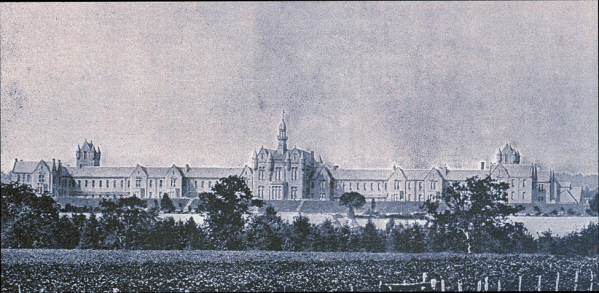
James Kinnear Orrock, my 2X great-uncle, was committed to the Dundee Royal Lunatic Asylum on December 9, 1888. Superintendent James Rorie declared that he was a pauper and that he was delusional.  James’ mother, Mary Watson, my 2X great-grandmother, requested that he be committed.4 Not unlike today, the police were involved. A constable declared that he had been violent and incoherent. It is obvious from the notice of admissions that James was experiencing psychotic episodes.

Westgreen Asylum, Liff, Dundee, Scotland in 1897, Westgreen Asylum, Liff, Dundee, Scotland in 1897

James was just 30 when he was admitted to the asylum. Sadly, he remained there until his death in 1930 when he was 72.5 It is distressing that he lived in this institution more than half his life. While little was known about mental illness at the time, the asylum offered the patients safety and hope. Specialist registrar Amy Macaskill states “What is clear is that they wanted to offer a degree of care and protection and containment for people who were causing difficulty at home and were in some level of distress.”6 The asylums cared for people who were depressed, anxious, delusional, as well as those suffering from other conditions such as epilepsy, alcoholism, and syphilis.7

The Dundee Royal Lunatic Asylum had separate quarters for men and women. The pauper wards for men each had a day room, with a number of single rooms with windows overlooking the airing court. The windows provided the only ventilation. The rooms were not heated but there were open fire places in the corridors. There were weaver shops in a separate building where some patients made packing cloth. Male patients also did stone breaking and some worked on the grounds. They were paid with tobacco and beer. There was a billiard room and dancing parties for the patients, attended by both men and women. A chaplain provided services on Sundays.8

When James was admitted, he was certified a pauper lunatic. This certification gave him access to psychiatric care, but it does not necessarily mean that he was a pauper. His admission records indicate that he was a seaman and he could have been gainfully employed. The Board of Governors of the asylums assessed each patient’s finances. If any financial assistance was required, then the patient was declared a pauper. If the patient or their family was assessed as being able to entirely finance their own care, they were classified as private patients. Private patients benefitted from better food, were able to wear their own clothes, and could be discharged if the person paying for their care wanted their discharge. Unfortunately, while a technical and legal label, the term “pauper lunatic” carried a stigma and deterred people from seeking help.9

We have come a long way in our care for those suffering from mental illness since the 19th century. The Lunacy (Scotland) Act 1857 formed mental health law in Scotland from 1857 until 1913. Its purpose was to provide official oversight of mental health institutions and to ensure that they were adequately funded.10

  1. Scotland’s People, Census Records, 1871 Census, https://www.nrscotland.gov.uk/research/guides/census-records/1871-census#1871%20instructions, accessed 1 November 2023.
  2. Historic England, Disability History Glossary, https://historicengland.org.uk/research/inclusive-heritage/disability-history/about-the-project/glossary/, accessed 1 November 2023
  3. Notice of Admissions, Royal Dundee Lunatic Asylum, Notice of Admissions, James Orrock, retrieved 22 March 2023
  4. James Rorie went on to write the History of the Dundee Royal Lunatic Asylum
  5. Scotland’s People, 1891, 1901, 1911, 1921 censuses, John Orrock, accessed 20 November 2023.
  6. BC News, Archives reveal life in Edinburgh and Inverness asylums, 7 January 2013, https://www.bbc.com/news/uk-scotland-20938462, accessed 21 November 2023.
  7. National Records of Scotland, From the NRS Archives, Servicemen in Scotland’s Asylums, 1918, 10 January 2019, https://blog.nrscotland.gov.uk/2019/01/10/from-the-nrs-archives-servicemen-in-scotlands-asylums-august-1918/, accessed 22 November 2023.
  8. Scottish Indexes, Institution Information – Dundee Royal Infirmary, https://www.scottishindexes.com/institutions/19.aspx, accessed 22 November 2023.
  9. Royal College of Psychiatrists, Pauper lunatics were not paupers, 23 February 2022, https://www.rcpsych.ac.uk/news-and-features/blogs/detail/history-archives-and-library-blog/2022/02/23/pauper-lunatics, accessed 21 November 2023.
  10. Wikipedia, Lunacy (Scotland) Act 1857, https://en.wikipedia.org/wiki/Lunacy_(Scotland)_Act_1857, accessed 22 November 2023.

Are We Related

Genealogy Ensemble, ( https://www.genealogyensemble.com) our collaborative blog began almost a decade ago. To this day it is still going strong. Nine ladies and one gentleman participate regularly. We, ladies, write stories about our ancestors, while our friend, Jacques Gagne, compiler and researcher prepares informative databases for posting on our blog.

The ladies meet once a month during the school year to discuss our stories. Over the years as our blog has grown with our published stories, we have come to realize that there are several among us who have common ancestors. Janice Hamilton and Lucy Anglin are cousins, Barb Angus and Sandra McHugh have ancestors in Scotland and Marian Bulford writes about hers in the United Kingdom. Dorothy Nixon, Mary Sutherland, Tracey Arial, and I, along with Jacques Gagne have French Canadian ancestors. Great diversity!

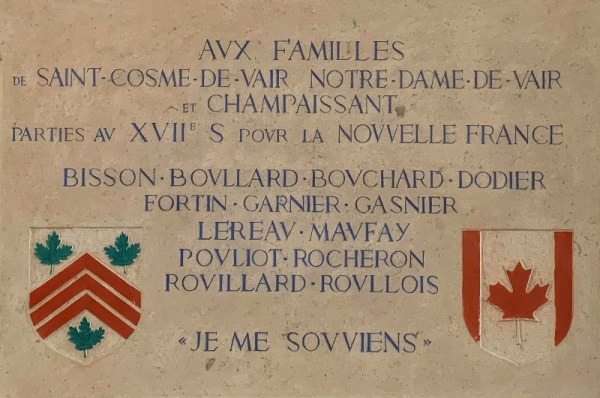
Jacques and I have discussed our ancestors knowing that they came to New France within a few years of each other and settled in the Sainte Anne de Beaupre area.

Initially, being a neophyte writer, and researcher, better skills were required, and completing the branches of our family trees was needed before tackling the relationship between Jacques’ ancestors and mine.

”That time has come”.“

Yes!” We are related going back more than 372 years when Julien Fortin, my 7th great-grandfather, a butcher, who in 1651, followed in the footsteps of Louis Gagne, the baker, Jacques’ great-grandfather who sailed to the New World in 1644 and settled in New France. Both men had occupations that would be welcomed in small communities.

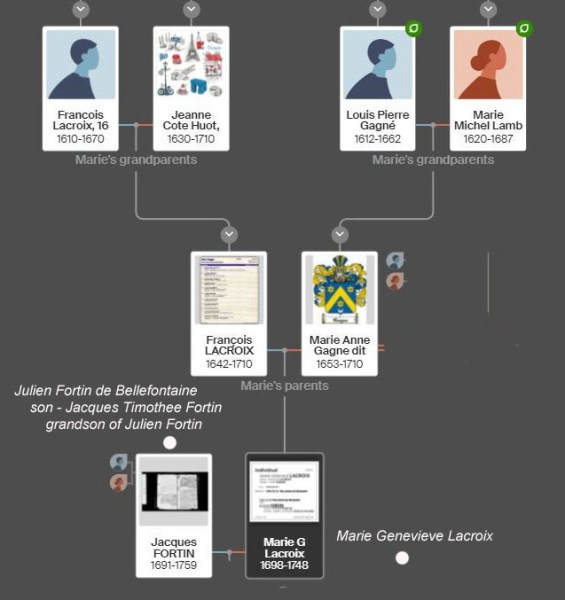
The following graphics and details below tell the story of our ancestors; Jacques’ and mine. I have chosen to use the graphics from my private Ancestry.ca family tree to indicate these connections.

The stories of our 7th Great Grandfathers and their families are intertwined.

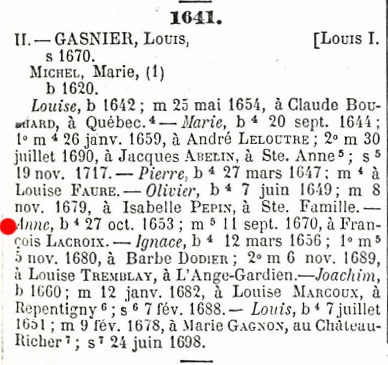
  • Louis Gagné, his wife Marie Michel, and their daughter Anne Gagné
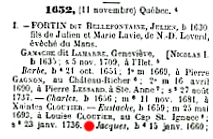
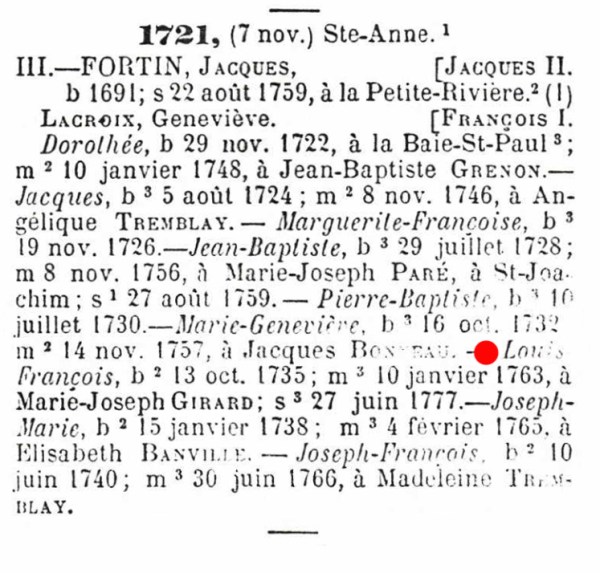
  • Julien Fortin de Bellefontaine, his wife Geneviève Gamache, and their grandson Jacques Fortin
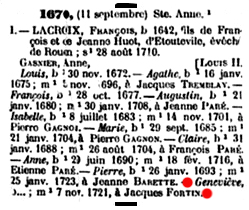
  • Francois Lacroix, his wife Jeanne Huot, and their son Francois Normand Lacroix

Louis Gagné, Marie, Michel, Julien Fortin, Genevieve Gamache, Francois Lacroix, Jeanne Huot, and their son, Francois Normand were born in France.

The others were born when their families arrived in New France.

 Louis Gagné married Marie Michel in France and arrived here in 1644.

In 1651 Julien Fortin arrived and in 1652, married Geneviève Gamaache “ une fille a marier’ who had arrived with her brother, Nicolas Gamache.

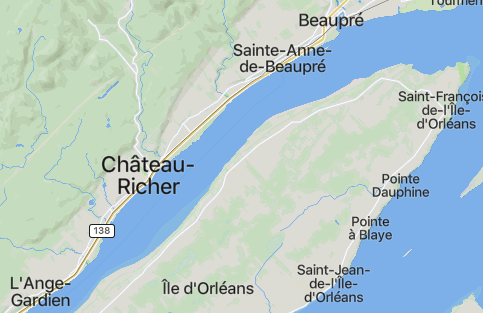
Louis Gagné and Julien Fortin along the way eventually found themselves and their families living around Chateau Richer and Saint Anne de Beaupre, east of Quebec City. Both families owned land along the shore of the St. Lawrence River.

GAGNE

FORTIN

Jacques Fortin is the son of Jacques Timothee Fortin and the grandson of Julien Fortin and Geneviève Gamache.

LACROIX

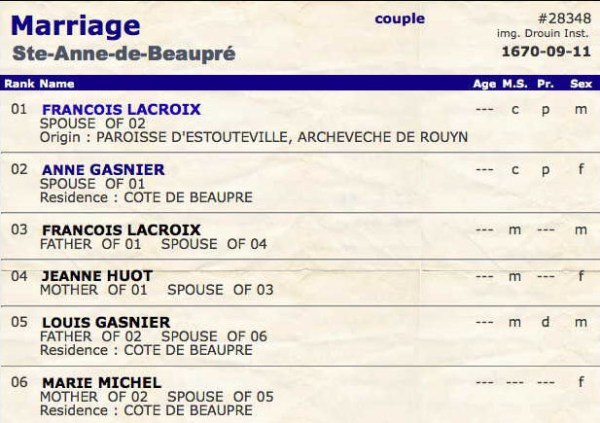
MARRIAGES

François Lacroix was a “domestique. Servants working in a home, agricultural servants and personal servants.

Any person at the service of another, without specifics. François Lacroix was employed as a domestic for Pierre Gagnon.

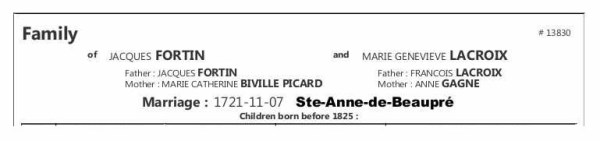
Genevieve Lacroix was the daughter of François Lacroix and Anne  Gagné.

Louis François Fortin is the son of Jacques Fortin and Geneviève Lacroix

Continuing the relationship chart to the Author

François Xavier Fortin – 3rd gg          Montebello, Quebec

Moyse Hypolite Fortin –  2nd gg        Rigaud, Quebec

François Evariste Fortin – 1st gg       Pembroke, Ontario

Louise Seraphina Fortin’s – my grandmother, Louis Joseph Jodouin – my  grandfather  Sudbury, Ontario

Estelle Anita Lindell – my Mother &  Author – Sudbury, Ontario

Sources:

Ancestry.ca – Personal family tree is the source of the research and graphics.

http://www.gagnier.org/p0000353.htm

https://www.genealogiequebec.com/fr/

Notes

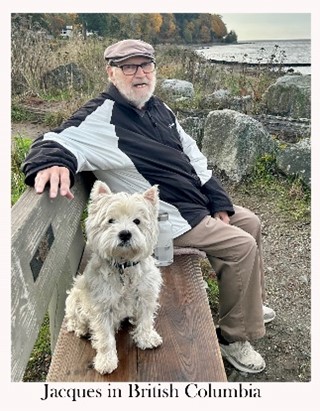
Dedicated to our good friend, Jacques Gagné who has recently moved to British Columbia to be near family. He will continue to grace our blog with his databases. We at Genealogy Ensemble wish him well.

Where Are All The Cousins?

Some branches of family trees flourish while others wither and die out. I have traced one branch of my tree back to Pierre Gadois and Louise Mauger, two of my one thousand and twenty four 8th great-grandparents who arrived in Quebec in 1636. This couple has many thousands of descendants alive today, probably even more. But even though some of my great-grandparents had many children there aren’t the expected number of cousins. I have only seven first cousins while a friend says she has more than fifty. My granddaughter has only two so far.

Barnabé Bruneau and Sophie Marie Prudhomme my two-times great-grandparents had 13 children. They all survived to adulthood. One would have expected that they would all marry and have a number of children. Even if they each had only four children, that would be 52 cousins but that is not what happened.

Barnabe & Sophie Marie Bruneau

These 13 siblings only had 17 children with 10 of the children born to Ismael Bruneau and Ida Girod. Seven of their ten children have descendants alive today. I haven’t counted up how many relatives this is but quite a number. It is hard to keep track of your second and third cousins and those once removed as they marry and have children.

When my great uncle Herbert Bruneau, Ismael’s son, drew up a family tree in the 1960s, he wasn’t able to find a record of any of his cousin’s children. He thought that he and his sibling’s descendants were the only branches.

When I had my DNA analyzed by Ancestry, one of my matches, “Shedmore” rang a bell. Ancestry said he was a 4th – 6th cousin but in fact, his great-grandmother Elmire Bruneau was my great-grandfather Ismael’s sister and so we are third cousins. The tree did have another branch.

Elmire Bruneau Huntley

Elmire, born in St-Constant, Quebec, immigrated to the United States in 1864 and worked in New York City as a French governess. She is said to have met Andrew Washington Huntley around 1867 in the choir of the Plymouth Church in Brooklyn Heights. His family lived in Mooers, New York. He was a veteran of the Civil War having served in a number of units from 1862-1865. This couple moved many times during their marriage according to census records. First to Wells, Minnesota, then to Bridport, Vermont to farm, then Chicago, Illinois where he was a ticket agent on the Electric Railroad and finally to Los Angeles, California. Elmire died there in 1922. Her body accompanied by her daughter Faith, went by train back to Bridport, Vermont where she was buried beside her son Howard.

Andrew Washington Huntley

Howard died at 18 without children. It was her daughter Faith, who married Smith C. Shedrick and had four children, Etta Elmere, Howard S., Helena F. and Howard H. who kept the family tree growing. “Shedmore” turned out to be Etta’s son. He does not have any children but his brother had three children, five grandchildren and some great-grandchildren so Elmire’s Bruneau line lives on. Both Helena and Howard also married so there might be even more twigs on those branches.

Faith and Howard Huntley

It is nice to have cousins. Some might not be close but you do have a family connection. Reach out to your cousins, you never know who you will find or what they may know.

Notes:

All photographs are from Ismael Bruneau and Ida Girod’s albums in the possession of the author.

Elmire Huntley Obituary: Middlebury Register, Middlebury Vermont. Dec. 1 1922, Friday page 7. Newspapers.com accessed Mar 29, 2022.

Year: 1870; Census Place: Clark or Wells, Faribault, Minnesota; Roll: T132_3; Page: 1440 Ancestry.com. 1870 United States Federal Census [database on-line]. Lehi, UT, USA: Ancestry.com Operations, Inc., 2009. Images reproduced by FamilySearch.Accessed Nov 22, 2021.

Year: 1880; Census Place: Bridport, Addison, Vermont; Roll: 1340; Page: 20A; Enumeration District: 002Ancestry.com and The Church of Jesus Christ of Latter-day Saints. 1880 United States Federal Census [database on-line]. Lehi, UT, USA: Ancestry.com Operations Inc, 2010. 1880 U.S. Census Index provided by The Church of Jesus Christ of Latter-day Saints © Copyright 1999 Intellectual Reserve, Inc. Accessed Nov 22, 2021.

Year: 1900; Census Place: Chicago Ward 21, Cook, Illinois; Roll: 271; Page: 17; Enumeration District: 0638 Ancestry.com. 1900 United States Federal Census [database on-line]. Lehi, UT, USA: Ancestry.com Operations Inc, 2004. Accessed Mar 29, 2022.

Year: 1910; Census Place: Oak Park, Cook, Illinois; Roll: T624_239; Page: 21b; Enumeration District: 0077; FHL microfilm: 1374252 Ancestry.com. 1910 United States Federal Census [database on-line]. Lehi, UT, USA: Ancestry.com Operations Inc, 2006. AccessedNov 22, 2021.

Year: 1920; Census Place: Los Angeles Assembly District 73, Los Angeles, California; Roll: T625_114; Page: 17A; Enumeration District: 393 Ancestry.com. 1920 United States Federal Census [database on-line]. Provo, UT, USA: Ancestry.com Operations, Inc., 2010. Images reproduced by FamilySearch. Accessed Nov 22, 2021.