BBC RADIO 4 – “This is the Shipping Forecast”

This piece of music is called “Sailing By” composed by Ronald Binge in 1963, and performed by the Alan Perry/William Gardner Orchestra, and is the version used by the BBC for its late-night early-morning shipping forecasts,

It signals the beginning of the Shipping Forecast, an important part of living on an island and it dates back over 150 years. The Shipping Forecast was established by Vice-Admiral Robert FitzRoy the first professional weather forecaster, and captain of the HMS Beagle, on which Charles Darwin sailed to South America. (1)
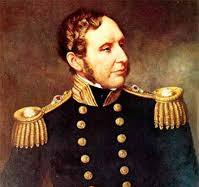
Vice-Admiral Robert FitzRoy.

Born 5 July 1805, Suffolk, England

Died 30 April 1865 Norwood, England.

In October 1859, the steam clipper Royal Charter was wrecked in a strong storm off Anglesey, Wales 450 people lost their lives. In response to this loss, FitzRoy introduced a warning service for shipping in February 1861, using telegraph communications.

Sadly, FitzRoy didn’t live to see his ideas become a permanent fixture of British life; he killed himself in 1865, in part because of his frustration at failing to set up a regular service. (2)

The shipping service was only discontinued during and following WW1 between 1914 and June 1921. During WW2, it was discontinued between 1939 and 1945.

The shipping forecast is heard by local fishermen all over the British Iles, Scotland Wales and further afield and Its tune is repetitive, assisting in its role of serving as a signal for sailors tuning in to be able to easily identify the radio station.

This delightful music above brings back happy memories for me, listening to the radio as a child in Plymouth Devon England, where I was born. “Dogger, Fisher, German Bight, North Utsire and South Utsire” – coastal regions near Norway – although I had no idea where these exotic names were, it was wonderful to imagine. 

Just look at some of the unusual names on the map, it was always a thrill to hear ‘Plymouth’ mentioned.
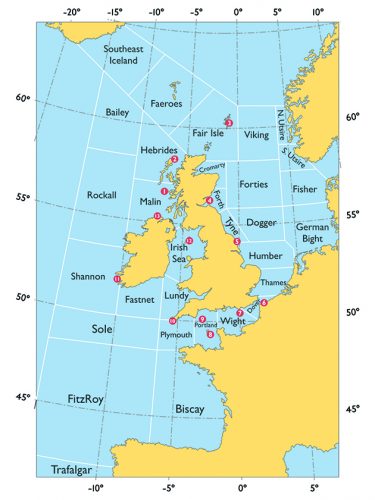
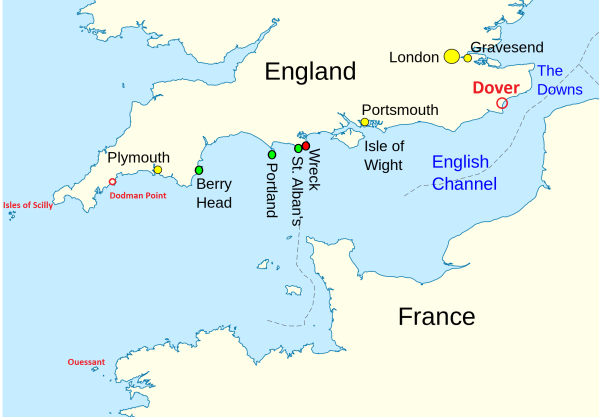
The sea areas match the forecast areas used by other North Sea countries, though some names differ. The Dutch KNMI and Norwegian counterpart, names the Forties “Fladen Ground”, while Météo-France uses “Pas-de-Calais” for Dover, “Antifer” for Wight “Casquests” for Portland and “Ouessant” or ‘Ushant” for my home town, Plymouth. Because of the unusual name for Plymouth, I also learned a fascinating piece of French history.

The Ouessant (or Ushant) is a breed of domestic sheep (Could that be a French insult?) from the island of Ouessant off the coast of Brittany but also the name of a French Submarine). Ushant is a French island at the southwestern end of the English Channel which marks the westernmost point of metropolitan France.  

It belongs to Brittany and in medieval times, Léon. In lower tiers of government, it is a commune in the Finistère department. It is the only place in Brittany, save for Brittany itself, with a separate name in English.
Even today, if I cannot sleep, I still listen to BBC Radio 4 in the early hours of the day and catch the Shipping Forecast as it lulls me to sleep.

Unfortunately, from this year, 2024, it is expected that the Shipping Forecast will no longer be broadcast on long wave (LW) due to the closure of the LW platform. This announcement was updated on the 4th of April 2023 due to the BBC amending their original announcement on the future of the LW Shipping Forecast. The LW broadcasts are expected to end in 2024, but a final decision has not yet been made. (4)

Listeners are reassured by the thought that, somewhere out at sea, British fishers are patiently waiting by their radios to find out whether there is a gale warning in Rockall or Cromarty. However, the slightly less romantic reality, according to Mike Cohen of the National Federation of Fishermen’s Organisations, is that his members have not needed Radio 4 for decades.

Modern fishers have far more accurate devices to warn them about the wind and rain: “Even the small 15-metre boats in Bridlington have satellite internet these days. I’ve had video calls from people in the middle of the sea.” (5)

Some interesting quotes below about the shipping forecast: 

“The Shipping Forecast is immensely popular with the British public; it attracts listeners in the hundreds of thousands daily – far more than actually require it.[18]

In 1995, a plan to move the late-night broadcast by 12 minutes triggered angry newspaper editorials and debates in the UK Parliament and was ultimately scrapped.[19]

Similar outcry greeted the Met Office’s decision to rename Finisterre to FitzRoy, but in that case, the decision was carried through.[20]

Peter Jefferson, who read the Forecast for 40 years until 2009, says that he received letters from listeners across the UK saying that the 0048 broadcast helped them get to sleep after a long day.[4]

The Controller of BBC Radio 4, Mark Damazer, attempted to explain its popularity: 

“It scans poetically. It’s got a rhythm of its own. It’s eccentric, it’s unique, it’s English. It’s slightly mysterious because nobody really knows where these places are. It takes you into a faraway place that you can’t really comprehend unless you’re one of these people bobbing up and down in the Channel.[18]

Zeb Soanes, a regular Shipping Forecast reader, described it thus:

“To the non-nautical, it is a nightly litany of the sea. It reinforces a sense of being islanders with a proud seafaring past. Whilst the listener is safely tucked-up in their bed, they can imagine small fishing-boats bobbing about at Plymouth or 170ft waves crashing against Rockall.[21]

….and many more here:

https://en.wikipedia.org/wiki/Shipping_Forecast

SOURCES

(1) https://en.wikipedia.org /wiki/Shipping_Forecast#Coastal_weather_stations_and_inshore_waters

(2) https://www.countrylife.co.uk/out-and-about/10-things-about-the-shipping-forecast-164341

(3) https://en.wikipedia.org/wiki/Ushant

(4) https://www.pbo.co.uk/news/no-more-shipping-forecast-on-lw-from-2024-75844

(5) https://www.theguardian.com/media/2022/jun/03/shipping-forecast-radio-4-long-wave-broadcast
Who is Henry Boggie?

Henry Boggie is my great-grandfather, but he was never really part of the family.

My grandmother, Elspeth Mill Boggie Orrock was born in 1875 in Arbroath in County Angus, Scotland. Her mother, Annie Linn Orrock, registered the birth and gave Elspeth her surname Orrock but she also gave Elspeth the name Boggie. The registration notes that Elspeth was illegitimate as her parents were not married.1

In 1881, when Elspeth was 6 years old, Annie Linn, still residing at 32 East Mill Wynd where she had given birth to Elspeth, instituted a civil paternity suit against Henry Boggie in the Sheriff Court.  On 11 September 1882, a decree was issued by the Sheriff Court, stating that the birth registration be corrected to include Henry Boggie as Elspeth’s father.2

Paternity cases were usually attempts to make the father pay child support and we can assume that this is probably why Annie Linn sued Henry for paternity.3 There is no evidence that Henry and Annie every lived together.

The censuses show that Henry lived with his mother until at least 1891. He worked as a mason and remained in Arbroath his entire life. He died fairly young, at 53. The registration of his birth says that he was single.4 It is unlikely that he fathered any other children.

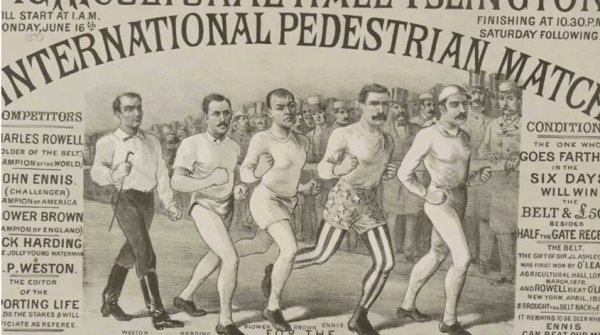
The records indicate that Henry led a quiet life, living in the same city all his life. However, Henry did practice an unusual sport, pedestrianism. In the 19th century, he would have been called a ped. At the time, pedestrianism was popular in Scotland and elsewhere. The six-day, 450-mile race usually began on a Sunday at 1:00 a.m. It started after midnight on Sunday because public amusements were prohibited on Sundays. The athletes walked for six days in a row, in a circle and had to complete the 450 miles. They could run, walk, or crawl. They ate, drank, and napped in little tents at the side. 5

Bloomberg, When Walking was a Spectator Sport, 7 August 2015

The walking matches were a spectator sport, with music and refreshments. It was like a fair. Gambling was also part of the attraction. There were lots of possibilities to place bets, such as the first pedestrian to drop out or the first to achieve a set number of miles. At the time, champagne was considered a stimulant. Some of the trainers (yes, they had trainers) would encourage the participants to drink copious amounts of it.6

Henry seems to have participated in several pedestrian tournaments. He was described as one of the “crack” walkers who participated in the Dundee tournament when he joined the Aberdeen Walking Match in December 1879. It took place in Cooke’s Circus, an equestrian establishment so we can assume that the participants walked around the equestrian arena. Prize money totalled £40 (about £6,000 today) and the winner won the champion belt of Scotland.7

On March 8, 1880, Henry competed in the Perth Grand Pedestrian Tournament. The thirty-three participants hailed from England and Scotland. The format of this tournament was that the men would walk or run between eleven o’clock in the morning and stop at eleven o’clock in the evening. First prize was £25 (about £3,800 today). Jostling, hindering another participant, or using bad language would result in disqualification.  Reserved seats were two shillings, second seats were one shilling, and third seats were a sixpence. A musical band was in attendance. Gambling was prohibited.8

The newspaper articles that list Henry’s participation in the Dundee, Perth, and Aberdeen tournaments are just a glimpse into this interesting sport. Not only did the participants travel to compete in these tournaments, the six-day races would have been quite exciting and exhilarating. There is no indication whether or not Henry ever won prize money, but still, he was a “crack” competitor.

  1. Scotland’s People, National Records of Scotland, Statutory Registers of Birth, 1875, District of Arbroath, County of Forfar, Elspeth Mill Boggie Orrock, retrieved 12 January 2018.
  2. Register of Corrected Entries for the District of Arbroath in the County of Forfar, dated 11 September 1882, directing that the defendant, Henry Boggie, Mason, should appear on the registration of birth of Elspeth Mill Boggie Orrock, in possession of author.
  3. Traces. Uncovering the Past, Tracing the Fathers of Illegitimate Children in Scottish Court Records, 3 December 2020, https://tracesmagazine.com.au/2020/12/tracing-the-fathers-of-illegitimate-children-in-scottish-court-records/, accessed 22 January 2024.
  4. Scotland’s People, National Records of Scotland, Statutory Registers of Death, 1905, District of Arbroath, County of Forfar, Henry Boggie, retrieved 22 January 2024.
  5. BBC, The Strange 19th century sport that was cooler than football, Zaria Gorvett, 28 July 2021, https://www.bbc.com/future/article/20210723-the-strange-19th-century-sport-that-was-cooler-than-football, accessed 22 January 2024.
  6. NPR,  In The 1870s And ’80s, Being A Pedestrian Was Anything But, 3 April 2014, accessed 23 January 2024.
  7. Aberdeen Press and Journal, 29 December 1879, page 4, accessed through British Newspapers on Findmypast, 23 January 2024.
  8. Dundee Courrier and Angus, 8 March 1880, page 1, accessed through British Newspapers on Findmypast, 23 January 2024.

Great-Grandfather Thomas Bevan

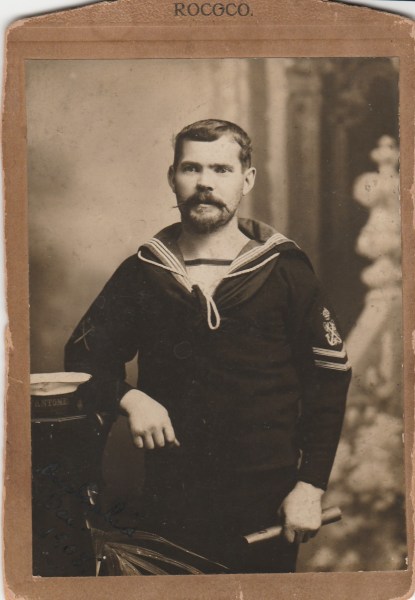
Thomas Bevan Royal Navy, Australia 1908

I was too young to know my maternal Great-Grandfather, Thomas Bevan. However, I do have some memories of him – mainly in his casket – in the front room of his house at number nine, Pellow Place Stoke, Plymouth Devon. The coffin stayed in the house for 7 days before the burial. My gran said I had to kiss him goodbye so that I would have pleasant memories of him and no nightmares!

Thomas was born in the little ancient town of Okehampton in West Devon on the Northern edge of Dartmoor and had a population of less than 6,000 in 2011.

The name Okehampton means settlement or estate (tun) on the River Okement and was founded by the Saxons. The earliest written record of the settlement is from 980 AD. The early form of the name Okementone is recorded in the Domesday Book of 1086, and later in 1167 and 1275 as Okemento(a).

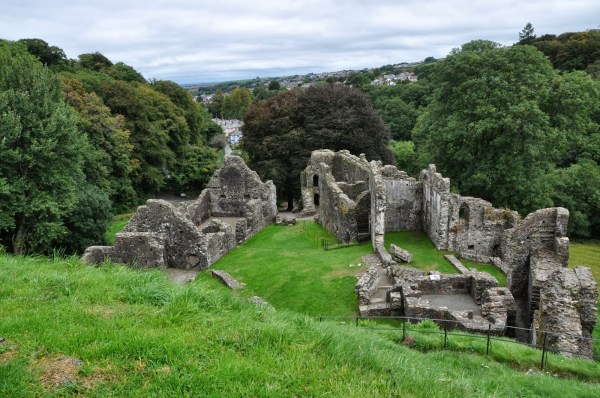
Like many towns in the West Country, Okehampton grew on the medieval wool trade. Notable buildings in the town include Okehampton Castle, now a ruin, established by the Norman Sheriff of Devon, Baldwin FitzGilbert. following a revolt in Devon against Norman rule.

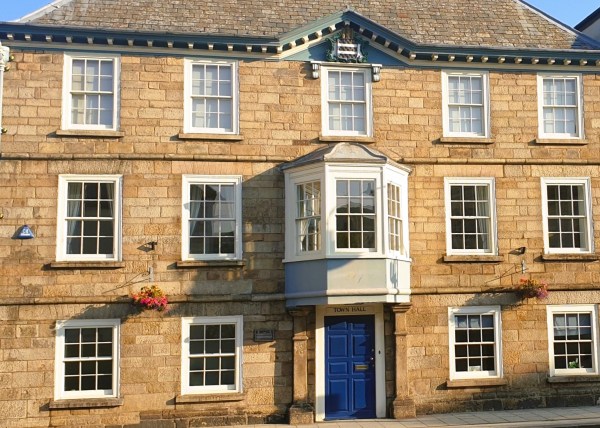
The 17th-century Okehampton Town Hall.

My Granny used to pronounce it as “Okenton”. Apparently, as late as the 1930’s the older people of the district pronounced it “Okington” or “Okenton” I asked Granny why she said it that way, and she said that was how her Father pronounced it. (1)

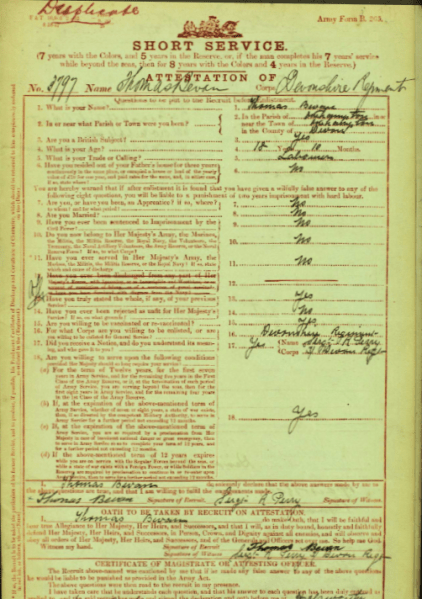
On the 18th of October, 1893, when Thomas was 18 years and 10 months old, he joined the Devonshire Regiment for ‘Short Service’.

The term “short service” refers to a type of enlistment in the British Army, introduced in 1870. It allowed soldiers to serve for a shorter time than the standard 12 years of service. Thomas served for eight years and then joined the Royal Navy at age 25.

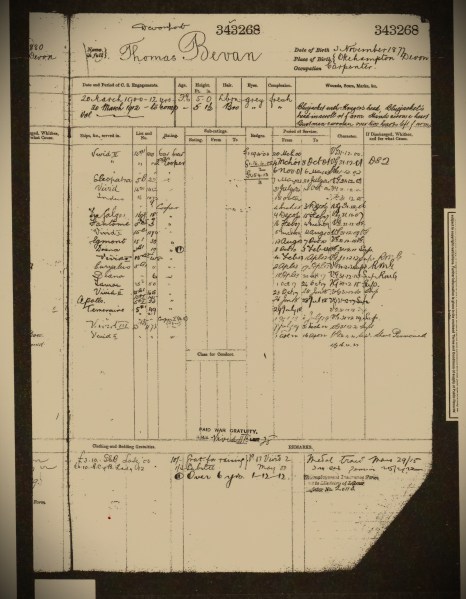
According to his records, when he joined the Royal Navy for a 12-year engagement on the 20th of March 1900, two years were added to his birth year. He was born in 1875 but his Royal Navy service Records show 1877.

Thomas became a Cooper and Master Carpenter on HMS Vivid II. This was a shore establishment, in the Devonport Dockyard in Plymouth, where I was born and lived. He may have learned of the rules regulations and history of the Royal Navy whilst there and probably picked up the basics of his trade too. According to his Service Record below, he served on many different ships and finished his service 12 years later, also on HMS Vivid III. (2)

Thomas Bevan’s Royal Navy Service Record

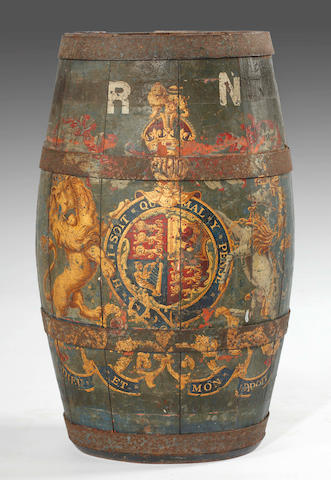
Granny told me that Thomas made and repaired wooden barrels, casks and other containers. The daily Rum ration for the Royal Navy, called the ‘tot’ for the crew was stored in a barrel such as Thomas would have made. The daily tot was abolished in 1970; I remember it made headlines in England. The reason was concerns that the intake of strong alcohol would lead to unsteady hands when working machinery.

A Scarce Royal Navy Rum Barrel made of English oak painted overall in blue faded to green on the front. Bound with four iron bands, the front was painted with post-1901 Royal Arms and R.N. and retained trace imprints of earlier bands.

Thomas lived with his wife, Lilian, their daughter Edith O’Bray (my Granny) and her husband Percival Victor (my Grandfather) in the early 1950’s in Plymouth at number nine Pellow Place Stoke. I lived with my parents five doors down from them at number four.

Although my Granny, Edith was born in 1900, her mother Lillian was single. Lillian’s father, a gardener named Thomas Symons, went to the Royal Navy to find the child’s father. Thomas had no idea he was a father as he was at sea for three years. When Thomas did arrive home on HMS Cleopatra in 1904 he married Lillian and the family went on to have six more children. Granny was already four years old then. The following link explains those circumstances.

https://genealogyensemble.com/2015/11/18/the-family-secret/

My Granny, his daughter, told me that her father tragically died in her house, whilst asleep in his chair. Everyone had gone shopping and when they arrived home, the house smelled of gas and Thomas was dead. Apparently, gas had leaked into the house, killing him. She told me he was a kind, quiet man.

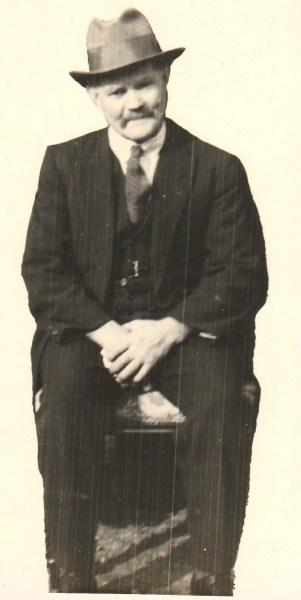
The photo below of him at 71, was taken about one year before his unfortunate death on the 31st of May, 1947.

Great-Grandad Thomas Bevan

SOURCES

(1) https://en.wikipedia.org/wiki/Okehampton

(2) https://en.wikipedia.org/wiki/HMS_Vivid_(1891)

(3) https://en.wikipedia.org/wiki/Okehampton_Town_Hall

The Royal Navy in the year 1900 had several tradesmen who were responsible for the maintenance of the ships and their equipment. One such trade was that of a cooper. A cooper is someone who makes wooden, staved vessels, held together with wooden or metal hoops and possessing flat ends or heads. Examples of a cooper’s work include casks, barrels, buckets, tubs, butter churns, vats, hogsheads, firkins, tierces, rundlets, puncheons, pipes tuns butts, troughs pins and breakers. 

Bottles, Boats and Blocks

by Claire Lindell

In the late nineteenth and early twentieth century, many enthusiastic young men with entrepreneurial spirits set out to make their fortunes. L.J Jodouin, my maternal; grandfather was among them. It was said that where there was a need he found a way to fulfill it. L.J.’s business ventures were a great success.

Louis Joseph Jodouin was born in 1861 in Montebello, Quebec, the third of five children of Joseph Jodouin and Leocadie Fortin. When he was a young man his family moved to Hull, Quebec where he was schooled by the Christian Brothers and attended college in nearby Ottawa.

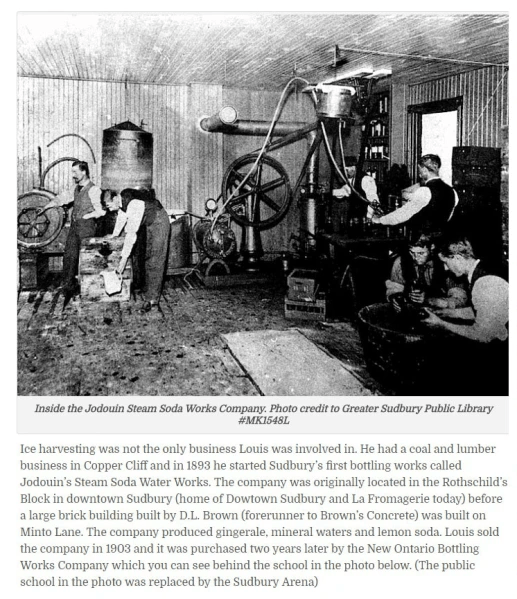
In 1891, at the age of twenty-seven, he went to Sudbury, Ontario where in nearby Copper Cliff prospectors found nickel and mines were being opened. It is there he started his first enterprise, L. J. Jodouin Bottling Works. With six employees he bottled and sold ginger ale, lemon soda, cream soda, and mineral water. Due to the influx of miners, the Sudbury area was a new and growing community, and L.J.’s business was profitable

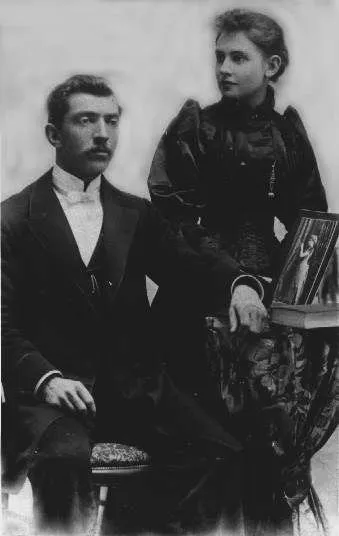
            Louis and Louisa

              1893

With financial security assured the young man decided it was time to seek a bride and start a family. Although the couple had the same grandfather and different grandmothers, they received dispensation and were married in Saint Columbkille Cathedral in Pembroke, Ontario in January of 1893. The young couple settled in Sudbury where they built their home and raised nine children, three boys and six girls.

In 1903 the bottling works were sold to the Taylor and Pringle Company of Owen Sound. His next venture was an ice business. He built a huge icehouse in the rear of his home along with a stable for the horses. At the time people had wooden iceboxes where the top section was lined with metal and large blocks of ice were placed within. Foods that needed to be kept cold were placed on shelves below. Ice was delivered regularly in the same manner as milk and bread from house to house by horse-drawn wagons and later years by truck.

Over the years Louis Joseph had many enterprises. He built a boathouse on Lake Ramsey, a large lake nearby. He rented boats and canoes. He ran a water taxi service and a huge gasoline-powered barge to transport large quantities of building and personal supplies for the people building cottages along the lake. The boat house was also used for storing huge blocks of ice during the winter months.  

The ice business was my grandfather’s lifelong enterprise and the most successful. A key to the success was the annual contracts with both railways. The Canadian Pacific and the Canadian National Railways. This arrangement continued until the mid-1940 when the trains acquired powered refrigeration.

My cousin Madelyn Percival described how Grandfather would spend his days.

  “In the winter months, Grandfather would often go out on Lake Ramsey to oversee the ice operations wearing his long raccoon coat and fur hat and fur mitts, but for the most part, he ran the business from a rocking chair near the dining room window overlooking the backyard where the horses were kept so he could see all the action!”

He was a good employer, and an active citizen, a town councilor, a school trustee, a voluntary fireman, and a member of the Board of Health. He played in the town band, sang in the church choir, and was an avid lacrosse player until he was hit in the head and lost his hearing.

“L.J. bought one of the first motor cars in Sudbury, although he could not drive because of his deafness. His eldest daughter, Alice Percival was the first woman driver in Sudbury and for many years she was his chauffeur.”

            In 1943 on the eve of his seventy-ninth birthday Grandpa Jodouin passed away. His son, Arthur, continued the ice business into the late 1950s and early 60s supplying the many cottagers in the area until electricity became available.

References:

  • Ancestry.com Quebec, Canada Viral and Church Records. Drouin Collection 1921-1968 database online.
  • Sudbury Star newspaper article., Author, Gary Peck. “The Not-so-distant Past, Jodouin Steam Soda Water Works.” October 2, 1981
  • Ancestry.com. Ontario, Canada, Catholic Church Records. Drouin Collection 1802-1967 database online.
  • Archives of Ontario, Toronto, Canada Registration of Marriage, 1869-1928 Series MS032:Reel 70 source ancestry.com and Genealogical Research Library( Brampton, Ontario, Canada Ontario Canada Marriages Ancestry.com Operations In.,2010.
  • Excerpts from an interview with the author and her cousin Madelyn Percival Smith , Louis Joseph’s granddaughter, Toronto Canada, August 2010.
  • Below is a video: cutting ice on Lake Ramsey

This biographical sketch of my maternal grandfather was first published in our book “Beads in a Necklace” published in 2017 by our Genealogy Ensemble group. It seems appropriate to include it in our ongoing blog.

Napoleon Bruneau – A Tragic End

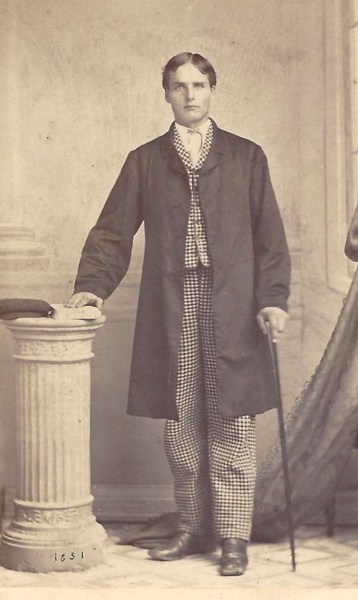
Napoleon Bruneau

Napoleon Bruneau died tragically on a Sunday night in 1916. The La Presse newspaper reported the train accident at Delson Junction on the CPR line but no details were given. This was not far from his home in St-Constant, Quebec. Was he coming home or going to Montreal? What happened? Did he fall on the tracks? He was almost 72 years old so he should have known better than to get in front of a train!

He and his twin sister Mathilde were the 5th and 6th children of Barnabe Bruneau and Sophie Marie Prudhomme. He lived his whole life in St-Constant, south of Montreal. It seems he inherited the family farm after his parent’s deaths. 

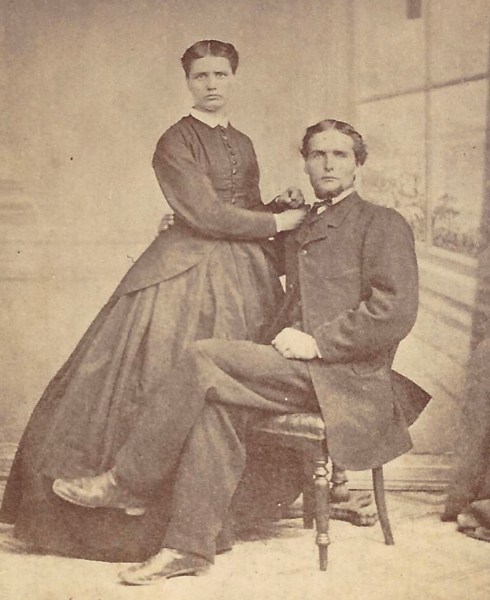
Napoleon and his sister Sophie Bruneau

Descriptions of Napoleon included being a farmer, a Free Will Baptist, a veterinarian and a justice of the peace. He was appointed a justice of the peace in 1902 for the district of Montreal which included St-Constant. It is possible he studied to be a veterinarian and didn’t just learn as an apprentice. A school for veterinarians was established in Quebec in 1866 with one of his cousins, Orphyr Bruneau as one of the lecturers. In 1876 courses were also offered in French when the school was under the McGill University Department of Agriculture. The Veterinary school, later associated with The University of Montreal, moved to Oka in 1928 and to its present location in Saint-Hyacinthe in 1947.

One would think that a tall handsome man with many interests and a farm would easily find a wife, so I found it strange that he didn’t marry until he was 66. His brother, Reverand Ismael Bruneau performed the ceremony at his Protestant Church, L’Eglise St Jean Baptiste de Montreal. Napoleon’s wife Emilie Beauchamp was 42 at the time, so it isn’t surprising that they didn’t have children. Emilie was born in Grenville, Quebec, on the Ottawa River. She probably met Napoleon in Montreal where she lived with her parents and sister Lily. Emilie had an uncle who was a French Protestant minister so it is quite possible that they met through the church.

My great-grandfather, Ismael Bruneau was upset with Emilie after Napoleon died as he wrote in a letter to his son Sydney.

You know your Uncle Napoleon made me the heir of all his estate except for $500, which I must give after the death of his widow as follows; $300 to my sister Helene, $100 to my sister Virginie and $100 to my sister Elmire. But his widow has everything during her lifetime. As she is a great deal younger than I, it is almost probable that I shall never enjoy this myself. They say she is already neglecting the house which is going to ruin and according to the law she must maintain it in good condition as it was at the time of the death of her late husband.”

Unfortunately, Ismael didn’t enjoy any of his inheritance as he died two years after Napoleon. Emilie only died in 1951. I don’t know what happened to the property as she married Emilien Frechette in 1929 and he had his own house and farm. Emilien had been married to two other Bruneau women, Emilina Bruneau, Ismael’s sister and and Ida Girod Bruneau Ismael’s wife.

Napoleon was buried in Mount Royal Cemetery with his sister Helene, her husband Celestin Lachance and their daughter Antoinette and not with his twin Mathilde in the Baptist cemetery in Grand Ligne. Emilie isn’t buried with Napoleon or even with Emilien Frechette and his first two wives, rather her final resting place is with her parents in the Beauchamp Cemetery in Marelan in the Laurentians near Grenville.

I haven’t yet found answers to questions about his tragic end.

Notes:

Napoleon Bruneau Obituary: LaPresse January 16, 1916.

Napoleon Bruneau’s death determined to be accidental. The Montreal Gazette, Tuesday, January 25, 1916. Page 7.

when searching for information on the train accident I found another Napoleon Bruneau who was also killed by a train. This accident happened in Huntington, Pennsylvania in 1908. He was decapitated and horribly mangled.

Appointed Justice of the Peace: Montreal Star Monday, June 23, 1902. page 10. Accessed Newspapers.com March 20, 2023.

Letter from Ismael Bruneau to his son Sydney Bruneau. Quebec, February 21, 1917. A copy in the hands of the author.

Emilie Beauchamp burial https://www.findagrave.com/memorial/167478027/emily-esther-beauchamp

accessed November 25, 2023.

Orphyr Bruneau one of Napoleon’s first cousins the son of his father Barnabe’s brother Medard.

There are notarial documents, Quittances which are receipts where Napoleon gave most of his siblings 300 piastres each, beginning two years after his mother died. These dispersals occurred from 1894 to 1904. Some received less and I haven’t found the documents for his sisters Aglae and Sophie. His brother Selene had already died and had no heirs. I am unsure if these were money paid to his siblings because he received the farm.

Three hundred piastres were 300 dollars. This would be the equivalent of over $10,000 today. Quebec used the word piastres on official documents into the 20th century. Even later it was used as a slang equivalent to the English word buck.