Part Two of Remembering Great-Grand Uncle Arthur Symons – The Price of Survival

This is part two of my Great-Grand Uncle Arthur Symons’s experiences in WWI. Arthur emigrated to Canada in 1901, arriving in Halifax, Nova Scotia, on the SS Soman. (1)

When WWI broke out, Uncle Arthur enlisted in the 56th Battalion Canadian Over-Seas Expeditionary Force in 1915 in Calgary. He was then shipped back home to the UK to train. While there, he visited his sister Lilian and her daughter Edith, my Grandmother.
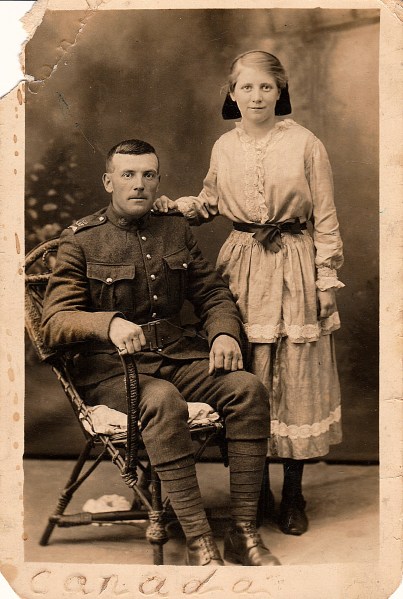
Arthur Symons with Edith Bevan his niece, my Granny.

Granny was 15 years old.

At Salisbury, Wiltshire, England, the Canadians trained for four months, most of it in terrible mud, as England experienced one of its wettest winters in decades. While most troops stood up well to the awful conditions, Canadian equipment did not. Much of it was soon discarded in favour of British types. The Canadians learned basic soldiering in England after a hasty mobilization and a difficult, uncomfortable winter. Their real training would come at the front.

After training, Arthur was sent to France and later Belgium. At the Third Battle of Ypres, better known as Passchendaele, the troops fought there from July to November 1917. Both sides suffered appalling conditions and heavy casualties. “The name Passchendaele has become synonymous with mud, blood and futility”. Arthur was wounded in 1917 at Passchendaele. (2)

The Government of Canada Library and Archives search had Arthur’s Attestation Papers and detailed medical treatments at “No. 4 General Hospital Dannes Camiers” (2) among many other hospital visits.
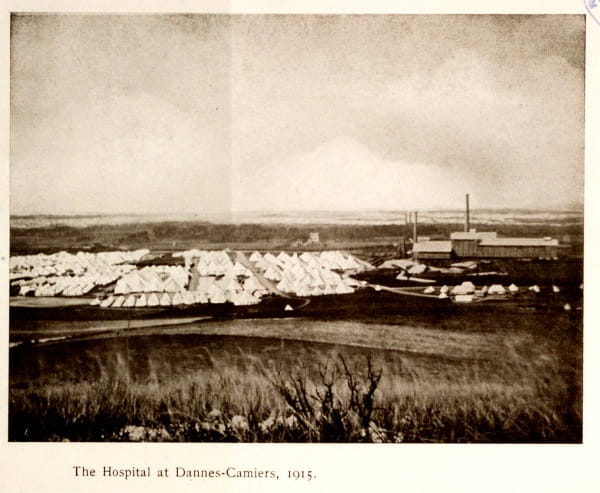
Searching for Dannes Camiers Hospital, led me to the Royal College of Surgeons of England and the following information. (2)

Shortly after the war broke out, McGill University organised the ‘No. 3 Canadian General Hospital’ to serve in France. The hospital was established at Dannes Camiers in the Pas-de-Calais area on 19th June 1915 under canvas. A staff of 35 Officers, 73 Nursing Sisters and 190 rank and file. Life under canvas that cold wet November was tough, with deep mud, storms, frost and collapsing tents. The conditions so undermined the health of one Lieutenant Colonel Yates that he was invalided to England where he died the following year.

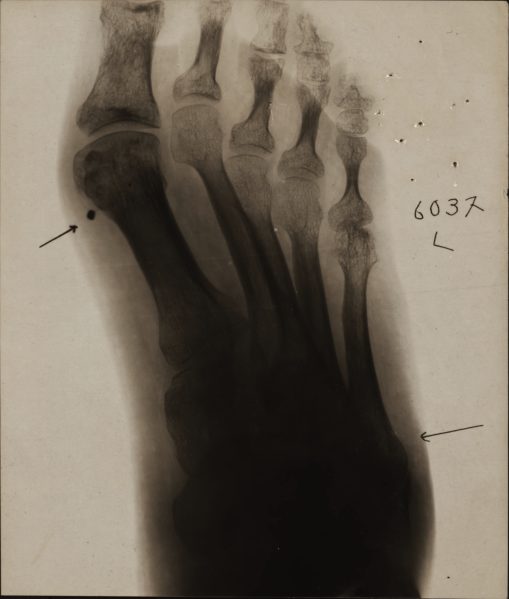
Arthur’s admission to the Dannes Camiers Hospital was on the 29th of October 1917. The first line of his medical records states he is ‘Dangerously ill’ with GSW (gunshot wounds) R. Leg fracture and left foot.

By the 16th of November, Arthur is now ‘seriously ill’ There follows 99 pages – starting with his Attestation Paper – then very detailed treatments and x-rays from various hospitals in France, England and Alberta, Canada. It makes for fascinating reading.
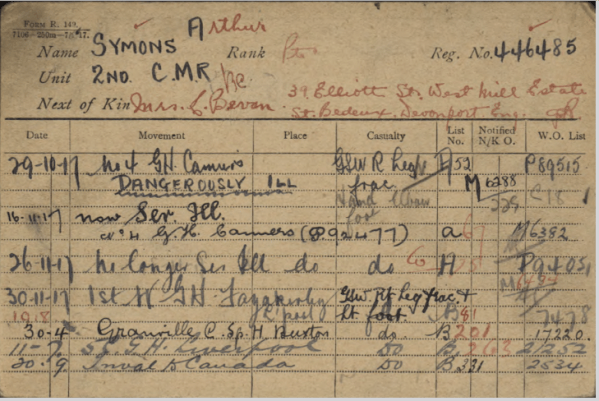
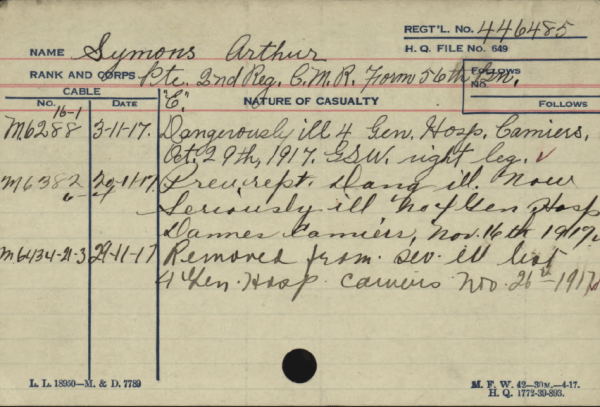
Three pages from Arthur’s 99 pages of hospital notes and X-rays.

On the 30 of November 1917, Arthur was transferred to the 1st West General Hospital Fazakerly, Liverpool England. After 5 months of treatment, Arthur was again moved to the Canadian Special Hospital Buxton, Derbyshire, England.

NOTE: Amongst the patients at Buxton, was Frederick G Banting, who would return to Canada after the war to continue research into diabetes and the use of insulin in its treatment, for which he was awarded the Nobel prize. (3)

His last transfer was on July 11, 1918, to the 5th Canadian General Kirkdale, Liverpool, England.

Eventually, on the 20th of September, 1918, Arthur was Invalided to Canada. He was sent to the Ogden military convalescent hospital in Calgary, Alberta. A short visit to the Calgary General Hospital, then back to Ogden.

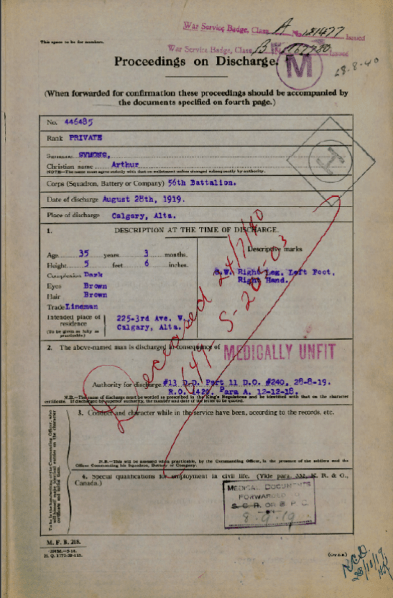
Finally, after nearly 2 years at 5 different hospitals, Arthur was sent to the Banff Rest Camp, and discharged on August 28, 1919, medically unfit for further service. He was 35 years old.

Arthur went on to marry and have two children and was employed in the Civil Service

This rather poignant note dashed across his discharge papers state ‘Deceased 24/7/40’
Excerpt from The Calgary Herald, July 26, 1940, page 2
Arthur Symons, 54, of 2409 Centre Street South, died in hospital here Wednesday afternoon. Born in Leicester, England, he came to Calgary 32 years ago and was employed in the civil service for 17 years. He is survived by his wife, Catherine, one son, Arthur, and one daughter, Dorothy.
Alberta Death Reg. #1940-08-201498

Great-Grand Uncle Arthur Symons is buried in Burnsland Cemetary, Calgary Alberta, Canada. (Photo credit Ron Reine)
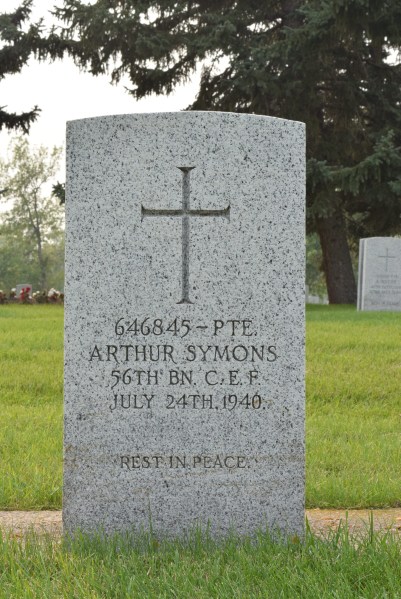
RIP Uncle Arthur.

Part 1 of Great-Grand-Uncle Arthur’s experiences in WW1:

(1) https://genealogyensemble.com/2024/11/11/remembering-great-grand-uncle/

(2) https://www.rcseng.ac.uk/library-and-publications/library/blog/we-will-remember-them-no-3-canadian-general-hospital/

(3) https://buxtonmuseumandartgallery.wordpress.com/2019/12/13/canadian-red-cross-special-hospital-buxton-1915-1919/

(4) Dr. Frederick Banting
Not Just A Kingston Girl

My great-grandparents, Harriet Eva Gould and William Gardiner (WG) Anglin shared 48 years of marriage together, and their lives exemplify the saying “Behind every great man is a great woman.” In many cases, when we look into our family history, finding information about our female ancestors can be tough. After they marry, their maiden names are often forgotten, their careers aren’t recorded, and their lives tend to be defined by their roles as wives, mothers and community participants. Such was the case for Harriet too, as is clear from her obituary.

Mrs. Harriet Anglin – there passed away at her home on 52 Earl Street, on Saturday evening, Mrs. Anglin wife of Dr. W.G. Anglin, deceased, who was before her marriage Harriet Eva Gould, had lived in Kingston since her girlhood days. For the past year and a half, she had been ill. Mrs. Anglin who was of retiring nature, was most widely known through her membership in Sydenham Street United Church.

Surviving her are two sons, Douglas Anglin of Anglin-Norcross Construction Company, Montreal, and Wendling Anglin of the Johnston and Ward firm, Montreal; also three daughters Mrs. McLaren Ewert of Moosejaw, Sask.; Mrs. R. M. Horsey of Montreal and Miss Mary Anglin, secretary to the Principal of Queen’s University; also one sister, Mrs. John Hunter of Goderich and three brothers, George, Harry and William Gould. Ten grandchildren also survive.

Prior to meeting each other, Harriet and WG gained experiences that would serve them well when they married.

Harriet Joins Kingston Society

For the first decade of her life, Harriet grew up as the eldest child of William Gould and Mary Wartman in Ancaster, Ontario. When she was about 11 years old, according to the 1871 census, her parents sent her to Kingston, Ontario, to live with her mother’s sister Susanna, who was married to a wealthy businessman named James Richardson. It’s not clear why they made this decision, but it’s believed that the Gould family couldn’t support all their children. At the same time, Aunt Susanna, who had only sons, longed for a daughter. 

The arrangement worked well for everyone: Harriet was raised in a comfortable home and Aunt Susanna got the daughter she always wanted. While living with her aunt, Harriet received a good education and was introduced to Kingston society. She became known for her connections to the prominent Richardson family and her Loyalist heritage through her mother’s side. This social standing would play a part in her future, especially when she married.

William Gardiner (WG) Becomes a Surgeon

Before their marriage in 1886, WG went to Edinburgh, Scotland, where he learned new surgical techniques from Dr. James Lister, a pioneer in antiseptic surgery. After his return and marriage to Harriet, WG was invited to teach at Queen’s Women’s Medical College. Surgeon and Mentalist

Career and Family Life

WG’s skill and dedication quickly earned him a spot on the prestigious faculty at Queen’s University. By 1887, he was appointed as a Professor of Pathology and head of the Clinical Surgery department. He shared the groundbreaking techniques he had learned in Edinburgh with his students, shaping the future of surgery in Canada. 

He and Harriet had their first daughter, Mary (1888-1979), that same year. In the following years came Susan (1889–1982), Douglas (1890–1955), Wendling (1892–1955) The Stock Broker, and Ruth (1895–1976). It’s believed that Mary and Susan were named after Harriet’s Aunt Susanna.

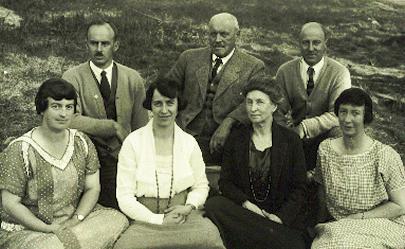
1923 – Douglas, WG, Wendling, Susan, Ruth, Harriet, Mary

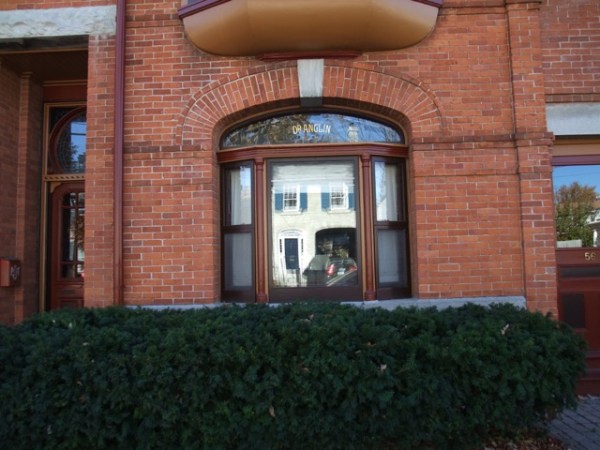
Throughout these years, W.G. ran a private medical practice from their home on Earl Street, which allowed him to spend time with the family. His name was even etched in stained glass in the window of their office building.

52 Earl Street with “Dr. Anglin” etched in top glass


Going to War

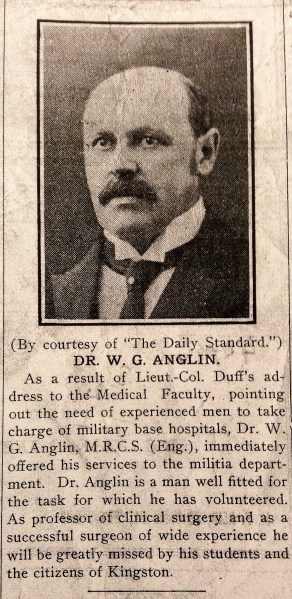
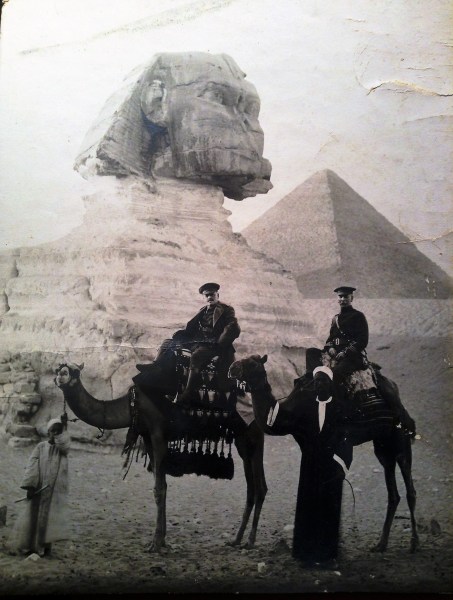
In 1915, WG left his teaching job and volunteered to go to Cairo, Egypt, with the Queen’s Stationary Hospital at 59 years old, in response to a plea from Lieutenant Colonel H.R. Duff, who needed someone with “experience and wisdom.” He caught Malta Fever and had to return to Canada a year later. Although he recovered a bit, the illness affected his health for the rest of his life. Duff, however, died of pneumonia in Cairo.

1915 – Cairo, Egypt, WG on the left camel

Community Leaders

After the war, WG continued working in medicine on a limited basis and served as an examiner for the Canadian Pension Board. He also worked at Kingston Penitentiary, where he introduced medical and administrative improvements and treated the inmates with dignity until he retired in 1928. 

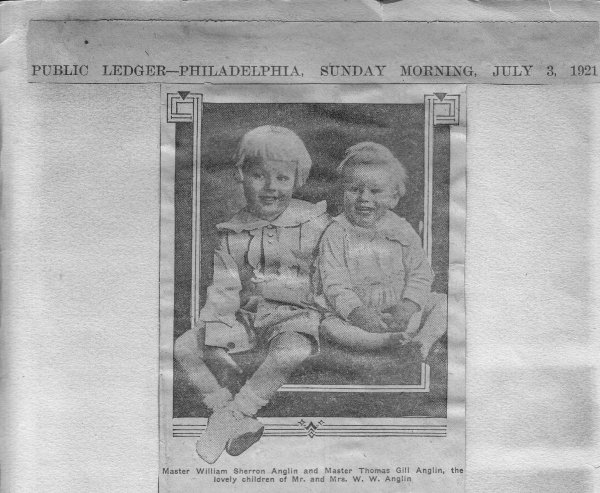
Harriet remained dedicated to her children, their families and her church. As a proud grandmother, she tucked a newspaper clipping of a photo of my father and his brother into a random book where it slipped out 90 years later into the hands of a distant cousin who then made contact with me!

1921 newspaper clipping of my Uncle Bill and my father Tom Social Media – Then and Now

In their later years, Harriet and WG were well-respected members of their Kingston community until he died in 1934. She died only two years later and they are now buried together in the Anglin plot at Cataraqui Cemetery.

Mulholland Bros. Hardware Merchants

In 1878, two brothers from Montreal opened a hardware store in Winnipeg, Manitoba. The Prairie city, known as the “gateway to the west,” was growing rapidly, and for several years the store appears to have been profitable, however, it went bankrupt in 1889. After that, the brothers’ lives took very different paths.

Mulholland Bros. Hardware Merchants was owned by Joseph Mulholland (1840-1897) and his younger brother Henry (1850-1934). Hardware must have been an easy choice for them since their father and several of their uncles had been very successful in the hardware business.  

Their father, Henry Mulholland (1809-1887), was born in Lisburn,1 near Belfast in the north of Ireland, and immigrated to Montreal as a young man. He soon found employment with a wholesale and retail hardware firm owned by Benjamin Brewster. By 1851 he was a partner in the Brewster and Mulholland hardware company. He later went into partnership with a member of the extended Workman family, Joel C. Baker. The hardware firm of Mulholland and Baker was in business from 1859 to 1879.

Henry Mulholland senior married Ann Workman (1809-1882) in Montreal in 1834. The Workman family had also come from the Lisburn area. Four of Ann’s brothers were in the hardware business, including William Workman (1807-1878) and Thomas Workman (1813-1889),who were partners in the firm of Frothingham and Workman, reputed to be the largest wholesale hardware company in Canada. The country’s population was growing, and hardware and building materials were in great demand.  

Henry and Ann Mulholland had several children who died very young, but two daughters (Ann and Jane) and three sons (Joseph, Henry and Benjamin) lived to adulthood. Both daughters remained in Montreal. Ann married Dr. George Henry Wilkins, while Jane and her husband, banker John Murray Smith, were my great-grandparents. Son Benjamin died of tuberculosis in Toronto in 1882.

The 1870 Canadian census found Joseph, 29, and Henry, 19, living in Montreal with their parents. Joseph was identified as a merchant, probably employed by his father’s firm. According to one newspaper account, he lived in Guelph, Ontario for a time prior to going to Winnipeg.2 Henry also worked for the family-owned hardware companies at the beginning of his career. Then, in 1878, Joseph and Henry headed to Manitoba. Many families were doing the same thing, attracted by the vast expanses of prairie farmland

The city of Winnipeg, incorporated in 1873, was a service center for the surrounding grain farms and, about a decade later, it became an important stop on the newly built Canadian Pacific Railway. The first CPR train steamed into the city in 1886. Optimists envisioned Winnipeg as a future “Chicago of the North”. In 1873, the city had a population of about 1900 people; that had risen to 8000 by 1881 and 42,000 in 1901.

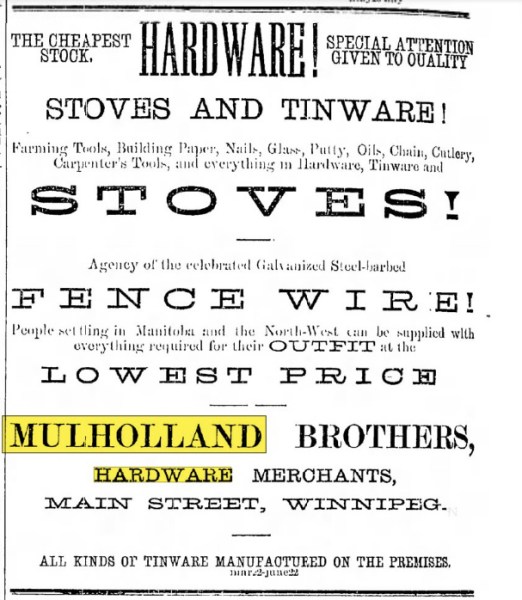
When Joseph and Henry opened their Winnipeg store in 1878, it faced stiff competition, and the large newspaper advertisement announcing the opening of Mulholland Bros. ran alongside ads from several other hardware stores. Over the next few years, the newcomers focused on basic items like fencing wire and wood stoves.

The store advertised regularly in the local newspapers. source: Manitoba Free Press, p. 4, May 26, 1880, Newspapers.com

Running a business with a sibling had its challenges. In a letter to his father in 1884, Henry must have mentioned that he and Joseph did not see eye to eye on a bookkeeping entry. Henry senior replied, “Joseph is a good-hearted, generous fellow, and I trust that you and he will get on cordially together, as it will be for your natural interest to continue the business without any wrangling and refer any differences of opinion between you and him to your Uncle Thomas [Workman] and me who have had long experience in co-partnership businesses and in keeping accounts between the copartners.”3

Henry senior continued to offer sensible advice and encouragement: “I am glad to hear that you are making no bad debts and that you have no large accounts due to you in the books and that your stock is well selected and next to this never be tempted to offer any customer to increase his indebtedness by selling him more goods on credit in hope of obtaining payment of a past due debt.”

It appears that Joseph was the more outgoing sibling. His name appeared frequently in Winnipeg newspapers as he was involved with the Board of Trade. He was for a time president of the Winnipeg Liberal-Conservative Association, and he was briefly a candidate for mayor of Winnipeg, but withdrew his name. Several newspaper clippings following his death described him as a very likeable fellow. 

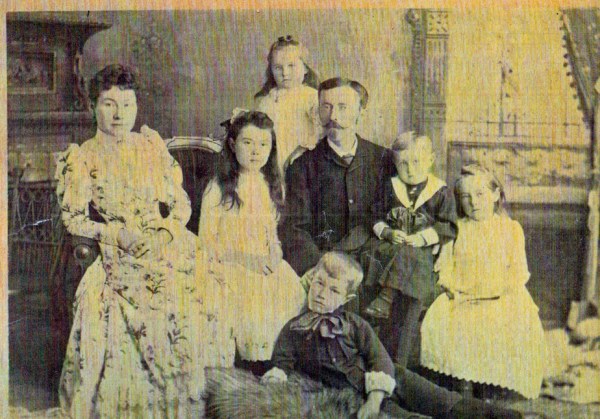
Meanwhile, Henry’s name never appeared in the newspapers, so perhaps he was the quiet one, busy running the store. It is also possible he was distracted by family obligations. Henry was married to Ontario-born Christina Maria Shore and the couple had six children.

Henry and Christina Mulholland and five of their six children. source: Mulholland family collection.

On June 25, 1885, Mulholland Bros. ran an ad in the Manitoba Daily Free Press listing the many new items they had in stock, including blacksmith and livery stable supplies as well as articles for barbers, butchers, hunters and gardeners. They also carried bird cages and ivory-handled table knives.

Few of Winnipeg’s citizens were wealthy, the local economy was dependent on a good grain harvest, and shipping costs to Winnipeg were high. The business may have over-extended its inventory. In February 1889, a bankruptcy sale notice for Mulholland Bros. appeared in the paper, listing egg boilers and dog collars among the many items to be disposed of.4

Joseph returned to Montreal and, in 1890, he married Amelia Bagg (1852-1943). Amelia had inherited Montreal real estate from her father, Stanley Clark Bagg, and she was an independently wealthy woman. She was generous to family members in need, and in return, she was loved and respected by members of both the Bagg and Mulholland families. For Joseph, marriage to Amelia not only brought companionship, it also brought him a job in the Bagg family business as a real estate agent.

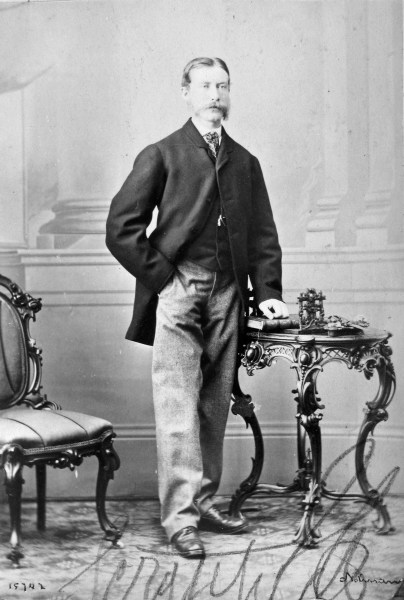
Joseph Mulholland, Montreal, QC, 1865, source: William Notman, I-1757421, McCord Stewart Museum

His good fortune did not last long, however. Joseph died of heart failure brought on by extreme heat in Montreal on July 15, 1897.5

As for Henry, after the Winnipeg store failed, he remained in Manitoba for a time — the family was still there in 1891 when the census was taken — but they eventually moved to Toronto, where Henry continued to work as a hardware merchant. After his death, his youngest son, Toronto lawyer Joseph Nelson Mulholland, commented that Henry had never regained his stride following the bankruptcy.6 When Henry died in Toronto in 1934, at age 84, his obituary did not mention the Winnipeg venture.7

A special thank you to a distant cousin who reached out to me recently with a question about his ancestor Henry Mulholland. Until then, I had never heard about Henry and had no idea Joseph had run a hardware store in Winnipeg.

This article is also posted on my personal family history blog, http://www.writinguptheancestors.ca

See also:

Janice Hamilton, “Henry Mulholland, Montreal Hardware Merchant”, Writing Up the Ancestors, March 17, 2016, https://www.writinguptheancestors.ca/2016/03/henry-mulholland-montreal-hardware.html

Janice Hamilton,  “The Life and Times of Great-Aunt Amelia”,  Writing Up the Ancestors, June 21, 2023, https://www.writinguptheancestors.ca/2023/06/the-life-and-times-of-great-aunt-amelia.html

Janice Hamilton, “The World of Mrs. Murray Smith”,  Writing Up the Ancestors, Feb.24, 2016, https://www.writinguptheancestors.ca/2016/02/the-small-world-of-mrs-murray-smith.html

Sources

  1. “The Late Mr. Mulholland”, The Montreal Star, Feb. 19, 1887, p. 8, Newspapers.com, https://www.newspapers.com/image/740882983/?match=1&terms=Henry%20Mulholland
  • 3. Letter from Henry Mulholland sr. to Henry Mulholland jr., Dec. 8, 1884, Mulholland family collection.
  • 5. “Late J. Mulholland. a man who was cordially liked by many friends in this city”, The Winnipeg Tribune, July 10, 1897, p. 5, Newspapers.com,
  • 6. Letter from Nelson Mulholland to Fred Murray Smith, June 22, 1943, Mulholland family collection.

7. “Henry Mulholland Dies in Toronto”, Montreal Daily Star, Nov. 12, 1934, p. 17, Newspapers.com, https://www.newspapers.com/image/741983911/?match=1&terms=Henry%20Mulholland

A Little About Helene Bruneau

Helene in New York City

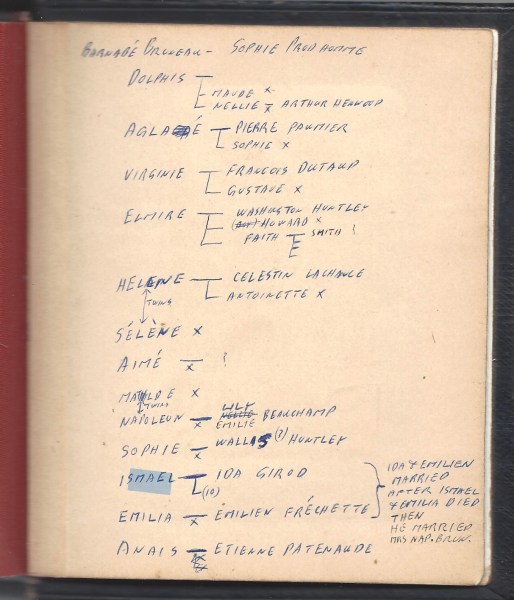
I have written stories about twelve of Barnabé Bruneau and Marie Sophie Prudhomme’s thirteen children. That just leaves Helene (1849 -1929). Helene was child number nine or perhaps number ten. I just realized that she and Selene Joseph were the second set of twins in the family. They were born on December 20, 1849.

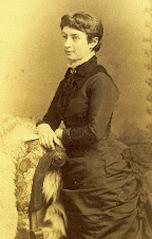
I haven’t found much information about Helene other than she appeared to be a devoted wife and mother. She married at twenty-six but before, had spent some time in New York City as photographs can attest. Was she also a French teacher or governess like her sisters?

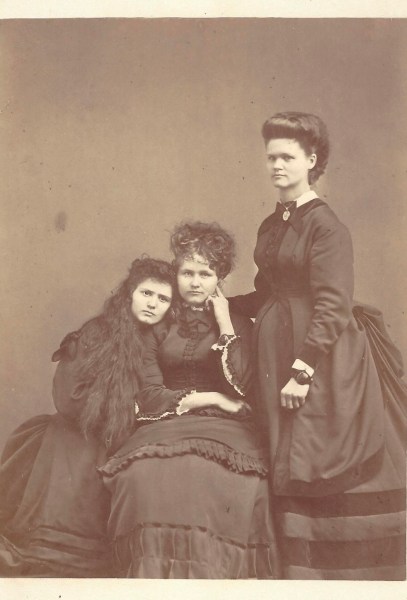
Sophie, Helene and Matilde Bruneau, New York City

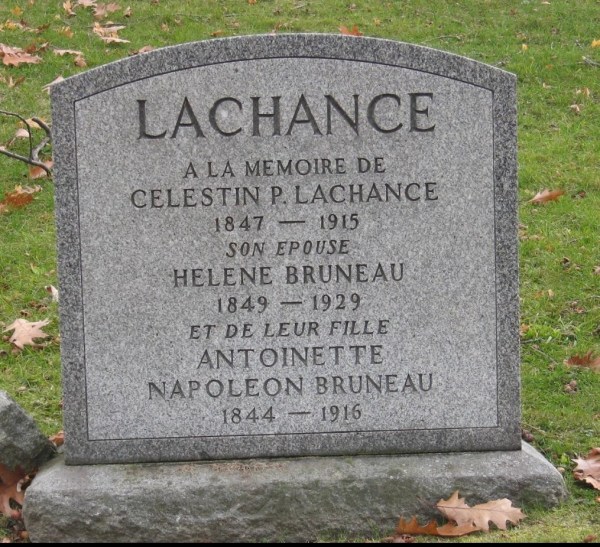
Helene married Célestin Pépin dit Lachance ( known as Lachance). He was born in Joliette (1847-1915) to Celestin Lachance and Elisabeth Payette. His parents converted to Protestantism in 1852 when he was a young child. He attended the l’Institute Evangelique Francais de Pointe-aux-Trembles. After he graduated, he became a Colporteur for two years for the French Canadian Missionary Society. He had aspirations of becoming a minister

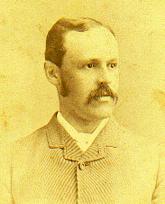
Celestin & Helene Lachance

In 19th century America, the word colporteur (the borrowing of a French word meaning “peddler”) came to be used for door-to-door peddlers of religious books and tracts and is still used today. The Missionary Society trained the colporteurs and future pastors as there wasn’t a French Protestant seminary. Celestin abandoned his studies in 1867, possibly because he had tuberculosis and his doctor recommended he only work outside in the fresh air. If he did have TB, the fresh air did him good as he lived almost another 50 years. He worked all over Quebec in the logging and forestry industry. Helene accompanied him everywhere during their marriage.

Helene & Celestin Lachance and Helen’s sister Anais

Although he gave up missionary work he remained a religious Presbyterian the rest of his life. He read the Bible every morning and night. During his last illness, he read the whole Bible twice in nine months. 

Helene was originally a Baptist as her parents also converted to Protestantism when she was a child. She is later recorded as being a Presbyterian.

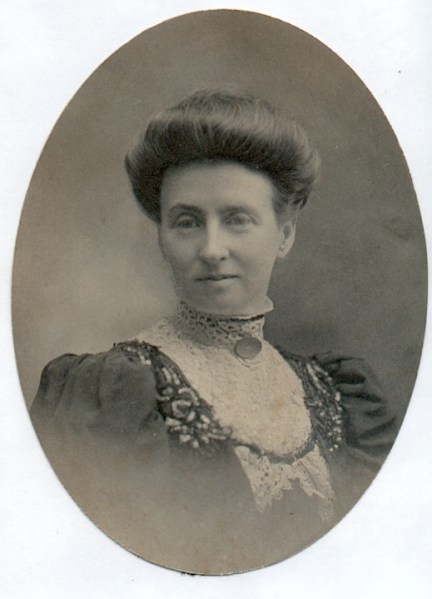
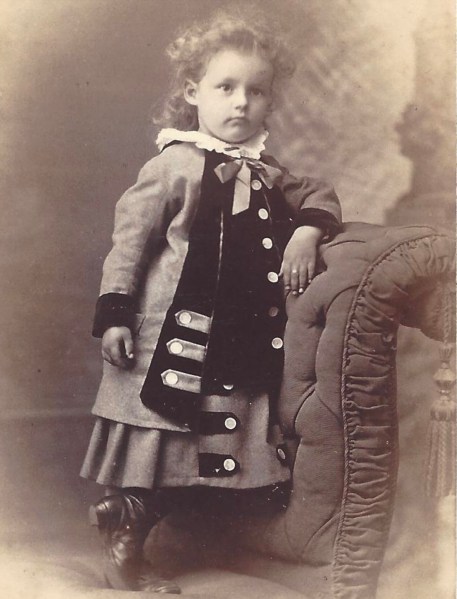
Celestin and Helene had only one daughter, Helene Marie Antoinette (1876 – 1916). This curly-haired child grew up but never married. She attended Royal Arthur School in Montreal. Antoinette attended English schools because the family was Protestant, so she couldn’t attend French Catholic schools. In 1892, she won the prize in French for second intermediate girls, besting Nellie Wilson, who won the awards for most of the other subjects. She didn’t have Antoinette’s advantage of a French background. At the closing of the ceremony, the commissioner said, “It was well to be clever but still better to be good.” Antoinette died at only forty years of age. She lived with her parents her whole life and never seemed to have an occupation.

Antoinette Lachance

After Celestin and Antoinette died, Helene lived in Verdun, Quebec until her death, on June 4, 1929. The family is buried in Mont-Royal cemetery in Montreal along with Helene’s brother Napoleon.

Mount Royal Cemetery Montreal

Notes:

In the back of the little photo album in a list of the children, it actually said twins, which had never registered with me. 

Back page of photo album

1871 Census: Celestin was 22 and living with his parents and sibling in St Charles Borromée, Joliette, Quebec. Year: 1871; Census Place: St Charles Borromée, Joliette, Quebec; Roll: C-10036; Page: 15

Helene and Celestin were married in 1875 and recorded as French Evangelicals.

Antoinette was born in October 2, 1876 and baptized at 9 years old in 1885.

According to Find a Grave: her full name was Helene Marie Antoinette Lachance born in St Constant Quebec.Ancestry.com. Canada, Find a Grave® Index, 1600s-Current [database on-line]. Lehi, UT, USA: Ancestry.com Operations, Inc., 2012.Original data: Find a Grave. Find a Grave®. http://www.findagrave.com/cgi-bin/fg.cgi accessed August 28, 2024.

1891 Census: The Lachances were living in Ste. Conegonde Hochelaga, Quebec. Celestin was a Commis au Bois, a wood clerk, Helene was a wife and both members of the Free Church. 

Year: 1891: Census Place: Ste Cunégonde Town, Hochelaga, Quebec, Canada; Roll: T-6396; Family No: 227Ancestry.com. 1891 Census of Canada [database on-line]. Lehi, UT, USA: Ancestry.com Operations Inc, 2008. Aug 28, 2024.

1901 Census: Celestine, Helene and Antoinettte (Marie-A ) were living in Ottawa, where Celestin was listed as a foreman and Antoinette, had no occupation. Year: 1901; Census Place: Ottawa (City/Cité) Dalhousie (Ward/Quartier), Ottawa (City/Cité), Ontario; Page: 19; Family No:189 Source InformationAncestry.com. 1901 Census of Canada [database on-line]. Lehi, UT, USA: Ancestry.com Operations Inc, 2006. Aug 28, 2024.

Montreal Star: Royal Arthur Closing Exercises, June 22, 1892 Wednesday, pg. 3. Newspapers.com accessed Sept 9, 2024.

Le Devoir: Celestin Lachance obituary, March 26, 1915 pg 2. Newspapers.com accessed September 9, 2024

Montreal Star Obituary: Helene Lachance, June 6, 1929 page 11. Accessed Oct 22, 2024.

Jean-Louis Lalonde: Lachance, Celestin (1849-1915) SHPFQ Societe d’Histoire du Protestantisme Franco-Quebecois. Octobre 12, 2020.

All the photographs are family photos in the hands of the author.

The Spiritualist Prime Minister: a book review

It has been 150 years since William Lyon Mackenzie King (1874-1950), Canada’s longest serving prime minister, was born in what is now Kitchener, Ontario. The anniversary of his birth passed with little fanfare, possibly because of King’s reputation as “weird Willie.” A new book called The Spiritualist Prime Minister: Volume I, William Lyon Mackenzie King and the New Revelation, by Anton Wagner, reveals what was weird about him.

Born Dec. 17, 1874, King was the grandson of William Lyon Mackenzie (1795-1861), leader of the failed Rebellion of 1837 in Upper Canada. King’s mother, Isabel, was his daughter. King grew up in Ontario with his parents and three siblings in what has been described as a happy family. He obtained several degrees from the University of Toronto and graduate degrees from Harvard University. In 1900, he was appointed Deputy Minister of Labour in Wilfred Laurier’s federal Liberal government. He was elected as a member of Parliament for the first time in 1908 and was appointed to cabinet a year later, but lost his seat in 1911 when the Liberals were defeated. He became leader of the Liberal Party in 1919, following Laurier’s death.

Over the next 21 years, he was prime minister for three stretches: 1921 to 1926, 1926 to 1930, and 1935 to 1948. During this time Canada went from having a primarily agricultural economy to becoming industrialized. King was prime minister during the difficult years of the Depression in the 1930s, and during the World War II.

Although he is said to have been a boring public speaker, King succeeded in keeping the country united through these tumultuous times. Today, many historians acknowledge him as Canada’s greatest prime minister. But King had interests and beliefs that the public did not know about. It is these activities, not his political accomplishments, that are the focus of Wagner’s book.

Raised a Presbyterian, King was a deeply religious man, but in addition to his Christian beliefs, he became a spiritualist: he was convinced of the continuity of life after death, and in the existence of a spiritual world that interacted with and guided him in the material world.

Such beliefs were not uncommon at that time. Many people had lost loved ones in World War I and in the great flu epidemic of 1918, and sought to communicate with them on the other side. While it may have been acceptable for ordinary people to try to contact deceased loved ones, it was another thing for the prime minister to do so. Meanwhile, Wagner writes, King was convinced he was “an agent of God, working out His will ‘on Earth as it is in Heaven.’”

Some people have suggested that King was on the brink of insanity. Wagner speculates he may have been suffering from prolonged grief disorder. King was unmarried and had few close friends. Both his parents and two of his siblings had died by 1922, and he was undoubtedly lonely. He was particularly attached to his mother, believing that she was “pure and holy and Christ-like” and was watching over him. A large portrait of her hung in his Ottawa study, and she regularly appeared to him in dream visions. 

Around 1917, King began consulting a fortune teller, having his horoscope read and consulting phrenologists, numerologists and palm readers. He participated in a séance for the first time in 1932 with the medium Etta Wriedt, and from then on took part in dozens of seances in the United States, England and Canada. At home, he began to act as a medium himself and, along with his “spiritual companion”, the married Joan Patteson, had regular table rapping conversations with spiritual entities over “the little table.”

King also met and corresponded with my grandparents, psychical researchers Dr. T.G. Hamilton and his wife, Lillian, of Winnipeg. It was because of this connection that I was asked to review Wagner’s book.

A few people knew about these activities, but they were not public knowledge. King kept a diary in which he recorded his daily activities, including his occult beliefs and practices. He intended these diaries to become the basis of his memoirs, but he died before he got a chance to write them. After he died, the instructions he left concerning the diaries were unclear. Some of his executors wanted to burn them in order to preserve King’s reputation but, in the end, they were not destroyed. In fact, they were eventually transcribed, with some omissions, and the 30,000-page typed copy is available online from Library and Archives Canada.

One of the first historians to write about King’s inner life was C.P. Stacey. In A Very Double Life: the Private world of Mackenzie King, published in 1976, Stacey wrote that King often frequented prostitutes. This information, as well as revelations about King’s spiritualist beliefs, led to his reputation as being weird. But until Wagner’s book was published in 2024, those occult activities had not been studied in depth. Volume I is an exploration of King’s life as a spiritualist, while Volume II takes a closer look at the many mediums he interacted with.  I have not read volume II.

Wagner is not an expert on Canadian political history. He has doctorates in drama and theatre, and has produced documentary films on arts and culture. He did, however, do extensive research for this book, not only from the primary sources of King’s diaries and letters; volume I includes a 15-page bibliography.

Volume I includes several examples of how King’s occult beliefs impacted his political decisions. Early in his political career, King consulted a fortune teller before choosing an auspicious date for an election – and he was disappointed when the prediction proved wrong. In 1937, King’s belief that he was part of a divine plan to save the world from war took him to Germany, where he badly misjudged Hitler and his intentions. And at the end of the war, King asked for advice from the recently deceased Franklin Delano Roosevelt regarding a spy scandal and what he should reveal to the Soviet Union about the development of the atom bomb.

Unfortunately, interesting as the topic is, I found the text hard to follow. So many people and events were included that the contents might have benefitted from better organization and an index, although a chronology at the end of volume I does help.

The Spiritualist Prime Minister, by Anton Wagner, PhD, is published by White Crow Books in association with the Survival Research Institute of Canada.

This article also appears on my personal family history blog, http://www.writinguptheancestors.ca.