
All posts by Jacques Gagné

Researching Quebec Loyalists at the BAnQ

Loyalist families settled in Quebec following the end of the American Revolution in 1783. At that time, Quebec was under British rule.

For a complete listings of United Empire Loyalists fonds which can be viewed at various repositories of the Bibliothèque et Archives nationales du Québec (BAnQ), go to the catalogue search page https://cap.banq.qc.ca/fr/ and search for the word Loyalist.

The collection includes books, theses, essays and papers. Some of the items in this collection have been reproduced on microfiche from old documents originating in other archives, libraries or historical societies in the provinces of Quebec, Ontario, Nova Scotia, New Brunswick and Prince Edward Island. A fair number of these papers were first published in the 19th century by historians, scholars, archivists and lecturers.

Between 60% to 70% of the material regarding the Loyalists stored at the various repositories of BAnQ in Montreal address Loyalist families who settled in Upper Canada (Ontario), Nova Scotia, New Brunswick and Prince Edward Island. I am mainly interested in Loyalists who settled in Quebec

The compilation attached here, “Researching Quebec Loyalists at the BAnQ,” lists 168 books, historical documents and other material available at the BAnQ in Montreal concerning the Loyalists who settled in what is now the Province of Quebec. Quebec Loyalists at the BAnQ

Please note: In order to borrow books or CDs from the Grande Bibliothèque de Montréal, one must obtain a BAnQ membership card. It is free to all residents of the Province of Quebec. For researchers residing outside of Quebec, temporary memberships can be issued with limited borrowing options. See my post Genealogy Ensemble dated Nov. 17, 2019, Exploring la Grande Bibliothèque.

Only at the Grande Bibliothèque de Montréal can a visitor borrow a book or CD.

The other repositories of the BAnQ in the Montreal region are:  the Collection nationale (du Québec) housed within the same building as the Grande Bibliothèque de Montréal; BAnQ Vieux-Montréal (Archives nationales du Québec on Viger Avenue in Old Montreal); BAnQ Rosemont La Petite-Patrie at 2275 Holt Street and, opening in 2020, the Bibliothèque Saint-Sulpice at 1700 St. Denis Street near Sherbrooke Street (east). At these repositories, material can only be viewed on location.

   Contents of the compilation

Page 2   Grande Bibliothèque de Montréal

Page 3   Collection nationale

Page 10 BAnQ Vieux-Montréal

Page 11 BAnQ Rosemont-La Petite-Patrie

 Page 11 BAnQ Online Digitized Books

 Page 12 BAnQ – Sir John Johnson and the British Governors during and following the great Loyalist migration.
 

Exploring la Grande Bibliothèque

BAnQ

The Library and National Archives of Quebec, known as La Bibliothèque et Archives nationales du Québec (BAnQ), is located at two separate locations in Montreal. The main library building (La Grande Bibliothèque) is situated in a sprawling, modern facility near the Berri-UQAM metro stop. The Archives de Montréal, one of the BAnQ’s ten archival centers in Quebec, is located on Viger Street in Old Montreal.

Click here to see what materials the archives contain: http://www.banq.qc.ca/archives/

Quebec’s Heritage Collection, known as La Collection Nationale, is kept in in two highly-controlled wood-paneled areas within the Grande Bibliothèque. Some of these precious materials are available for public viewing, but only on-the-spot. Click here for more information about this collection:

http://www.banq.qc.ca/collections/collections_patrimoniales/collection_nationale/

BAnQ’s vast collection include dossiers from the birth of New France in 1604 onward, and many other books and documents of interest to genealogists with Québecois ancestors.

Many of BAnQ’s  resources can be accessed online by anyone, anywhere, for free; other resources require a subscription. However, the family history section is available only in French.

http://www.banq.qc.ca/archives/genealogie_histoire_familiale/ressources/bd/index.html?language_id=3

When an English version of a page is available, you can click on the box in the upper right hand of the page for English. If a page is only available in French, you can copy and paste the text you don’t understand into an online translation tool such as Google Translate.

Membership at BAnQ is free to Quebecers, and available to anyone else for a subscription fee. However, only Quebecers can subscribe to online services requiring a log-in. When you join BAnQ, you will be given a membership card with a number on the back that can be used to log into library services online at MY ACCOUNT or to borrow books, view multimedia, etc. on-site.

Non-residents of Quebec can nevertheless join BAnQ and subscribe to all services by paying for a subscription ($50 for three months, $100 for a year). However, online access to digital resources requiring login, including the borrowing of e-books, is granted only to subscribers who reside in Quebec. You can find all rates by clicking Here.

To find out how to join the BanQ from a distance, or to ask any other question, see this page: http://www.banq.qc.ca/outils/nous_joindre/index.html

BAnQ’s collection includes books in the English language about the people of the British Isles, Germany, France, the Netherlands, the Scandinavian countries, the Baltic States, Switzerland, Belgium, Italy, Spain, Greece, Portugal, France, Poland and other countries of Eastern Europe. Once subscribers have obtained their BAnQ subscriber’s card, they can take home as many as 25 books or CDs.

About the BAnQ

Some 8,000 daily visitors or 46,000 visitors per week visit this superb repository of books, documents and CDs that opened in 2005.

Approximately four million books or CDs are borrowed every year from the Grande Bibliothèque de Montréal.

In excess of two million books can be read on location or borrowed at this repository.

Click on the link below for detailed information on all the services that a BANQ subscription has to offer, including access to collections and equipment offered on-site at the Grande Bibliothèque, at BAnQ Rosemont–La Petite-Patrie and at the BAnQ archives facilities, and to use online services that require a log-in.

 www.banq.qc.ca/services/pret/carte/index.html?language_id=1

The Grande Bibliothèque is closed on Mondays and open 8am to 10pm on weekdays and 8am to 6 pm on weekends. For more detailed information, click here:

http://www.banq.qc.ca/aide/information_generale/faq/index.html?language_id=1

BAnQ  475, boulevard De Maisonneuve Est (Berri-UQAM metro stop)
Montréal (Québec) H2L 5C4

Telephone: 514 873-1100 (Montréal region)
or 1 800 363-9028 (elsewhere in Québec)
http://www.banq.qc.ca/accueil/

For more information, consult these posts on the Genealogy Ensemble blog:

https://genealogyensemble.com/2018/09/30/using-the-banqs-pistard-to-research-your-ancestors-life/

https://genealogyensemble.com/2018/09/16/searching-the-banq-for-books-and-documents/

French Canadians in Eastern Ontario 1816-2002

Francophones have been a presence in Ontario since the arrival of Samuel de Champlain in 1615. They settled mostly in Eastern Ontario to work on the railways and in forestry and in Northwestern Ontario to work in the mines.

Their births, marriages and deaths were recorded and are available at Bibliothèque et Archives nationales du Québec (BAnQ,) the national library of Quebec. To see what records the BAnQ has, click on the link: French Canadians in Eastern Ontario Rev2

You can also google the ‘family search wiki’ for the Ontario county where your ancestors lived to find a wide variety of records useful to genealogists.

 TABLE OF CONTENTS

Carleton County

Repositories

Catholic Parishes

Frontenac County

Repositories

Catholic Parishes

Glengarry and Stormont Counties

Repositories

Catholic Parishes

Prescott and Russel Counties

Repositories

Catholic Parishes

Renfrew and Perth Counties

Repositories

Catholic Parishes

This post was revised Nov. 14, 2019 to remove links that did not work. 

The Fur Trade: A Wealth of Resources

Over the last few weeks, Genealogy Ensemble has posted a series of research guides on the merchants, ship owners and others who were involved in the lucrative fur trade based in New France. This week, I have put together a list of archives, web site addresses and other resources that you may want to consult as you dig deeper into your research on these merchants.

The first repositories on this list are Quebec’s provincial archives, la Bibliothèque et Archives nationales du Québec. The links I have included will not only help you find the main archives in Montreal and Quebec City and other regional branches, but show you how to e-mail a question to an archivist.

Other archives with collections related to these merchants include Library and Archives Canada and various archives in France. I have written guides to several French archives in the past. See https://genealogyensemble.com/2018/10/21/researching-the-new-france-archives/ https://genealogyensemble.com/2019/01/27/the-national-archives-of-france/ https://genealogyensemble.com/2018/12/16/bnf-gallica/ and https://genealogyensemble.com/2018/05/13/researching-your-french-ancestors-online/.

To better understand the Canadian-based resources, see my posts https://genealogyensemble.com/2018/11/18/patrimoine-quebec-a-genealogical-library/ and https://genealogyensemble.com/2018/10/21/researching-the-new-france-archives/

Other resources on the list include university libraries and museums. I have also included links to various genealogy and history societies in North America and Europe. Several of these, such as the French-Canadian Heritage Society of Michigan, provide a great deal of background information on the fur trade era. Don’t forget that the merchants of New France were scattered from Acadia (in Canada’s eastern provinces) to Louisiana. Finally, I have included the names of several publishers and booksellers that could prove of interest.

Click here to see the list of repositories and publishers: Repositories of Documents Booksellers Publishers

This is the last post in the series. Previous articles in this series on the merchants, ship owners and fur traders of New France can be found at:

https://genealogyensemble.com/2019/05/05/the-merchants-ship-owners-and-fur-traders-of-new-france-part-1-a-g/

https://genealogyensemble.com/2019/05/10/the-merchants-and-fur-traders-of-new-france-part-2-h-to-z/

https://genealogyensemble.com/2019/05/26/the-trading-companies-of-new-france/

https://genealogyensemble.com/2019/06/02/french-seaports-and-new-france/

https://genealogyensemble.com/2019/06/09/books-and-articles-about-the-merchants-ship-owners-and-fur-traders-of-new-france/


Books and Articles about the Merchants, Ship Owners and Fur Traders of New France

Many books and articles have been written about the history of New France and the merchants who were involved in the fur trade there. If you discover one of your ancestors worked for a trading company, was a coureur de bois or owned ships that transported furs and goods across the Atlantic, these publications could be of interest to you.

To see the research guide to these publications, click here: The Authors

This is one of a series of posts on Genealogy Ensemble about the merchants, fur traders and ship owners of New France, the trading companies they were associated with and their ports of departure in France.

French Seaports and New France

During the 16th, 17th and 18th centuries, the French competed with the British and Dutch for control of the fur trade in North America.

British merchants traded in Massachusetts and coastal New England from the 17th century until the American Revolution. The British also carried on trade in the Hudson River valley, and they controlled much of the trade out of Hudson’s Bay in the north.

Early on, Dutch merchants were in business in what is now the New York City area. Between about 1830 and 1842, the American Fur Company of New York City, owned by John Jacob Astor, monopolized the fur trade in the United States.

From the late 16th century until New France fell to the British in 1759, merchants from France, New France and Acadia (in today’s Maritime provinces) dominated the fur trade throughout a vast area. They were the leading fur trading merchants in the St. Lawrence River Valley, the Great Lakes region (Michigan, Illinois, Wisconsin), the Missouri River Delta, the Mississippi River Delta and the Great West regions in present-day Canada and the American States bordering Canada. French merchants were also present in the Hudson Bay and James Bay regions of northern Quebec in the 17th century and early 18th century.

The French also exploited other resources, such as fish, in North American waters, and they supplied household goods to the farmers who settled in New France as well as goods to trade with the First Nations people.

The merchants who carried on this busy trade had operations at the ports of Quebec City, Montreal, Trois-Rivières, and Louisbourg in North America, and they were associated with fellow merchants at various port cities of France.

La Rochelle was one of the most important French ports for trade with New France, along with Bordeaux, Rouen and Caen. Saint-Malo was the home port of explorer Jacques Cartier, while Samuel de Champlain, recognized as the father of New France, was based at the port of Honfleur in Northern France. Other French port cities with connections to the new world included Brest, Calais, Cherbourg, Dieppe, Dunkerque, Fécamp, Le Havre, Lorient, Rochefort, Royan and Vannes, while a few ships sailed from Marseille in southern France.

The research guide attached below provides more information about these French ports. Some of the articles are in French, so if you have trouble following them, use an online translation tool such as Google Translate.

To access this research guide, click here: Ports of Departure

This is the fourth in a series of weekly posts about the merchants, fur traders and ship owners who did business with New France, from the time Jacques Cartier planted a French flag on the shores of the Gaspé in 1534 until the Treaty of Paris was signed in 1763 and New France became a British colony.

The series includes a pair of research guides focused on the individual fur traders, ship owners and private bankers involved in trade between France and New France. See https://genealogyensemble.com/2019/05/05/the-merchants-ship-owners-and-fur-traders-of-new-france-part-1-a-g/ and https://genealogyensemble.com/2019/05/10/the-merchants-and-fur-traders-of-new-france-part-2-h-to-z/

A research guide to the trading companies these merchants were associated with can be found at https://genealogyensemble.com/2019/05/26/the-trading-companies-of-new-france/

Next week I will post a list of authors and researchers who have written about this period, including links to some of their publications.

The Trading Companies of New France

The fur trade between the First Nations people of North America and the Europeans was central to the history of Canada and the United States. The commerce in furs made fortunes, it changed the lives of the First Nations people forever, it encouraged the French to explore deep into the interior of the continent, and it gave work to hundreds of people.

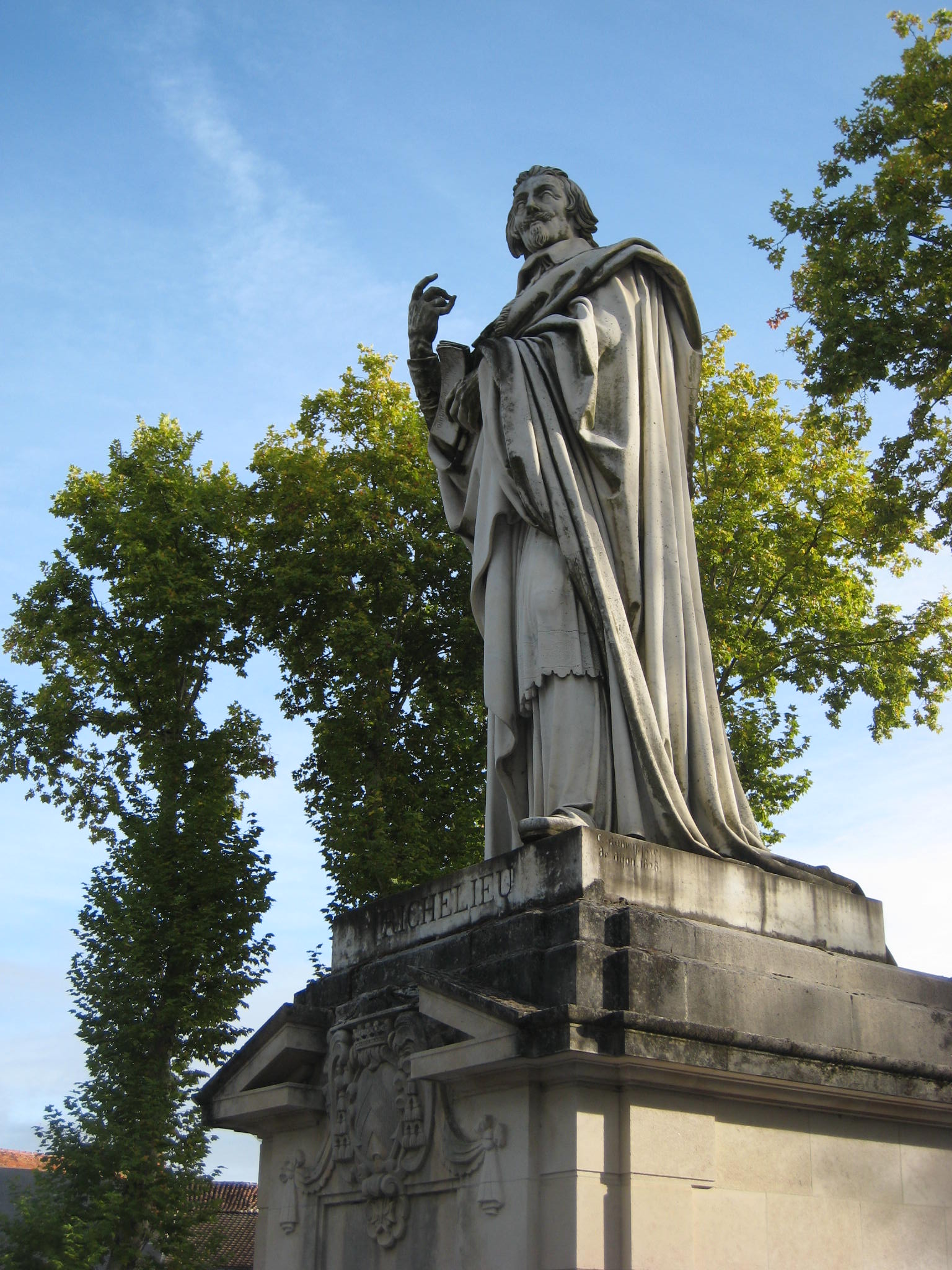
Cardinal Richelieu

The names of some of the companies that controlled the trade in beaver pelts are still remembered today. The early trading companies that operated as monopolies in the days of New France included the Compagnie des Cent-Associés (Company of One Hundred Associates), 1627-1645, and the Compagnie francaise des Indes occidentales (French West India Company), 1664-1674. Later, the North West Company, 1789-1821, and the Hudson’s Bay Company, 1670-1870s, competed for dominance.

The Company of One Hundred Associates was created in Paris in 1627 by Armand Jean Duplessis, better known as Cardinal Richelieu. Among the leading members of this trading company were explorers, fur traders, merchants, ship owners, bankers, governors of New France and Acadia. They included Samuel de Champlain, Martin Anceaume, Thomas Bonneau, Jacques Bulteau, Henry Cavelier, Antoine Cheffault, Sébastien Cramoisy. Charles Daniel, Jean David, Jacques Duhamel, Arnault Dumas, Thibault Dumas, Jean Guenet, Charles Huault, Pierre de La Haye, Gabriel Lattaignant, Claude de Launay-Razilly, Jean de Lauzon, Simon Lemaistre, Raoul L’Huillier, François de Magny, Adam Mannessier, Georges Morin, François Mouet, Antoine Nozereau, Jean Papavoine, Claude Potel, Guillaume Prévost, Isaac de Razilly, Claude de Roquemont, Jean Rozé, Charles de Saint-Étienne de La Tour, Jean Taffet and André Terru.

Perhaps your ancestor owned or helped to run one of these trading companies. Perhaps he was a coureur de bois who traveled by canoe into the interior of the continent to trade with the indigenous people, and perhaps he married an indigenous woman. Whatever your interest, the attached compilation can help you better understand the roles these companies may have played in your ancestor‘s life.

Click here: Trading Companies

Next week’s post will cover the ports of departure in France associated with the merchants who traded with New France. Following that, I will look at authors who have written about this period and archives where you can find more information.

See also:

“The Merchants, Fur Traders and Ship Owners of New France, part 1, A-G” https://genealogyensemble.com/2019/05/05/the-merchants-ship-owners-and-fur-traders-of-new-france-part-1-a-g/

“The Merchants, Fur Traders and Ship Owners of New France, part 2, H-Z” https://genealogyensemble.com/2019/05/10/the-merchants-and-fur-traders-of-new-france-part-2-h-to-z/

photo copyright Janice Hamilton

The Merchants and Fur Traders of New France, part 2, H to Z

In the days of New France and Acadia, a merchant, fur trader, private banker or ship owner was sometimes called a négociant, or dealer. Some négociants were based in Canada, but most had their headquarters in France, especially in La Rochelle, Bordeaux, Rouen and Caen. Other French port cities with connections to the new world included Brest, Calais, Cherbourg, Dieppe, Dunkerque, Fécamp, Le Havre, Lorient, Rochefort, Royan, Saint-Malo and Vannes, while a few ships sailed from Marseille in southern France.

Rich merchants from La Rochelle, Bordeaux, Caen and Rouen often sent young family members to the French colonies of New France, Acadia and Louisiana to manage their North American investments.

Most such dealers, especially those who settled in New France and Acadia, were Catholics. Some were Protestants (Huguenots or Calvinists) and a few from the city of Bordeaux were Jewish. Following the 1759 British conquest of New France, the number of Huguenot merchants increased slightly, at least in Montreal and Quebec City.

These négociants were the people who opened communications between Europe and ports located in the American colonies. Many of the French traders also dealt with associates in South America, Africa, the Middle East and the Far East.

Hundreds of dealers were in business over the approximately 250 years that New France existed. In the compilation attached below, I have only selected a fraction of them, addressing primarily the French traders who dealt directly with family members or associates in New France, Acadia or Louisiana. In regard to the fur traders, I have tried to identify those who had a place of business in Montreal, Trois-Rivières, Quebec City or Louisbourg. I have also included a few well-known explorers who were associated with merchants in these four towns.

Many of the French traders who were associated with Quebec, Louisiana or the Great Lakes regions are profiled in the Dictionary of Canadian Biography. If your ancestor was a fur trader, banker or ship owner, you may find a great deal about his life in this publication, available online or in many libraries. See http://www.biographi.ca/en/index.php or http://www.biographi.ca/fr/index.php for the French-language edition.

This post is the second in a series of compilations focused on these négociants during the period of colonial New France in the 16th, 17th and 18th centuries. The series will include brief biographies of these merchants, background on the French port cities where they were based, information about the trading companies they were associated with, the names of historians and other researchers who have written about this people, and a list of archives where you can obtain further information.

To see last week’s post introducing the merchants, fur traders, private bankers and ship owners of New France with last names beginning A to G, go to https://genealogyensemble.com/2019/05/05/the-merchants-ship-owners-and-fur-traders-of-new-france-part-1-a-g/

To read this week’s compilation on the merchants, fur traders, private bankers and ship owners of New France and Acadia with last names beginning H to Z, click on this link: Merchants, Fur Traders and Ship Owners of New France, H-Z Merchants, Fur Traders and Ship Owners of New France, H-Z

The Merchants, Ship Owners and Fur Traders of New France, Part 1, A – G

There are a couple of versions of this story: in 1539, someone told the King of France that explorer Jacques Cartier had found gold and silver along the shores of the Saguenay River. Another source says that Cartier had only suggested there might be gold and silver in the Saguenay region. (It turned out to be fool’s gold.)

According to both sources, however, Cartier suggested that trading beaver pelts and other wild animal furs could become a great source of income for the king. Needless to say, the fur trade turned out to be a lucrative business that lasted for almost 250 years.

Eventually, many types of traders established operations at the ports of Quebec City, Montreal, Trois-Rivières, and Louisbourg. All these merchants were associated with fellow merchants at various port cities of France, including La Rochelle, Bordeaux, Rouen and Caen. And in the days of Louis de Buade, Count of Frontenac and Governor of New France between 1672-1682 and 1689-1698, merchants in New France and its territories held a special place among the elite of the French colony.

Some of these traders married in North America, or brought their wives and children with them. They became the ancestors of many French Canadian or Acadian families, but, as of today, few family history researchers have searched for these early merchants, traders, private bankers, ship owners or tannery operators.

If you think you might have merchant ancestors, and you enjoy research online in France and Canada, try searching for the following term: Name of Ancestor (family name only, négociant du 17ème et 18ème siècles en France et Nouvelle-France. You can also try replacing Nouvelle-France with Acadie. This may bring you surprising search results.

First, however, you must determine on the spelling of the family name in France in the 16th, 17th and 18th centuries. For example, my Gagné brothers who settled Château-Richer near Quebec City in the 17th century were Gasnier in France – same pronunciation, different spelling.

This is the first in a series of weekly posts about these merchants, fur traders and ship owners during the period of Colonial New France (until around 1760.) It will include:

two compilations including very brief biographies of these merchants and usually including their wives’ names;

links to information about the port cities in France with which they traded;

links to information about the trading companies they were associated with;

a list of authors, historians and academic researchers who have studied this period, with links to some of their publications;

a list of the archives and other repositories where you can learn more about this subject.

Click on the link to read Merchants, Ship Owners and Fur Traders A-G


Popular Early Notaries in Quebec

If you are looking for the notaries who prepared documents such as leases, wills and business agreements for your ancestors, the best place to start might be the notaries with the biggest practices. The notaries listed below are the notaries with the largest clientele in New France & Quebec under the British.

I have reviewed 551 notaries and I have selected, by judicial districts, the notaries with the largest number of notarial acts (minutiers) written.

The notarial acts of the notaries listed below are available on microfilm at the Bibliothèque et Archives nationales du Québec (BAnQ) in old Montreal, or the BAnQ in Quebec City, or branches of the BAnQ in Sherbrooke, Gatineau or Trois-Rivières. Check before you visit. Meanwhile, more and more acts are being digitized and can be found online on the BAnQ’s website, on Familysearch.org or on Ancestry.ca.

Their clients were varied. Prior to 1760, they included primarily French Canadian and Acadian families. After the British Conquest, they included French Canadians and British, Scottish, Irish families and soldiers, Americans, Loyalists, Germanic soldiers and their families, Dutch Loyalists and Scandinavians & Baltic States immigrants.

Montreal Judicial District

>> Antoine Adhémar dit Saint-Martin 1677-1714 – 13 microfilms

>> Michel Lepailleur & François Lepailleur dit LaFerté – 1700-1739 – 14 microfilms

>> Jean-Baptiste Adhémar dit Saint-Martin – 1714-1754 – 10 microfilms

>> Charles-François Coron – 1734-1767 – 10 microfilms

>> Simon Sanguinet Senior & Junior – 1734-1786 – 13 microfilms

>> François Simonnet – 1737-1778 – 12 microfilms

>> Antoine Foucher – 1746-1800 – 13 microfilms

>> Jean-Baptiste Daguilhe – 1749-1783 – 10 microfilms

>> Joseph Lalanne & Pierre Lalanne – 1752-1792 – 12 microfilms

>> Pierre de Méru Panet & Pierre-Louis Panet – 1755-1783 – 10 microfilms –

>> François Leguay Senior & Junior – 1770-1807 – 10 microfilms

>> Edward William Gray & Jonathan Abraham Gray – 1777-1812 – 12 microfilms

>> Joseph Papineau – 1780-1841 – 11 microfilms

>> Edme Henry – 1783-1831 – 10 microfilms

>> Louis Chaboillez – 1787-18213 – 21 microfilms

>> Peter Lukin Senior & Junior – 1790-1837 – 10 microfilms

>> Jean Mondelet – 1794-1842 – 11 microfilms

>> Pierre Lanctot – 1809-1850 – 12 microfilms

Quebec City Judicial District

>> Gilles Rageot & François Rageot & Charles Rageot – 1666-1753 – 10 microfilms

>> Edme Jacob, Étienne Jacob, Joseph Jacob – 1680-1750 – 12 microfilms

>> Louis Chamballon – 1692-1716 – 15 microfilms

>> André Genest 1738-1783 – 13 microfilms

>> Jean Antoine Panet & & Jean-Baptiste Panet & Jean-Claude Panet – 1744-1783 – 20 microfilms

>> Antoine Crespin – 1748-1782 – 12 microfilms

>> Charles Voyer & Jacques Voyer – 1787-1842 – 14 microfilms

>> François-Xavier Larue Senior & Junior – 1788-1865 – 17 microfilms

>> Roger Lelièvre – 1793-1847 – 27 microfilms

>> Barthélemy Faribault – 1796-1821 – 23 microfilms

>> Louis Guay – 1806-1843 – 12 microfilms

Trois-Rivières Judicial District

>> Jean-Baptiste Badeau – 1765-1796 – 12 microfilms

>> Antoine Gagnon – 1792-1824 – 12 microfilms

>> Joseph Badeau – 1798-1835 – 21 microofilms

Richelieu Judicial District (Richelieu River Valley)

>> Henry Crebassa – Richelieu – 1795-1843 – 16 microfilms

Beauce Judicial District

>> John Walsh – 1803-1845 – 10 microfilms

>> Jean-Baptiste Bonneville – 1819-1871 – 12 microfilms

>> Jean-Olivier Arcand – 1832-1868 – 16 microfilms

Iberville Judicial District (Richelieu River Valley)

>> François Médard Pétrimoux – 1798-1849 – 13 microfilms

>> Louis Decoigne Senior & Junior – 1807-1857 – 15 microfilms

>> Laurent Archambault – 1820-1859 – 13 microfilms

Montmagny Judicial District (Lower St. Lawrence)

>> Nicolas-Charles–Louis Lévesque – 1752-1795 – 10 microfilms

>> Augustin Larue & Abraham Larue – 1804-1847 – 20 microfilms

Kamourasksa Judicial District (Lower St. Lawrence)

>> Louis Cazes – 1780-1798 – 10 microfilms

>> Augustin Dionne – 1797-1821 – 12 microfilms

Beauharnois Judicial District – (North of New York State)

Louis Sarault – 1805-1861 – 11 microfilms

Godfroi Chagnon – 1825-1862 – 11 microfilms

St. Hyacinthe Judicial District

>> Pierre-Paul Dutalmé – 1798-1821 – 10 microfilms

Charlevoix (St. Lawrence’s North Shore)

>> Charles-Pierre Huot – 1817 -1865 – 11 microfilms

Joliette Judicial District

>> Louis Raymond – 1796-1829 – 14 microfilms