All posts by Jacques Gagné

British & Scottish Military Chaplains

1759 – 1767

Quebec City – Montreal – Three Rivers – Sorel

This database consists of information regarding:

  • The Anglican Church of Quebec City – 1759 – 1768
  • Archives of the Society of the Gospel in Foreign Posts
  • Military Chaplains
  • Chaplains
  • British, Scottish, Irish Families of the Quebec City Region

1768 – 1899

  • Lambeth Palace Library – the National Archives
  • BanQ Montreal

Click the link below to access the file and open the link in a new window.

British & Scottish Chaplains 1759-1767

Ukrainians in Montreal

This database contains articles written by authors indicating how to proceed in locating Ukrainian ancestors.

Church documents of births, deaths and marriage are listed for the Church of Saint Michael the Archangel for the years 1902-1917 using the following link: https://numerique.banq.qc.ca/patrimoine/details/52327/3899555docsearchtext=St.%20Michael%20the%20Archangel.

There are also list of passengers who arrived in Quebec between 1925 – 1935

<object class="wp-block-file__embed" data="https://genealogyensemble.com/wp-content/uploads/2022/02/the-ukrainians-in-montreal-.pdf&quot; type="application/pdf" style="width:100%;height:580px" aria-label="Embed of <strong>The Ukrainians in MontrealThe Ukrainians in MontrealDownload

Click the above link and open in a new window.

St. Sophie Ukrainian Orthodox Cathedral

https://www.bing.com/maps?q=Ukrainian+Churches+in+MOntreal&form=CHRDEF&sp=-1&pq=ukrainian+churches+in+montreal&sc=0-30&qs=n&sk=&cvid=ED5542821C0940D1AC6E745D3FC2123D

English Language Catholics at BAnQ

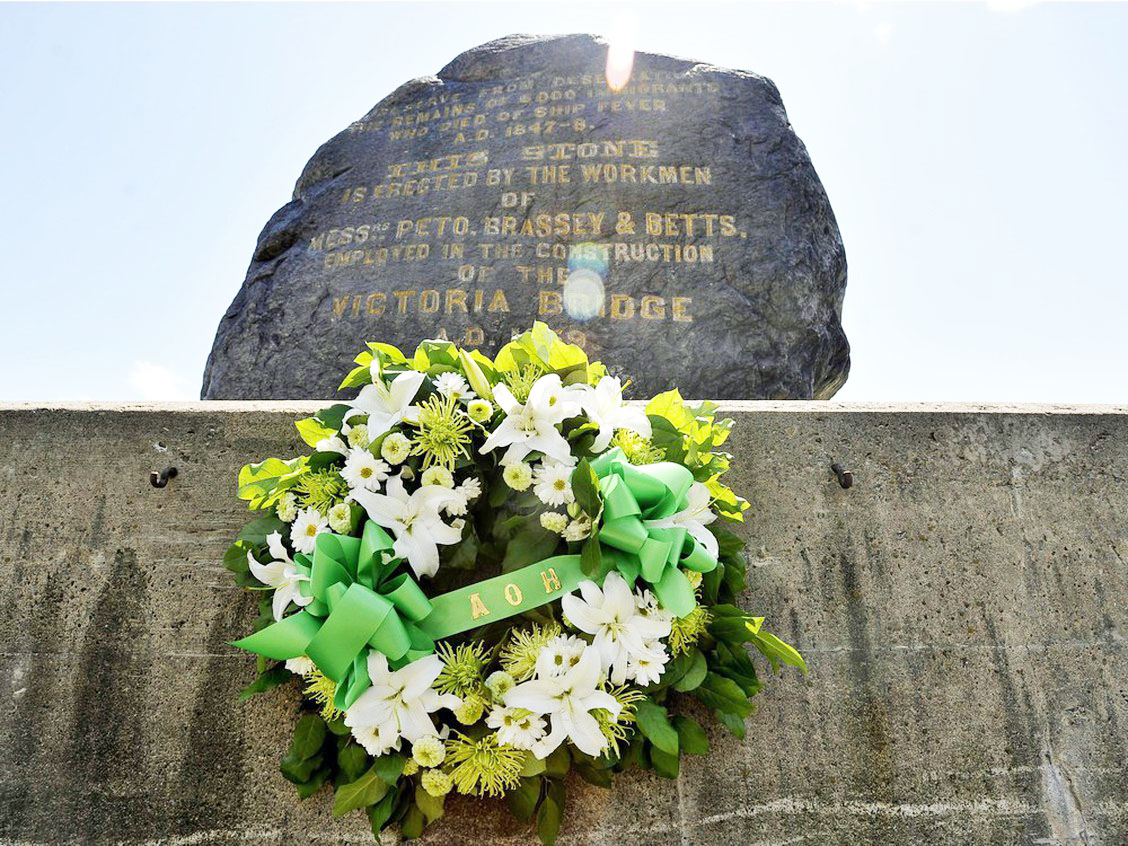
Black Rock
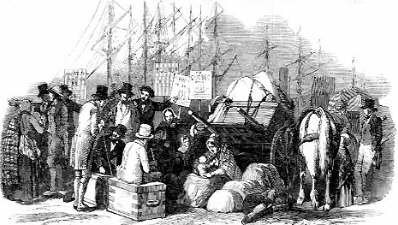
A wreath sits at the base of the black rock in Point Saint Charles, Montreal, Sunday, May 31, 2009, after a ceremony to commemorate the Irish immigrants who died of typhus in Montreal after fleeing the potato famine in 1847. photo THE GAZETTE/Graham Hughes. PHOTO BY GRAHAM HUGHES /Montreal Gazette

This database consists of a list of authors who have written books, theses, dissertations, articles and blogs about Catholics, predominantly Irish and Scottish, who were seeking a better future in a new land.

Many of these writings are available for either reading online or to download and are indicated in bold green letters.

Click on the above link and open in a new window.

British American Land Company at BAnQ

The database contains a wealth of information for genealogists who are researching their ancestor’s land acquisitions in the Eastern Townships.

Many complete documents, books, dissertations, abstracts and theses are available to be downloaded. These are highlighted in green.

Link to map : https://collections.leventhalmap.org/search/commonwealth:4m90f8694

Click on the link below and open in a new window.

Intolerance in Quebec

Meaning of intolerance in English

the fact of refusing to accept ideasbeliefs, or behaviour that are different from your own:

https://dictionary.cambridge.org/dictionary/english/intolerance

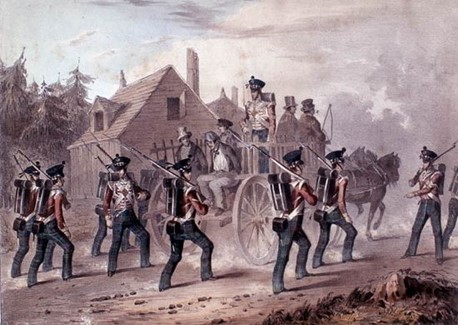
In 1837 and 1838, insurgents in Upper and Lower Canada led rebellions against the Crown and the political status quo. … It led to the Act of Union, which merged the two colonies into the Province of Canada. It also resulted in the introduction of responsible government.

The following database consists of a list of authors who have written books, theses and articles on the subject of Intolerance in Quebec.

Kindly click on the link below and open in a new window.

A Patriote

Germanic Europeans at BAnQ

https://www.german-way.com/history-and-culture/holidays-and-celebrations/christmas/a-to-z-guide-to-christmas-traditions/

Whether you live in North America, in German-speaking Europe, or almost anywhere else in the western world, the way Christmas is celebrated has been influenced in large measure by Austria and Germany. The Christmas tree comes from Germany. “Silent Night” (“Stille Nacht”), the world’s best known Christmas carol, originated in Austria. 

The German religious reformer Martin Luther (1483-1546) is often credited with starting the Christmas tree custom, but the first appearance of a Tannenbaum was recorded in Germany many years after Luther’s death. It was in 1605 in Strasbourg in Alsace, then in Germany, that a chronicler wrote (in old German): “Auff Weihenachten richtett man Dahnnenbäum zu Strasburg in den Stuben auff…” (“At Christmas they set up Christmas trees in Strasbourg in their rooms…”).

But it is likely that the custom dates back to at least around 1550, since the first of several “Tannenbaum” ballads was circulating in print at that time. By the 19th century this custom had spread across most of Germany and beyond. Several royal Germans are credited with helping extend the tree decorating custom beyond Germany’s borders. The Duchess of Orleans (from Mecklenburg) brought it to Paris, while other Germanic royals brought the Christmas tree to England and other European countries. But it was commoners—emigrants from Germany—who brought the Weihnachtsbaum to America.

https://en.wikipedia.org/wiki/Hessian_(soldier)

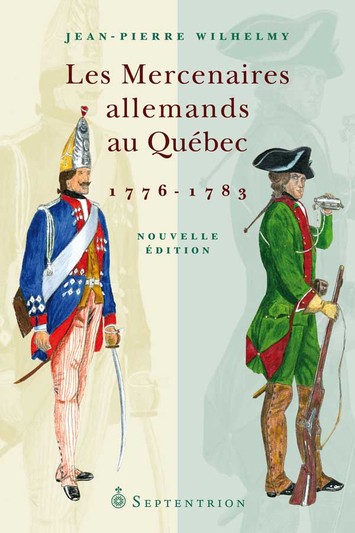
Hessians were German soldiers who served as auxiliaries to the British Army during the American Revolutionary War. The term is an American synecdoche for all Germans who fought on the British side, since 65% came from the German states of Hesse-Kassel and Hesse-Hanau. Known for their discipline and martial prowess, around 30,000 Germans fought for the British during war, comprising a quarter of British land forces. While known both contemporaneously and historiographically as mercenaries, Hessians were legally distinguished as auxiliaries: whereas mercenaries served a foreign government on their own accord, auxiliaries were soldiers hired out to a foreign party by their own government, to which they remained in service. Auxiliaries were a major source of income for many small and poor German states, typically serving in wars in which their governments were neutral.

https://www.tfcg.ca/hesse-hanau-soldiers-canada

Today, roughly 10,000 French-Canadians have a German soldier as an ancestor. If your surname follows, you may have a German soldier as an ancestor: Arnoldi, Bauer, Berger, Besner, Besré, Black, Brown, Carpenter, Caux/Claude, Eberts, Frédéric, Grothe, Hamel, Heynemand, Hinse, Hoffman, Hunter, Inkel, Jordan, Koenig, Laître/Lettre, Lange, Lieppé, Maheu, Matte, Nieding, Olivier, Pave, Piuze, Pétri, Plasse, Pratte, Rose, Rouche, Schenaille, Schmidt, Schneider, Steinberg, Stone, Trestler, Wagner, Wolfe. Some of these surnames were simply translated from German into French or English, while others went through a more complex transformation

The database below consists of authors who wrote about the immigration of Germans to Quebec beginning with Hessian auxiliary soldier who fought along side the British.

Click on the link below and open in a new window:

Scandinavians at BAnQ

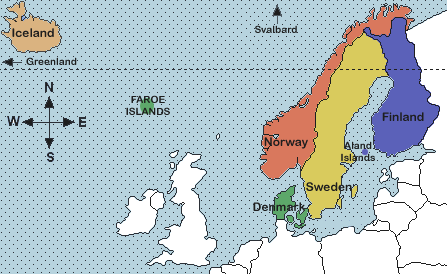
Scandinavia – Nordic Regions

What is the difference between Scandinavian and Nordic countries? – Quora Check the link.

Scandinavia consists of three countries, Norway, Sweden and Denmark, where Scandinavian languages dominate.

The Nordic countries consist of Scandinavia plus Iceland (that used to be a part of first Norway then Denmark) and Finland (that used to be the eastern third of Sweden, with a strikingly similar culture, although a totally different language).

The Nordic countries includes two autonomous parts of Denmark, namely Greenland and the Faroe Islands, plus one similarly autonomous archipelago of Finland, the Åland Islands, where the language is Swedish and almost no Finnish speakers live.

The Scandinavian languages are, unsurprisingly, Danish, Swedish and Norwegian.

The most used term is the Nordic countries, which is:

  • Sweden
  • Denmark
  • Norway
  • Finland
  • Iceland
  • Åland (?)

The term the Scandinavian countries is only a physical regional designation:

  • Sweden
  • Denmark
  • Norway

The database below consists of documents, books, articles and theses written by authors from Scandiavian countries, Canada, the U.S.A. and Nordic countries.

Several complete books, documents and articles may be downloaded and they are noted in several different colors.

Click the link bewlow to access the database and open in a new window.

Eastern Europeans at BAnQ

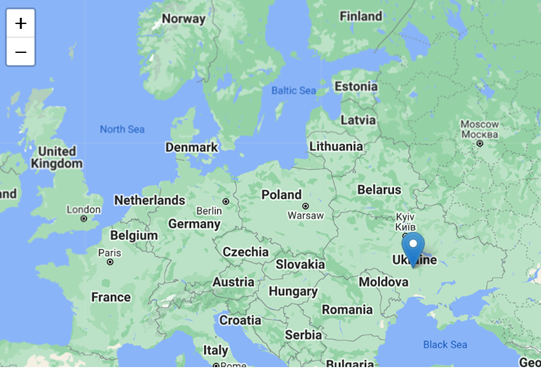
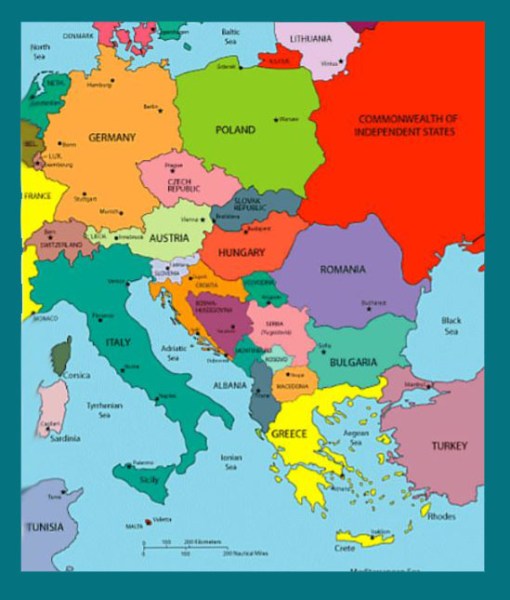
Map of Eastern Europe

Eastern Europeans Who Settled in Quebec

The following database consists of books, documents, abstracts, and short articles that were written by numerous Authors whose works are available at BAnQ and numerous other links.

There are also links pertaining to books available at book stores within the list.

There is a History list of sites used in this document.

To view the database click the link below and open in a new window.

Protestant Families of Quebec City and Trois Rivieres 1759-1875

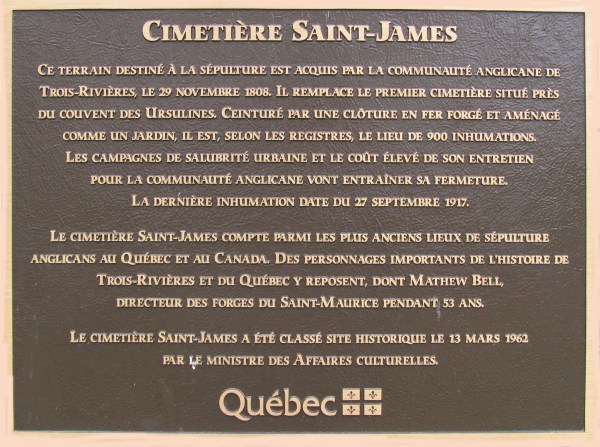
The photographs below depict cemeteries in each city. They have been declared Historic Sites in Canada and Quebec.

Mount Hermon Cemetery:

Hermon Cemetery is a  National Historic Site of Canada. It is located in the Sillery district (Frenchquartier) of the Sainte-Foy–Sillery–Cap-Rouge borough (Frencharrondissement) of Quebec CityQuebec, Canada.[1][2][3][4][5] The cemetery was designated a National Historic Site of Canada in 2007.[3][4] https://en.wikipedia.org/wiki/Mount_Hermon_Cemetery

Saint James Cemetery:

Located at the corner of Saint Francois Xavier and de Tonnancour Streets in the old part of Trois Rivieres. It was classified as a Quebec Historic Site in 1962 and is one of the oldest Anglican cemeteries in Canada. The land was acquired by the Three Rivers Anglican Community in 1808 and the cemetery was used until 1917. (It is also known as Cimetiere Saint-James) https://www.findagrave.com/cemetery/2517306/saint-james-cemetery

The database presented below consists of two extensive lists of names of Protestant Families that resided in Quebec during those years.

The Italians at BAnQ

The Italians at BAnQ

Designated a National Historic Site of Canada in 2002
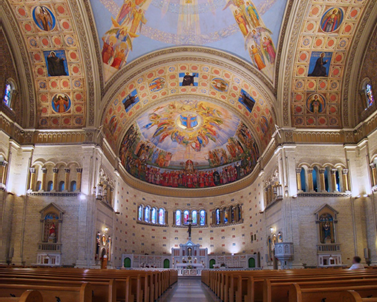
Notre-Dame-de-la-Défense

Montreal’s Italian community is one of the largest in Canada, second only to Toronto. With 279,795 residents of Italian ancestry as of the 2016 census in Greater Montreal,[2] Montreal has many Italian districts, such as La Petite-Italie, Saint-Leonard (Città Italiana), Rivière-des-Prairies, and LaSalle. Italian is the third most spoken language in Montreal and in the province of Quebec.

The Italian Immigrant Presence in Canada, 1840-1990 John E. Zucchi McGill University.

In the last one-hundred years, more than 650,000 Italians have immigrated to Canada, almost three-quarters of them in the period following World War I1 (Rosoli, 1978:35%5). They have settled primarily in Toronto and Montreal, and to a lesser degree in Vancouver, but also in significant numbers in scores of small and large mining and industrial towns in British Columbia, Alberta, Ontario and Nova Scotia….. The literature on Italian immigration to Canada is extensive and is represented by a number of fields, primarily history, sociology, anthropology, geography, political science and literature.1.

In the early 20th century, a new wave of European immigrants made its way to Québec and to Montréal. Among them were thousands of Italians who brought with them their traditions, their values, and their customs, going on to form one of the oldest and largest immigrant cultural communities in Montréal.2.

Of all the immigrants Montreal has welcomed since its founding, the Italians have had the greatest impact on the city. From the arts to politics, agriculture, real estate, gastronomy and sports, the Italian community has influenced every sector of life in Montreal.

The Italian presence on Quebec soil goes back to the founding of Montreal. Italian settlers served in the French regiment of Carignan-Salières (1670) to help fight the Iroquois. In return, the King of France gave them land. More Italian migrants arrived, and in 1860, 60 Italian families called Montreal home. From 1900 to 1915, more than eight million Italians left their country. Many headed for Europe, while others ended up in North America, especially the United States, and a few settled in Quebec, primarily in Montreal.

Notre-Dame-de-la-Défense parish, also known by its Italian name, Madonna della Difesa, is the first Italian parish in Canada. It is located along Saint-Laurent Boulevard, with Saint-Zotique and Jean-Talon streets marking its limits. Educational, assistance, recreational and sports establishments quickly sprung up in the community. It was here that, in 1927, the grand Notre-Dame-de-la-Défense Church was inaugurated. In 2002, the Government of Canada designated this church a national historic site.3.

  1. https://en.wikipedia.org/wiki/Italian_Canadians_in_Greater_Montreal
  2. https://pacmusee.qc.ca/en/exhibitions/detail/italian-montreal/
  3. https://ahgm.org/en-ca/magazine-mtl1642-articles/petite-italie-un-morceau-ditalie-pour-fa%C3%A7onner-montr%C3%A9al

Open the above link in a new window