All posts by Mary Sutherland

The German Soldier – Wolfgang Kempff

IMG_8356
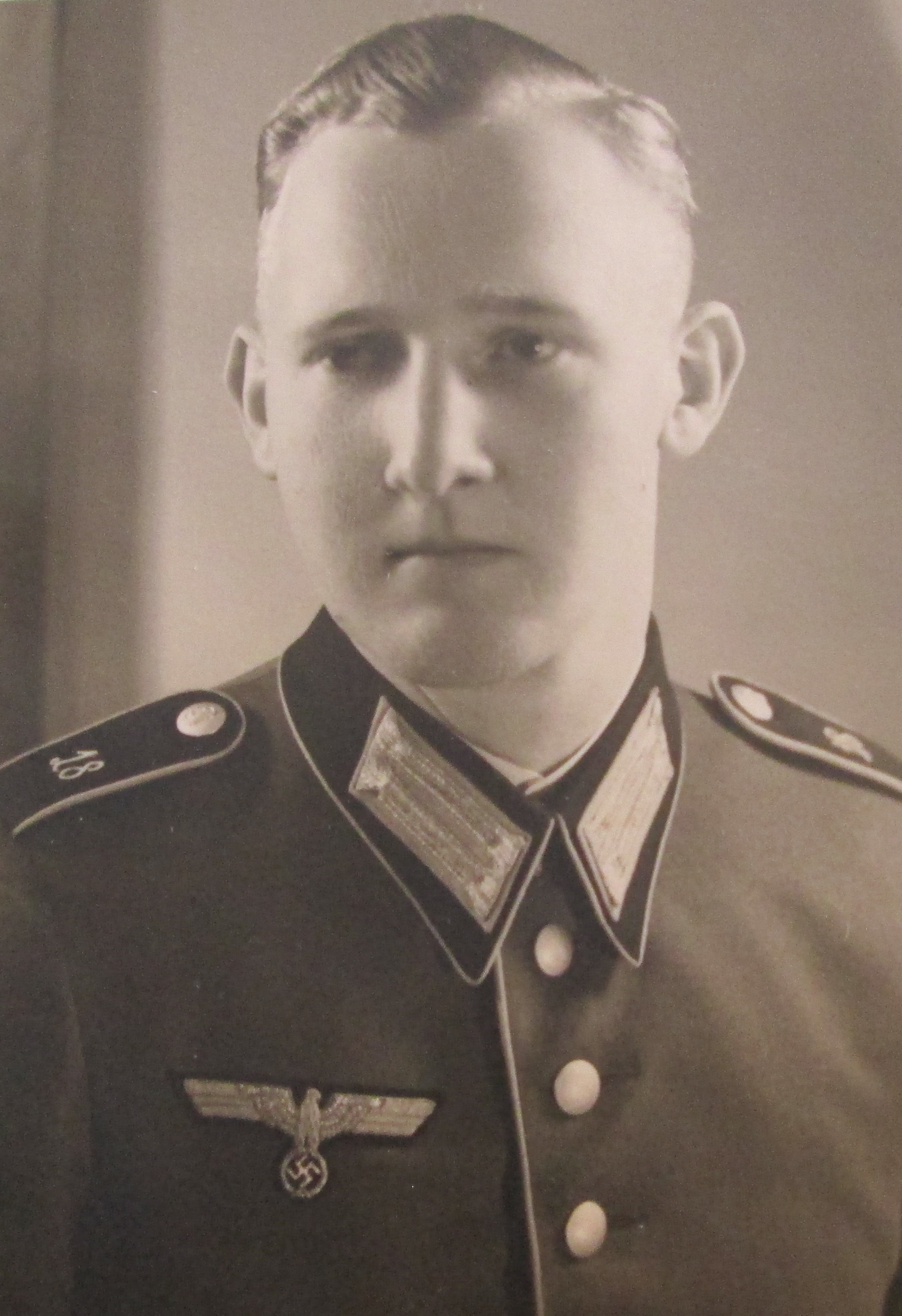
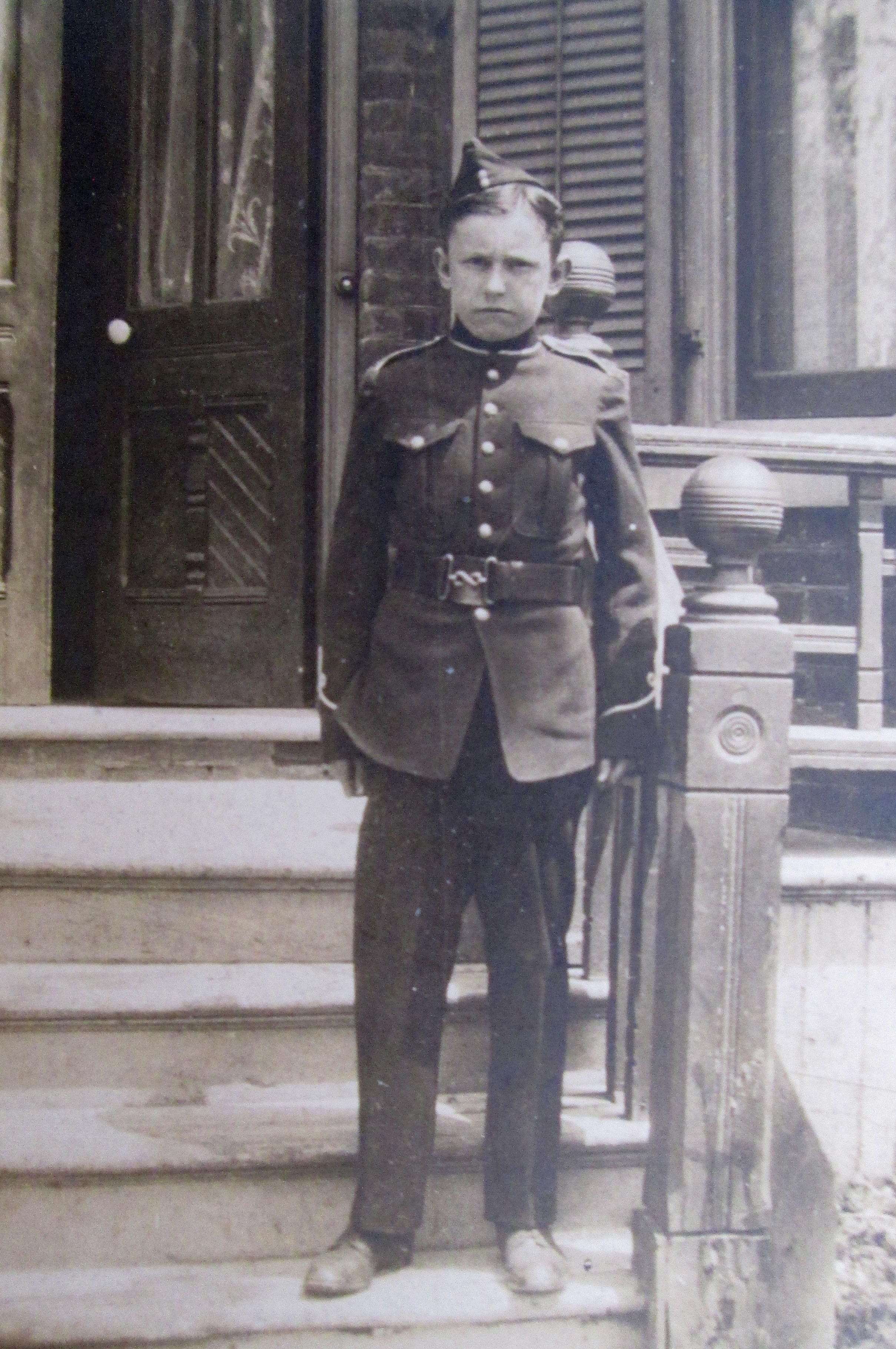
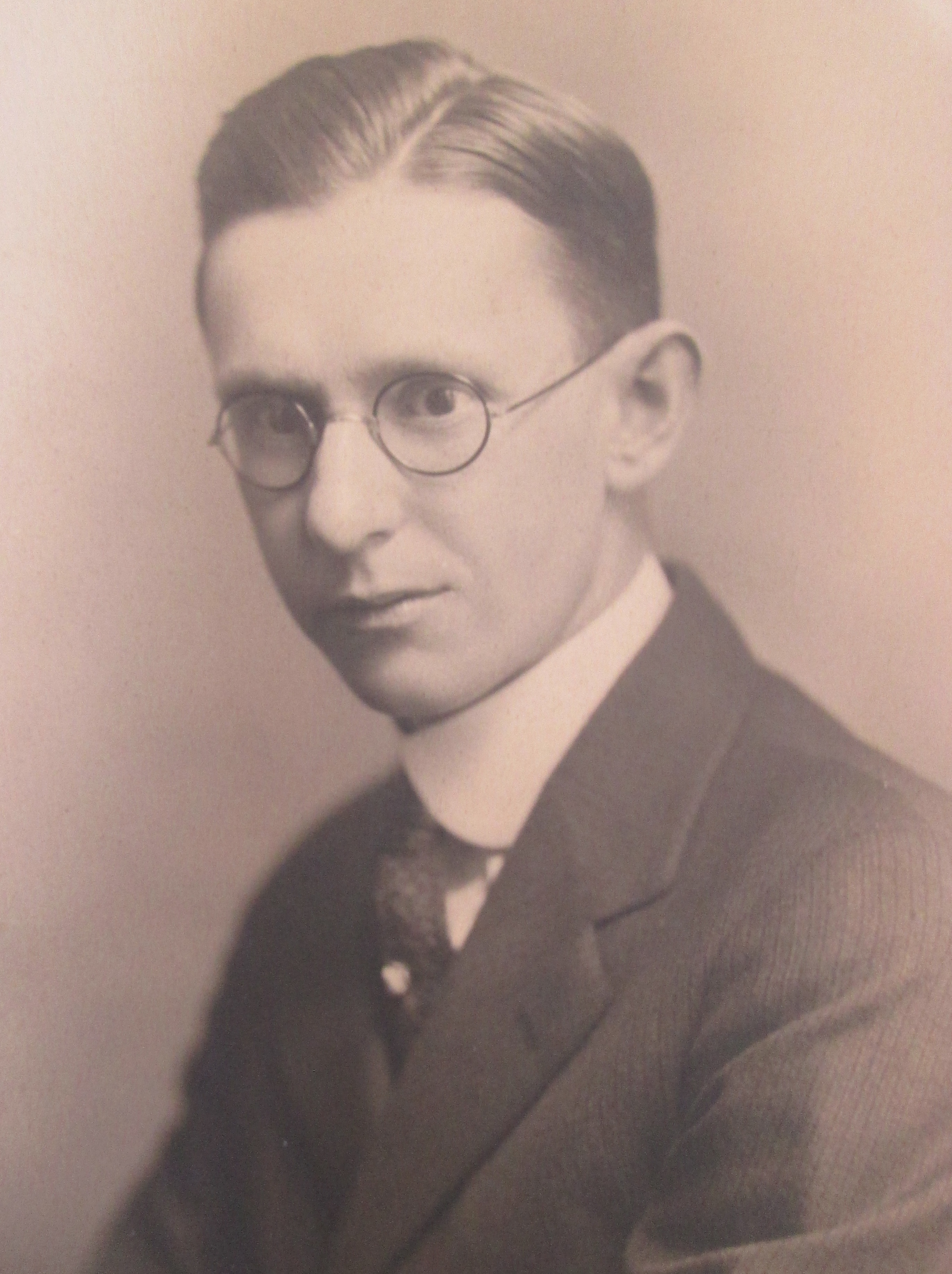
Wolfgang Kempff 1937

The last letter my father received from Wolfgang Kempff was dated Berlin, September 20, 1939. Canada had declared war on Germany ten days earlier.

We hear many stories about allied soldiers, their heroics in the war and how proud they and their ancestors are of the medals won. This past remembrance day there was a story about a couple who had found medals and were trying to reunite them with the recipient’s family. One person commented that his German father had burned all his medals, not wanting to remember his part in the war. This invoked other comments saying how we have never heard what the German soldiers really felt about Hitler and the war.

I have some letters written to my father from a German fellow, Wolfgang Kempff, who was just 22 in 1939. Wolfgang had followed in the footsteps of his older brother and spent four years in Canada, attending Westmount High School, Westmount Quebec. He enjoyed his time perfecting his english and living the Canadian life. When he graduated in June 1935 he returned to Germany.

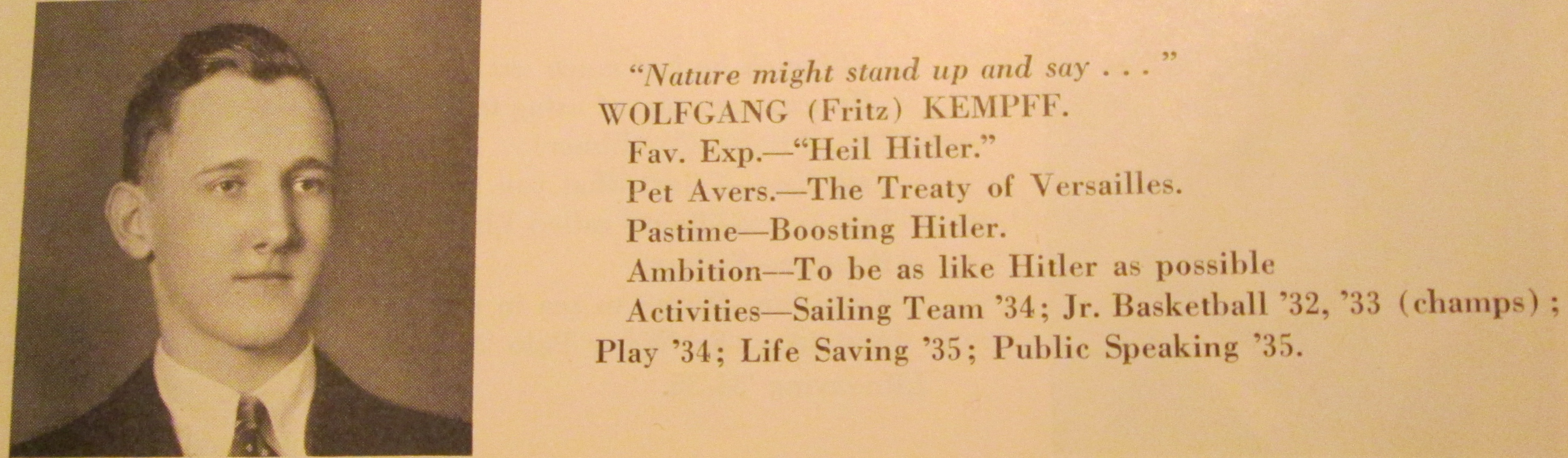
He is pictured in the school year book with all the other graduates. His biography is very revealing of his thoughts and feelings about Hitler and the position of Germany at that time.

His Quote: “Nature might stand up and say……”

His Favourite Expression: Heil Hitler

Pet Aversion: The treaty of Versailles

Past Time: Boosting Hitler

Ambition: To be as like Hitler as possible

Activities: Sailing Team, Junior Basketball, Play, Lifesaving and Public Speaking.

Wolfgang corresponded with his school friends after he returned home. He was very anxious for them to come visit him, to enjoy German beer, wine, racing cars, skiing and opera. He lived in Berlin with his mother and their guest room was always available. He even suggested they try to win scholarships so they could study in Berlin.

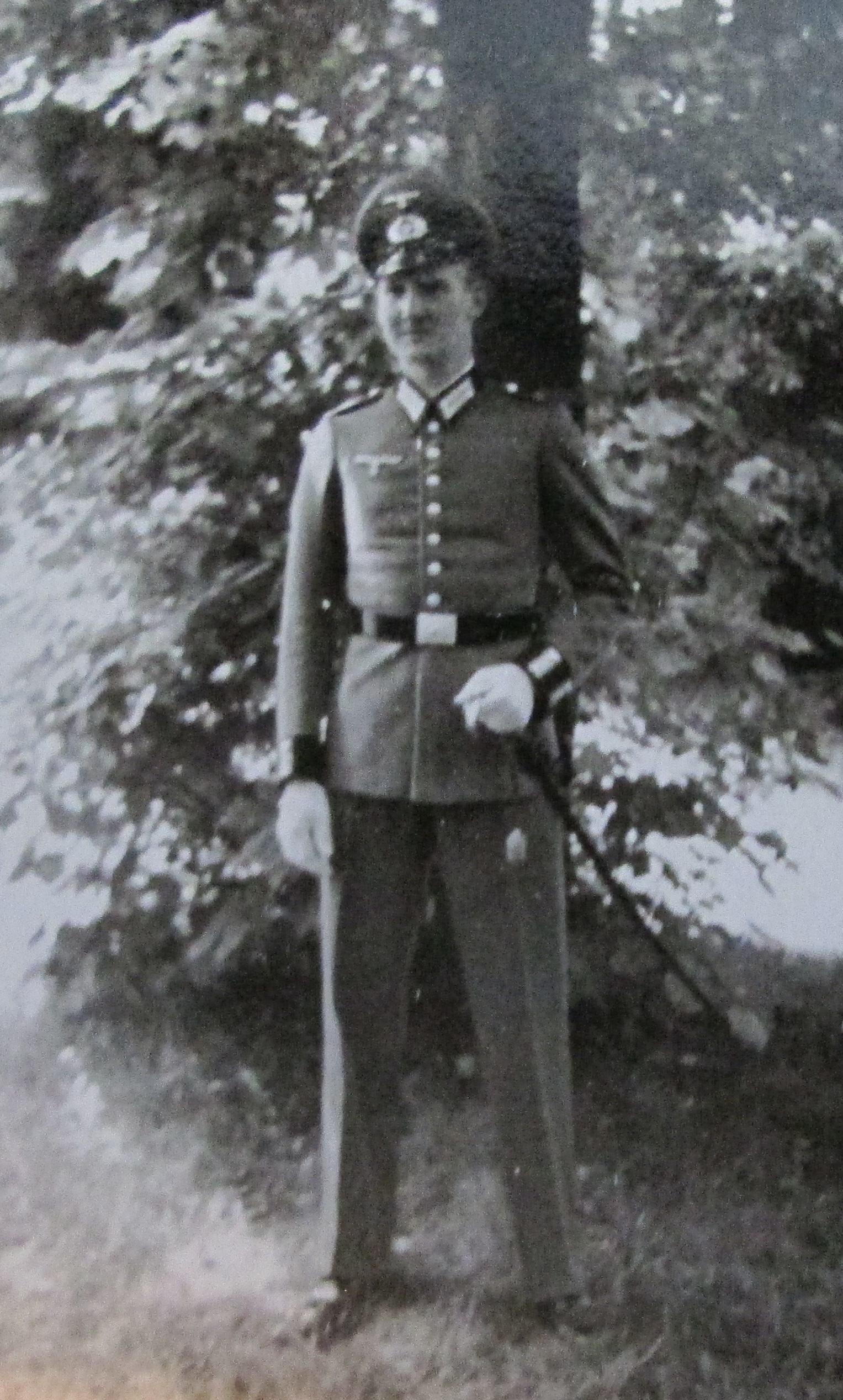
In 1937 Wolfgang was in the German army. He loved it and thought he would have great success because of his knowledge of English. He was proud of being German and believed Hitler was doing great things for his country. “I really gave myself pains to do everything well, and one can only do that when one is “flesh and blood” for the idea.” Unfortunately because of his health, continual throat infections, he was dismissed from the army. He was very upset as he would have been promoted to the military school that October and become an officer 18 months later.

With his military career over, he decided to study engineering at the University in Berlin. He needed six months of practical experience working in a factory before he could begin his program. It would then take seven and a half years before he would obtain his degree, much longer than his friends in Canada. In the summer of 1938 he worked for the State Railway and found it a very interesting experience. That fall he started his second term in mechanical engineering.

Wolfgang was enjoying the typical student life, going out, drinking beer, ski trips in the Bavarian Alps and chatting up English girls. He was annoyed that his summer holidays were to be cut by five weeks, but in September 1939 he and his mother were to drive to Italy, with stops in Prague and Vienna.

IMG_8355
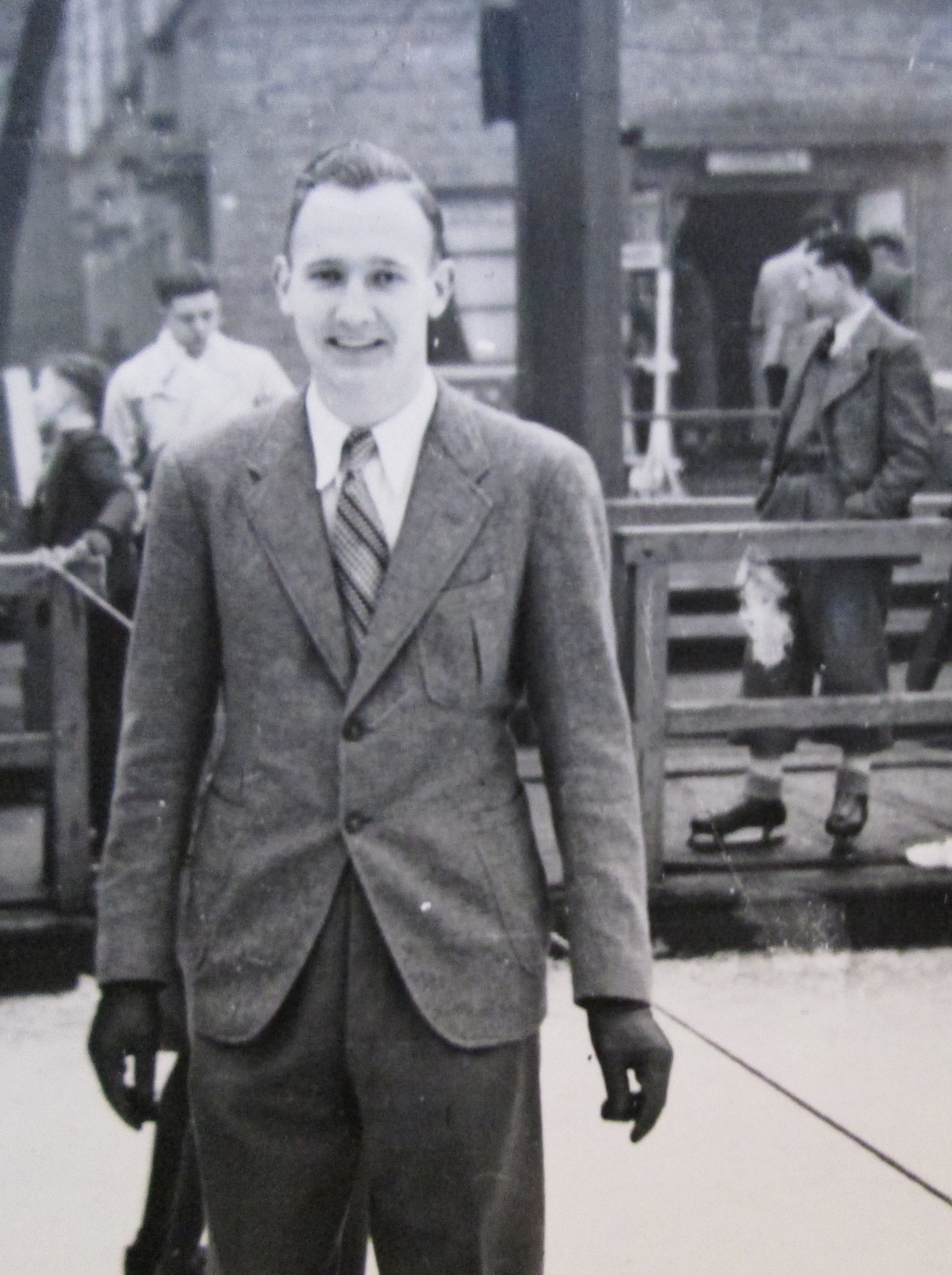
Wolfgang Ice Skating in Berlin 1938

He wrote about politics. He didn’t think what was reported in the west was the truth. Wolfgang thought German food rationing was a joke. Every person could still have a pound of butter per week and enough eggs for breakfast! Lobster and caviar were expensive but these luxuries were something people could do without. No one was starving as local meat and vegetables were still readily available and there was almost no unemployment. “In 6 years much has been achieved. Perhaps no country in history has undergone such a change in 6 years. Hitler said in one of his last speeches, that Germany would far rather spend cash on things than on an unproductive army but apparently other countries have different ideas.”

The final letter was from September 20, 1939. He said, unfortunately he and his mother had to cancel their trip to Italy. Wolfgang didn’t understand why Britain and Canada had declared war on Germany. “We fight our own battles and won’t stand other people sticking their fingers into things which are none of their business.” He felt the Allies had nothing to gain and everything to lose in fighting the very fine German forces. “I don’t suppose any of you fellows will ever get on French soil. My pity for the “Paile and Tommy” who is going to try to run in our fortresses.”

IMG_8369
Wolfgang Kempff 1937

He certainly didn’t think the war would last very long. “My invitation still holds good when the scuffle is over. Please give my regards to everybody and with best wishes to you and your family,

Wolfgang

Notes:

Letters and photographs from Wolfgang Kempff, Germany to Donald Sutherland, Westmount, Quebec, Canada. Aug 5, 1937, Aug 23, 1938, March 29, 1939 and September 20, 1939.  In the author’s possession.

Westmount High School Annual, Westmount, Quebec, Canada. 1935

IMG_7951

I assume Wolfgang was accepted back into the German army and didn’t survive the war. As yet, I haven’t been able to find any more information about him.


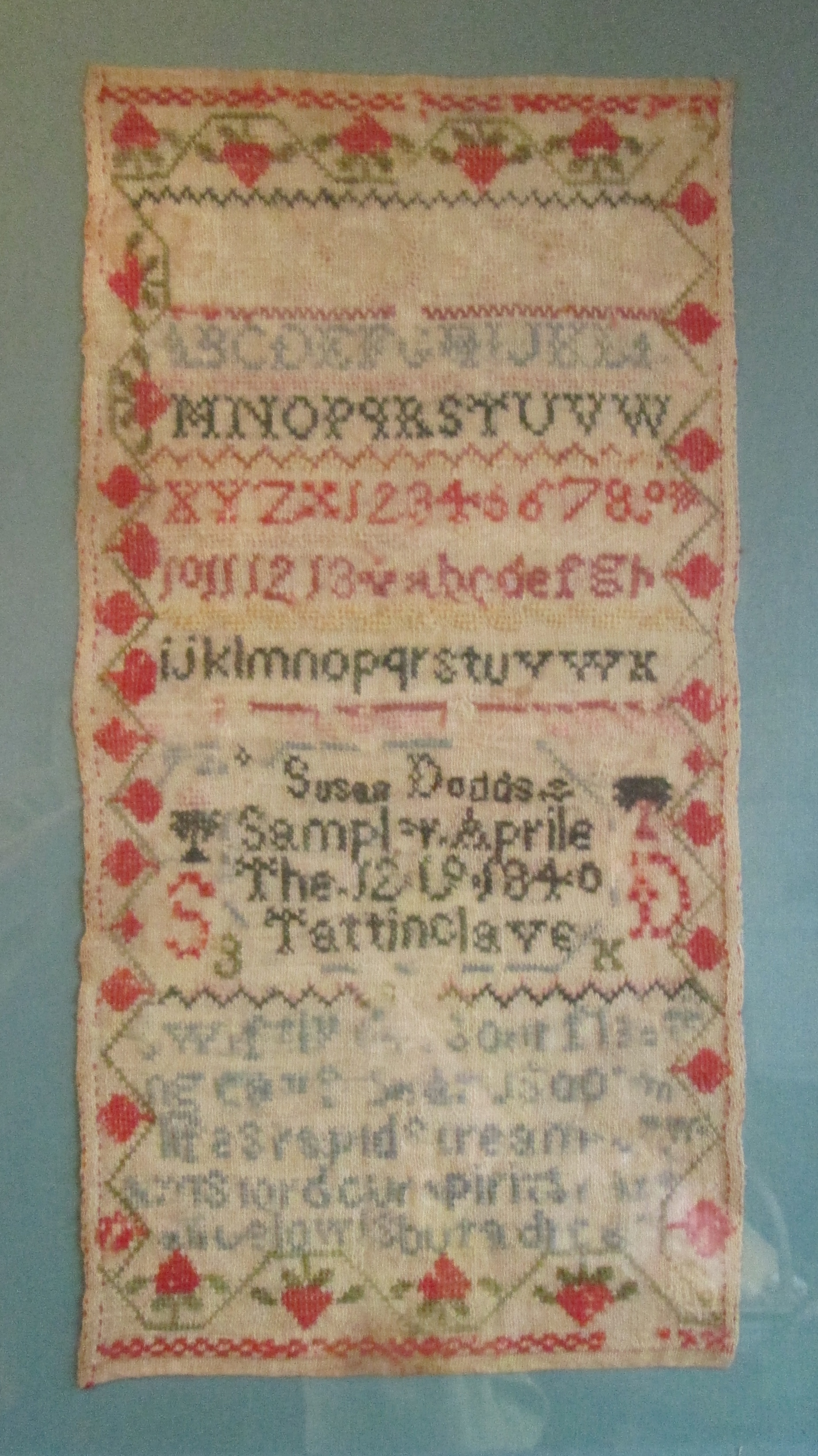
Susan Dodds’ Sampler


IMG_6245 - Version 2

A precious item hung in our hall while I was growing up, made by my great, great grandmother. I often wondered about the woman who made it. Finding out about her was one of my first genealogical searches.

The sampler was made of rough woven linen with cross stitches of bright coloured wool. There were red strawberries, green and yellow borders and rows of letters and numbers. What was very clear on the sampler were the words in black, “Susan Dodds and Tattinclave” and the date “Aprile 12 -19, 1840.” I knew the family came from Ireland and finally discovered that Tattinclave is a townland in County Monaghan, Northern Ireland, just north-east of Castleblaney and Oram near the Armagh border. That was the where, then there was the who?

Many samplers have a saying or a motto embroidered on the bottom but unfortunately here, there is much wear making Susan’s difficult to read. What can be read is “lord our spirits” showing that Susan was a religious person.

This was confirmed in a letter, Susan and her husband Alexander Bailey carried to Canada from Rev. Samuel Dunlop, a Presbyterian minister. It stated, ” I have known the bearer Shusana Dodds since she was a child. She is not only of an unexceptionable but an examplary moral character. She is the daughter of very pious parents and prior to her leaving this country in full communion in our church. She was married previous to her going to America to one Alexander Bailey by the Rev. W. Momson. They are both a sober industrious young couple and persons in whom I believe confidence might be placed. April 13, 1843.”

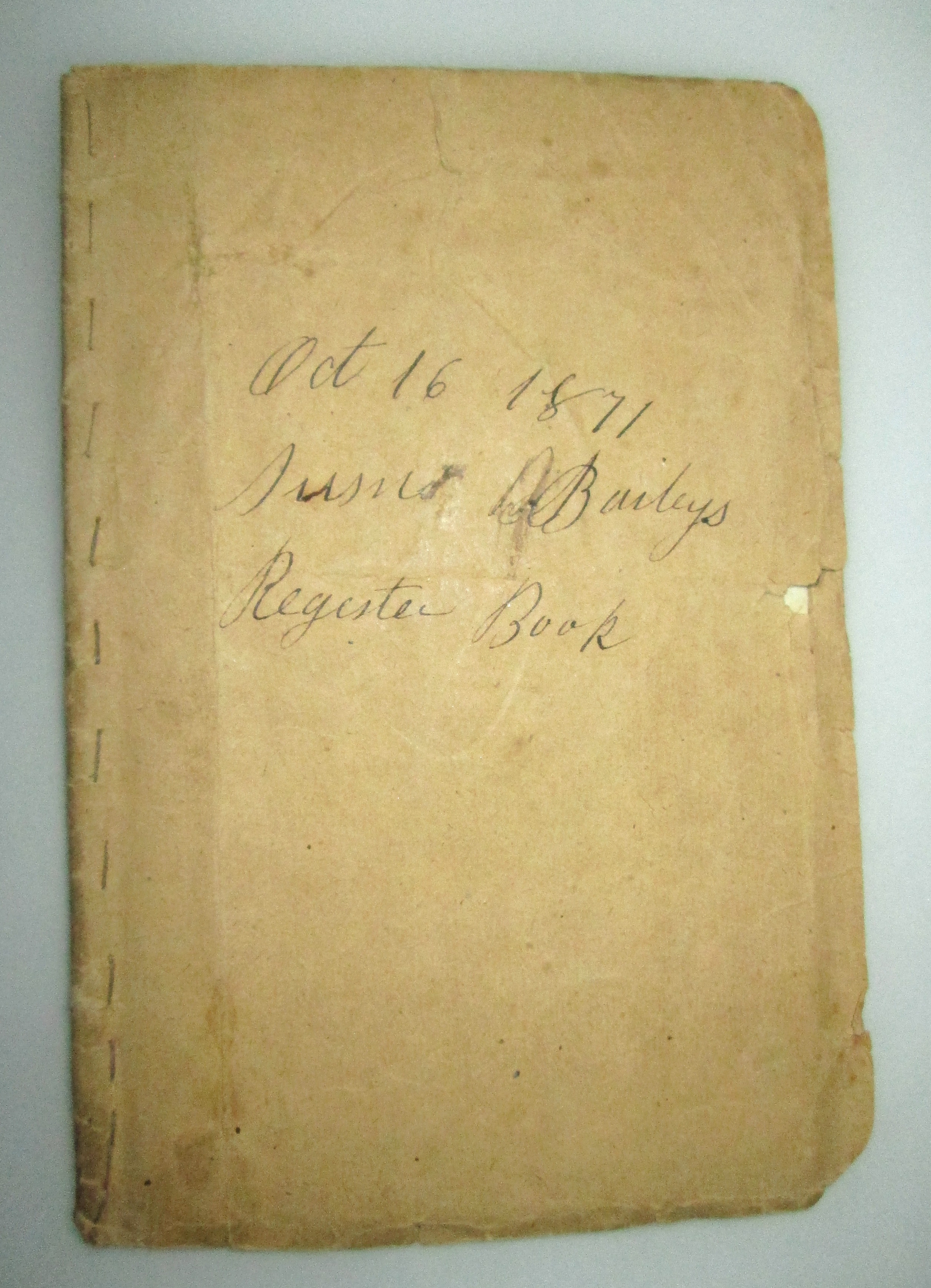
In a box with family letters and photographs was a little hand sewn booklet. It was sent to Susan by her sister Eliza Dodds in 1871.There is a letter in the front where Eliza explains that Susan should use it to record events in her life and though they may never see each other again there is comfort in knowing God is looking after them both. In it were recorded all the births and as life would have it, some of the deaths of her children. There are few clues to other parts of her life with only “Dada was made a church elder 1839 and I joined the church 1840.”

IMG_3067
Oct 16, 1871 Susan D Bailey Register Book

After they arrived in Toronto, Alexander worked as a carpenter while Susan began raising children. Their first child Eliza Jane was born in 1844, but died the next year. They had seven more children, another Eliza Jane, Mary, Robert, William, Isabella, James, and Joseph who would have kept Susan busy. It was the last, little Joseph, who appeared to have had the greatest effect on their lives. He died at seven years of age in August of 1871, falling from a pile of lumber. Perhaps his father was supposed to be watching him as at this point the family seemed to break apart.

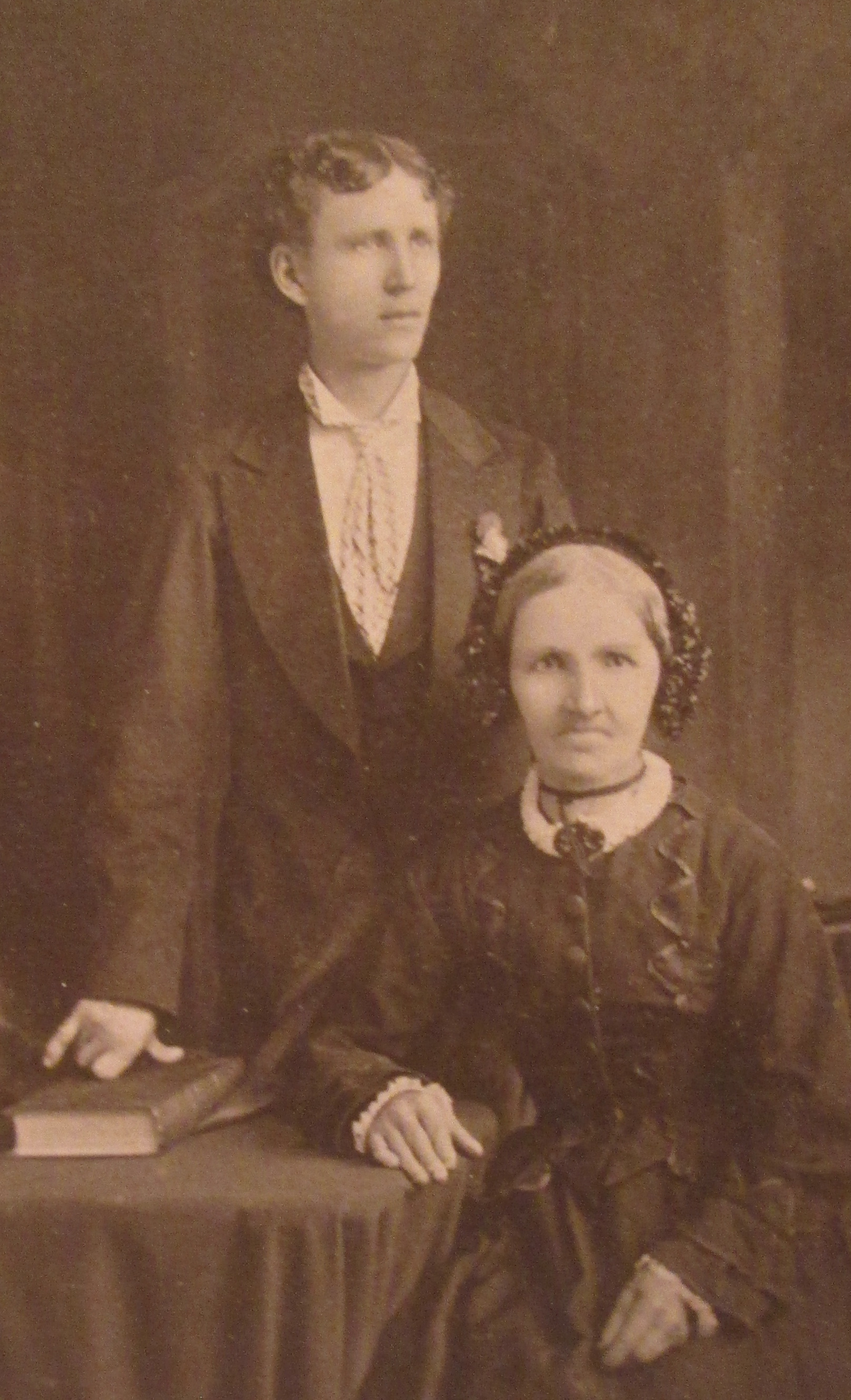
Even while mourning her son, Susan appeared to be a strong woman. She was recorded as the head of the household while her husband seemed to have disappeared. She held the family together as some of her children, Isabella and James continued to live with her until her death in 1896. Her son Robert pictured with her here, died of tuberculosis in 1882.

IMG_3815_2
Robert Bailey and mother Susan Dodds Bailey

When my mother began down sizing, she offered us an item from the house every birthday. The sampler was my first choice. It now hangs on my wall.

Notes:

Dodds, Eliza. Register Book. Letter to Susan Bailey. October 16, 1871. Ireland. The booklet was sent after Joseph died.

Dunlop, Samuel, Rev. Letter to To Whom It May Concern. 13 Apr. 1843. Ireland. In author’s possession.

“Canada Census, 1881,” index, FamilySearch (https://familysearch.org/pal:/MM9.1.1/MVF7-172 : accessed 19 Nov 2014), Susan Bailey, Yorkville, York East, Ontario, Canada; citing p. 126; Library and Archives Canada film number C-13248, Library and Archives Canada, Ottawa, Ontario; FHL microfilm 1375884.

With the help of Google I found the whole quote on the sampler.

“Swiftly thus our fleeting days, Bear us down life’s rapid stream. Upward lord our spirits raise. All below is but a dream.”    This is the second verse of a hymn “While with Ceaseless Course the Sun” by John Newton who also wrote Amazing Grace. It was in a book, Olney Hymns London: W Oliver 1779. Book II Hymn I.                                                                                                                                                                   

The place-name is also spelled Tatinclieve or Tattintlieve. It is 219 acres, in the county of Monaghan, the Barony of Cremorne, the parish of Muckno, Poor Law Union in 1857 in Castleblaney and in the Town land census of 1851 Part I, Vol III page 262.

It is assumed Susan’s parents were James Dodds and Jane McKee. There is a James Dodds renting 44 acres ( the most land in Tattinclave) in 1861. There is also a record that James Dodds was an elder in Garmony’s Grove Presbyterian Church in 1840.

Rev Samuel Dunlop was the minister in Garmony’s Grove Presbyterian Church from 1822 until his death in 1848. Garmony’s Grove was originally set up in connection with the Presbytry in Market Hill. The baptismal records only begin in 1844. Some of the people who attended this church may have been buried in Clarkesbridge or Newtownhamilton which is in Armagh. These three churches were united for a time. With the record of the marriage of Susan and Alexander being in Armagh, they might have been married in Newtownhamilton. This information was from Paula McGeough, personal communication.

Poor Little Children

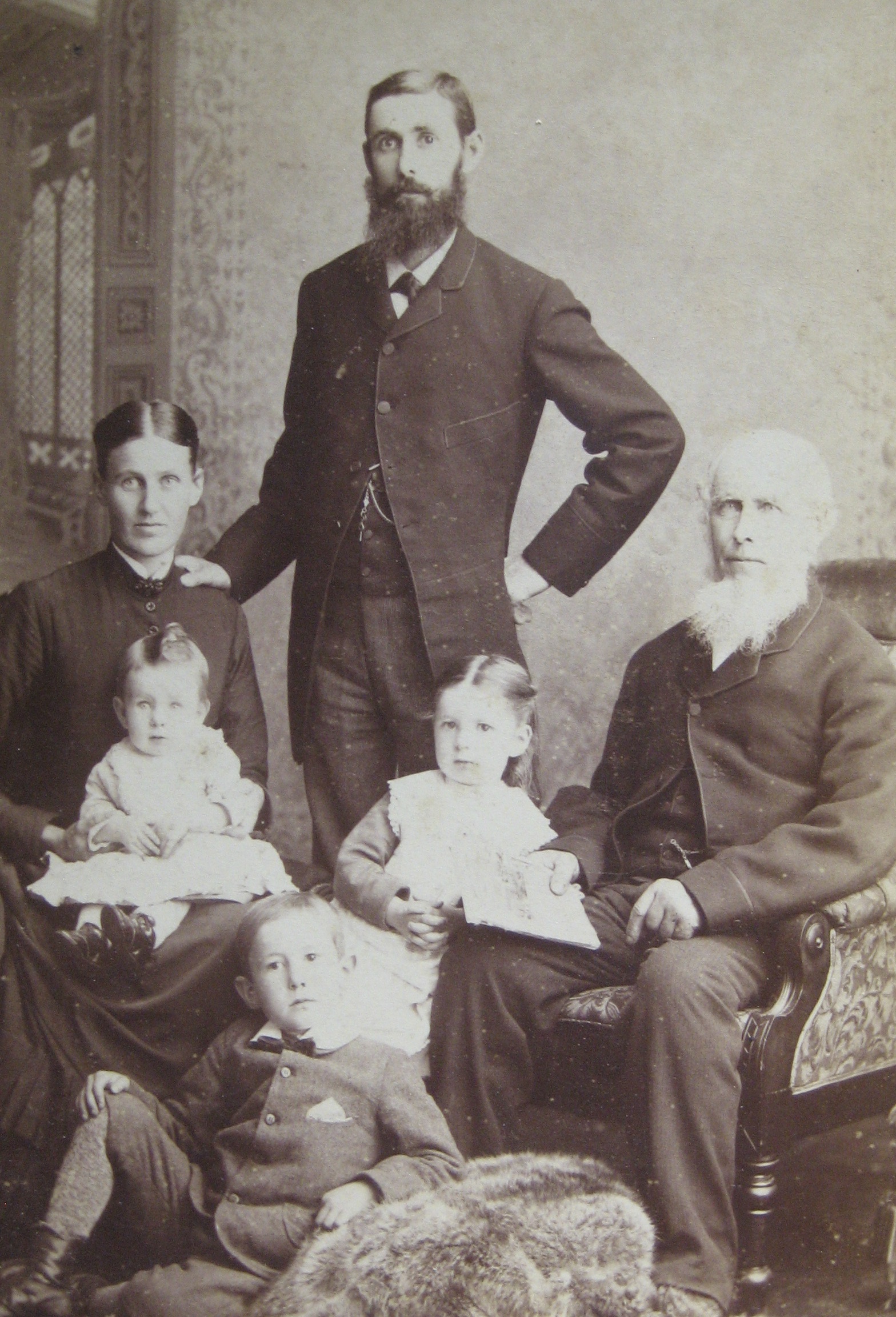
IMG_0424

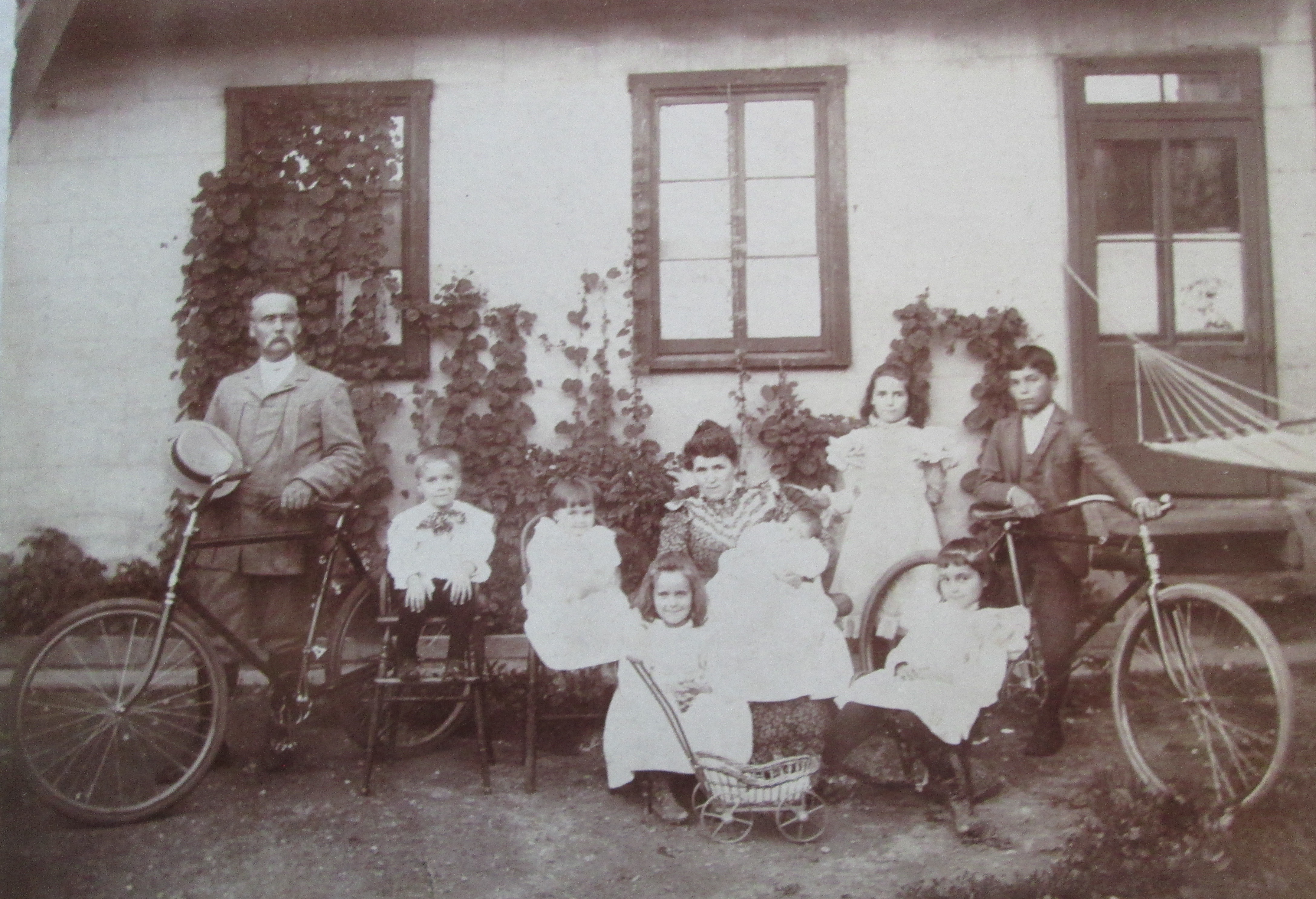
I always thought that my grandfather, William Sutherland was one of three children. He and his brother Wilson died before I was born and his sister Mary when I was a baby, so I never heard any information first hand. There is a picture of the family with three children, parents and grandfather. I always assumed the baby sitting on Alice Dickson Sutherland’s lap was Wilson, until one day I realized the eyes were light coloured. Wilson the youngest son definitely had brown eyes confirmed in many other pictures.

Thinking this was a child who had died, I searched through the Ontario Birth, Marriage and Death indexes. I found a James Dickson Sutherland who died at fourteen months, in January 1886, of bronchial pneumonia and thought he was a possible match. This was confirmed in a letter from Alice to a cousin Jessie McIntosh, where she mentioned little James Dickson. “Baby is growing he is pretty plump but not so big and fat as Willie was when he was his age. We call him James Dickson, he has dark hair, blue eyes and a deep dimple in his chin.”

It was certainly not unusual for young children to die before the discovery of antibiotics and vaccines. In my search I had noticed a Mowat Sutherland, who had died of diphtheria in 1891. Unfortunately, Ontario death certificates don’t give the parents names. No one else in the family had been called Mowat, but that was my great great grandmother’s maiden name. Then a “Knowat” Sutherland age two, was found in the 1891 census living with my great grandfather’s brother William and his wife Jessie Sutherland.

There was also an Elizabeth Mowat Sutherland, who died in 1890. I thought she was probably Mowat’s sister but hadn’t found any birth record. Then, in the LDS database I found both Mowat, Elizabeth Mowat and James Dickson buried in Mount Pleasant cemetery, plot M5120 owned by my great great grandfather William Sutherland.

I kept looking through the records. I searched through the birth records putting in different parents names and then just Sutherland, as I knew the death date and age, 9 months. I finally found a record of the birth of an Elizabeth Maud Sutherland whose parents weren’t William and Jessie Sutherland but rather Donald Sutherland and Alice Dixon (Dickson). This little girl was my great great aunt. She was born July 26, 1888 and died of bronchial pneumonia, April 22, 1889.

Imagine, three babies buried in plot M 5120 with their grandparents, but then there were four. Recently a Dickson baby boy was found to be buried in this plot. He was still born and probably the son of Alice’s brother James Dickson.

Donald and Alice lost two children before the youngest, Wilson was born. As the baby of the family he was spoiled according to all sources. His mother babied him and the explanation was undoubtedly the two children she lost. It was said he never had to learn the value of money and would buy a newspaper every day!

There was one more baby who was never mentioned. My grandmother Minnie Eagle Sutherland and her sister Amy had another younger sister. Elizabeth Martha Eagle, known as Bessie was born October 1, 1886 and died July 18, 1887 of cholera . Her mother Eliza Jane Eagle said, “God knew she could only cope with two children and took Bessie to heaven.”

Are there other little children to find so they too will be remembered?

IMG_3854
Robert Wilson Sutherland          Abt 1905

IMG_3866
Robert Wilson Sutherland                  Abt. 1920

Bibliography:

Ancestry.com. James Dickson Sutherland – Archives of Ontario. Registrations of Deaths, 1869-1938. MS 935, reels 1-615. Series: MS935; Reel: 45

 Year: 1891; Census Place: St Johns Ward, Toronto City, Ontario; Roll: T-6371; Family No: 3.

Archives of Ontario. Registrations of Births and Stillbirths – 1869-1913. MS 929, reels 1-245. Toronto, Ontario, Canada: Archives of Ontario.

“Ontario, Toronto Trust Cemeteries, 1826-1989,” index and images, FamilySearch (https://familysearch.org/pal:/MM9.1.1/KH6C-BDS : accessed 07 Mar 2014), Elizabeth Mowat Sutherland, 1889.

“Ontario, Toronto Trust Cemeteries, 1826-1989,” index and images, FamilySearch (https://familysearch.org/pal:/MM9.1.1/KH6C-FP9 : accessed 07 Mar 2014), Mowat Sutherland, 1891.

“Ontario, Toronto Trust Cemeteries, 1826-1989,” index and images, FamilySearch (https://familysearch.org/pal:/MM9.1.1/KH6H-378 : accessed 05 Apr 2014), Eliza M Eagle, 18 Jul 1887; citing Toronto, Ontario, Canada, section and lot T 94, line 11917, volume Volume 07, 1883-1891, Superintendent of Administrative Services; FHL microfilm 1617041.

Ontario, Toronto Trust Cemeteries, 1826-1989,” index and images, FamilySearch (https://familysearch.org/pal:/MM9.1.1/24MZ-7G5 : accessed 19 May 2014), Wm Sutherland in entry for Dickson, 05 Oct 1888; citing Toronto, Ontario, Canada, section and lot M 51 20, line 5000, volume Volume 01, 1876-1896, Superintendent of Administrative Services; FHL microfilm 1617049.

Personal communication with Elizabeth Sutherland Van Loben Sels. 2000.

Family letters from Carol MacIntosh Small. All the original letters were donated by Carol to the Bruce County Archives in Southampton, Ontario.

Letter from Alice Sutherland to Jessie McIntosh March 18, 1885.

Turkeys

IMG_7959

The mention of Thanksgiving or Christmas always brings up thoughts and smells of roasting turkey with stuffing, mashed potatoes covered with gravy, turnips, bright red cranberry sauce and fizzy cranberry drink with ginger-ale. There are also the family hors d’oeuvres; crackers, often Ritz, with cheese and an olive slice or just an anchovy. This is our traditional holiday dinner and apparently my ancestors also enjoyed turkey.

I am lucky to have a few letters written by my great grandparents, Donald and Alice Sutherland and funnily enough, most of them mentioned turkeys. They might have raised turkeys at one time, on their farm in Bruce County. William Sutherland obtained crown land in Carrick, Ontario in 1855. He and his family cleared the land and began farming but they later realized that farming wasn’t in their blood. Donald and some of his siblings had left for Toronto before William sold the farm in 1876 to his son William. Even this William preferred the big city and by 1879 the farm was sold again and all the Sutherlands were living in Toronto. They  still had ties to the country as many cousins remained farmers in Bruce County. Although they preferred urban life, it seems they would rather have farm fresh produce on their table.

The first note written by Donald on January 6, 1899 said, “We received the butter and turkeys alright. They are very nice. We will forward the amount next week.”

On December 17th 1900, Donald writes a long letter about his trip to Scotland and London and in closing says, “I want to know if you can send us three or four good fat turkies for Christmas. If you can please ship them by express early on Saturday before Christmas and I think we will get them on Monday, address to store 288 Yonge Street. We will give whatever price is going.” One can just picture a crate of gobbling turkeys in the middle of the book store. Mail service must have been very reliable at the time! There was no haggling over the price.

The third letter was written by his wife Alice, December 19, 1901. Christmas was again approaching and and she wanted to know, “well what about turkeys if you have any to sell you might send us three or four, they were fine last year, if you have none to sell let us know as soon as you can.” She continues giving a little news about other family members and closes with“hoping you can let us have some turkey I remain your cousin Alice.” It seemed late to place a turkey order but they probably received them.

There was another letter in Carol’s book and of course it also mentioned turkeys. January 7, 1904, “Dear Cousins, I must apologize for delay in answering. The Turkeys came alright and was very acceptable. Thanks for same. We weighed the two largest ones but the smaller one was missed however as the two weighed 9 lbs each and the other not any more we will reckon 27 lbs @ 12 c = $3.24. You will find enclosed a P.O. Order for $3.25 to cover the three turkeys. If you have any more left and could send us other three we could use them. We never get beat eating Turkey although a little more expensive than ordinary meat yet they are good.”

When I received copies of the letters, I sent them on to my siblings. We all had a good laugh and this prompted, in many subsequent emails the mention of turkeys in every way shape and form. We thought these letters were really funny and have continued telling turkey jokes. It’s only a little thing but they bring the ancestors to life.

Bibliography:

Small, Carol A. The McIntoshes of Inchverry. Denfield, Ont.: Maple Hurst, 2008. Print.

Sutherland, Donald. Letter to Gordon McIntosh. 06 Jan. 1899. MS. 204 Younge Street, Toronto, Ontario, Canada.

Sutherland, Donald. Letter to McIntosh Cousins. 17 Dec. 1900. MS. 288 Yonge Street, Toronto, Ontario, Canada.

Sutherland, Alice. Letter to McIntosh Cousins. 19 Dec. 1901. MS 167 Seaton Street, Toronto, Ontario, Canada

Sutherland, Donald. Letter to McIntosh Cousins. Jan 7, 1904. MS 167 Seaton Street, Toronto, Ontario, Canada

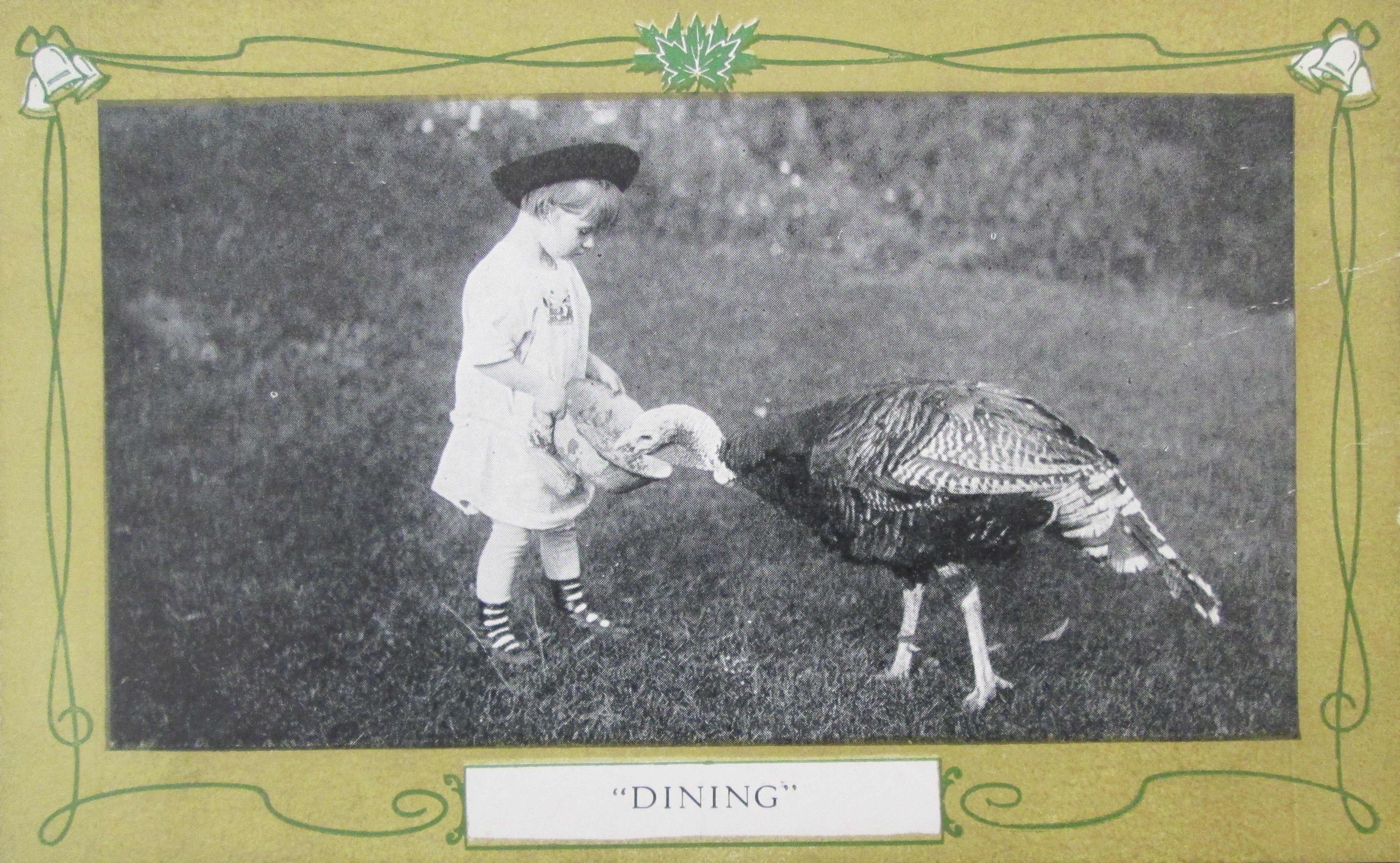
Postcard: The Montreal Standard’s Christmas Greeting card No. 9 printed in Canada

Call Me Ismael

IMG_7917
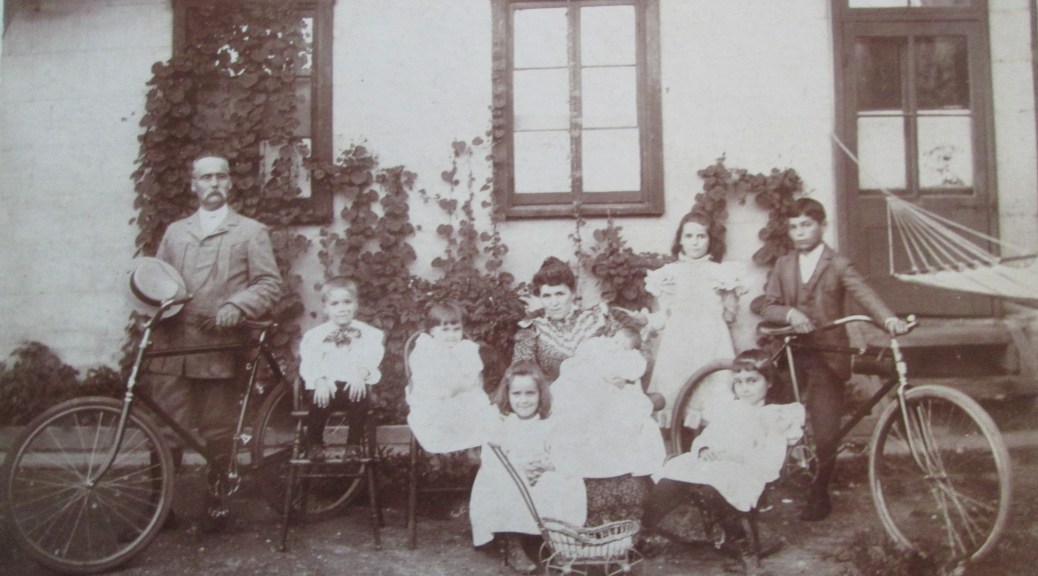
The Bruneau family in Montreal about 1899

 He arrived when the service was almost over. He walked to the pulpit and announced the last hymn “Seigneur Tu donne Ta Grace.” As the organ played he collapsed to the floor. So ended the life of Ismael Bruneau, my great grandfather.

His life began in 1852 as Ismaer Bruneau in St-Constant Quebec, just south of Montreal. Ismaer was the eleventh of thirteen children and the youngest son of Barnabé Bruneau and Sophie Prudhomme. He attended the French Protestant school in Pointe aux Trembles and one summer went to West Randolph, Vermont to work in the mills. He spent a lot of time thinking about his future. He had written for advice to the principal of the school, Dr. Tanner who encouraged him to return to his studies and take the classes for those considering the ministry.

He was not sure of that path. One day he was out walking in the woods and climbed to the top of a hill. He sat facing Canada and prayed to God about the decisions he must make. As he reported, there was a dark cloud on the horizon and a voice spoke to him as if from the sky, telling him to return home and study, then travel and spread the gospel.

Ismaer continued his studies at Pointe aux Trembles and was then admitted to the Presbyterian College in Montreal, which had begun teaching subjects in French. At this time he changed his name from Ismaer to Ismael which he thought was more biblical and added Prudhomme as a middle name in honour of his mother.

After graduating, he was sent to Saint-Anne’s Kankakee County, Illinois to work with Father Chiniquy. Father Chiniquy was a Catholic priest who had left Quebec in the wake of several scandals. His zeal for God remained intense but not his feelings for the Catholic Church, which he renounced. He made his beliefs known to his congregation and they all chose to follow him and convert to Protestantism.

One family living in Kankakee was the Girods, who had recently immigrated from Switzerland. When their daughter Ida, a teacher in Baltimore came to visit, she was introduced to their minister. Ismael had been very homesick and often wrote letters home. He began writing about the lovely woman he had met. Then in one letter, he wrote to his sister Anais, “ Wouldn’t you like to come out after the harvest and see my wife. It would be worth it for without a doubt she is one of the beauties of the world in my eyes.” Ismael and Ida were married June 12, 1886.

The Bruneaus had three children in Green Bay, Wisconsin, one in Holyoke, Massachusetts, three in Quebec City and the last three in Montreal. Ismael had wanted a biblical family, a child for each of the 12 tribes of Israel but in the end had only 10. Nine of the children survived. He continued moving and preaching, taking a charge in Cornwall, Ontario and finally in 1917 back to Quebec City.

In Quebec, he had a church in the Old City as well as a congregation in Portneuf. He would conduct the morning service, catch the train to Portneuf for an afternoon service and be back in Quebec City in time for the evening service. On January 27, 1918 the train was delayed because of a troop train. Arriving late in Quebec City he ran up the hill from the station. He entered the church before the service ended but while his spirit was still willing his heart was weak. His family suffered financial hardships after his death as there were no pensions and the Presbyterian Church sent his widow one cheque for the days he had worked that month and nothing more.

Bibliography:

Bruneau, Ida. A Short History of the Bruneau – Girod Families. 1993.

Duclos, Rieul P. Histoire Du Protestantisme Français Au Canada Et Aux États-Unis. Montreal, Canada: 1912. Print

Villard, Paul. Up to the Light: The Story of French Protestantism in Canada. Toronto: Issued for the Board of Home Missions of the United Church of Canada by the Committee on Literature, General Publicity and Missionary Education of the United Church of Canada, 1928. Print.

Here is a link to a story about Ismael’s wife Ida Girod.

https://wordpress.com/post/genealogyensemble.com/3674

Barnabé Bruneau, Why a Protestant?

IMG_9033
Barnabe & Sophie Bruneau

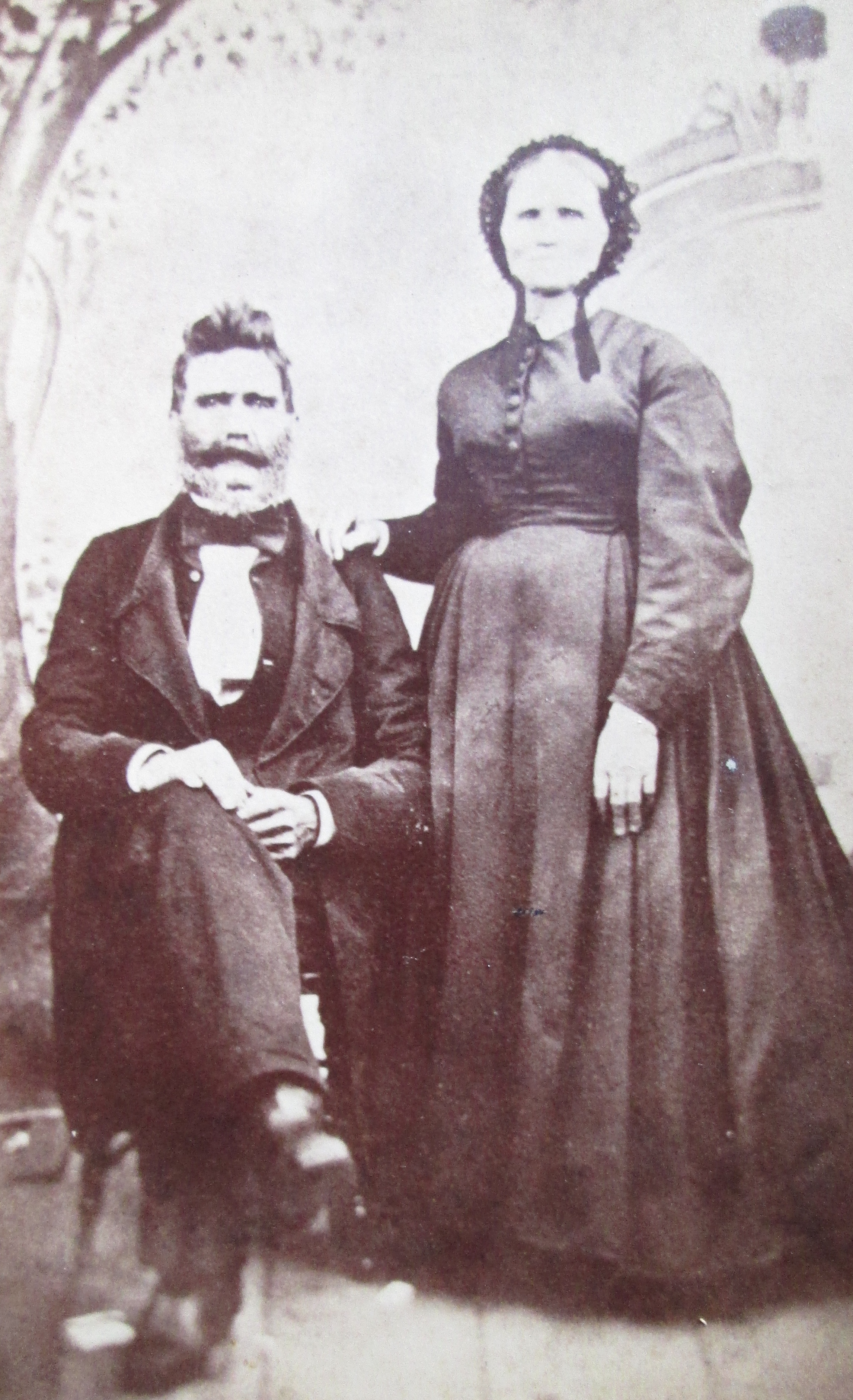
Whenever I tell someone my ancestors were French Protestants, I always get the reply, “Oh, Huguenots”, but that is not the story. Francois Bruneau came to Quebec in 1659 from France and he was a Catholic. He married Marie Provost a Filles du Roi in 1669 and they began our French Catholic line. The family remained Catholic until Barnabe Bruneau had a bone to pick with the church and became a Baptist. The reasons why depend on who is telling the story.

Barnabé was the son of Antoine Bruneau and Josephte Robichaud. He and his second wife, Sophie Prudhomme, the daughter of Jeramie Prudhomme and Louise Decarie, lived in Sainte Constant Quebec. There they farmed, raised their children and attended the local Catholic Church. Barnabé owned a number of parcels of land, one of which was just inside the border of Sainte-Catherine in the parish of La Prairie. 

In 1856 when the church was collecting the tithe due them from his land, both parishes wanted their tax. Barnabé refused to pay the Curé of Sainte-Catherine. He tried to stop his tithe obligation, by telling the Curé he was leaving the Catholic Church, but they still sued him. With his lawyer Joseph Doutse, who had the reputation of being a great adversary of the Catholic Church, Barnabé went to court and won. With that, he decided to attend the Baptist church, Eglise Baptiste de Saint Constant. He was the first person in the St Constant region to convert to the evangelical faith.

Barnabé’s parents had already died and were safely buried in the crypt of the St Constant Catholic Church, so they were not upset by his conversion. His brother Médard continued to attend the Catholic Church until one Sunday the priest preached that Protestants were devils with cloven hooves, who worshipped Satan and didn’t belong to the true church. Médard came home from church and demanded to see Barnabé’s feet. When they were not cloven, he denounced the priest as a liar and he too left the church and became a Baptist.

As there are notarial documents about the court case this is probably close to the truth but depending on which cousin you ask you will get other stories. One was that the Bruneau brothers learned that the local priest had been “fooling around” with some wives while the husbands were working in their fields and so they left the Catholic Church and became Baptists.

There was another version for those who didn’t want their family to have been involved in any scandals. The Catholics in the area saw that their tithes did not provide for any schooling while the Protestant church was very interested in educating their children and had begun setting up schools. The Catholics in the area tried to persuade the church to start a school but finally, in frustration, the whole congregation walked out of the Catholic Church and joined the Baptist Church.

They certainly did become Protestants. The family committed themselves to the Protestant church as Barnabé’s son Ismael, my great-grandfather had the calling and became a Presbyterian minister.

Bibliography:

Bruneau, Ida. A Short History of the Bruneau – Girod Families. 1993.

Duclos, R.P. Histoire du Protestantisme Francais au Canada et aux Etas-Unis. Montreal, Canada: 1912.

Prévost, Robert. Mon Tour De Jardin. Sillery, Québec: Septentrion, 2002. Print.

Gagné, Jacques. Baptist Churches of Lower Canada & Québec Compiled and researched by: gagne.jacques@sympatico.ca

Photograph of Barnabe and Sophie Marie Prud’homme Bruneau taken by Ayers Photo-Portraits in Jersey City, New Jersey in the 1870s.

This is the link to a story about Barnabe’s son Ismael https://wordpress.com/post/genealogyensemble.com/1237


Every Scrap of Paper

 I have stuff, lots and lots of stuff. I have letters tied with string, photographs in envelopes and albums, documents, census printouts and family trees in binders. I have boxes of stuff and filing cabinets of stuff.

One good genealogical process I hadn’t done for a while was to go back through all the information I had collected. You never know what might come out of it. As you learn more, things that meant nothing, suddenly make sense.

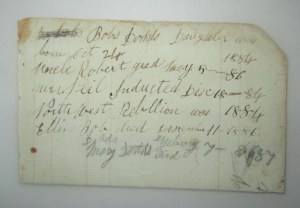
Recently, I looked through some binders searching for information I wanted to reference. I love looking through the stuff and reading old letters again and again. In one binder I found a piece of old paper. It looked like it came from a note book but didn’t fit the handmade one that was there. That note book belonged to my great great grandmother Susan Dodds. She married Alexander Bailey in 1843 just before they came to Canada from Ireland. It was sent to her by her sister Eliza and that is all I know about her siblings and families.

IMG_3076

The paper had a list of names and dates:

“Bob Dodd’s daughter born Oct 24 1884, Uncle Robert gied May 5 86, Mr Peil inducted buc 18 – 84, North West Rebellion was 1884, Ellin’s Bob died Dec 11, 1886 and Mary Dodds died 7, 1887.”

Who were these people and how did they connect to the family? Just looking up these dates on Family Search I found that in 1881, a Robert Dodds born about 1809 in Ireland, his son Robert and a servant Ellen Graham were all living together in Toronto. His wife Agnes had died. Robert Jr.(Bob) and Ellen Graham were married in 1883 and a daughter Gertrude was born Oct 24, 1884, also in Toronto. Gertrude appeared to be their only child. Robert senior died May 5, 1886 and then his son Bob soon followed, dying Dec 14, 1886. Both were buried in Mount Pleasant Cemetery. There was no further information on Ellen but in the 1901 census Gertrude was living with her Uncle Andrew Miller and his wife Eliza, both Irish. Was aunt Eliza, Bob Dodd’s sister? Gertrude married Samuel J Wilson and she died 18 May 1935.

I also found a Mary Dodds who died Feb 7, 1887 at 40 years of age. Was she also Bob Dodd’s sister? I confirmed all these dates in less than 30 minutes sitting in my recliner. Unfortunately, I still don’t know for sure how these people connect with Susan Dodds, but they must be related as someone, and I think it was Susan recorded these dates.

In with these family dates was the North West Rebellion 1884. This shows interest in what was happening in Canada at that time. This was the year Louis Riel was captured and hanged. I am still not sure of the meaning of Mr Peil or was it Mr Riel and Inducted buc 1884?

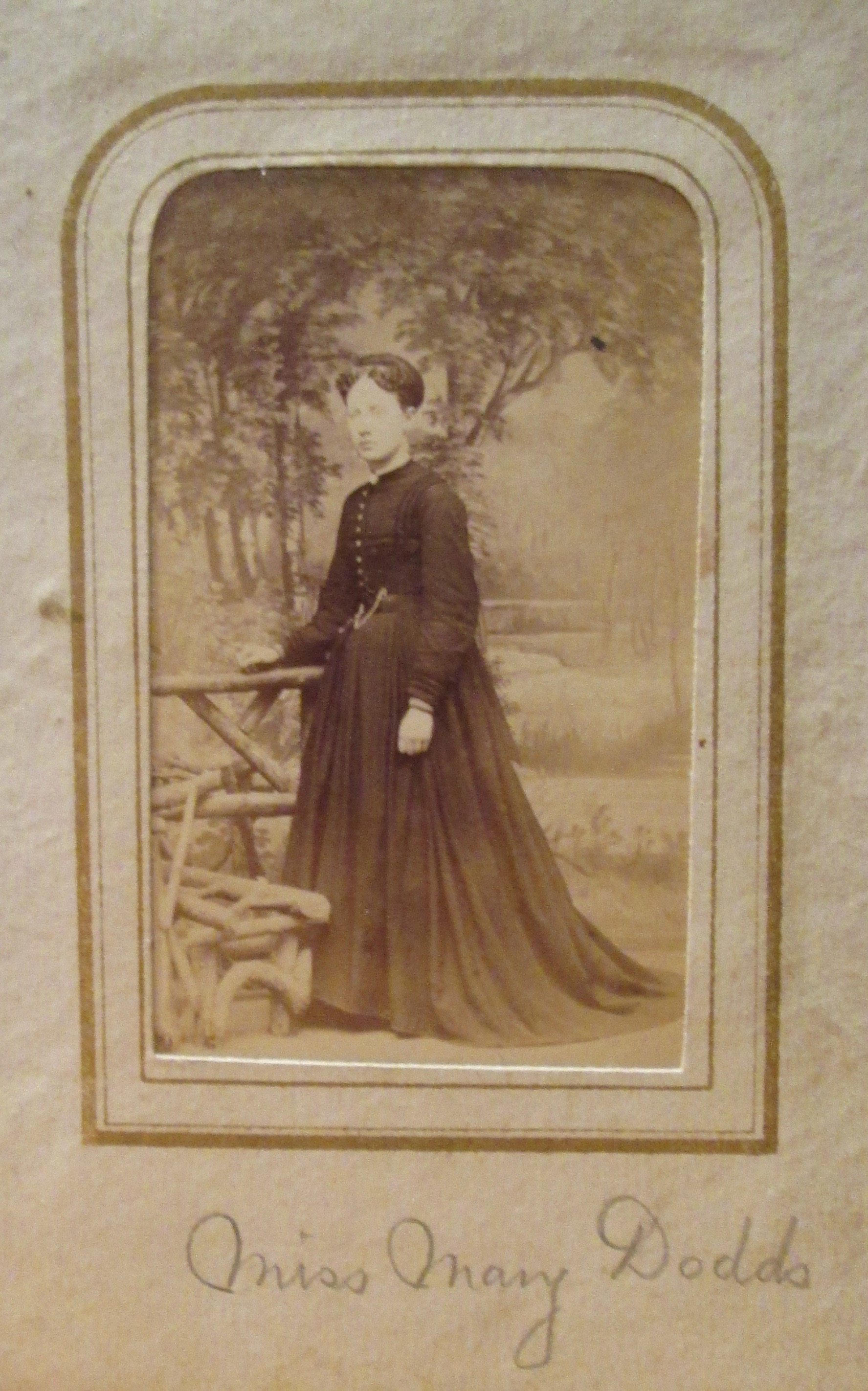
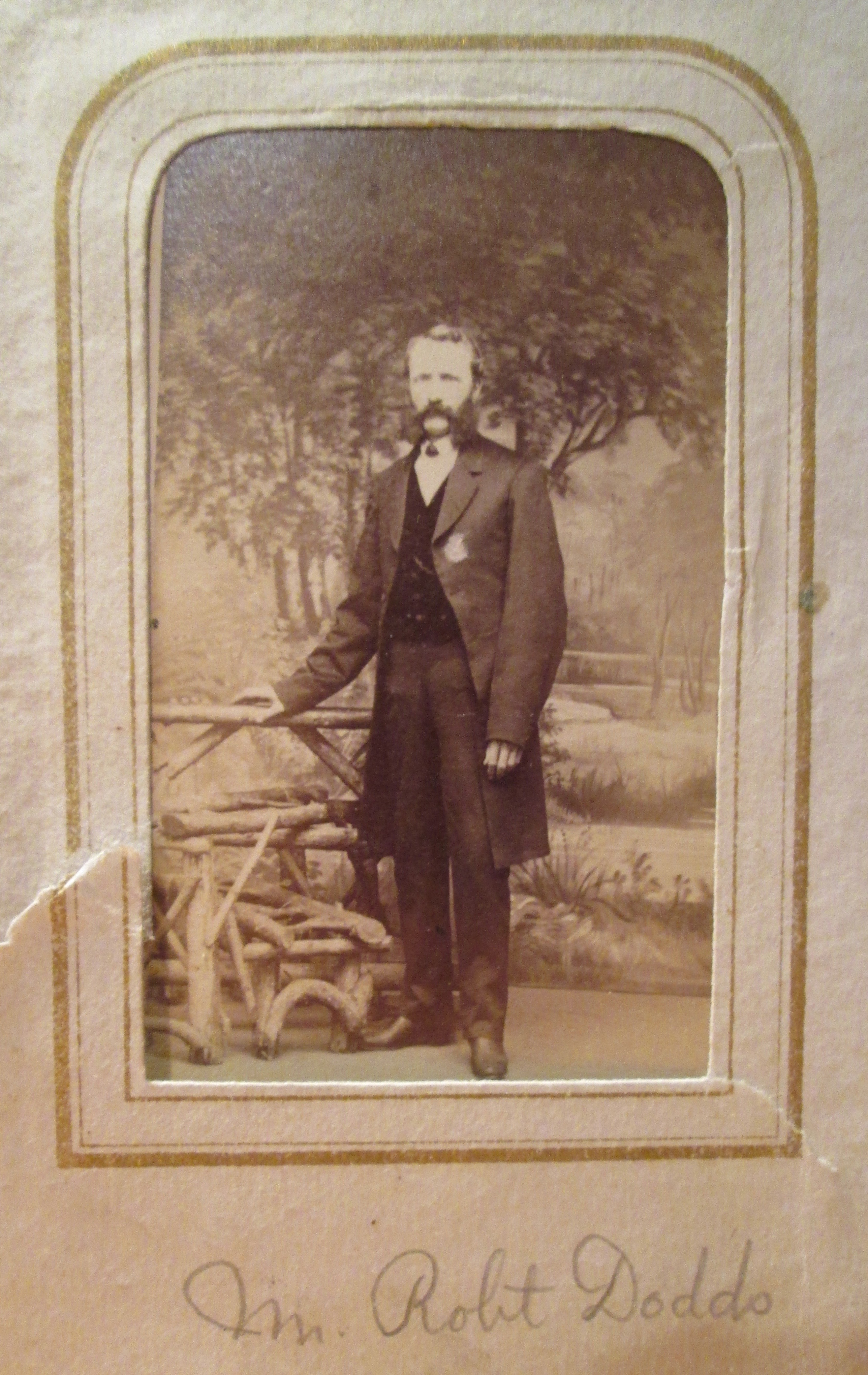
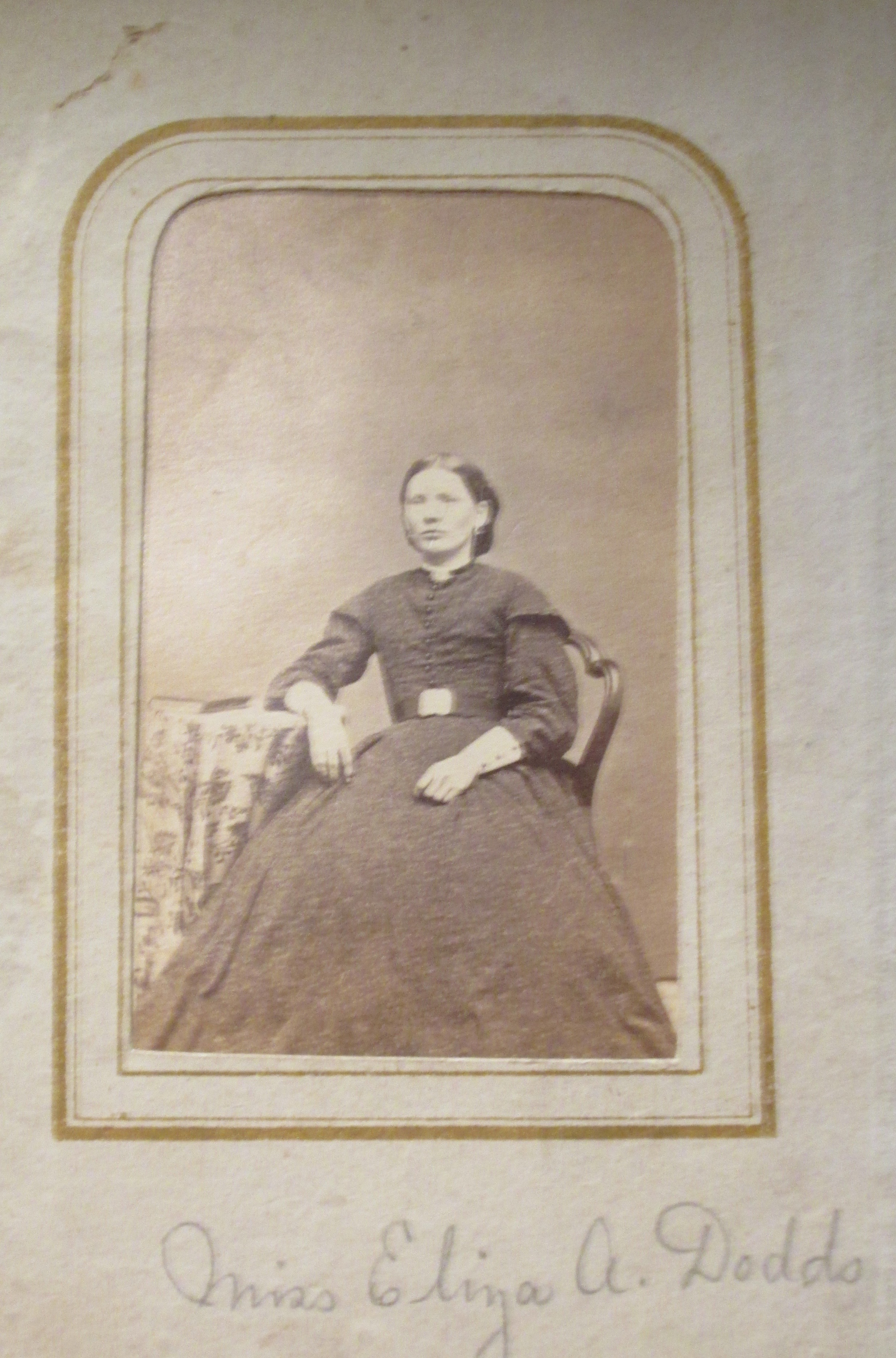
I also have a photo album a “Mrs Barber wanted to leave to Mrs Eagle.” Eliza Jane Bailey Eagle was Susan’s daughter. In it are pictures of a Mary Dodds, Robert Dodds and Eliza Dodds. Most of the pictures have names written underneath, probably by my grandmother Minnie Eagle Sutherland, so they are all people known to the family.

Maybe somewhere is another scrap of paper with answers to these questions.

IMG_7720 IMG_7722 IMG_7725

Bibliography:

“Canada Census, 1871,” index, FamilySearch (https://familysearch.org/pal:/MM9.1.1/M43R-1X4 : accessed 13 March 2015), Robert Dodds, St Partick’s Ward, West Toronto, Ontario, Canada; citing p. 4, line 15; Library and Archives Canada film number C-9970, Public Archives, Ottawa, Ontario; FHL microfilm 4,396,300.

“Canada Census, 1881,” index, FamilySearch (https://familysearch.org/pal:/MM9.1.1/MVFS-PXP : accessed 13 March 2015), Robert Dodds, St-John’s Ward, Toronto (City), Ontario, Canada; citing p. 152; Library and Archives Canada film number C-13246, Library and Archives Canada, Ottawa, Ontario; FHL microfilm 1,375,882.

“Ontario Marriages, 1869-1927,” index, FamilySearch (https://familysearch.org/pal:/MM9.1.1/FMJC-MZK : accessed 13 March 2015), Robert Dodds and Ellen Graham, 13 Sep 1883; citing registration 015093, Toronto, York, Ontario, Canada, Archives of Ontario, Toronto; FHL microfilm 1,869,764.

“Ontario Deaths, 1869-1937 and Overseas Deaths, 1939-1947,” index, FamilySearch (https://familysearch.org/pal:/MM9.1.1/JDG5-BNR : accessed 13 March 2015), Robert Dodds, 05 May 1886; citing Toronto, York, Ontario, yr 1886 cn 22384, Archives of Ontario, Toronto; FHL microfilm 1,853,483.

“Ontario Deaths, 1869-1937 and Overseas Deaths, 1939-1947,” index, FamilySearch (https://familysearch.org/pal:/MM9.1.1/JDR3-1XQ : accessed 13 March 2015), Mary Dodds, 07 Feb 1887; citing Toronto, York, Ontario, yr 1887 cn 19737, Archives of Ontario, Toronto; FHL microfilm 1,853,487.