Category Archives: British Columbia

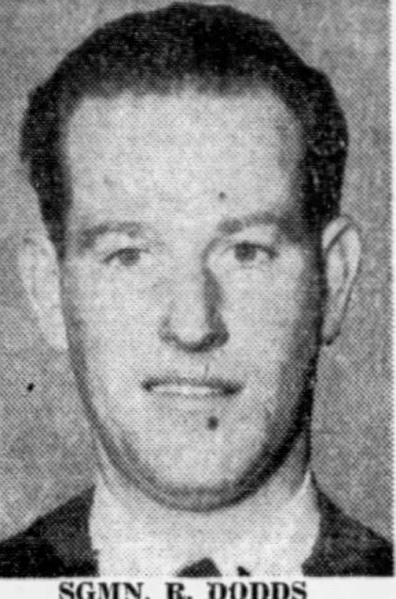
Ralph Dodds, Signalman, Royal Canadian Navy

My aunt, Sarah Jane McHugh, was delighted to host the linen shower to celebrate her daughter, Dawna Day’s upcoming marriage to Ralph Dodds. The happy couple announced their engagement in October 1947. Ralph had recently been discharged after serving in the Royal Canadian Navy for over six years.  The couple’s wedding would take place in Vancouver, Ralph’s home town. Dawna was from Montreal.

Ralph was just 20 when he started his navy career in Esquimalt, British Columbia in 1939.1 With the advent of World War II, the Esquimalt Navy base became the largest naval training center in western Canada. 2 Ralph Dodds trained to become a signalman would have learned all aspects of military communications in the Canadian Navy. He would have used semaphore flags, read and transmitted morse code messages, and assured radio communications.3 During his training, Ralph would not have predicted that he would participate in the sinking of a German U-boat during the Battle of the Atlantic, that he would be on a destroyer that participated in a sea fight on D-Day, or that the destroyer he was on would be shipwrecked off the coast of Iceland.
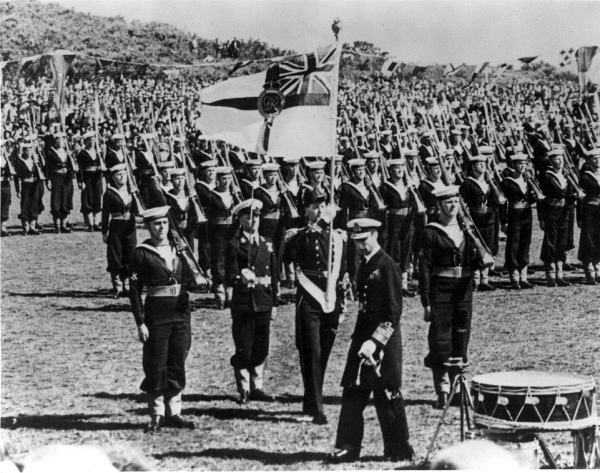
King George VI presents the King’s Colours to the Royal Canadian Navy at Beacon Hill Park, Victoria, 1939. Photo: CFB Esquimalt Naval and Military Museum collection

While Ralph was assigned to a naval station, and to a corvette (small destroyer), for most of his naval career, he was assigned to the HMCS Skeena.
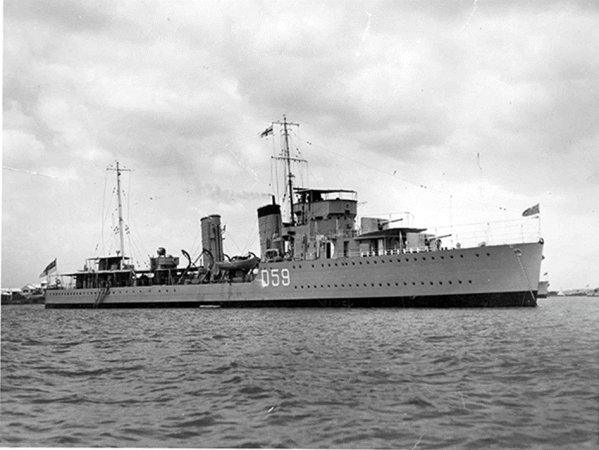
HMCS Skeena, D59, Government of Canada website, Ships’ histories

The HMCS Skeena was commissioned in 1931 in Portsmouth, U.K. and was one of the first two ships built to Canadian order. With the outbreak of the war, the Skeena initially performed domestic escort duties. In May 1940, she was sent to Plymouth, U.K. and became part of the Western Approaches Command, taking part in the evacuation of France and escorting convoys in British waters. She was later assigned to continuous convoy duty.

During one of its escort duties in the Atlantic, the Skeena destroyed U-boat U-588. This happened during ON-115 (ON means Outbound to North America).  There were twelve escort ships for a trade convoy of 43 merchant ships that left Liverpool on July 12, 1942. On July 29, seven U-boats of the Wolfpack Wolf had spotted them. This Wolfpack was quickly joined by another six U-boats of the Wolfpack Pirat. The Wolf Pack tactic, or the “Rudeltaktik,” was devised to attack the Allied convoy system by forming into position effecting a massed organized attack.4 This particular battle resulted in the loss of three of the ships in the convoy and significant damage to two of the ships in the convoy. One of the damaged ships returned to the U.K. and one was escorted to St. John’s, Newfoundland. The Skeena, on which Ralph was a signalman, and the HMCS Wetaskiwin, an escort corvette, destroyed U-boat 588 with depth charges (antisubmarine missiles) on July 31. The hostilities lasted until August 3 when the U-boats lost contact with the convoy due to misty weather. The convoy with the remaining ships reached Boston on August 8, 1942.5
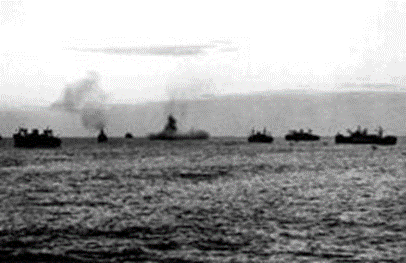
The sinking of American freighters, Edward Rutledge, Tasker H. Bliss and Hugh L. Scott at Fedala Roads, November 12, 1942
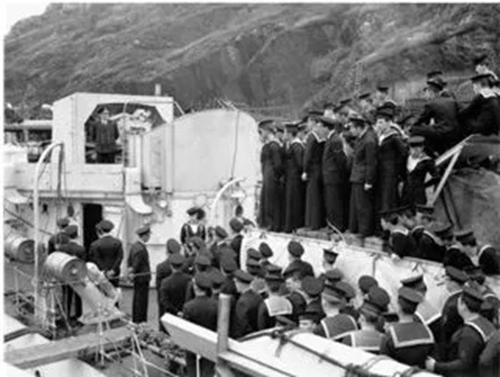
Commodore Leonard Murray congratulating the ship’s companies of HMCS Skeena and HMCS Wetaskiwin for sinking the German submarine U-588 on 31 July 1942. St. John’s, Newfoundland, Aug. 4, 1942. (NAC PA-115347)

The Skeena also participated in a hot sea fight in the Channel on D-Day. The Skeena’s assignment was to prevent enemy U-boats from attacking Allied ships while the Invasion of France was being carried out.

“Torpedoes were shooting about in the Channel and missed the Skeena by only a matter of feet,” said Ralph in an interview he gave to the Vancouver Sun.

The destroyer also had to contend with German Dorniers (bombers) that were bombing the destroyers in the Channel. One of the aerial missiles fell so close to the Skeena that shrapnel was later found on the deck.6
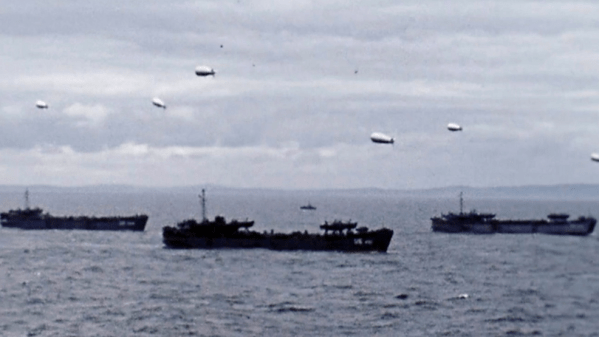
Ships and blimps sit off the coast of France on D-Day, June 6, 1944. War Footage From the George Stevens Collection at the Library of Congress

After five years of war, the HMCS Skeena met her end as she sheltered from a violent gale with 15-metre waves off the coast of Iceland, at Videy Island on October 24, 1944. Even though the crew had thrown out a second anchor to secure the ship, the Skeena smashed into the rocks. When the crew abandoned ship, the men were unable to hold the lines. Some crew members were smashed into the rocks, while others were tossed into the sea. Fifteen sailors died.7 Ralph Dodds survived.
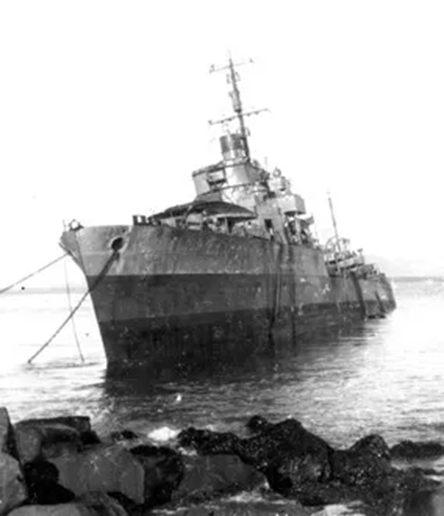
HMCS Skeena aground on Videy Island. (Image Source: http://www.forposterityssake.ca/Navy/HMCS_SKEENA_D59.htm#Photos)
  1. Vancouver Sun, D-Day Fight in Channel Recalled by B.C. Sailor, 13 December 1944.
  2. Vance, Emily. Capital Daily, How Canada’s Pacific Fleet Shaped Greater Victoria Over Two Centuries, 1 May 2021, https://www.capitaldaily.ca/news/canadas-pacific-fleet-greater-victoria-two-centuries, accessed 24 July 2023.
  3. Wikipedia, Signaller, https://en.wikipedia.org/wiki/Signaller, accessed 24 July 2023.
  4. Uboataces, German U-Boat, U-Boat Tactics, The Wolf Pack, http://www.uboataces.com/tactics-wolfpack.shtml, accessed 31 July 2023.
  5. Wikipedia, Convoy ON115, https://en.wikipedia.org/wiki/Convoy_ON_115, accessed 26 July 2023.
  6. Vancouver Sun, D-Day Fight in Channel Recalled by B.C. Sailor, 13 December 1944.
  7. Military History Now, HMCS Skeena – Meet One of the Toughest Warships of the Battle of the Atlantic, 12 November 2020, https://militaryhistorynow.com/2020/11/12/hmcs-skeena-meet-one-of-the-toughest-warships-of-the-battle-of-the-atlantic/, accessed 2 August 2023.
The Making of a Canadian Artist

JULIUS GRIFFITH
RCA, OSA, CSPWC, CSGA
(1912-1997)

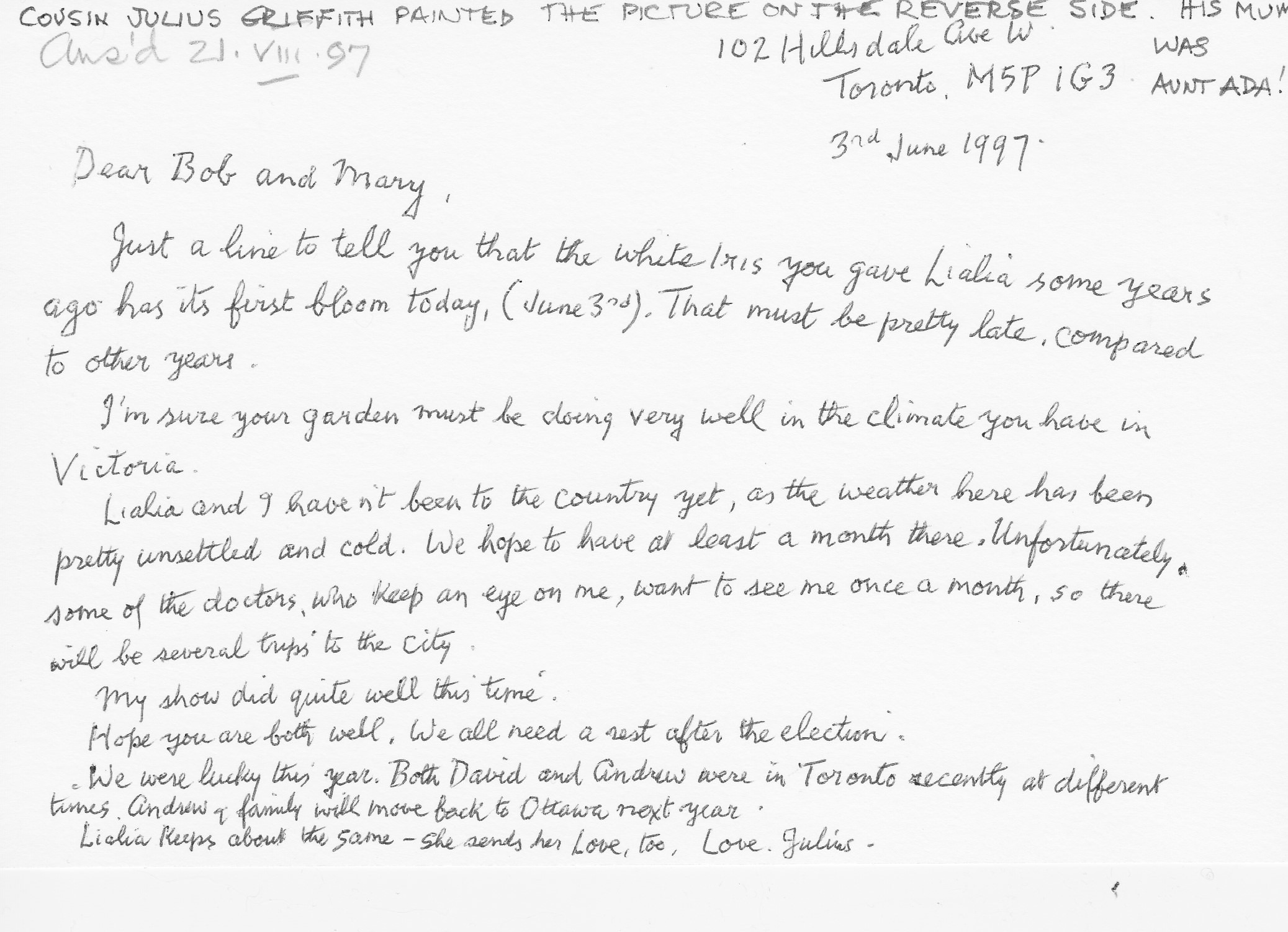
My collection of genealogy treasures includes two picture postcards sent to my Aunt Mary by her talented artist cousin, Julius Griffith, prior to his death in November 1997.

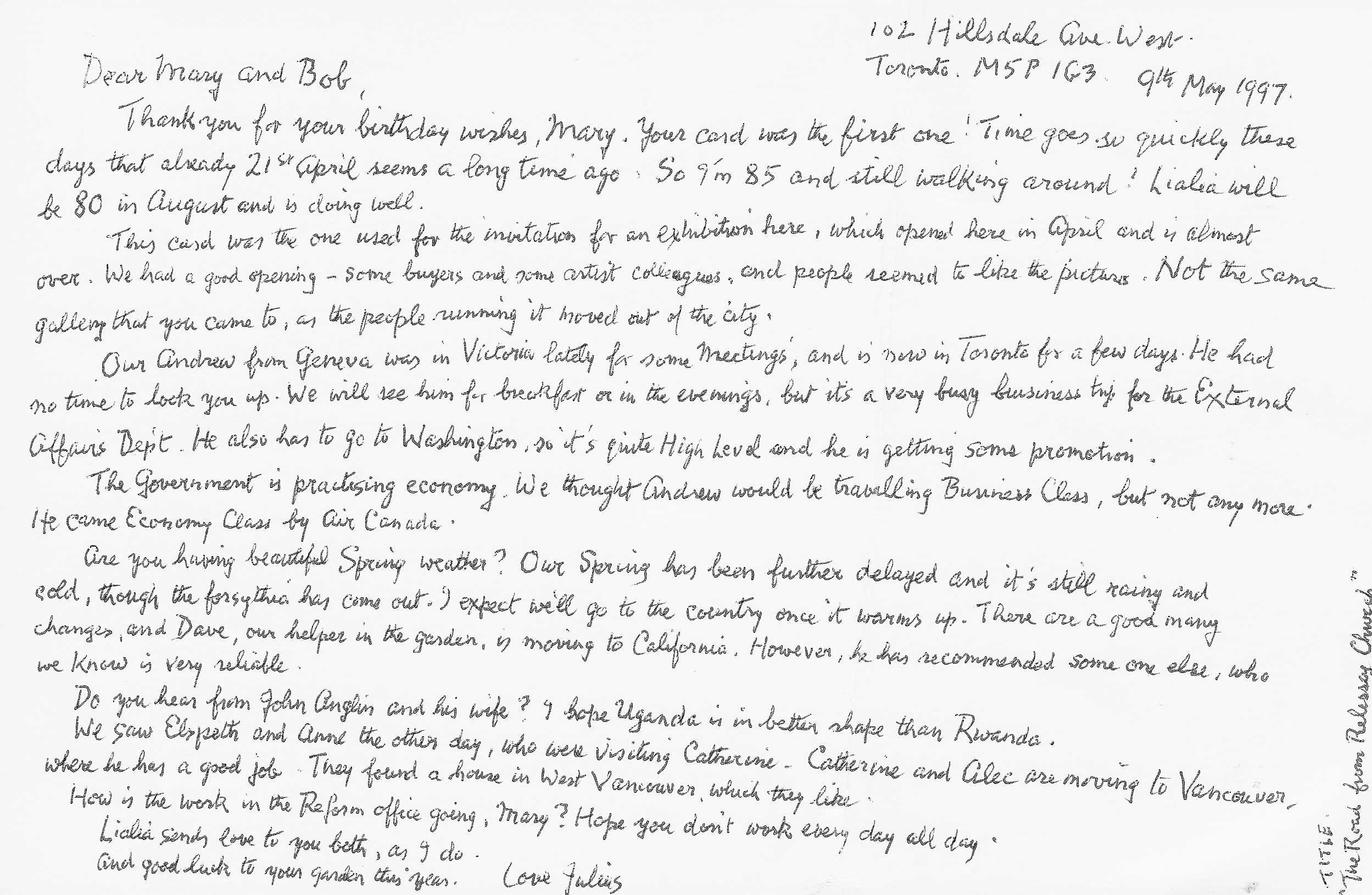
His meticulous handwriting described that day’s garden blooms, commented on the recent election, provided a short health update, news of a son moving back to Ottawa with his family and Lialia sending her love. At the very end, he writes “my show did quite well this time.”

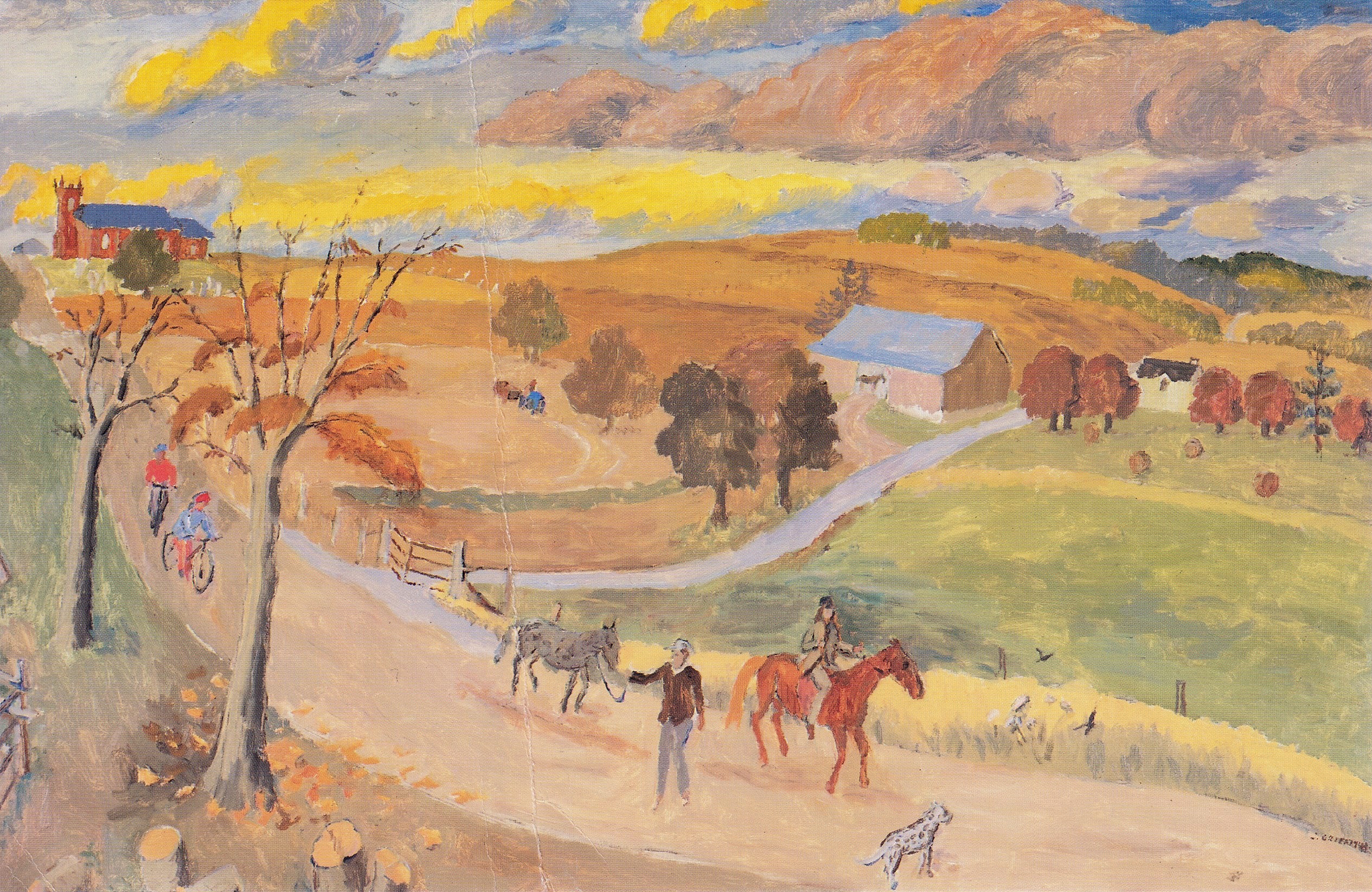
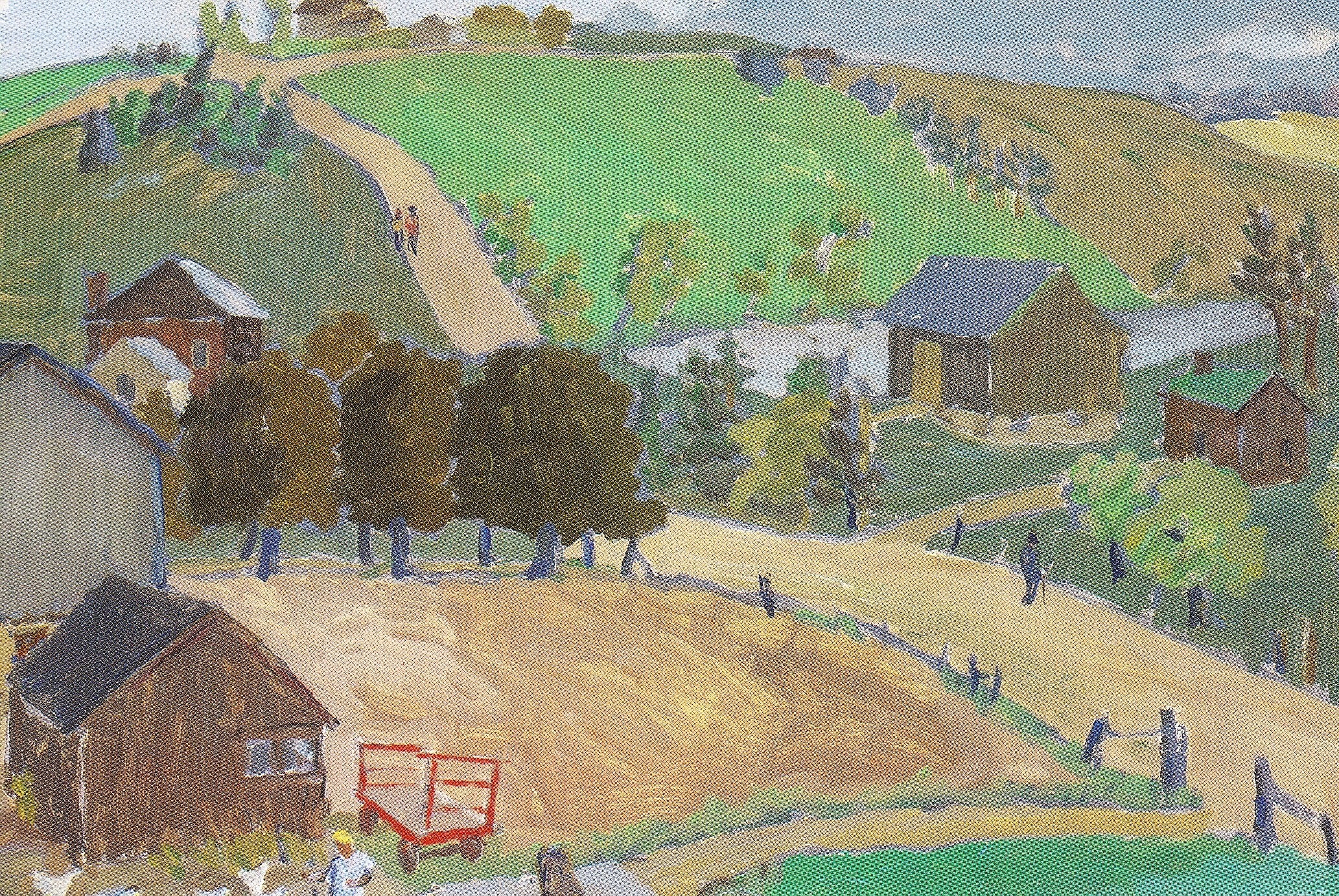
“The Road between Allen’s Farms”

And so it should have. Her cousin, Julius Edward Griffith (1912-1997) was a successful enough painter in watercolour that the members of the Canadian Society of Painters in Water Colours (CSPW), voted for him to be included as a member. Co-founded by a group of prestigious painters including Group of Seven artists A.J. Casson and Franklin Carmichael in 1925, the association continues to exist and has a storied history. For their Diamond Jubilee in 1985, they selected 60 paintings, including one from cousin Julius, and gave them to Her Majesty Queen Elizabeth II. The Queen formally exhibited the collection in Windsor Castle’s Drawing Gallery in 19861.

One of my two postcards could be a replica of his circa 1982 painting presented to the Queen, which was called “The Empty Farmhouse.” The official description describes it as a “watercolour view across fields of a square farmhouse with four windows, surrounded by trees.”

Julius Edward Griffith (1912-1997) was a successful painter in watercolour and oils, a graphic artist, an illustrator, a fine print maker and an art teacher.

As the only child of Katharine Ada Lindsay and Julius Henry Griffith, and born in Vancouver, British Columbia, Julius relished his grandfather Lindsay’s extensive art collection when he visited with him in Montreal, Quebec. Thus began his art education.

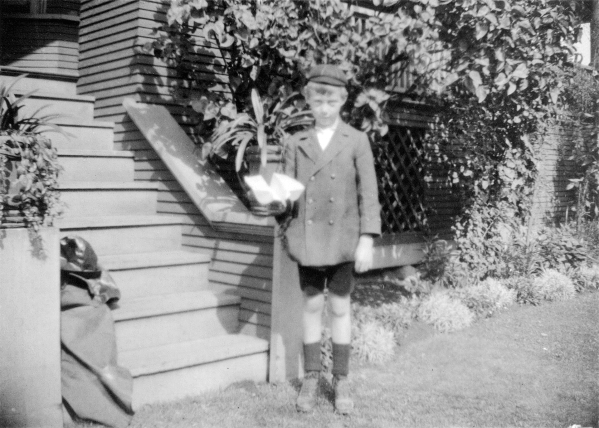
Julius Griffith – 1920

When Julius finished High School at 16, he was too young to attend the Royal Military College, as was his father’s family tradition. Instead, he studied at the Vancouver School of Art (Now Emily Carr University of Art + Design)under Charles H. Scott, F.H. Varley and J.W.G. MacDonald (two of which were Canada’s famous Group of Seven artists2). What a fantastic start to his artistic career! At the same time, he also learned block printing techniques from American artist Bruce Inverarity3 who lived in Vancouver at that time. Julius was immediately drawn to block printing because he enjoyed black and white contrast.

A few years later, he moved to England with his parents and studied at the Slade School of Art4 in London and continued his studies at the Central School of Arts & Crafts with Noel Rooke5 learning the technique of wood carving.

At age 21, Julius returned to Vancouver during the Depression hoping to get any kind of work as an artist. And he did! The owner of the Vancouver Sun newspaper commissioned him to paint two murals on the walls of his building and different groups of people were invited to watch his progress. Among these groups were his previous art teachers, Fred Varley and Jock Macdonald and their students at the time. He must have been so pleased at this role reversal!

In 1938, near the end of his fourth year back in England at the Royal College of Art6, he returned to Vancouver to see his father just before he died. After his father’s death, WWII interrupted Julius’ studies but he returned to England with his mother at that time as he wanted to serve.

During the war he worked with the “Air-raid Precautions” for a time and eventually joined the Red Cross. He worked in a country-house hospital in Sussex and, with so little to do, Julius taught art and learned to speak Russian.

What a serendipitous decision! He fell in love with his teacher – nurse Lialia Oralevs originally from Latvia – and they married quietly a couple of years later before the end of the war.

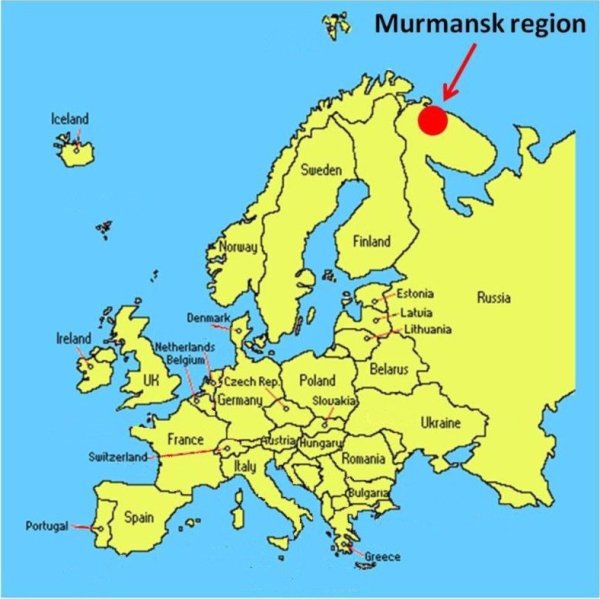
After learning to speak Russian, Julius presented himself in London to the Royal British Navy, passed an oral Russian test and worked as an interpreter under the rank of Sub-Lieutenant stationed in Murmansk7 and Archangel until the end of the war.

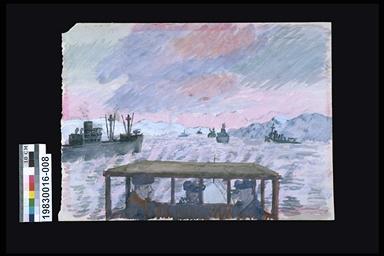
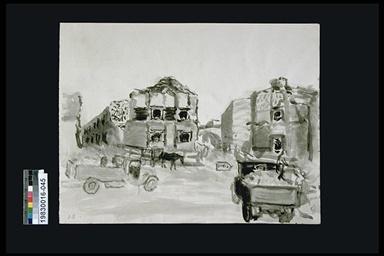
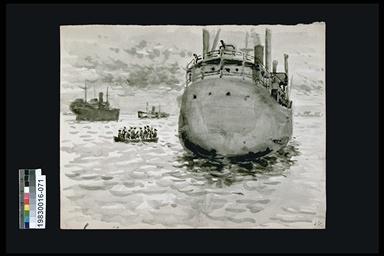
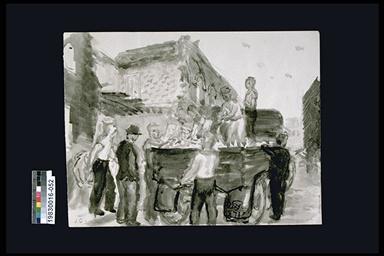
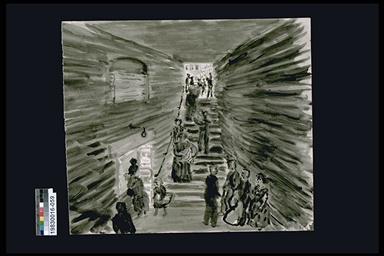
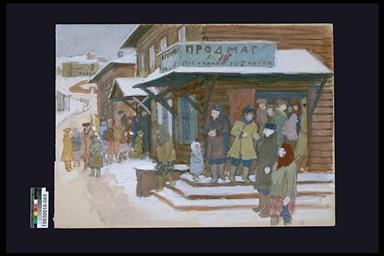
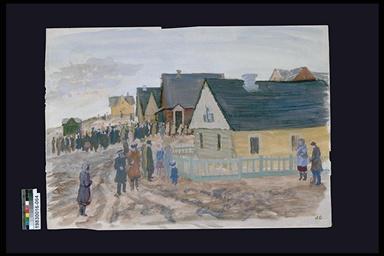
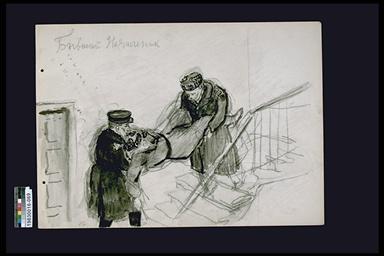
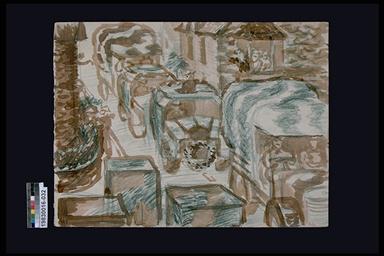
While in Russia, Julius would sketch scenes from memory in the privacy of his room at night and only after his 30-year oath of secrecy expired did he show them to the Canadian War Museum8. They purchased 90 of these drawings and The British War Artists Collection acquired several as well.

After the war, Julius and Lialia returned permanently to Canada. Julius quickly earned a degree at age 34 which enabled him to teach art and support his wife and four sons while continuing to pursue his passion as a graphic artist and wood engraver. Julius taught art in many of the top schools in Toronto – the Western Technical School, Artists’ Workshop, Ryerson Polytechnic Institute, Ontario College of Art, and at Central Technical School.

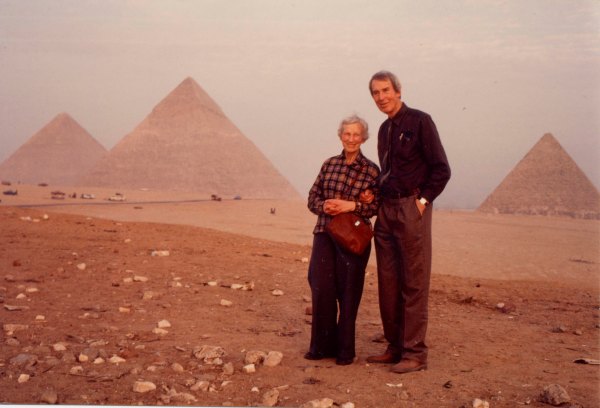
Although I never met Julius, I understand that they made quite the impressive pair with Julius at 6 feet 4 inches towering over five foot Lialia. Not surprisingly, “Julius seemed to develop a slight lilt to the left in later years, probably because he would put is left hand on Lialia’s shoulder and lean to hear or speak to her.” This 1985 photo taken during a trip to Egypt illustrates this charming pose.

Julius and Lialia – 1985 (courtesy of Lorne Griffith)

On the other postcard that he sent to my Aunt Mary in 1997, he wrote “This card was the one used for the invitation for an exhibition here, which opened in April and is almost over. We had a good opening – some buyers and some artist colleagues, and other people seemed to like the pictures.”

” The Road from Relessey Church”

Although I don’t have any of Julius’ original paintings, his two picture postcards with his personal handwritten messages are real treasures to me.

NOTE:

Julius’ work is displayed in the collections of the National Gallery of Canada, Canadian War Museum, Imperial War Museum (London), Art Gallery of Ontario, Toronto City Archives, Toronto Public Library, Art Gallery of Hamilton, McMaster University (Hamilton), Carleton University (Ottawa), Glenbow Museum (Calgary), Art Gallery of Greater Victoria (British Columbia), and numerous corporate and private collections.

1https://www.rct.uk/collection/926180/the-empty-farmhouse (as referenced 2023-06-02)

2https://wiki2.org/en/Group_of_Seven_(artists) (as referenced 2023-06-02)

3https://www.fecklesscollection.ca/robert-inverarity/ (as referenced 2023-06-02)

4https://wiki2.org/en/Slade_School_of_Fine_Art (as referenced 2023-06-02)

5https://wiki2.org/en/Noel_Rooke (as referenced 2023-06-02)

6https://wiki2.org/en/Royal_College_of_Art (as referenced 2023-06-02)

7https://wiki2.org/en/Arctic_convoys_of_World_War_II (as referenced 2023-06-02)

8https://www.warmuseum.ca/collections/?type=all&q1=all%3A%3A_contains%3A%3Ajulius%20griffith%20art&sort=title&order=asc&view=grid&size=24&page=1 (Julius Griffith’s 24 paintings

– as referenced 2023-06-02)

The French Canadians in Western Canada

canewzz


The Archives nationales du Québec in Montréal on Viger Avenue are the repository of a wonderful and unique collection of books of marriages, baptisms, deaths of French Canadian families who left the Province of  Québec between 1840 and 1930 for destinations in Western Canada, especially in Alberta and Manitoba.

Monsieur Daniel Olivier,  former archivist at the Bibliothèque de la Ville de Montréal on Sherbrooke Street East, the latter no longer in operation, referred to for years as Salle Gagnon was responsible with the assistance of his associates for the acquisition of many of the books of marriages, baptisms, deaths, and burials outlined in this research guide.

Madame Estelle Brisson, former archivist at the Archives nationales du Québec on Viger Avenue East in Montréal with the assistance of her associates was also responsible for the acquisition of many of the books of marriages, baptisms, deaths, and burials outlined in this research guide compiled by Jacques Gagné.

Click on the link            The French Canadians in Western Canada