Category Archives: Quebec

Fly Me to the Moon: Why I am not an Astronaut

This week Perseverance landed on Mars, the latest rover sent to explore the Red Planet. The excitement of space exploration always stimulates my imagination.

When the first astronauts went up in space I attended elementary school. Televisions on tall carts were wheeled into our classrooms and we watched wide eyed as the rockets took off. The excitement of the count down kept us all on the edge of our seats; three, two, one, blast off!

With only male astronauts, most little girls didn’t even consider going into space, myself included. Still, as men first circled the earth and then the moon, finally landing there in 1969, dreams of space travel were limitless.

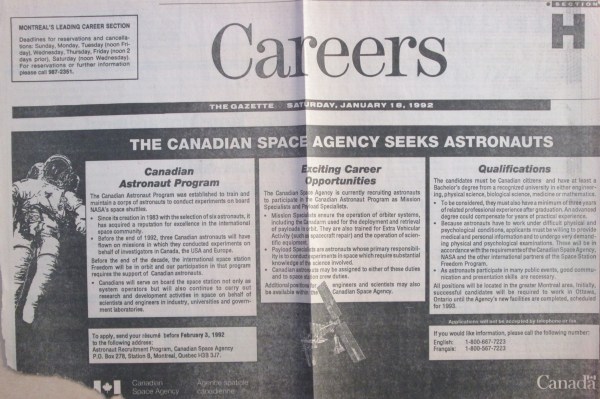
In 1983, Canada chose their first astronauts and among the men, a woman, Roberta Bondar. She followed Marc Garneau as the second Canadian in space flying on the Space Shuttle Discovery. In 1992, the Canadian Space agency wanted a new group of astronauts. How did they look for astronauts? They put advertisements in local papers. There in the Career’s section of the Saturday Gazette it said, The Canadian Space Agency Seeks Astronauts.

I had been working as a technician in a cancer research laboratory. My boss’s research grants were not going to be renewed and so I needed another job. A fellow at the camera club who applied on to be an astronaut in the previous search expressed pride at his rejection letter. So I thought, why not.

Surprisingly, I could say yes to all the qualifications to become an astronaut. You had to be a Canadian citizen, have at least a Bachelor’s degree from a recognized university in engineering, physical science, biological science, medicine or mathematics. They only required at least three years of related professional experience, and the candidate needed to possess good communication and presentation skills. Additionally, they would undergo demanding physical and psychological examinations. So, I applied, highlighting my background in a scientific lab, where I gained expertise working with instruments, conducting biological and immunological assays, designing experiments, troubleshooting, and collaborating both independently and as part of a team. These abilities are all suitable for a payload specialist.

When I received the ‘we regret to inform you letter’ from the Canadian Space Agency, I expected it. Over 5000 Canadians applied and according to the letter; “ the Agency has had the challenging task of selecting a relatively small number of candidates from among the many diverse and interesting applications received. Your submission was carefully considered, but we are unfortunately unable to offer you employment. However, your application form will be kept on file for a period of six months. Should a suitable position become available within this period we will be pleased to communicate with you again.” I had no further communication.

The Canadians chosen to train as astronauts in 1992 included Chris Hadfield, Michael McKay, Julie Payette and Dave Williams but not me.

I must admit in my heart of hearts I didn’t really want to go into space. It is fun imagining being there but after training for years, the end result of all your work is to climb into a tiny capsule above a bomb to be blasted into space. I will be happy to watch from my armchair as a Canadian astronaut flies to the moon in 2023 on the Artemis II mission.

Sugarplum Tree

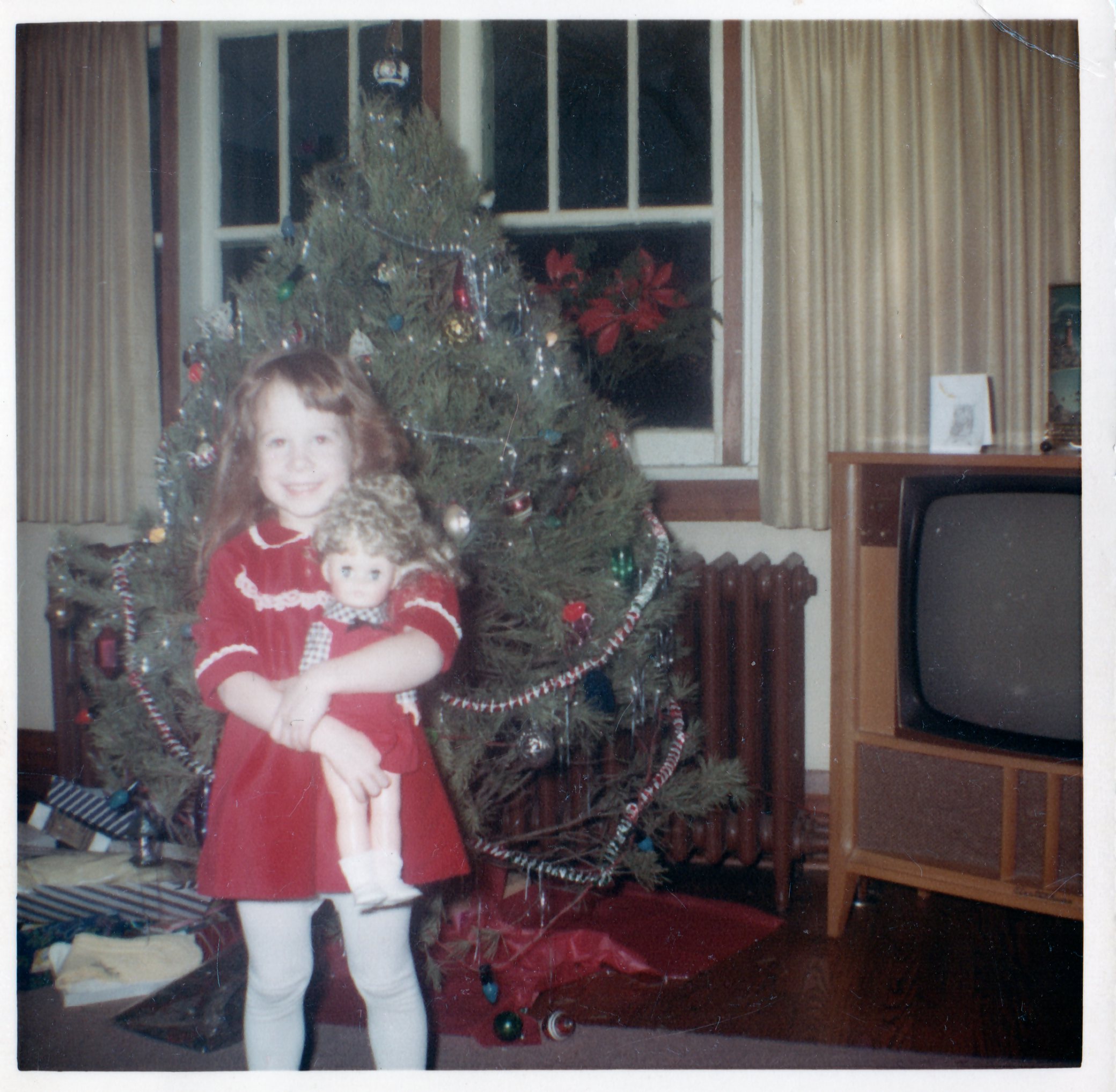
As Christmas fast approaches it stirs memories of my childhood holidays. The pungent smell of the balsam fir ready to be decorated, Christmas carols playing in the background, especially Joan Baez, the bright paper and ribbons waiting to wrap presents and the kitchen noises as my mother prepared all the holiday foods, including our favourites, the sweets. My mother baked all year round so we always had dessert but Christmas meant special treats.

November found my mother chopping dried fruits and nuts and mixing them in a big enameled wash pan, also used to bathe babies and soak feet. The fruit cake had to be started early so that after baking it could be wrapped in cheesecloth and regularly doused it in brandy. We liked fruit cake but we liked other things more.

Next came the shortbread cookies. I am not sure how much she enlarged the recipe because we seemed to have a mountain of cookies. While I make a log and cut slices or balls that I roll and flatten with a fork, my mother would roll out the dough and cut Christmas shapes. Stars, bells, candy canes and holly leaves all decorated with red and green cherries and silver balls would appear. Layers of cookies, laid between sheets of wax paper, filled a large canning pot put on the top shelf of the pantry to keep the cookies away from little hands. Luckily, with a step stool and a good reach, cookies could be extracted and enjoyed in ones own little space. Of course, many still remained for Christmas.

Cherry Bonbons made by my brother

We loved the Cherry Bonbons, a candied cherry covered in cookie dough, rolled into a ball and coated with pink icing. Then the Gumdrop Squares, a chewy and spicy cake fill with chopped gumdrops and nuts topped with white icing and more gumdrops filled another tin. Another favourite, Cornflakes Meringue cookies with chocolate chips and a cherry on top quickly disappeared. Lastly, the Christmas pudding, steamed on the stove ready to be served with hard sauce. Never my favourite!

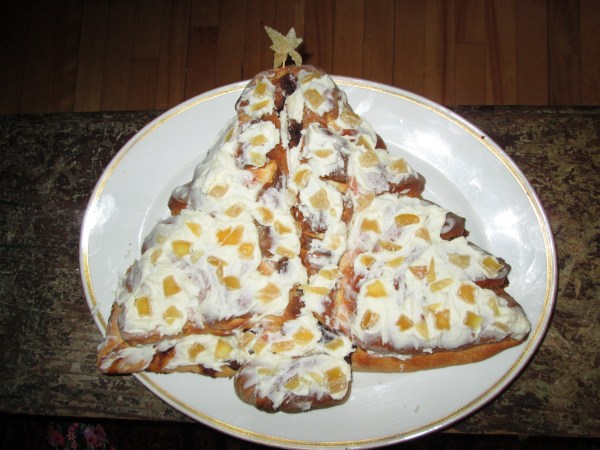
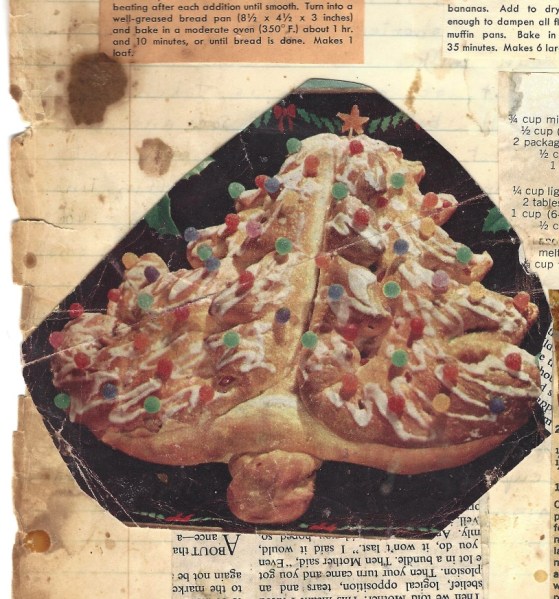
The day before Christmas was the time to make the Sugarplum Tree. I am not sure when my mother started making this treat. She rarely baked with yeast. The recipe had been cut out of a magazine and stuck into her book, spotted with years of flour and greasy fingers. The dough, filled with raisins and citron raised in a warm corner, rolled into a rectangle, spread with sugar and cinnamon, the corners folded in and cuts made on the sides to form branches magically appeared. She iced it, added more gumdrops for decorations including one flattened yellow gumdrop cut to form a star. All done ready for Christmas.

Mom’s Recipe Book

In our house, when we woke up Christmas morning, we didn’t hurry downstairs in our pajamas. We had to brush our teeth, get dressed, make our beds and then sit on the stairs waiting until everyone was ready. My father would go down and light the tree and then we rushed to see if Santa had come. We could play with our Santa Claus present while my mother made breakfast. Along with the Sugarplum bun we had half grapefruits with crushed pineapple, red and green cherries in the center and Santa mugs for our milk. Some people would even eat cereal!

My sisters continued the tradition of making sugarplum trees. My older sister had Christmases at her home after she married so she has made many buns. My younger sister began her own tradition after my mother stopped visiting her and making the bun at Christmas.

I never made the treat until the Christmas after my mother died. I had her recipe book with the original magazine recipe, so in her memory, I made the bun. Not quite like hers, as I used ginger, no gumdrops and a cream cheese icing. Still, the delicious sweetness evoked fond memories and so I will make it again this year. I did and a few pieces are still in the freezer!

O’ Christmas Tree

Last weekend, we grabbed a bunch of boxes from the basement and spent a few hours decorating the house for the holidays. We also played carols, drank rum and egg nog and laughed a lot. Most of our decorations are a little kitschy. Others are touching, like the reindeer horns made of our hands and feet when our now adult children were little.

One of the ugliest things we pulled out is an old Christmas tree that once belonged to my grandmother. Made of wire and green plastic that looks a bit like garbage bags, the thing is only about three feet high. We put it on a table so that the lit angel on top almost touches the ceiling.

I love that ugly tree. It came into my possession 36 years ago from Nanny, who used a tiny ceramic tree my mom made her for her apartment from then on. Using her gift over and over makes me feel ecological. Yes, it’s plastic and convenient but it’s being reused, so it isn’t filling up land fill yet.

It brings to mind Charlie Brown’s Christmas, holidays as a child and imaginary visions from the Victorian era.

Canada’s First Christmas Tree Decoration Party

Christmas-tree decorating has been popular in Canada since at least 1781. That year, General Von Riedesel (Freiherr Friedrich Adolf Riedesel Freiherr zu Eisenbach) and his wife Frederika Charlotte held a Christmas Eve party in Sorel, Quebec. During the event, they decorated North America’s first documented Christmas tree. Wikipedia cites his wife’s diary for this fact.1

Von Riedesel grew up in Germany, fought in London, and ended up in North America with thousands of other German soldiers fighting for the British during the American Revolution. His wife brought their three daughters to join him. The couple got captured during the Battle of Saratoga.

It took two years before the British traded them for an American prisoner of war. They lived in Sorel, Quebec for another two or three years before returning to England.

That party also included plum pudding,2 another tradition from my childhood. Unfortunately, I haven’t been able to locate the recipe for granny’s yummy rum sauce.

My family and others continue decorating Christmas trees, just as the families of German and British pioneers have done for more than 200 years.

For the first hundred years, as in my house now, the trees stood on a table covered with a white cloth that served as snow.

Christmas trees became full-sized self-standing around 1900, when someone invented cast iron tree stands. The stand I use almost looks old enough to date from that era.

Of course in those days, the trees were lit with candles, which is why the Christmas tree decorating occurred only on Christmas Eve. That way, the freshly cut tree still retained enough moisture to prevent being a fire hazard.

For years, I used electric lights that got warm enough that I lit them rarely. I now have LEDs so that my ugly little tree can decorate our home with the only risk being one of fashion.

Sources

  • 1Riedesel, Friederike Charlotte Luise; Riedesel, Friedrich Adolf (1801). von Reuß, Heinrich (ed.). Die Berufs-Reise nach America: Briefe der Generalin von [sic] Riedesel auf dieser Reise und während ihres sechsjährigen Aufenthalts in America zur Zeit des dortigen Krieges ín den Jahren 1776 bis 1783 nach Deutschland geschrieben. Haude und Spener Berlin, https://en.wikipedia.org/wiki/Friedrich_Adolf_Riedesel#cite_note-9, accessed November 24, 2020.

Christmas Trees Over Generations

Montreal Transit

“Eddie! Come on, Ed. Frank forgot his lunch and you have to take it to him.”

Ed’s heart sank. He had no school today but, instead of playing with his friends, he would have to make his way all the way from Verdun to Montreal West so that he could give Frank the lunch he forgot. It was sitting right there, on the kitchen table when Frank left – and he forgot it again!

My uncle, Frank McHugh, worked as a tramway driver and he drove the tram on the 63 or 64 route that went along Sherbrooke Street West in Montreal. The unlucky little boy who always had the job of taking him his lunch was my dad, Edward McHugh.

Uncle Frank’s full name was Francis Strachan McHugh. He was born in Dundee, Scotland in 1904 and emigrated to Canada with his parents and six siblings in 1912. His younger brother, Edward, was born in 1914. So, by the time Frank had found work as a tramway driver in the 1920’s, Edward was old enough to travel across the city and bring him his lunch.

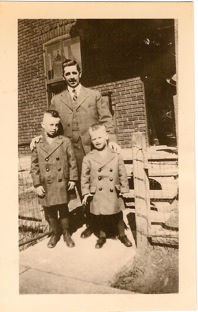
Thomas McHugh with sons, Edward (left) and James (right). Edward was about eight years old in this picture, about the time he would have carried Frank’s lunch to him.

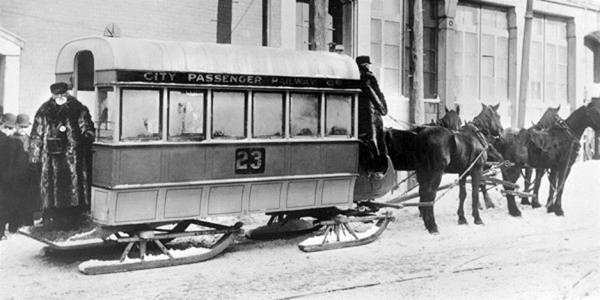
The first public transportation company in Montreal, The Montreal Passenger City Railway Company (MPCRC) was established in 1861 when the first horse-drawn tramway came into service along Notre Dame Street. The horse-drawn tramway had two employees on-board, a driver and a conductor who collected the fares. The passengers simply hailed the tram when they wanted to get on and signaled to the driver when they wanted to get off.1

Horse-drawn winter tramway on St. Catherine Street (around 1877), Société de transport de Montréal (STM) website, Tramways History

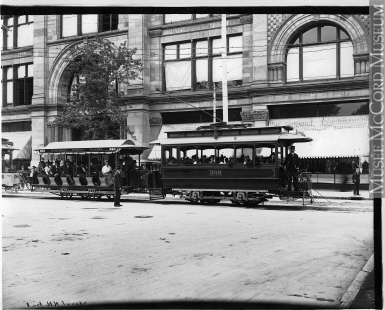
The MPCRC eventually became the Montreal Street Railway Company (MSRC). The MSRC introduced the first electric powered tramway, The Rocket, on September 21, 1892. The electric tramways immediately became very popular as they were much faster than the horse-drawn tramways. 2

By the time Uncle Frank became a tram driver, his employer was the Montreal Tramways Company (MTC). The MTC, created in 1911, acquired all the other transit companies on the island at that time. The citizens of Montreal, concerned that a private company had a monopoly over the public transit in the city, put pressure on the city, and the Montreal Transit Commission was created in 1918 to oversee the MTC. 3


Electric trams, Ste-Catherine Street, Montreal, McCord Museum, Wm Notman and Son, 1895

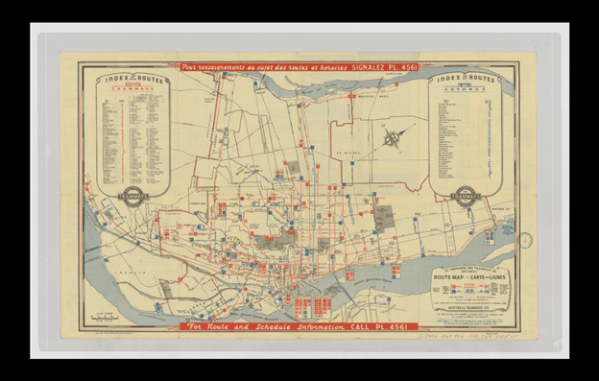
At the time that Uncle Frank worked as a tramway driver in the early 1920s, it was the peak of the operation of the tramway system in city. At that time, the MTC carried nearly 230 million passengers per year. 4 In 1924, the company published this map of the Montreal Transit system.5


Route map of bus and tramways in Montreal, Bibliothèque et Archives nationales du Québec, collection numérique

By the mid-1920s, the city began transitioning to buses, with the first major replacement of the tramway in 1936 in the city’s east end on Notre Dame Street. 6 Uncle Frank followed suit and drove the bus that went along Sherbroooke Street West. But by that time, if he forgot his lunch, he was out of luck.

When cars became popular in Montreal in the 1950s, Uncle Frank quit his job as a bus driver and became a taxi driver.


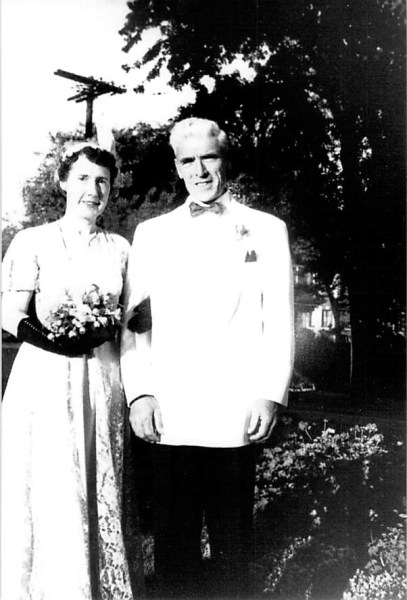
Frank McHugh and his wife, Molly Baxter
.
  1. http://www.stm.info/en/about/discover_the_stm_its_history/history/tramways-history#:~:text=Created%20in%201911%2C%20the%20Montreal,quality%20of%20the%20service%20offered, accessed October 18, 2020
  2. Ibid.
  3. Ibid.
  4. Ibid
  5. Société de transport de Montréal (STM) website, Tramways History, http://www.stm.info/en/about/discover_the_stm_its_history/history/tramways-history#:~:text=Created%20in%201911%2C%20the%20Montreal,quality%20of%20the%20service%20offered,accessed October 18, 2020
  6. http://www.stm.info/en/about/discover_the_stm_its_history/history/tramways-history#:~:text=Created%20in%201911%2C%20the%20Montreal,quality%20of%20the%20service%20offered, accessed October 18, 2020

Pierre Gadois the First Farmer

There is always a lot of talk in this province about who is a “real” Quebecer. Our current Premier Francois Legault, wants to limit services in English to “Historical Anglos”. While I can certainly claim this right, having been born and raised in Quebec, as were my parents, I also have “Pure Laine” ancestry. I descend from Pierre Gadois, the first person to be granted land on the Island of Montreal.

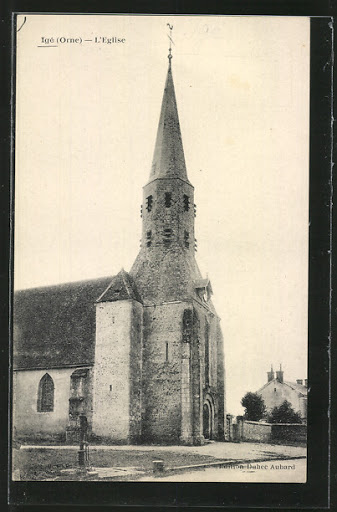
St Martin Church in d’Ige, France

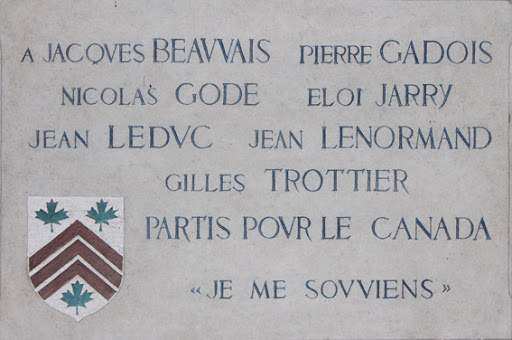
L’eglise Saint-Martin d’Igé in Orme, Basse-Normandie, in north west France has a plaque with the names of men who left for Canada and the saying, “Je me Souviens” (I remember). I don’t know when the plaque was installed in this ancient church but Pierre Gadois arrived in Nouvelle France (Canada) about 1636. He left in one of the earliest waves of immigrants from L’Igé. Nicolas Godé, his sister Francoise’s husband also has his name on the plaque. That family arrived in Ville Marie (Montreal) six years later.

Pierre, his wife Louise and two children sailed to New France as part of a settlement initiative by Robert Giffard de Moncel, the first Seigneur of the French Colony. They first settled near Quebec City on the Beauport Seigneury where Pierre farmed. Another child, Francois was born during this time and baptized in 1636. Pierre decided to move to the safety of Montreal after several Indian attacks. It was recorded that Hurons entered his house a number of times, beat him and robbed him of food.

While he arrived in Montreal after the founding ceremony in 1642, he was still a very early settler. In 1648 Paul de Chomedy de Maisonneuve the governor of the colony, awarded him the first land grant. Why was he given 40 arpents of land? Had he proven himself a good farmer? The answer was probably yes. The colony needed food to survive and as the majority of inhabitants were soldiers farmers would be important citizens. Pierre Gadois was well thought of as he was also elected the fourth warden of Notre Dame Church.

According to notarial records, Pierre farmed his land and later added to his acreage. It was François Dollier de Casson, the author of the Histoire du Montréal 1640- 1672 who referred to him as “Le Première Habitant” or first farmer of Ville Marie.

He built a small wooden house of 390 pi² (French square feet slightly larger than English ones) on some of his land. An out building of almost the same size was also erected. This land is now in what is called “Old Montreal” bordering on de La Commune on the south, rue St Pierre on the east and possibly McGill Street on the west.

Montreal was not safe from Indian attacks even with its protective palisades. Pierre continued to defend his land and his family. Even when he was well into his sixties, he fought bravely defending Charles Le Moyne and other colonists who had been attacked by the Iroquois.

I descend from Pierre’s daughter Roberte Gadois and her husband Louis Prud’homme. Roberte became the owner of a number of pieces of property, after her father’s death. The family continued farming as their profession continued to be recorded as production-aliment or food producers.

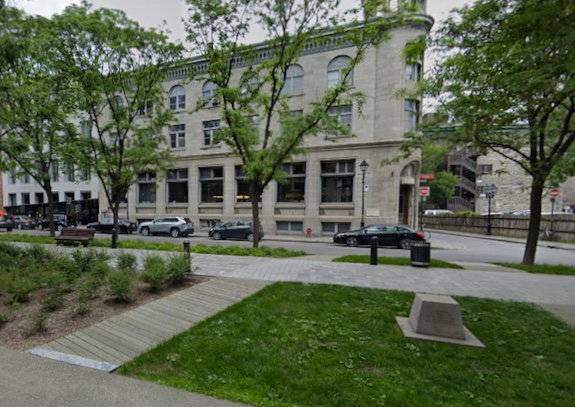
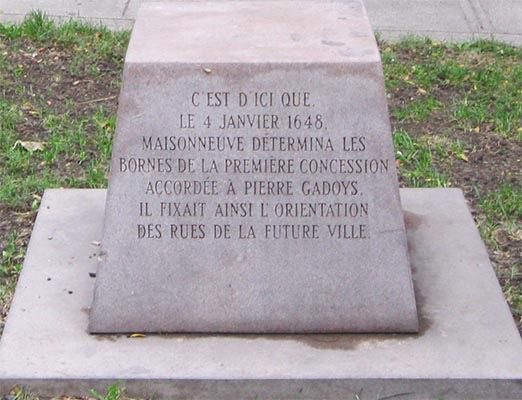
Montreal kept growing. When François Dollier de Casson laid out the first streets for Montreal, one, Rue Sainte-Pierre was named in memory of Pierre Gadois. A small monument in Place d’Youville, placed there in 1992 during Montreal’s 350thanniversary also honour’s The First Farmer.

Pierre Gadois Stone in Place d’Youville, Montreal

Notes:

Pierre Gadois (Gadoys) Born 1594 & died Oct 20, 1667 in Montreal age 73.Married Louise Mauger in 1627.She was born in 1598 and she died 18 March 1690 in Montreal at age 92!

Their Children:

Roberte Gadois was born Sept 15, 1628 in France & died Sept 14, 1716, Montreal, the day before her 88th birthday.

Pierre born Nov 17, 1631 died May 18 1714

Eitenne ?

Ernest?

Francois born Dec 2, 1636 No further information.

Jeanne born Jun 26,1638 died June 26, 1638

Joseph born Sept 28 1639 died Oct 1639

Jean-Baptiste born March 2, 1641 died April 15, 1728

Pierre’s father was Francois Jean Gadois and his mother Barnabe Gadois

He was the brother of Francois, Francoise and half brother of Valentine Gadois.

Dollier de Casson, Francois. Histoire du Montreal 1640-1672. pg 88

Adhemar – Fiche Biographique Centre of Canadian Architecture

https://www.remparts.info/adhemar_php/bio.php?I_NUMERO=GAD0001 accessed Jan 02, 2020.

Jean-Jacques Lefebvre, “GADOYS, PIERRE,” in Dictionary of Canadian Biography, vol. 1, University of Toronto/Université Laval, 2003–, accessed September 3, 2020,

http://www.biographi.ca/en/bio/gadoys_pierre_1E.html

http://www.perche-quebec.com/files/perche/individus/gadois.htm

https://www.wikitree.com/wiki/Gadois-12

http://www.perche-quebec.com/files/perche/individus/emigrants-en.htm#12 plaque in d’Igé

http://www.perche-quebec.com/files/perche/lieux/ige.htm#1

Here you can read the story about his wife Louise Mauger. https://genealogyensemble.com/2019/09/11/la-fermiere-louise-mauger/

Marin Boucher another Percheron immigrant’s story. https://genealogyensemble.com/2020/09/09/marin-boucher-pioneer-of-new-france/

Slavery in New France in the 17th & 18th Centuries

August 1, 2020, Emancipation Day in Canada

In 1734, a huge fire destroyed part of Montreal. Marie-Joseph Angélique, a black slave, was accused on setting the fire deliberately as she tried to escape from her owner. She was arrested and found guilty, then she was tortured and hanged and her body was burned.

Angélique was one of many slaves, some black, others Indigenous, in New France.  Slavery was legal in Canada for more than 200 years. The Slavery Abolition Act brought an end to chattel slavery throughout the British Empire, coming into effect on August 1, 1834 in Britain, Canada, and several other colonies.

The attached PDF  Slavery in New France   is a 23-page research guide to the topic of slavery in New France in the 17th and 18th centuries. It contains the following contents:

Page 2     A link to a complete online copy of the book L’Esclavage au Canada français – 17e et 18e siècles” (in French) Author: Marcel Trudel – 474 pages Publisher- Les Presses Universitaires Laval, Quebec, Canada 1960

Pages 3-17    A List of authors who have written about slavery in Canada

Page 17- 20       Repositories in Quebec

Pages 21-22     Various online sites

Pages 22-23     Publishers


Brush with a (Messy) Icon

Marion1FIXED

Marion Blair, my mother-in-law, 1990s

There were no teenagers back in the old days, my mother-in-law, Marion Blair, used to say. You were a girl one day and a woman the next – at least when it came to the way you dressed and the way you arranged your hair.

Somewhere, I have a black and white studio photo of Marion looking rather glamorous wearing what appears to be bright red lipstick, (it’s hard to tell for certain) taken in 1929.

I find the photo a bit freaky, because Marion was born in 1917! At a mere 12 years of age she certainly had achieved that polished ‘movie-star’ look and she maintained that impeccably groomed image right up until her death in 2002.

So it was no surprise to me when my husband came into the room a while back as I was watching an old Bette Davis movie on TCM and said, “That woman looks just like my mother.”

“Your mom didn’t look at all like Bette Davis,” I replied. “But, I can see your point. The movies, back then as now, instructed girls – and boys – on how to be grown up.”

Now, this was doubly ironic as here in Quebec in the 1930’s children under 16 were banned from the cinema because of the 1927 Laurier Palace Theatre Fire where 72 children had died in a crush to the exit.

So what did these deprived Depression Era English Quebec children do to bend the rules and partake of some healthy Hollywood escapism? According to my mother-in-law, they sneaked into the movie theatres and comported themselves like adults. That meant no shouting and no jostling. Girls often applied make-up to enhance the illusion.

Marion Blair was the middle of three sisters, so it is no surprise, really, that her appearance meant a lot to her, especially since her sisters were, let’s face it, much better looking. Think Rita Hayworth and Merle Oberon.

She was the skinny sister with the slightly wonky left eye and a wild boy-crazy “biker chick” personality that had to be tamed with two years at Trafalgar all-girls school. (Hmm. Maybe, there were ‘teenagers’ in the 1930’s after all.)

The 1930’s Hollywood Dream Factory inspired more than Marion’s hair and makeup. She was a wannabe thespian. At McGill in the late 30’s she got to play comedic parts in the famed Red and White Revue.

Somewhere, I have some clippings from the early WWII McGill Daily. In one of them Marion is flying in the air attached to cables with a giant wand in her hand and an enormous toothy grin on her face.

Marion Blair was a natural for the theatre, but in 1941, with war raging, she chose a domestic existence and married Thomas Wells, a Westmount boy who had played semi-pro  hockey with her brother and who had recently enlisted in the RCAF.

mariaondancefixe

Marion, ballerina, 1942, Dunville, Ontario RCAF training base.

As a young mother in the 1950’s, Marion continued to act in local amateur theatre out in the suburbs with the Hudson Players Club. (I guess the stage was the only place she felt safe ‘letting her hair down.’)

Her own mother, Marion Nicholson Blair, had been widowed in 1927, when Marion Jr. was just 10 years old. Mother Marion had been cut out of her husband’s family lumber fortune, but instead of remarrying one of her many suitors she went back to work as a teacher at the Montreal Board and also got involved with the Protestant Teachers Union, rising to President during WWII.

The Nicholson/Blair female-run family had little money to spare but being a natural wheeler-dealer, mother Marion found patrons to send her children to university which is why daughter Marion could swing from the rafters at McGill’s Morris Hall.

Which brings me to another related story – about another photograph, one I actually have on hand to show you.

My mother-in-law’s patron was a friend of her mother’s, a Mr. Dean from the local Westmount Church. One summer in 1936 he took them to Saranac Lake, New York on a vacation.

One morning,  as they walked on the waterfront, at the marina, Marion spotted a portly older man with very disheveled hair on the pier beside a small sailboat. “What messy hair that man has,” said Marion to her companions. “Disgraceful.”

Mr. Dean would have no part of it. “That, my dear,” he told her, in a hushed and reverent tone, “is Professor Einstein.”

So my mother in law snapped a photograph – and here it is.

Saranac Lake

This picture is more than mere family memorabilia.

With a little online research I soon figured out that my mother in law caught the Man of the Century setting up for a famous AP photo shoot. (Or perhaps shutting down from it.)

Here’s that photo “Einstein at Play” taken a few minutes before or after my mother-in- law snapped the photo of the physicist icon with the famously messy head of white hair.

EinsteinatPLAY


A pic of Marion on on stage and a clip from the December 1955 Lake of Two Mountains Gazette.

My Prudhommes

How do you get to be you? First you must have your parents, then your grandparents and as you trace back through your family trees you find all the coincidences needed for people to come together at a time and place for you to be who you are.

When Louis Prudhomme arrived in New France around 1640 I am sure that he never thought his seven times great-granddaughter would live there almost four hundred years later. He was an early settler in Ville-Marie (Montreal), a brewer, churchwarden and a member of the Montreal Militia. I descend from Louis and his wife Roberte Gadois. This marriage almost didn’t take place. Roberte came to New France as a child with her parents Pierre Gadois and Louise Mauger. Then when just 15, a marriage contract was drawn up between Roberte and Cesar Leger with the ceremony happening four days later. After six years, the marriage was annulled, most likely because there were no children. The survival of the colony depended on couples having children. On the same day her first marriage was annulled, Roberte married Louis Prudhomme. This wasn’t a quick decision as their marriage contract had been drawn up a year earlier. Roberte proved her fertility by soon giving birth. Their first child, son Francois-Xavier Prudhomme (1651 – 1741) is my ancestor.

Finally, well into his thirties, Francois Xavier married Cecile Gervais, only 13 at the time. This marriage too might not have taken place. Cecile’s parents were Jean Gervais and Anne Archambault. Her mother Anne had previously been married to Michel Chauvin. Michel had owned the property next to Louis Prudhomme. Louis, on a trip back to France, learned that Michel had a wife and children still living there. On his return to New France, he accused Michel of bigamy and reported him to the Governor Paul Chomedey de Maisonneuve. Michel, expelled from the colony, went back to France leaving Anne free to marry again and give birth to Cecile. Francois Xavier Prudhomme and Cecile eventually had nine children.

Their first child Francois Prudhomme (1685 – 1748) married Marie-Anne Courault. This couple appeared to have lead uneventful lives except for having eight children.

One of their children, Nicolas Prudhomme (1722 – 1810 ) married Francine Roy. This couple had at least five children before Francine died at age 34. Their youngest child Eustache was just two at the time so not surprisingly Nicholas soon married again.

It was the marriage with his second wife Helene Simone Delorme that produced Jeramie Marie Prudhomme (1766 – 1846) my three times great grandfather. Seven years had past before this child entered the world. Helene must have been busy raising her step children. In 1818 Jeramie is listed by the Sulpicians as one of the twenty family heads living and farming in Côte Saint-Luc, west of the original settlement but still on the Island of Montreal. He married Marie Louise Décarie (1769-1855), from another important farming family. Jérémie and Marie Louise had seven children. Their last child Sophie Marie Louise married Barnabé Bruneau. The Prudhommes had lived on the island of Montreal since the 1640s. Sophie left her ancestral home and moved south across the St Lawrence River to St. Constant.

It is with Sophie Marie Prudhomme that my direct Prudhomme line ended. Other branches of the Prudhomme family continued to flourish. My Great Grandfather Ismael Bruneau chose the middle name Prudhomme in honour of his mother.

Notes:

7th Great Grandfather Louis Prudhomme (1611- 1671) married Roberte Gadois (1628- 1716)

6th Great grandfather Francois Xavier Prudhomme (1651-1741) married Cecile Gervais (1671-1760)

5th Great Grandfather Francois Prudhomme (1685-1748) married Marie Anne Courault (1689-

4th Great grandfather Nicolas Prudhomme (1722-1810) married Helene Simone Delorme (1730-

3rd Great Grandfather Jeramie Marie Prudhomme (1766-1846) married Marie Louise Decarie (1769- 1855)

Two times Great Grandmother Sophie Marie Prudhomme married Barnabé Bruneau

Jean-Jacques Lefebvre http://www.biographi.ca/en/bio/prud_homme_louis_1E.html accessed May 13, 2020.

https://www.geni.com/people/Fran%C3%A7ois-Xavier-Prud-homme/6000000002352538874 accessed May 13, 2020.

Making Lime: http://www.minervaconservation.com/articles/abriefhistoryoflime.html accessed May 24, 2020.

https://csllibrary.org/the-prudhomme-family/ accesses May 12, 2020.

How to Find Protestant Abjurations in Quebec

Over the past several years, I have posted several articles about the Huguenots, or French Protestants, who came to New France. Once here, many of them signed abjurations, or declarations in which they renounced their faith, and they became Catholic.

The act of ‘’abjuration’’ was the first step to be taken by a Protestant individual. The second step was an act of ‘’confirmation,’’ conducted by a Catholic priest at a local or regional parish or at a regional convent. Guy Perron in his superb blog refers to this subject as Confirmations.

Recently, the Bibliothèque et Archives nationales du Québec (BAnQ) has replaced its online research tool Pistard with a much better search engine, Advitam, https://advitam.banq.qc.ca/ and this has made the task of finding these abjurations and confirmations much easier. The first six entries in the attached research guide were obtained by using Advitam.  See https://genealogyensemble.com/2020/04/19/banq-advitam/

Through BAnQ Advitam, BAnQ Numérique or BAnQ Ask a Question/BAnQ Poser une question, you can obtain an online download for free within days simply by searching for the ‘’cote #’’ (Shelf # at BAnQ) and an approximate date of an event.

The nine-page research guide attached here   Abjurations in New France   includes links to registers of abjuration, to the bulletin of the historical society of French-speaking Protestants of Quebec, to Guy Perron’s excellent blog, and to a list of books and articles on the subject.

Over the last few years, Genealogy Ensemble has posted three listings of Huguenot Family Names of New France and Quebec. The links to these lists are at the end of the PDF.

  • Huguenot family names listed by the Huguenot Trails periodical of the Huguenot Society of Canada prior to 2002.
  • Huguenot family names issued by Michel Barbeau, a retired genealogist. (Michel Barbeau’s work is highly precise but is a short list in comparison to other sources.)
  • Huguenot family names compiled by myself from books, essays, papers issued over four centuries by leading historians, academics, archivists, authors, librarians in Canada and in France.

This last list was compiled from books stored at the Collection nationale within the Grande Bibliothèque de Montréal, books and dossiers at BAnQ Vieux-Montréal and books which can be researched online at BAnQ Numérique and through various online sociétés savantes (literary societies) and finally from the online pages of Fichier Origine (www.fichierorigine.com.)

Over the past few years, I have posted a series of research guides to finding Protestants in France. Here are links to my articles about the Protestants who came to Quebec:

Huguenot Refugees, April 2, 2014, https://genealogyensemble.com/2014/04/02/huguenot-refugees/

The Trail of the Huguenots in Europe, the U.S.A. and Canada, April 4, 2014, https://genealogyensemble.com/2014/04/04/the-trail-of-the-huguenots-in-europe-the-u-s-a-and-canada/

Register of Abjurations, Feb, 3, 2015, https://genealogyensemble.com/2015/02/03/register-of-abjurations/

Huguenots – Index of Names, March 6, 2015, https://genealogyensemble.com/2015/03/06/848/

The Protestant Churches of Quebec City, 1629-1759, Feb. 3, 2019,   https://genealogyensemble.com/2019/02/03/the-protestant-churches-of-quebec-city-1629-1759/

The merchants and Fur Traders of New France, part 2, H-Z, May 10, 2019, https://genealogyensemble.com/2019/05/10/the-merchants-and-fur-traders-of-new-france-part-2-h-to-z/

Protestants in Quebec, Dec. 22, 2019, https://genealogyensemble.com/2019/12/22/protestants-in-quebec/

Also of interest: Marian Bulford’s articles about the Huguenots who immigrated to England. After the British Conquest of 1759 at the Plains of Abraham, British Governors James Murray, Guy Carleton, Frederick Haldimand, Lord Dorchester (Carlton) appointed chief justices, judges and a few lieutenant-governors and senior military officers who were at ease in the French language and all of the above were descendants of Huguenot families who had settled in the London region and also in Northern Ireland. These Huguenot administrators and military officers under Murray, Carleton, Haldimand, Dorchester attended the same churches mentioned by Marian.

Marian Bulford, Huguenot of England, Part 1, April 25, 2018, https://genealogyensemble.com/2018/04/25/the-huguenot-of-england-part-1/

Marian Bulford, Huguenot of England, Part 2, June 15, 2018, https://genealogyensemble.com/2018/06/15/the-huguenot-of-england-part-2/

For help finding Protestant families s in France in the 16th and 17th centuries, see my series of regional research guides, posted on Genealogy Ensemble in 2019-2020, as well as:

How to Search for Huguenot Ancestors in France, May 20, 2018, https://genealogyensemble.com/2018/05/20/how-to-search-for-huguenot-ancestors-in-france/

Huguenot Family Lineage Searches, June 3, 2018, https://genealogyensemble.com/2018/06/03/huguenot-family-lineage-searches/

Researching Your French Ancestors Online, May 13, 2018, (the attached updated PDF describes how to research in the Archives départementales de France, the country’s 95 regional archives)  https://genealogyensemble.com/2018/05/13/researching-your-french-ancestors-online/


Living outside city walls

Settlers have long been attracted to Saint Roch, a neighbourhood on the banks of the St. Charles River next to the cliff leading up to Quebec’s walled Upper Town.

My great great great grandparents—Joseph Gabriel Arial Robert Content and Judith/Julie Belleau-dit-LaRose —both grew up in the neighbourhood. They knew it as the Saint Roch parish, which was officially founded in 1829. By then, the swampy neighbourhood housed 20 different shipyards and most of Quebec’s French-speaking families.

The neighbourhood began in 1620 as a small religious community set up by French missionaries known as the Recollets. They built a chapel in 1620. That chapel has long since gone, as were those built in 1811, 1816 and 1841.1 A stone church built in 1923 now sits on the same site as all the others at 160, rue Saint Josephe Est. For some great photos of the area and a discussion in French about all the different churches on the site, refer to Jérôme Ouellet’s 2014 blog post.

Joseph and Judith got married in the 1816 version of the church on September 4, 1832.2 Her parents Joseph Belleau and Marie-Anne Ratté married in a predecessor on November 5, 1808.3

I don’t know exactly where in Quebec Joseph lived prior to their marriage, but his dad Jean Baptiste worked as a day labourer.4

Judith’s family lived at 28 Saint Vallier. Her dad Joseph Bélau (Belleau) worked as a baker.5

Just down from the Bélau home sat an opulent stone house built by businessman Henry Hiché. He built his mansion on the foundations of a farmhouse originally built by Charles Aubert de la Chesnaye in 1679. The building later became known as the “White House” due to a covering of white plaster.

Most of the neighbourhood, including the White House, burned down in the Great Saint-Roche Fire of 1845. A total of 1,200 houses burned down, leaving 12,000 people homeless that year. Another smaller fire swept through in 1866.

You can still see the third rendition of the home built by Scottish immigrant William Grant on the original vaulted cellars of the previous home at 870 Saint-Vallier East. The stone house gives you a rough idea of the beginnings of the neighbourhood built outside of Quebec City’s walls.

Joseph Belleau appears again in the 1851 Canada East agricultural census in St. Roche, Quebec on line 24.6 Joseph and Judith/Julie don’t appear on the 1851 census, but they and their eight children (one of whom was my direct ancestor “Pete”) appear on the census 10 years later, still living in St. Roche.7

If my grandmother’s notes are accurate, Joseph moved to Manitoba sometime after that. He died in St. Boniface on November 4, 1880.8

At some point, I hope to go on a walking tour of the area and reconnect to the neighbourhood that housed my ancestors 200 years ago.

-30-

To read more about Joseph and Julie’s son Pete and see a photo of him and his children, refer to Original Arial Family of Western Canada

2 Mariage certificate #3816438, The Programme de recherche en démographie historique (PRDH), Quebec, 1621 to 1849.

3 Mariage certificate #2337256, The Programme de recherche en démographie historique (PRDH), Quebec, 1621 to 1849.

4 Mariage certificate #3816438, The Programme de recherche en démographie historique (PRDH), Quebec, 1621 to 1849.

5 Archives de la paroisse de Notre-Dame-de-Québec, CM1/F1, 3, vol. 4, p. 36. Visite générale de la paroisse de Québec commencée le 1er octobre 1805, p 36.

6 Census of 1851 (Canada East, Canada West, New Brunswick and Nova Scotia), Item Numbers: 93934, and 93935.

7 Census of 1861 (Canada East, Canada West, Prince Edward Island, New Brunswick and Nova Scotia) for Image No.: 4108628_01187, Item Number 2159833.

8 Handwritten notes from my grandmother.