Category Archives: England

How Now Black and White Cow. Isle of Lewis Obsessions.

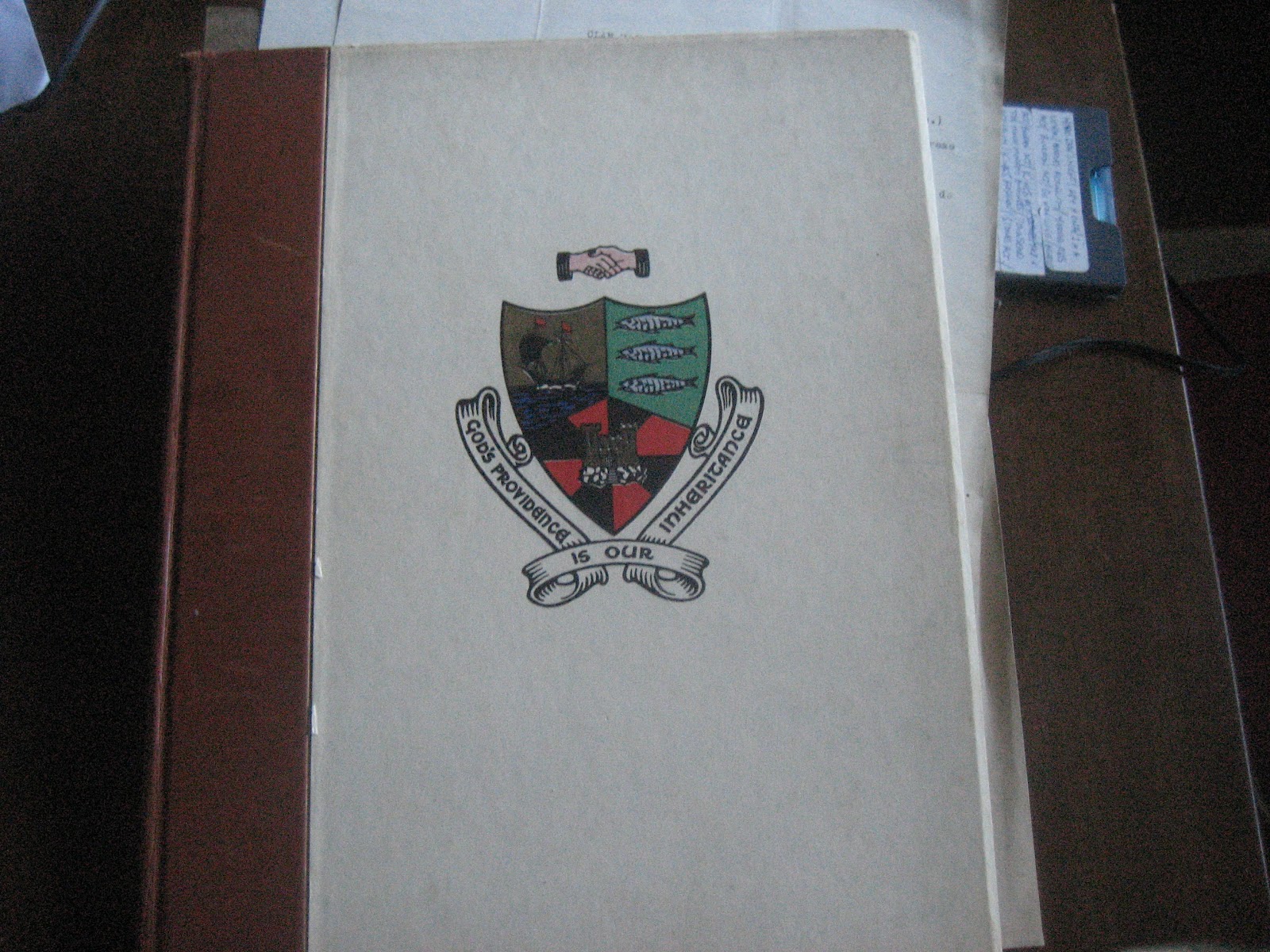
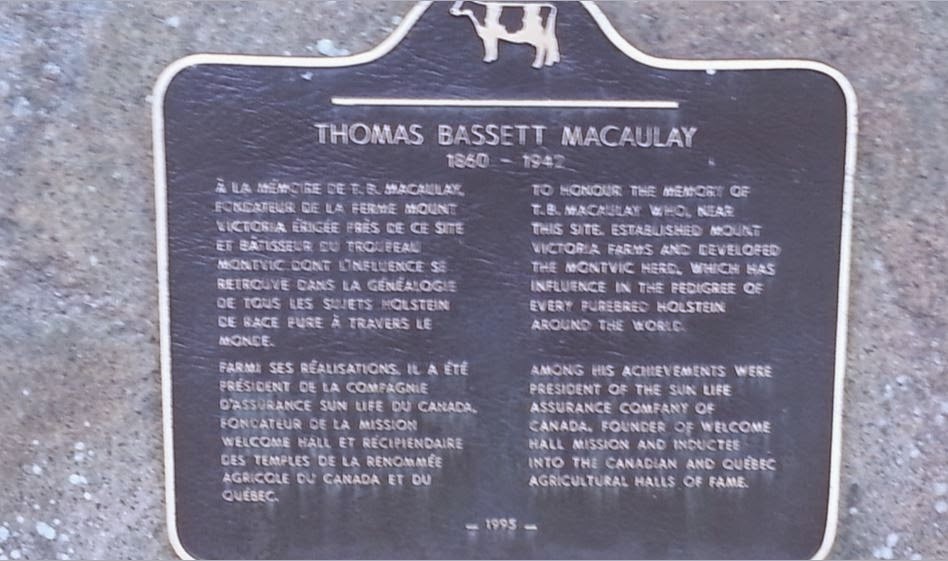
This book above, The Genealogy of the Macaulays of Uig and this plaque, below,  in Hudson, Quebec, are related.
The other week, while strolling with our two dogs by the water in Hudson, Quebec, my husband and I passed another  couple walking their enormous pooch, a Newfoundlander-like dog, but one with large black and white patches.

I remarked on the unusual colouring of said canine and one of the owner’s replied, “Yes,  he’s our Jersey dog.”

I asked my husband,  “Aren’t Jersey cows brown? Those black and white cows you see everywhere are called something else. Aren’t I right?”

“Yes,” replied my husband, who grew up in the country so he knows a lot about such things. “Those black and white cows were developed by a guy from here in Hudson. There’s a plaque up on Mount Victoria? Do you want to do see?” It seems he couldn’t remember the name of the breed of cow, either.

So my husband took me to see this plaque, installed to honour the memory of a local man,Thomas Basset Macaulay, who developed a new breed of cow, the Holstein, on his experimental farm on the shores of the Ottawa River.

T.B. Macaulay, as it happens, was also the long-time President of Sun Life Insurance.

OK. So, what’s all this got to do with two-legged genealogy?

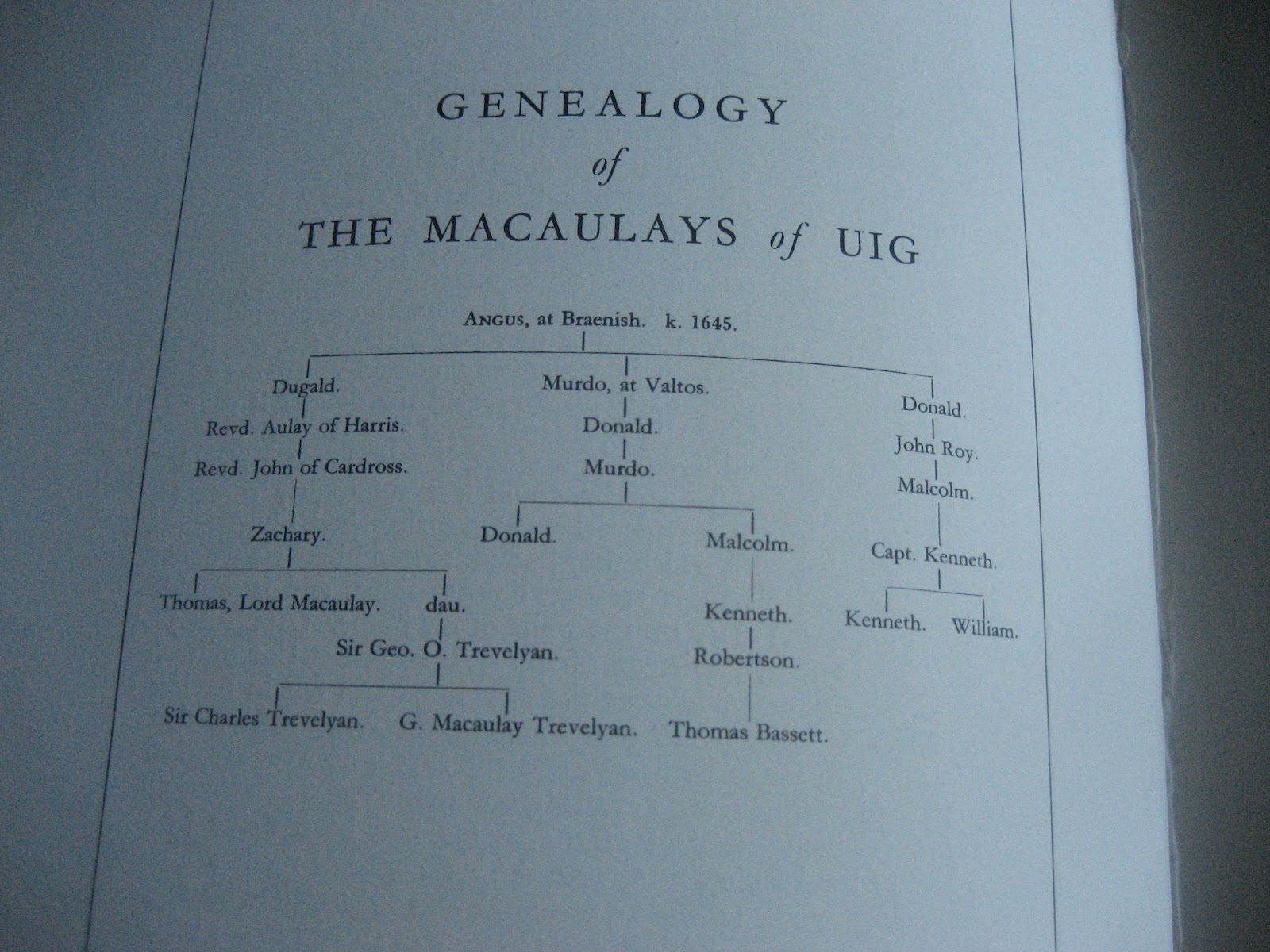
Well, the name T.B. Macaulay rang a bell with me.  I have a self-published book, The Genealogy of the Macaulays of Uig, in my house.

The book once belonged to Edith Nicholson, 1884-1977, my husband’s great aunt,a proud descendant of the Isle of Lewis Scots, those penniless crofters who were cleared from the land in the 1800’s and forced to emigrate to Canada and beyond.

My husband’s great aunt Dede, a teacher, left behind a slew of letters (from 1906 to 1936) and a few other personal possessions, including an 1888 two volume edition of Middlemarch; a yearbook from The Hostel from 1928 (that was McGill’s women’s Phys Ed residence);some yellowed newspaper clippings about the militant suffragettes; and this little genealogy volume, given to her in 1931.

The inscription reads: To Edith Nicholson, in appreciation of her connection with the Nicholson Institute of Stornoway. T.B. Macaulay.

There’s even a picture of Mr. Macaulay inside the book.
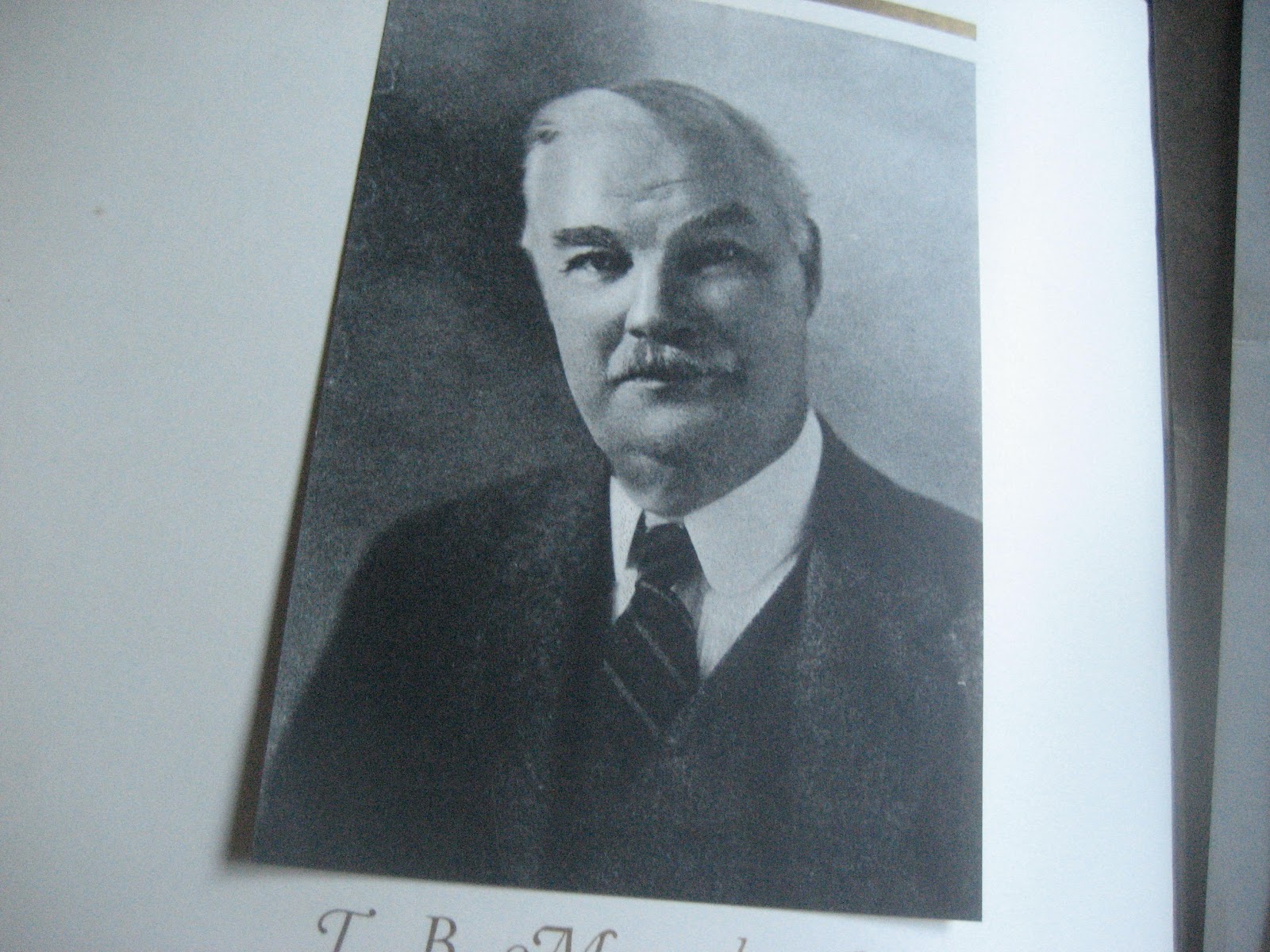
And here’s that inscription.
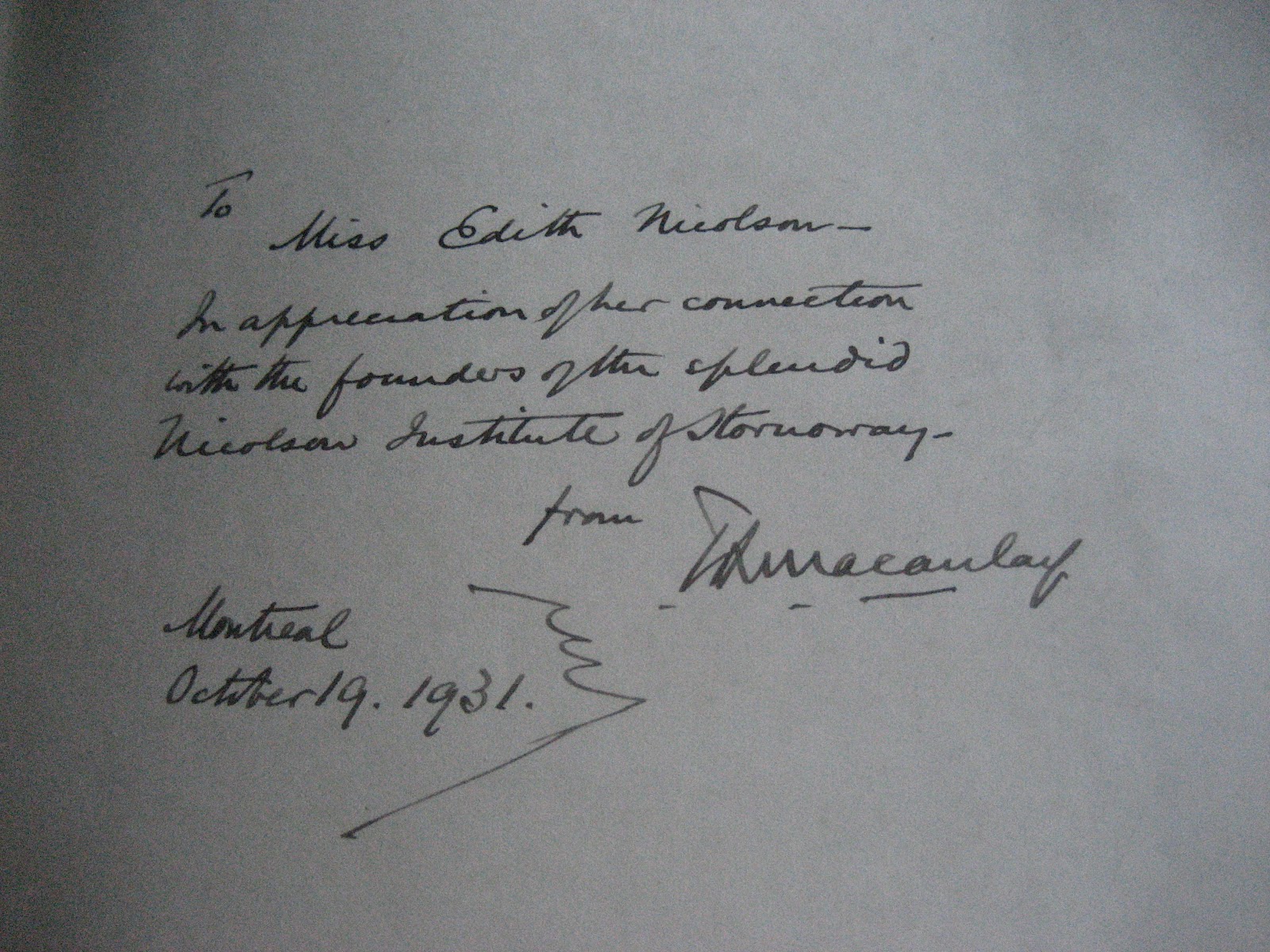
How well Mr. Macaulay knew my husband’s great aunt Dede, I don’t know. Edith had worked at Sun Life between 1917 and 1920, but only as a lowly stenographer in the accounting department.

After that she worked in the Registrar’s office at McGill and as a Tutor-in-Residence at the Hostel and as Assistant Warden at Royal Victoria College. In the 1930’s, Edith stepped out with Carrie Derick, the suffragist and first female full professor at McGill.

Edith’s family, from Richmond, Quebec was cash-poor but well-connected.  J.C. Sutherland, the long-time Superintendent of Protestant Education in Quebec, was a close friend. Edith’s father, Norman, had stumped for Sir Wilfrid Laurier back in the day.

But no Macaulay figures in any of the family’s 1,000 letters, although there are many mentions of Morrison’s and McLeod’s and other Isle of Lewis surnames. As far as I know from the same stash of correspondence, Edith got her job at Sun Life because the head of the Accounting Department lived beside her sister, Marion, on York Avenue in Westmount.

No, these two people didn’t have much in common, except that they were both of Isle of Lewis, Scotland, origin and they both were into genealogy big time. Somewhere along the line T.B. Macaulay learned of Miss Edith’s obsession.

Edith would visit the Hebrides homeland, herself, in 1933. She would bring back loads of information about the Nicolson Education Institute of Stornoway, a school. She was clearly proud of the connection she felt she had with this particular place. And for a few years in the 1930’s she would sign her name Edith Nicolson, without the H.

Now, that’s taking genealogy seriously!

Isle of Lewis genealogy is very well-documented on the Internet. This page leads to a story about how the Nicolsons and the Macaulays of Uig liked to feud over grazing privileges. But, of course.
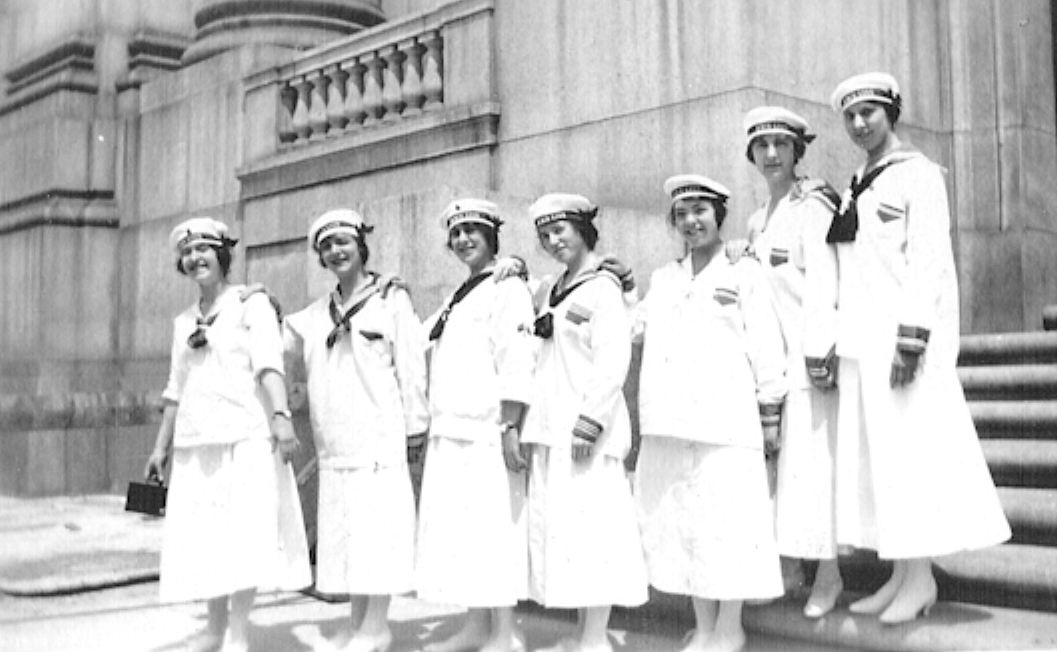
Edith, second from right, in Navy League uniform, in front of Sun Life Building, 1917, during WWI.
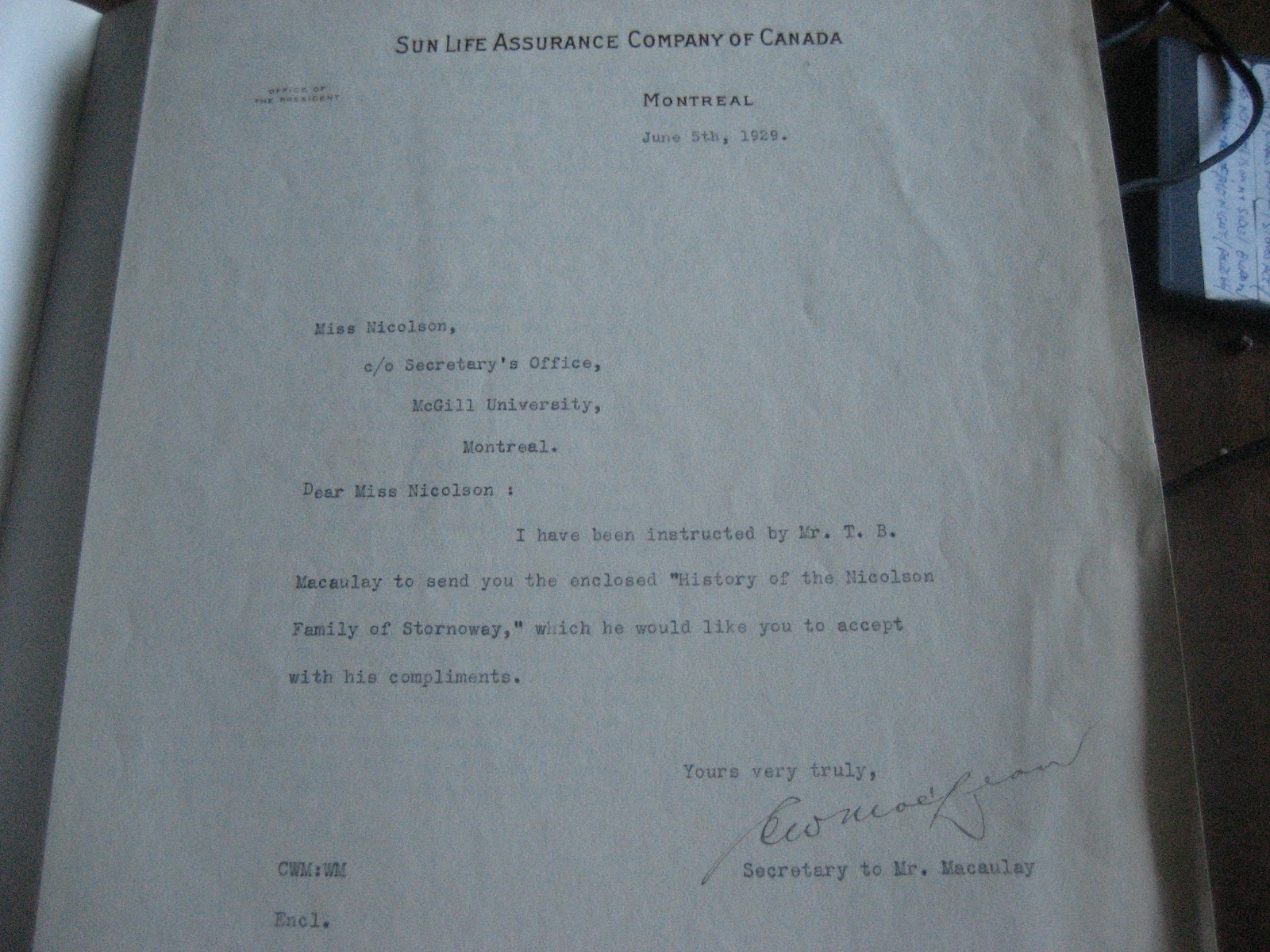
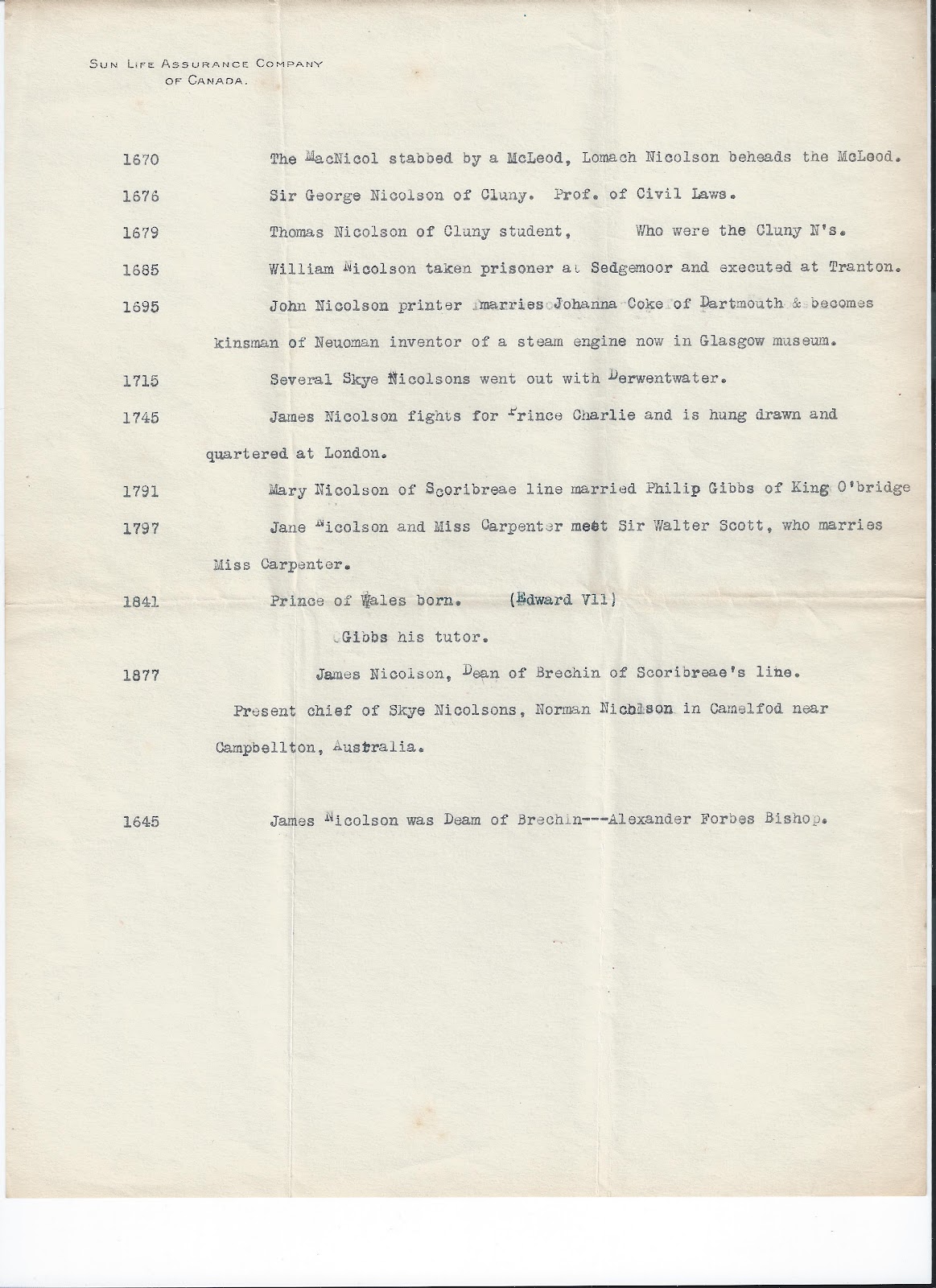
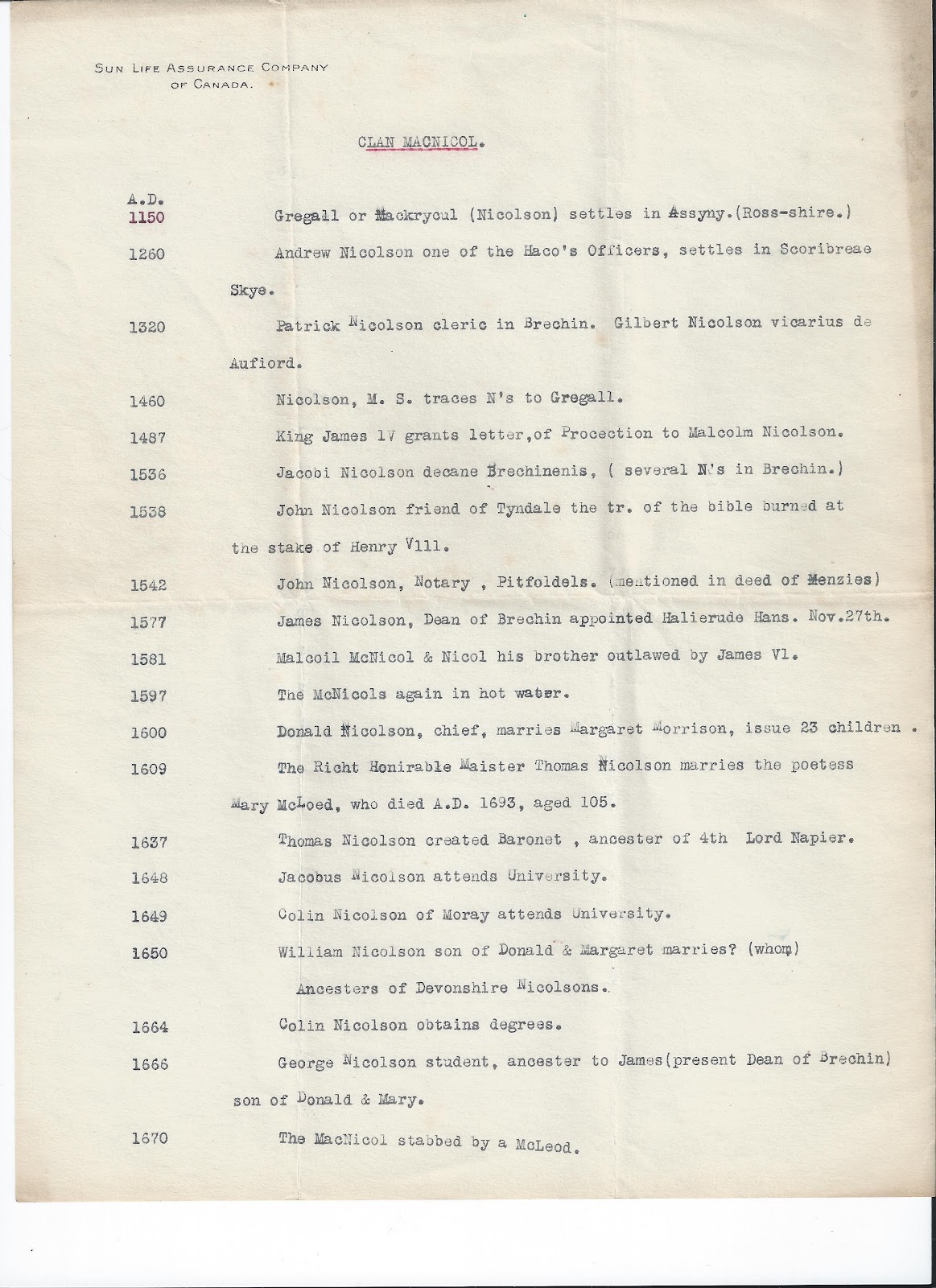
Macaulay’s Secretary wrote the letter to Edith. It was slipped inside the book as was a genealogy of the Nicolson clan from Medieval times and later.
WHY BAPTISTS?

By René Péron

Religious history tells us that what we call The Reformation was indeed part and parcel of several attempts to reform certain aspects of the once dominant Roman Catholic Church. Be it under the influences of Francis of Assisi, Erasmus, Waldo, Hus, most prior moves towards reform from within said Church lasted but short periods of time. It remained for two convinced and strong willed men, namely Martin Luther and Jean Chauvin (whom we know best as Jean Calvin or John Calvin) to found separate though like-intentioned movements for deep and exacerbating reform.

Out of these said movements there was born a surge of people who became followers of the revised theological thinking as promulgated by each of the above named men, each in his own right and own sphere of influence. Thus the followers of the one became known as Lutherans and those of the other as Calvinists.

As is also well known, homo sapiens being a questioning animal, even the followers of the above two men started questioning some of their theological pronouncements. Over the years, much to the dismay of many, such questionings became points of division within the very core of the first Lutherans or Calvinists. These divisions on doctrinal or other issues within “reformed” Christianity over the last several centuries have led to a multitude of groups, such bearing names which they gave themselves or were given by others to differentiate, separate them from other believers in Christianity. Some of these names were outright fanciful whilst others were based on their beliefs or organizational set-ups. Thus Lutherans, Calvinists, Baptists, Pentecostals, Presbyterians, Brethren, to name a few.

As North America as we know it today was founded by members of these diverse religious groups said members formed communities of like minded folk and their religious entities bore, bear, names borrowed,  adopted, from the movements found in the country of origin, be it the British Isles or the European continent. . Canada, particularly after the Conquest, inherited similar religious names through the migration of people from the British Isles as well as Europe. To these was the added influence of those U.S. citizens known to us as (a) Loyalists, or more simply as (b) people who crossed back and forth over the common border between Canada and the U. S. A., loosely guarded and even more loosely observed or recognized. Some of these latter individuals belonged to splinter religious entities, thus forming dissentient groups in Canada, keeping their identifying religious nomenclatures. Needless to say, further dissenting members of the established groups perpetuated the practice of adopting names to identify themselves.

In all of this one must not lose sight of the historical fact that in the early days, after the conquest, non-French speaking immigrants were most apt to affiliate, join, with the then official state church, namely the Church of England. However many areas soon saw the arrival of itinerant preachers of the then established denominations, some originating in the British Isles, others in the U.S.A., ; these men would often visit communities which were not, or at least not well, served by the state church. Thus there soon were pockets of folk who formed Baptist, Methodist, or other church groups as they gathered around the said itinerant preachers, adopted their way of expressing their religious beliefs and took on the nomenclature which defined their particular approach to “religion”.

Perhaps this modus operandi was most noticeable in those geographical areas where the established state church had not found it expedient to send representatives. Understandably such areas were in the undeveloped hinterland. Those places, distant from the large centres, such as along the U.S./Canada border, were most susceptible to experience this phenomenon.

All of which leads one to remark or note that when the Province de Québec saw the beginnings of its own “reform” movement amidst the French speaking population in the early 1800s the people who converted to Protestantism  were apt to follow the same pattern in joining one particular religious denomination or the other. One can cite as an example the group which many historians recognize as the first to firmly put down roots and later affiliate itself with a recognized denomination, namely the Baptist one. Its founders, from “la Suisse” (Switzerland), namely Louis Roussy and Mrs Henriette (née Odin) Feller  had felt a spiritual calling to come to Québec to evangelize. Supported by a non-conformist missionary /religious society, La société des missions évangéliques de Lausanne, in Suisse, encouraged by a fellow Christian, namely Henri Olivier, who was already trying to evangelize French language Canadians in the Montréal region, they briefly came to that city and endeavoured to convert the local folk to their view or approach to the Protestant faith.

Food Rationing Post WW 2

I think queues were invented in the UK. We queued for everything and even though I was only about four-and-a-half  years old, I remember queuing with my mother. One time, when she was heavily pregnant with my brother, she sent me into the shop to keep her place, whilst she rested on the wall outside.

I marched in, went straight up to the front of the queue and stated my order…….I remember very well, the smiles and laughs, but I got my order right away and, once outside, instructions from Mum on the correct way to queue.  My Mum told me that ‘food was all we thought about’ how to get it what to make with it, how to stretch it.

We ate everything from the animal. Called ‘offal’ it included heart, kidneys, brain and stomach–all made into quite tasty dishes. I don’t know if I would have eaten the dishes, had I known what I was actually eating!

¹During rationing, 1 person’s typical weekly allowance would be: 1 fresh egg, 4 oz margarine, 4 oz bacon (about 4 rashers), 2 oz butter, 2 oz tea, 1 oz cheese and 8 oz sugar.

 Meat was allocated by price, so cheaper cuts became popular. Points could be pooled or saved to buy pulses, cereals, tinned goods, dried fruit, biscuits and jam.

We used to have a dish called ‘tripe’ boiled animal stomach with onions. Or liver and onions still popular today. If you got a tongue at the butchers you could make many meals with it. Fried, or pressed in aspic to make ‘brawn’ then cut up to make sandwiches with or add to salads.

A favourite after the Sunday roast was “bubble and squeak” which was the left-over potatoes and greens cut up small and fried to a crisp with cold meat and pickled onions, usually fed to us on Monday as the family laundry was done on that day. Corned beef hash was another dish mixed with cabbage and potato and fried.

Chitterlings (intestines) were sometimes eaten cold. Pigs trotters added to a hearty mix of vegetables made a wonderful meal with dumplings. Many people made their own blood puddings.

Gran’s beef olives was a favourite meal. That was skirt steak, when we could get it, beaten to death with a rolling-pin cut into strips and the strips stuffed with sage and onion stuffing rolled up and secured with a tooth pick and roasted for hours on end.

Dripping’ was the various fat from animals carefully preserved (no refrigeration in those days) in a crock and kept on the cold, stone floor in the larder to spread on a piece of bread sprinkled with salt – very tasty!

Most people had an allotment and grew as many veggies as possible. Wasting food was a criminal offence during the war my Gran told me. Too bad that does not apply today!

²The Ministry of Food produced leaflets and posters advising housewives to be creative and one of England’s best known cooks, Marguerite Patten gave cooking tips on the radio.

‘Mock’ recipes included ‘cream’ (margarine milk and cornflour) and ‘mock goose’ (Lentils and breadcrumbs). Powdered eggs and Spam from the US were mainstays of wartime and after. Kippers and Sprats were a fish easy to obtain in Plymouth Devon, a Royal Naval fishing city where I was born.

This is an example of a ‘Government Recipe’ taken from the book ‘Ration Book Cookery Recipes and History. Published by English Heritage, London 1985.

Mock Goose

150 g (6 oz) split red lentils

275 ml (1/2 pint) water

15 ml (1 tbls) lemon juice

salt and pepper

For the ‘stuffing’

1 large onion

50 g (2 oz) wholemeal fresh breadcrumbs

15 ml (1 tbls) fresh sage, chopped.

Cook the lentils in the water until all the water has been absorbed. Add lemon juice and season. Then make the stuffing. Sauté the onion in a little water or vegetable stock for 10 minutes. Drain, then add to the breadcrumbs. Mix in the chopped sage and mix well. Put half the lentil mixture into a non-stick ovenproof dish, spread the ‘stuffing’ on top, then top off with the remaining lentils. Put in a moderate oven until the top is crisp and golden.

I have tried this recipe, and it was really good, considering not much was in the ingredients.

Despite the stresses of wartime, it was reported that the health of the poor improved. Babies and pregnant women were allocated extra nutrients such as milk, orange juice and cod liver oil.

Post war, the orange juice we got for my baby sister was condensed in a small bottle and carefully measured out by the teaspoon and mixed with water. For all the hardships I was never hungry and I do believe that I had a healthy start to life, due to rationing.

¹ http://www.bbc.co.uk/history/topics/rationing_in_ww2

This is an interesting slide show regarding rationing.
² http://news.bbc.co.uk/today/hi/today/newsid_8511000/8511309.stm

Visiter le Londres de Shakespeare

London in 1561.  Go see this amazing map at Agas map, university of Victoria:  it is a bird’s eyeview of the city, first printed on wooden blocks.  I heard about it on the French CBC radio show, La tête ailleurs.


J’écoutais La tête ailleurs le dimanche 23 février 2014 comme chaque dimanche, à la radio 95.1 fm radio-canada première.  J’ai été très intéressée lorsqu’ils ont parlé de cette carte,imprimée sur des blocs de bois

Détail de la carte d'Agas montrant Londres vers 1561
Détail de la carte d’Agas montrant Londres vers 1561     Photo : Université de Victoria

Une carte de Londres datant de 1561 permet aux internautes de visiter la ville au temps de Shakespeare grâce à Janelle Jenstad, de l’Université de Victoria, en Colombie-Britannique. Notre collaborateur Thomas Leblanc présente cette étonnante expérience dans sa chronique « Le cartographe amateur ».

Dans ses cours sur la littérature anglaise, Janelle Jenstad utilise cette carte de Londres, appeléeCivitas Londinum ou carte d’Agas, pour faire voyager ses étudiants dans les rues, les tavernes, les églises, les cafés et les théâtres du 16e siècle. Ces lieux ont presque tous disparu à la suite du grand incendie de 1666.

La carte d’Agas – Université de Victoria