
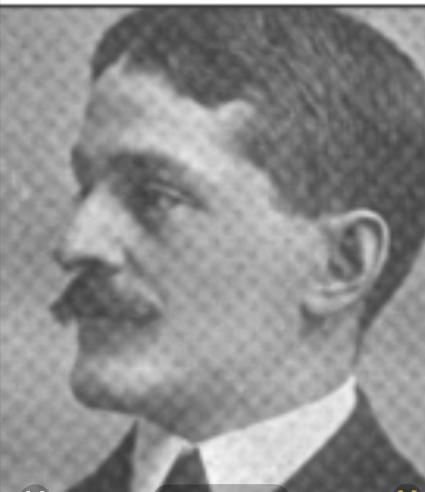
Judging from her family tree, my late mother, Marie Marthe Crepeau was a bona fide French Canadian de souche.1
Her father, Jules Crepeau, son of an entrepreneur painter from Laval and her mother, Maria Roy of Montreal, daughter of a master-butcher, have trees that go right back to the boat in France – and yes, mostly to Normandy, Poitou and Ile de France. Classic!2
And yet, according to Ancestry’s (beta) chromosome browser, my mother was not 100 percent “French.”
I’ve provided my own spit to the platform and apparently chromosomes 3 and 12 on her side are English (but that does include the North of France) and chromosomes 17 and 18 are Norwegian (Norsemen -Northmen-Normandy, perhaps?) And a swath of chromosome 2 is indigenous American, making me less than one percent indigenous.
Lately, I’ve subscribed to an interesting infotainment3 website that really dives into a person’s ethnicity from all angles and over a slew of time periods: Ancient, Bronze , Iron and Modern Ages. Sure, I get Eure, Finistere and Vendee (Normandy, Brittany and Poitou) in spades, but I get just about every other area of France, too – as well as some Spanish, French Corsican and French Basque.4
My mom’s French Canadian family tree supports some of this. From the ten percent sample I traced back to France I get natives of Limousine, Aquitaine, the Mid-Pyrenees, Picardy, Bourgogne, Haute-Marne, Bayonne, Les Rhones Alpes, as well as the Canadian North (Innu).5
And let’s not forget my ancestor the legendary pioneer river pilot Abraham Martin dit L’Ecossais (he of the Plains of Abraham fame) who may have been from Scotland. My mom has him at least twice in her tree.
A while back, I figured out that my Mom’s paternal Crepeau line (father’s father’s father, etc.) can be traced back to Vendee but it is likely of Sephardic Jewish ethnicity and hails originally from Spain. 6
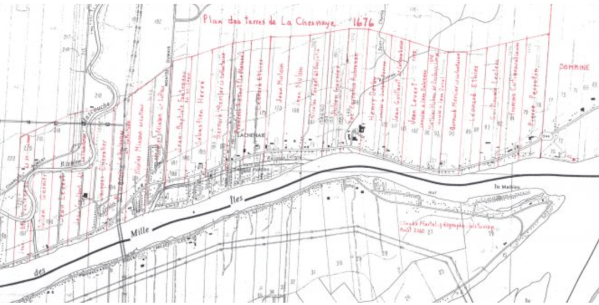
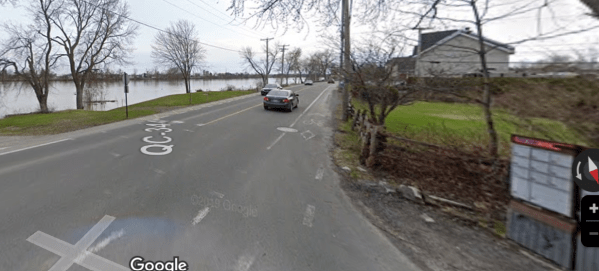
In New France, my grandpapa Crepeau’s maternal tree can be traced to the original families at the Lachenaye (Terrebonne) Seigneury (est.1673) north east of Montreal, four founding farmer families in particular: Ethier (Poitou-Charentes), Forget (Normandy), Hubou (Ile de France) and Limoges (Rhones Alpes). My mother’s DNA is largely a mish-mash of these families’ genes, for they inter-bred down through the centuries. Basil Crepeau my mom’s 4 x GG was a slightly later arrival at Lachenaye who moved in beside the Hubous.
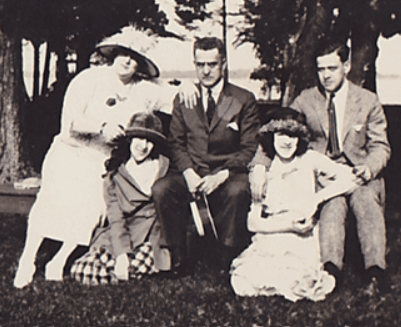
Now DNA distributes down the generations in very complicated and irregular ways especially where endogamy or founder effect is concerned8 and judging from my many French Canadian ‘cousins’ on Ancestry, my mom may have gotten a disproportionate amount of her genetic material from the Hubou founder family at Lachenaye Seigneury. A great majority of my DNA cousins on that platform are connected to me through her 2nd great grandfather, Michel Hubou dit Tourville.9
As it happens, Michel’s pioneer ancestor was one Mathieu Hubou dit Deslongchamps, a master-armourer from Normandy who was married to one Suzanne Betfer who was…wait for it… a gal from Gloucester, UK.
Now, ain’t that fun! A bona fide English Fille de Roi!!
THE END
1. de souche a controversial label that means from the roots.
2. https://www.biorxiv.org/content/10.1101/2022.07.20.500680v1.full.pdf On the genes, genealogy and geographies of Quebec. According to: French Canadians come from 8500 founder families in 17th and 18th century, with only 250 of these founder families, the majority from Perche, leaving behind the majority of genetic disorders that passed down through the ages. https://www.jstor.org/stable/41464974
(Hereditary disorders in the population of Quebec II Contribution of Perche)
The very first pioneers, the 2,700 super founder families, 1608-1680, were 95 percent French. The later 17th and 18th century founder families were 80-85 percent French but the non-French includes Acadians.) The first 2,700 founder families contributed to 2/3rds of the modern gene pool of French Canadians, but geography and natural boundaries kept families within even smaller gene pools. Indigenous DNA contributed one percent of French Canadian DNA. Regions can have super-founder families that contributed even more to the modern gene pool.
3. Your DNA Portal
4.These ethnicity estimates are based on complex science but the various results have to be taken with a grain of salt. Even if the original science is spot on, these results depend on what sample of your DNA is taken and how far back the algorithm is examining. I liken it to making a complicated stew from various ingredients, letting it simmer for a long time and then trying to deconstruct what it was made from. Maybe you put parsnips, carrots and parsley in the recipe, but these ingredients are already related genetically so it’s not easy to pull apart. Still, taken as a whole the results I get are telling: My mother’s ancestors were mostly from Gaul, especially the tribes Redones and Veneti in Brittany. Hardly a surprise as that’s what my Mom had always been told, that her people were from Brittany. I also get Gaul Santones who lived in Charentes. So spot on!
5. Nos Origines and Drouin
6.My mother is no outlier French Canadian in this respect, at least according to a recent paper that maintains that the Huguenot and Acadian populations are largely made-up of Sephardic Jews escaping the Inquisition. Investigating the Sephardic Jewish ancestry of colonial French Canadians through genetic and historical evidence. Hirschman.
https://nameyourroots.com/home/names/Crespo (Spanish roots likely Sephardic) The name means Curly Haired One. My mom knew that. She did have very curly hair as did her father so that trait passed down through the ages.
The Crepeaus (Crespeaus, Crespo’s Crepspin) are not the only possible Spanish line my mother has in her tree. For instance, her mother’s maternal Gagnon line goes back to one Lily Rodrigue in Normandy, a surname some say is Spanish derived. Another line goes to a Domingo in Bayonne, near the Spanish border. That name is Spanish/Italian and found in Southern France. I also have Navarre or Navarro. ADDED August 2025. I recently got two distant cousins – not related themselves on Ancestry Crespo and Crespim. Both mostly Spanish (very little 2 percent French) with 3 percent Sephardic Jew. Seems to prove my point.
7. Roy is the second most common surname in Quebec. http://leroy-quebec.weebly.com/the-surname-leroy.html . Gagnon is the third most common name and my direct pioneering ancestor hails from Perche in the North of France where he was a leading citizen, apparently.
8. Supposedly, all things being equal, we have only a 47 percent chance of inheriting DNA from an 8th GG, and inherited DNA from 8th GG’s amounts to a fraction of 1 percent but a high degree of endogamy or ‘founder effect’ clearly changes that, judging from the info in the studies in the links I have posted here.
9. On Ancestry, 60 percent of my closer DNA cousins are connected to me through Michel Hubou Tourville and his wife, but it should be noted that a full 400 family trees on Ancestry contain his name. It appears that his descendants moved to the US and did their family trees! Also, these ‘cousins’ tend to have my other Lachenaye names like Ethier and Forget and Limoges in their trees, so impossible to parse.
“This article explains the very thing I’m talking about: https://www.legacytree.com/blog/dealing-endogamy-part-exploring-amounts-shared-dna?fbclid=IwAR1veE4wNTc9gLGtx33Z8qphXmRdtTH2fREANxrenVDgx2NRqs1SznCAV0 “In one of our research cases, we found that an individual descended 12 different times from the same ancestral couple who lived in the late 1600s in French Canada. Although they were quite distant ancestors in every case (within the range of 9th-11th great grandparents), he had inherited a disproportionate amount of DNA from them due to their heavy representation within his family tree.”
Endogamy or consanguity? I’ve discovered that my grandfather Jules Crepeau likely had some double first cousins: his mother Vitaline Forget Despaties married Joseph Crepeau and Vitaline’s brother Adolphe Forget Despatie married Joseph’s sister, Alphonsine. I wonder if this happened further up the line. Wouldn’t that have messed with the DNA estimates! If such cousins marry it is closer to consanguinity than endogamy.
https://www.historyfiles.co.uk/KingListsEurope/BarbarianRedones.htm
The Celtic Tribes in France were described by the Romans as the GAULS.
 Genealogy Ensemble