Category Archives: Migration

The Life and Times of Phineas Bagg

A few years ago, my husband and I travelled to Pittsfield, in western Massachusetts, where Phineas Bagg (c. 1751-1823), my four-times great-grandfather, lived. As we wandered around the nearby town of Lenox, we spotted a sign indicating that a small office building had once been the Berkshire County Courthouse. Simply by chance, we were standing in front of the building where my family’s history had taken a dramatic turn. In 1794 and 1795, my ancestor appeared in that courthouse because he owed money he couldn’t pay to several local merchants. After he lost most of his land to pay off these debts, he left Massachusetts and came to Canada.

Phineas was most likely born in Westfield, MA around 1751. Although there is no record of his baptism, he was probably the youngest of eight children of farmer David Bagg and his wife Elizabeth Moseley.1 Elizabeth died when Phineas was about eight years old. His father remarried, but that second wife also died. In the mid-1760s, the family moved to Pittsfield, a new town on the western frontier of Massachusetts, and David married a third time.  Meanwhile, the family cleared the forest so they could plant crops, and they likely built their own log house. Later, as a young single man in 1777, Phineas purchased a farm of his own of about 100 acres.

Although Pittsfield was remote, the political events of the time were of great interest to its residents, and opposition to Great Britain was strong. When the American Revolution (1775-1783) broke out, Phineas, his father and several of his brothers served as soldiers. On three occasions, Phineas marched in a local militia unit, and he served in the Continental Army for about a month.2

By the time the war ended, Phineas had his own family. In 1780, when he was about 29, he married 20-year-old Pamela Stanley.3 There are no records of their children’s births or deaths, but Phineas and Pamela had four children who survived to adulthood: Polly, Stanley, Abner and Sophia.4
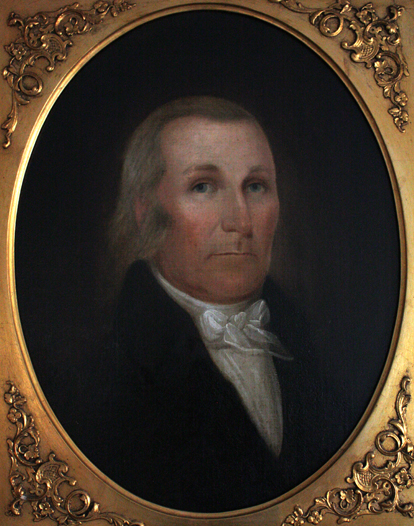
Phineas Bagg. Bagg family collection.

When his household was counted in the 1790 United States census, it included six people: one white male age 16 and older, two white males under 16 and three white females.5 Phineas Bagg’s name also appeared in other Berkshire County records: his household was included in a 1786 local census, his name appeared in the ledger of a local merchant between 1791 and 1794, and he paid $49.11 in real estate tax in 1795.6 What was not recorded was his wife’s death. Pamela probably died between 1792 and 1794, a period when there were many deaths in the community. This would have been a hard blow to the family, not only emotionally, but also because women not only raised the children, they also helped bring in extra income to the farm.

Farmers Under Pressure

Many New England farmers had faced financial difficulties ever since the end of the revolution. In 1886 and 1887, many of them joined in what became known as Shays’ Rebellion.7 I do not know whether Phineas joined the rebels, but he shared a similar financial situation.

Phineas was a yeoman: a farmer who owned his own land. Land ownership gave yeomen a great deal of pride and independence. Before the revolution, the farmers in the interior regions of Massachusetts were subsistence farmers: they grew enough crops to feed their families (mostly Indian corn, apples and vegetables) and bartered the small surplus of goods they produced with local merchants to obtain products such as nails and sugar.

After the revolution, new economic forces squeezed the merchants, and they in turn pushed their customers for cash. If the farmers did not have cash, the merchants took them to court. Many yeomen lost their land, others were sent to jail.

This was what happened to Phineas. In 1793, he mortgaged his farm to the Union Bank for $500. The following year, three creditors took him to the Berkshire County Courthouse for debts totaling about 44 pounds. If he did not repay the money within six months, the court commanded the sheriff to “take the body of said Bagg and him commit into our gaol” until his creditors were satisfied.8 In post-revolutionary New England, being sent to debtor’s jail was often equivalent to a death sentence. Phineas had no choice: several weeks later, he gave each of his creditors several acres of the farm as payment.

In 1795, he took out another mortgage on his property. Then ten additional creditors to whom he owed a total of $650, including substantial court costs, assessors’ fees and inflated travel expenses, won judgments against him. To repay them, Phineas lost another 62 acres of farmland, the barn and half his house.
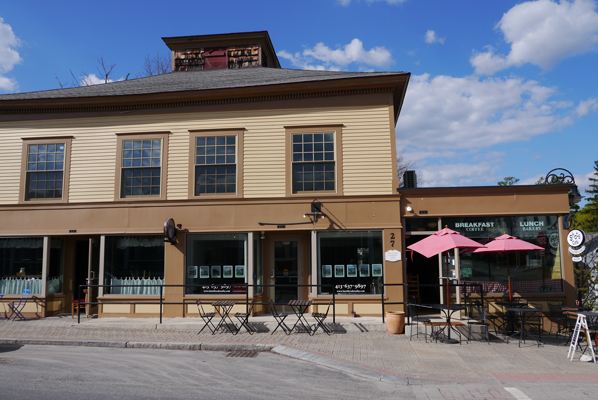
This commercial building in Lenox, Massachusetts was once the Berkshire County Courthouse where Phineas almost lost everything. jh photo

A final court case, heard in 1797, involved money he owed a tailor. Once again, the court ordered that Phineas should be jailed if he did not pay. Phineas did not pay and he did not appear in court. In fact, by that time, he was in Canada. Several weeks later, that tailor acquired title to a piece of land from Phineas’ farm.

Perhaps these events had convinced Phineas that he could not raise his children in Pittsfield. Perhaps he was so distraught, he did not want to try. I do not know whether anyone attempted to convince him to stay in Massachusetts, but at some point, he and the children headed north along the Indian trails and military roads toward Lake Champlain and Lower Canada (now Quebec). Meanwhile, it appears he had found a companion who wanted to accompany him to this new life – or perhaps she persuaded him to go. Her name was Ruth Langworthy.9

Phineas received a licence to run a tavern in La Prairie, Lower Canada, on March 15, 1797 and he became an innkeeper. La Prairie is a small town located on the south shore of the broad St. Lawrence River, opposite Montreal. The Indigenous people were early inhabitants of the area, and Jesuit missionaries established a mission there in 1667. Later, a small walled fort was built to protect the residents, and La Prairie remained strategically important for the defence of the area until after the War of 1812. When Phineas resided there, La Prairie had become a commercial hub. It was relatively close to the Richelieu River, which connected to Lake Champlain and the U.S. border, and it was a transit center for goods being transported to and from Montreal. A number of English-speaking merchants lived in the town at the time.
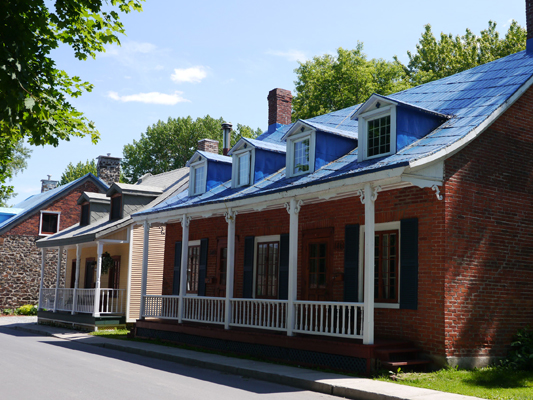
An old house in modern LaPrairie. Jh photo.

Phineas and Ruth eventually had two children. Daughter Lucie Bagg was baptized in the Catholic parish church in La Prairie on January 11, 1798 by a French-speaking priest and with French Canadian godparents. Lucie was referred to as Phineas’ “natural daughter,” another way of saying her parents were not married. When she grew up and married, she lived in Buffalo, New York. Phineas and Ruth also had a son, Louis, who died shortly after birth in 1800. I do not know what happened to Ruth.

Montreal Tavern Keeper

La Prairie notary Ignace-Gamelin Bourassa handled six acts for Phineas between September, 1796 and March, 1801, including a lease, an agreement for transportation and a loan guarantee, while notary Edme Henry handled two leases from Joseph Nolin to Phineas Bagg in 1800 and 1803. Other notarial records show Phineas purchased land in the La Prairie area in 1805 and sold it in 1813.

By 1809, Phineas had moved across the St. Lawrence and was living on the Island of Montreal. In October of that year, he was appointed overseer of highways for the Ste-Catherine district, an annual unpaid appointment that rotated among parish householders. Phineas may have been a member of the Scotch Presbyterian Church in Montreal.10 A number of Americans attended that church.

As an exciting new opportunity arose, he formed a business partnership, P. & S. Bagg, with his oldest son, Stanley, to run another tavern. On October 17, 1810, the pair visited the office of Montreal notary J.A. Gray to co-sign a lease for the Mile End Tavern with landlord John Clark.11 Although it was not a mile from anywhere significant, the Mile End Tavern was in an excellent location for a drinking establishment, at the corner of St. Lawrence Street, the road leading north from the city to the Rivière des Prairies, and Ste. Catherine Road, which crossed the northern flank of Mount Royal. The tavern must have been a popular spot for travellers, and especially busy on days when there was horse racing at the nearby track.

The Mile End property was also a farm, and the lease stipulated that the tenants had to manure the pastures, protect the maple grove, and allow their cows and those belonging to the neighbouring nuns to graze together. Having been both a farmer and an innkeeper, Phineas was well suited for this undertaking.
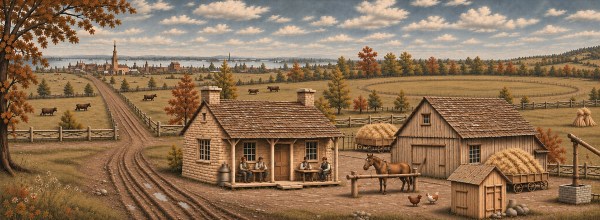
Cousin LG used AI to create an artistic impression of the Mile End Tavern around 1820. St. Lawrence Street led to the small city of Montreal , about a mile away on the shores of the St. Lawrence River. The eastern slope of Mount Royal rose nearby, cows grazed in the fields, and  there was a racetrack near the tavern.  

Phineas and Stanley renewed the tavern lease in 1815, but by 1818, Stanley was busy with other opportunities as a merchant and contractor, while Phineas was in his 60s. They closed the tavern business, placing an ad in the newspaper asking anyone with an outstanding account to settle it. A year later, son Stanley Bagg and land owner John Clark signed another notarized agreement:  a marriage contract between Stanley Bagg and Mary Ann Clark, John Clark’s only daughter.

When Phineas died in 1823, his funeral service was held at Montreal’s Anglican Christ Church. Phineas Bagg Esquire was probably buried in the old cemetery downtown and his remains later moved to the imposing Bagg family crypt in Mount Royal Cemetery. Once a debtor threatened with imprisonment, Phineas had become part of a well-respected family.

This story originally appeared on my personal family history blog Writing Up the Ancestors and I have edited it with some additional material.

Notes and footnotes 

1. The best evidence for his date of birth comes from the record of his burial at Montreal’s Anglican Christ Church. Dated Nov. 3, 1823, it says, “Phineas Bagg esq of Montreal, merchant, died on the 31 day of November [sic] 1823, aged 72 years, and was buried on the 3rd day of November following by me. John Bethune, rector.” (The minister made a mistake on the date of death: it was actually 31 October.)

In 2014, I researched the question of Phineas’ parents and posted my conclusions on my personal family history blog, Writing Up the Ancestors (https://www.writinguptheancestors.ca/2014/10/who-was-phineas-bagg.html). While unable to state categorically that David and Elizabeth were his parents, I wrote, “there is considerable evidence to suggest that Phineas Bagg was born in 1751 in Westfield, the son of David Bagg and Elizabeth Moseley, however, most of this evidence is indirect, from derivative sources and secondary information, so it is inconclusive. I found no evidence that conflicts with this hypothesis.”

In 1980, Debretts, the genealogy company that researched the Bagg family for my mother, came to the same conclusion, writing that, “although we have no conclusive proof, it seems reasonably certain that David was Phineas’ father.” The report also noted that David purchased land in Pittsfield from Abel Caldwell on January 1, 1763, and that same land was subsequently owned by Phineas.

2. A summary of his service record reads as follows:  “Bagg, Phineas, Pittsfield.Capt. William Francis’s co.; list of men who marched to Albany Jan. 14, 1776, by order of Gen. Schuyler, and were dismissed Jan. 19, 1776; service, 5 days; also, Lieut. William Barber’s co., Col. Simonds’s regt.; list of men who marched to New York Sept. 30, 1776, and were dismissed Nov. 17, 1776; service, 7 weeks; also, Private, Capt. William Francis’s co., Maj. Caleb Hyde’s regt.; list of men who marched to Fort Edward July 8, 1777, and were dismissed Aug. 26, 1777; service, 7 weeks; also, list of men who enlisted Oct. 26, 1779, to reinforce Continental Army, and were dismissed Nov. 30, 1779.”  Ancestry.com. Massachusetts Soldiers and Sailors in the War of the Revolution [database on-line]. Provo, UT, USA: Ancestry.com Operations Inc, 1998. Original data: Secretary of the Commonwealth.  Massachusetts Soldiers and Sailors in the War of the Revolution. Vol. I-XVII. Boston, MA, USA: Wright and Potter Printing Co., 1896. (accessed Jan. 12, 2013)

3.  Early Vital Records of Berkshire, Franklin, Hampden & Hampshire Counties, Mass. to about 1850 (electronic resource) Wheat Ridge, CO: Search and Research Publ Corp. c2000, p. 22 of sheet 99, F94/p6/M37.

4. According to date of birth calculated from age as listed on her tombstone, Polly Bagg Bush was born April 22, 1785 and died Jan 9, 1856. (https://www.findagrave.com/memorial/65952231/polly-bush).

Stanley Bagg and his brother Abner were both baptized as adults in Christ Church (Anglican) Montreal in 1831. At that time Stanley gave his date of birth as June 27, 1788 and Abner said he was born August 5, 1790, however, Abner’s date does not make sense in light of his sister Sopha’s calculated birthdate.  “Quebec, Canada, Vital and Church Records (Drouin Collection), 1621-1968” [database on-line].  Ancestry.com, (www.ancestry.ca, accessed 2 Oct. 2016), entry for Stanley Bagg, 2 April, 1831; citing Gabriel Drouin, comp. Drouin Collection. Montreal, Quebec, Canada: Institut Généalogique Drouin.

Sophia was probably the youngest of the Bagg children. When Dame Sophia Bagg, veuve (widow) Gabriel Roy died Nov. 12, 1860, she was said to have been 69 years, eight months of age. Calculating her date of birth, she would have been born around February 20, 1791. (“Quebec, Canada, Vital and Church Records (Drouin Collection), 1621-1968” [database on-line]. Ancestry.com.)

5. United States Census, 1790 Pittsfield, Berkshire, Massachusetts, familysearch.org, results for Phinehas Bagg. “United States Census, 1790,” database with images, FamilySearch (https://familysearch.org/ark:/61903/1:1:XHKL-1HW : accessed 29 September 2018), Phinehas Bagg, Pittsfield, Berkshire, Massachusetts, United States; citing p. 483, NARA microfilm publication M637, (Washington D.C.: National Archives and Records Administration, n.d.), roll 4; FHL microfilm 568,144.

6. The people of Pittsfield were not great record keepers during this period, however, the Berkshire Family History Association (www.berkshirefamilyhistory.org/) has done a good job of transcribing the records that do exist.

7. David P. Szatmary, Shay’s Rebellion: The Making of an Agrarian Insurrection, Amherst: University of Massachusetts Press, 1980.

8. These legal documents have been digitized by Familysearch.org and can be browsed under Massachusetts Land Records 1620-1986, Berkshire, Deeds, 1792-1813, vol 31-32, images images 424-428 and 435-443.

9. William Franklin Langworthy, compiler, The Langworthy Family. Some descendants of Andrew and Rachel (Hubbard) Langworthy, who were married at Newport, Rhode Island November 3, 1658. Published by William F. and Orthello S. Langworthy, Charles St. Hamilton, N.Y.

See Janice Hamilton. “Lucie Bagg’s Mother, Ruth Langworthy”, Writing Up the Ancestors, April 15, 2016, https://www.writinguptheancestors.ca/2016/04/lucie-baggs-mother-ruth-langworthy.html

See Janice Hamilton, “Lucie Bagg: Her Story,” Writing Up the Ancestors, March 31, 2016, https://www.writinguptheancestors.ca/2016/03/lucie-bagg-her-story.html

10. Rev. Robert Campbell, A History of the Scotch Presbyterian Church, St. Gabriel Street, Montreal, Montreal: W. Drysdale & Co. 1887, P. 252. https://archive.org/details/cihm_00397/page/n1. This book notes the large number of New Englanders living in Montreal at the beginning of the 1800s. The author mentions Phineas but incorrectly describes him as Abner Bagg’s brother, rather than his father, so he may have confused Phineas with Stanley.

11. Notary J.A. Gray, act #2874, BAnQ
A Twist of Fate

By Susan Gingras Calcagni

My great-grandfather, William Irvine, born on 31 August 1864 in Maryton, Kirriemuir, Forfar, Scotland1 was devastated by the death of his eldest daughter, Mary Ann, in 1911.2  Heartbroken, William was ready to hand over his lease as a publican and make preparations to sail to Canada with one of his daughters, Georgina. The 1911 census reveals that William was a Spirit Merchant at the Camperdown Pub located at 144 High Street in Dundee, Scotland.  William and his family were living at 22 Peel Street in Lochee, Dundee,3 just a 10-minute walk from the pub. This was a popular pub with the workers of the Camperdown Works, the largest jute factory in the world at the time.4 By spring 1912 William had found a new owner who was interested in taking over the pub and William had finalized preparations to emigrate to Canada.

Subsequently, William was shocked and dismayed to learn that his emigration to Canada would need to be delayed. James Jones, the new owner, could not take over the lease to the pub as planned. His son was due to return from India and the transfer of the lease had to wait until his return. This would have been overwhelming for William and this new development significantly altered the plans he had set in motion for a new life. He had come this far and would hold on to the one silver thread to achieve his goal. I can only imagine his strength and determination in the face of this situation and the need to change his plans.

While I was growing up, my Aunt Gladys Fairlie, my mum’s sister, was very keen to learn from her grandmother, Betsy, William’s wife, about her family history. As William Irvine died in 1931 in Montreal, Quebec,5 Betsy was the only one living to tell the family stories. Now here is where the family lore comes into play. Gladys was born in Canada, and not having immigrated, she would ask her grandmother why they came to Canada. Betsy told her that it was due to the death of their eldest daughter. It was said that this broke William’s heart and therefore he decided to leave Scotland for Canada. One can only dare say how devastated they must have been when forced to contend with the loss of their daughter, Mary Ann, at the tender age of 17 years old. As genealogists, we are often under the impression that our ancestors usually emigrated for economic reasons and opportunities to better their lives. In this case, it was not the sole cause for my family.  It was heartbreak, and further research revealed that it was an overwhelming one for William.

While researching William and Betsy’s immigration to Canada, I found that William was a widower at the time of his marriage to Betsy (something we weren’t aware of).6 A well-known step in researching family history is to leave no stone unturned, so I dug deeper into the records to learn that William had first married in December 1887.7 Unfortunately the death of Mary Ann in 1911 was not the first tragedy in his life. On 8 February 1888, his first wife, Mary McGregor Grimmond died days after giving birth.8 This was followed quickly by the death of their twin daughters, [Mary and unknown] on 29 February 1888.9 Chills ran through my body as I could only imagine how devastated my great-grandfather must have felt with grief and sorrow in his heart. My quest to learn more had increased ten-fold.

Moving forward, in 2002 plans for travel to Scotland were underway to learn more about my ancestors and especially about William and Betsy’s emigration to Canada. My Aunt Gladys and I were embarking on a fact-finding mission with the hope of confirming the stories she had been told by her grandmother over the years. Airline tickets were purchased and reservations were booked with plans to spend time in Dundee. I sent emails to the Dundee City Archives to book appointments to review the records to locate the address of the Public House where William was a publican and any other pertinent particulars we may extract. Meanwhile, I contacted the Balgay Cemetery in Dundee to plan a visit to the gravesite of Mary Ann Irvine. My Aunt Gladys had always yearned to locate and visit her grandfather’s pub and her Aunt Mary Ann’s gravesite. My desire to seek out these details were equally shared. My mission was underway and there was no disappointing my aunt.

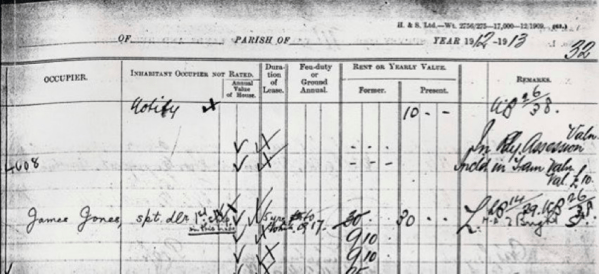
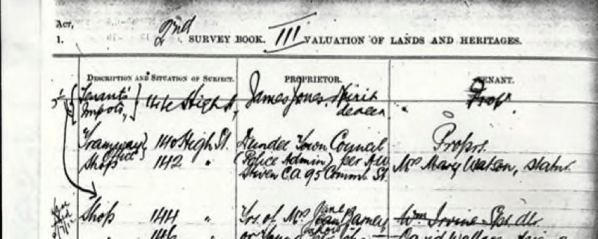
With all the information swirling in my head, I was eager to start my quest. However, here is where my curiosity really started to unfold. Gladys was also told that William had his passage to Canada in the making and that the new owner of the Public House requested that William delay his departure, as noted above in this story. When we visited the Dundee Archives, you can imagine how thrilled we were when shown the entry at the Dundee City Archives10 with evidence that there was indeed an alteration in the transfer of the lease for the Public House located at 144 High Street, Lochee, Dundee between William Irvine and James Jones, Spirit dealers. Betsy, William’s wife, told the story that William was dismayed that he was required to stay on longer just until Mr. Jones’ son arrived back from India. Mr. Brian Cullens of the Dundee City Archives, who I had contacted by email, remarked that day on our visit that William probably had needed to alter his arrangements for his passage to Canada. This delay in the transfer of the lease saved William and Georgina’s lives. Originally William and Georgina had booked their passage on the RMS Titanic that left Southampton, England on April 15, 1912 but these tickets had to be cancelled. Eventually William and Georgina travelled on the Allan Line’s SS Scandinavian which departed from Glasgow on June 29, 1912, two months after the RMS Titanic’s fated voyage.11 After confirming at the Dundee City Archives that William did, indeed, change his travel plans made Aunt Gladys and I realize that we were in Dundee in 2002 because of this remarkable twist of fate.

Extracts from the Dundee City Archives, 2002

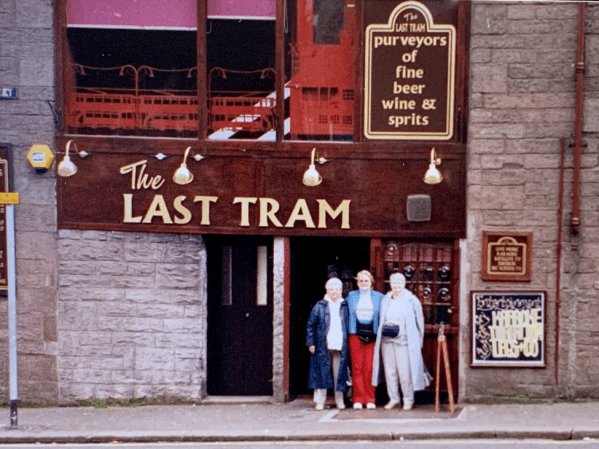
While in Dundee in 2002, we also visited the site of William Irvine’s pub which was then called the “Last Tram” located at 144-146 High Street. Below is a picture taken during this trip. This name of the pub honoured the historic end of the Dundee’s tram service in October 1956. In earlier years, the Camperdown Tavern, was nicknamed the “Tommy” or the Wounded Tommy. The soldiers of WWI who were badly wounded and who recuperated in Bright Street nearby the tavern at the Union Street Church Hall were nicknamed the “Tommies.” They were patrons of the tavern because the wounded soldiers would find it easy to enter and exit with no steps from the street level.12

The Last Tram, Dundee, Scotland, family photo by author, 2002

Often, as genealogists, we are asked why we do family history. Greater than the sum of these fragments, here is one of my responses. On the train ride leaving Dundee, Gladys and I were sitting there, and while crossing the Tay Rail Bridge, my aunt turned and looked at me. In a surreal tone she expressed her thoughts, “What would my grandparents and my mother think to know that I was there and sat in the family’s Public House, the same brick and mortar, and visited the Balgay Cemetery gravesite of my aunt that I had never met.”  This squeezed my heart knowing that I had fulfilled a dream of the person who has always been my soul mate and inspiration in life and genealogy, my dearest Aunt Gladys.

  1. New Register House Scotland, Statutory Birth Records, 1864, William Irvine, accessed 2000.
  2. ScotlandsPeople, Statutory Death Records, 1911 Mary Ann Irvine, accessed 2006.
  3. ScotlandsPeople, 1911 UK Census, accessed 2011.
  4. Wikipedia, Camperdown Works, https://en.wikipedia.org/wiki/Camperdown_Works, accessed 22 June 2026.
  5. Ancestry, Drouin Collection, Grace Anglican Church, Montreal, Quebec, accessed 5 August 2026.
  6. New Register House Scotland, Statutory Marriage Records, 1892, William Irvine and Betsy Smith Lawson, accessed 2000.
  7. ScotlandsPeople, Statutory Marriage Records, 1887,William Irvine and Mary McGregor Grimmond, accessed 2008.
  8. ScotlandsPeople, Statutory Death Records, 1888, Mary McGregor Grimmond, accessed 2008.
  9. ScotlandsPeople, Statutory Death Records, 1888, Mary McGregor Grimmond Irvine, accessed 2008.
  10. Dundee City Archives, Liquor Licensing Records, William Irvine, accessed 2002.
  11. Findmypast, Passenger Lists leaving UK 1890 -1960, William Irvine, accessed 2007.
  12. Wikipedia, Camperdown Works, https://en.wikipedia.org/wiki/Camperdown_Works, accessed 6 August 2026.

Aime Bruneau- Jewels and Glasses

The Fall River Daily Evening News reported in Our Folks and Other Folks Column, “ He sustained an accident and narrowly escaped serious injury in Brookline on Saturday, by jumping from an electric without signalling for a stop. A sliver in the platform step caught in his shoe heel and threw him, as he jumped, and he was dragged some distance. He sustained severe bruises, his clothes were badly torn and his shoe, one of a new pair, was ripped from his foot.” This is one of the more interesting things written about my two times great uncle, Aimé B. Bruneau.

Aimé was a jeweller and studying to be an optometrist in 1897 when the accident happened. He must have been attending the Klein School of Optics in Boston’s South End. The school, founded three years earlier by ophthalmologist Dr. August Klein, was one of America’s first formal training programs in optics and refraction. After one year of study, Aimé could make glasses as well as jewellery.

He had travelled far from his roots. Aimé Benjamin Bruneau was born in Saint Constant, Quebec to Barnabé Bruneau and Sophie Marie Prud’Homme. He grew up on the family farm but as the seventh of 13 children, he had to find employment elsewhere. He left home as a teenager and went with his brother Dolphis to Adams, South Berkshire, Massachusetts where they were probably attracted by jobs in a mill.

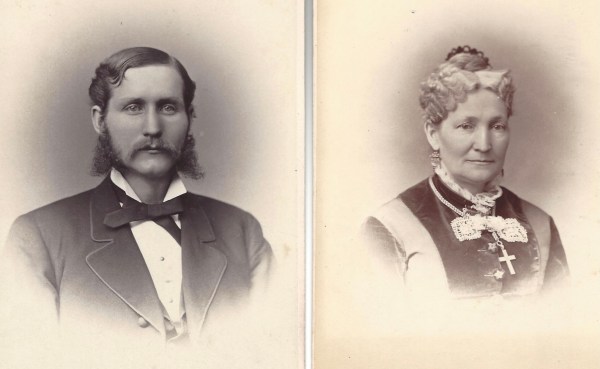
I am not sure where he met Mary Floretta Mann. She lived in Rutland Vermont. Her husband, Steven Mann had died in 1869 and the widow was living with her three children. Four other children had died in early childhood. Mary couldn’t have been looking for financial support as she had real estate worth $16,000 and a personal estate of $5,000. When they married in 1871 Aimé was 26 and Mary 43.

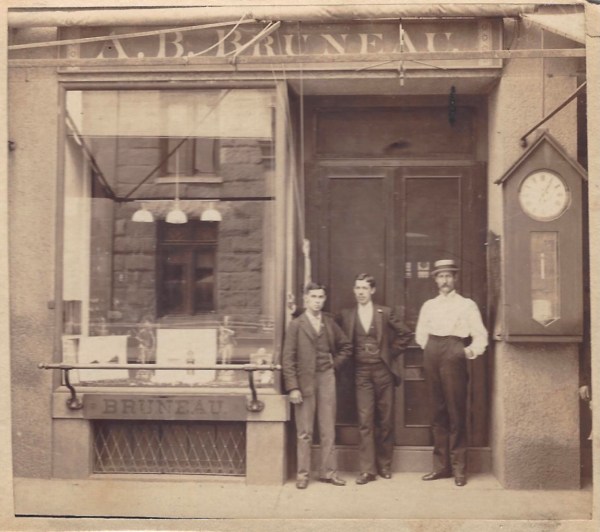
The couple soon moved to Fall River, Massachusetts, which after the Civil War was the leading textile city in America. Aimé didn’t work in a mill but as a clerk in Fred Macomber’s jewellery store and eventually bought him out. It was a prosperous business in the Granite Block, a block-long commercial building in downtown Fall River and one of the leading jewellery stores in the area for almost twenty years.

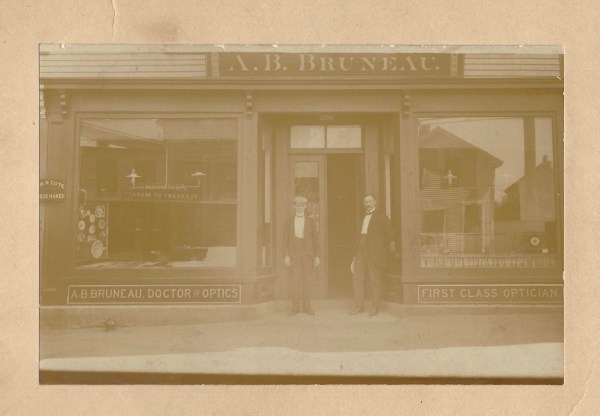
Aime Bruneau on right in front of his jewellery store, Fall River MA.

“Mr. Bruneau was of a very social nature and made many friends here (Fall River). He greatly lived out of door life and was noted as a walker, covering all the country about this city in his tramps. A walk to Newport or Providence, (almost 20 miles away) on a pleasant Sunday was an ordinary thing with him.”

Then in 1897, his business fell off, he closed his store, sold his stock at auction and studied to be an optometrist. A year later he re-established in a smaller way as an oculist. In the next few years, he can be found in Leominster, Massachusetts, Dover New Hampshire and finally in Auburn, Maine with Aime’s occupation listed as a jeweller but also as an Insurance Agent working for the Manhattan Company Federal Street, Boston. During this time Mary appeared to be living in Fall River.

Aimé died unexpectedly of an internal hemorrhage in January 1910. He was 65 and still living in Auburn, Maine. His wife continued to live in Fall River, Massachusetts with her daughter Ida. Mary died there, just six months later at the age of 82. I can speculate about why he wasn’t living with his wife but the long and painful illness noted in her obituary might be the story.

Notes:

Aime B. Bruneau Obituary, The Evening Herald, Fall River Massachusetts. Tuesday 18 January 1910 pg 4. Newspapers.com December 25, 2021. The only Bruneau family member mentioned in his obituary was his brother Ismael as a Congregationalist minister in Montreal.

Our Folks and Other Folks column. Fall River Daily Evening News, Fall River Massachusetts. Tuesday, August 24, 1897. Page 1. Newspapers.com Dec 23, 2021. 

Death of Mrs. Mary F. Bruneau: Fall River Daily Evening News, Fall River Massachusetts. Tuesday Aug 23, 1910. Page 8. Newspapers.com Dec 23, 2021. 

The New England College of Optometry, NECO was founded as the Klein School of Optics by Dr. August Klein in 1894. Located at 2 Rutland Street in Boston’s South End, the Klein School offered a one-year program that centred on optics, anatomy, and refraction. As optometry quickly became a more established profession, the school’s name changed in 1901 to the Massachusetts School of Optometry. The school began offering a two-year program in 1909, and that same year the National Board of State Examiners in Optometry was established as other new optometry schools sprang up around the country.

The Mass School of Optometry also began requiring incoming students to have completed four years of high school and to possess “good moral character.”

Mary Died of a Broken Heart

I have no doubt that the real cause of my great-grandmother’s death was a broken heart. She had experienced one grief too many and after the death of her daughter, she gave up and her heart gave out.

Alice Mary Knight, my great-grandmother, was born in the small village of West Bromwich, Staffordshire in 1875.1 Mary’s love story started in Birmingham, about six miles away. She went to Birmingham to work and met John Deakin at the rooming house where they were living.2 John also came from a nearby village. They were single, away from their families, and most certainly lonely. They married in 1900 and almost immediately moved to Sheffield, 90 miles away.3

The move to Sheffield would have been difficult. While Mary and John had each other, they would certainly have been homesick. Especially as their son, my grandfather, George Deakin, was born soon after they moved. In a strange city with a newborn, far from her mother and sisters, Mary would certainly have missed living in the village.

John found a mining job in Sheffield and he possibly worked for the Tinsley Park Collieries, situated very close to where John and Mary lived.Mary would have been alone most of the day as miners often worked 12-hour shifts. This young couple could have no inkling that the mine would unravel their lives.

In 1905, their little family was complete with the birth of George’s sister, Alice Gertrude Deakin.4

When George finished school, he went on to apprentice as a fitter, also at a mine, and possibly the one his father worked at.5 Fitters repaired and maintained machinery. George always worked at the surface of the mine. But he knew that it would not be long before he would be asked to work below ground. He was a short man and therefore an ideal size for moving around in the close spaces below ground. “I did not want to work below ground in the mine,” Gramps would say every time someone asked him why he came to Canada.

When George came to Canada in 1922, he had not yet decided whether he would stay.6 As soon as he arrived, he went out west by train to work on the wheat farms, to bring in the harvest. When the work dried up on the farms, he returned east to Montreal and met my grandmother, Grace Hunter. He was content living in Montreal. He married my grandmother and they had two children, Jack and Patricia. He had a job he enjoyed and worked there all his life, even during the Great Depression. George went on with his life but I cannot help but think that his mother must have been sorry he was so far away. Mary must have regretted George’s job at the mine, the catalyst for his emigration to Canada. It is unlikely that George ever went back to England for a visit, possibly because he may have felt that he could not take the time off work. A week to get there, a day’s journey by train to get to his parents’ house, and then the return. My grandparents were not rich, so money would have also been a consideration.

In 1935, John and Mary received more bad news. John had laryngeal cancer. At the time they did not know it, but mining is now considered a risk factor for laryngeal cancer. John underwent surgery to address the cancer, but he had heart failure from the shock of the operation and died on the operating table.7

After the death of her husband, Mary and her daughter, Alice, decided to move back to the village of Smethwick, John’s birthplace. Both John and Mary’s family were in the area. At least Mary would be close to some family members. Mary purchased a house and Alice found a job as a timekeeper at W&T Avery, a spring balance manufacturer.8

Tragedy struck again about ten years later when Alice was diagnosed with a brain tumour. Alice Gertrude died in the Queen Elizabeth Hospital in Birmingham on November 1, 1951. Alice’s friend and neighbour, Marie Evans, was the informant on the death certificate.9

Within a week of Alice’s death, Mary changed her will.10 She must have already been seriously ill and, although we don’t know for sure, the urgency would have been to dispose of the house. Mary died of a heart attack less than two months after the death of her daughter. She was a widow, her son lived far away, and her daughter had died. The sorrow would have been overwhelming.  Mary died at home on New Year’s Eve in 1951, in the company of her younger brother, Benjamin.10

Mary’s new will left 20£ to her brother, Benjamin, for being the executor of her estate. She left a few bequests of 5£ to some of her friends and to the Firth Alms House in Sheffield, Yorkshire. Mary required that all of her other possessions, including her house, be sold and bequeathed to her son, George, in Canada.11

Mary must have felt that she lost her son to Canada and that when her daughter died in 1951, that the future was bleak. When death gently came to claim her just two months after her daughter’s death, Mary did not fight back.

  1. Certified copy of an entry of birth, Alice Mary Knight, born April 17, 1875, extract dated May 4, 2021.
  2. Certified copy of an entry of marriage, John Thomas Deakin and Alice Mary Knight, November 25, 1900, St. Paul’s Church, Aston, Harwick, extract dated May 25, 2021.
  3. 1901 census, Tinsley, Yorkshire, John Deakin and Mary Deakin, referenced January 1, 2016.
  4. Copy of an entry of birth, Alice Gertrude Deakin, born July 19, 1905, referenced July 27, 2021.
  5. Declaration of passage, George Thomas Deakin, Form 30A, referenced October 2, 2009.
  6. Idem.
  7. Copy of an entry of death, John Thomas Deakin, died July 8, 1935, referenced October 29, 2021.
  8. 1939 Register, Findmypast, Deakin, Alice G. and Deakin, Alice M., Alice is registered as a timekeeper at a balance manufacturer. Mary is registered as unpaid domestic help, referenced June 24, 2017. 
  9. Copy of an entry of death, Alice Gertrude Deakin, died November 1, 1951, referenced August 29, 2021.  The informant was Marie Evans, neighbour and friend. The law is specific about who can register a death in England: a relative, someone who was present at the death, an employee of a public house where the death occurred, or the person making the funeral arrangements. As Marie Evans was not a relative, she was allowed to register the death if she made the funeral arrangements. As such, the death certificate states that Marie Evans was “causing the body to be buried.” This way Marie Evans was able to allow her to register the death.
  10. The Last Will and Testament of Alice Mary Deakin, dated November 1, 1951 and probate, dated February 6, 1952, referenced August 12, 2021.
  11. Copy of an entry of death, Alice Mary Knight, died December 31, 1951, referenced August 8, 2021.

The Antoine Pilon Home

In the mid 1600’s New France welcomed many of my ancestors from France. Among them, Genevieve Gamache a ‘marriageable young woman’, contracted to marry. She is, a sixth great grandmother, who was privately sponsored. She settled in the Quebec City area.

At the request of Louis XIV who offered incentives for people to settle in a new country  Anne Thomas, also a sixth great grandmother, in 1665 along with 90 other ‘filles du roi’ (young women) boarded the ‘St. Jean Baptiste’ and sailed from Dieppe to Montreal.1.

At about the same time, in the town of Bayeux, Normandy, France, where the famous tapestry depicts the Norman Conquest of 1066, there was a young man seeking adventure. Antoine was born on the Feast of St. John the Baptist in 1664 (June 24th).2. His father Thomas Pilon, a butcher and his wife Madeleine Hugues dit  Rouault had 5 children.

At the age of twenty-four Antoine left his homeland to cross the Atlantic seeking a new life in what was then a fledgling country where he became a farmer and later a landowner.

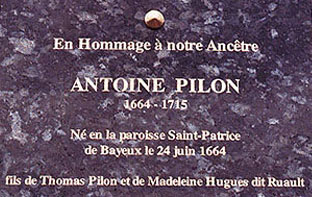
hommage


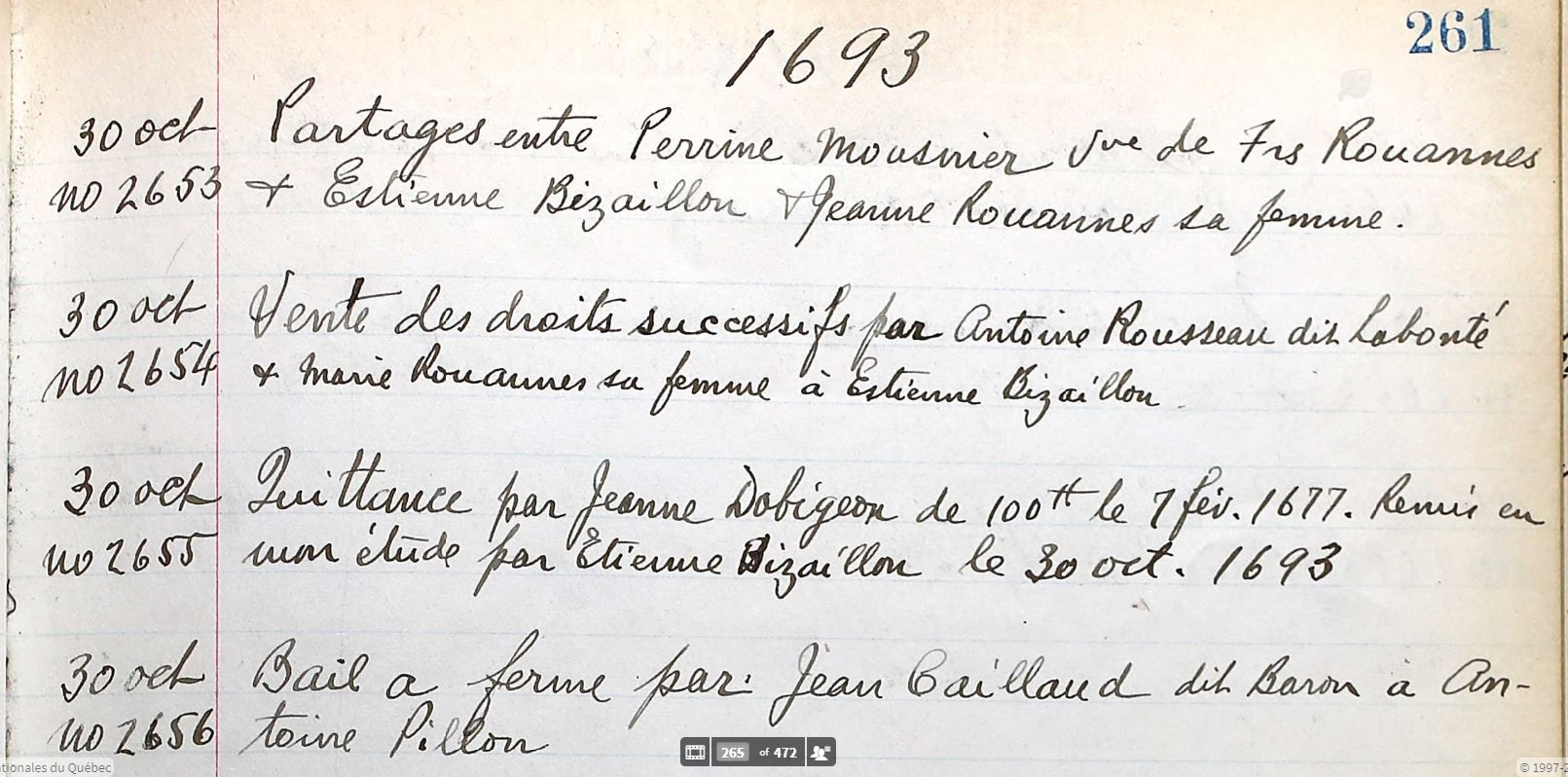
Capture.JPG Pilon lease on a farm 1693

30 oct   no.2656   Notarial Record – Lease on a farm 3.

Shortly after his arrival in Ville Marie Antoine, my 7th greatgrandfather chose his bride to be, Anne Brunet. Michel Mathieu Brunet dit L’Etang and Marie Madeleine Blanchard brought Anne into the world on January 1, 1672.4. Michel was a farmer and a prosperous fur trader. At the time of Anne’s birth, the family was living near Trois Rivieres. The family moved to Lachine at a later date.

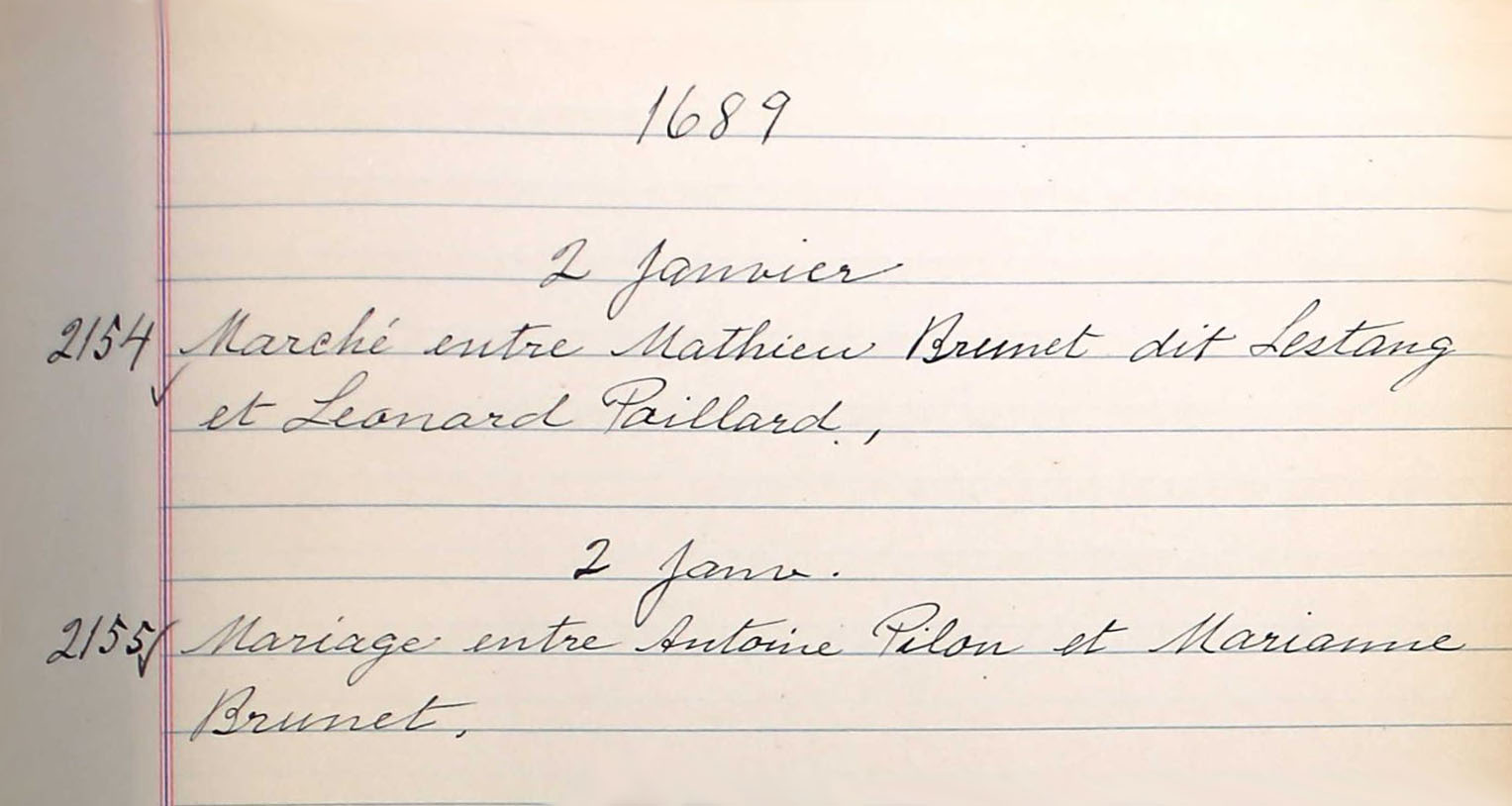
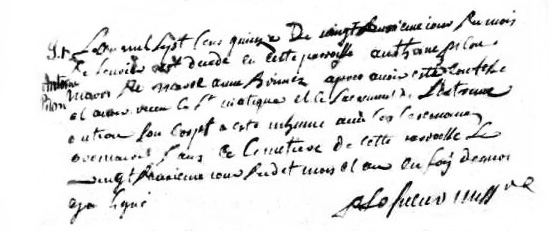
Antoine and Anne were married in Notre Dame parish church in Montreal on January 29, 1689. Their first child, Jeanne was born in Montreal, December 9th of that same year. Over a period of 24 years the couple had 14 children.6. The first 3 children were born in Montreal, two, in Laprairie and the others in Lachine and Pointe-Claire. In those days not all children survived, and they lost three infants. However, several of their children lived well into their 80`s.

Capture.JPG Marriage Church Record Notre Dame

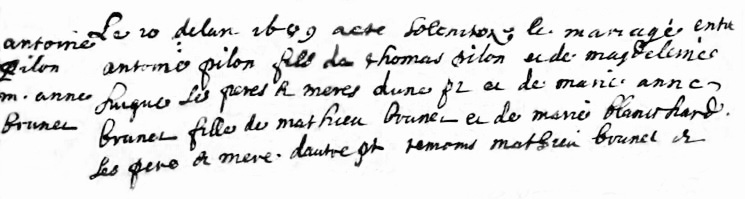
Church record of the marriage of Antoine and Anne 5.

Translation:

On the 20 of January 1689  a solemn marriage between Antoine Pilon, son of Thomas Pilon and Madeleine Hugues, the father and mother on one hand and Marieanne (Anne) Brunet daughter of Michel Mathieu Brunet and Marie Blanchard, the father and mother on the other. Mathieu Brunet was a witness.

Capture.JPG Notarial act marriage Antoine Pilon and Marieanne BRUNET copy

1689   2 janvier    21551    Notarial record of marriage 5.

Antoine was not as fortunate as his children. He died at the age of 50 on February 24th, 1715.7. He is buried in St. Joachim Ancient Cemetery beside the church in the village of Pointe-Claire not far from the home he built.

Antoine Burial

Church Record of Antoine Pilon’s burial

During those early years Ville Marie, as Montreal was called at that time, experienced numerous Indian raids. One of them being the devastating Lachine Massacre in August 1689. Many lives were lost. During the next few years efforts were made to find a peaceful resolution.

“The Great Peace of Montreal (French: La Grande paix de Montréal) was a peace treaty between New France and 39 First Nations of North America. It was signed on August 4, 1701, by Louis-Hector de Callière, governor of New France, ….and provided 16 years of peaceful relations and trade before war started again.”.8.

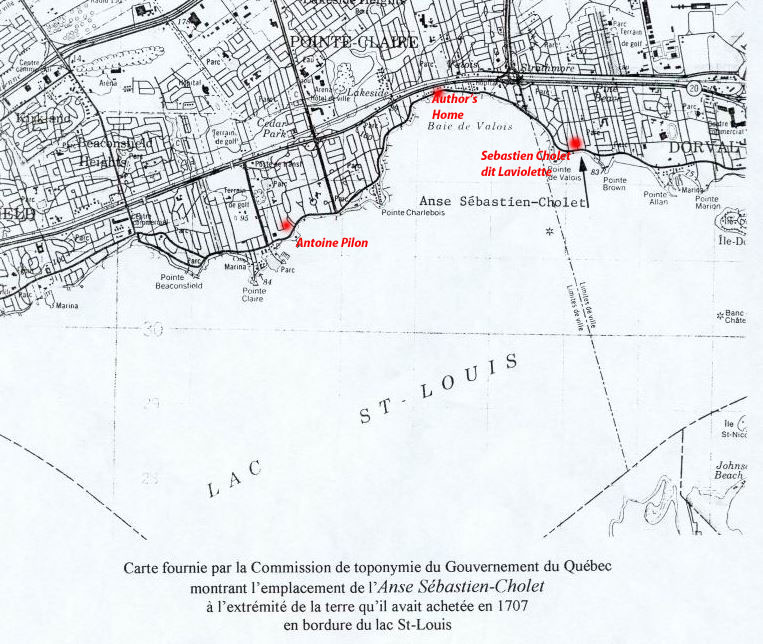
After the signing of the peace treaty, the Sulpicians, administrators, and seigneurs of the land began conceding properties. Several of my ancestors were among those who benefited from this opportunity. They chose to move westward to what we now refer to as the West Island. The first, Sebastien Cholet dit Laviolette,  my 6th great-grandfather, a weaver started the trend along with his wife Anne Thomas, the ‘fille du roi’. He and his family settled in the community of present day Dorval. Their home lay  on the eastern tip of Valois Bay in a small cove that bears his name, overlooking Lake St. Louis.

Antoine Pilon my 7th great-grandfather also chose to settle west of Ville Marie, following in Sebastien’s footsteps, He also purchased land in Pointe-Claire with frontage on the shores of Lake St. Louis. 9.

map of Cholet cove copy

All the land transactions, from the original owner Pierre Sauvé to Antoine Pilon are all documented to the current date.10.

The Antoine Pilon House lies on lot 88 of the present survey, forming a part of lot number 154 in the original land registry of the Island of Montreal. Lot 154-D was conceded by the Sulpicians to Pierre Sauvé dit Laplante on November 24th,1698. Then, the size of the property was 3 acres of frontage and 60 acres deep, on the shore of Lac Saint-Louis.

Pierre Sauvé and his wife Marie-Michel sold this land to Jean du Tartre dit Desrosiers on October 27th, 1700. Two transactions took place on the same day, September 19,1706. DuTartre gave a concession to Madeleine LeMoyne, already in possession of the adjoining lot. She immediately sold lot 154-D to Antoine Pilon, having already purchased from her the adjoining lot 155-D.

Anne Brunet, Antoine’s widow, inherited the lot after Antoine`s death and she gave the land to her son Mathieu on January 22nd, 1729. The deed (acte de donation) indicates land of 5 acres of frontage to 20 acres deep, consisting of lots 154-D and 155-D. In this deed we learned that the lot contained a house, and a small barn, possibly built during the summer of 1707.

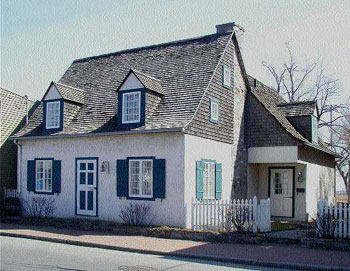
The house Antoine built remained in the Pilon family, passed on from his wife, Anne to their son Mathieu and then from father to son for 120 years.11. Remarkably it is still standing today. One can see the home when driving along 258 Lakeshore Road-Bord-du-lac near the entrance to Pointe-Claire village.

maison_antoine_pilon

Antoine Pilon House

      Footnotes:

  1. http://www.migrations.fr/ACTESFILLESDUROY/actesfillesduroy_index.htm
  2. http://www.piloninternational.ca/international/genealogies/bayeuxplus.htm
  3. Bibliothèque et Archives nationales du Québec; Montréal, Quebec, Canada; Collection: Fonds Cour Supérieure. District judiciaire de Montréal. Cote CN601. Greffes de notaires, 1648-1967.; District: Montréal; Title: Saint Martin, Antoine Adhemar dit (1668-1699)com. Quebec, Canada, Notarial Records, 1637-1935 [database on-line]. Lehi, UT, USA: Ancestry.com Operations, Inc., 2016. Repertoire de notaires (Notarial catalogs), Montreal. Maugue, Claude (1677-1696)
  4. http://www.francogene.com/genealogie-quebec-genealogy/000/000796.php
  5. Ancestry.com. Quebec, Canada, Vital and Church Records (Drouin Collection), 1621- 1968[database on-line]. Provo, UT, USA: Ancestry.com Operations, Inc., 2008.Quebec, Canada, Vital and Church Records (Drouin Collection), 1621-1968
  6. http://www.francogene.com/genealogie-quebec-genealogy/005/005837.php7
  7. .Ancestry.com. Quebec, Genealogical Dictionary of Canadian Families (Tanguay Collection), 1608-1890[database on-line]. Provo, UT, USA: Ancestry.com Operations, Inc., 2011. [database on-line]. Provo, UT, USA: Ancestry.com Operations, Inc., 2011.Original data: Tanguay, Cyprien. Dictionnaire généalogique des familles canadiennes depuis la fondation de la colonie jusqu’à nos jours. Québec, Canada: Eusèbe Senécal, 1871-1890. Library and Archives Canada, Ottawa, Canada
  8. https://en.wikipedia.org/wiki/Peace_treaty
  9. http://www.genealogie.org/famille/cholette/eindex.html
  10. https://www.wikitree.com/photo/jpg/Pilon-239
  11. https://grandquebec.com/montreal-touristique/maison-antoine-pilon/


Irish Catholic Churches of Arthabaska, Compton, Frontenac, Mégantic, Wolfe Counties, Quebec

The research guide below is part of a series of seven compilations designed to help you find your Irish immigrant ancestors in mostly French-speaking Quebec. It explores Arthabaska, Compton, Frontenac, Megantic and Wolfe counties, the most easterly of the province’s Eastern Townships.

Few Irish people came to this primarily rural area until the late 1800s. The earliest church record I was able to trace in regard to the Irish of these counties was 1829, within the parish of Saint-Jacques in the then village of Leeds, Megantic County.

Parish records can help you find traces of the Irish setters who came to North America by the tens of thousands during the first half of the 19th century. Please note: The inclusion of an Irish Catholic churches in this research guide does not imply that parishioners were mostly of Irish descent, but implies that at one point in time, a minimum of 10% of the acts of baptism, marriage, death addressed Irish immigrants or their descendants.

A good place to start looking for English-speaking settlers in the Eastern Townships is the Eastern Townships Resource Centre, http://www.etrc.ca/. The Eastern Townships Resource Centre preserves the documentary heritage of the Eastern Townships and serves as an archival expertise resource for local heritage organizations. While its Archives Department concentrates on the acquisition of private archives related to the English-speaking community, the Centre’s mission, mandate and on-going activities are meant to be inclusive of all communities present in the Eastern Townships.

Thousands of documents such as diaries, letters, minute books, photographs, postcards, maps, plans and audio-visual material are made available to researchers. Assistance is also provided to genealogists tracing their family roots. You will find contact information for this organization at the end of the PDF research guide below.

Another research guide I prepared a few years ago may also be helpful to your search. See “British, Irish, Scottish, Loyalist, American, German, Scandinavian, Dutch and Huguenot families in Lower Canada and Québec” by Jacques Gagne, https://genealogyensemble.com/wp-content/uploads/2015/04/british-irish-scottish-loyalist-american-german-scandinavian-dutch-in-quebec2.pdf

townships map

This guide mentions a number of books about Quebec’s large Irish population. Two additional articles of interest are, “Pioneer English Catholics in the Eastern Townships” by T.J. Walsh, http://www.cchahistory.ca/journal/CCHA1939-40/Walsh.html  and “A.C. Buchanan and the Megantic Experiment: Promoting British Colonization in Lower Canada” by J.I. Little, https://hssh.journals.yorku.ca/index.php/hssh/article/viewFile/40265/36450

The attached research guide is an expanded and improved version of a similar guide I posted on Genealogy Ensemble in 2014. It includes a detailed list of the Catholic parish churches in these five counties where people with Irish names worshiped. It also includes links to help you find the cemeteries where they were buried, a recommended reading list and a list of archives and other repositories where further records can be found.

Click on the link to open the PDF:  Irish Catholic Churches of Arthabaska, Compton, Megantic, Frontenac, Wolfe counties