Delete. Delete. Delete. All family historians and genealogists fret about what will happen to their research once they are dead. Before the digital age, they worried about their research being chucked in the garbage or, more recently, tossed into the recycling bin. Now they worry about the word DELETE.
Those of us who post our research on web sites and blogs know that once the domain no longer exists, our research will also disappear. Quebec’s national library, the Bibliothèque et Archives nationales du Québec (BAnQ) has put an extraordinary initiative in place, the Archivage Web. This is a wonderful collection of Quebec web sites. Its objective is to preserve Quebec’s digital heritage and Quebec’s presence on the web. Quebec has harvested Quebec-centric web sites since 2012 and these sites can be accessed using a specialized web archiving interface. This initiative responds to the mission of the BAnQ to gather, conserve, and disseminate Quebec’s documentary heritage.
Here is the link to this extraordinary collection:
With this collection of archived web sites, the BAnQ desires to create a representative portrait of Quebec society through its digital presence. It selects web site to archive using the following criteria:
Of interest to the general public
Is well known in its domain
Has a current and historical value
Has original content and is compatible with the content of the BAnQ’s collections
Has a quality site
Genealogy Ensemble applied to the BAnQ to become part of its archived collection and we are delighted to announce that we have been accepted. The BAnQ uses a data-collection robot to collect the sites that are part of its collection and has already been harvested twice.
Genealogy Ensemble is honoured to be chosen to be part of the BAnQ’s digital heritage collection. Members of the public can access our web site through Archivage Web. When you access this page, just type in Genealogy Ensemble and this will take you to a calendar with highlighted dates. These dates represent the dates that a “snapshot” was taken. While you cannot search with these snapshots, you will be able to browse them. The advantage is that these snapshots will be part of BAnQ’s permanent selection and will survive after our blog is no longer active.
Of course, our hope is that genealogists and historians will use this tool for years to come. Even though the snapshoots cannot be searched in the same way that the live site can be searched, it does not mean that this will not be possible in the future. After all, our ancestors would never have imagined the digitization of their important documents.
The wedding of a thirty-six-year-old widower and his nineteen-year-old orphaned cousin took place the day before the Feast of St. Jean in 1750. The marriage bolstered a resilient family community that remained in the Saguenay through local strife, high taxes, and the burning down of their farm by the British in 1759. Together, the couple produced six children, including our ancestor, Marie-Anne, who was born in 1761.
The match may also have been one of many successful unions organized by the bride’s godmother, an Ursuline nun named Félicité Poulin.
Poulin was an 18th century career woman and eventually became known in religious circles as the “Mère de L’Assomption” (Mother of Assumption). She served in the St. Anne de Beaupré Shrine when her god-daughter was baptised there but became leader of her order by the time of the wedding. Her influence over the bride, whose name was Félicité Simard, would presumably have increased as Simard’s mother died when she was only seven years old. When Simard’s father died in 1741, Poulin may have taken over the responsibility for her marital prospects.
The groom was a farmer named Joseph Dufour. His mother and Simard’s grandmother were sisters, so Poulin would have at least known his reputation, if not him personally. She must have acted quickly after Dufour’s first wife, Marie Anne Tremblay, died in September 1749. Dufour’s wedding to Simard occurred only seven months later.
Jesuit Father Claude-Godefroi Coquart likely played a role too. During the winter of 1749, Coquart inspected the farm Dufour and three of his children were running on Crown land in La Malbaie (Murray’s Bay) along the Saguenay for the King of France. In a report dated the day after Dufour and Simard’s wedding, Coquart urgently requested that the King of France lower Dufour’s taxes. The farmer could starve, wrote the Jesuit. The requirement that Dufour send the King half the wool produced by eight of his own sheep wasn’t fair, he explained. Dufour and his three grown daughters were working “even beyond the limits of their strength.” (See the story Joseph Dufour’s Farm for a description.)
Was Coquart’s plea to the King a wedding gift? Did Poulin have anything to do with it? We don’t know.
I haven’t even confirmed whether Coquart and Poulin knew one another, but the Ursulines and the Jesuits were close colleagues in New France, so they probably did. Coquart moved into an Ursuline mission after he retired, though that was after Poulin had died.
Did the King eventually lower Dufour’s taxes? Did the family rebuild their farm after it was burned down? It’s not clear. All we know for sure is that the couple stayed in Malbaie and continued raising children there until Dufour’s death on April 1774, at 61 years of age.
Our direct ancestor Marie-Anne would have been only thirteen years old when her father died. Fifteen months later—on July 20, 1775—her mother and nineteen-year-old brother, Dominique Benjamin, died too. Like her mother, she became an orphan.
It must have been a happy wedding. For a girl from humble American roots to marry the owner of one of Lower Canada’s (Quebec) vast seigneuries, this must have seemed like a wonderful match. And the groom had recently lost his parents, so his family members were no doubt pleased to see him marry.
Unfortunately, there was no fairy-tale ending to this story.
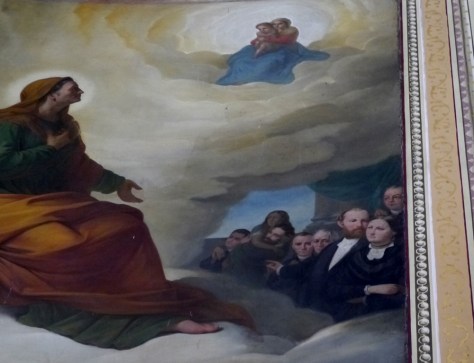
Detail of a 19th-century painting showing Sainte Anne with local landowner C.A.M. Globensky and his wife and cousin, Virginie Lambert Dumont. JH photo.
The bride was Sophia Mary Roy Bush. She was born Sophia Mary Bush around 1815, the daughter of farmer William Bush, of West Haven, Vermont, and his wife, Polly Bagg Bush. This family struggled financially, so Sophia had come to Lower Canada to live with her aunt and uncle, Sophia Bagg and Gabriel Roy, a landowner and politician, who had no children of their own.
The groom was Charles-Louis Lambert Dumont, born in 1806, the son of Eustache Nicolas Lambert Dumont.1 Eustache Nicolas had been a judge, militia officer, politician and co-seigneur of Milles-Îles, but he had accumulated crippling debts running the seigneury and had fallen out with his sister because their father had left them unequal shares of the seigneury.
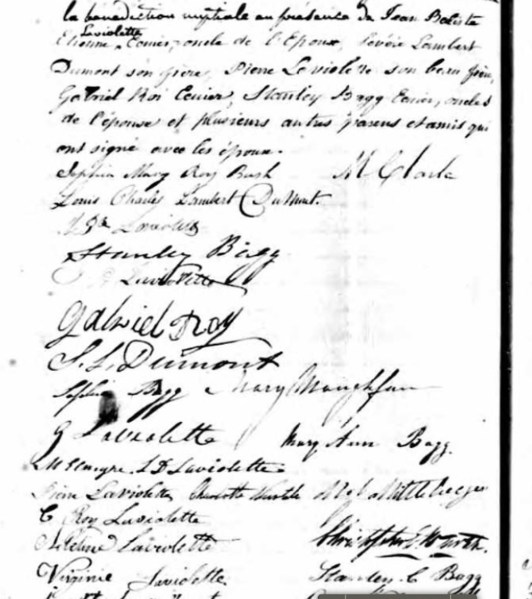
On the bride’s side, Sophia Bagg and Gabriel Roy signed the parish record book, as did the bride’s uncle Stanley Bagg, his 15-year-old son, Stanley Clark Bagg, and his mother-in-law, Mary Mitcheson Clark. Abner Bagg’s wife, Mary Ann Mittleberger, signed the register, as did her daughter Mary Ann. Among Louis Charles’ relatives who signed the book were his sister Elmire, her husband, Pierre Laviolette, and seven other members of the Laviolette family. The groom’s brother, Louis Sévère Dumont, was also present. Source: Quebec Canada Vital and Church Records (Drouin Collection) 1621-1968 for BM Dush, Saint Laurent, 1830-1840, Sept. 25, 1835, p. 106, www.Ancestry,ca.
The Dumont family had been seigneurs of Milles-Îles since 1743, owning a vast area of wilderness and fertile farmland northwest of Montreal. According to traditions that went back to the time of New France, the habitants, or farmers, paid rent annually to the seigneur, cleared the land and grew crops. The seigneur was responsible for building grist mills, saw mills and roads. In 1770, the Dumont family donated land for the construction of a Catholic church, and the village of Saint-Eustache grew up next to it. They later built the seigneurial manor house near the church.2
Charles-Louis’ and Sophia’s wedding was held at the parish church in Saint-Laurent, where the Roy family lived, on September 22, 1835. The newlyweds lived in the manor house in Saint-Eustache, but their life was not easy. Charles-Louis was learning how to administer the debt-ridden seigneury, arguing over money with his brother and fighting off court challenges over the property from his aunt. Then the couple’s first-born child, a daughter, died in 1837, shortly after her first birthday.
Meanwhile, social and political tensions were increasing in Lower Canada, and when the government refused to approve reforms, an armed rebellion broke out. On December 14, 1837, 1500 government troops and loyalist volunteers attacked the Patriotes, or rebels, who had barricaded themselves inside the church at Saint-Eustache. The government forces burned the church, the convent and much of the village. Seventy Patriotes died during the battle and 120 were taken prisoner.
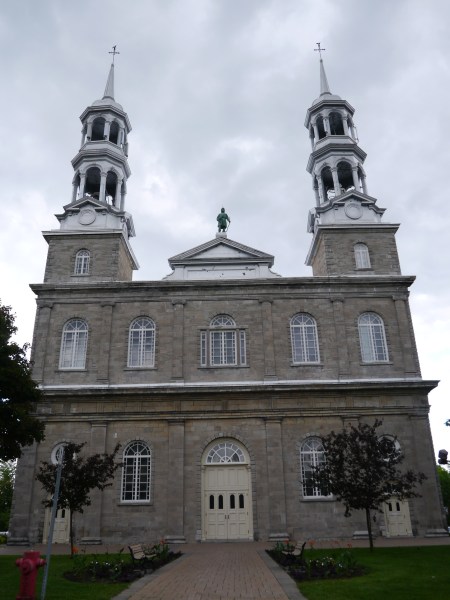
The Catholic parish church in Saint-Eustache. JH photo.
Charles-Louis and Sophia had anticipated trouble and left Saint-Eustache for Montreal in November. When they returned in the spring, they discovered the manor house had been destroyed so they moved into a smaller house down the road. Their second child, Marguerite Virginie Lambert Dumont, was born there on August 21, 1838.
On June 27, 1841, Sophia died suddenly, age 26. The body of Charles-Louis, 36, was discovered in his house on November 1. His brother, Louis Sévère, died eight weeks later, age 31. None of the accounts of this family’s history explains these deaths, and several historians seem to suggest that these events were suspicious.4
Three-year-old Marguerite Virginie Lambert Dumont was now an orphan and future heiress.to the seigneury of Milles-Îles.
An arranged marriage
Her father had named Gabriel Roy as the little girl’s legal guardian in case something happened to him. Virginie was sent to live with the Roy couple in Saint-Laurent, but Roy, now 71 years old, realized he was unable to raise the child. She returned to Saint-Eustache where notary Frédéric-Eugène Globensky became her new guardian. He and his wife, who had no children of their own, brought her up, and she attended school at the convent in the village.
Everyone expected that when Virginie became an adult, she would marry her cousin Charles-Auguste-Maximilien Globensky (1830-1906), known as C.A.M. But in 1854, the government announced that the seigneurial system was to be abolished. Virginie’s marriage to C.A.M. was fast-tracked, with special permission from the church, and on July 21, 1854 she married C.A.M. She was just 15 years old.
In Quebec, a married woman’s property belonged to her husband unless they had signed a marriage contract making them separate as to property. In Virginie’s case, the seigneury was the dowry she gave to C.A.M.. He now became co-seigneur.5
C.A.M. was a tall and imposing man, not always liked in the community, but respected for his honesty and known for his intellect and his many interests, especially agriculture and railways. He is still remembered for the book he wrote about the causes of the Rebellion of 1837 in Saint-Eustache. His father, Maximilien Globensky, a lieutenant-colonel in the British Army, had led a company of volunteer militia at the Battle of Saint-Eustache.
The bitter fallout from the rebellion hung over Saint-Eustache for many years. But the aftermath of the battle was not the only shadow over Virginie’s life. There were disputes over the shared inheritance of the seigneury and its large debts. Virginie was in court several times, fighting family members over various property disputes.
Although the seigneurial system had been abolished, it took decades to dismantle. A committee evaluated property values and the habitants had the right to buy their farms from the seigneurs or continue to pay rent. As co-seigneurs of Milles-Îles, a territory so vast that it included the sites of the city of Saint-Jerome and the town of Saint-Sauveur, Virginie and C.A.M. were very wealthy.
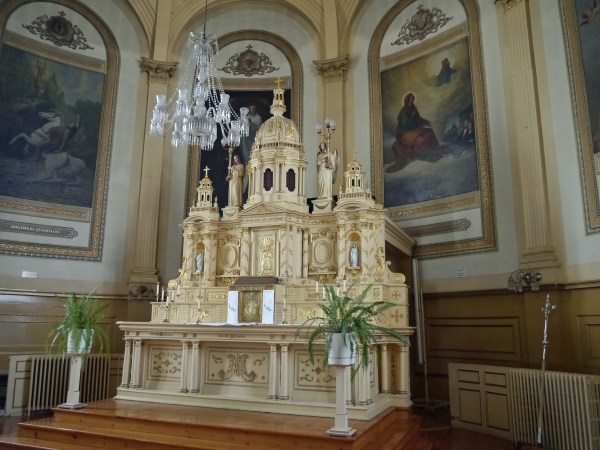
Altar of Saint-Eustache parish church, with the painting of Sainte Anne, C.A.M. and Virginie behind it on the right. JH photo.
C.A.M. built a new seigneurial manor house in Saint-Eustache and the family moved into it in 1865. Every Sunday, Virginie and her growing family sat in the front pew of the church, a privilege reserved for seigneurs.
Virginie and C.A.M. had eight children. When Virginie became ill, she made out her will, leaving C.A.M. as her sole beneficiary. She died August 19, 1874, age 36, and he remarried two years later.
The year Virginie died, C.A.M. visited Rome and brought home a painting of the Adoration of Saint Anne in which Virginie, C.A.M. and the village priest were portrayed sitting at the saint’s feet. This huge painting hangs behind the altar of the parish church in Saint-Eustache to this day.6
Notes Concerning the Extended Bagg Family
Some written accounts refer to Sophia Mary Roy Bush as Gabriel Roy’s adopted daughter. The parish marriage record simply refers to her as the daughter of William Bush and Polly Bagg. Sophia’s birth parents were Protestant, so in 1827, Sophia was baptized Catholic and added Roy to her name. That church record refers to Gabriel Roy and Sophia Bagg as her sponsors. She was age 12 at the time and signed the parish record book herself. In French-speaking Quebec, people probably called her Sophie.
Polly (Bagg) Bush (1785-1856), Stanley Bagg (1788-1853), Abner Bagg (1790-1852) and Sophia (Bagg) Roy (1791-1860) were siblings. Their father was Phineas Bagg, a farmer from Pittsfield, Massachusetts who moved to the Montreal area with his family around 1795. Their mother, Pamela Stanley, was born in Litchfield, Connecticut and probably died in Pittsfield. Stanley and Abner were well-known Montreal merchants, but I had never heard of Polly or Sophia until I started researching the family.
Polly and William Bush had three other children besides Sophia. They were Pamelia Ann (1812-1880), who married Methodist Episcopal minister John W. York and lived in Benton County, Oregon; William Stanley (1816-1892), a Baptist preacher in the Lake George area of New York State; and Phineas (1820-1867) who moved to the Midwest with his parents before 1850. He is buried in Harrison Cemetery, Marion County, Illinois, along with his parents and three young daughters. (Polly’s grave in Illinois can be viewed on Findagrave.com, https://www.findagrave.com/memorial/65952231/bush) After Phineas’ death, his widow, Louisa, and two surviving daughters moved to Chattanooga, Tennessee.
Gabriel Roy (1770-1848) was born in Montreal, the son of a market gardener from France.8 His first wife was a widow 24 years older than him. She named him the guardian of her adopted daughter, Marie-Rosalie Sabrevois de Bleury, the heiress of a wealthy Montreal family, and he managed their affairs. Shortly after his first wife died in 1810, Gabriel married 19-year-old Sophia Bagg. The couple moved from the city to Saint-Laurent, now a Montreal suburb but at that time a rural area. He became a wealthy landowner, school commissioner and road commissioner, and in 1841 he was appointed to the Legislative Council of the Province of Canada,9 a position he held until his death at age 78. He was then referred to as l’Honorable Gabriel Roy. After his death, Sophia referred to herself as Sophia Bagg, veuve (widow) Gabriel Roy. In her will, she left money to the Catholic church and to many relatives. As requested in her will, and according to the church funeral record, she was buried in the Saint-Laurent parish church.
This article is a condensed version of several stories I wrote in 2014, 2015 and 2016 and posted on my personal family history blog, Writing Up the Ancestors (www.writinguptheancestors.ca). They were: The Doomed Marriage of Mary Sophia Roy Bush and Charles-Louis Lambert Dumont, posted Jan. 28, 2015; Marguerite Virginie Globensky, posted Jan. 28, 2015; Polly Bagg Bush: a Surprise Sister, posted May 23, 2014; Polly Bagg Bush and her Family, posted April 28, 2016 and William S. Bush, Baptist Preacher, posted May 19, 2016.
Sources:
1. In collaboration with W. Stanford Reid, “LAMBERT DUMONT, NICOLAS-EUSTACHE (Eustache-Nicolas),” in Dictionary of Canadian Biography, vol. 6, University of Toronto/Université Laval, 2003–, accessed March 21, 2026, https://www.biographi.ca/en/bio/lambert_dumont_nicolas_eustache_6E.html, accessed March 22, 2026.
2. André Giroux, Histoire du territoire de la ville de Saint-Eustache, tome 1, L’époque seigneuriale 1683-1854, Québec: Les Éditions GID, 2009, p. 49.
It is the 25th of March, 1967, and my father, my then-boyfriend, John, and Dad’s second wife, plus me are on our way to St Austell, in Cornwall, England. We were visiting Dad’s mother, my Granny Bulford, whom I never really knew, as my parents had divorced when I was seven.
We were in Dad’s new white Mini Minor, a small car. In fact, a very small car. Dad’s head brushed the interior of this small vehicle. Dad was 187.96 cm (6′ 2″), I was 180.34 cm (5’11”), and my boyfriend was about the same. I think the only comfortable person was his second wife, who was petite!
I never understood why he would buy such a small car, but, as I matured, I realised it was affordable, dependable, and low on fuel. Economic pragmatism over physical comfort, that was my Dad!
An Austin Mini 1967
Thank goodness, the trip from Plymouth to St Austell in Cornwall was only 50 to 60 minutes. The drive was along the spectacular Cornish coast. We enjoyed the scenery, and I was excited to be meeting Granny Bulford after all these years.
About half an hour into the trip, the sharp, suffocating stench of oil permeated the car. We knew exactly what it was, and our lighthearted trip turned into a sense of helplessness.
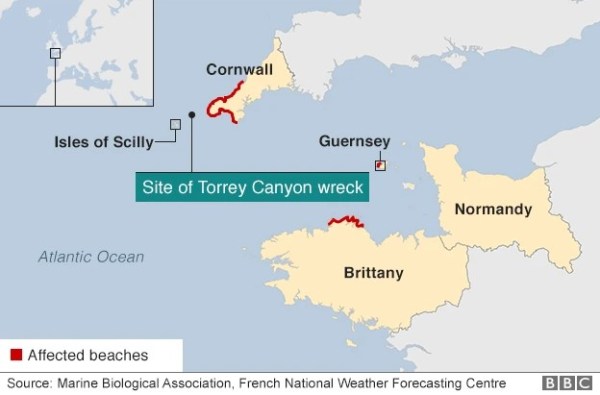
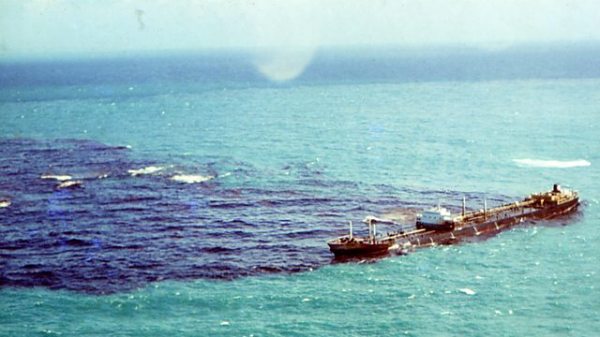
A week earlier, on Saturday the 18th of March, 1967, the supertanker The SS Torrey Canyon, carrying 120,000 tons of Kuwaiti crude oil, had run aground on Pollard’s Rock, Seven Stones Reef, between Lands’ End, Cornwall and the Isles of Scilly. It made headlines everywhere, and now, we all saw the true visuals of the disaster. (1)
We stopped and stood in silence on a cliff headland and looked out to sea. Although we were too far away to actually see the wreck, we could smell and see the devastation it had caused. As it spread to Brittany and Normandy in France, it became known as a ‘Marée noire’.(Black Tide) (3)
Map Showing The Spread of The Torry Cannyon Oil Spill
The sea in the distance was black, whilst where we stood, it was still the beautiful Celtic green-blue. We could all see that was to soon change. Over the month, it had become the source of a massive, 35-mile-long oil slick.
The Wreck Of The Torry Canyon
Everyone was quiet on the remaining drive. As Dad pulled away from the headland, the sharp, cloying scent of oil followed us. We all realised that this was going to be a huge cleanup operation to save the wildlife, the beautiful Cornish beaches, and the ocean. The cleanup had begun on the 20th of March. (See Notes Below)
That still, uncomfortable silence seemed to follow us. When we arrived, the air was clearer, but the atmosphere remained heavy. I was struck by the scale of things – everything felt smaller here. I was surprised to see how tiny Granny was. She just came up to my Dad’s armpit!
She was quite welcoming and ushered us in for tea and pasties. Waiting in the dining room was her eldest daughter, my Aunt Florence. This aunt, whom I had never seen since I was, according to my mother, about a year old, didn’t greet me with a hug or even a smile. She simply GLARED at me, all the time through the visit. It looked like she really did not like me. After an hour or two, I started to feel really uncomfortable.
Trying to start a conversation with her, I was met with only a yes or no. What had I done to deserve such behaviour, I wondered? Nobody else seemed to notice, or pretended not to. Eventually, we left. I never saw either one of my relatives again. My Granny died the following year, aged 86, four months after my wedding to John.
Once in the car, I whispered to John, ” Wow, I was so uncomfortable with Aunt Florrie, staring at me all the time, with such dislike’ My soon-to-be husband turned and said ‘I don’t think it was dislike. Maybe she was staring at her younger image; she was the absolute image of YOU. The facial resemblance was astonishing!”
I was speechless.
It’s quite a “Twilight Zone” and perhaps vanity moment to wonder all these years later, if the woman I thought was glaring at me with dislike was maybe staring in total shock because she was looking at a younger, taller version of herself? Or, maybe the contrast between the modern, liberated woman in a mini-skirt and the traditional, religious aunt in the tiny house?
The family in Cornwall were very religious, and perhaps me, in my fashionable mini, riding in a Mini, smoking, being in the WRAF, accompanied by my boyfriend, was just too much for her? I will never know. At 100 years old (when she passed in 2009), she certainly had the “longevity genes,” even if her social graces were a bit rusty that day!
The Torry Canyon Oil spill was the UK’s worst environmental accident. It wasn’t just the sheer scale of the spill, but also the chaotic and often counterproductive “war” the government waged against the sea to clean it up. To be fair, the UK government had not had actual experience of a disaster of this scale.
The problem increased due to the methods used in the cleaning tasks. The first stage was to use too much ‘detergent’, which sounded harmless; in reality, it was harsh, highly toxic chemicals which affected the marine environment and its populations. The ‘Cure’ was worse than the disease. The British government was completely unprepared, treating the spill like a military invasion, using methods that are now considered environmental malpractice. (1)
Bombing The Wreck
Next, the Government tried Bombing the wreck. The RAF (Royal Air Force) and the Royal Navy dropped 161 bombs, rockets and thousands of gallons of napalm and kerosene on the ship to burn off the oil! It was a spectacular failure. The cold seawater extinguished the fires, and many bombs missed the target entirely! Both John and I felt a “professional” interest in the failed bombing mission.
Bulldozing The Beaches:
Poured onto the beach and into the sea, whilst it broke up the oil, it killed almost all marine life it touched – limpets, crabs and seaweed. Other methods, such as ploughing detergents into the sand with a bulldozer, buried the oil deep underground, where it remained for decades. After all this effort, some Cornish beaches turned a bright green due to the limpets, which eat algae, being killed, leading to massive, unchecked bright green blooms.
The Environmental And Social Impact
Beaches were left knee-deep in sludge, and an estimated 30, 000 to 75, 000 seabirds perished. Mostly guillemots, puffins, and razorbills. This ecological catastrophe, of images of oil-soaked birds and the black sludge on the pristine beaches, gave birth to the modern environmental movement in the UK.
The Legacy
This disaster led to a total overhaul of International Maritime Law. Before 1967, a ship’s liability was often limited to the value of the ship itself, which, in the case of the Torrey Canyon, was a single surviving lifeboat worth about £50. This led to the “1969 International Convention on Civil Liability for Oil Pollution Damage”, ensuring that ship owners (not just taxpayers) are held strictly liable for such disasters. (1)
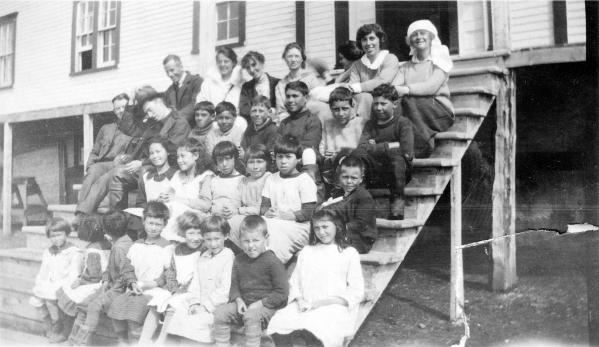
Marguerite Lindsay (top right) with the orphans of Muddy Bay – 1922
It’s hard to believe that over a century ago, my great aunt Marguerite Lindsay (1896-1922) was due to return home in August 1922. But instead, she disappeared.
It feels different to think about someone who passed away so long ago. Their loss doesn’t carry the same weight or mystery as a recent one. It quietly fades into the background, becoming a distant, difficult-to-understand memory.
Back in the summer of 1922, Muddy Bay, a small, close-knit community near Cartwright in Labrador, might have been a place where days blended together and everyone knew each other. Marguerite Lindsay arrived that June, as a young, educated volunteer, to teach the orphan children at the local school during the teacher’s six-week summer break. The whole community, children and adults, welcomed her and loved having her around. In early August, only a few weeks later, she was planning to return to her family in Montreal, Quebec, just as easily as she had come.
The morning before Marguerite was due to leave, the children were given their annual checkup by the local doctor and she wasn’t needed. It was a very hot day, and she told the others she was going for a swim and wouldn’t be back until later. She left around eleven o’clock, just before lunch. When her body was found four months later, a quarter mile from where she had left the others, her wristwatch had stopped at 11:30.
When she didn’t come back for supper that day, a search party quickly got together and started looking in places where someone might have gone swimming. They walked all the nearby paths, including the wooded path near the marshes where she would eventually be found, but sadly, they didn’t find her.
Stanley, Marguerite’s brother in Montreal, visited Muddy Bay at the end of August, a few weeks after her disappearance. He recalled her letters fondly describing the people, the town and the natural beauty of the area. He expressed his gratitude to the community once he heard about their thorough efforts in searching for her.
Summer gave way to autumn, and soon enough, snow began to fall. Life in Muddy Bay continued as usual.
Four months later, in December, her body was found in the frost-covered marshes. She had been shot through the heart and froze beneath the snow, where a hunter’s dogs had discovered her.
The three autopsies that followed over time didn’t provide any clear answers. The media coverage quickly offered sensational headlines, including a self-inflicted shooting in a fall or suicide over a love affair gone wrong. Both those possibilities allowed the story to rest.
Yet, so many questions remained unanswered. What about foul play?
If Marguerite had planned to end her life, why had she recently written a long, warm letter to her brother Stanley, filled with affection and small observations from her days? Why bring a bathing suit? Why did she end up in the marsh along the wooded path instead of near the water?
If her death had been an accident, how could she have shot herself at such an angle, one that clearly didn’t align with a fall? Why did the bullet pass right through her body, never to be found, when a small firearm she might have carried would not likely have had such force? And why was no gun ever found?
And what about the search itself?
Why was the wooded path to the marsh searched first, even though it was thought she had gone in the opposite direction to swim? Who made that decision and who unquestioningly followed suit? In Muddy Bay, like many small communities, influence often went unspoken. Did one or more people kill her and then walk among the searchers, already knowing what had happened?
Perhaps the most difficult thought is not that someone harmed her, but that more than one person may have known something they couldn’t—or felt unable to—say.
Did Marguerite discover a secret or something – whether she knew it or not – that someone didn’t want her revealing when she returned to Montreal? When her voice was silenced, whatever she might have known died with her.
Her story lives on, however, even though the truth can soften and fade over time.
And even when things about Marguerite remain uncertain, the community chooses to remember her over a hundred years later – with a plaque in the local church, the naming of the marsh, a song about her and the careful passing down of her story, making sure she’s never forgotten.
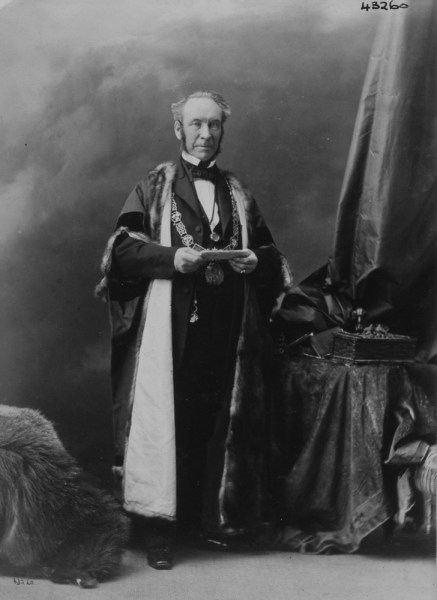
Mayor William Workman in his robes of office, 1870.
In 1848, Montreal hardware merchant William Workman was encouraged to run for mayor. He refused. Twenty years later, Workman was elected as the city’s mayor, bringing his extensive experience in business, banking and philanthropy to the position for three years.
A Protestant immigrant from Ireland, Workman (1807-1878) came from a middle-class family. He became a partner with the Montreal wholesale hardware company Frothingham and Workman and, after retirement in 1859, he remained active on the boards of several banks and philanthropic organizations.1
In politics, he was a liberal and, like several of his eight siblings, a member of the Unitarian Church. “All the (Workman) brothers had been instilled with a strong sense of morality, had learned skills to earn their living, possessed an ability to think through issues for themselves, and seemed to seek knowledge for its own sake,” Christine Johnston wrote in her biography of Willam’s brother Dr. Joseph Workman.2
In 1868, when Workman agreed to run, democratic institutions were relatively new. Montreal had been incorporated as a city in 1833, but its mayor was not elected by public voters until 1852, and there was no secret ballot until 1889. At first, only property owners were eligible to vote. As of 1860, renters – and in this city, most people were renters – could vote, provided they had paid their taxes. Anyone running for mayor, however, had to own property worth at least 1000 pounds.3 Thus, most of the city’s early mayors were from the business community, and about 60 percent of the people elected to city council were anglophones.
Banker and railway entrepreneur William Molson put Workman’s name forward at a nomination meeting. His opponent was Jean-Louis-Beaudry, a businessman who had already served several years as mayor. At first, there was a question as to whether Workman was eligible to run, then Beaudry claimed that Workman should be disqualified. His objections were dismissed and Workman beat Beaudry with 3134 votes to 1862.4
In 1869 and 1870, Workman was acclaimed mayor, but he did not run again in 1871.
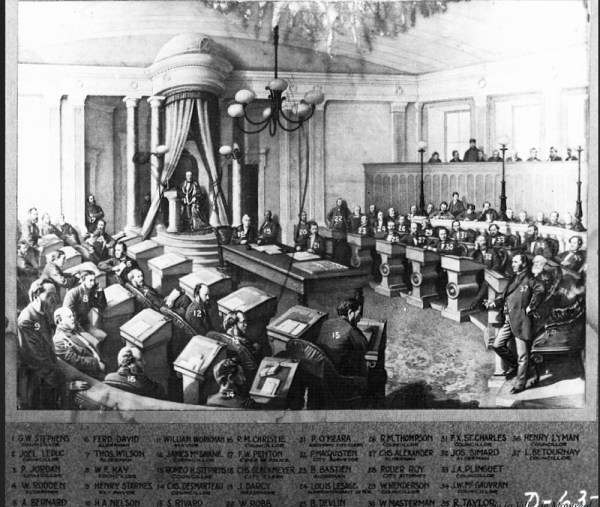
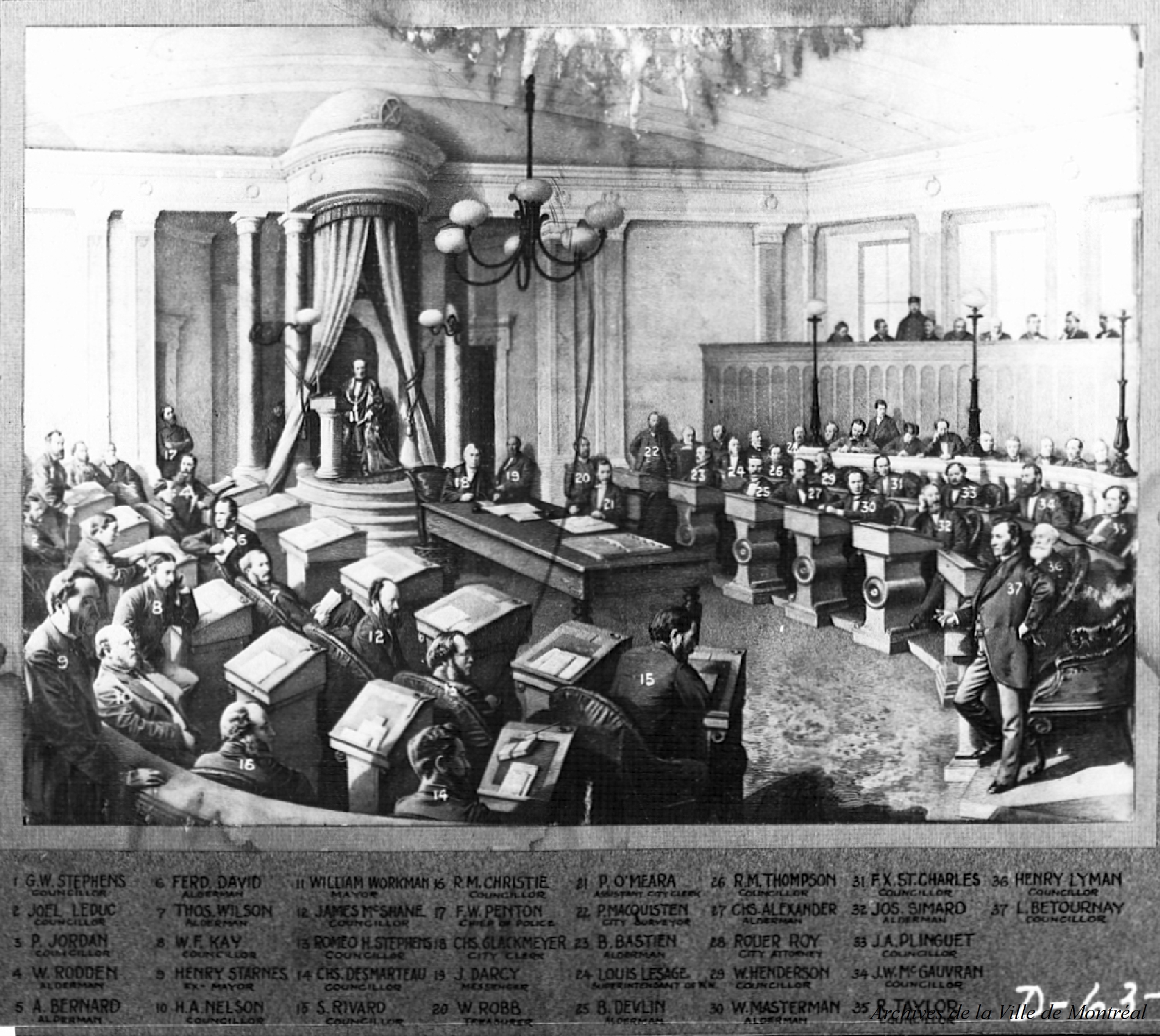
When Workman was mayor, the municipal council met on the ground floor of the Bonsecours Market building, in what is now known as Old Montreal. In this 1870 photo, Workman was standing on the raised area at the far end of the room.
The most distressing of Montreal’s problems was the high mortality rate for young children. Some people suspected that this was linked to its water supply. Cholera epidemics had reached Montreal in 1832, 1849 and 1854, but even most physicians did not understand that cholera was caused by bacteria, spread in contaminated drinking water. Instead, they believed that disease was spread by miasma, or unpleasant vapours in the air. William Workman, however, may have had some understanding of the contagiousness of cholera because his brother Joseph had done his thesis on cholera while a medical student at McGill University.6
As president of the Montreal Sanitary Association, William realized the importance of clean water. Over the three years he served as mayor, he looked at municipal economic development and urban life as two sides of the same coin. He was the first mayor to do so.7 His administration focused on improving the city’s water system, improving sanitation and making the city more livable for residents.
Workman improved the city’s aqueduct system to ensure it could provide enough water to everyone. He ensured that the sewer system was modernized, replacing rotting wooden sewer pipes with clay ones. He also saw to it that low-lying areas, where potentially contaminated water could accumulate, were drained.7
He turned his attention to garbage collection, introducing regulations concerning the pickup of manure, dead animals, soot and ashes. People were required to store waste in boxes or barrels, and the city now picked up garbage on a daily basis. The city built public baths, since many homes did not have hot running water, and it constructed municipal slaughterhouses.
To ensure that the city benefit all residents, he advocated for the creation of large public parks, on the top of Mount Royal and on Île Sainte-Hélène, where people could breathe pure air.8 Not long after Workman left office, the city purchased the necessary land and hired famous landscape architect Frederick Olmstead to design Mount Royal Park. It was officially opened in 1876 and it is still today a much-loved feature of Montreal. Île Sainte-Hélène, in the St. Lawrence River, also remains a popular green space.
One of the most exciting events of Workman’s time as mayor may have been the clear, crisp October day in 1869 when 19-year-old Prince Arthur, Queen Victoria’s third son, arrived in Montreal as part of a Canadian tour. Workman greeted the prince in the old port and made a short welcoming speech, then he and his guest took part in a procession through the streets. People cheered as they passed by, and homes and commercial buildings were decked out with banners and flags. The following day a lacrosse tournament took place.
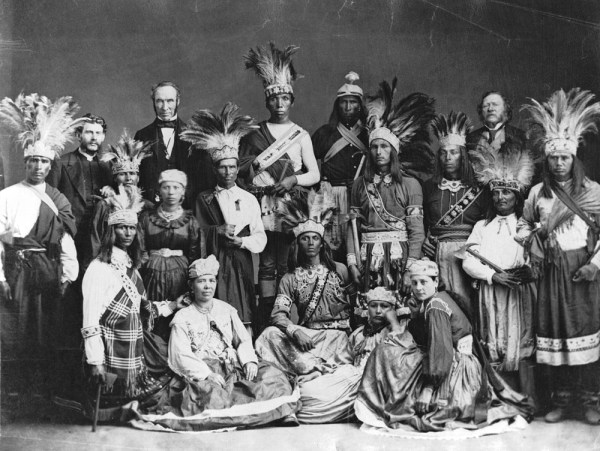
On the day of the 1869 lacrosse tournament, Workman, back row on the left, posed with a group of indigenous people.
Workman proved to be a very popular mayor among both English- and French-speaking Montrealers, and when he left office, citizens showed their appreciation. A public banquet was organized in his honour, and people from all classes came to thank him for his hard work and the generous hospitality he had offered to visitors. The Gazette was effusive in its description of the banquet and the expensive thank-you gifts of a diamond ring and silver dishes that Workman received.
The speech Workman gave during this dinner revealed that he had had concerns about going into politics. Addressing the crowd, and especially members of municipal council, he said, “I entered upon the duties of my office under great inexperience.… I laboured under great misgivings and suspicions as to the conduct of affairs in your corporate administration. Then, as now, the press had been sounding the alarm as to combinations, jobs and rings. I watched with great attention and anxiety in every department to discover the truth of these assertions, but I watched in vain and, after three years experience, I can truly say that, if it is one of the great blessings of a city … and of the citizens to find the corporate action of its representatives in unison with right and honest discharge of duty, then Montreal enjoys that blessing to its fullest extent.”
Kanien’kehá:ka group with William Workman, Mayor of Montreal, Montreal, QC, 1869; 1869 10 09; photo by James Inglis, McCord Stewart Museum, M6308, accessed March 4, 2026
4. Claude-V. Marsolais, Luc Desrochers, Robert Comeau, Histoire des maires de Montréal, Montreal: VLB Éditeur, 1993, p. 309
5. Paul-Andre Linteau, translated by Peter McCambridge, The History of Montreal: the story of a Great North American City, Montreal: Baraka Books, 2013. p 87.
6. Johnston, The Father of Canadian Psychiatry: Joseph Workman, p. 22.
7. Marsolais et al, Histoire des maires de Montreal, p. 87.
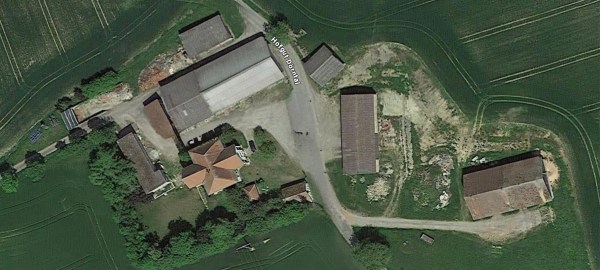
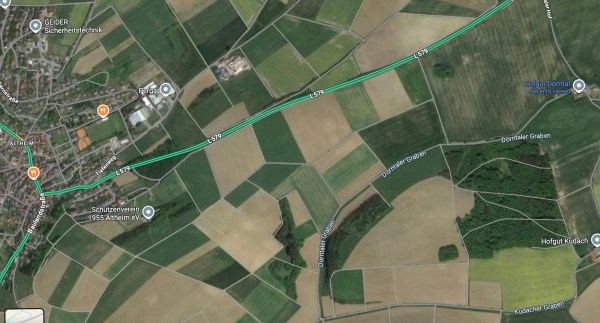
Hofgut Dorntal as seen on Google Maps 2026. The big grey building housed the chickens
A strange clomp, clomp, clomping woke me up. I looked around a strange room, from a strange bed, in a strange country. It was 1973 and I had arrived in West Germany the day before on a Canadian German Academic Exchange Society trip. I was going to a farm to work for two months, but the only location I had was Hofgut Dorntal. I knew it was in West Germany, but I had no idea where.
The clomping was the farmer, Herr Leo Knorzer going downstairs on his artificial leg. I assumed he lost it during the war and never asked him about it. It turned out it was in a car accident. His leg was broken and the cast was put on too tight. By the time his brother, a doctor visited, gangrene had set in and the leg couldn’t be saved.
I had just finished my third year at Queens University in Kingston Ontario. I had taken German as an elective, although majoring in biology. One day, the professor announced that we should all apply for a summer exchange in Germany, so I thought, why not! We could apply to study or to work. I didn’t expect to be chosen but when another student dropped out, I was offered a place.
We flew to Frankfort and picked up train tickets to our final destinations. My ticket said Eubigheim. I boarded a train to Munich, but had to change in Lauda. I sat alone on a bench outside the Lauda station in the cold and wet, thinking I would rather be home! I When the Eubigheim train arrived, it was only a two-car commuter train. All the seats were full, so I sat on my suitcase. I hadn’t slept, so I dozed as the train rumbled on. I kept jolting awake, hearing strange words around me. I knew they were German but some sounded like out-of-context English. I had to keep alert so I wouldn’t miss my station.
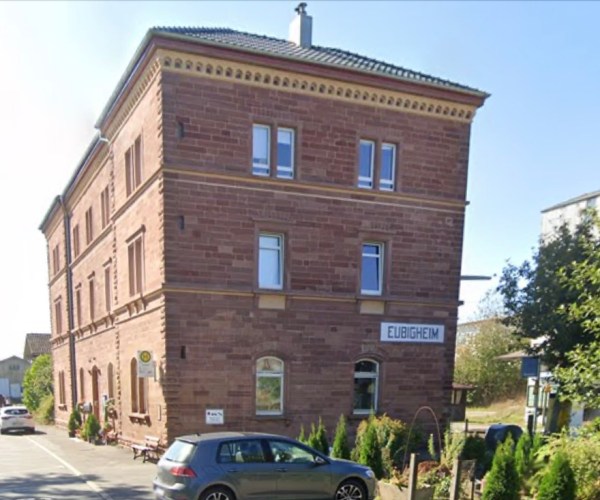
Eubigheim Station Google Maps 2026
When we arrived at Eubigheim, I gathered my luggage and followed the commuters off the train. They hurried through an empty station and out the other side. With no one to ask, I wandered around outside the station and found a man in a little office. With some difficulty, I made him understand that I wanted to contact Herr Leo Knorzer at Hofgut Dorntal. He called and soon their son arrived in his little Porsche sports car. I was expected, but not that day. His parents were out at a farmer’s meeting. Ekkehard spoke good English but said this was the only time he would speak English, as I needed to learn German to communicate with his parents.
Ekkehard and his wife Gutrune had their own apartment in his parents’ house. Gutrune was expecting a baby, so they needed help with the chickens. They gave me supper of rye bread, cheese and salami while we watched Bugs Bunny cartoons on TV in German. What was I doing there! They showed me to my room on the other side of the house and I slept, to be awoken by the clomping. I had forgotten the alarm clock I had purchased for the trip, so Frau Knorzer had to wake me with a knock on my door.
My main job was collecting eggs. They had a large barn with two sections of hens. One section, the horse stalls, was up steep cement steps where I collected the eggs by hand into buckets and carried them down. I always worried about falling down the stairs with all the eggs! The other section was on the ground floor and automated. They had conveyor belts which carried the eggs into the grading room where they would be sorted by size and weight. Any dirty eggs had to be washed and misshapen eggs broken into a bucket. Those eggs were frozen sent to make egg noodles. The conveyor belt worked well until an egg broke. Then, with the call gelbe, gelbe (yellow, yellow) the conveyor was stopped and Herr Knorzer had to go into the hen house and clean it up so not all the eggs would need to be washed.
Conveyor belts under the cages carried away the poop and others supplied food. Pipes carried their water and the dispensers often leaked.
“ Today I washed all the egg racks and pails. Then I swept and removed cobwebs in the cellar. Then I washed the whole wash kitchen. When I collected the eggs there was water dripping. One of taps was gone and the feeding tray was full of water. I held my fingure over the hole while Gurtrune tried to block it. Then I carried out the wet feed.”
Most hens lay an egg a day. When their production falls, they are crated and sent away. That was tough work as the hens didn’t cooperate, resulting in scratched and pecked hands. The Knorzers didn’t raise hens from chicks but would buy a new set of laying hens.
“ The new hens came today, all 2000 of them. The men came at 7 am. What a stinking mess. Shit all over the place from the frightened birds. I took out the birds while Frau K. put them in cages. I got more bruises on my poor arm.”
These new hens laid lots of eggs. One morning I collected 3261 eggs or 27 pails full that all had to be carried down the stairs.
Most evenings, Frau Knozer would deliver the eggs to customers. So Herr Knorzer and I often ate, just the two of us. He was very interested in how everything worked in Canada: farms, hospitals, schools and transportation. With my rudimentary German and his only English words, grandfather and grandmother one would think we would have trouble communicating but he could always find another way to say something so I would understand. Because of his patience, I learned quite a bit of German.
Frau Knorzer, on the other hand, had no patience. She would get very frustrated when I didn’t understand what she wanted me to do. “Die Mary this and die Mary that!” she would say with a sigh. She did everything quickly but one vacuumed slowly. She always told me, “Immer langsam.” I still hear her, “always slowly,” every time I vacuum. I did learn to clean the house to her satisfaction and weed the garden while only pulling out some of the lettuce.
Town of Althheim on the left and Hofgut Dorntal on the top left Google Maps 2026.
The farm was a few miles from anywhere, so at night we would just watch TV. They took me most places they went, including to their next farmers’ meeting. We walked into a room with about twenty people sitting around a large table. They introduced me, and I had to walk around and shake everyone’s hands. They treated me as one of the family so much so that after their two daughters and their families left after a visit, Frau Knorzer said she was tired of entertaining them and glad it was just us!
“My last day wasn’t a good day. Overnight visitors came and I am sleeping on a lawn chair in the sewing room. After the eggs, I had to clean out my room, help change the beds, vacuuum, make a cake with 20 minutes beating sugar and eggs, clean Soren’s room, clean up the kitchen, sweep, then lunch, clean the car, wash the floors and then I was finished!”
I left at the end of July after two months of work. I then had a month to travel before meeting up with my exchange group in Frankfurt for a trip to Berlin, before we flew home. I left the farm without any real plans. The Knorzers said that if I had any problems or for any reason, I was welcome to come back. They drove me to Osterburken, where I boarded a train to Heidleburg on my way to Frankfurt to begin another adventure.
My parents didn’t know where I was going or even if I had arrived. I sent a postcard soon after I arrived.
“ I got 2 letters today. One from Mom and one from Dad. They just got my postcard on the 27th. That took over a month to get there. I think they were kind of worried.”
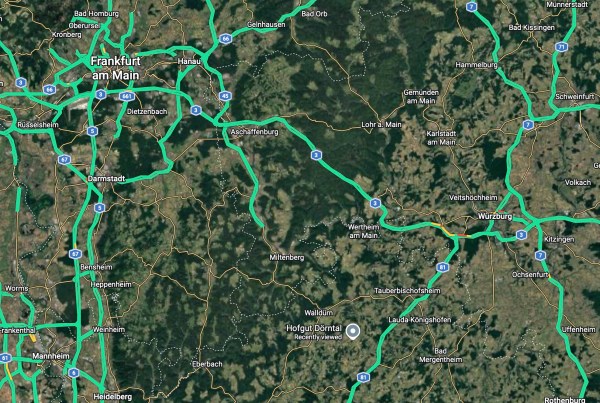
Hofgut Dorntal in relation to Frankfurt
Notes:
Fast forward to 2026. I Googled Hofgut Dorntal and Google Maps took me right to the farm. I could see the house and the outer buildings.
I also couldn’t find Eubigheim, but when I Googled Altheim, the town nearby, Eubigheim appeared on the map, right on a railway line. It was the closest station to the farm, but not the most convenient. There is a three-story building where the Banhof should be, but on the side of the building is a big sign “Eubigheim,” so it appears that it is the station.
All the quotes are from a journal I kept during the summer of 1973.
I looked up Leo and Erna Knorzer on the internet and found their final resting places.
Chapter 2 of Diary of a Confirmed Spinster a story based on family letters from the 1900 era from Montreal and Richmond, Quebec. The story in pdf form is archived online at National Library of Canada. (See below)
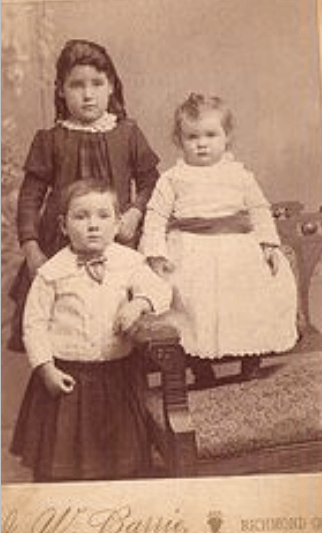
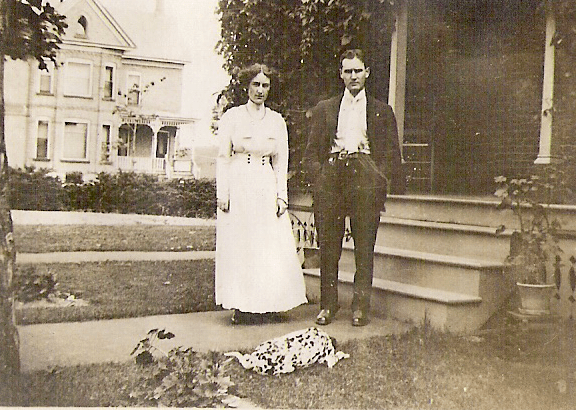
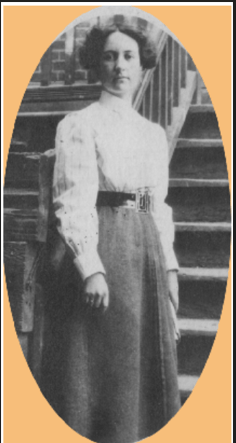
Edith, Herb and Marion Nicholson circa 1890
But, first, let’s go back to the beginning. (But which beginning? The beginning beginning. The I AM BORN beginning, to once again invoke David Copperfield, that despite appearances is not my favourite novel. Middlemarch is.)
Easy enough. I am born in January 1884 in a green clapboard rental house in Melbourne, Quebec, 10 months after my parents’ marriage.
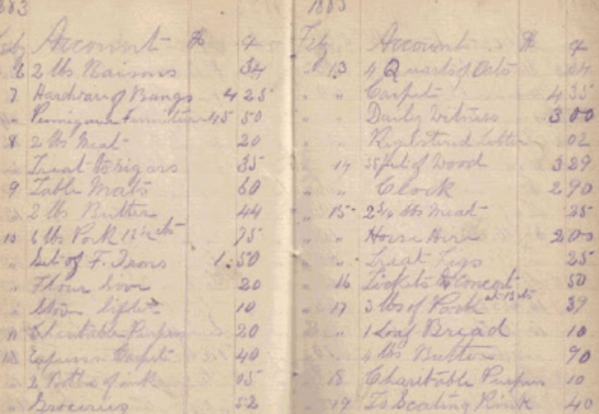
I know this because I have been told and also because the proof resides in shaky ink strokes in my father’s Store Book for 1884.
His household accounts that he kept from 1882, before his marriage to 1921, the year he passed away.
Fifty years of family accounts, kept in little black books.
It could be claimed that the entire story of our family is told in these pocket-size volumes, the practical side at least. The down-to-earth work-a-day side.
I was born in early January 1884 because the store book has an entry on the 7th, inserting baby’s birth 25 cents. I have survived my first challenge.
Under that breast pump 75 cents. Breast shield 25 cents. Along with one quart of milk 5 cents, a loaf of bread 10 cents, a gallon of coal oil, 25 cents. Two cords of wood 8 dollars and 35 cents. 11 pounds of oatmeal 38 cents. One dozen herring 20 cents. 1 ½ pounds of steak 15 cents. And rent 25 dollars a month. The staples of bodily existence then and today: shelter, heat, light and daily bread.
On February 19th a baby cradle is purchased 3 dollars. And some flannel and some cotton for baby. And on April 28, baby’s picture 25 cents. I have officially arrived. I have survived the precarious early days. I am safe to be sketched in silver bromide.
On June 27, 1 baby carriage 6.37. October 1884, one crib. 2.75. Some wool for baby 2.60.
A year later, baby’s first shoes, 1.20. I am now officially a financial burden on my parents. They would spend a great deal on shoes and boots – and the mending of same – for me and my three siblings in the following decades.
In June 1886, a child’s broom is purchased. 15 cents and I begin to pay for my keep. In those days they began teaching girls the womanly arts very early.
Also purchased that month: baby’s first book. We are Scots after all, who value education above all else. “An education is something they cannot take away from you,” my mother always says.
Still, it’s something of a mixed message I am being sent, as a 2 and ½ year old. But I might as well get used to it. Being a female, I will be showered with mixed messages for most of my life.
Then, the narrative in numbers continues: 1890 to 1895 school fees 25 cents a month. The occasional slate 5 cents. Bottles and bottles of cough medicine 25 cents each. (Cough medicine had kick in those days.) Later scribblers 5 -7 cents. Skating rink 10 cents. Soda at Sutherland’s drugstore 5 cents. (Soda had kick in those days, too.)
Also pocket money for Edith 5 cents. I guess I was doing a lot more than sweeping by then. Oddly, my younger brother Herb received ‘wages’ for his household chores.
And then I grow up. St. Francis Academy 50 cents a month. Latin text 1.25. Euclid’s geometry 1.00, the Jamaica Catechism, 80 cents, etc.(Students must purchase their textbooks, many published by the Renouf Company of Montreal, who, in turn, cash city teachers’ paycheques for them, as women don’t have bank accounts.) And I get stockings and gloves at Christmas, just like Mother.
We are living in our own house by 1896, built at a cost of 2,718 dollars, not including landscaping. My father is by now a well-to-do hemlock bark dealer. Hemlock is plentiful in the E.T. and used in the leather tanning process. Father sells his bark to tanneries in Montreal, New Hampshire and Maine.
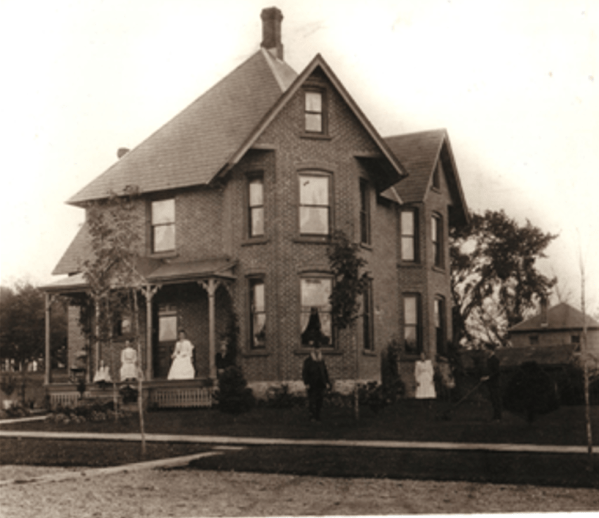
The mortgage on our house is 30 dollars a month, similar to what we paid on the rental house, but “Tighsolas” or House of Light in Gaelic is ours. And it is a fine house, a brick-encased Queen-Anne Revival in the good part of Richmond, not far from St. Francis Academy on College Street. (The kind of house seen often in Ontario but fairly rare in Quebec.) Building this house my father inspected every plank, brick and tile himself, tossing aside more than he used.
By now, as I said, I have three siblings, a younger brother, Herb and two younger sisters, Marion and Flora, born 1885, 1887, and 1892.
Edith and Herb circa 1910 in front of home in elegant part of Richmond.
By 1901 I am ‘fully out’ : corset for Edith 2.35. I start wearing my hair tied up around then, but only at dances. Combs for Edith: 20 cents.
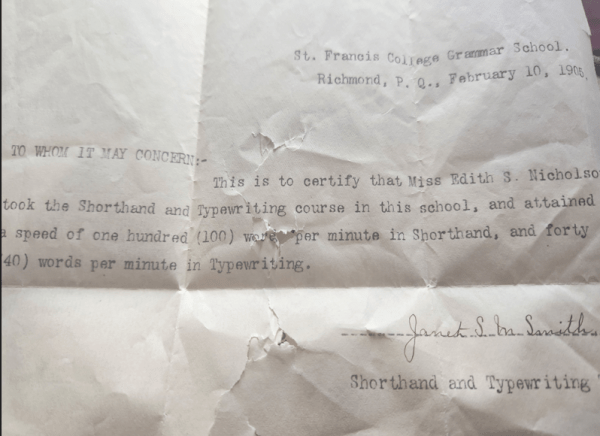
I graduate from St. Francis Academy II in 1903 and a little later take a stenography course there. Stenography is an up-and-coming profession for women. 13.50 for the course. 1.28 for a shorthand book. 5 cents for a reporter’s notebook.
I pass the course with 100 words a minute in shorthand and 45 words a minute in typing, good enough to get a job, but my parents don’t want me going to the city to work. Life in the city for young working women is a dreary business, at least according to a cousin, Jessie Beacon, in a letter to Mother.
Jessie laments that she works until six at her insurance office, goes home to her boarding house for a “lousy hash complete with garnish of housefly” and then dresses for a predictably boring evening.
My parents are intent on saving me from such a degrading existence and seek a job for me in Richmond, but jobs for young people in country towns are few and far between.
Money is plentiful at home despite the fact my father has had to change lines of work. He now sells pulpwood instead of the bark. At Christmas, over and above the usual stockings and gloves, there are gifts of watches, rings and perfume.
In 1905 my younger sister, Marion, leaves for McGill Normal School and adventures in the Big City. My determined little sister has managed to convince my wary parents that the City is safe, as long as she rooms at the YWCA on Dorchester.
And, as Herb works in Montreal, at the E.T. Bank, she is not alone, so my parents permit her to go despite the great cost: 16.50 a month.
Everything in life is timing!
And I am left alone at home with my little sister, born nine years after me. My parents shower me with ‘pity gifts’ at Easter: 5.00 for a plaid “Montreal” dress. (Plaid voile is all the rage this year, I read it in the Delineator.) 2.35 for a ticket to see the Madame Albani concert in Sherbrooke. Opera singer Emma Lajeunesse, now in her middle age, is a ‘local’ girl from Chambly made good. She is world-famous, a long-time favourite at London’s Covent Garden. So, this is a huge event. All of the. E. T. seems to want to attend.
At 22, I feel like a debutante about to make her grand appearance under the patronage of a local legend. But nothing comes of it. No eligible young men come out to the home-coming concert.
But late 1906 the pulp contracts dry up. To add fuel to this fire, we are disinherited by a wealthy Maiden Aunt on her deathbed.
My brother takes this especially hard.
“Well, now that my house is being given to someone else, I will have to give up all hope of being rich and look at it as a fortune lost,” he writes in a letter home.
“My house? MY house?” exclaims Marion at Christmas. She is now working at Sherbrooke High School and boarding at a Mrs. Wyatt’s who has a daughter, Ruth, Marion’s age. “What has Father been telling him?”
I don’t tell my sister that Herb believes we were disinherited because Old Aunt Maggie did not approve of ‘working women.’
In June 1907 my father is desperate for work with a meagre 33 dollars left in his bank account. He applies to our local Member of Parliament, E.W. Tobin, to work as inspector on the crew building the Canadian Transcontinental Railway.
He receives a polite letter from the TCR offices in Ottawa. They say they have their full complement of inspectors. They acknowledge that Tobin has been in to see them on his behalf.
Then in August a great bridge, half built, collapses, the Quebec Bridge. It was to be the world’s longest suspension bridge. 78 men die, mostly Mohawks from Cawgnawaga near Montreal.
The bridge was a component of the TCR. Magically, there is a need for inspectors at end of steel and father gets the call to La Tuque, to be Timber Inspector at 100 dollars a month.
My parents take out a 1,000 dollar insurance policy on my father’s life. It is well known that jobs on the railway are dangerous.
My mother exchanges one worry for another.
“What is a timber inspector? Is it safe? It doesn’t sound safe.”
And I am still at home, no income, no prospects.
Then arrives a letter from Reverend J. R. McLeod, my mother’s cousin living in a town half way between Montreal and Quebec City.
Three Rivers, Sept. 1907
My dear Friend,
I have but a few minutes to write as prayer meeting is starting. I was asked yesterday by the Manager of Works in a village 15 miles from here if I could find a suitable girl to teach a small school, about 10 children. My thoughts went to you. They will take you without a diploma. They offer $20.00 a month. I know you are fit for the position.
Edith as a school marm, likely 1911-1914 ish in a classic working girl shirtwaist blouse. Neckties were often worn with them.
Regards, Reverend J. R. Macleod
“Should I accept now, I mean that Father is away?” I ask my mother.
“It is your decision to make,” my mother replies. She does not seem surprised at all by the letter from her cousin.
Mother hands me another letter, just arrived in the mail, from a young friend of the family’s, Mary Carlyle. The correspondent omits the obligatory opening pleasantries and gets straight to the irksome point:
“Dear Maggie,
I am writing you with such good news. I am to be married! He is a George White and he is from Kingsey. He is a sweet, kind man, with a good position and very good looking, in my opinion. It is such a relief. I was worried I was destined to be a burden on Father.”
“Kingsey. So, that’s where all the perfect men are,” I say to Mother in a tired voice but my mind is suddenly made up. I climb the stairs to my room to scratch off a note to J.R. McLeod saying I will take the job as offered.
END
(This is Chapter 2 of a novellette I wrote, Diary of a Confirmed Spinster, part of School Marms and Suffragettes that can be found at the National Archives of Canada. The story is based on the letters and other memorabilia of the Nicholson family of Richmond, Quebec).
Second sight has a long tradition in Scotland, more particularly in the Highlands and among Irish-Scots. Scots are a superstitious people and many believe even today in the gift or curse of the second sight. 1 My family was Irish-Scots and maybe this is why they believed that they had family members with this gift. It is called the second sight is because the first sight is our normal vision that everyone has. Only some people have inherited the second sight. There are many Gaelic words for the second sight, the most common being An Da Sheallad, meaning two sights.2
Auntie Ann always said that she had inherited the gift of premonition. She knew things before they were going to happen. She also claimed that she could ‘feel’ things about people.
Ann Lynn McHugh Smith (1897-1975)
“Such nonsense!” my mother would snort when we got back in the car after visiting Auntie Ann. Her sister-in-law always had a story or two about the times she could foresee the future or just knew something. I used to listen in open-mouthed wonder while my father squirmed uncomfortably. My mother held her tongue during the visits but I could feel her bristling with indignation.
One time Auntie Ann told a story that scared me for years. She was in her kitchen and she felt a cold shadow pass over her. She knew something terrible had happened and she learned later that a toddler had fallen to his death in the neighbourhood.
Another story that struck me was about Auntie Ann’s son, Tommy Smith, when he was overseas during World War II. He was injured in battle and she claims to have sat right up in bed because she knew he was going to be injured in the leg. When I was little, I could easily imagine Auntie Ann sitting up in bed, terrified and unable to reach her son.
There are detailed written accounts of incidents involving the second sight since the 17th century in Scotland. They have been collected by modern day folklorists and ethnographers. These include many detailed descriptions about how the prophecy appeared to the person with the second sight. Sometimes people saw exactly what was going to happen. At other times, they saw symbols and interpreted them. Sometimes these visions were accompanied by smells and sounds.3
When I would ask my dad about Auntie Ann’s second sight, he would answer that Scots believe that this ability runs in families and that Auntie Ann was convinced that she had this gift. But I wanted to know whether my father believed it. I realize today that my father didn’t want to hurt his sister so he never really said one way or the other.
Ethnographers are sure that the second sight is an inherited ability.4 However, no one in our family has this ability now. And what would my mother say? “Hogwash!”
Cohen, Shari Ann, Doctoral thesis abstract, Scottish tradition of second sight and other psychic experiences in families, University of Edinburg Research Archive, 1996, https://www.era.lib.ed.ac.uk/handle/1842/9674, accessed November 26, 2018
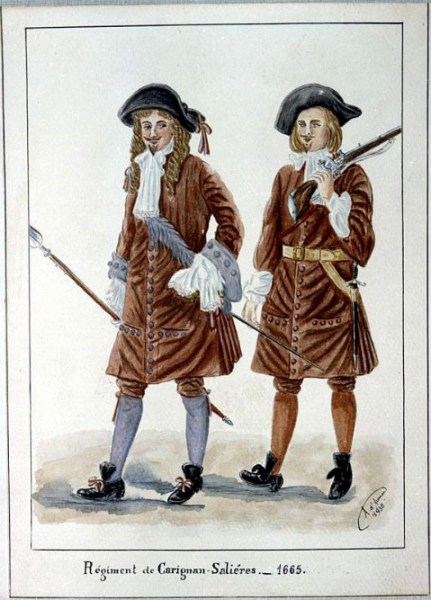
In 1665, 1,200 French soldiers arrived in New France to set up a series of fortresses along the Richelieu River to protect New France colonies in the Saint Lawrence Valley from the Five Nations of the Iroquois.
They were known as the Carignan-Salières Regiment and my ancestor Blaise Belleau dit LaRose was among them. He served in the La Tour Company, one of the 20 companies officially commanded by Marquis Henri de Chastelard de Salières. (Note: the regiment’s name came from a merger of the Salières Regiment with the regiment of Emmanuel Philibert of Savoy, Prince of Carignan, in 1660.)1
After Christmas 1664, Belleau left his parents (François Belleau and Marguerite Crevier) to join 1,099 soldiers in Marsal, Lorraine. They began marching across France in January 1665 to get to La Rochelle, where seven ships waited to carry them to New France. They were stationed on the Île d’Oléron and the Île de Ré prior to leaving.
On April 19, 1665, Belleau crossed the Atlantic Ocean on the Viex Siméon, a 200-ton ship piloted by Sieur Pierre Gaigneur. In addition to soldiers from the La Tour Company (probably eight officers and sub-officers: Captain, Lieutenant, Ensign, Sergeant, Corporal, Cadet, Drummer, and a Surgeon plus 50 soldiers), the ship carried passengers from the Chambly, Froment and Petit companies. They arrived in Quebec City on June 19.2
Another 200 men from four additional companies (Berthier, La Brisandière, La Durantaye and Monteil) arrived in Canada under the command of Alexandre de Prouville de Tracy, Lieutenant-General of the Antilles and New France on June 30. The rest of the soldiers continued arriving until the fall. (Note that some documents place my ancestor Belleau in the Berthier Company, which means he would have gone to the Antilles prior to getting to Quebec.)
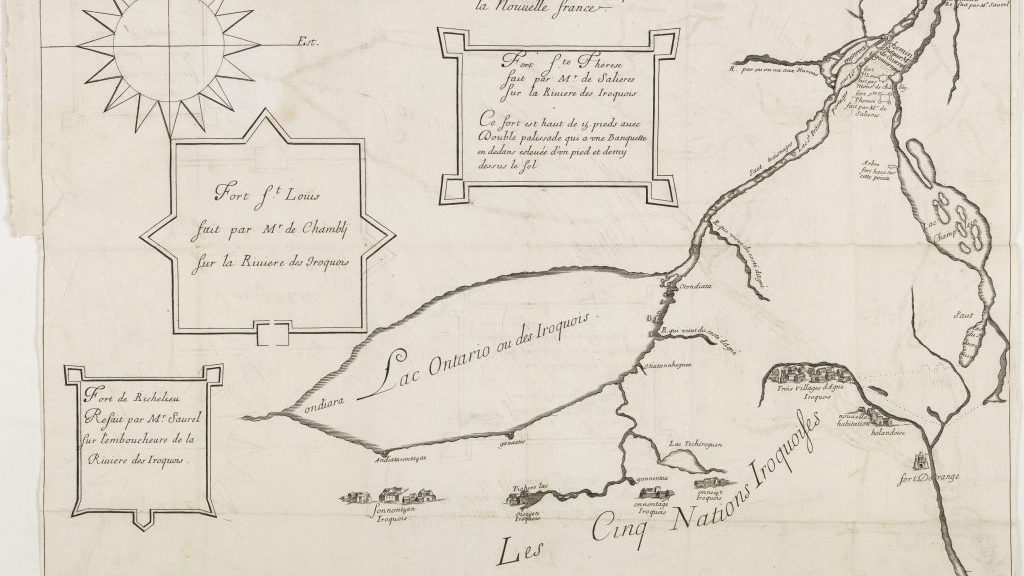
The Regiment’s first task was to build forts Saint-Louis, Richelieu, and Sainte-Thérèse along the Richelieu River to block Iroquois intending to invade New France colonies. By late September, the forts were built and all the soldiers had arrived to fully station them. The Marquis de Tracy stationed others in Quebec City, Ville Marie (Montreal), and Trois-Rivières.
Although they initially served as defence forces, the following year, the regiment went on the offensive. By the winter of 1666, 500 to 600 soldiers, volunteers, and Indigenous allies headed towards Iroquois villages in what is now New York State. The cold and lack of food prevented them from continuing, however, and 60 men died en route. Despite that failure, some Iroquois Nations began negotiating peace treaties with New France. In September 1666, a second expedition of 1000 soldiers, 600 militiamen and 100 Hurons and Algonquins reached four abandoned Mohawk villages, which were burned to the ground. These attacks combined with smallpox and scarlet fever epidemics led the Mohawk Nation to sign a treaty with France in Quebec City on July 10, 1667. Eventually, all Five Iroquois Nations signed onto the treaty concluding the Beaver Wars and bringing a 17- to 18-year respite to New France.
The Carignan-Salières Regiment was recalled to France in 1668, but King Louis XIV offered land to soldiers and officers who wished to establish themselves in the new colonies. Belleau was among nearly 400 men who chose to demobilize and settle. He was also among another 283 men who married a Fille du Roi (King’s Daughter).
Blaise Belleau dit LaRose (also known as Bellot and Bezou) settled in the Sillery seigneury and built a home. He married Hélene Calais on September 25, 1673. By 1712, they had enough to donate a portion of land with a home to their son, Jean-Baptiste Bellot (Belleau), and his wife, Catherine Berthiaume.3
If you want to learn more about this period, the Fort Chambly National Historic Site demonstrates the military life during this era, and will reopen for general admission in spring 2026. (Note that Fort Chambly was built in 1711. It is located at 2 Richelieu Street, Chambly, QC J3L 2B9. The website is https://parks.canada.ca/lhn-nhs/qc/fortchambly.)
2Verney, Jack. The Good Regiment: the Carignan-Salières Regiment in Canada 1665-1668, McGill-Queen’s University Press, 1992.
38 mai 1712 [Document insinué le 30 août 1712], Cote : CR301,P755, Fonds Cour supérieure. District judiciaire de Québec. Insinuations – Archives nationales à Québec Id 81885, pièce provenant des registres des insinuations de la Prévôté de Québec, vol. 3 (Anciennement registres 7, 8, 9, 10, 11 et 12) (15 octobre 1709 – 24 mars 1715), pages 433-434, https://advitam.banq.qc.ca/notice/81885.