Tag Archives: Cornwall Ontario

Letters

Nothing gets a genealogist’s heart beating faster than finding an old letter written by an ancestor. These are as close as we come to knowing what they really thought, gleaning a little bit of an ancestor’s character. “Thank you very much for your good wishes for my 65th birthday and it seems to me only yesterday that I was your age. Oh! Life goes fast; we should use it well so as not to have one regret on reaching the end.”¹ I am lucky as I have a number of family letters but one always wishes for more.

Many of the letters are somewhat disappointing. People seem to be just filling the page. How are you? We are all fine and the neighbours too, unless of course they aren’t and then the neighbours ailments are itemized. They often finish with please write soon as we have waited such a long time to hear back from you. Other than knowing the letter writer is still alive not much other information is given. Still the recipient was happy to receive the note.
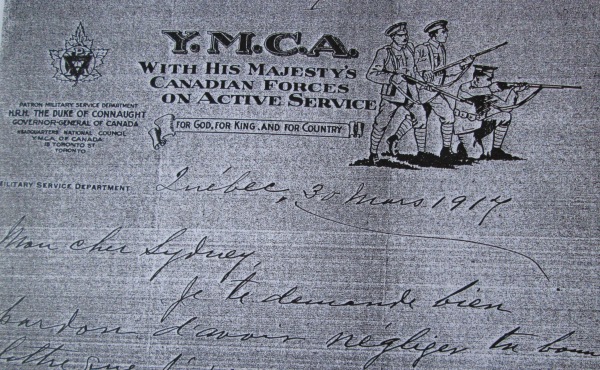
Letter written by Ismael Bruneau

Before the telephone became ubiquitous people would just drop a note in the mail. It might just be a postcard with thanks for a visit, even to a neighbour around the corner. They used the post as a means of keeping in touch.

Some letters are heartfelt, such as a father wishing his sons wouldn’t go to war. “ I am sorry to tell you that I do not approve of your plans to go to war. Alas I certainly had greater and nobler ambitions for my boys than to make simple soldiers of them.”² If they did go he prayed that God would keep them safe. All his congregation was praying for them. My great-grandfather Ismael Bruneau wrote many letters to his son Sydney during the First World War. He signed most, “ton père affectionné I.P. Bruneau”. Sydney kept the letters and his daughter translated some. I only have photocopies which are hard to read.

These letters have only snippets about the family as he writes, “Your mother told you about the family so I won’t.” Only one letter written by Ida Bruneau survives and that was written just after Ismael’s death.
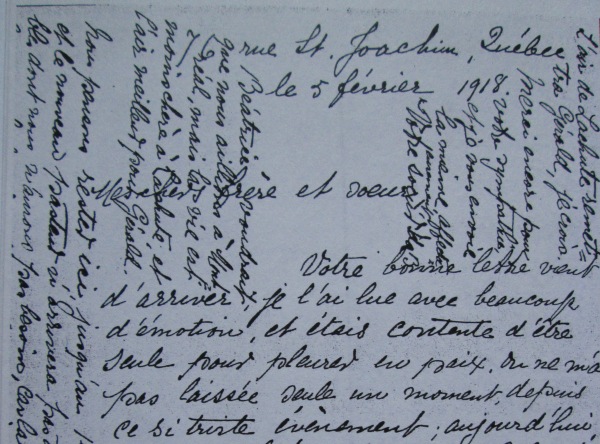
Letter written by Ida Girod Bruneau

Handwriting can be difficult to decipher and letters written in other languages make them even harder to read. Some people had beautiful even cursive script and their letters are still a pleasure to read. They learned “real writing” in school with much practice. Other letters are covered in tiny script as they didn’t want to waste the paper. Most difficult to read are those with writing perpendicular to the first lines, again to save paper or a just remembered thought.

Unfortunately, there are also some letters you wished you had never found as they say things you didn’t want to hear. Letters from people recounting their hard times and mental struggles you never heard about and negative opinions about people you thought you knew.

Did those who saved the letters ever think someone would read them many, many years later? Most often there is just one side of the correspondence. I have a series of letters my grandfather wrote to my grandmother before they were married. He mentions often rereading her letters so he didn’t immediately discard them but they didn’t survive. Were they too personal or showed too much anger or just stupid thoughts? I imagine my grandmother found them and was embarrassed by her openness and she threw them out.

What will future generations find? Nothing? Emails and texts they can’t access, Facebook pages that have disappeared or meaningless tweets but almost no letters. There will be no papers touched by a loved one’s hand to find, tied with a ribbon or tucked into a fancy box. So after reading this, go and write someone a letter. They just might keep it!

Notes:


  1. Letter from Ismael P. Bruneau to his son Sydney Bruneau: Y.M.C.A., Quebec, 30 March 1917. Ismael died before his 66th birthday.
  2. Letter from Ismael P. Bruneau to his son Sydney Bruneau: Cornwell, ONT, 15 March 1915. Both Sydney and his brother Edgar survived the war.
  3. Letter from Ismael P. Bruneau to his son Sydney Bruneau: Cornwall, Ont, 18 July 1915.

These letters were translated by Sydney Bruneau’s daughter Ida Bruneau.
Call Me Ismael

IMG_7917
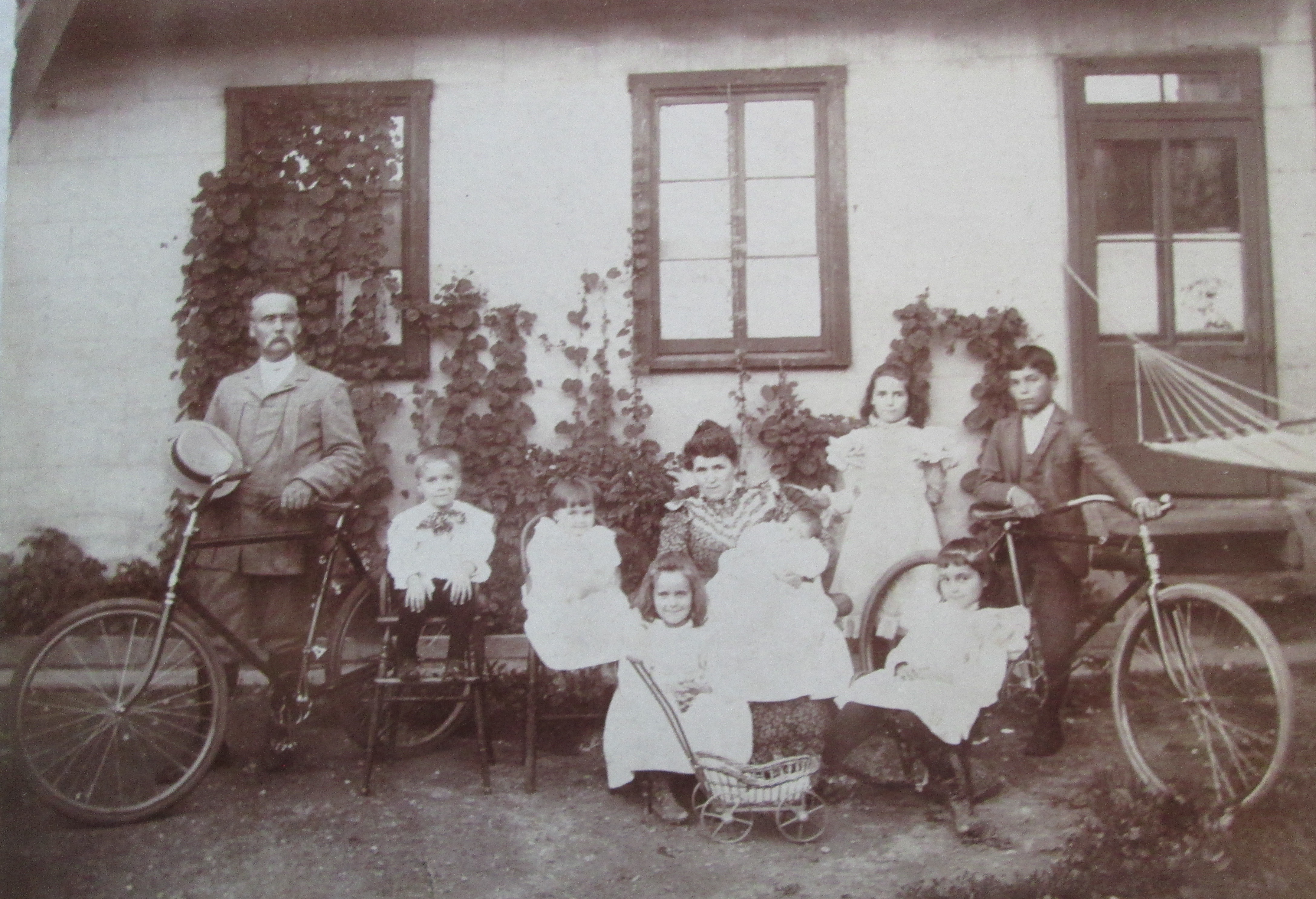
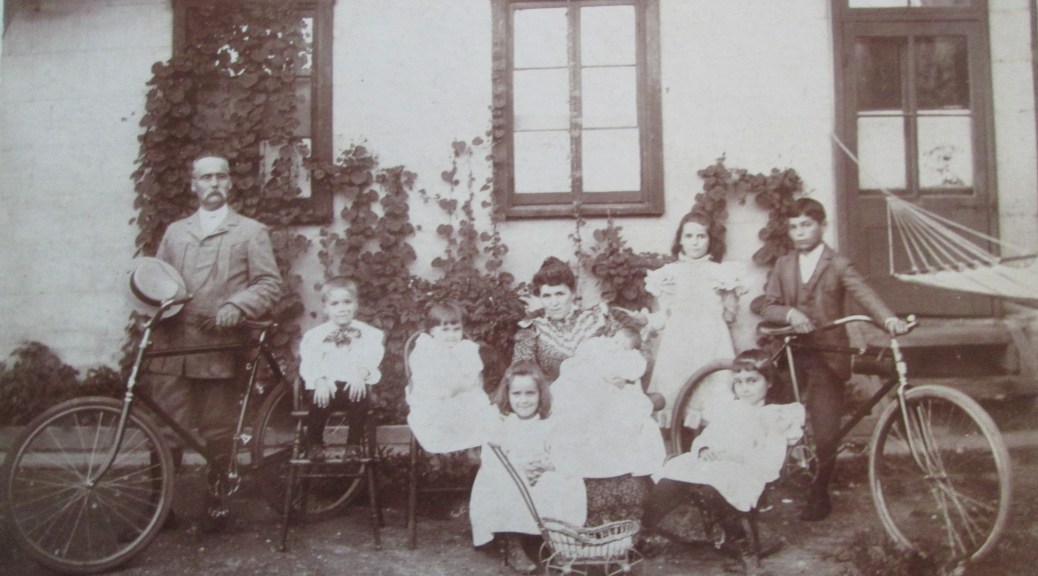
The Bruneau family in Montreal about 1899

 He arrived when the service was almost over. He walked to the pulpit and announced the last hymn “Seigneur Tu donne Ta Grace.” As the organ played he collapsed to the floor. So ended the life of Ismael Bruneau, my great grandfather.

His life began in 1852 as Ismaer Bruneau in St-Constant Quebec, just south of Montreal. Ismaer was the eleventh of thirteen children and the youngest son of Barnabé Bruneau and Sophie Prudhomme. He attended the French Protestant school in Pointe aux Trembles and one summer went to West Randolph, Vermont to work in the mills. He spent a lot of time thinking about his future. He had written for advice to the principal of the school, Dr. Tanner who encouraged him to return to his studies and take the classes for those considering the ministry.

He was not sure of that path. One day he was out walking in the woods and climbed to the top of a hill. He sat facing Canada and prayed to God about the decisions he must make. As he reported, there was a dark cloud on the horizon and a voice spoke to him as if from the sky, telling him to return home and study, then travel and spread the gospel.

Ismaer continued his studies at Pointe aux Trembles and was then admitted to the Presbyterian College in Montreal, which had begun teaching subjects in French. At this time he changed his name from Ismaer to Ismael which he thought was more biblical and added Prudhomme as a middle name in honour of his mother.

After graduating, he was sent to Saint-Anne’s Kankakee County, Illinois to work with Father Chiniquy. Father Chiniquy was a Catholic priest who had left Quebec in the wake of several scandals. His zeal for God remained intense but not his feelings for the Catholic Church, which he renounced. He made his beliefs known to his congregation and they all chose to follow him and convert to Protestantism.

One family living in Kankakee was the Girods, who had recently immigrated from Switzerland. When their daughter Ida, a teacher in Baltimore came to visit, she was introduced to their minister. Ismael had been very homesick and often wrote letters home. He began writing about the lovely woman he had met. Then in one letter, he wrote to his sister Anais, “ Wouldn’t you like to come out after the harvest and see my wife. It would be worth it for without a doubt she is one of the beauties of the world in my eyes.” Ismael and Ida were married June 12, 1886.

The Bruneaus had three children in Green Bay, Wisconsin, one in Holyoke, Massachusetts, three in Quebec City and the last three in Montreal. Ismael had wanted a biblical family, a child for each of the 12 tribes of Israel but in the end had only 10. Nine of the children survived. He continued moving and preaching, taking a charge in Cornwall, Ontario and finally in 1917 back to Quebec City.

In Quebec, he had a church in the Old City as well as a congregation in Portneuf. He would conduct the morning service, catch the train to Portneuf for an afternoon service and be back in Quebec City in time for the evening service. On January 27, 1918 the train was delayed because of a troop train. Arriving late in Quebec City he ran up the hill from the station. He entered the church before the service ended but while his spirit was still willing his heart was weak. His family suffered financial hardships after his death as there were no pensions and the Presbyterian Church sent his widow one cheque for the days he had worked that month and nothing more.

Bibliography:

Bruneau, Ida. A Short History of the Bruneau – Girod Families. 1993.

Duclos, Rieul P. Histoire Du Protestantisme Français Au Canada Et Aux États-Unis. Montreal, Canada: 1912. Print

Villard, Paul. Up to the Light: The Story of French Protestantism in Canada. Toronto: Issued for the Board of Home Missions of the United Church of Canada by the Committee on Literature, General Publicity and Missionary Education of the United Church of Canada, 1928. Print.

Here is a link to a story about Ismael’s wife Ida Girod.

https://wordpress.com/post/genealogyensemble.com/3674