Tag Archives: John Clark

Mile End Farm: the Origins of a Neighbourhood

with additional research by Justin Bur

The Mile End neighbourhood of Montreal is famous as the home of Montreal bagels and of novelist Mordecai Richler. Its iconic architecture features outside staircases attached to two- and three-storey rowhouses, next door to churches, synagogues, shops, cafés and renovated manufacturing buildings. But Mile End’s history goes back to one small tavern at a crossroads in the countryside more than 200 years ago.

The Mile End Tavern was located at today’s northwest corner of Saint Laurent Boulevard and Mount Royal Avenue,1 now the starting point of the Mile End neighbourhood. In turn, Mile End is on the Plateau, an elevated plain lying north of Sherbrooke Street and east of Mount Royal.

The first known reference to Mile End was dated April 21, 1808, when landowner John Clark placed a notice in the Gazette advertising Mile End Farm as providing “good pasture for horses and cows at the head of the Faubourg [suburb] Saint-Laurent.”
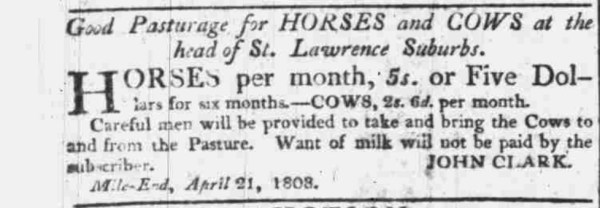
Screenshot

Clark (1767-1827), an English-born butcher, acquired the land he would call Mile End Farm in several transactions, including purchase agreements and leases, between 1804 and 1810.2 Like most farms in Quebec, it was long and narrow. At its greatest extent in 1810, it measured 2.5 kilometers from south to north, and between 400 and 550 meters wide. Clark was almost certainly the one who chose the name Mile End. The centre of his property was about a mile north of the small city of Montreal, and the area might have reminded him of another Mile End, a mile east of London, England. The name caught on and has been in use ever since.
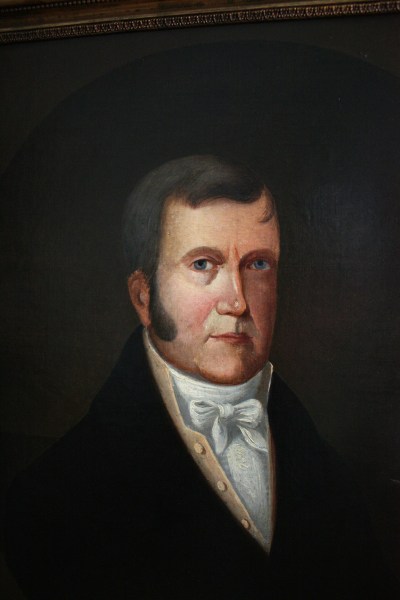
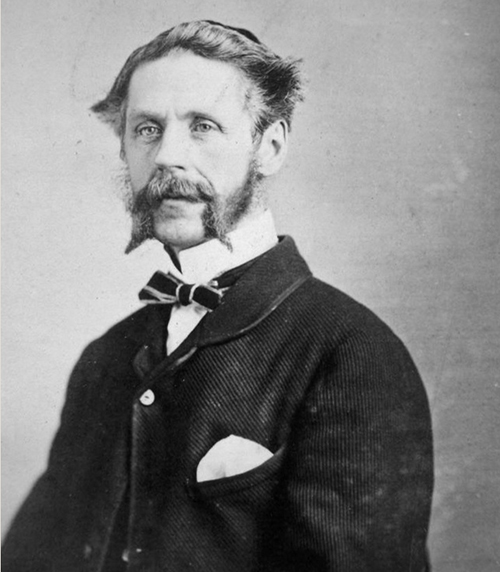
John Clark, a butcher from Durham, England, settled in Montreal around 1797. Portrait in a private collection.

When Montreal was founded in 1642, Mile End was probably uninhabited. The ground was too rocky for settlements or agriculture, and few Indigenous artefacts have been found there. The northeastern region of the Island of Montreal was covered by a vast cedar forest. The heart of Mile End was also forested, but there, both cedar and ash trees were the dominant species. This forest was still intact when the Sulpician priests mapped the area in 1702, but as the city’s population grew — it stood at around 1,200 residents in 1700 – more and more trees were cut to provide firewood.   

By 1780, most trees had disappeared from the foot of the mountain, replaced by houses, farm buildings, hay fields and pastures. In the Mile End area, livestock pastures, vegetable crops, tanneries and quarries dominated the countryside, and orchards were planted in the mid-1800s.

In 1663, the Sulpician priests became the seigneurs, or feudal lords, of the entire island. In 1701, the Hôpital Général acquired an extensive piece of land from the Sulpicians in the future Mile End area, and the Grey Nuns took over the hospital and all its lands in 1747. In 1803, the nuns sold the piece of land that would become Mile End Farm to two masons, Jean-Baptiste Boutonne and Joseph Chevalier. They wanted to quarry its stone and sand for building materials.

The masons had to pay the Grey Nuns a rente constituée (annual interest), as well as yearly seigneurial dues to the Sulpicians. So when John Clark bought the property – the first part of his Mile End Farm — in 18044 and gave Boutonne and Chevalier the right to continue collecting building materials for seven years after the sale, they must have been relieved. Meanwhile, Clark found another use for the land, first advertising pasture for other peoples’ cows in 1808.

When the same ad for livestock pasturing at Mile End Farm appeared the following year, it was placed by Phineas Bagg (c.1751-1823) and his son Stanley Bagg (1788-1853), my four-times and three-times great-grandfathers. A farmer from western Massachusetts, Phineas had brought his family to Canada around 1795. Initially he worked as an innkeeper in LaPrairie, near Montreal, and then the family moved onto the island. In 1810, Phineas and Stanley signed a lease with John Clark.5 Paying an annual rent of 112 pounds, 10 shillings, they ran the Mile End Tavern and managed the farm for the next seven years before subletting to another innkeeper.

description below.

The lease described the property as having a two-storey house (which at some point must have been converted into the tavern), a barn, stable and outbuildings. The Baggs were required to sufficiently manure the pastures and arable land, to cultivate and to perform road maintenance and other required duties. They were permitted to cut wood for fencing and firewood, but they had to preserve the maple grove. They were also permitted to cut and remove stone.

No doubt the tavern brought them a good income since it was located at an important, if somewhat remote, intersection. Stanley must have attracted many additional customers after he built a racetrack nearby. In May 1811, he signed an agreement with the Jockey Club of Montreal, subletting a piece of land to the club and promising to build the track within five weeks. The club supervised the races. The track, partially on land leased from the Sisters of the Hôtel-Dieu, was about a mile in circumference and what is now Jeanne Mance Park, extending east to Saint-Laurent. It was most likely the first racetrack in Montreal.6

Another reference to Mile End appeared in the Gazette on August 4, 1815 when Stanley Bagg, Mile End Tavern, placed a notice offering a reward for information about a lost bay horse, about 10 years old, with a white face and some white about the feet.7

In 1819, Stanley married John Clark’s daughter, Mary Ann (John Clark was also my four-times great-grandfather). Their son, Stanley Clark Bagg (1820-1873), eventually inherited the Mile End Farm, as well as other properties Clark had owned nearby.

In the second half of the 19th century, Stanley Clark Bagg began subdividing and selling the properties he had inherited from his father and grandfather. He died in 1873 and the next generation of the family continued to sell building lots from the Stanley Clark Bagg Estate.

In 1891, they sold most of the Mile End Farm property to McCuaig and Mainwaring, a pair of promoters from Toronto who envisioned a high-end residential suburb they called Montreal Annex.8 The project got off to a slow start because basic services such as water, sewers and streetlights were nonexistent and a promised electric tramway did not materialize in time. A recession that started in 1893 put an end to their dreams. A few years later another group of investors, the Montreal Investment & Freehold Company, took over the property and the area developed as a mixture of duplexes, triplexes and commercial buildings.

Meanwhile, the Mile End Hotel continued to appear in city directories at the corner of Saint- Laurent and Mount Royal until 1900. The property was expropriated for road widening in 1902 and the building was demolished. A department store had replaced it by 1906.

Description of Map: The areas with a greyish tinge are the areas that John Clark held by lease rather than owning them; none of them ever came back to Clark-Bagg possession after the leases ended. The yellow areas are cutouts belonging to and reserved by other people, excluded from the rectangles describing the property leased to P & S Bagg in 1810. Mile End Farm was bounded by the modern Saint-Laurent Blvd. in the east, while the future Park Avenue was just to the west and Pine Ave. would have been the southern boundary. RHSJ refers to the Religieuses Hospitalières de Saint-Joseph de Montréal, a religious order dedicated to caring for the sick.

This article also appears in my personal family history blog, www.writinguptheancestors.ca.

See also:

Janice Hamilton, John Clark, 19th Century Real-Estate Visionary, Writing Up the Ancestors, May 22, 2019, https://www.writinguptheancestors.ca/2019/05/john-clark-19th-century-real-estate.html

Janice Hamilton, The Life and Times of Phineas Bagg, Writing Up the Ancestors, Oct. 17, 2018, https://www.writinguptheancestors.ca/2018/10/the-life-and-times-of-phineas-bagg.html

Janice Hamilton, The Life and Times of Stanley Bagg (1788-1853), Writing Up the Ancestors, Oct. 5, 2016, https://www.writinguptheancestors.ca/2016/10/the-life-and-times-of-stanley-bagg-1788.html

Notes and Sources

1.  Mount Royal Avenue is the continuation of Côte Sainte-Catherine Road, which traverses the northeast slope of Mount Royal and continues east of Saint-Laurent Boulevard. Saint- Laurent, now a busy commercial street, was at one time the only road leading north from city to the Rivière des Prairies, on the north shore of Montreal Island. Built by the Sulpician priests in 1717, Saint Laurent was initially known as Le grand chemin du Roy – the Great King’s Highway. Over the years it has been known by many names, English and French, including Chemin Saint-Laurent, St. Lawrence Street and “the Main”. Since 1905, its official name has been Boulevard Saint-Laurent.

2.  Yves Desjardins, Histoire du Mile End, Québec: Les Ēditions du Septentrion, 2017, p.  22.

3.  Island of Montreal property owners were required to pay dues to the Sulpicians every year until the seigneurial system was gradually abolished there, starting in 1840. The system was abolished in the rest of Quebec in a gradual process starting in 1854.

4.       Louis Chaboillez, n.p. no 6090, 30 May 1804. A reference to the purchase also appears in J.A. Labadie, n.p. no 16733, 7 June 1875. This was the inventory of Stanley Clark Bagg’s Estate. It includes the name of the seller, the date of the sale and the notary who prepared the deed. This part of Mile End Farm is item #264.

5.  Jonathan A. Gray, n.p. no 2874, 17 Oct. 1810.

6.  Justin Bur, Yves Desjardins, Jean-Claude Robert, Bernard Vallée, Joshua Wolfe, Dictionnaire historique du Plateau Mont-Royal (Montreal, Éditions Écosociété, 2017), p 107.

7.  Justin Bur, “À la recherche du cheval perdu de Stanley Bagg, et des origines du Mile End.” A la recherche du savoir: nouveaux échanges sur les collections du Musée McCord; Collecting Knowledge: New Dialogues on McCord Museum Collections. Joanne Burgess, Cynthia Cooper, Celine Widmer, Natasha Zwarich. Montreal: Éditions MultiMondes, 2015, p. 143.

8.  Justin Bur, Yves Desjardins, Jean-Claude Robert, Bernard Vallée, Joshua Wolfe, Dictionnaire historique du Plateau Mont-Royal (Montreal, Éditions Écosociété, 2017), p 271.
The Bagg Family Dispute, part 1: Stanley Clark Bagg’s Estate

Written by Janice Hamilton, with research by Justin Bur

Note: there were three generations named Stanley Bagg, so for the sake of brevity I use their initials: SCB for generation two, Stanley Clark Bagg, and RSB for generation three, Robert Stanley Bagg.

   Be careful what you wish for, especially when it comes to writing a will and placing conditions on how your descendants are to use their inheritance. That was a lesson my ancestors learned the hard way.

It took a special piece of provincial legislation in 1875 and what appears to have been a family crisis before these issues were finally resolved many years later. 

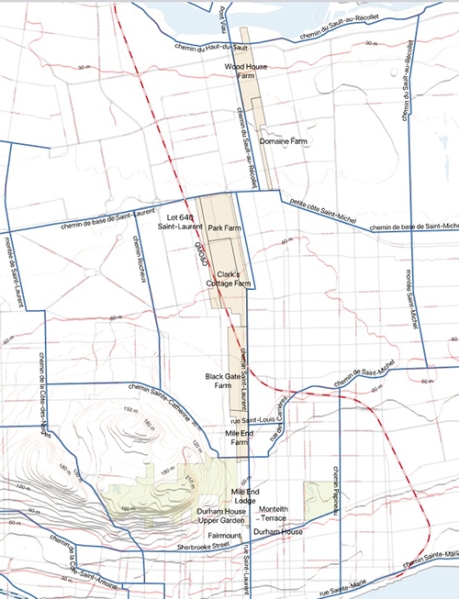
The estate at the heart of these problems was that of the late Stanley Clark Bagg (1820-1873), or SCB. He had owned extensive properties on the Island of Montreal. Several adjacent farms, including Mile End Farm and Clark Cottage Farm, stretched from around Sherbrooke Street, along the west side of Saint Lawrence Street (now Saint-Laurent Boulevard), while three other farms extended along the old country road, north to the Rivière des Prairies. SCB had inherited most of this land from his grandfather John Clark (1767-1827).  Although he trained as a notary, SCB did not practise this profession for long, but made a living renting and selling these and other smaller properties.  

This map shows the extent of the late Stanley Clark Bagg’s properties, shaded in beige, in 1875, when an inventory was made of his estate. These properties are overlaid over a modern map of the island of Montreal. At that time, the actual city of Montreal was south of Sherbrooke Street, extending down to the banks of the Saint Lawrence River. The slope of Mount Royal is just west of the SCB estate. Map created by Justin Bur, based on two open data sources: physical geography from CanVec, Natural Resources Canada and modern streets from Geobase, City of Montreal.

At age 52, SCB suddenly died of typhoid. In his will, written in 1866, he named his wife, Catharine Mitcheson Bagg (1822-1914), as the main beneficiary of his estate, to use and enjoy for her lifetime, and then pass it on to their descendants. He also made her an executor, along with his son Robert Stanley Bagg (RSB, 1848-1912). There were two other executors: Montreal notary J.E.O. Labadie and his wife’s brother, Philadelphia lawyer McGregor J. Mitcheson.

But SCB’s estate was large and complicated, and no one was prepared to handle it. RSB had recently graduated in law from McGill and was continuing his studies in Europe at the time of his father’s death. As for Catharine, she became involved in decisions regarding property sales over the years, but she must have felt overwhelmed at first.

Notary J.A. Labadie spent two years doing an inventory of all of SCB’s properties, listing where they were located, their boundaries, and when and from whom they had been acquired, but he did not mention two key documents. One of these was the marriage contract between SCB’s parents, the other was John Clark’s will.

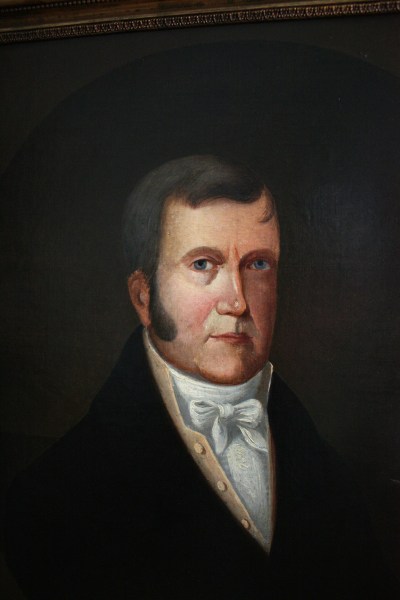
John Clark, a butcher, was born in County Durham, England and came to Montreal around 1797. Bagg family collection.

In the marriage contract, John Clark gave a wedding present to his daughter, Mary Ann Clark (1795-1835), and her husband, Stanley Bagg (1788-1853): a stone house and about 22 acres of land on Saint Lawrence Street. Clark named the property Durham House. But it was not a straight donation; it was a substitution, similar to a trust, to benefit three generations: Mary Ann’s and Stanley’s child (SCB), grandchildren (RSB and his four sisters) and the great-grandchildren. Each intervening generation was to have the use and income from the property, and was responsible for transmitting it to the next generation. That meant SCB could not bequeath it in his will because his children automatically gained possession, and so on, with the final recipients being the great-grandchildren.

In his 1825 will, Clark had made an even more restrictive condition regarding the Mile End Farm. This time the substitution was intended to be perpetual “unto the said Mary Ann Clark and unto her said heirs, issue of her said marriage and to their lawful heirs entailed forever.”

Perhaps Clark imposed these conditions on his descendants for sentimental reasons. Durham House was his daughter’s family home, and Stanley Bagg had probably courted Mary Ann on the Mile End Farm while he was running a tavern there with his father. Or maybe Clark simply believed that these provisions would give the best financial protection to his future descendants. SCB must have thought this was a good idea because his will also included a substitution of three generations.

Clark and SCB did not foresee, however, that the laws regarding inheritances would change. In fact, the provincial government changed the law regarding substitutions a few months after SCB wrote his will. This new law limited substitutions to two generations. Meanwhile, when SCB died in 1873, no one seems to have remembered that the substituted legacies Clark had created even existed. 

Stanley Clark Bagg, Montreal, QC, 1863, William Notman, McCord Stewart Museum #1-5660.1

Real estate sales practices also changed over the years. Clark had written a codicil specifying that any lot sales from the Mile End Lodge property, where he and his wife lived and which he left to her, were subject to a rente constituée. The buyer paid the vendor an amount once a year (usually 6% of the redemption value), but it was like a mortgage that could never be paid off. In the early 1800s this had been a common practice in Quebec, designed to provide funds to the seller’s family members for several generations.

SCB similarly stipulated that nothing on the Durham House property could be sold outright, but only by rente constituée. By the time he died, some of the properties located near the city outskirts were becoming attractive to speculators and to people wanting to build houses or businesses, but the inconvenience of a rente constituée was discouraging sales. It became clear that the executors had to resolve the issue.

They asked the provincial legislature to pass a special law. On February 23, 1875, the legislature assented to “An Act to authorize the Executors of the will of Stanley C. Bagg, Esq., late of the City of Montreal, to sell, exchange, alienate and convey certain Real Estate, charged with substitution in said will, and to invest the proceeds thereof.” (According to the Quebec Official Gazette, this was one of about 100 acts that received royal assent that day after having been passed in the legislative session to incorporate various companies and organizations, approve personal name changes, amend articles in the municipal and civil codes, etc.)

This act allowed the executors of the SCB estate, after obtaining authorization from a judge of the superior court, and in consultation with the curator to the substitution, to sell land outright, provided that the proceeds were reinvested in real estate or mortgages for the benefit of the estate. In other words, the rente constituée was no longer required, and sales previously made by the estate were considered valid.

No more changes were made until 1889, when family members realized that part of SCB’s property actually belonged to his children, and not to his estate, and a family dispute erupted. The story of how they resolved this issue and remained on good terms will be posted soon.

This article is also posted on my personal family history blog, http://www.writinguptheancestors.ca

Notes and Sources:

I could not have written this article without the help of urban historian Justin Bur. Justin has done a great deal of historical research on the Mile End neighbourhood of Montreal (around Saint-Laurent Blvd. and Mount Royal Ave.) and is a longtime member of the Mile End Memories/Memoire du Mile-End community history group (http://memoire.mile-end.qc.ca/en/). He is one of the authors of Dictionnaire historique du Plateau Mont-Royal (Montreal, Éditions Écosociété, 2017), along with Yves Desjardins, Jean-Claude Robert, Bernard Vallée and Joshua Wolfe. His most recent article about the Bagg family is La famille Bagg et le Mile End, published in Bulletin de la Société d’histoire du Plateau-Mont-Royal, Vol. 18, no. 3, Automne 2023.

Documents referenced:

Mile End Tavern lease, Jonathan Abraham Gray, n.p. no 2874, 17 October 1810

Marriage contract between Stanley Bagg and Mary Ann Clark, N.B. Doucet, n.p. no 6489, 5 August 1819/ reg. Montreal (Ouest) 66032

John Clark will, Henry Griffin, n.p. no 5989, 29 August 1825

Stanley Clark Bagg will, J.A. Labadie, n.p. no 15635, 7 July 1866

Stanley Clark Bagg inventory, J.A. Labadie, n.p. no 16733, 7 June 1875

Quebec legislation: 38 Vict. cap. XCIV, assented to 23 February 1875

See also:

Janice Hamilton, “Stanley Clark Bagg’s Early Years,” Writing Up the Ancestors, Jan. 8, 2020, https://www.writinguptheancestors.ca/2020/01/stanley-clark-baggs-early-years.html

Janice Hamilton, “John Clark, 19th Century Real Estate Visionary,” Writing Up the Ancestors,   May 22, 2019, https://www.writinguptheancestors.ca/2019/05/john-clark-19th-century-real-estate.html

John Clark, 19th Century Real Estate Visionary

Clark Street in Montreal’s Mile End neighbourhood features two-storey row houses, most of them red brick or grey stone, set back a few feet from the sidewalk. Two hundred years ago, this now densely populated street was just a gleam in the eye of my four-times great-grandfather John Clark (1767-1827), who owned that land. Today, Clark Street looks remarkably similar to the way he envisioned it.

John must have foreseen that his farmland would someday get swallowed up by the expanding city. He wanted to see it developed properly, and he wanted his descendants to profit from it. Thus, he carefully outlined his development vision in his last will and testament.

A native of County Durham in northeast England, John Clark1 immigrated to Montreal with his wife, Mary Mitcheson, and their young daughter around 1797, and he became a butcher and an inspector of beef and pork.

He probably had a nest egg of cash because he soon bought property here. In 1799, he purchased a property on Montreal’s La Gauchetière Street. Perhaps the Clark family lived there. When he sold it 11 years later, the deeds showed it to be a double lot including two houses and several other buildings..2

Between 1804 and 1814, John purchased several neighbouring farms north of the city limits of Montreal.3 He purchased these properties from French Canadian farmers, then named them Mile End Farm, Blackgate Farm and Clark Cottage Farm.  The land, including several houses, barns, stables and outbuildings, was on the west side of Saint Lawrence Street, now known as Saint-Laurent Boulevard and one of the city’s major arteries. At the time, this was the main road to the countryside, leading past the eastern flank of Mount Royal to the Rivière des Prairies on the north side of Montreal Island.

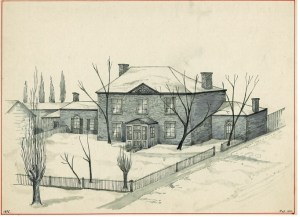
Mile End Lodge

The area was rural, consisting primarily of fields of wheat, oats and peas, as well as pastureland, fruit orchards and woodlots. Both John and Mary had grown up in rural England, so they preferred to live in the countryside rather than in the crowded city. The Clarks’ grey stone house, called Mile End Lodge, was built around 1815 on Saint Lawrence Street, between what are now Bagg and Duluth streets. They had few neighbours: most Montrealers, especially recent immigrants from Britain like them, lived in town.

Land ownership was important. It conferred social status, it carried the right to vote, and land was a financial tool, commonly used as security for loans. I do not know for sure why John purchased so much land, but even in the short term, it was a smart decision: the soil was fertile and the area was close to the city, where there was a growing demand for meat and produce. John no doubt wanted to graze his own cattle on that land, and to grow timothy hay for them. Meanwhile, in 1816, he placed an advertisement in the Montreal Herald saying he was willing to pasture cattle on his property for between eight and 10 shillings per cow.4

John probably collected rental income from these farms. It was not uncommon for members of the city’s elite, and for skilled tradesmen such as John, to purchase land and rent it to local farmers. He went one imaginative step further and, in 1810, leased a two-storey house on the Mile End Farm to father and son Phineas and Stanley Bagg to operate as a tavern.5 The building was located at a major intersection on St. Lawrence Street, so it was in an excellent location for thirsty travellers.

Phineas and Stanley ran the Mile End Tavern until 1818. The following year, Stanley married John’s daughter, Mary Ann. As a wedding present, John gave them a lot on St. Lawrence Street, including a two-storey house he named Durham House, that he had purchased in 1814.6

John may have had an emotional attachment to the Mile End Farm and Durham House, but he certainly saw his land as a long-term investment. The population of Montreal had increased from about 6000 in 1780 to 20,000 in 1820, and he foresaw this area would eventually be developed.

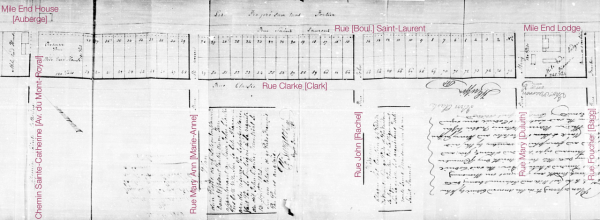
The names of modern streets have been superimposed on this diagram; computer graphics by Justin Bur. Plan for proposed subdivision of a part of Mile End Farm.

In 1825, at age 58, John wrote his will, leaving his properties to Mary Ann and to his young grandson, Stanley Clark Bagg.7 He added a codicil a few months later that included a plan for housing lots on St. Lawrence Street and on the yet to be created Clark Street, one block west. He specified that the lots should be 44 feet wide by 90 feet deep, and that the buildings should be built of stone or brick and set back from the road.8

John’s codicil also specified that the sale of the lots were subject to a rente constituée, meaning that, in addition to the initial cost of the property, the buyer was to pay the vendor an amount every year, usually about 6% of the property’s value. This was a common practice in Quebec, designed to provide funds to the seller’s family members for several generations. However, when Clark Street was finally developed decades after John’s death, buyers were not interested in this old-fashioned practice and the rente constituée was eliminated.9

Meanwhile, most of the property lines and all of the street rights-of-way shown on the plan in John’s will are still in effect today. Also, the specifications for building quality were respected, and similar conditions were imposed by neighbouring landowners.

 See also:

“Mile End Tavern,” Writing Up the Ancestors, Oct. 21, 2013, http://writinguptheancestors.blogspot.com/2013/10/the-mile-end-tavern.html

“A Home Well Lived In”, Writing Up the Ancestors, Jan. 21, 2014, http://writinguptheancestors.blogspot.com/2014/01/a-home-well-lived-in.html

“John Clark, of Durham, England,” Writing Up the Ancestors, May 29, 2014, http://writinguptheancestors.blogspot.com/2014/05/john-clark-of-durham-england.html

“A Freehold Estate in Durham,” Writing Up the Ancestors, May 3, 2019, http://writinguptheancestors.blogspot.com/2019/05/a-freehold-estate-in-durham_92.html

Image Credits:

Mile End Lodge, watercolour by John Hugh Ross, copyright Stewart Museum, 1970, 1847

Codicil to the last will and testament of John Clark, December 1825, BAnQ, CN601 S187.

 Notes and Sources:

  1. John Clark is usually identified as an inspector of beef and pork. There was another John Clark, a master butcher, living in Montreal at the same time. That John Clark made a will in 1804, while my John Clark made a first will in 1810 and a final one in 1825.
  2. Thomas Barron, notarial act #2876, “Deed of sale John Clark to William Scott,” 18 Oct. 1810, BAnQ.
  3. These properties are listed in John Clark’s will, (Henry Griffin, notarial act #5989, “Last Will and Testament of Mr. John Clark of Montreal,” 29 August 1825, BAnQ) and in the inventory of his grandson’s estate (Joseph-Augustin Labadie, notarial act #16733, “Inventory of the Estate of the Late Stanley Clark Bagg Esq.” 7 June, 1875, BAnQ.)
  4. Jennifer L. Waywell, “Farm Leases and Agriculture on the Island of Montreal 1780-1820,” Dept. of History, Faculty of Graduate Studies and Research, McGill University, 1989, p. 88; https://central.bac-lac.gc.ca/.item?id=TC-QMM-59553&op=pdf&app=Library (accessed May 14, 2019)
  5. J.A. Gray, notarial act, “Lease for five years John Clark to Phineas and Stanley Bagg,” 17 Oct. 1810, BAnQ.
  6. Records for lot 110, Saint-Laurent Ward, Montreal, p. 395, Registre foncier du Québec online database.
  7. Henry Griffin, notarial act #5989, “Last Will and Testament of Mr. John Clark of Montreal,” 29 August 1825, BAnQ
  8. Clark Street as laid out in the plan attached to John’s codicil ran from just south of the city limits (Bagg St. near Duluth) to Saint Catherine Road (now Mont-Royal Ave). Clark Street was developed in segments throughout the 19th and 20th centuries, with the first part, around Mile End Lodge, subdivided in 1873. In the early days, a section of Clark Street was called Mitcheson Street (Mitcheson was John’s wife’s name), but by 1912, it became Clark Street along its length.
  1. The rente constituéewas often used in France, England and French Canada. In those days, there was no modern money-lending system, so people could rent land for an annual sum. The borrower/purchaser could redeem the rent, however, the capital value of the property was not reduced by previous rent payments. John Clark and his grandson Stanley Clark Bagg complicated things by using testamentary substitutes to require that their real estate be subject to such arrangements far into the future. Their wills specified that the actual beneficiary was three generations down, while the intervening generations were responsible for keeping the estate in good shape for their children. When the Bagg and Clark properties were subdivided in the late 19th century, the Quebec legislature passed an act to end the substitution.

Further Reading:

Justin Bur, Yves Desjardins, Jean-Claude Robert, Bernard Vallee and Joshua Wolfe, Dictionnaire Historique du Plateau Mont-Royal, Montreal, Les Éditions Écosociété, 2017.

Yves Dejardins, Histoire du Mile End, Québec: Les éditions du Septentrion, 2017.

Justin Bur, “À la recherché du cheval perdu de Stanley Bagg, et des origins du Mile End,” Joanne Burgess et al, Collecting Knowledge: New Dialogues on McCord Museum Collections, Montreal: Éditions MultiMondes, 2015.

Sherry Olson and Patricia Thornton, Peopling the North American City, Montreal 1840-1900. Montreal: McGill-Queens University Press, 2011.

Alan M. Stewart, “Settling an 18th-Century Faubourg: Property and Family in the Saint-Laurent Suburb, 1735-1810,” Dept. of History, Faculty of Graduate Studies and Research, McGill University, 1988, http://digitool.Library.McGill.CA:80/R/-?func=dbin-jump-full&object_id=64109&silo_library=GEN01 (accessed May 20, 2019).

This article is also posted on https://writinguptheancestors.blogspot.com