Tag Archives: Stanley Bagg

John Clark of Durham, England

revised and condensed

According to family lore, my four-time great-grandfather John Clark (1767-1827) was a butcher who came to Canada from County Durham, in northeast England, with his wife and young child around 1797. A search of the baptismal records of Durham for the mid-1700s brought up more than a dozen men named John Clark. Which one was mine?

Fortunately, about 100 years ago another descendant left a note in the family records: “John Clark, pork butcher, 9-6-1767.” I checked the parish records again, and there it was: John Clark, of Wingate Grange, was baptized at Kelloe parish church, County Durham, on 9 June, 1767.

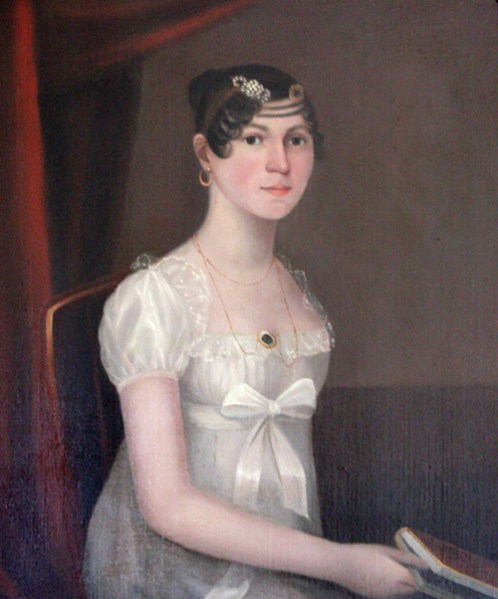
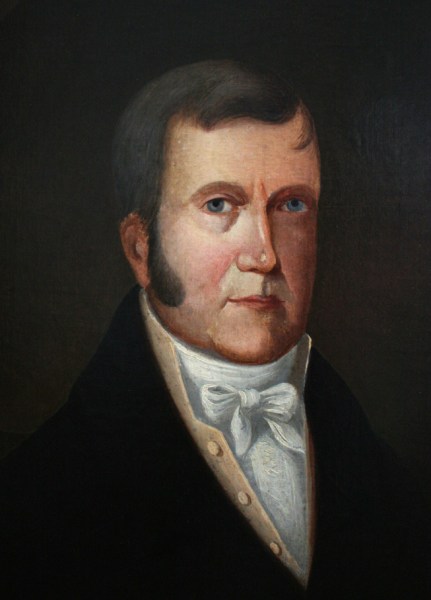
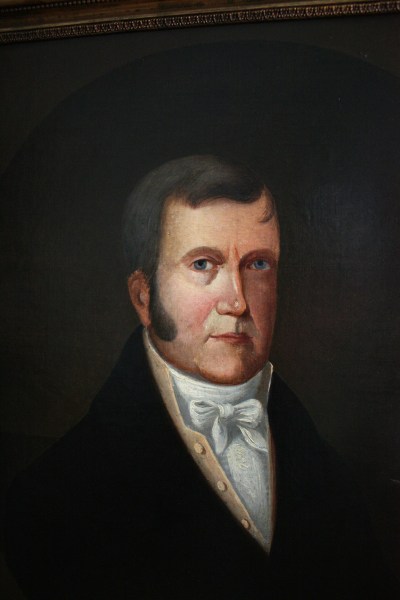
Portrait of John Clark, private collection. It may have been painted after his death from a miniature by Sir Martin Archer Shee RA, (1769-1850).

County Durham was later known for its coal mines, but when John Clark was born, the region was mostly farmland, and Wingate Grange was a rented farm, located several miles south of the city. A rental noticepublished in the Newcastle Courant in late 1777 described Wingate Grange Farm as being “526 acres and tithe free, within six miles of Durham, well watered and enclosed; a draw kiln lies contiguous and limestone upon the premises; there are two very good farm houses, four barns and all other necessary buildings.”

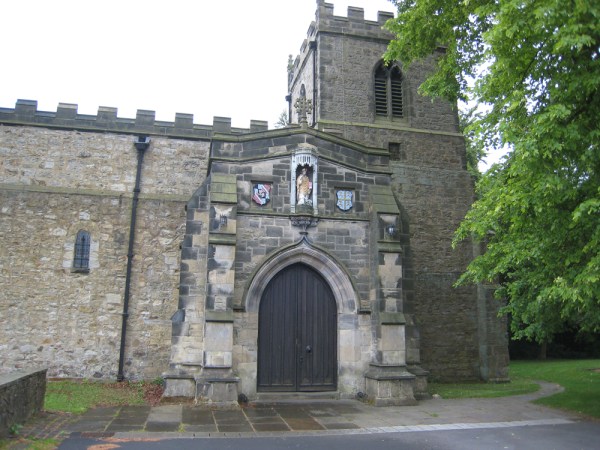
John was the eleventh of the twelve children born to Ralph Clark and his wife Margaret Pearson. Ralph Clark was born in rural Kirk Merrington Parish, County Durham in 1721 and Margaret Pearson was baptized in 1725, also in Kirk Merrington.1 Ralph and Margaret were married on May 8, 1746 in Kirk Merrington2 and their first child was born a year later. The family probably rented Wingate Grange around 1763, and the three youngest were baptized at St. Helen Church, Kelloe Parish.  

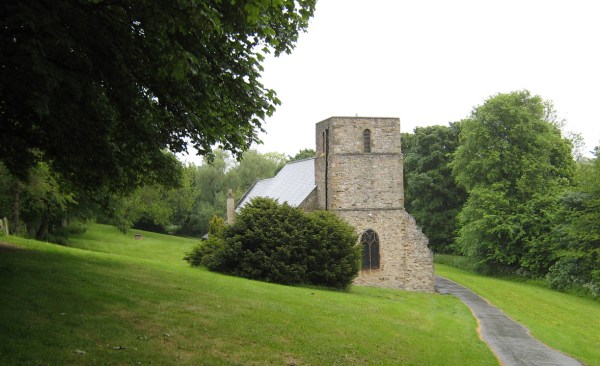
St. Helen Church, Kelloe Parish. JH photo.

When John was just eight years of age, his mother died. His father wrote his will the following year and died in November, 1776.3 Knowing that his children would be orphaned, Ralph was clearly concerned about their prospects, and in his will he gave his cousin Robert Dent, of Morden Red House in Sedgefield parish, some financial control over the bequests left to the younger children.

Ralph realized that each of his children had different needs, so he varied his bequests to them. He also ensured that not just his sons, but also his daughters, received inheritances.4

Daughters Letitia and Elizabeth were already married when their father died. Letitia (also known as Lettice, and married to butcher Richard Jefferson,) was to receive £15. Ralph seems to have been particularly concerned about Elizabeth. He left her £40 in trust, and her husband “shall have no power or control whatsoever and shall in no wise be liable to the payment of his debts or otherwise.”

Son Thomas was left £20 and a horse. Anne was to have £40 and a third of Ralph’s household goods when she reached 21. Ralph jr. and Edward would each get £60 when they reached 21. Lancelot, the youngest child, was to receive £90 when he turned 21. Ralph appointed William, Mary and Margaret as joint executors and residuary legatees. John was to receive £70 when he turned 21 – about £8500 in today’s money.

I do not know where John lived after his parents died. Perhaps he stayed with his sister Letitia, and perhaps it was her husband who trained John to become a butcher.

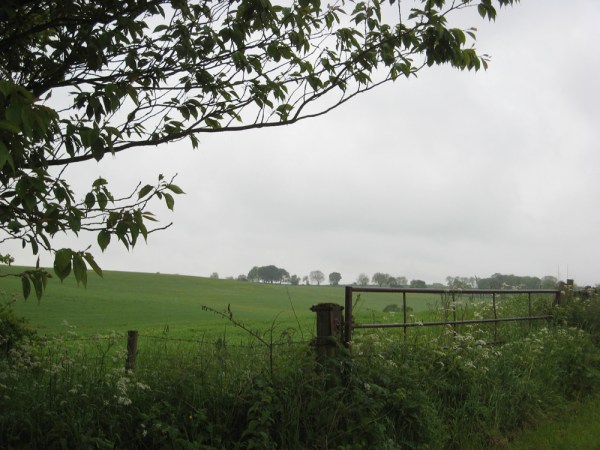
Fields of Wingate Grange Farm. JH photo.

In 1785, John Robson Clerk married Eleanor House.5 If this was my John, he would have been just 18 years old. This marriage had been left out of the family stories until I found The Marriage Bonds and Allegations document associated with John’s second marriage.6 This document stated that John was a widower when he married Mary Mitchinson in 1794. I know nothing about Eleanor, including where or when she died. 

John’s second marriage took place on June 10, 1794, at St. Giles parish church, on a hill above the Wear River. Mary Mitchinson, or Mitcheson, (1776-1856), was my eventual ancestor and the daughter of Joseph Mitcheson (1746-1821) and Margaret Philipson (1756-1821).7 The fact that John and Mary were not married at Whickham parish church, where she had been baptized and her parents were later buried, suggests that perhaps her parents did not approve of the marriage.

St. Giles Parish Church, where John Clark and Mary Mitcheson were married. JH photo.

The following year, Mary gave birth to a daughter, Mary Ann Clark, and around 1797 the family boarded a ship, bound for a new life in Montreal, Canada.

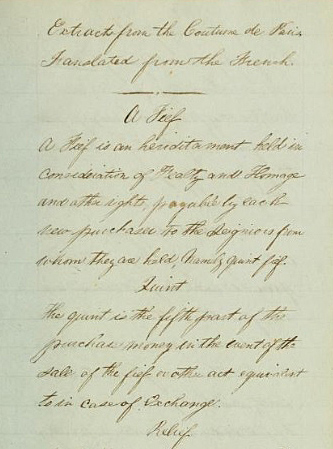
A Freehold Estate in Durham

According to another family legend, John owned a freehold estate near the cathedral in Durham. I imagined a large house surrounded by shady old trees. This was a misunderstanding on my part: the term freehold estate simply refers to a property, or real estate, that is “free from hold” of any entity besides the owner. I also imagined that Clark lived on his own land. When he married Mary, he lived in St. Giles parish, a largely agricultural suburb of the city of Durham, however, I found no evidence that he owned property there.

Furthermore, if he owned land in England, why would he want to go to Canada? I began to wonder whether John Clark owned property in England at all.

John Clark’s will, written in Montreal in 1825, settled the question. It stated, “The said testator doth will, bequeath and devise unto his said daughter Mary Ann, her heirs and assigns, the whole of his real estate of all and every nature and description soever, situated and being in the city or town of Durham or in the neighbourhood thereof in England.”8 In other words, Clark did own property in Durham, but his will gave no clue as to its use or location.

Over the years, I hired several professional researchers in Durham to search collections such as land tax records, deeds, enclosure records and tithe applotment records at the archives in Durham, and they added small pieces to the puzzle. Finally, after many years of looking at this question off and on, it became clear that the exact nature and location of this freehold estate will likely remain a mystery, however, Clark’s property may have been located in the heart of the city.

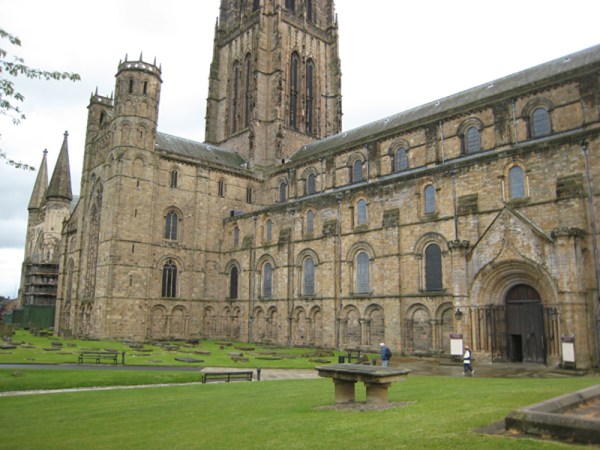
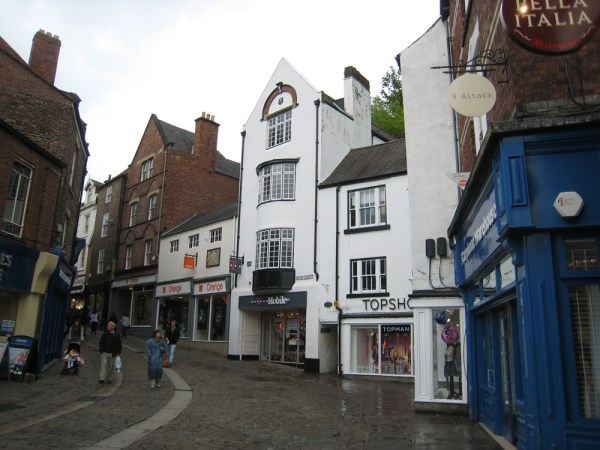
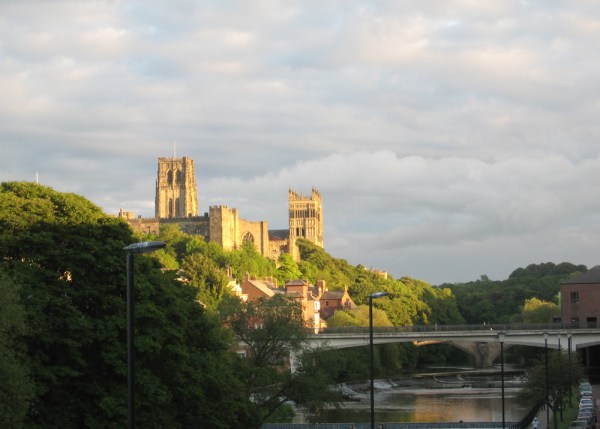
Durham is a very old city built on a peninsula surrounded by the meandering River Wear. Several bridges cross the river, leading to the market square, and from there, Sadler Street goes up a hill to Durham Cathedral and Durham University. At one time, Sadler Street was also known as Fleshergate and butchers had their shops there.

Sadler Street, Durham, England. JH photo

An old Durham city deed notes that a man named John Clark was an occupant of the building at no. 5 Sadler Street until 1796,9 which was shortly before my ancestor left for Canada. He was probably renting or subletting, since his name is not listed among the main parties to the deeds.

When Clark died in 1827, he left his Durham property to his daughter, Mary Ann. Her husband, Montreal merchant Stanley Bagg, was executor of the will. Clark also left 13 bequests of 50 pounds each to several of his brothers and sisters in England, and to several of his wife’s relatives.

In 1829, Mary Ann decided to sell the property in Durham.10 It was probably difficult to manage the property from across the Atlantic, and she could use the proceeds to pay these bequests. William Mitcheson, John Clark’s brother-in-law who was an anchor maker in London, was appointed an executor of Clark’s will in England, however, I was unable to find proof of Clark’s will being probated in England.

It is clear, however, that the family sold some property in Durham in 1842. Mary Ann had died in 1835, leaving it to her son, Stanley Clark Bagg (SCB), who was then a minor. Stanley Bagg was the executor of her estate until SCB turned 21 in 1841.

Durham Cathedral at sunset. JH photo

The following summer, Stanley and SCB travelled to Durham and sold the remaining property. On their return, Stanley recorded the names of the three buyers in a notarized document in which he admitted he had used some of the rental income from the Durham properties for his own purposes. He arranged to repay his son and listed the names of three people who purchased the properties, as well as the name of a Mr. “Bromwell” who had collected the rents. The name “Bramwell” was listed in the document regarding no. 5 Sadler Street at the Durham University archives.

Several questions remain: how extensive was Clark’s property? Did the properties SCB sold in 1842 represent all of Clark’s English real estate? And how and when did Clark acquire it in the first place? His father left him 70 pounds when he was a child, so perhaps someone helped him invest it wisely.

Later in life, John Clark proved to be a successful butcher and an astute businessman who supplied meat to the British army and invested in properties near Montreal.

Notes:

This article has been revised and condensed from four articles previously posted on my personal family history blog Writing Up the Ancestors: John Clark of Durham, England, May 30, 2014; A Freehold Estate in Durham, May 4, 2019; Ralph Clark’s 1776 Will, April 17, 2019; A Trip to England in 1842, Feb. 7, 2020 (also posted on Genealogy Ensemble)

Special thanks to Margaret Hedley, Past Uncovered, for research in County Durham, 2018-2019, and to Geoff Nicholson, a highly respected genealogist in the area. We corresponded for several years, and in 2009 he took my husband and me on a tour of the area. Geoff died in 2021.

Recently a Clark descendant who lives in New Zealand, contacted me to say that he has researched two more generations of the Clark family, bringing their tree back to the mid-1600s. He has posted the Clark family tree on MyHeritage.com and the Kane-Wilson and Hurworth-Hirst public member’s tree on Ancestry.

When I first did this research, I found the record of John Clark’s birth at St. Helen Church, Kelloe parish, Easington, in the Northumberland and Durham Baptisms on Findmypast.com. Find My Past is a good source for County Durham records. Another good place to search for obscure County Durham records is Durham Records Online, www.durhamrecordsonline.com. The Northumberland and Durham Family History Society is an active organization with an extensive website and helpful members. See https://ndfhs.org.uk/. The Story (formerly The County Durham Record Office) has a variety of historical resources; see  https://www.thestorydurham.org/.

The note about John Clark’s date of birth was made by his great-grandson Rev. Sydenham Bagg Lindsay (1887-1975) of Montreal. I found it in the Bagg family bible at the McCord Stewart Museum in Montreal around 2010.

Marriage of Johannes Dent to Elizabetha Clark in Sedgefield in 1721: “England Marriages, 1538–1973,” database, FamilySearch(https://familysearch.org/ark:/61903/1:1:NLZY-9MB : viewed 10 February 2018, Johannes Dent and Elizabetha Clark, 16 May 1721; citing Sedgefield, Durham, England; index based upon data collected by the Genealogical Society of Utah, Salt Lake City; FHL microfilm 91,112.

In 2012, I found a record of the marriage of John Robson Clerk and Eleanor House in Kelloe parish in the Bishop’s Transcripts on familysearch.org. The link – www.familysearch.org/pal:/MM9.1.1/NKXW-BHM — still leads to a record of the marriage, but the image is no longer available. The Bishops Transcripts were copies, made annually, of the original parish records. John did not usually use his middle name, but he is remembered as John R. Clark on a plaque in the Bagg family mausoleum in Montreal, Canada

Prior to most marriages in England, banns were read and people could express their opposition to the union. Couples could bypass this step by paying a fee for a marriage license. A marriage allegation is a sworn statement in connection with the license application, in which the couple state there is no known reason for the marriage not to take place. The Durham Diocese, England, Calendar of Marriage Bonds and Allegations, 1494-1815, can be found on Ancestry, while familysearch.org has the records for the years 1692-1900.  CHECK

I have written a number of articles about the Mitcheson family in Durham, Montreal, London and Philadelphia, searchable on my personal family history blog Writing Up the Ancestors (www.writinguptheancestors.ca), and will copy them to Genealogy Ensemble in the near future.

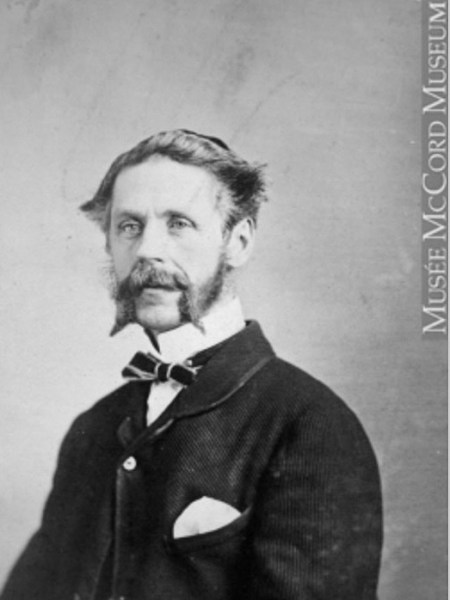
There are several clues that father and son visited Durham. In 1866, John Clark’s grandson, Stanley Clark Bagg, wrote an article called “The Antiquities & Legends of Durham, a lecture before Numismatic & Antiquarian Society of Montreal” in which he recalled his own visit to the cathedral with his father more than 20 years earlier. There is a record in a passenger list of Stanley Bagg and S.C. Bagg travelling from Liverpool to Boston aboard the Acadia. Boston Courier (Boston, Massachusetts, Monday, Sept. 19, 1842, issue 1921;) 19th Century Newspapers Collection, special interest databases, http://www.americanancestors.org; accessed 18/04/2019. A search for Mary Ann Bagg in the Durham University Archives online catalogue brings up a result in the Durham Cathedral Library: J.H. Howe Collection. It cites Montreal parish records showing how John Clark was related to Stanley Clark Bagg, and includes an affidavit from Montreal notary Henry Griffin and a note from Charles Bagot, Governor General of British North America, verifying the information. Reference: JJH 11 Dates of creation: 1842 JJH 11/1, 27 April & 9 May 1842. Similarly, there is a note appended to Clark’s will, dated 13 May, 1842, from Charles Bagot, certifying the information; attached to records for lot 110, Saint-Laurent Ward, Montreal, p. 395, Registre foncier du Québec online database. 

Revised Sources

1 “England Births and Christenings, 1538-1975,” database, FamilySearch (https://familysearch.org/ark:/61903/1:1:NBC9-BQD : accessed 11 February 2018), Margret Pearson, 31 Oct 1725; index based upon data collected by the Genealogical Society of Utah, Salt Lake City; FHL microfilm 91,097, 94,097.

2. The Church of Jesus Christ of Latter-day Saints, “International Genealogical Index (IGI),” database, FamilySearch (https://familysearch.org/ark:/61903/2:1:MDK6-CRN : accessed 15 April 2019), entry for Ralph Clark, batch A23286-7; citing FHL microfilm 455,471. This marriage is also included in Boyd’s Marriage Index, 1538-1840, Findmypast.com

3. Burials, Stockton District, record # 573795 2, St. Edmund the Bishop Church, Sedgefield, 8 Nov. 1776, Ralph Clerk {Clark] of Wingate Grange in the Parish of Kelloe.

4. Will of Ralph Clark, Oct. 11, 1776; 1776/C8/2, University of Durham Special Collections Department.

5. Marriage of John Robson Clerk and Eleanor House “England Marriages, 1538–1973”, FamilySearch https://www.familysearch.org/ark:/61903/1:1:NKXW-BHM, Entry for John Robson Clerk and Eleanor House, 10 July 1785.

6. England, Durham Diocese, Marriage Bonds & Allegations, 1692-1900, database with images, FamilySearch (https://familysearch.org/ark:/61903/1:1:Q21P-XMQK : accessed 29 July 2017), John Clark and Mary Mitchinson, 07 Jun 1794; citing Marriage, Durham, England, United Kingdom, Church of England. Durham University Library, Palace Green; FHL microfilm.

7 “England, Births and Christenings, 1538-1975”, database, FamilySearch (https://www.familysearch.org/ark:/61903/1:1:N5D4-DGM : 5 February 2023), Joseph Mitchinson in entry for Mary Mitchinson, 1776.

8. “Last Will and Testament of Mr. John Clark of Montreal,” Act of notary Henry Griffin, #5989, 29 Aug. 1825, Bibliothèque et Archives nationales du Québec, p. 9.

9. Durham University Library, Special Collections Catalogue, http://reed.dur.ac.uk/xtf/search, results for John Clark, Durham City Deeds, Bundle 22, Sadler Street alias Fleshergate, 5 Sadler Street, east side, Reference: DCY 23/1-34, Dates of creation: 1776-1856. The entry says, “These premises were described as a burgage [land or property in a town that was held in return for service or annual rent] and shop, with appurtenances, almost throughout. In 1856 it was called a freehold dwellinghouse and shop….The occupants of the property included, initially, John Clark, by 1796 one Haswell ….”

10. Annex attached to John Clark’s Last Will and Testament, by notary Henry Griffin, 10 Nov. 1829 and attached to records for lot 110, Saint-Laurent Ward, Montreal, p. 391, Registre foncier du Québec online database.

Mile End Farm: the Origins of a Neighbourhood

with additional research by Justin Bur

The Mile End neighbourhood of Montreal is famous as the home of Montreal bagels and of novelist Mordecai Richler. Its iconic architecture features outside staircases attached to two- and three-storey rowhouses, next door to churches, synagogues, shops, cafés and renovated manufacturing buildings. But Mile End’s history goes back to one small tavern at a crossroads in the countryside more than 200 years ago.

The Mile End Tavern was located at today’s northwest corner of Saint Laurent Boulevard and Mount Royal Avenue,1 now the starting point of the Mile End neighbourhood. In turn, Mile End is on the Plateau, an elevated plain lying north of Sherbrooke Street and east of Mount Royal.

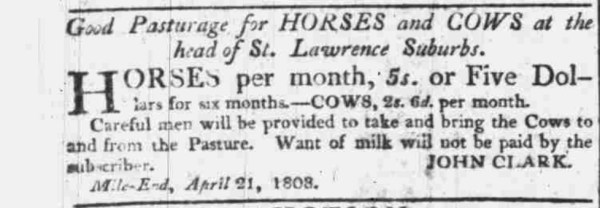
The first known reference to Mile End was dated April 21, 1808, when landowner John Clark placed a notice in the Gazette advertising Mile End Farm as providing “good pasture for horses and cows at the head of the Faubourg [suburb] Saint-Laurent.”

Screenshot

Clark (1767-1827), an English-born butcher, acquired the land he would call Mile End Farm in several transactions, including purchase agreements and leases, between 1804 and 1810.2 Like most farms in Quebec, it was long and narrow. At its greatest extent in 1810, it measured 2.5 kilometers from south to north, and between 400 and 550 meters wide. Clark was almost certainly the one who chose the name Mile End. The centre of his property was about a mile north of the small city of Montreal, and the area might have reminded him of another Mile End, a mile east of London, England. The name caught on and has been in use ever since.

John Clark, a butcher from Durham, England, settled in Montreal around 1797. Portrait in a private collection.

When Montreal was founded in 1642, Mile End was probably uninhabited. The ground was too rocky for settlements or agriculture, and few Indigenous artefacts have been found there. The northeastern region of the Island of Montreal was covered by a vast cedar forest. The heart of Mile End was also forested, but there, both cedar and ash trees were the dominant species. This forest was still intact when the Sulpician priests mapped the area in 1702, but as the city’s population grew — it stood at around 1,200 residents in 1700 – more and more trees were cut to provide firewood.   

By 1780, most trees had disappeared from the foot of the mountain, replaced by houses, farm buildings, hay fields and pastures. In the Mile End area, livestock pastures, vegetable crops, tanneries and quarries dominated the countryside, and orchards were planted in the mid-1800s.

In 1663, the Sulpician priests became the seigneurs, or feudal lords, of the entire island. In 1701, the Hôpital Général acquired an extensive piece of land from the Sulpicians in the future Mile End area, and the Grey Nuns took over the hospital and all its lands in 1747. In 1803, the nuns sold the piece of land that would become Mile End Farm to two masons, Jean-Baptiste Boutonne and Joseph Chevalier. They wanted to quarry its stone and sand for building materials.

The masons had to pay the Grey Nuns a rente constituée (annual interest), as well as yearly seigneurial dues to the Sulpicians. So when John Clark bought the property – the first part of his Mile End Farm — in 18044 and gave Boutonne and Chevalier the right to continue collecting building materials for seven years after the sale, they must have been relieved. Meanwhile, Clark found another use for the land, first advertising pasture for other peoples’ cows in 1808.

When the same ad for livestock pasturing at Mile End Farm appeared the following year, it was placed by Phineas Bagg (c.1751-1823) and his son Stanley Bagg (1788-1853), my four-times and three-times great-grandfathers. A farmer from western Massachusetts, Phineas had brought his family to Canada around 1795. Initially he worked as an innkeeper in LaPrairie, near Montreal, and then the family moved onto the island. In 1810, Phineas and Stanley signed a lease with John Clark.5 Paying an annual rent of 112 pounds, 10 shillings, they ran the Mile End Tavern and managed the farm for the next seven years before subletting to another innkeeper.

description below.

The lease described the property as having a two-storey house (which at some point must have been converted into the tavern), a barn, stable and outbuildings. The Baggs were required to sufficiently manure the pastures and arable land, to cultivate and to perform road maintenance and other required duties. They were permitted to cut wood for fencing and firewood, but they had to preserve the maple grove. They were also permitted to cut and remove stone.

No doubt the tavern brought them a good income since it was located at an important, if somewhat remote, intersection. Stanley must have attracted many additional customers after he built a racetrack nearby. In May 1811, he signed an agreement with the Jockey Club of Montreal, subletting a piece of land to the club and promising to build the track within five weeks. The club supervised the races. The track, partially on land leased from the Sisters of the Hôtel-Dieu, was about a mile in circumference and what is now Jeanne Mance Park, extending east to Saint-Laurent. It was most likely the first racetrack in Montreal.6

Another reference to Mile End appeared in the Gazette on August 4, 1815 when Stanley Bagg, Mile End Tavern, placed a notice offering a reward for information about a lost bay horse, about 10 years old, with a white face and some white about the feet.7

In 1819, Stanley married John Clark’s daughter, Mary Ann (John Clark was also my four-times great-grandfather). Their son, Stanley Clark Bagg (1820-1873), eventually inherited the Mile End Farm, as well as other properties Clark had owned nearby.

In the second half of the 19th century, Stanley Clark Bagg began subdividing and selling the properties he had inherited from his father and grandfather. He died in 1873 and the next generation of the family continued to sell building lots from the Stanley Clark Bagg Estate.

In 1891, they sold most of the Mile End Farm property to McCuaig and Mainwaring, a pair of promoters from Toronto who envisioned a high-end residential suburb they called Montreal Annex.8 The project got off to a slow start because basic services such as water, sewers and streetlights were nonexistent and a promised electric tramway did not materialize in time. A recession that started in 1893 put an end to their dreams. A few years later another group of investors, the Montreal Investment & Freehold Company, took over the property and the area developed as a mixture of duplexes, triplexes and commercial buildings.

Meanwhile, the Mile End Hotel continued to appear in city directories at the corner of Saint- Laurent and Mount Royal until 1900. The property was expropriated for road widening in 1902 and the building was demolished. A department store had replaced it by 1906.

Description of Map: The areas with a greyish tinge are the areas that John Clark held by lease rather than owning them; none of them ever came back to Clark-Bagg possession after the leases ended. The yellow areas are cutouts belonging to and reserved by other people, excluded from the rectangles describing the property leased to P & S Bagg in 1810. Mile End Farm was bounded by the modern Saint-Laurent Blvd. in the east, while the future Park Avenue was just to the west and Pine Ave. would have been the southern boundary. RHSJ refers to the Religieuses Hospitalières de Saint-Joseph de Montréal, a religious order dedicated to caring for the sick.

This article also appears in my personal family history blog, www.writinguptheancestors.ca.

See also:

Janice Hamilton, John Clark, 19th Century Real-Estate Visionary, Writing Up the Ancestors, May 22, 2019, https://www.writinguptheancestors.ca/2019/05/john-clark-19th-century-real-estate.html

Janice Hamilton, The Life and Times of Phineas Bagg, Writing Up the Ancestors, Oct. 17, 2018, https://www.writinguptheancestors.ca/2018/10/the-life-and-times-of-phineas-bagg.html

Janice Hamilton, The Life and Times of Stanley Bagg (1788-1853), Writing Up the Ancestors, Oct. 5, 2016, https://www.writinguptheancestors.ca/2016/10/the-life-and-times-of-stanley-bagg-1788.html

Notes and Sources

1.  Mount Royal Avenue is the continuation of Côte Sainte-Catherine Road, which traverses the northeast slope of Mount Royal and continues east of Saint-Laurent Boulevard. Saint- Laurent, now a busy commercial street, was at one time the only road leading north from city to the Rivière des Prairies, on the north shore of Montreal Island. Built by the Sulpician priests in 1717, Saint Laurent was initially known as Le grand chemin du Roy – the Great King’s Highway. Over the years it has been known by many names, English and French, including Chemin Saint-Laurent, St. Lawrence Street and “the Main”. Since 1905, its official name has been Boulevard Saint-Laurent.

2.  Yves Desjardins, Histoire du Mile End, Québec: Les Ēditions du Septentrion, 2017, p.  22.

3.  Island of Montreal property owners were required to pay dues to the Sulpicians every year until the seigneurial system was gradually abolished there, starting in 1840. The system was abolished in the rest of Quebec in a gradual process starting in 1854.

4.       Louis Chaboillez, n.p. no 6090, 30 May 1804. A reference to the purchase also appears in J.A. Labadie, n.p. no 16733, 7 June 1875. This was the inventory of Stanley Clark Bagg’s Estate. It includes the name of the seller, the date of the sale and the notary who prepared the deed. This part of Mile End Farm is item #264.

5.  Jonathan A. Gray, n.p. no 2874, 17 Oct. 1810.

6.  Justin Bur, Yves Desjardins, Jean-Claude Robert, Bernard Vallée, Joshua Wolfe, Dictionnaire historique du Plateau Mont-Royal (Montreal, Éditions Écosociété, 2017), p 107.

7.  Justin Bur, “À la recherche du cheval perdu de Stanley Bagg, et des origines du Mile End.” A la recherche du savoir: nouveaux échanges sur les collections du Musée McCord; Collecting Knowledge: New Dialogues on McCord Museum Collections. Joanne Burgess, Cynthia Cooper, Celine Widmer, Natasha Zwarich. Montreal: Éditions MultiMondes, 2015, p. 143.

8.  Justin Bur, Yves Desjardins, Jean-Claude Robert, Bernard Vallée, Joshua Wolfe, Dictionnaire historique du Plateau Mont-Royal (Montreal, Éditions Écosociété, 2017), p 271.

Part of the Bagg Family Fonds Now Online

Many people have old family treasures such as letters and albums in the attic. In my family, a collection of 200-year-old business records made their way from the attic to a Montreal museum, and now some them have been digitized and placed online for everyone to explore. Part of the Bagg Family Fonds housed at the McCord Museum, these newly digitized images include records from the store where the workmen who built the Lachine Canal in the early 1820s bought their bread and rum.

The project to digitize these and other documents was financed by Library and Archives Canada to mark the 150th anniversary of Canadian Confederation and Montreal’s 375th anniversary. The McCord Museum in Montreal is posting some 75 000 images from its collection of textual archives to its website (http://collections.musee-mccord.qc.ca/en/keys/collections/).

The website provides an introduction to the Bagg family and to the scope of the Bagg Family Fonds (P70): http://collections.musee-mccord.qc.ca/scripts/explore.php?Lang=1&tableid=18&tablename=fond&elementid=31__true.  At the bottom of this page are links to four sets of digitized documents: the Laprairie Brewery (1821-1832), the workmen’s store in Lachine (1822-1823), a child’s scrapbook and a young woman’s autograph book that probably dates from around the turn of the century.

My three-times great-grandfather Stanley Bagg was one of the four main contractors in charge of building the Lachine Canal in Montreal in the 1820s. He also ran the store that supplied the workers with bread, tea, sugar, pork and occasionally fish, eggs and butter, although rum and beer seem to have been the most popular items. Some pages list the names of the customers, the items they purchased and the prices they were charged.

Other images record cash payments related to the canal construction, including planks, nails, wheelbarrows, hay (probably for the horses), blasting powder and wages for day labourers.

Another set of records is related to the brewery owned by Stanley’s brother, Abner Bagg. The LaPrairie Brewery account books list expenses such as barley, charcoal, transportation costs and wages. Both the store and the brewery records contain many names of suppliers and customers.

Both of these collections provide a window into life in Montreal some 200 years ago. For example, Quebec historian Donald Fyson used these records as a basis for his thesis, “Eating in the city [electronic resource]: diet and provisioning in early nineteenth-century Montreal” Montréal: McGill University, 1989. http://www.collectionscanada.ca/obj/thesescanada/vol1/QMM/TC-QMM-55597.pdf

No one really knows who had the foresight to save these records, or how they ended up at the McCord. According to one of my cousins, these account books were found in the basement of the Redpath Museum at McGill University, but no one knows who put them there in the first place. Clare Fellowes, daughter of Evelyn (Bagg) Davis, gave an additional gift of textual documents to the museum in 2002 and 2003.

Documents in the Bagg Family Fonds that have not been digitized includes copies of letters that Stanley and Abner wrote to each other and to business colleagues, and a ledger belonging to butcher John Clark, Stanley Bagg’s father-in-law. Documents related to another generation of the family date from the final decades of the 19th century when the Baggs were property owners and real estate developers. This includes a ledger showing property sales, and letters between the Bagg siblings as they discussed and sometimes disagreed about business decisions. There are also personal documents such as a list of wedding presents, recipes and several albums of family photos, taken in the early 1900s by my grandmother, Gwendolyn Bagg. More recently, the late Joan Shackell, a descendant of Abner Bagg, donated a number of items related to her line of the family.

Members of the public can visit the archives at the McCord Museum to consult the Bagg Family Fonds and other collections, but they must make an appointment weeks in advance. It is encouraging to see that some of these documents are now available online.

(This article is also posted on http://writinguptheancestors.blogspot.ca)

See also

Janice Hamilton, “Abner Bagg, Black Sheep of the Family?” Writing Up the Ancestors, April 9, 2015, http://writinguptheancestors.blogspot.ca/2015/04/abner-bagg-black-sheep-of-family.html

Janice Hamilton, “Stanley Bagg and the Lachine Canal, Part 2: Rocks and Water,” Writing Up the Ancestors, March 13, 2015, http://writinguptheancestors.blogspot.ca/2015/03/stanley-bagg-and-lachine-canal-part-2.html