
revised and condensed
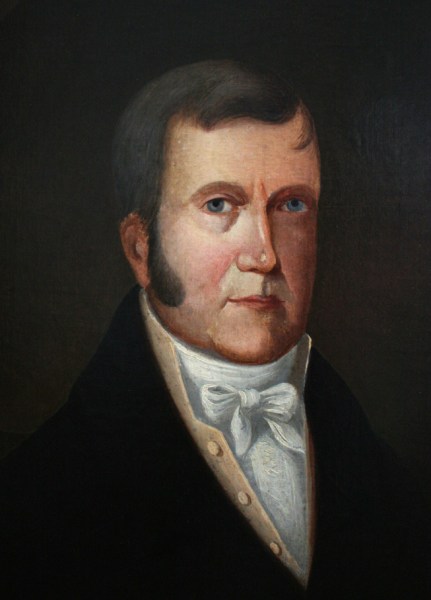
According to family lore, my four-time great-grandfather John Clark (1767-1827) was a butcher who came to Canada from County Durham, in northeast England, with his wife and young child around 1797. A search of the baptismal records of Durham for the mid-1700s brought up more than a dozen men named John Clark. Which one was mine?
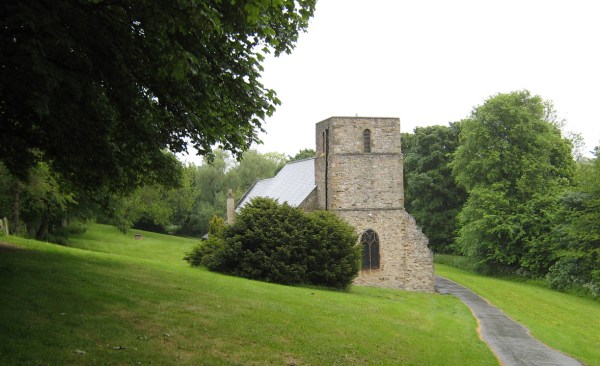
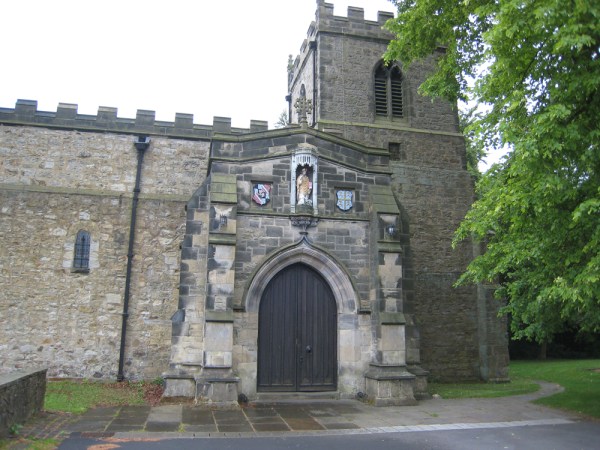
Fortunately, about 100 years ago another descendant left a note in the family records: “John Clark, pork butcher, 9-6-1767.” I checked the parish records again, and there it was: John Clark, of Wingate Grange, was baptized at Kelloe parish church, County Durham, on 9 June, 1767.
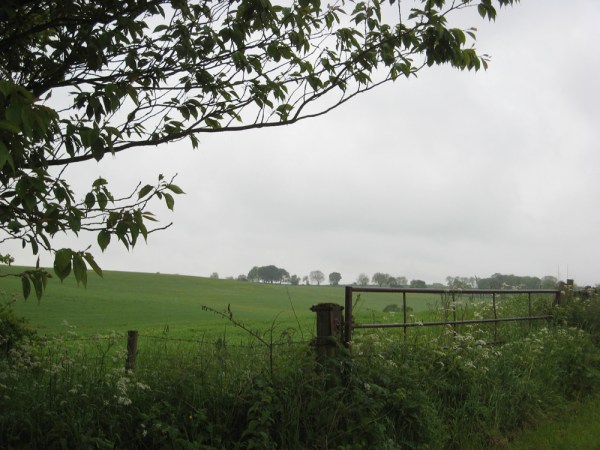
County Durham was later known for its coal mines, but when John Clark was born, the region was mostly farmland, and Wingate Grange was a rented farm, located several miles south of the city. A rental noticepublished in the Newcastle Courant in late 1777 described Wingate Grange Farm as being “526 acres and tithe free, within six miles of Durham, well watered and enclosed; a draw kiln lies contiguous and limestone upon the premises; there are two very good farm houses, four barns and all other necessary buildings.”
John was the eleventh of the twelve children born to Ralph Clark and his wife Margaret Pearson. Ralph Clark was born in rural Kirk Merrington Parish, County Durham in 1721 and Margaret Pearson was baptized in 1725, also in Kirk Merrington.1 Ralph and Margaret were married on May 8, 1746 in Kirk Merrington2 and their first child was born a year later. The family probably rented Wingate Grange around 1763, and the three youngest were baptized at St. Helen Church, Kelloe Parish.
When John was just eight years of age, his mother died. His father wrote his will the following year and died in November, 1776.3 Knowing that his children would be orphaned, Ralph was clearly concerned about their prospects, and in his will he gave his cousin Robert Dent, of Morden Red House in Sedgefield parish, some financial control over the bequests left to the younger children.
Ralph realized that each of his children had different needs, so he varied his bequests to them. He also ensured that not just his sons, but also his daughters, received inheritances.4
Daughters Letitia and Elizabeth were already married when their father died. Letitia (also known as Lettice, and married to butcher Richard Jefferson,) was to receive £15. Ralph seems to have been particularly concerned about Elizabeth. He left her £40 in trust, and her husband “shall have no power or control whatsoever and shall in no wise be liable to the payment of his debts or otherwise.”
Son Thomas was left £20 and a horse. Anne was to have £40 and a third of Ralph’s household goods when she reached 21. Ralph jr. and Edward would each get £60 when they reached 21. Lancelot, the youngest child, was to receive £90 when he turned 21. Ralph appointed William, Mary and Margaret as joint executors and residuary legatees. John was to receive £70 when he turned 21 – about £8500 in today’s money.
I do not know where John lived after his parents died. Perhaps he stayed with his sister Letitia, and perhaps it was her husband who trained John to become a butcher.
In 1785, John Robson Clerk married Eleanor House.5 If this was my John, he would have been just 18 years old. This marriage had been left out of the family stories until I found The Marriage Bonds and Allegations document associated with John’s second marriage.6 This document stated that John was a widower when he married Mary Mitchinson in 1794. I know nothing about Eleanor, including where or when she died.
John’s second marriage took place on June 10, 1794, at St. Giles parish church, on a hill above the Wear River. Mary Mitchinson, or Mitcheson, (1776-1856), was my eventual ancestor and the daughter of Joseph Mitcheson (1746-1821) and Margaret Philipson (1756-1821).7 The fact that John and Mary were not married at Whickham parish church, where she had been baptized and her parents were later buried, suggests that perhaps her parents did not approve of the marriage.
The following year, Mary gave birth to a daughter, Mary Ann Clark, and around 1797 the family boarded a ship, bound for a new life in Montreal, Canada.
A Freehold Estate in Durham
According to another family legend, John owned a freehold estate near the cathedral in Durham. I imagined a large house surrounded by shady old trees. This was a misunderstanding on my part: the term freehold estate simply refers to a property, or real estate, that is “free from hold” of any entity besides the owner. I also imagined that Clark lived on his own land. When he married Mary, he lived in St. Giles parish, a largely agricultural suburb of the city of Durham, however, I found no evidence that he owned property there.
Furthermore, if he owned land in England, why would he want to go to Canada? I began to wonder whether John Clark owned property in England at all.
John Clark’s will, written in Montreal in 1825, settled the question. It stated, “The said testator doth will, bequeath and devise unto his said daughter Mary Ann, her heirs and assigns, the whole of his real estate of all and every nature and description soever, situated and being in the city or town of Durham or in the neighbourhood thereof in England.”8 In other words, Clark did own property in Durham, but his will gave no clue as to its use or location.
Over the years, I hired several professional researchers in Durham to search collections such as land tax records, deeds, enclosure records and tithe applotment records at the archives in Durham, and they added small pieces to the puzzle. Finally, after many years of looking at this question off and on, it became clear that the exact nature and location of this freehold estate will likely remain a mystery, however, Clark’s property may have been located in the heart of the city.
Durham is a very old city built on a peninsula surrounded by the meandering River Wear. Several bridges cross the river, leading to the market square, and from there, Sadler Street goes up a hill to Durham Cathedral and Durham University. At one time, Sadler Street was also known as Fleshergate and butchers had their shops there.
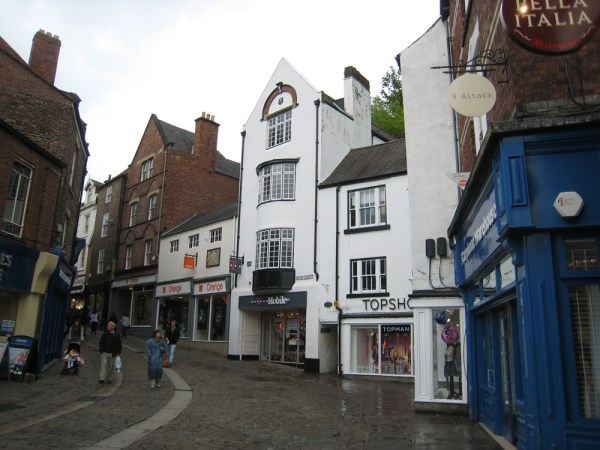
An old Durham city deed notes that a man named John Clark was an occupant of the building at no. 5 Sadler Street until 1796,9 which was shortly before my ancestor left for Canada. He was probably renting or subletting, since his name is not listed among the main parties to the deeds.
When Clark died in 1827, he left his Durham property to his daughter, Mary Ann. Her husband, Montreal merchant Stanley Bagg, was executor of the will. Clark also left 13 bequests of 50 pounds each to several of his brothers and sisters in England, and to several of his wife’s relatives.
In 1829, Mary Ann decided to sell the property in Durham.10 It was probably difficult to manage the property from across the Atlantic, and she could use the proceeds to pay these bequests. William Mitcheson, John Clark’s brother-in-law who was an anchor maker in London, was appointed an executor of Clark’s will in England, however, I was unable to find proof of Clark’s will being probated in England.
It is clear, however, that the family sold some property in Durham in 1842. Mary Ann had died in 1835, leaving it to her son, Stanley Clark Bagg (SCB), who was then a minor. Stanley Bagg was the executor of her estate until SCB turned 21 in 1841.
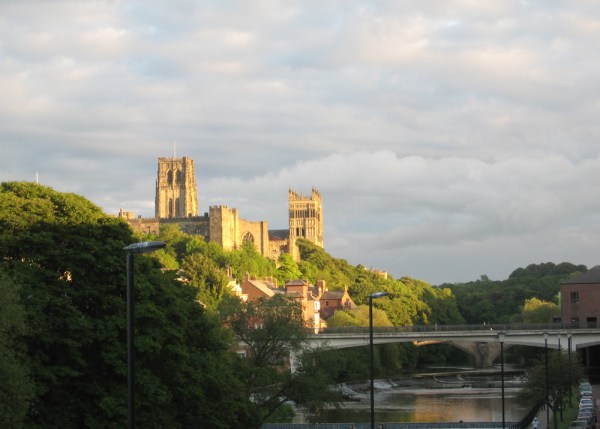
The following summer, Stanley and SCB travelled to Durham and sold the remaining property. On their return, Stanley recorded the names of the three buyers in a notarized document in which he admitted he had used some of the rental income from the Durham properties for his own purposes. He arranged to repay his son and listed the names of three people who purchased the properties, as well as the name of a Mr. “Bromwell” who had collected the rents. The name “Bramwell” was listed in the document regarding no. 5 Sadler Street at the Durham University archives.
Several questions remain: how extensive was Clark’s property? Did the properties SCB sold in 1842 represent all of Clark’s English real estate? And how and when did Clark acquire it in the first place? His father left him 70 pounds when he was a child, so perhaps someone helped him invest it wisely.
Later in life, John Clark proved to be a successful butcher and an astute businessman who supplied meat to the British army and invested in properties near Montreal.
Notes:
This article has been revised and condensed from four articles previously posted on my personal family history blog Writing Up the Ancestors: John Clark of Durham, England, May 30, 2014; A Freehold Estate in Durham, May 4, 2019; Ralph Clark’s 1776 Will, April 17, 2019; A Trip to England in 1842, Feb. 7, 2020 (also posted on Genealogy Ensemble)
Special thanks to Margaret Hedley, Past Uncovered, for research in County Durham, 2018-2019, and to Geoff Nicholson, a highly respected genealogist in the area. We corresponded for several years, and in 2009 he took my husband and me on a tour of the area. Geoff died in 2021.
Recently a Clark descendant who lives in New Zealand, contacted me to say that he has researched two more generations of the Clark family, bringing their tree back to the mid-1600s. He has posted the Clark family tree on MyHeritage.com and the Kane-Wilson and Hurworth-Hirst public member’s tree on Ancestry.
When I first did this research, I found the record of John Clark’s birth at St. Helen Church, Kelloe parish, Easington, in the Northumberland and Durham Baptisms on Findmypast.com. Find My Past is a good source for County Durham records. Another good place to search for obscure County Durham records is Durham Records Online, www.durhamrecordsonline.com. The Northumberland and Durham Family History Society is an active organization with an extensive website and helpful members. See https://ndfhs.org.uk/. The Story (formerly The County Durham Record Office) has a variety of historical resources; see https://www.thestorydurham.org/.
The note about John Clark’s date of birth was made by his great-grandson Rev. Sydenham Bagg Lindsay (1887-1975) of Montreal. I found it in the Bagg family bible at the McCord Stewart Museum in Montreal around 2010.
Marriage of Johannes Dent to Elizabetha Clark in Sedgefield in 1721: “England Marriages, 1538–1973,” database, FamilySearch(https://familysearch.org/ark:/61903/1:1:NLZY-9MB : viewed 10 February 2018, Johannes Dent and Elizabetha Clark, 16 May 1721; citing Sedgefield, Durham, England; index based upon data collected by the Genealogical Society of Utah, Salt Lake City; FHL microfilm 91,112.
In 2012, I found a record of the marriage of John Robson Clerk and Eleanor House in Kelloe parish in the Bishop’s Transcripts on familysearch.org. The link – www.familysearch.org/pal:/MM9.1.1/NKXW-BHM — still leads to a record of the marriage, but the image is no longer available. The Bishops Transcripts were copies, made annually, of the original parish records. John did not usually use his middle name, but he is remembered as John R. Clark on a plaque in the Bagg family mausoleum in Montreal, Canada
Prior to most marriages in England, banns were read and people could express their opposition to the union. Couples could bypass this step by paying a fee for a marriage license. A marriage allegation is a sworn statement in connection with the license application, in which the couple state there is no known reason for the marriage not to take place. The Durham Diocese, England, Calendar of Marriage Bonds and Allegations, 1494-1815, can be found on Ancestry, while familysearch.org has the records for the years 1692-1900. CHECK
I have written a number of articles about the Mitcheson family in Durham, Montreal, London and Philadelphia, searchable on my personal family history blog Writing Up the Ancestors (www.writinguptheancestors.ca), and will copy them to Genealogy Ensemble in the near future.
There are several clues that father and son visited Durham. In 1866, John Clark’s grandson, Stanley Clark Bagg, wrote an article called “The Antiquities & Legends of Durham, a lecture before Numismatic & Antiquarian Society of Montreal” in which he recalled his own visit to the cathedral with his father more than 20 years earlier. There is a record in a passenger list of Stanley Bagg and S.C. Bagg travelling from Liverpool to Boston aboard the Acadia. Boston Courier (Boston, Massachusetts, Monday, Sept. 19, 1842, issue 1921;) 19th Century Newspapers Collection, special interest databases, http://www.americanancestors.org; accessed 18/04/2019. A search for Mary Ann Bagg in the Durham University Archives online catalogue brings up a result in the Durham Cathedral Library: J.H. Howe Collection. It cites Montreal parish records showing how John Clark was related to Stanley Clark Bagg, and includes an affidavit from Montreal notary Henry Griffin and a note from Charles Bagot, Governor General of British North America, verifying the information. Reference: JJH 11 Dates of creation: 1842 JJH 11/1, 27 April & 9 May 1842. Similarly, there is a note appended to Clark’s will, dated 13 May, 1842, from Charles Bagot, certifying the information; attached to records for lot 110, Saint-Laurent Ward, Montreal, p. 395, Registre foncier du Québec online database.
Revised Sources
1 “England Births and Christenings, 1538-1975,” database, FamilySearch (https://familysearch.org/ark:/61903/1:1:NBC9-BQD : accessed 11 February 2018), Margret Pearson, 31 Oct 1725; index based upon data collected by the Genealogical Society of Utah, Salt Lake City; FHL microfilm 91,097, 94,097.
2. The Church of Jesus Christ of Latter-day Saints, “International Genealogical Index (IGI),” database, FamilySearch (https://familysearch.org/ark:/61903/2:1:MDK6-CRN : accessed 15 April 2019), entry for Ralph Clark, batch A23286-7; citing FHL microfilm 455,471. This marriage is also included in Boyd’s Marriage Index, 1538-1840, Findmypast.com
3. Burials, Stockton District, record # 573795 2, St. Edmund the Bishop Church, Sedgefield, 8 Nov. 1776, Ralph Clerk {Clark] of Wingate Grange in the Parish of Kelloe.
4. Will of Ralph Clark, Oct. 11, 1776; 1776/C8/2, University of Durham Special Collections Department.
5. Marriage of John Robson Clerk and Eleanor House “England Marriages, 1538–1973”, FamilySearch https://www.familysearch.org/ark:/61903/1:1:NKXW-BHM, Entry for John Robson Clerk and Eleanor House, 10 July 1785.
6. England, Durham Diocese, Marriage Bonds & Allegations, 1692-1900, database with images, FamilySearch (https://familysearch.org/ark:/61903/1:1:Q21P-XMQK : accessed 29 July 2017), John Clark and Mary Mitchinson, 07 Jun 1794; citing Marriage, Durham, England, United Kingdom, Church of England. Durham University Library, Palace Green; FHL microfilm.
7 “England, Births and Christenings, 1538-1975”, database, FamilySearch (https://www.familysearch.org/ark:/61903/1:1:N5D4-DGM : 5 February 2023), Joseph Mitchinson in entry for Mary Mitchinson, 1776.
8. “Last Will and Testament of Mr. John Clark of Montreal,” Act of notary Henry Griffin, #5989, 29 Aug. 1825, Bibliothèque et Archives nationales du Québec, p. 9.
9. Durham University Library, Special Collections Catalogue, http://reed.dur.ac.uk/xtf/search, results for John Clark, Durham City Deeds, Bundle 22, Sadler Street alias Fleshergate, 5 Sadler Street, east side, Reference: DCY 23/1-34, Dates of creation: 1776-1856. The entry says, “These premises were described as a burgage [land or property in a town that was held in return for service or annual rent] and shop, with appurtenances, almost throughout. In 1856 it was called a freehold dwellinghouse and shop….The occupants of the property included, initially, John Clark, by 1796 one Haswell ….”
10. Annex attached to John Clark’s Last Will and Testament, by notary Henry Griffin, 10 Nov. 1829 and attached to records for lot 110, Saint-Laurent Ward, Montreal, p. 391, Registre foncier du Québec online database.

