Tag Archives: Mary Ann Clark

The Life and Times of Stanley Clark Bagg, part 1

Revised and Condensed

In this article, I refer to Stanley Clark Bagg (1820-1873) as SCB to differentiate him from his father, Stanley Bagg (1788-1853,) and from his son, Robert Stanley Bagg (1844-1912).

Many young people spend a long time deciding what they want to be when they grow up. The career of Stanley Clark Bagg, however, was determined long before he was born.
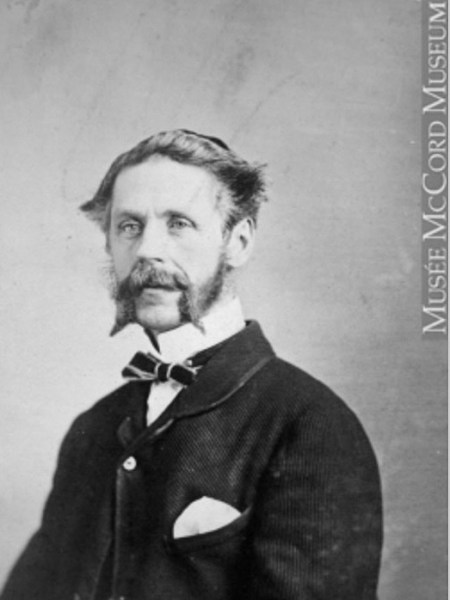
Stanley Clark Bagg, Montreal, QC, 1863, photo by William Notman; McCord Stewart Museum, Montreal.

SCB was destined to become a large landowner on the Island in Montreal, thanks to the foresight of his grandfather. John Clark, a butcher who had immigrated to Canada in the late 1790s and purchased several adjoining farms along the west side of Saint Lawrence Street. This was the road that led out of the old city gates and past the eastern slope of Mount Royal, to the north shore of the Island of Montreal.  

When Clark died in 1827, he left some of this property to his daughter, Mary Ann (Clark) Bagg, but he left most of his estate to SCB, his only grandchild.1 SCB was just seven years old then, and he spent much of his youth preparing for his future responsibilities as a landlord and a gentleman. For many people whose ancestors had settled in Canada, or who had themselves immigrated to North America in the 19th century, owning land was their greatest dream, so property brought social status, as well as having monetary value. SCB was set for life.

Unfortunately, being a landowner wasn’t what he really wanted to do. According to grandson Stanley Bagg Lindsay, SCB wanted to be an Anglican minister. “He was a very religious man and I understand would have entered the ministry, but for the fact that would have entailed leaving Montreal, where there was no theological college, and going to Lennoxville (in Quebec’s Eastern Townships), where theology could be studied at the University of Bishops College. With all his property interests in Montreal and getting married in 1844, it was not possible for SCB to be away from Montreal for so long.”2 Fortunately, SCB had the means and the time to read, write (including articles, poetry and hymns), travel and support philanthropic organizations, such as the English Workingman’s Benefit Society of Montreal, which he founded.
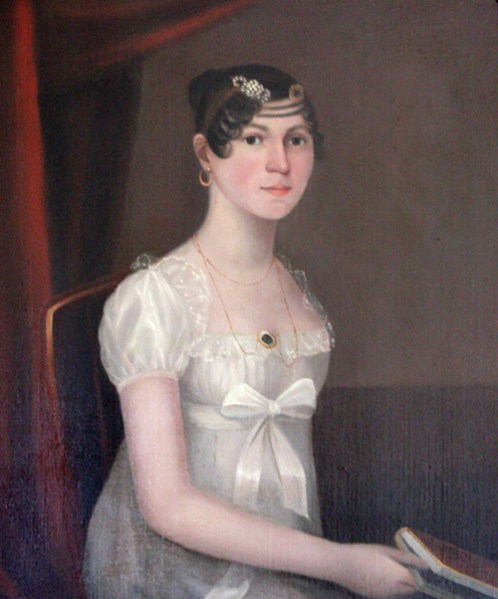
SCB’s mother, Mary Ann Clark, wife of Montreal merchant Stanley Bagg. She was born in Durham, England and came to Canada as a baby. artist unknown. private collection.

Stanley Clark Bagg was born on Dec. 23, 1820, the son of American-born merchant Stanley Bagg and his English-born wife, Mary Ann Clark (1795-1835.)3 He grew up at his parents’ home, Durham House, on St. Lawrence Street, just outside what was then the small city of Montreal.

SCB probably grew up playing in his father’s orchard and learning to ride a horse – a necessary skill in those days. He was educated by an Anglican minister and studied at McGill, then just a small college. A hired farm hand would have looked after the cows, chickens and other animals at Durham House, but perhaps SCB was also required to do some farm chores.

On Feb 10, 1835, when SCB was 14, his mother died. His father never remarried, although he probably hired a housekeeper to cook and help look after young Stanley. Soon after Mary Ann’s death, Stanley senior met with a group of friends and relatives in front of a judge to choose a tutor, or guardian, for the boy. Stanley was named his son’s tutor and Gabriel Roy, husband of Stanley’s sister Sophia, became sub-tutor.4 Stanley also acted as executor of both John Clark’s and Mary Ann’s wills, so he managed the properties and SCB’s funds until his son turned 21.

Two years after Mary Ann’s death, Lower Canada faced a crisis as some moderate nationalists and members of a more radical group known as the Patriotes took up arms in a rebellion, demanding responsible government. Troops from the regular British army, joined by members of the local volunteer militia, prepared to defend the status quo.

Stanley Bagg was a major in the 1st Batallion Loyal Montreal Volunteers5 and SCB served as a standard-bearer at the Battle of Saint-Eustache.6 About two weeks before his 17th birthday, he witnessed the bloodiest battle of the rebellion in the village of Saint-Eustache, northwest of Montreal. Fought in December 1837, this event resulted in the deaths of 100 rebels, and many buildings in the area were destroyed by fire.

SCB continued to participate in the volunteer militia for more than 20 years, going on inactive status in 1859 with the rank of captain.7

At about age 16, he started to train to be a notary. Notaries played an important role in Quebec society, recording people’s wills, marriage contracts, business agreements, disputes (especially when money was owed) and, most importantly for SCB, property deeds and rentals. As a notary, SCB would be familiar with the laws pertaining to property transfers.

He served a four-year apprenticeship with notary W.S. Hunter and, in August 1841, his father indentured him for a final eight months to N.B. Doucet, a well-known Montreal notary.8 Doucet undertook to instruct him, give him access to books and render him fit to serve as a notary, while SCB undertook to apply himself.

The Custom of Paris

In 1840, many English-speaking citizens of Quebec could not read the civil laws that governed their everyday activities. Although Quebec had been a British colony for almost 80 years, the collection of civil laws called the Coutume de Paris (Custom of Paris) had not been translated from French into English. So in 1841, SCB translated excerpts of the Coutume de Paris, completing the project shortly before he finished his apprenticeship. 

Today this manuscript — the earliest recorded translation of the Coutume de Paris into English — is housed in the library of York University’s Osgood Hall Law School in Toronto, and it can be found online at https://digitalcommons.osgoode.yorku.ca/library_digital/1/
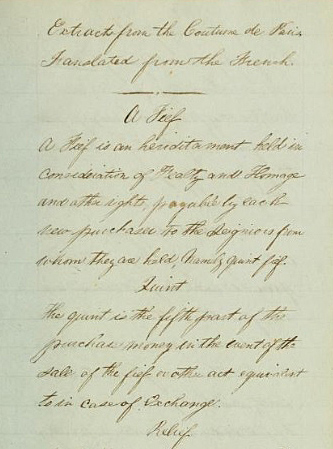
The first page of SCB’s translation of the Coutume de Paris.

SCB’s translation consists of about 200 pages, neatly handwritten in a small, hardcover notebook.9 He focused on definitions of French legal terms in English, and English translations of laws governing rights of property ownership, marriage and inheritance. On the final page he noted, “The laws of every nation are more or less mixed with the laws of nations that have passed away, but none more than the laws of Canada, which have for their basis the jurisprudence of France and England.”

By the spring of 1842, a few months after he turned 21, he had finished his apprenticeship. As a legal adult, he could now manage his inheritance, collect the rent for the farms he owned and buy and sell properties. Perhaps he also started to think about marriage and opening an office as a notary. First, though, he and his father travelled to England to explore County Durham, in the northeast, where his mother had been born.

A Trip to England in 1842

The trip was a combination of business and pleasure. The business involved selling property that SCB’s maternal grandfather had owned in Durham, and the pleasure involved a whirlwind tour of London, Scotland, Ireland and France, as well as visits with various great-aunts and great-uncles who still lived in England.

A few months after his return to Montreal, SCB wrote to his cousin in Philadelphia, describing the trip. Unfortunately, he did not include any details or impressions of their adventures, but he listed the places they visited.

Their trip across the Atlantic was fast. The age of the trans-Atlantic steamship had arrived in the 1830s, and SCB wrote, “We made the passage to Liverpool from Halifax in the incredible short space of nine days and six hours, which was I believe the shortest passage ever made across the Atlantic. From Liverpool we went to London, thence to Leeds, Manchester, Birmingham, York, Darlington, Durham, Stockton, Sunderland, Newcastle, Shields, Tynemouth, Otterburn …. ”10
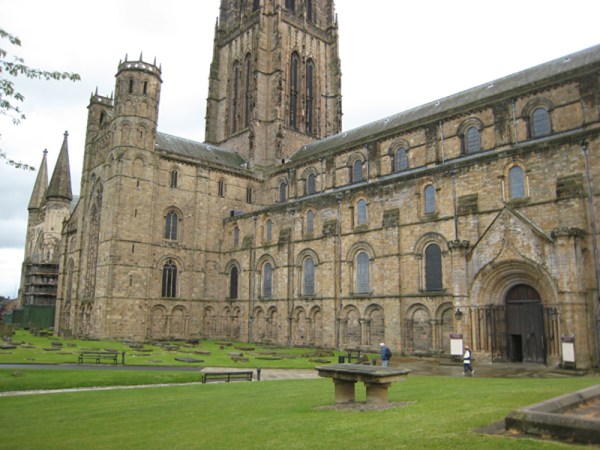
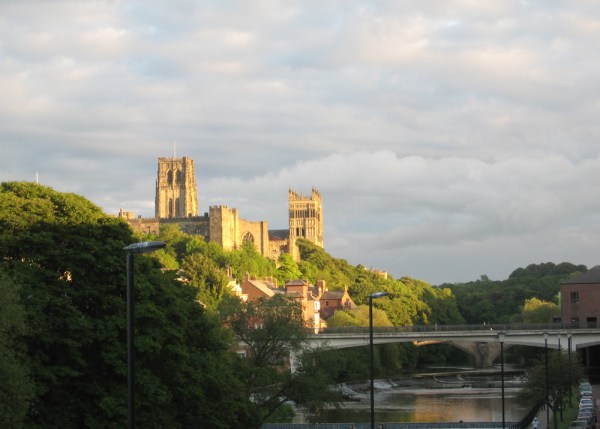
Durham Cathedral. JH photo.

In Scotland, they explored both Glasgow and Edinburgh. After a few days in London, they crossed the Channel to France, visiting Paris and several other cities before returning to London. SCB wrote, “We left London shortly afterwards for Ireland, and having visited Kingstown, Dublin and Kilmainham, returned to Liverpool, where … we embarked on board a steamship and after a boisterous passage of 14 days arrived at Boston exceedingly gratified with our tour.”11

Anchor-maker William Mitcheson, brother of SCB’s grandmother Mary Mitcheson Clark, lived in London, and the Baggs visited him there. While in County Durham, they visited more Mitcheson relations, including Mrs. Dodd (Mary Mitcheson’s sister Margaret) near Ryton, and Mrs. Maugham (Mary’s sister Elizabeth) at Sunderland. 

It is clear that the visit to Durham was the highlight of the trip, but not because of the business they finalized there. In fact, SCB did not mention it at all in his letter. When he turned 21, he gained control over an inheritance of property in Durham from his grandfather, John Clark (1767-1827). The property generated rental income, but SCB wanted to sell. In a notarized document dated after their return to Montreal, Stanley Bagg listed the sales of three properties in Durham.12

Meanwhile, SCB’s real interest was in ancient legends, old coins, Norman castles and the like, and he was enthralled with the ancient city of Durham. More than 20 years later, he presented a lecture to the Numismatic and Antiquarian Society of Montreal on “The Antiquities and Legends of Durham.”
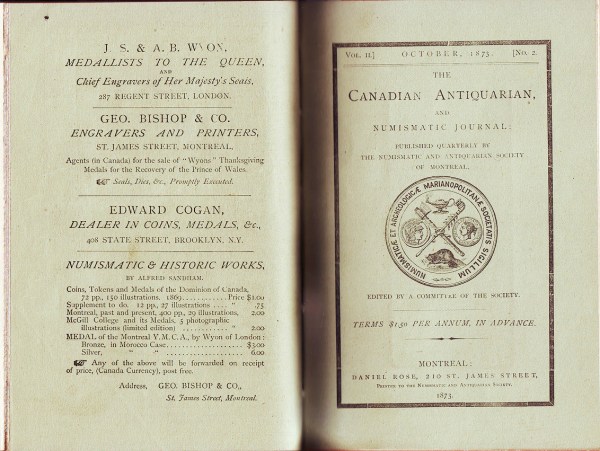
He described the legend surrounding the founding of Durham city by 9th century monks. When Danes attacked England’s northeast coast, the monks fled their monastery on the Island of Lindisfarne with the miraculously well-preserved body of their former bishop. Eventually they built an abbey at the future site of the city and buried him there. Today, that bishop is remembered as Saint Cuthbert, and pilgrims still visit the huge abbey church, Durham Cathedral.

In his 1866 lecture to the Numismatic Society, SCB described his feelings on that trip. He recalled, “The first time I had the privilege of attending a divine service in Durham Abbey, I was enraptured with the sweet and masterly chanting, unsurpassed in the empire. My father and I obtained seats in the choir. The service was exceedingly impressive, so much so, that …. whenever the portion of the Psalter chanted upon that occasion recurs in the services of the church, it carries me back in imagination to the first service I attended in the venerable abbey of my mother’s native city.”13

This article is condensed from a series of articles about Stanley Clark Bagg (my two-times great-grandfather) posted in 2020 on my personal family history blog Writing Up the Ancestors (www.writinguptheancestors.ca). Part 2 will follow on July 1, 2026.

Notes  

King Louis XIV made the Coutume de Paris the civil law of New France in 1664. It did not include criminal law or cover commercial law. Some of its provisions dated from feudal times and were based on concepts such as moveable property (objects that can be moved) and immovable property (such as land and buildings), as well as community of property between married couples, provisions to protect widows and inheritances for daughters.

After the British Conquest of New France, the Royal Proclamation of 1763 introduced British Common Law to the colony, however, French Canadians resisted this new way of doing things. In 1774, the government passed the Quebec Act, bringing back the property and family laws of the Coutume de Paris, while British Common Law applied to criminal matters. Some reforms were made in 1840, but legislators realized that the laws had to be updated to meet the needs of a changing society. The old seigneurial system of land ownership was being phased out, and new laws were needed to make it easier for commerce, investment and industrialization to expand.

The new Civil Code of Lower Canada, which came into force in 1866, clearly had some roots in the Custom of Paris, making Quebec’s legal traditions unique in Canada. Today, Quebecers still rely on notaries to prepare their wills, property deeds and marriage contracts.

Sources

1. Henry Griffin, notarial act #5989, “Last Will and Testament of Mr. John Clark of Montreal,” 29 August 1825, Bibliothèque et Archives nationales du Québec (BAnQ); also, George Dorland Arnoldi, notarial act # 3842,  “Last Will and Testament of Mrs. Mary Ann Clark, wife of Stanley Bagg,” 10 December 1834, BAnQ

2. Unsigned, undated (probably Stanley Bagg Lindsay), “Stanley Clark Bagg,” Lindsay family collection.

3. Stanley Clark Bagg, born Dec. 22, 1820; baptized Christ Church Cathedral, Montreal, July 2, 1822. Institut Généalogique Drouin; Montreal, Quebec, Canada; Drouin Collection; Author: Gabriel Drouin, comp.,Quebec, Canada, Vital and Church Records (Drouin Collection), 1621-1968 [database, Ancestry.ca:  on-line]. (Accessed 23 Dec. 2019) entry for Stanley Clark Bagg, citing Gabriel Drouin, comp. Drouin Collection. Montreal, Quebec, Canada: Institut Généalogique Drouin.

4. Although Lower Canada was a British colony at the time, it retained many legal traditions, including this one, stemming from the French Regime. “Tutorship: minor Stanley Bagg” BAnQ microfilm #1857, Tutelles, 5 Decembre 1834 au 20 Mars 1835, Document 174 – 27 Feb. 1835.

5. Elinor Kyte Senior, Redcoats and Patriots: The Rebellions in Lower Canada. 1837-38, p 214, Stittsville, ON: Canada’s Wings, Inc., 1985.

6. Pierre B. Landry, “BAGG, STANLEY CLARK,” in Dictionary of Canadian Biography, vol. 10, University of Toronto/Université Laval, 2003–, accessed December 24, 2019, http://www.biographi.ca/en/bio/bagg_stanley_clark_10E.html.

7. “List of Officers of the Sedentary militia of Lower Canada, 1862,” database, Ancestry.com (http://www.ancestry.ca: accessed Dec. 23, 2019), entry for Stanley C. Bagg, citing List of Officers of the Sedentary militia of Lower Canada, 1862, Quebec: S. Derbyshire and G. Desbarats, 1863.

8. Joseph-Hilarion Jobin, notarial act #2977 23 Aug 1841, “Indenture of Stanley C. Bagg to N.B. Doucet,” Bibliothèque et Archives nationales du Québec; abstract by Sherry Olson.

9. Bagg, Stanley Clark, “A Collection of Extracts from the Coutume de Paris: Translated from the French,” 1841. https://digitalcommons.osgoode.yorku.ca/library_digital/1/

10. Letter from Stanley Clark Bagg to Rev. R. M. Mitcheson, Dec. 6, 1842, probably transcribed by Stanley Bagg Lindsay; Lindsay family collection.

11. Record in a passenger list of Stanley Bagg and S.C. Bagg travelling from Liverpool to Boston aboard the Acadia. Boston Courier (Boston, Massachusetts, Monday, Sept. 19, 1842, issue 1921;) 19th Century Newspapers Collection, special interest databases, www.americanancestors.org (accessed April 18, 2019.)

12. Joseph-Hilarion Jobin, “Account and mortgages from Stanley Bagg Esq to Stanley Clark Bagg,” 8 October 1842, notarial act #3537, Bibliothèque et Archives nationales du Québec.

13. Stanley Clark Bagg, “The Antiquities and Legends of Durham: a Lecture before the Numismatic and Antiquarian Society of Montreal,” p. 21, Montreal, 1866. https://archive.org/details/cihm_48731/page/n4 (accessed Dec. 27, 2019) This article can also be found here: http://www.canadiana.ca/view/oocihm.48731/1?r=0&s=1
John Clark of Durham, England

revised and condensed

According to family lore, my four-time great-grandfather John Clark (1767-1827) was a butcher who came to Canada from County Durham, in northeast England, with his wife and young child around 1797. A search of the baptismal records of Durham for the mid-1700s brought up more than a dozen men named John Clark. Which one was mine?

Fortunately, about 100 years ago another descendant left a note in the family records: “John Clark, pork butcher, 9-6-1767.” I checked the parish records again, and there it was: John Clark, of Wingate Grange, was baptized at Kelloe parish church, County Durham, on 9 June, 1767.

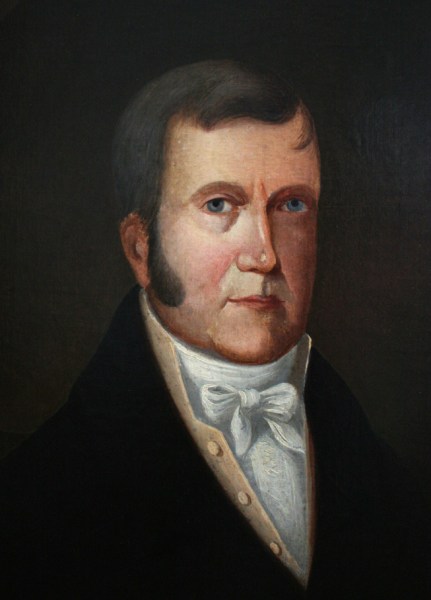
Portrait of John Clark, private collection. It may have been painted after his death from a miniature by Sir Martin Archer Shee RA, (1769-1850).

County Durham was later known for its coal mines, but when John Clark was born, the region was mostly farmland, and Wingate Grange was a rented farm, located several miles south of the city. A rental noticepublished in the Newcastle Courant in late 1777 described Wingate Grange Farm as being “526 acres and tithe free, within six miles of Durham, well watered and enclosed; a draw kiln lies contiguous and limestone upon the premises; there are two very good farm houses, four barns and all other necessary buildings.”

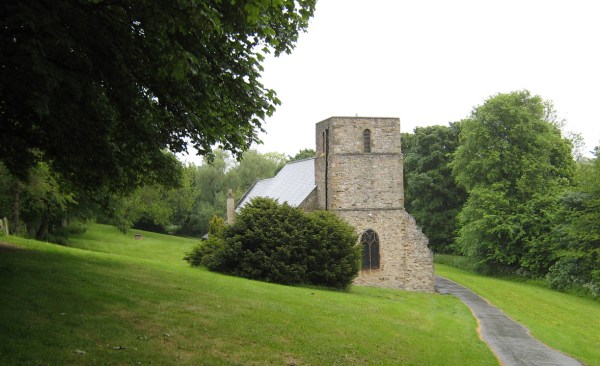
John was the eleventh of the twelve children born to Ralph Clark and his wife Margaret Pearson. Ralph Clark was born in rural Kirk Merrington Parish, County Durham in 1721 and Margaret Pearson was baptized in 1725, also in Kirk Merrington.1 Ralph and Margaret were married on May 8, 1746 in Kirk Merrington2 and their first child was born a year later. The family probably rented Wingate Grange around 1763, and the three youngest were baptized at St. Helen Church, Kelloe Parish.  

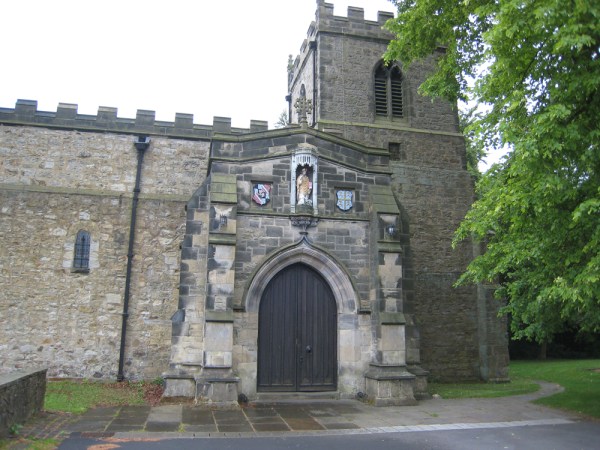
St. Helen Church, Kelloe Parish. JH photo.

When John was just eight years of age, his mother died. His father wrote his will the following year and died in November, 1776.3 Knowing that his children would be orphaned, Ralph was clearly concerned about their prospects, and in his will he gave his cousin Robert Dent, of Morden Red House in Sedgefield parish, some financial control over the bequests left to the younger children.

Ralph realized that each of his children had different needs, so he varied his bequests to them. He also ensured that not just his sons, but also his daughters, received inheritances.4

Daughters Letitia and Elizabeth were already married when their father died. Letitia (also known as Lettice, and married to butcher Richard Jefferson,) was to receive £15. Ralph seems to have been particularly concerned about Elizabeth. He left her £40 in trust, and her husband “shall have no power or control whatsoever and shall in no wise be liable to the payment of his debts or otherwise.”

Son Thomas was left £20 and a horse. Anne was to have £40 and a third of Ralph’s household goods when she reached 21. Ralph jr. and Edward would each get £60 when they reached 21. Lancelot, the youngest child, was to receive £90 when he turned 21. Ralph appointed William, Mary and Margaret as joint executors and residuary legatees. John was to receive £70 when he turned 21 – about £8500 in today’s money.

I do not know where John lived after his parents died. Perhaps he stayed with his sister Letitia, and perhaps it was her husband who trained John to become a butcher.

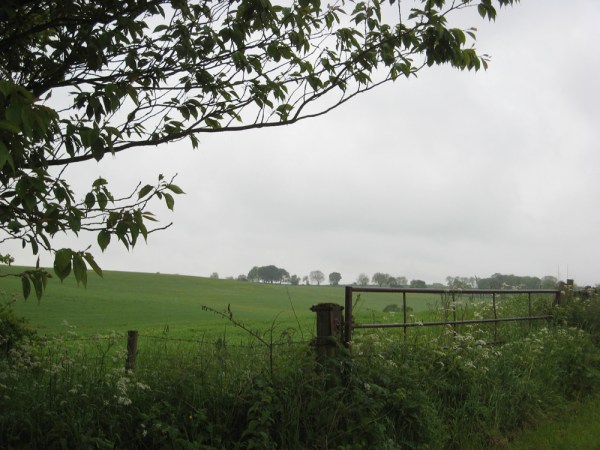
Fields of Wingate Grange Farm. JH photo.

In 1785, John Robson Clerk married Eleanor House.5 If this was my John, he would have been just 18 years old. This marriage had been left out of the family stories until I found The Marriage Bonds and Allegations document associated with John’s second marriage.6 This document stated that John was a widower when he married Mary Mitchinson in 1794. I know nothing about Eleanor, including where or when she died. 

John’s second marriage took place on June 10, 1794, at St. Giles parish church, on a hill above the Wear River. Mary Mitchinson, or Mitcheson, (1776-1856), was my eventual ancestor and the daughter of Joseph Mitcheson (1746-1821) and Margaret Philipson (1756-1821).7 The fact that John and Mary were not married at Whickham parish church, where she had been baptized and her parents were later buried, suggests that perhaps her parents did not approve of the marriage.

St. Giles Parish Church, where John Clark and Mary Mitcheson were married. JH photo.

The following year, Mary gave birth to a daughter, Mary Ann Clark, and around 1797 the family boarded a ship, bound for a new life in Montreal, Canada.

A Freehold Estate in Durham

According to another family legend, John owned a freehold estate near the cathedral in Durham. I imagined a large house surrounded by shady old trees. This was a misunderstanding on my part: the term freehold estate simply refers to a property, or real estate, that is “free from hold” of any entity besides the owner. I also imagined that Clark lived on his own land. When he married Mary, he lived in St. Giles parish, a largely agricultural suburb of the city of Durham, however, I found no evidence that he owned property there.

Furthermore, if he owned land in England, why would he want to go to Canada? I began to wonder whether John Clark owned property in England at all.

John Clark’s will, written in Montreal in 1825, settled the question. It stated, “The said testator doth will, bequeath and devise unto his said daughter Mary Ann, her heirs and assigns, the whole of his real estate of all and every nature and description soever, situated and being in the city or town of Durham or in the neighbourhood thereof in England.”8 In other words, Clark did own property in Durham, but his will gave no clue as to its use or location.

Over the years, I hired several professional researchers in Durham to search collections such as land tax records, deeds, enclosure records and tithe applotment records at the archives in Durham, and they added small pieces to the puzzle. Finally, after many years of looking at this question off and on, it became clear that the exact nature and location of this freehold estate will likely remain a mystery, however, Clark’s property may have been located in the heart of the city.

Durham is a very old city built on a peninsula surrounded by the meandering River Wear. Several bridges cross the river, leading to the market square, and from there, Sadler Street goes up a hill to Durham Cathedral and Durham University. At one time, Sadler Street was also known as Fleshergate and butchers had their shops there.

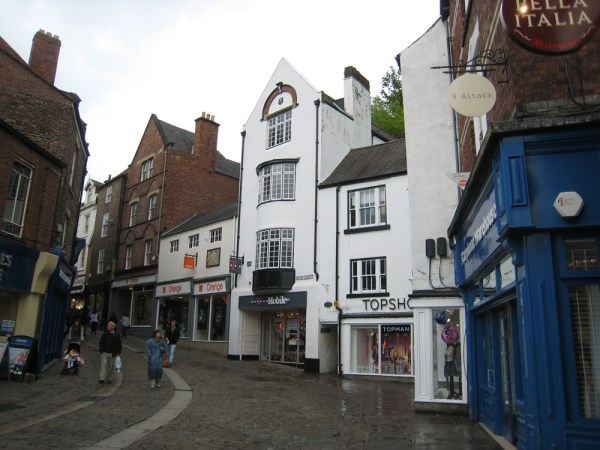
Sadler Street, Durham, England. JH photo

An old Durham city deed notes that a man named John Clark was an occupant of the building at no. 5 Sadler Street until 1796,9 which was shortly before my ancestor left for Canada. He was probably renting or subletting, since his name is not listed among the main parties to the deeds.

When Clark died in 1827, he left his Durham property to his daughter, Mary Ann. Her husband, Montreal merchant Stanley Bagg, was executor of the will. Clark also left 13 bequests of 50 pounds each to several of his brothers and sisters in England, and to several of his wife’s relatives.

In 1829, Mary Ann decided to sell the property in Durham.10 It was probably difficult to manage the property from across the Atlantic, and she could use the proceeds to pay these bequests. William Mitcheson, John Clark’s brother-in-law who was an anchor maker in London, was appointed an executor of Clark’s will in England, however, I was unable to find proof of Clark’s will being probated in England.

It is clear, however, that the family sold some property in Durham in 1842. Mary Ann had died in 1835, leaving it to her son, Stanley Clark Bagg (SCB), who was then a minor. Stanley Bagg was the executor of her estate until SCB turned 21 in 1841.

Durham Cathedral at sunset. JH photo

The following summer, Stanley and SCB travelled to Durham and sold the remaining property. On their return, Stanley recorded the names of the three buyers in a notarized document in which he admitted he had used some of the rental income from the Durham properties for his own purposes. He arranged to repay his son and listed the names of three people who purchased the properties, as well as the name of a Mr. “Bromwell” who had collected the rents. The name “Bramwell” was listed in the document regarding no. 5 Sadler Street at the Durham University archives.

Several questions remain: how extensive was Clark’s property? Did the properties SCB sold in 1842 represent all of Clark’s English real estate? And how and when did Clark acquire it in the first place? His father left him 70 pounds when he was a child, so perhaps someone helped him invest it wisely.

Later in life, John Clark proved to be a successful butcher and an astute businessman who supplied meat to the British army and invested in properties near Montreal.

Notes:

This article has been revised and condensed from four articles previously posted on my personal family history blog Writing Up the Ancestors: John Clark of Durham, England, May 30, 2014; A Freehold Estate in Durham, May 4, 2019; Ralph Clark’s 1776 Will, April 17, 2019; A Trip to England in 1842, Feb. 7, 2020 (also posted on Genealogy Ensemble)

Special thanks to Margaret Hedley, Past Uncovered, for research in County Durham, 2018-2019, and to Geoff Nicholson, a highly respected genealogist in the area. We corresponded for several years, and in 2009 he took my husband and me on a tour of the area. Geoff died in 2021.

Recently a Clark descendant who lives in New Zealand, contacted me to say that he has researched two more generations of the Clark family, bringing their tree back to the mid-1600s. He has posted the Clark family tree on MyHeritage.com and the Kane-Wilson and Hurworth-Hirst public member’s tree on Ancestry.

When I first did this research, I found the record of John Clark’s birth at St. Helen Church, Kelloe parish, Easington, in the Northumberland and Durham Baptisms on Findmypast.com. Find My Past is a good source for County Durham records. Another good place to search for obscure County Durham records is Durham Records Online, www.durhamrecordsonline.com. The Northumberland and Durham Family History Society is an active organization with an extensive website and helpful members. See https://ndfhs.org.uk/. The Story (formerly The County Durham Record Office) has a variety of historical resources; see  https://www.thestorydurham.org/.

The note about John Clark’s date of birth was made by his great-grandson Rev. Sydenham Bagg Lindsay (1887-1975) of Montreal. I found it in the Bagg family bible at the McCord Stewart Museum in Montreal around 2010.

Marriage of Johannes Dent to Elizabetha Clark in Sedgefield in 1721: “England Marriages, 1538–1973,” database, FamilySearch(https://familysearch.org/ark:/61903/1:1:NLZY-9MB : viewed 10 February 2018, Johannes Dent and Elizabetha Clark, 16 May 1721; citing Sedgefield, Durham, England; index based upon data collected by the Genealogical Society of Utah, Salt Lake City; FHL microfilm 91,112.

In 2012, I found a record of the marriage of John Robson Clerk and Eleanor House in Kelloe parish in the Bishop’s Transcripts on familysearch.org. The link – www.familysearch.org/pal:/MM9.1.1/NKXW-BHM — still leads to a record of the marriage, but the image is no longer available. The Bishops Transcripts were copies, made annually, of the original parish records. John did not usually use his middle name, but he is remembered as John R. Clark on a plaque in the Bagg family mausoleum in Montreal, Canada

Prior to most marriages in England, banns were read and people could express their opposition to the union. Couples could bypass this step by paying a fee for a marriage license. A marriage allegation is a sworn statement in connection with the license application, in which the couple state there is no known reason for the marriage not to take place. The Durham Diocese, England, Calendar of Marriage Bonds and Allegations, 1494-1815, can be found on Ancestry, while familysearch.org has the records for the years 1692-1900.  CHECK

I have written a number of articles about the Mitcheson family in Durham, Montreal, London and Philadelphia, searchable on my personal family history blog Writing Up the Ancestors (www.writinguptheancestors.ca), and will copy them to Genealogy Ensemble in the near future.

There are several clues that father and son visited Durham. In 1866, John Clark’s grandson, Stanley Clark Bagg, wrote an article called “The Antiquities & Legends of Durham, a lecture before Numismatic & Antiquarian Society of Montreal” in which he recalled his own visit to the cathedral with his father more than 20 years earlier. There is a record in a passenger list of Stanley Bagg and S.C. Bagg travelling from Liverpool to Boston aboard the Acadia. Boston Courier (Boston, Massachusetts, Monday, Sept. 19, 1842, issue 1921;) 19th Century Newspapers Collection, special interest databases, http://www.americanancestors.org; accessed 18/04/2019. A search for Mary Ann Bagg in the Durham University Archives online catalogue brings up a result in the Durham Cathedral Library: J.H. Howe Collection. It cites Montreal parish records showing how John Clark was related to Stanley Clark Bagg, and includes an affidavit from Montreal notary Henry Griffin and a note from Charles Bagot, Governor General of British North America, verifying the information. Reference: JJH 11 Dates of creation: 1842 JJH 11/1, 27 April & 9 May 1842. Similarly, there is a note appended to Clark’s will, dated 13 May, 1842, from Charles Bagot, certifying the information; attached to records for lot 110, Saint-Laurent Ward, Montreal, p. 395, Registre foncier du Québec online database. 

Revised Sources

1 “England Births and Christenings, 1538-1975,” database, FamilySearch (https://familysearch.org/ark:/61903/1:1:NBC9-BQD : accessed 11 February 2018), Margret Pearson, 31 Oct 1725; index based upon data collected by the Genealogical Society of Utah, Salt Lake City; FHL microfilm 91,097, 94,097.

2. The Church of Jesus Christ of Latter-day Saints, “International Genealogical Index (IGI),” database, FamilySearch (https://familysearch.org/ark:/61903/2:1:MDK6-CRN : accessed 15 April 2019), entry for Ralph Clark, batch A23286-7; citing FHL microfilm 455,471. This marriage is also included in Boyd’s Marriage Index, 1538-1840, Findmypast.com

3. Burials, Stockton District, record # 573795 2, St. Edmund the Bishop Church, Sedgefield, 8 Nov. 1776, Ralph Clerk {Clark] of Wingate Grange in the Parish of Kelloe.

4. Will of Ralph Clark, Oct. 11, 1776; 1776/C8/2, University of Durham Special Collections Department.

5. Marriage of John Robson Clerk and Eleanor House “England Marriages, 1538–1973”, FamilySearch https://www.familysearch.org/ark:/61903/1:1:NKXW-BHM, Entry for John Robson Clerk and Eleanor House, 10 July 1785.

6. England, Durham Diocese, Marriage Bonds & Allegations, 1692-1900, database with images, FamilySearch (https://familysearch.org/ark:/61903/1:1:Q21P-XMQK : accessed 29 July 2017), John Clark and Mary Mitchinson, 07 Jun 1794; citing Marriage, Durham, England, United Kingdom, Church of England. Durham University Library, Palace Green; FHL microfilm.

7 “England, Births and Christenings, 1538-1975”, database, FamilySearch (https://www.familysearch.org/ark:/61903/1:1:N5D4-DGM : 5 February 2023), Joseph Mitchinson in entry for Mary Mitchinson, 1776.

8. “Last Will and Testament of Mr. John Clark of Montreal,” Act of notary Henry Griffin, #5989, 29 Aug. 1825, Bibliothèque et Archives nationales du Québec, p. 9.

9. Durham University Library, Special Collections Catalogue, http://reed.dur.ac.uk/xtf/search, results for John Clark, Durham City Deeds, Bundle 22, Sadler Street alias Fleshergate, 5 Sadler Street, east side, Reference: DCY 23/1-34, Dates of creation: 1776-1856. The entry says, “These premises were described as a burgage [land or property in a town that was held in return for service or annual rent] and shop, with appurtenances, almost throughout. In 1856 it was called a freehold dwellinghouse and shop….The occupants of the property included, initially, John Clark, by 1796 one Haswell ….”

10. Annex attached to John Clark’s Last Will and Testament, by notary Henry Griffin, 10 Nov. 1829 and attached to records for lot 110, Saint-Laurent Ward, Montreal, p. 391, Registre foncier du Québec online database.