
Tag Archives: Mile End Farm

Mile End Farm: the Origins of a Neighbourhood

with additional research by Justin Bur

The Mile End neighbourhood of Montreal is famous as the home of Montreal bagels and of novelist Mordecai Richler. Its iconic architecture features outside staircases attached to two- and three-storey rowhouses, next door to churches, synagogues, shops, cafés and renovated manufacturing buildings. But Mile End’s history goes back to one small tavern at a crossroads in the countryside more than 200 years ago.

The Mile End Tavern was located at today’s northwest corner of Saint Laurent Boulevard and Mount Royal Avenue,1 now the starting point of the Mile End neighbourhood. In turn, Mile End is on the Plateau, an elevated plain lying north of Sherbrooke Street and east of Mount Royal.

The first known reference to Mile End was dated April 21, 1808, when landowner John Clark placed a notice in the Gazette advertising Mile End Farm as providing “good pasture for horses and cows at the head of the Faubourg [suburb] Saint-Laurent.”
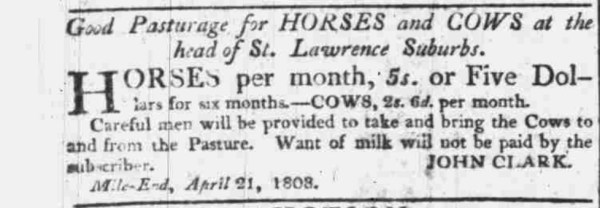
Screenshot

Clark (1767-1827), an English-born butcher, acquired the land he would call Mile End Farm in several transactions, including purchase agreements and leases, between 1804 and 1810.2 Like most farms in Quebec, it was long and narrow. At its greatest extent in 1810, it measured 2.5 kilometers from south to north, and between 400 and 550 meters wide. Clark was almost certainly the one who chose the name Mile End. The centre of his property was about a mile north of the small city of Montreal, and the area might have reminded him of another Mile End, a mile east of London, England. The name caught on and has been in use ever since.
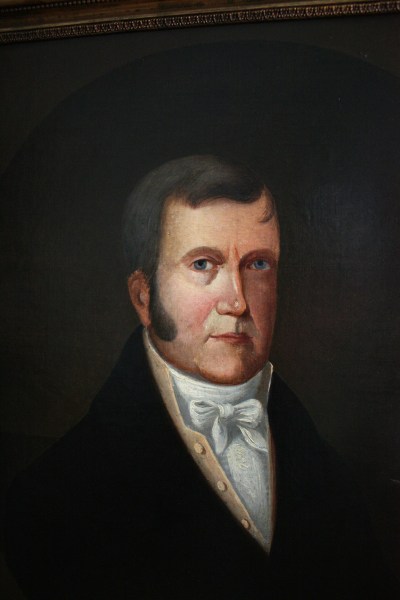
John Clark, a butcher from Durham, England, settled in Montreal around 1797. Portrait in a private collection.

When Montreal was founded in 1642, Mile End was probably uninhabited. The ground was too rocky for settlements or agriculture, and few Indigenous artefacts have been found there. The northeastern region of the Island of Montreal was covered by a vast cedar forest. The heart of Mile End was also forested, but there, both cedar and ash trees were the dominant species. This forest was still intact when the Sulpician priests mapped the area in 1702, but as the city’s population grew — it stood at around 1,200 residents in 1700 – more and more trees were cut to provide firewood.   

By 1780, most trees had disappeared from the foot of the mountain, replaced by houses, farm buildings, hay fields and pastures. In the Mile End area, livestock pastures, vegetable crops, tanneries and quarries dominated the countryside, and orchards were planted in the mid-1800s.

In 1663, the Sulpician priests became the seigneurs, or feudal lords, of the entire island. In 1701, the Hôpital Général acquired an extensive piece of land from the Sulpicians in the future Mile End area, and the Grey Nuns took over the hospital and all its lands in 1747. In 1803, the nuns sold the piece of land that would become Mile End Farm to two masons, Jean-Baptiste Boutonne and Joseph Chevalier. They wanted to quarry its stone and sand for building materials.

The masons had to pay the Grey Nuns a rente constituée (annual interest), as well as yearly seigneurial dues to the Sulpicians. So when John Clark bought the property – the first part of his Mile End Farm — in 18044 and gave Boutonne and Chevalier the right to continue collecting building materials for seven years after the sale, they must have been relieved. Meanwhile, Clark found another use for the land, first advertising pasture for other peoples’ cows in 1808.

When the same ad for livestock pasturing at Mile End Farm appeared the following year, it was placed by Phineas Bagg (c.1751-1823) and his son Stanley Bagg (1788-1853), my four-times and three-times great-grandfathers. A farmer from western Massachusetts, Phineas had brought his family to Canada around 1795. Initially he worked as an innkeeper in LaPrairie, near Montreal, and then the family moved onto the island. In 1810, Phineas and Stanley signed a lease with John Clark.5 Paying an annual rent of 112 pounds, 10 shillings, they ran the Mile End Tavern and managed the farm for the next seven years before subletting to another innkeeper.

description below.

The lease described the property as having a two-storey house (which at some point must have been converted into the tavern), a barn, stable and outbuildings. The Baggs were required to sufficiently manure the pastures and arable land, to cultivate and to perform road maintenance and other required duties. They were permitted to cut wood for fencing and firewood, but they had to preserve the maple grove. They were also permitted to cut and remove stone.

No doubt the tavern brought them a good income since it was located at an important, if somewhat remote, intersection. Stanley must have attracted many additional customers after he built a racetrack nearby. In May 1811, he signed an agreement with the Jockey Club of Montreal, subletting a piece of land to the club and promising to build the track within five weeks. The club supervised the races. The track, partially on land leased from the Sisters of the Hôtel-Dieu, was about a mile in circumference and what is now Jeanne Mance Park, extending east to Saint-Laurent. It was most likely the first racetrack in Montreal.6

Another reference to Mile End appeared in the Gazette on August 4, 1815 when Stanley Bagg, Mile End Tavern, placed a notice offering a reward for information about a lost bay horse, about 10 years old, with a white face and some white about the feet.7

In 1819, Stanley married John Clark’s daughter, Mary Ann (John Clark was also my four-times great-grandfather). Their son, Stanley Clark Bagg (1820-1873), eventually inherited the Mile End Farm, as well as other properties Clark had owned nearby.

In the second half of the 19th century, Stanley Clark Bagg began subdividing and selling the properties he had inherited from his father and grandfather. He died in 1873 and the next generation of the family continued to sell building lots from the Stanley Clark Bagg Estate.

In 1891, they sold most of the Mile End Farm property to McCuaig and Mainwaring, a pair of promoters from Toronto who envisioned a high-end residential suburb they called Montreal Annex.8 The project got off to a slow start because basic services such as water, sewers and streetlights were nonexistent and a promised electric tramway did not materialize in time. A recession that started in 1893 put an end to their dreams. A few years later another group of investors, the Montreal Investment & Freehold Company, took over the property and the area developed as a mixture of duplexes, triplexes and commercial buildings.

Meanwhile, the Mile End Hotel continued to appear in city directories at the corner of Saint- Laurent and Mount Royal until 1900. The property was expropriated for road widening in 1902 and the building was demolished. A department store had replaced it by 1906.

Description of Map: The areas with a greyish tinge are the areas that John Clark held by lease rather than owning them; none of them ever came back to Clark-Bagg possession after the leases ended. The yellow areas are cutouts belonging to and reserved by other people, excluded from the rectangles describing the property leased to P & S Bagg in 1810. Mile End Farm was bounded by the modern Saint-Laurent Blvd. in the east, while the future Park Avenue was just to the west and Pine Ave. would have been the southern boundary. RHSJ refers to the Religieuses Hospitalières de Saint-Joseph de Montréal, a religious order dedicated to caring for the sick.

This article also appears in my personal family history blog, www.writinguptheancestors.ca.

See also:

Janice Hamilton, John Clark, 19th Century Real-Estate Visionary, Writing Up the Ancestors, May 22, 2019, https://www.writinguptheancestors.ca/2019/05/john-clark-19th-century-real-estate.html

Janice Hamilton, The Life and Times of Phineas Bagg, Writing Up the Ancestors, Oct. 17, 2018, https://www.writinguptheancestors.ca/2018/10/the-life-and-times-of-phineas-bagg.html

Janice Hamilton, The Life and Times of Stanley Bagg (1788-1853), Writing Up the Ancestors, Oct. 5, 2016, https://www.writinguptheancestors.ca/2016/10/the-life-and-times-of-stanley-bagg-1788.html

Notes and Sources

1.  Mount Royal Avenue is the continuation of Côte Sainte-Catherine Road, which traverses the northeast slope of Mount Royal and continues east of Saint-Laurent Boulevard. Saint- Laurent, now a busy commercial street, was at one time the only road leading north from city to the Rivière des Prairies, on the north shore of Montreal Island. Built by the Sulpician priests in 1717, Saint Laurent was initially known as Le grand chemin du Roy – the Great King’s Highway. Over the years it has been known by many names, English and French, including Chemin Saint-Laurent, St. Lawrence Street and “the Main”. Since 1905, its official name has been Boulevard Saint-Laurent.

2.  Yves Desjardins, Histoire du Mile End, Québec: Les Ēditions du Septentrion, 2017, p.  22.

3.  Island of Montreal property owners were required to pay dues to the Sulpicians every year until the seigneurial system was gradually abolished there, starting in 1840. The system was abolished in the rest of Quebec in a gradual process starting in 1854.

4.       Louis Chaboillez, n.p. no 6090, 30 May 1804. A reference to the purchase also appears in J.A. Labadie, n.p. no 16733, 7 June 1875. This was the inventory of Stanley Clark Bagg’s Estate. It includes the name of the seller, the date of the sale and the notary who prepared the deed. This part of Mile End Farm is item #264.

5.  Jonathan A. Gray, n.p. no 2874, 17 Oct. 1810.

6.  Justin Bur, Yves Desjardins, Jean-Claude Robert, Bernard Vallée, Joshua Wolfe, Dictionnaire historique du Plateau Mont-Royal (Montreal, Éditions Écosociété, 2017), p 107.

7.  Justin Bur, “À la recherche du cheval perdu de Stanley Bagg, et des origines du Mile End.” A la recherche du savoir: nouveaux échanges sur les collections du Musée McCord; Collecting Knowledge: New Dialogues on McCord Museum Collections. Joanne Burgess, Cynthia Cooper, Celine Widmer, Natasha Zwarich. Montreal: Éditions MultiMondes, 2015, p. 143.

8.  Justin Bur, Yves Desjardins, Jean-Claude Robert, Bernard Vallée, Joshua Wolfe, Dictionnaire historique du Plateau Mont-Royal (Montreal, Éditions Écosociété, 2017), p 271.
The Bagg Family Dispute, part 2

In collaboration with Justin Bur

When my great-great grandfather Stanley Clark Bagg died in 1873, his wife and five children inherited large tracts of farmland on the island of Montreal, land that they made a family business of selling.1 But misunderstandings over who owned what and how to keep track of the income created a lot of difficulties. 

Stanley Clark Bagg (I usually refer to him as SCB to differentiate him from his father, Stanley Bagg, and his son, Robert Stanley Bagg,) had inherited most of this property from his grandfather John Clark (1767-1827).2 But there were conditions attached to some of these bequests: Clark’s 1825 will stated that land that comprised the Durham House property, and land comprising Mile End Farm, should pass down through three generations of descendants before it could be sold. The legal term for this, in civil law, is a substitution. However, a change in the law, passed in 1866, limited substitutions to two generations.3 That meant that the generation of Robert Stanley Bagg and his sisters Katharine, Amelia, Mary and Helen were the last generation affected by the substitutions and they could do what they liked with these properties.

The substitution clause referring to Durham House was part of the 1819 marriage contract between SCB’s parents, in which John Clark gave that property to his daughter as a wedding present.4 (It is shown in dark green on the map below.)

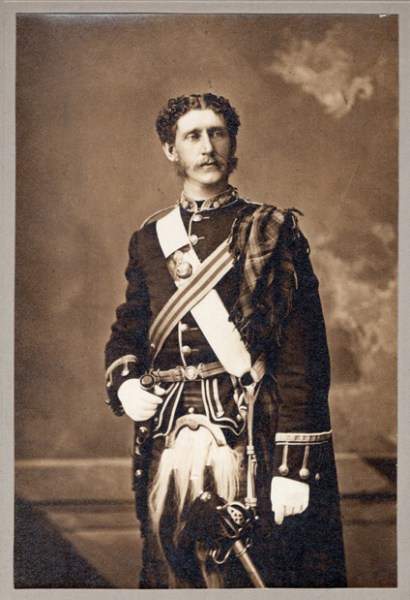
Robert Stanley Bagg, # II-57308.1, 1880, Notman & Sandham, McCord-Stewart Museum; Bagg family collection.

When SCB died at age 53, none of his family members was ready to manage these properties. His only son, Robert Stanley Bagg, or RSB, (1848-1912) had recently graduated in law, but he had no experience in renting or selling properties. Furthermore, neither the notary who completed the inventory of SCB’s estate in 1875,5 nor SCB’s widow, nor his children were aware of the substitutions. The Durham House and Mile End Farm properties were treated as though they were no different than the other properties belonging to the late SCB’s estate.

The 22-acre Durham House property (lots 19–28 and 101–115, cadastre of the Saint-Laurent ward) was located north of Sherbrooke Street, on the west side of today’s Saint-Laurent Boulevard. SCB had subdivided part of it and sold lots from it as early as 1846. In 1889, RSB, who was an executor of his father’s estate, subdivided the Upper Garden of Durham House (lot 19, Saint-Laurent ward) and began to sell those lots. He signed the property documents as “R. Stanley Bagg for the estate,” and his mother, Catharine Mitcheson Bagg, also signed.

But the Durham House property actually belonged jointly to the five Bagg siblings. It was not part of SCB’s estate, and his widow could not inherit this land, sell lots from it or acquire income from it. Yet that is what she did: the name Dame Catharine Mitcheson, widow of Stanley Clark Bagg, appeared on five deeds of sale in 1889.  

It is not clear who discovered the error, but perhaps someone close to the Bagg family took a good look at the property documents and noticed these details. SCB’s middle daughter, Amelia Bagg, was to marry Joseph Mulholland the following year, and he worked as a real estate agent for the Stanley Clark Bagg Estate. Also, Joseph’s brother-in-law, John Murray Smith, was about to purchase several of the Durham House lots. Any one of these people could have discovered the marriage contract and John Clark’s will, which SCB had registered at the provincial land registry office.6

This map shows details of several of the late Stanley Clark Bagg’s properties in 1875, when an inventory was made of his estate. Durham House and its upper garden, as well as a small part of the Mile End Farm and SCB’s home, Fairmount Villa, are overlaid over a modern map of the island of Montreal. Mile End Lodge had been John Clark’s home. At that time, the densely populated part of Montreal was south of Sherbrooke Street. Mount Royal Park, opened in 1876, is on the left. Map created by Justin Bur, based on two open data sources: physical geography from CanVec, Natural Resources Canada and modern streets from Geobase, City of Montreal.

As soon as they became aware of the situation, the Bagg siblings tried to remedy it with a notarized document called a Ratification.7 It said that, as the actual owners, they ratified and approved the five sales made by their mother. A few weeks later, in January and April of 1890, the Bagg siblings sold five lots to John Murray Smith and four to James Baxter, and this time, the vendors named in the deeds were correct.

Next, Catharine and her five children took a step to sort out the income from lots from the Durham House property that SCB had sold in his lifetime. They did not involve a notary, but tried to look after the issue as a family, signing a document called an Indenture on May 12, 1890.8

The indenture stated that neither Catharine nor her children had known about the marriage contract until December, 1889. The Bagg children (by now all were adults) declared the love and affection they had for their mother and their desire to settle the matter amicably, and released her from all claims and demands. For her part, Catharine agreed to repay to her children the capital sums she had received from the sale of these properties. Because she had paid taxes and expenses on them, the children made no claim for the interest payments she had received.

Action Demanded

No doubt confident that everything had been resolved, RSB took his wife and two young daughters on an extended trip to England, leaving his mother and sisters to handle offers for land sales during his absence. After his return, however, the family dispute blew up once more, this time over the Mile End Farm property. Two of the married sisters, Katharine Sophia Mills and Mary Heloise Lindsay, hired a notary to represent their interests.

Notary Henry Fry sent a complaint on their behalf to the three living executors of SCB’s will — Catharine Mitcheson Bagg, Robert Stanley Bagg and notary J.E.O. Labadie – demanding immediate action. Dated July 22, 1891 and titled Signification and Demand,9   this document stated that the executors of SCB’s will were bound, upon his death, to deliver over the Durham House and Mile End Farm properties to his children, and to produce an account of the administration of these properties.

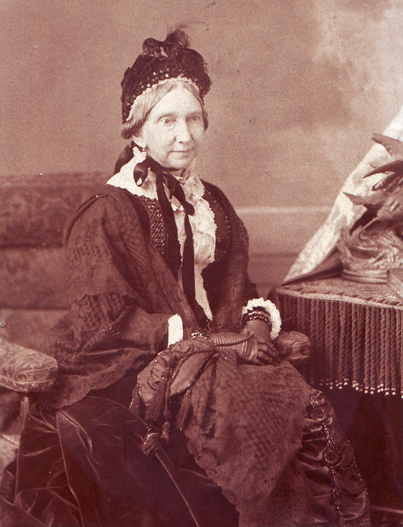
Catharine Mitcheson Bagg, #71147, 1883, William Notman & Son, McCord-Stewart Museum; Bagg family collection.

It stated that the executors “have wholly failed and neglected to render such account, but on the contrary, have, since the death of the said Stanley Clark Bagg, continued in possession of the said substituted property and have even sold and alienated portions thereof and have received the consideration money of such sales and have received and retained the entire revenues therefrom and that although they have been recently requested to render such account, the said executors have neglected and refused to do so.”

The executors had until August 10 to provide an account of the property belonging to the substitutions. They must have met this demand because no further complaints have turned up. Furthermore, the Bagg siblings seem to have found a better solution to their dilemma: they partitioned the Durham House property and sold a large chunk of the Mile End Farm.

In September 1891, the remaining unsold lots of the Durham House property were grouped into five batches, and the five siblings pulled numbers out of a hat to determine who got which ones.10 They could then sell these lots, or keep them, as they pleased.

Two months later, the five siblings sold 145 arpents of land, including most of the Mile End Farm and a section of the adjoining Black Gate Farm, to Clarence James McCuaig and Rienzi Athel Mainwaring,11 These Toronto land developers had plans to develop an exclusive housing development they called Montreal Annex in the area.12

As for keeping track of property sales, Amelia, the middle Bagg sibling who was now married to Joseph Mulholland, took on that responsibility. Starting in 1892, she kept a ledger in which she wrote down the dates, names of purchasers and prices paid for each of the lots that were part of the Mile End Farm and Durham House properties.13

This article is also posted on my personal family history blog, www.writinguptheancestors.ca

See also:

Janice Hamilton, “Bagg Family Dispute Part 1: Stanley Clark Bagg’s Estate”, Writing Up the Ancestors, Dec. 13, 2023, https://www.writinguptheancestors.ca/2023/12/bagg-family-dispute-part-1-stanley-clark-baggs-estate.html

Janice Hamilton, “Aunt Amelia’s Ledger” Writing Up the Ancestors, April 26, 2023,  https://www.writinguptheancestors.ca/2023/04/aunt-amelias-ledger.html

Janice Hamilton, “Stanley Clark Bagg’s Family”, Writing Up the Ancestors, Feb. 29, 2020,  https://www.writinguptheancestors.ca/2020/02/stanley-clark-baggs-family.html

Janice Hamilton, “My Great-Great Aunts, Montreal Real-Estate Developers”, Writing Up the Ancestors, October 11, 2017, https://www.writinguptheancestors.ca/2017/10/my-great-great-great-aunts-montreal.html

Janice Hamilton, “A Home Well Lived In”, Writing Up the Ancestors, Jan. 21, 2014, https://www.writinguptheancestors.ca/2014/01/a-home-well-lived-in.html

Notes:

The Indenture, the Deed of Ratification and several other documents mentioned in this article were donated to the archives of the McCord Stewart Museum in Montreal around 1975 by my cousin.

This article was written in collaboration with urban historian Justin Bur. Justin has done a great deal of historical research on the Mile End neighbourhood of Montreal (around Saint-Laurent Blvd. and Mount Royal Ave.) and is a longtime member of the Mile End Memories/Memoire du Mile-End community history group (http://memoire.mile-end.qc.ca/en/). He is one of the authors of Dictionnaire historique du Plateau Mont-Royal (Montreal, Éditions Écosociété, 2017), along with Yves Desjardins, Jean-Claude Robert, Bernard Vallée and Joshua Wolfe. His most recent article about the Bagg family is La famille Bagg et le Mile End, published in Bulletin de la Société d’histoire du Plateau-Mont-Royal, Vol. 18, no. 3, Automne 2023.

Sources:

  1. Stanley Clark Bagg will, J.A. Labadie, n.p. no 15635, 7 July 1866
  2. John Clark will, Henry Griffin, n.p. no 5989, 29 August 1825
  3. In 1866 the government of Lower Canada enacted the Civil Code. This was a compilation and revision of the civil law inherited from the French regime; article 932 of the code put a two-generation limit on substitutions.
  4. Marriage contract between Stanley Bagg and Mary Ann Clark, N.B. Doucet, n.p. no 6489, 5 August 1819
  5. Stanley Clark Bagg inventory, J.A. Labadie, n.p. no 16733, 7 June 1875
  6. John Clark’s will and the marriage contract between Stanley Bagg and Mary Ann Clark are still publicly available at the Registre foncier du Québec. John Clark’s will had been transcribed there in 1844 (Montréal ancien #4752). The marriage contract (Montréal Ouest #66032) was transcribed in 1872. SCB’s will was transcribed into the register (Montréal Ouest #74545) in 1873.
  7. Deed of Ratification, Adolphe Labadie, n.p. no 2063, December 12, 1889, register Montreal Est #25109, McCord Stewart Museum (P070/66,3) This notary was a son of notary J.E.O. Labadie, who was an executor of the will, and grandson of notary J.A. Labadie, who had handled SCB’s will and the inventory of his estate.
  8. Indenture, May 12, 1890, McCord Stewart Museum (P070/B6,3).
  9. Signification and Demand, Henry Fry, n.p. no. 2234, 22 July 1891, McCord Stewart Museum (P070/B6,3).
  10. Deed of Partition, John Fair, n.p no 3100, Sept. 10, 1891, register Montreal Est #29503, McCord Stewart Museum (P070/B8,4).
  11. Deed of Sale, William de Montmollin Marler, n.p. #17571, 20 November, 1891, register Hochelaga-Jacques-Cartier #40225
  12. Justin Bur, Yves Desjardins, Jean-Claude Robert, Bernard Vallée, Joshua Wolfe, Dictionnaire historique du Plateau Mont-Royal (Montreal, Éditions Écosociété, 2017), p 271.
  13. Amelia Josephine Bagg Mulholland, Grand livre, 1891-1927, McCord Museum, Fonds Bagg, P070/B07,1. https://collections.musee-mccord-stewart.ca/en/objects/293626/a-j-mulholland-ledger (accessed April 3, 2023)