
As in other parts of Quebec, German-speaking immigrants, including some Loyalists with German roots, integrated well into life in the Eastern Townships and surrounding regions. This compilation describes the towns and villages where some of these people have lived from the late 1700s to the 20th century. It names the churches they attended and the cemeteries where they were buried, and it helps the researcher locate these records.
Tag Archives: research
German-speaking Quebecers in the Trois Rivières area
German-speaking individuals and families have been immigrating to Quebec for almost 350 years. The first German-speaking family in New France was that of Hans Bernhardt, who arrived in 1663. A few more families settled in New France between 1668 and 1690 and the first small wave of emigration from the Palatinate (German Rheinpfalz) region to North America occurred in 1673.
Following the War of 1812-1814, some soldiers and officers of the Regiment of Watteville and the Regiment de Meuron, who had fought alongside the British against the Americans, settled in central Quebec, primarily in Drummond, Arthabaska, Wolfe and Bagot counties.
Between 1815 and the creation of Germany in 1871, people emigrated from various germanic principalities, dukedoms and electorates. These German-speaking families settled in Montreal, Quebec City, Western Quebec, the Eastern Townships, the Laurentian Region and the south shore region of Montreal.
Much of this information comes from Dictionnaire des souches allemandes et scandinaves au Québec, by Claude Kaufholtz-Couture & Claude Crégheur, published by Septentrion, 2013. This book includes 4,500 biographies of Germanic settlers, identifies where they came from in Continental Europe, notes their marriages in Quebec and the marriages of their children.
This link leads to a short compilation of information on the records of German-speaking Quebecers in the Trois Rivières area, northeast of Montreal:
The German Presence in the Trois Rivieres area
Earlier posts include:
The German Presence in the Montreal Region (Feb. 7, 2016) https://genealogyensemble.com/2016/02/07/the-german-presence-in-the-montreal-region/
the Germanic Presence in Quebec City (Jan. 24, 2016) https://genealogyensemble.com/2016/01/24/germanic-presence-in-quebec-city/
German Churches and Cemeteries in Western Quebec and the Upper Ottawa Valley (Jan. 17, 2016) https://genealogyensemble.com/2016/01/17/german-churches-and-cemeteries-of-western-quebec-and-the-upper-ottawa-valley/
There are three more compilations on Germanic records to come.
The German Presence in the Montreal Region
The first German-speaking families probably came to Montreal around 1700. While this community has never been large, it has been well-organized: the German Society of Montreal was set up in 1835 and St. John’s Lutheran Church was established in 1853. Many families of German origin attended Protestant and Catholic churches along with their English, Scottish and French Canadian neighbours. This compilation lists many of the city’s churches and the repositories where their birth, marriage and burial records are kept.
Tracking Montreal Ancestors: Images of the Past
Many genealogists are aware that the Montreal’s McCord Museum has a large collection of digitized photographs taken in the 19th century studios of William Notman (1826-1891). Although it is best known for its photographs of Montreal’s English-speaking elite, the collection goes far beyond the studio, including pictures of Montreal’s Victoria Bridge, the Canadian Pacific Railway, First Nations people across the country and ordinary Montrealers at work and at leisure.
This is only one image collection of potential interest to genealogists researching Montreal. As you try to try to imagine the people and places that would have been familiar to your ancestors in what was once Canada’s largest city, here are some other resources that might inspire you.
The place to start exploring the McCord Museum’s images is http://www.musee-mccord.qc.ca/en/keys/collections/. This page links to the museum’s online collection of more than 122,000 images, including paintings, prints, drawings and photos. There are documents such as diaries, letters and theatre programs, as well as costumes and archaeological objects. While the museum’s collections focus on Montreal, they include images and objects from the Arctic to Western Canada and the United States. You can search the McCord’s online collection for an individual name, or you can browse time periods, geographic regions and artists.
The McCord also has a flickr page, https://www.flickr.com/photos/museemccordmuseum/albums.The historically themed albums on the flickr page include old toys, Quebec’s Irish community and an homage to women.
The Bibliothèque et Archives nationales du Québec (BAnQ) is another excellent source of digital images, including photographs, illustrations, posters (affiches) and post cards (cartes postales) from the past. To start exploring these collections, go to http://www.banq.qc.ca/collections/images/index.html.
There are two collections of special interest to people with Montreal roots. The first is a collection of 22,000 photos taken by Conrad Poirier (1912-1968), a freelance photojournalist who worked in Montreal from the 1930s to 1960. He covered news (nouvelles), celebrities, sports and theatre, and he did family portraits, weddings, Rotary Club meetings and Boy Scout groups. I even found a photo of myself at a 1957 birthday party (fêtes d’enfants). You can search (chercher) the collection by subject or by family name.
The other collection of interest to people researching Montreal is the BAnQ’s Massicotte collection (http://www.banq.qc.ca/collections/collection_numerique/massicotte/index.html?keyword=*). Edouard-Zotique Massicotte (1867-1947) was a journalist, historian and archivist. The online collection mainly consists of photos and drawings of Montreal street scenes and buildings between 1870 and 1920. Some illustrations come from postcards, while others are clippings from periodicals. There are also a few blueprints and designs. The accompanying text is in French. You can search this collection by subject, by location, date of publication or type of image, or you can put in your own search term.
Philippe du Berger’s flickr page https://www.flickr.com/photos/urbexplo/albums is a gold mine of Montreal images. He includes contemporary photos of the city, including neighbourhoods that have recently been changed by big construction projects such as the new CHUM hospital. There are old photos of neighbourhoods such as Griffintown, Côte des Neiges and Hochelaga-Maisonneuve and he illustrates the transformation of the Hay Market area of the 1830s that eventually became today’s Victoria Square. Some albums include old maps to help the viewer put locations into geographic context.
The City of Montreal Archives has uploaded thousands of photos to its flickr page, https://www.flickr.com/photos/archivesmontreal/albums/. They are arranged in albums on various topics, ranging from city workers on the job to lost neighbourhoods, newspaper vendors, sporting activities and cultural events.
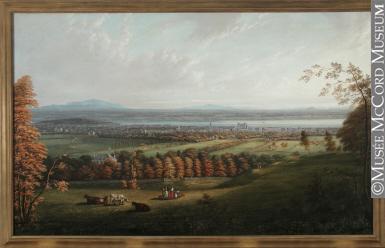
Photo:
James Duncan. Montreal from the Mountain, 1830-31. M966.61, McCord Museum. http://collection.mccord.mcgill.ca/en/collection/artifacts/M966.61?Lang=1&accessnumber=M966.61
This article is also posted on writinguptheancestors.blogspot.ca
German Churches and Cemeteries of Western Quebec and the Upper Ottawa Valley
This compilation is designed to help researchers find German-speaking ancestors in Western Quebec and the Upper Ottawa River Valley area of Ontario. It identifies several books that cover the topic, the towns where German-speaking immigrants settled, the Lutheran churches that served their spiritual needs and the cemeteries where they were buried. It also lists repositories where the archives of these institutions can be found and genealogical societies in these areas.
The German Churches and Cemeteries in Western Quebec January 12, 2016
Genealogy Societies of France
Genealogy Societies in France
If you are interested in joining a genealogical society in France to pursue your research, the information found within this list may be very helpful.
The document contains a comprehensive list of 95 departments and their genealogical societies.
The following information is noted for each of the societies.
- location,
- number of years in existence
- email address
- internet addresses
- cost of membership
Right Click and choose open in a new window: Genealogy Societies of France.
The Germans in Quebec – Their Churches
Their Churches from 1759 onward
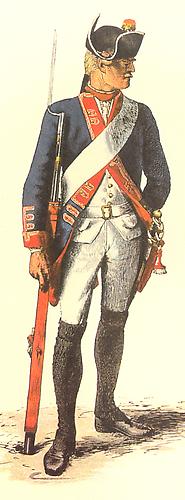
Among the Germanic people who emigrated to Québec, we find those who fought with the Imperial Army during the British Conquest of 1759 plus those who fought for the British during the wars of the American Revolution and of 1812. An appreciable number of these Germanic soldiers settled into Québec once their tours of duty were concluded. Other German immigrants who spoke some forms of the German language originated from various principalities, dukedoms, electorates, counties, landgraviates, margraviates of Germany, but also from surrounding kingdoms such as Prussia, Silesia, Bohemia, Hungary, Poland, Austria, United Netherlands, Austrian Netherlands, Switzerland, Palatinate, Strasbourg and Luxembourg.
 Click the following link The Germans in Québec
The Europeans in Quebec and Their Churches
The Europeans in Québec Lower Canada and Québec
Churches of the Scandinavian, Baltic States, Germanic, Icelandic people in Montréal, Québec City, Lower St. Lawrence, Western Québec, Eastern Townships, Richelieu River Valley – The churches of immigrants from Sweden, Norway, Denmark, Finland, Estonia, Latvia. Lithuania, Iceland, Germany, the Netherlands, Belgium, Switzerland, Austria plus those from Eastern European countries – Churches which were organized in Québec from 1621 to 2005. Also included within this document you will find a number of book titles relating to the subject.
Click the link:
The Europeans in Québec
French Canadians in Ontario
French Canadians in Ontario
This compilation “French Canadians in Ontario” consists of lists of the many of the churches throughout Ontario where our French Canadian ancestors migrated and explains where the document of births, marriages and deaths are located for the many parishes.
This compilation is a useful tool for those who may not know exactly where these records are now located. Many can be found at BanQ, the national archives located on Viger Street in Montreal, Quebec.

Highlight the file below and right click to open link in a new window
French Canadian Research tips
To look up French-Canadian Catholics:
1. Plug in the name of your ancestor in to the BAnQ archives directly (refer to our link for the right address): no need to know the church or village name.
2. Remember that in Quebec, women are listed under their birth family name in records, from birth to death, regardless of whether they married or not. There may ‘’wife of’’ or ‘’widow of’’ also included.
3. To make it even easier, parents are listed on marriage records.
You can use the Drouin collection of books, one for men and one for women, with marriages 1760-1935, or online Drouin or Ancestry or Family Search at home or at the Quebec family History Society or at numerous other sources.
 Genealogy Ensemble