Tag Archives: Westmount

Grandfather’s Diary

The Diary

My grandfather, William Harkness Sutherland, kept a small red leather diary from January 1st, 1920, to December 31, 1924. During those five years, he regularly jotted down notes. Not his deepest thoughts or a record of history, just about his family and his life.

The Diary begins, “Thursday, January 1st 1920, “Very cold went to Monks for dinner and tea.” Minnie his wife and the children were still in Toronto for a Christmas visit to her mother and sister. When Grandfather was home alone, he was often invited out to eat as no mention is made of him preparing his own meals.

The first page of the diary

William was married with three children, lived in Westmount, Quebec, attended church regularly, worked as a civil engineer, owned a car, played golf and often visited friends for the afternoon and tea.

Donald, Bessie and Dorothy Sutherland about 1920

My father, Donald Sutherland, was two to seven years old during those years. It is interesting to see how often he and his two older sisters, Bessie and Dorothy, were sick. They had all the childhood diseases, chicken pox, measles, mumps, whooping cough, as well as colds, flu and bilious complaints that lasted many days. They also had their tonsils and adenoids removed, but they had doctors who came to their house!

According to one entry, Minnie, my grandmother, was diagnosed with tonsilitis and Donald’s sore neck became mumps as he continued to have a swollen gland. “Tuesday, March 30, 1920, Drs. Craig and Shaw saw Donald this morning and Craig says the gland must be opened. Dr. Shaw brought Dr Bourne in the afternoon and they gave Donald an anesthetic and opened it, removing quite a considerable quantity of pus.” Amy, Minnie’s sister, came down from Toronto as most of the family was sick.

A few days later, Amy also became ill, so William called in Dr. Smythe. The doctor also checked Donald’s neck, which was again inflamed. “April 4, 1920, brought Dr Smythe home with us (from church) to dress Don’s neck. It was not necessary to probe it for when the bandage came off, it discharged freely. Dr, S. pressed it firmly and Donald kicked up a great fuss.” Imagine, four doctors visited the house within a week!

The children were better during the summer. Although one time, Donald cut his foot at the cottage while swimming, but luckily, there was a doctor just across the lake. Dr. Swaine came over, sewed it up and gave Donald a dollar.

Swimming in Brome Lake

The family often went for drives all around the city. William enjoyed having a car and would pick up friends and drive them all over Montreal, as not many people had cars or could drive.

Driving on Mount Royal, Montreal

A few incidents outside the family were written about, such as when Victoria Hall burned down on March 8, 1924. Some of the family were at their new home on Arlington Ave, which was being renovated, when “About 4:15 heard fire wagons went out and saw Victoria Hall burn. Watched until 6:30 and then went home for tea.” There was mention of another fire, the burning of the Sacre Coeur Hospital, March 15, 1923. “ Fire destroyed the Hospital on Decarie Boul. All patients were taken safely out, but the building was totally destroyed. Minnie went out to see it and then called at Donnelleys.”

It was a busy time in his life. The family moved from Grosvenor to Arlington Avenue. Then they built a cottage in Dunany, near Lachute, fifty miles north of Montreal. Two hours and twenty minutes was a quick trip, although many took three to four hours to the cottage, which can now be reached in just over an hour.
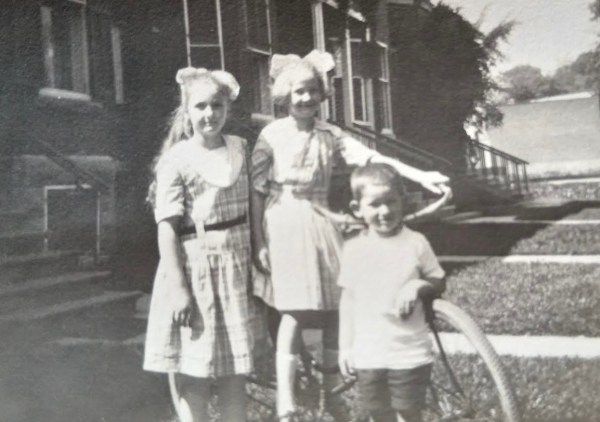
Bessie, Dorothy and Donald

Grandfather enjoyed playing golf. There are many entries about his games played at different golf courses, including who he played with and how he practiced indoors in warehouses during the winter. The Dunany Country Club was his favourite, where he was one of the founding members.

What would a diary be without talking about the weather. “October 31, 1920. Oct was an exceptional month, warm, an average of 7 degrees above normal. March 31, 1923. “Coldest March on record by about 10 degrees on average, still mid winter weather.” The last entry ,”December 1924 “Weather has been very cold for three weeks. At Davidson’s for tea on the 31st.”
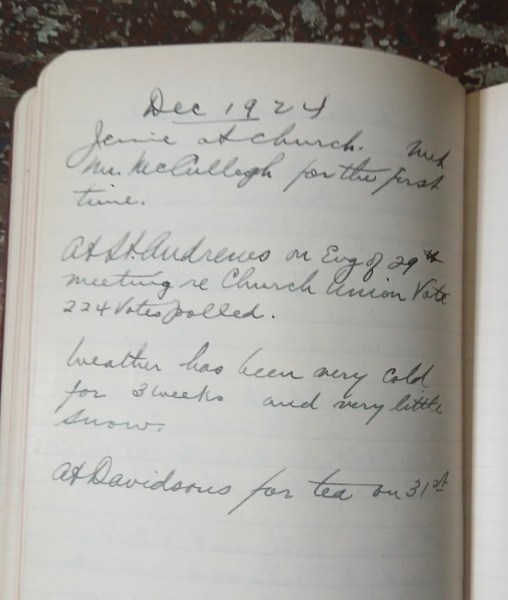
The last page

The diary concludes at the year’s end but since there were still many empty pages, I wonder why he stopped writing. Most likely, life got in his way. I am glad he wrote if even for a short time. By reading his diary, I learned a lot about a grandfather I never knew.

Notes:

The Diary is in the hands of the author. All the pictures are in the possession of the author.
The Life of a Church

St. Andrews United Church Westmount, Quebec 

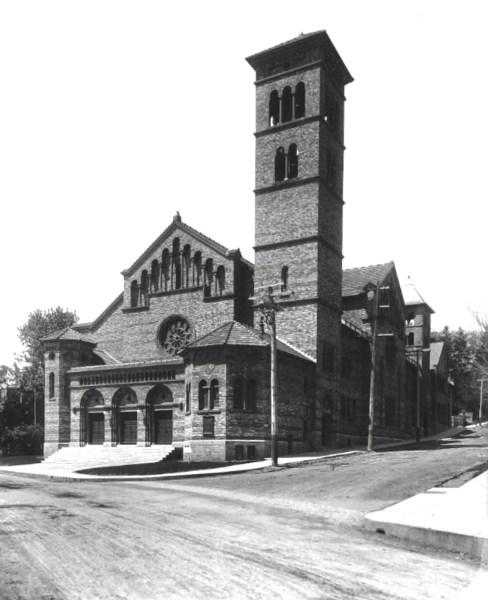
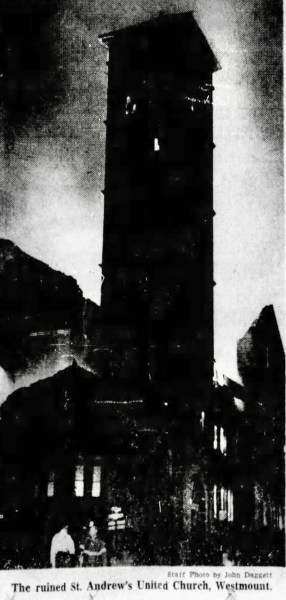
The night St. Andrews United Church, Westmount was razed by fire in 1965, I was thirteen. The whole sanctuary gone. Stained glass windows, memorials to many, melted, the organ burned and the small tower toppled. Charred red bricks littered Staunton Street. Only the tall tower and walls remained of the 57-year-old church.

Montreal Star Aug 4, 1965

This devastating fire occurred, even though the church sat just across the street from the Westmount fire station. The caretaker lived in the back of the building and when he smelled smoke in the afternoon, he went across the street to the fire station. The firemen looked through the whole church without finding anything amiss. They closed the fire doors to the Sunday School and left. Around midnight the church was engulfed in flames and all the firemen in the city couldn’t save the building. It was determined that the fire started in the basement under the sanctuary and hidden there, smouldered for hours. The minister, Reverend D.M. Grant holidaying in Nova Scotia was awakened with a telegram saying his church was burning.

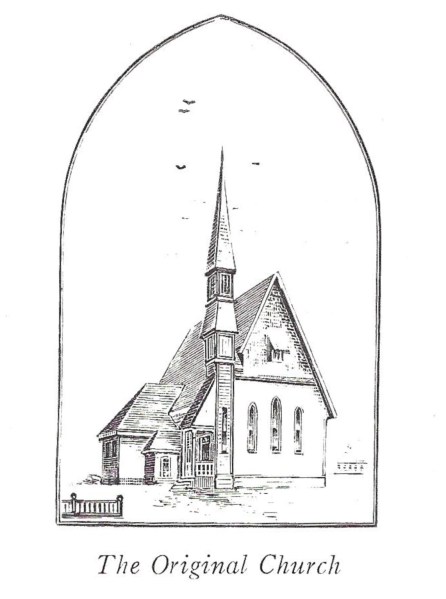
My family was not some of the early Westmount Presbyterians who worshiped in the Mission School from 1869 until 1886. They weren’t even members when a small frame church, Melville Presbyterian, was built on the corner of Cote St Antoine and Stanton St.

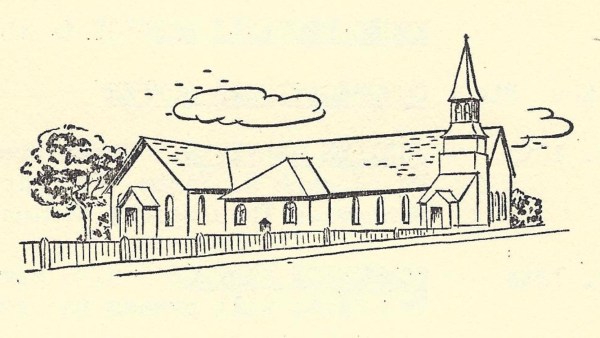
According to the booklets written for the Church’s golden and diamond Jubilees, St Andrew’s Church in Westmount was formally founded in 1900. “A difference of opinion caused the division of the members. One group retained the name of Melville Presbyterian Church and moved to Melville Ave where they built a new church. The other group, retained the present church site and became St Andrew’s Church.” In the newspapers of the day I found the reason for the split, alcohol consumption! When Rev. T. W. Winfield was hired, “a promise was extracted from the Reverend gentleman that he would refrain from intoxicating liquors while pastor of Melville Church.” Some members accused him of breaking that promise. The minority moved with the Minister and took the Melville name while the majority stayed in the building and chose the new name St Andrews Presbyterian. 

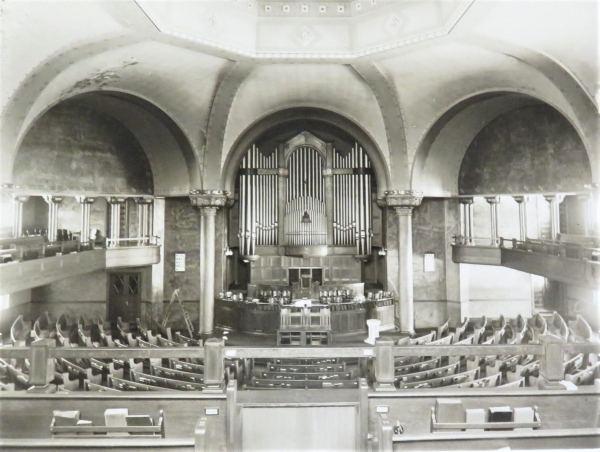
This congregation continued to grow, so in 1908 the red brick church was built. The large sanctuary, surrounded on three sides with balconies held 1100 worshipers. There was a rose window over the front doors and many other stained glass windows on the side walls. It was one of the Presbyterian churches that united with the Methodists and the Congregationalists in 1925 and became St. Andrews United Church.

St Andrew’s Church 1908-1965

I spent many hours in St Andrews Church growing up, as did my father. My grandparents joined the church when they moved from Chomedy Street to Grosvenor Ave in 1912. My grandfather, William Sutherland was a church elder and later so were both my parents. My grandmother Minnie Eagle Sutherland was very involved in church life being president of the Women’s Missionary Society and the Women’s Christian Temperance Union. My mother taught Sunday School and was the head of the Primary department for many years.

Church Interior photo by Alfred Peter Jorbes

We went to Church and Sunday School every week and won prizes for attendance. It was a church of many staircases. The hall behind the church had three sets and before and after church children would run around, up and down the stairs and through the halls. A back staircase off the kindergarten room led down to the basement. It was dark and gloomy and we would only venture down a few stairs before running somewhere else.

I remember Christmas pageants with Roman soldiers in costumes, clanking down the aisle with swords, helmets and leather skirts. I so admired the angels in their light blue satin dresses with wings that I wished I could be one. I was promised I could be an angel the next time they had a pageant but before that happened, the church burned including all the costumes stored in the basement.

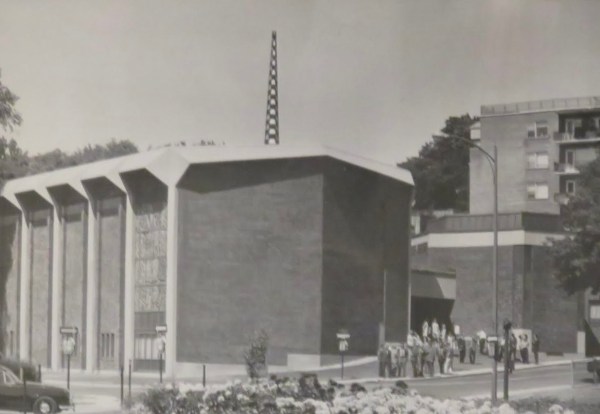
After the fire, the Church was rebuilt although with some controversy and another split. Some of the congregation left because they thought the million-dollar insurance money should be put to better use than having three underused United Churches in Westmount. They were out-voted and the new modern church opened in October 1967. It only held 500 people.

The rebuilt Church 1967

The congregation continued to age, fewer young families joined and people such as myself attended irregularly. St Andrews and Dominion Douglas United, amalgamated in 1985. The committee discussed which church to keep. Dominion Douglas, an old stone church on The Boulevard became the new home with the St Andrew’s congregation moving up the hill. Selwyn House School, across the street, bought St. Andrews. for their expansion. The chapel, including stain glass windows was deconstructed and rebuilt in the Dominion Douglas basement. In 2004 Erskine American United Church, on Sherbrooke Street joined St. Andrews-Dominion Douglas and another name was needed. The congregation became Mountainside United Church.

In less than twenty years Mountainside United Church became impossible to maintain and heat with a diminishing congregation. That building was sold to a developer and the congregation moved to the Birks Chapel on the McGill Campus. I have not attended a service there.

References:

Church Fire: The Montreal Star; Aug 4, 1965 page 3. Downloaded from newspapers.com Dec 29, 2022.

Westmount Mayor Praises Firemen: Montreal Star; August 10, 1965 page 6. Accessed from Newspapers.comDecember 29, 2022

Rising from its Ashes: Montreal Star; June 3, 1967 page 58 Accessed from Newspapers.com December 29, 2022.

Melville Church Difficulty: Montreal Gazette; 28, March 1900 page 10. Accesses from Newspaper.com January 25, 2023.

Date of Separation: Montreal Star; 12 May 1900 page 10. Accessed from Newspapers.com January 26, 2023.

Melville Presbyterian Church: https://cac.mcgill.ca/maxwells/details.php?recordCount=165&Page=4&id=155&pn=&cn=All&pr=All&ct=All&str=&mj=All&mn=All&sta=Built

St Andrew,s Church Golden Jubilee Celebration Bulletin November 5th to 12th 1950. IN the hands of the author.

Our Heritage St Andrew’s Church Diamond Jubilee 1900-1960 booklet. In the hands of the author.

Notes:

The back annex which housed the Sunday school was saved by the fire doors. Books and papers recovered from the Sunday school were stored in our basement for a time but they continued to smell of smoke and were later discarded. The manse next door was also saved but torn down for the new church. 

After the church fire may local churches and synagogues offered the congregation space to worship including Melville Presbyterian Church. I went to confirmation classes at Melville but we had Sunday services in the auditorium of Westmount High School.

Melville Presbyterian Church was built on Elgin Avenue later changed to Melville Avenue, facing Westmount Park. It is now Holy Trinity Serbian Orthodox Church. After the founding of the United Church in 1925, Melville Presbyterian Church amalgamated with Westmount Methodist to form Westmount Park-Melville United Church. The combined congregation worshipped in the Melville Church building for two years, until it was sold [back] to former members who remained with the Presbyterian Church. Victoria Hall served as a temporary site while the new Westmount Park-Melville Church, which is now known as the Westmount Park United Church was built on the western edge of Westmount Park.

Living in Westmount

One Sunday after the service at St. Andrew’s United Church, Westmount, a friend of my mother’s commented on an article in the Westmount Examiner. My mother said she didn’t read that paper as she’d never lived in Westmount. “Yes you did dear,” my father replied, “but you didn’t like it!”

img_0198

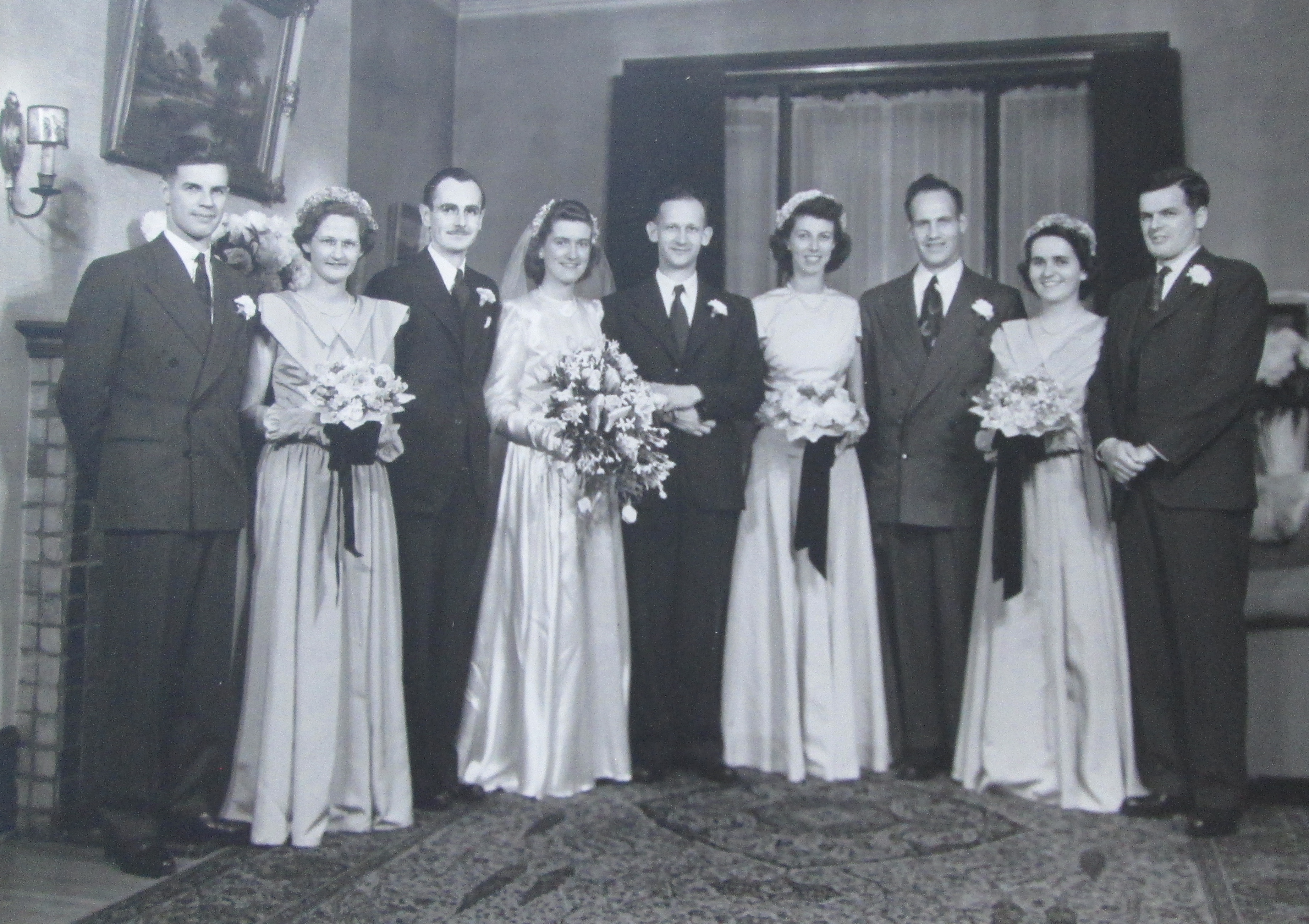
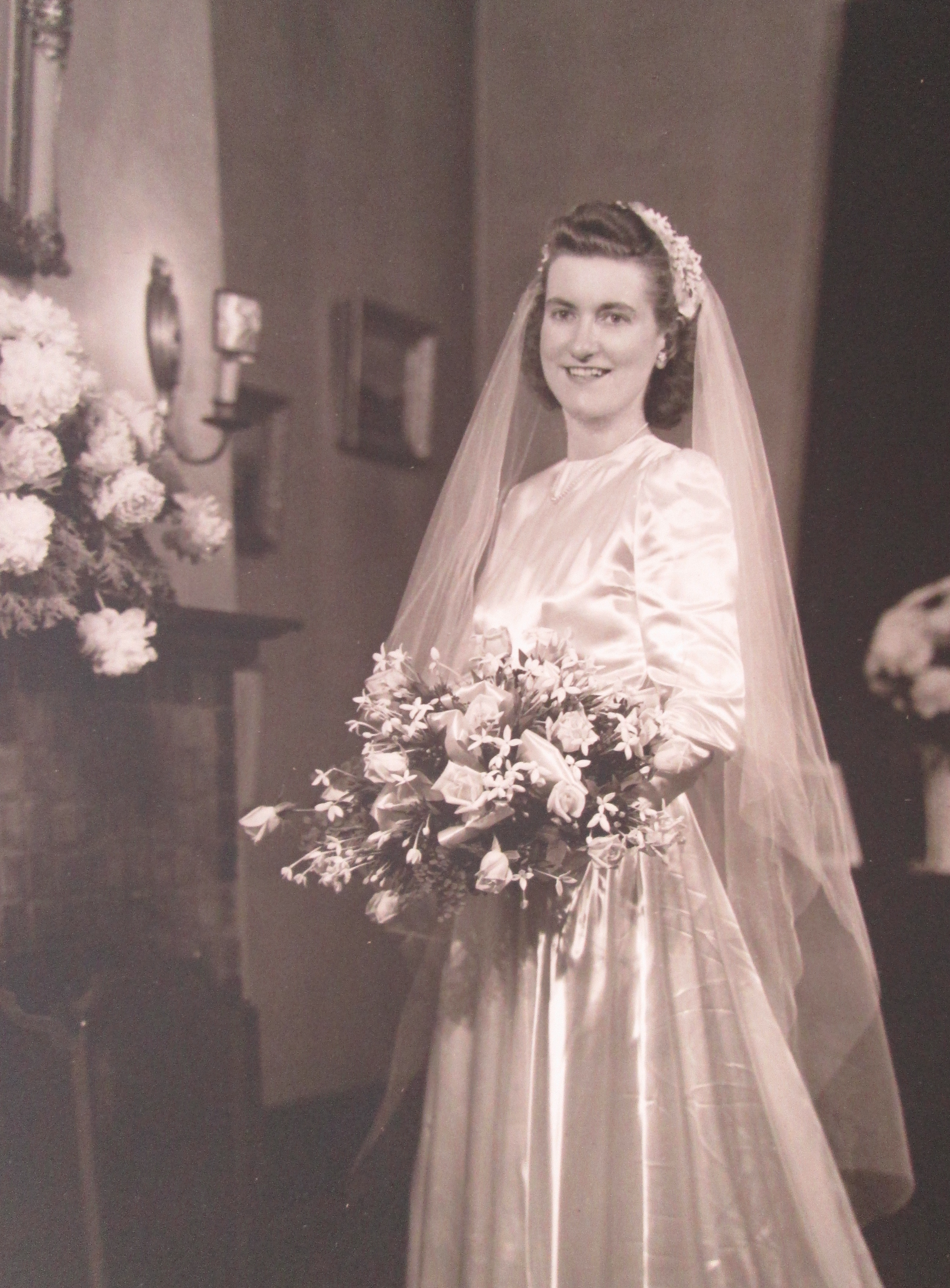
My parents, Donald William Sutherland and Dorothy Isabel Raguin were married on June 25, 1948. The recent war and the return of the soldiers made finding apartments very difficult. That summer they lived in Dorothy’s family home on Woodbury Ave in Outremont. Her parents, Beatrice and René Raguin were spending the summer at their cottage in Dunany, north of Montreal. Come fall and the return of the Raguins, there was no room for them there so they moved in with Donald’s mother, Minnie Eagle Sutherland and his sister, Dorothy on Arlington Avenue in Westmount.

IMG_0199

My mother found it difficult being a new bride and living with her mother-in-law. She didn’t have much to do. Two women came in to do the housework. Mrs Mikalachki did the heavy work and Mrs Boutilier the light cleaning and ironing. When Mom tried to do things for her husband she came up against Minnie Sutherland, a proud, willful woman who wanted all things done her way. Dorothy had been a Wren during the war and worked as a sick berth attendant in Halifax, Nova Scotia.  On leaving the navy, she renewed her teaching certificate and taught at Iona School in Montreal up until the day of her marriage. Sitting around listening to her mother-in-law tell her how things should be done wasn’t making her happy. She certainly didn’t want to start a family living there.

Luckily, one of her husband’s friends had an apartment on Maplewood (now Edouard Montpetit). He and his wife had bought a house and offered to have the apartment lease transferred to Dorothy and Don. My mother was thrilled with her own place but my father hated paying rent. My sister, Elizabeth Anne was born there and it was up to my mother to push the baby carriage to the post office to pay the monthly rent.

In the early fifties, the construction of new houses increased so my parents looked for a home to buy. What had been farmland and apple orchards in western Notre Dame de Grace were now streets with semi-detached brick houses. The show house on Cumberland Avenue, little longer and wider than others on the street was the one my father wanted. It had three bedrooms, a large basement and a good-sized backyard. The house was purchased on February 21, 1951, my sister’s first birthday. It was bought for $19,000 with a small mortgage. My father hated the mortgage payments and paid it off as quickly as he could.

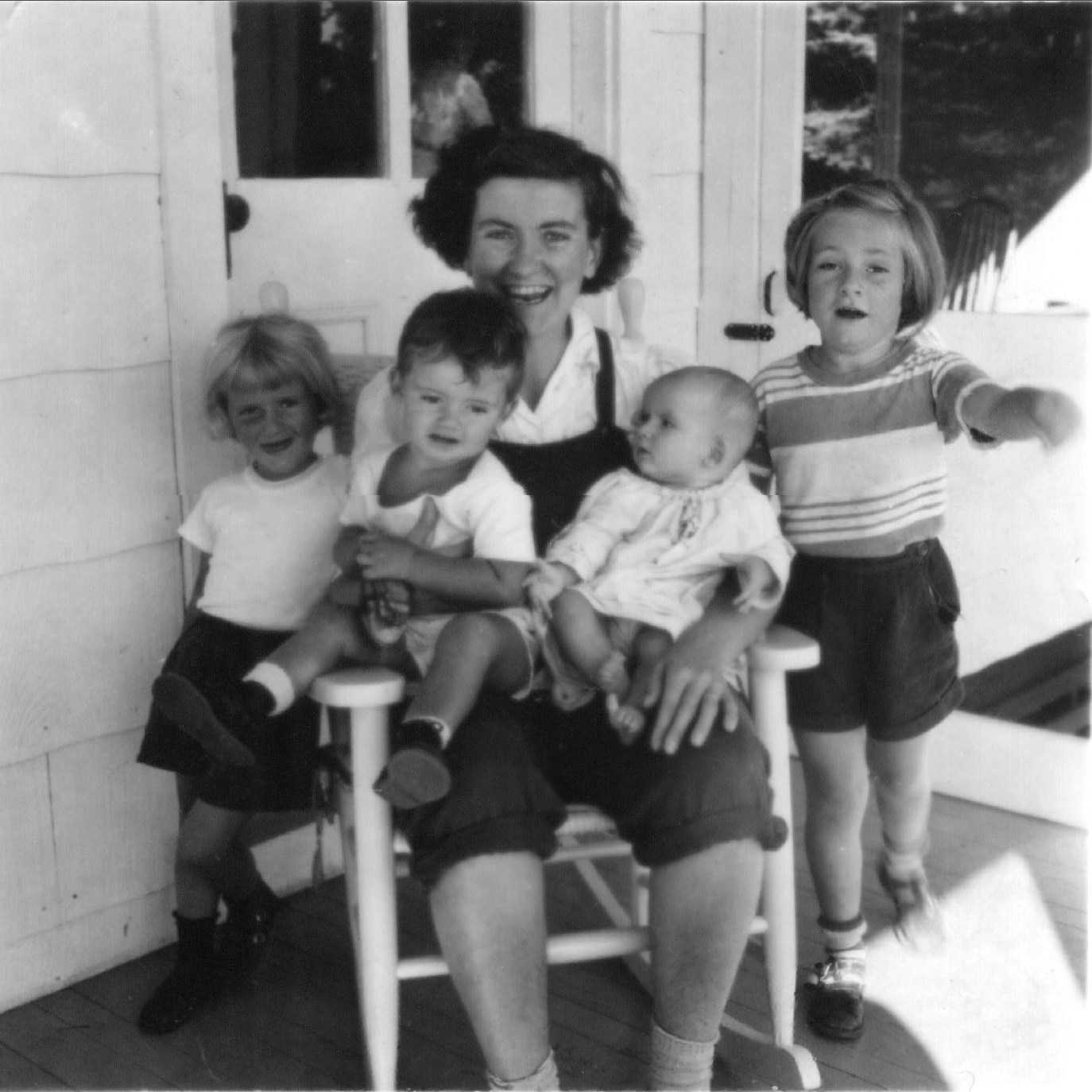
One child soon became four with the births of Mary Ellen, Donald John and Dorothy Jean. The house became too small. My parents considered moving, although they liked the area. They looked at houses in the West Island of Montreal, but none were just what they wanted. So, in 1960 they had an addition built onto their house. A bedroom, bathroom and den were built over the garage and the kitchen was enlarged, including a laundry room.

unnamed-4

In the mid-sixties, it became apparent that both grandmothers would soon need help. My parents considered buying a bigger house with a grannie suite, so both grandmothers could live with the family. This time they did look at houses in Westmount. My maternal grandmother lived with us for a short while but in the end, we didn’t need to move as both grandmothers died in 1967.

My mother continued to live in the house after my father died. She went into a residence in NDG in 2011 where she died in 2017 and never moved back to Westmount.


Notes:

This Sunday was mother’s Day  and May 11, 2020, would have been my mother’s 98th birthday so I posted this story as a remembrance of her.

My mother’s story of serving as a Wren https://wordpress.com/block-editor/post/genealogyensemble.com/4470

Personal recollections by Dorothy and Donald Sutherland told to the author.

One house in Pointe-Claire had a large closet with sliding doors in the upstairs hall where two little girls put their dolls during the visit and forgot them. The agent returned to look for them but they were gone and never seen again.

The Decaries and the Prud’hommes

I have driven along Cote St Antoine thousands of times, through Westmount and NDG, without realizing my ancestors in the 17th, 18th and 19th centuries also used the same route.

When researching one’s ancestors it is nice to find out where they lived, which city, town or area. In my case, the Decaries and the Prud’hommes can be located by the streets that bear their names. They farmed land in what is now the Notre Dames de Grace (NDG) section of Montreal. The Decaries have a boulevard and an expressway named after them. Prudhomme Ave is only four blocks long just west of Decarie and the street jigs and jags.

Jean Decarie dit Le Houx and Louis Prud’homme, two of my seven times great grandfathers, were some of the early settlers in Nouvelle France. They first obtained land in Ville-Marie as their names are on plots of a 1663 map.

Jean Decarie arrived from France before 1650. He was a stone mason and started quarries. He married Michelle Artus in 1654, after meeting her in Quebec City while there buying supplies. She had just arrived from France. By 1729 they are said to have had 82 descendants.

Louis Prud’homme was a brewer and a captain in the Montreal militia. He was another early inhabitant of Montreal as he married Roberte Gadois there in 1650. He was elected as one of the first wardens by the Sulpicians for the parish of Notre Dame.

The Decaries and Prud’hommes were two of 13 families granted land by the Sulpicians along Cote Saint-Antoine. Jean Decarie bought the first strip of land, concession 615 in 1675. These early roads allowed settlers to move away from the original walled city. The land grants were from the St Pierre River north to the mountain. The men began working the land while still living in Ville-Marie. They all had trades which allowed them to survive while they cleared the land, built houses and began farming. They were neighbours, friends and many intermarriages made them families.

For a time, the area was known as the “Haute Folie,” as those who lived there were fools to have left the safety of the walled city but these families continued to live in the same area for more than two centuries.

The land was on the south side on Mount Royal’s western summit (Westmount Mountain). It was good land for farming with many streams and wonderful views down to the St Lawrence River. They built their houses close to the roads and out of the wind,  not for the views.

The Decaries and the Prud’hommes became successful farmers whose land was passed from father to son and sometimes even to a daughter. In the 1731 survey, their farms were well developed and affluent with a house, barn and stable on all their properties. The Decaries were known for their melons. Musk or Mush melons, also known as Montreal melons, thrived in the perfect conditions of the area. There were also orchards covering much of the properties. Apple trees were common but also cherry, peach, plum and other tender fruit trees survived in the microclimate of the south facing ravines.

Intermarriages continued. My two-time great grandmother Sophie Marie Prud’homme (1812-1892) who married Barnabé Bruneau was the daughter of Jeramie Prud’homme (1766-1846) and Marie Louise Decarie (1769 -1855)

As the city grew, many of the farms were sub-divided and single family homes were built. Not all the owners were happy to sell their land. Although the Prud’hommes had earlier sold land to the church to build Église de Notre Dame de Toutes Grâces. Leon Prud’homme tried to fight expropriation of some of his lands by the Atlantic Railway. It was said to be “the most beautiful orchards in the country,” but the rail line was built. The first Decarie house was sold and demolished in 1912 by the Canadian Pacific Railway Company to build a roundhouse.

After more than 200 years the farms were gone.

My great uncle, Sydney Bruneau, used to walk with his children around eastern NDG and tell them that they were walking on their ancestors land, and they were!


For a story about Sophie Marie Prud’homme and her husband Barnabe Bruneau https://wordpress.com/post/genealogyensemble.com/1040


References:

The Settlement and Rural Domestic Architecture of Cote Saint-Antoine, 1675-1874. Masters thesis by Janet S. MacKinnon 2004. Faculty of Urban Planning, University of Montreal, Montreal, Quebec. https://core.ac.uk/download/pdf/80345357.pdf/

https://www.nosorigines.qc.ca/genealogie.aspx?lng=fr accessed Nov 9 2018.

Dictionary of Canadian Biography accessed Nov 9, 2018. http://www.biographi.ca/en/bio/prud_homme_louis_1E.html

La Patrie, 6 October 1888, page 6.

Notes:

The 13 original settlers were Jean Decarie, Louis Prudhomme, Marin Hurtubise, Jean Leduc, Rene Bouchard dit Lavallee, Joseph Chevaudier dit Lepine, Jean Cousineau, Honore Dasny, Jean Deroches, Simon Guillory, Louis Langevin dit Lacroix, Pierre Verrier dit LaSolaye and Antoine Boudria.

Two Decarie houses remain today, one at 39 Cote St Antoine and the other the “Pink” house at 5138 Cote Sainte-Antoine. The Prud’homme’s house at 967 Girouard near Rue St Jacques is also still standing. It was the first farm along Upper Lachine Road. The other house we can see today is the Hurtubise house at 563 Cote St Antoine. Marie Hurtubise married Paul Decarie in 1686.

Another Prud’homme house stood until around 1900 though then it was known as the Saint-Germain house, originally ceded to Francois Prud’homme in 1708. In 1892 the property was subdivided into 68 lots on each side of Lansdowne Ave above Cote Saint-Antoine. There was another Decarie property that stood until 1912. It was on the property first purchased by Jean Decarie dit Lehoux in 1675 but likely built by his grandson Joseph.

My grandfather, William H Sutherland was looking for a solid stone house before he bought 28 Arlington Avenue in 1922. According to his daughter, “his first choice at that time was a detached stone house on Cote St. Antoine Road but it wasn’t available; it has since become a historical monument.” Was that the Hurtubise house?

I wondered what Janet MacKinnon was doing now after this very detailed thesis and found she had unfortunately died Feb 4, 2011, in Montreal, at 54 years of age. Thank you Janet for your informative thesis.

Heatwaves and Victory Gardens


socialnotespotato

On Sunday, October 1, 2017, some members of Genealogy Ensemble will be participating in the Culture Days event at the Verdun Farmer’s Market, in promotion of Beads in a Necklace, our  book of family stories to be published in November.   My talk will focus on WWI Victory Gardens and the rising cost of living during that period.

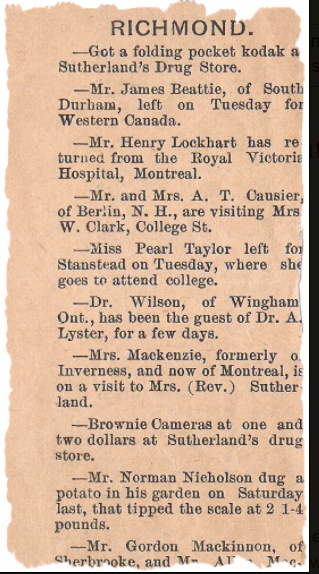
The newspaper clipping, above, is from the social notes column of the Richmond-Times Guardian, (Richmond, Quebec) circa 1905. The very silly item about a big potato is probably my husband’s great-grandfather’s way of poking fun at small town pretensions.  Or is it?

The Nicholson family’s vast vegetable garden behind their charming red-brick house in the Eastern Townships of Quebec was no joke to them, not even in an era when pre-prepared foods like Heinz Beans, Jello, and Quaker Oats, were fast becoming house-hold names.*(1)

In 1911, with their four children were grown up, the large backyard garden that produced corn, beets, sweet peas, etc., was critical to the diet of this frugal Scottish Canadian family.

The potato patch was a particular concern:

“I put the Paris Green on the potatoes twice. Mrs. Montgomery came over to tell me that the bugs were eating up my potatoes. I was waiting to get someone to do it for me, as that was one thing I never attempted.

“But when she interfered thought we would try it. So one dark night, Flora (daughter) got the lantern and we went out when the bugs were asleep and gave them their dose. We dressed ourselves in the shed. You ought to have seen us. When we got through left our clothes there. Went to bed and dreamed all night that the bugs were crawling over us.”

So writes Margaret Mcleod Nicholson, in a July, 9, 1911 to husband Norman, who was away in Northern Ontario working as a railway inspector.

You have to admire Margaret’s style. Although her letters were often penned in haste and full of household concerns, ‘the local news’  as in gossip, and much high anxiety over finances, she certainly could paint a word picture when she wanted to.*(2)

In the spring of 1911, it was 57 year old Margaret’s job to care for the garden because her two older girls, Edith and Marion, were away teaching in Montreal, and her youngest, Flora, was very busy studying for final exams. Margaret and Flora were living alone for most of the year.

Although her daughters returned to Richmond for the summer, they came and went as they pleased, often in motorcars owned by wealthier neighbours. *(3)

Norman, in his letters home,  warned his wife not to work too hard out in the backyard, especially in hot weather, and the summer  of 1911, as it happens, was very, very hot.*(4)

tighsnapcorn

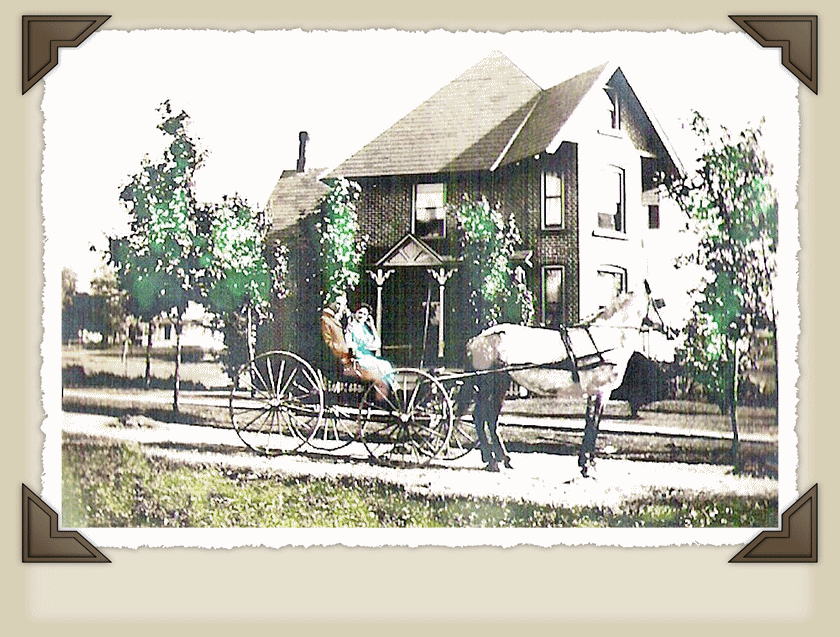
An ‘old-fashioned’ carriage in front of Tighsolas, the Nicholson home, circa 1910. A hire. The Nicholsons couldn’t afford to keep a carriage, let alone buy an automobile, like so many of their neighbours.

The same  letter continues:

“We have had dreadful hot weather. Just fancy, one night we slept out on the veranda. Took our mattresses down. The Skinners (other neighbours) were sleeping in theirs so that we were not afraid and we had Flossie (the dalmatian) with us but yesterday afternoon it rained so last night was cool.

We all had a good sleep and today is fine. We feel like working. I hope you did not have this extreme heat. We had quite a cold wave about the 24th but no frost.”

This sounds like typical Quebec  weather, doesn’t it?  So up and down.  It’s not easy cultivating a garden in this province. It takes perseverance.

Six years later, in the spring of 1917, most everyone in the west end of the city of Montreal was out on the street digging their wartime Victory Gardens.*(5)

Marion Nicholson, now a mother and homemaker living on York Street in lower Westmount, describes the scene in a letter home to Mom:

“Every vacant lot around the city has been utilized for gardens and I think it is more common to see people out digging and planting in these gardens than in a small town like Richmond. Some I think are making their first attempt.”

Her small family is no exception.  “Hugh (husband) and Willie (cousin) are making a garden. What success they will have I do not know. One thing for sure, the beds are straight (her underline) and square. I myself would prefer more in them.”

Marion (who is six months pregnant) then describes how she has hardly slept all week while tending her very sick toddler. She begs her mom to send as many crates of eggs as she can on the next train.

It certainly was an era of high-anxiety about food, nutrition  – and so many other things.

butterbill1917

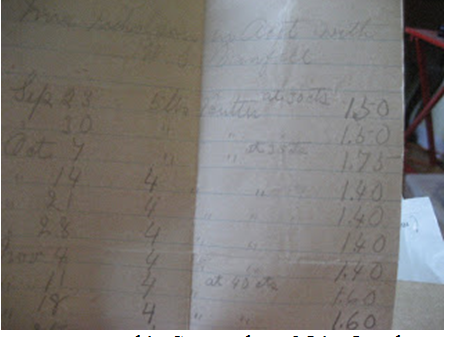
Margaret’s 1917 butter bill. Inflation. The price of butter goes up from 30 to 40 cents from September to October.* (6)

Still, Marion closes her letter to her Mom by praising her comfort food:  “So, now to get a taste of your home-made bread. When I eat it, I close my eyes and I feel as if I were home. Thank you for all the good things you sent.”

orchard[1]

Edith, young Margaret, and Marion, far right, in summer of 1918 in an orchard in Richmond, possibly behind the Nicholson home as they had apple trees. (The newborn is in other pics.) This was the year of the Spanish Flu. It was safer in the countryside. Marion stayed an entire month in Richmond, until her husband, Hugh, begged her to come home in a letter. “The ice in the icebox has melted all over the floor, there’s no food in the house, the windows are kept open and it’s hot as Hades in here. Please come home and take care of me!” He was in the care of his sisters-in-law, who had better things to do in wartime Montreal  than to baby their brother-in-law. Edith, a Sun Life employee, volunteered in Soldiers’ Aid for the YMCA and for the Navy League.

  • 1. Most of the famous food brands of the 20th century got their start in 1900-1910 by advertising in magazines like the Ladies’ Home Journal with happy-family lifestyle ads with bigger graphics and fewer printed promises. “Pure” was the adjective of the day.

It was understood, even back then, that the home was evolving from a center of production to a center of consumption. Margaret, born in 1853, made everything from scratch, on a woodstove, with recipes she kept firmly locked in her head; Marion Nicholson, born 1886, would cook on a gas stove relying on her Fanny Farmer Cookbook; her daughter, also Marion, born 1917,  living in middle class comfort in 1950’s suburbia, would feed her brood nothing but canned vegetables, even canned potatoes, which she warmed on an electric stove.

  • 2. Norman was tickled by an anecdote from a November, 1909 letter, where Margaret vividly describes a back-and-forth argument she has had with a male relation over woman suffrage. The relation invokes St. Paul as was the custom. She replies “St. Paul has been dead for a long time. I don’t live in those days, milking cows and making fires.” Norman, who is active in local politics, replies in support of his wife: “Too absurd to think that a woman cannot exercise her franchise with as much intelligence as some of the male sex. And when you have to drag some of these supposedly intelligent men to the polls as you would cattle.”
  • 3. Margaret disliked motor cars. From 1909. “Mr. Montgomery is selling his horse and buying a car. Don’t you think he is foolish?” But, she was happy to go on drives when invited.
  • 5.  http://www.thecanadianencyclopedia.ca/en/article/victory-gardens. Apparently, Victory Gardens weren’t only a way to add to the food supply; they were about improving morale on the home-front by making people feel useful.


  • 6. A Chicago Agency sent a very fancy direct mail advertisement out to Richmond homemakers in 1916 on behalf of a new product called Crisco Shortening asking, “Do you like the taste of fresh buns in the morning? Try Crisco.” A coupon was attached.