All posts by Jacques Gagné

The French Canadians in the U.S.A 1840-1930

French Canadian Emigration to the U.S. 1840-1930

compiled by Jacques Gagné

“The Archives nationales du Québec in Montréal on Viger Avenue are the repository of a wonderful and unique collection of books of marriages, baptisms, deaths of French Canadian families who left the Province of Québec between 1840 to 1930 for destinations south of the border. For it is estimated that during that 90 year period, 900,000 French Canadians left the regions along the shores of the  St. Lawrence River, the Richelieu River, the Chaudière River for the U.S. ”

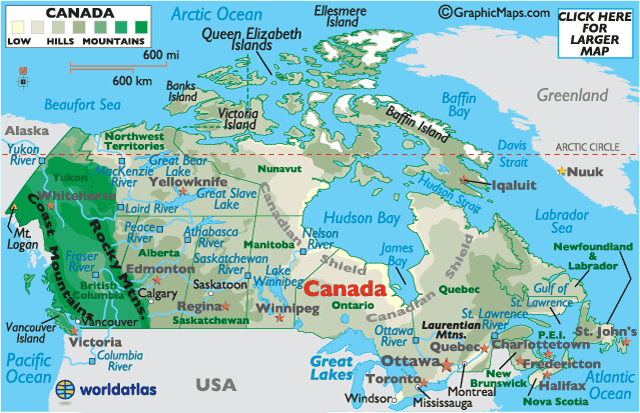
As part of this research guide, Jacques Gagné has also included the exodus of Acadians to the same New England States, New York State and other points within the United States of America including the Acadian families who were deported to Louisiana.


Click here to open the pdf file : French Canadians in the U.S.A. 2014
Loyalist Churches in Brome-Missisquoi – Upper Richelieu Valley – South Shefford

Missisquoi 2_edited-1

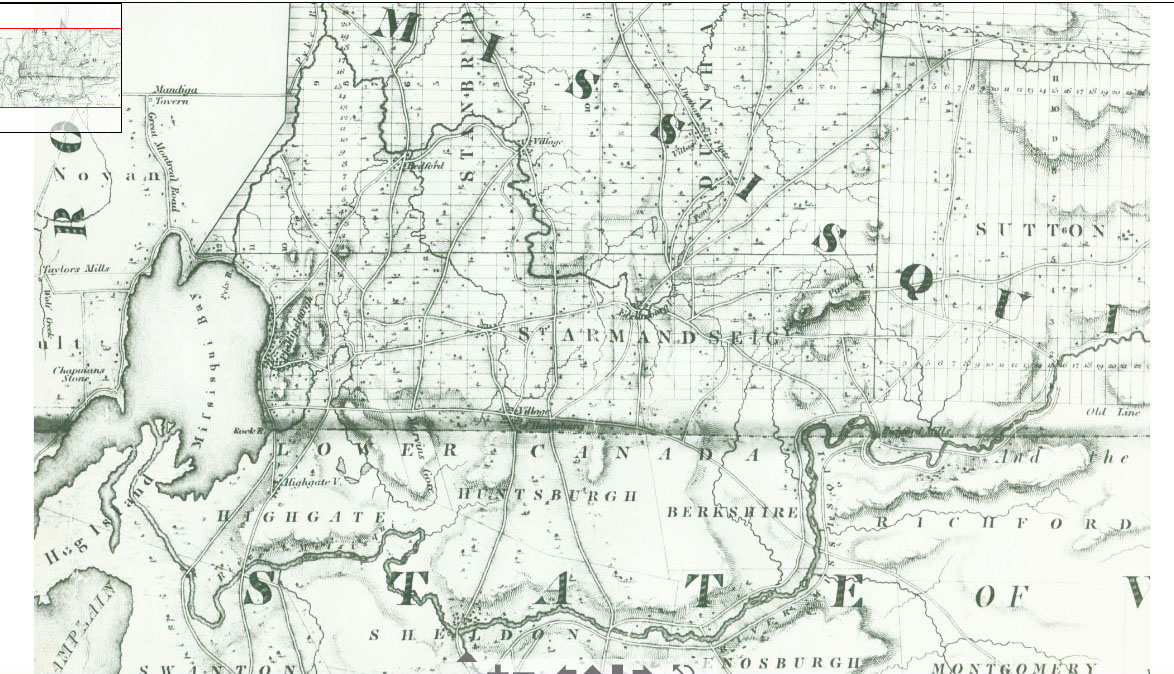
The American Revolution left  profound marks on the development of the areas of Brome-Missisquoi, the Upper Richelieu Valley and South Shefford. The Americans who wished to remain loyal to the British Crown fled the United States. These Loyalists  came from the northern states and settled very close to the border. Within a short period of time they began to develop many small communities, from Abercorn , near what is now the Vermont border to St. Armand near Missisquoi Bay..

This compilation describes the many towns and villages that emerged from the late 1780s to this day. Their churches contained documents of birth, marriages and deaths that have  been preserved and are available in various archives.

The contributions of these Loyalist can be found   throughout the area.  Many of the churches are still standing and are a tribute to their perseverance.

Click on the link: Loyalist Churches in Brome Missiquoi

Upper Richelieu Valley and South Shefford

images (1)

The Loyalist Churches of Sorel, Three Rivers, Saint Johns, Chambly and Surrounding Areas

images (1)


This compilation, prepared by Montreal genealogist Jacques Gagné, looks at the churches frequented by Loyalists who settled in three regions of Quebec in the late 18th century: Trois-Rivières (Three Rivers) and Sorel, east of Montreal on the St. Lawrence River, and Saint-Jean (St. Johns) and Chambly, south of Montreal on the Richelieu River. It outlines the histories of these churches and where to find surviving records.

Click on the link: Loyalists Churches Sorel – Three Rivers

The Loyalist Churches of the Gaspe Peninsula

images (1)

Following the War of the American Revolution, those who had remained loyal to the British felt compelled to leave the newly independent United States. While most settled in what is now Ontario, Nova Scotia and Quebec’s Eastern Townships, some moved to the Gaspé Peninsula of eastern Quebec. This is a region of interior forests and mountains and of fishing villages along the Gulf of St. Lawrence. 

The newcomers settled in towns and villages such as Matapédia, Bonaventure, Percé, Gaspé and New Carlisle. Their neighbours were of French Canadian, Acadian and Micmac ancestry, and most were Roman Catholic. The newly arrived English-speaking, Protestant Loyalists needed their own places to worship and to record their births, marriages and burials.

At first, these needs were met by Anglican, Presbyterian and Methodist missionaries, but eventually the newcomers built churches of their own. This compilation lists the churches they founded and the ministers who served the English-speaking community. It guides the genealogist to the various places where their records are kept, including government and church archives, and the library of the Quebec Family History Society.

The compilation also mentions the records of the Gaspé residents who came from Jersey and Guernsey, in the Channel Isles, and the early settlers from Scotland. The introduction pays tribute to two individuals who researched and documented the lives of the English-speaking residents of the Gaspé, Kenneth Annett and David J. McDougall, and tells researchers where to find their work.

                                                        Click the link to open in a new window:

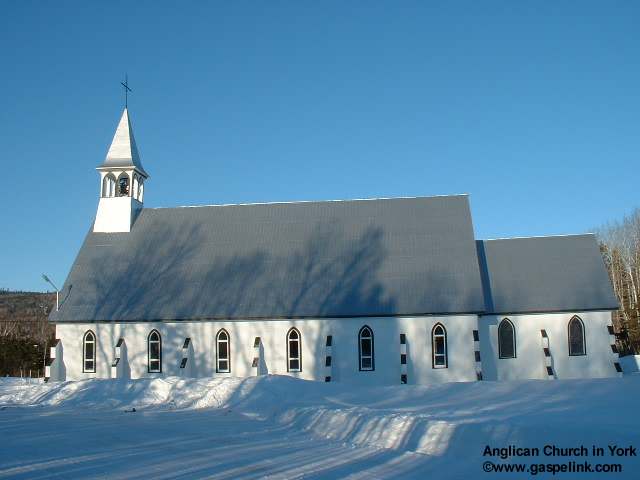
Gaspe-Loyalist Churches

yorkchurch

The Germans in Quebec – Their Churches

Their Churches from 1759 onward

Among the Germanic people who emigrated to Québec, we find those who fought with the Imperial Army during the British Conquest of 1759 plus those who fought for the British during the wars of the American Revolution and of 1812. An appreciable number of these Germanic soldiers settled into Québec once their tours of duty were concluded. Other German  immigrants who spoke some forms of the German language originated from various principalities, dukedoms, electorates, counties, landgraviates, margraviates of Germany, but also from surrounding kingdoms such as Prussia, Silesia, Bohemia, Hungary, Poland, Austria, United Netherlands, Austrian Netherlands, Switzerland, Palatinate, Strasbourg and Luxembourg.

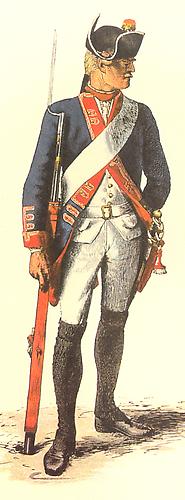
Hessian Soldier Illustration Click the following link                The Germans in Québec

The Europeans in Quebec and Their Churches

The Europeans in Québec                         Lower Canada and Québec

Churches of the Scandinavian, Baltic States, Germanic, Icelandic people in Montréal, Québec City, Lower St. Lawrence, Western Québec, Eastern Townships, Richelieu River Valley – The churches of immigrants from Sweden, Norway, Denmark, Finland, Estonia, Latvia. Lithuania, Iceland, Germany, the Netherlands, Belgium, Switzerland, Austria plus those from Eastern European countries – Churches which were organized in Québec from 1621 to 2005. Also included within this document you will find a number of book titles relating to the subject.

Click the link:

The Europeans in Québec

The French Canadians in Western Canada

canewzz


The Archives nationales du Québec in Montréal on Viger Avenue are the repository of a wonderful and unique collection of books of marriages, baptisms, deaths of French Canadian families who left the Province of  Québec between 1840 and 1930 for destinations in Western Canada, especially in Alberta and Manitoba.

Monsieur Daniel Olivier,  former archivist at the Bibliothèque de la Ville de Montréal on Sherbrooke Street East, the latter no longer in operation, referred to for years as Salle Gagnon was responsible with the assistance of his associates for the acquisition of many of the books of marriages, baptisms, deaths, and burials outlined in this research guide.

Madame Estelle Brisson, former archivist at the Archives nationales du Québec on Viger Avenue East in Montréal with the assistance of her associates was also responsible for the acquisition of many of the books of marriages, baptisms, deaths, and burials outlined in this research guide compiled by Jacques Gagné.

Click on the link            The French Canadians in Western Canada

French Canadians in Ontario

French Canadians in Ontario

This compilation “French Canadians in Ontario” consists of lists of the many of the churches throughout Ontario where our French Canadian ancestors migrated and explains where the document of births, marriages and deaths are located for the many parishes.

This compilation is a useful tool for those who may not know exactly where these records are now located. Many can be found at BanQ, the national archives located on Viger Street in Montreal, Quebec.

fleur-de-lis-377307

Highlight the file below and right click to open link in a new window

The French Canadians in Ontario

Acadian research guide contains hundreds of resource links

On this 259th anniversary of the Acadian deportation, those researching their Acadian heritage might find the research guide, Acadians of Nova Scotia, New Brunswick, Prince Edward Island, Newfoundland of interest. It consists of Acadian Parish Registers under the French and British regimes in addition to the modern-day period under Confederation.

Click on this link, Acadians of Nova Scotia, New Brunswick, Prince Edward Island, Newfoundland, to see a 162-page downloadable document that will help you find your family’s name in community parish records, etc.

2014 Acadian Congress
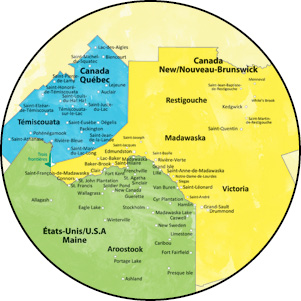
The Acadian Congress takes place August 8 to 24, 2014. The map below indicates the areas where many of the Congress activities will take place.

Carte3RegionsPetit

“Then uprose their commander, and  spake from the steps of the altar. Holding aloft in his hands, with its seals, the royal commission. “You are convened this day,” he said, “by his Majesty’s orders… Painful the task is I do, which to you I know must be grievous. Yet must I bow and obey, and deliver the will of our monarch; Namely, that all your lands, and dwellings, and cattle of all kinds, forfeited be to the crown; and that you yourselves from this province be transported to other lands. God grant you may dwell there. Ever as faithful subjects, a happy and peaceable people! “

“Prisoners, now I declare you; for such is his Majesty’s pleasure!”

Silent a moment they stood in speechless wonder, and then arose louder and ever louder a wail of sorrow and anger. “

Source: Henry Wadsworth Longfellow, Évangéline and other selected poems Penguin Books, 1988.

The Irish Catholic Churches of Quebec

St. Brendan Parish in Rosemont


Here’s a guide to the Irish Catholic Churches of Quebec.

Use this guide to find out where the documents you want to find are located. You can also find photos of the church parishes your ancestors attended.

See: the-irish-catholic-churches-of-quebec

This compilation was edited on Nov. 21, 2018. A new version will be coming in 2019.