All posts by Mary Sutherland

Her Name was Aglae

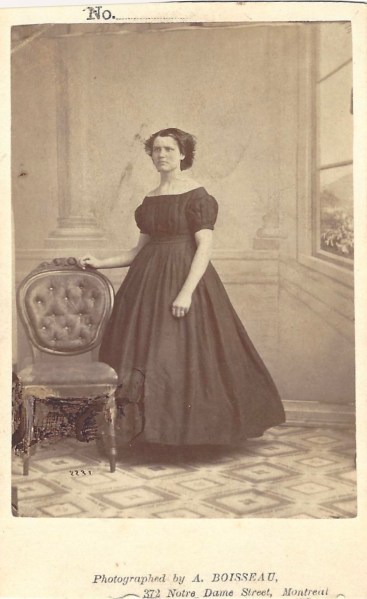
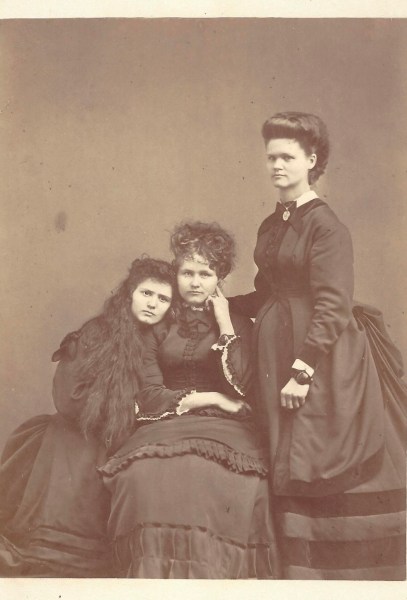
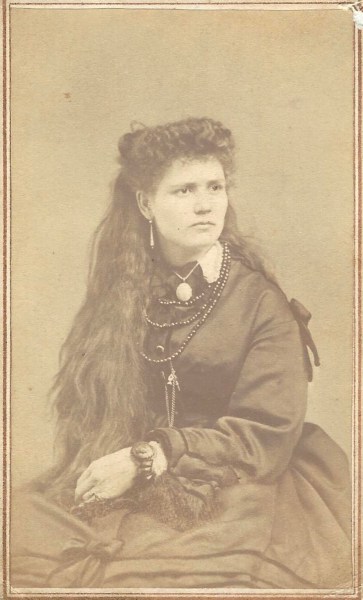
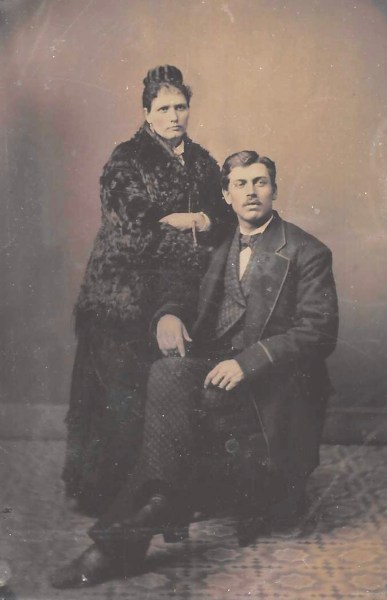
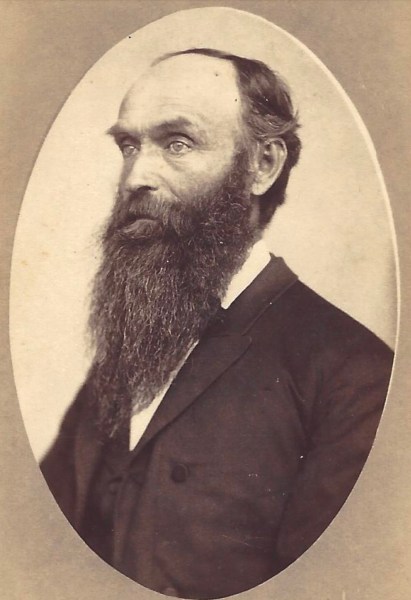
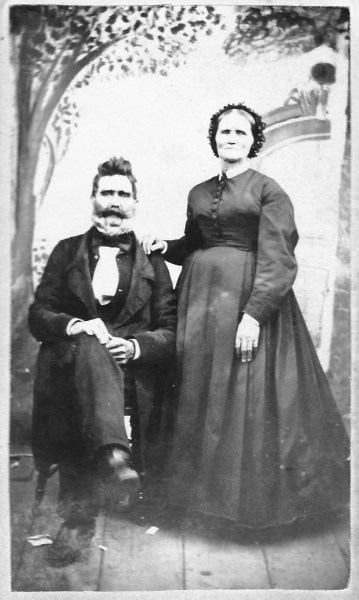
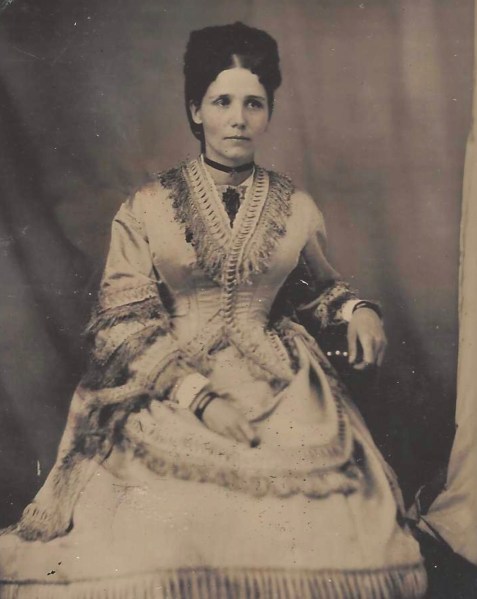
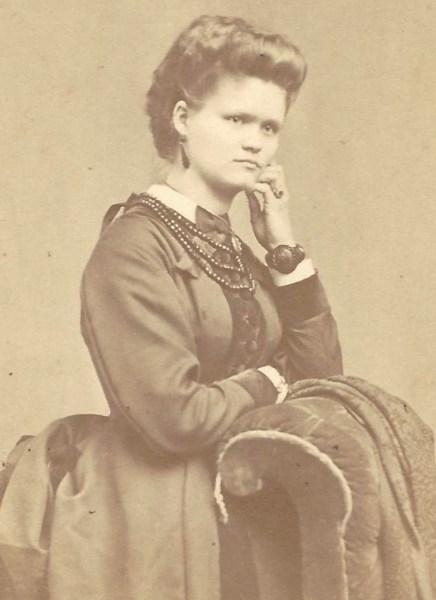
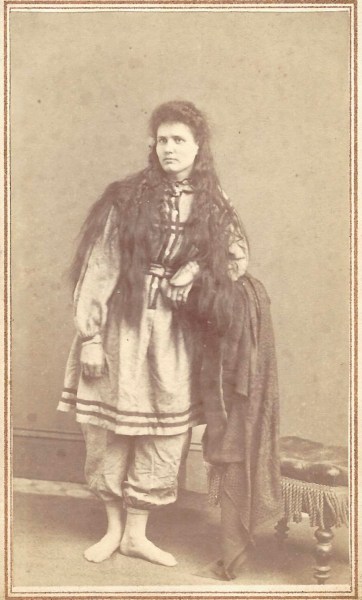
Aglae Bruneau Paumier

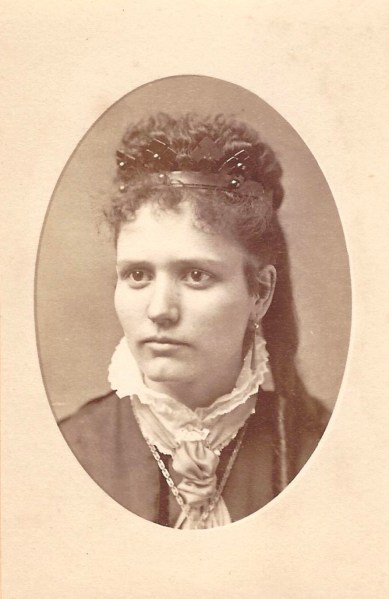
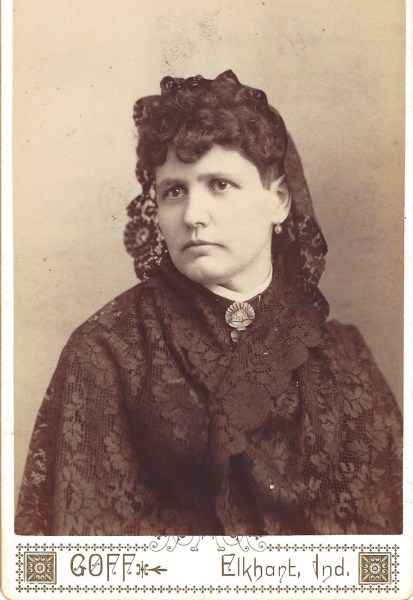
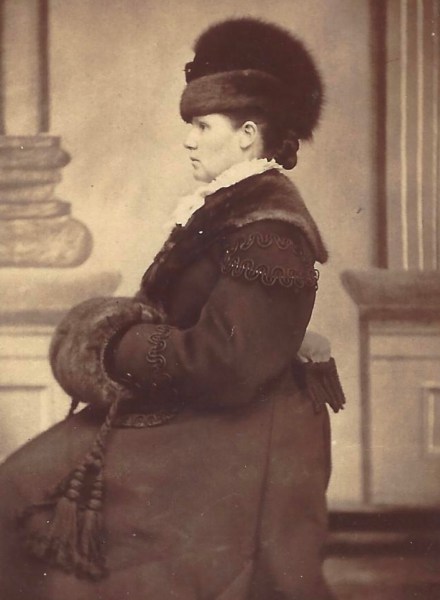
What is in a name? Aglae Bruneau (1837 – 1906) was the oldest of 13 children in my great-grandfather’s family. How did her parents Barnabe Bruneau and Sophie Marie Prud’homme come up with that name? Aglae is a name of Greek origin meaning splendour, brilliance and the shining one. She was one of Zeus’s three daughters, with her sisters Euphrosyne and Thalia known as the three graces. Apparently, it is not as strange a name as I thought, as the BAnQ (Bibliothèque et Archives nationales du Québec) website has many references to Aglaes even other Aglae Bruneaus.

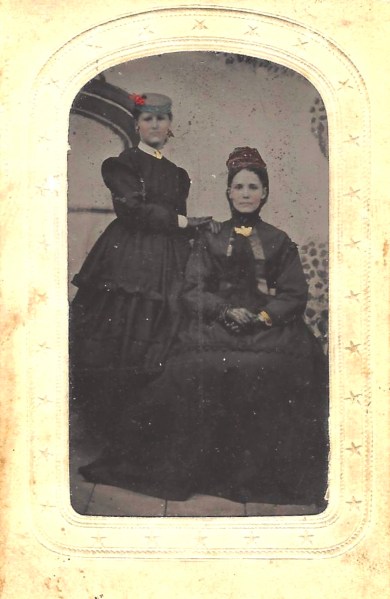
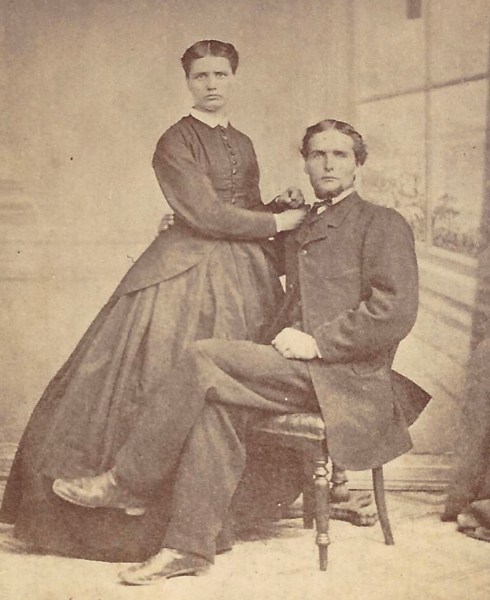
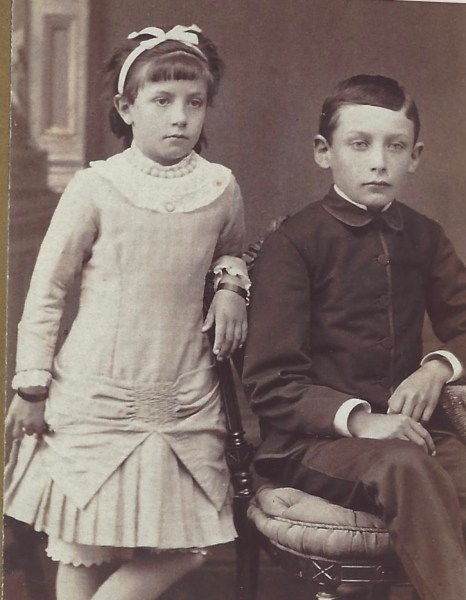
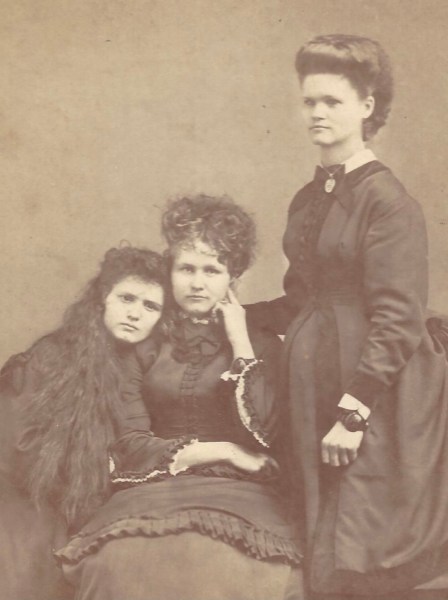
Aglae seated and her youngest sister Anais

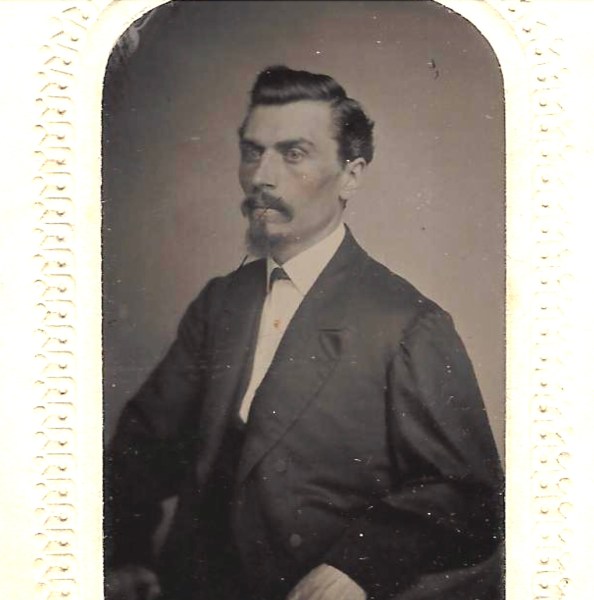
Aglae was born on her parent’s farm in St. Constant, Quebec. The family was Catholic as recorded in the 1851 census but converted to Protestantism soon after. Aglae married Pierre Charles Paumier (1828 – 1914) in the First Baptist Church in Montreal in 1860. He was born in France and immigrated to the United States in 1856. He had a farm in Mooers Forks, New York close to the Quebec border. It is possible that they met at religious services held at the Felleur Institute in Grande Ligne, Quebec as French Protestants often moved back and forth across the border for religious events.

Pierre Charles Paumier

On many of the US census, Pierre Paumier is listed as a farmer but was he originally a Baptist minister from France? My great uncle, Sydney Bruneau, wrote in his recollections “One of my aunts had married a Baptist minister from France, a man who made no secret of loving his pipe and his homemade brew of well-fermented cider, to the no small scandal of his congregation. When he was informed of complaints which had reached the higher authorities, he lost no time in preaching his farewell sermon, flaying his listeners without mercy for their narrowness of mind and their intolerance of the harmless pleasures of life, and retired to a farm where he grew his own tobacco and lived to a ripe old age.” 

Like many of Aglae’s siblings, they only had one child Sophie F. Paumier. The family continued to live on their farm which Pierre owned outright and Aglae “kept house” until she died in 1906.

It appears that after Aglae died Sophie and her father sold the farm, packed up and moved to California, as they were living in Los Angeles according to the 1910 census. Two of Aglae’s sisters had also moved west to California. Pierre owned the house and neither he nor his daughter had an occupation listed so he continued to be a man of some means. In some directories, he is listed as Rev. Peter Pomier. Sophie died in LA only five years after her father.

The name Aglae has not been used again in our family. Aglae herself called her daughter Sophie after her mother rather than naming her after another Greek goddess.

Notes:

Census of 1851 (Canada East, Canada West, New Brunswick and Nova Scotia) for Image No.: e002302444 Archives Canada.

“United States Census, 1870”, , FamilySearch(https://www.familysearch.org/ark:/61903/1:1:M8FF-5DS : Tue Mar 05 04:26:42 UTC 2024), Entry for Peter Pa?mier and Aglae Pa?mier 1870.

“United States Census, 1900”, , FamilySearch(https://www.familysearch.org/ark:/61903/1:1:MS65-NLR : Thu Apr 11 19:59:05 UTC 2024), Entry for Charles Paumier and Aglaia Paumier, 1900.

1910 Census: “United States Census, 1910”, , FamilySearch(https://www.familysearch.org/ark:/61903/1:1:MV2R-4HP : Sun Mar 10 05:36:01 UTC 2024), Entry for P C Paumier and S F Paumier, 1910.

Bruneau A. Sydney. Walking With God in Dequen. Page 6. A memoir of his early childhood through the summer of 1910. Written by A. Sydney Bruneau in the late 1960s and transscribed by his granddaughter Virginia Greene, in January 2017. The author has a copy.

Tobacco was grown in Upstate New York and in Quebec and Ontario in the mid to late 1800’s. This shade tobacco was used commercially as cigar wrappers.

Selene Joseph Bruneau – Romantic Disease

Selene Bruneau in Fall River MA

“Selene J. Bruneau brother of A.B. Bruneau who has been visiting at his mother’s, in St. Constant, near Montreal, Canada, for the past six weeks returned home this morning. His many friends will be glad to hear his health is much improved.” as reported in the Fall River Evening Daily News 1880. Unfortunately, two years later Selene died at only 31 years of age.

Selene (1850-1882) was the first of Barnabé Bruneau and Sophie Marie Prudhomme’s 13 children to die. According to his obituary, he died of consumption, at his mother’s in St-Constatnt. What used to be called consumption is tuberculosis or TB. It became known as the wasting disease as those afflicted seemed consumed by their disease as bacteria grew in their lungs and digestive tract. They lost energy, coughed up blood and slowly died. “The slow progress of the disease allowed for a “good death” as those affected could arrange their affairs.”

Most typical 19th-century victims of TB lived in tenements and or worked in factories, places where the disease spread quickly because of close contact and poor hygiene. Even when TB was known to be a contagious disease, people ignored public health campaigns to quarantine the sick and continued to spit on the streets. Selene, not a typical victim, lived in Fall River Massachusetts in a house with his brother Amie’s family. Although some of his older brothers had come to the US earlier and worked in factories, Selene worked in Aime’s jewellery store as a watchmaker.

He seemed content living in the United States as he had the support of some family, friends and a good job although he never married. Selene petitioned for naturalization and took his oath allegiance in 1879 with Aime and his wife Mary as witnesses.

Selene Bruneau in Montreal QC

It appears Selene went home to his mother’s to try and recuperate from his illness. This was before there were any sanitoriums for TB patients. The first one in the US opened in Saranac Lake, New York in 1884 and the first one in Canada, Muskoka Cottage Sanitorium, Ontario in 1897. These sanitoriums isolated infected patients and provided nutritious food, plenty of rest and fresh air. Selene undoubtedly was given this treatment by his mother but at this time 80% of those who developed active TB died from it

The BCG vaccine against TB (Bacille Calmette-Guérin) was first used in humans in 1922. In Canada, only Quebec and Newfoundland had mass vaccinations of school children from the 1950s to the 1970s. In 1944 streptomysin was isolated, the first antibiotic effective against tuberculosis. Medical professional’s hopes that the disease could be eliminated were dashed in the 1980s with the rise of drug-resistant strains. Surgery was also used where infected portions of the lungs were cut out which produced some cures, relieved pain and various anatomic obstructions. Still today, worldwide, there are over ten million new cases of TB a year. 

Selene’s burial place is in the St Blaise Sur Richelieu Cemetery, the Baptist Cemetery in Grande Ligne associated with the Feller Institute, alongside his parents and some of his siblings. His mother outlived him by ten years.

Selene wasn’t a lucky name. His brother Ismael called one of his sons, Selene Fernand and this child died early, in his first year of life. My grandmother told us it was his strange name that killed him although he was called Fernand and not Selene. This from a family with girls called Helvetia, Hermanie and Edmee. Little did she know it was the Selene that was the problem!

Notes:

Fall River Daily Evening News; Publication Date:11/ Aug/ 1880; Publication Place:Fall River, Massachusetts, USA; URL:https://www.newspapers.com/image/589977928/?article=01a0ff3e-4f23-11ed-b80e-4af2d760f135&xid=4635 &terms=Selene_J_Braneau

Fall River Daily Evening News 14 August, 1882 Monday Page 2. Selene J Bruneau Obituary.

United States, New England Petitions for Naturalization Index, 1791-1906″, , FamilySearch(https://www.familysearch.org/ark:/61903/1:1:VXRD-LZ2 : Tue Nov 14 02:51:28 UTC 2023), Entry for Selene J Bruneau.Oath of Alliengence to the US Oct 11, 1879 Bristol County Superior Court, Taunton, Massacheuttes.

Find a Grave, database and images https://www.findagrave.com/memorial/243595198/selene-joseph-bruneau: accessed 23 January 2024. 

https://www.who.int/teams/global-tuberculosis-programme/tb-reports/global-tuberculosis-report-2023

The promotion of Christmas Seals began in Denmark in 1904 as a way to raise money for tuberculosis programs. It expanded to the United States and Canada in 1907–1908 to help the National Tuberculosis Association (later called the American Lung Association).

https://en.wikipedia.org/wiki/History_of_tuberculosis#:~:text=In%20the%2018th%20and%2019th,like%20London%2C%20Stockholm%20and%20Hamburg.

In Canada, vaccinations of all children 10-14 continued until 2005 when it was decided the TB rates in the general population had fallen to such a low level that universal BCG vaccination was nolonger needed.

M. tuberculosis infection is spread almost exclusively by the airborne route. The droplets may remain suspended in the air and are inhaled by a susceptible host. The duration of exposure required for infection to occur is generally prolonged (commonly weeks, months or even years). The risk of infection with M. tuberculosis varies with the duration and intensity of exposure, the infectiousness of the source case, the susceptibility of the exposed person, and environmental factors. Although treatment courses are prolonged, effective treatment of the individual with active TB disease can reduce the infectiousness after two weeks.

Napoleon Bruneau – A Tragic End

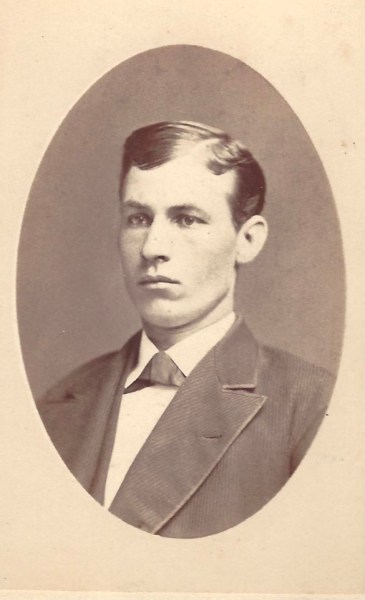
Napoleon Bruneau

Napoleon Bruneau died tragically on a Sunday night in 1916. The La Presse newspaper reported the train accident at Delson Junction on the CPR line but no details were given. This was not far from his home in St-Constant, Quebec. Was he coming home or going to Montreal? What happened? Did he fall on the tracks? He was almost 72 years old so he should have known better than to get in front of a train!

He and his twin sister Mathilde were the 5th and 6th children of Barnabe Bruneau and Sophie Marie Prudhomme. He lived his whole life in St-Constant, south of Montreal. It seems he inherited the family farm after his parent’s deaths. 

Napoleon and his sister Sophie Bruneau

Descriptions of Napoleon included being a farmer, a Free Will Baptist, a veterinarian and a justice of the peace. He was appointed a justice of the peace in 1902 for the district of Montreal which included St-Constant. It is possible he studied to be a veterinarian and didn’t just learn as an apprentice. A school for veterinarians was established in Quebec in 1866 with one of his cousins, Orphyr Bruneau as one of the lecturers. In 1876 courses were also offered in French when the school was under the McGill University Department of Agriculture. The Veterinary school, later associated with The University of Montreal, moved to Oka in 1928 and to its present location in Saint-Hyacinthe in 1947.

One would think that a tall handsome man with many interests and a farm would easily find a wife, so I found it strange that he didn’t marry until he was 66. His brother, Reverand Ismael Bruneau performed the ceremony at his Protestant Church, L’Eglise St Jean Baptiste de Montreal. Napoleon’s wife Emilie Beauchamp was 42 at the time, so it isn’t surprising that they didn’t have children. Emilie was born in Grenville, Quebec, on the Ottawa River. She probably met Napoleon in Montreal where she lived with her parents and sister Lily. Emilie had an uncle who was a French Protestant minister so it is quite possible that they met through the church.

My great-grandfather, Ismael Bruneau was upset with Emilie after Napoleon died as he wrote in a letter to his son Sydney.

You know your Uncle Napoleon made me the heir of all his estate except for $500, which I must give after the death of his widow as follows; $300 to my sister Helene, $100 to my sister Virginie and $100 to my sister Elmire. But his widow has everything during her lifetime. As she is a great deal younger than I, it is almost probable that I shall never enjoy this myself. They say she is already neglecting the house which is going to ruin and according to the law she must maintain it in good condition as it was at the time of the death of her late husband.”

Unfortunately, Ismael didn’t enjoy any of his inheritance as he died two years after Napoleon. Emilie only died in 1951. I don’t know what happened to the property as she married Emilien Frechette in 1929 and he had his own house and farm. Emilien had been married to two other Bruneau women, Emilina Bruneau, Ismael’s sister and and Ida Girod Bruneau Ismael’s wife.

Napoleon was buried in Mount Royal Cemetery with his sister Helene, her husband Celestin Lachance and their daughter Antoinette and not with his twin Mathilde in the Baptist cemetery in Grand Ligne. Emilie isn’t buried with Napoleon or even with Emilien Frechette and his first two wives, rather her final resting place is with her parents in the Beauchamp Cemetery in Marelan in the Laurentians near Grenville.

I haven’t yet found answers to questions about his tragic end.

Notes:

Napoleon Bruneau Obituary: LaPresse January 16, 1916.

Napoleon Bruneau’s death determined to be accidental. The Montreal Gazette, Tuesday, January 25, 1916. Page 7.

when searching for information on the train accident I found another Napoleon Bruneau who was also killed by a train. This accident happened in Huntington, Pennsylvania in 1908. He was decapitated and horribly mangled.

Appointed Justice of the Peace: Montreal Star Monday, June 23, 1902. page 10. Accessed Newspapers.com March 20, 2023.

Letter from Ismael Bruneau to his son Sydney Bruneau. Quebec, February 21, 1917. A copy in the hands of the author.

Emilie Beauchamp burial https://www.findagrave.com/memorial/167478027/emily-esther-beauchamp

accessed November 25, 2023.

Orphyr Bruneau one of Napoleon’s first cousins the son of his father Barnabe’s brother Medard.

There are notarial documents, Quittances which are receipts where Napoleon gave most of his siblings 300 piastres each, beginning two years after his mother died. These dispersals occurred from 1894 to 1904. Some received less and I haven’t found the documents for his sisters Aglae and Sophie. His brother Selene had already died and had no heirs. I am unsure if these were money paid to his siblings because he received the farm.

Three hundred piastres were 300 dollars. This would be the equivalent of over $10,000 today. Quebec used the word piastres on official documents into the 20th century. Even later it was used as a slang equivalent to the English word buck.

Where Are All The Cousins?

Some branches of family trees flourish while others wither and die out. I have traced one branch of my tree back to Pierre Gadois and Louise Mauger, two of my one thousand and twenty four 8th great-grandparents who arrived in Quebec in 1636. This couple has many thousands of descendants alive today, probably even more. But even though some of my great-grandparents had many children there aren’t the expected number of cousins. I have only seven first cousins while a friend says she has more than fifty. My granddaughter has only two so far.

Barnabé Bruneau and Sophie Marie Prudhomme my two-times great-grandparents had 13 children. They all survived to adulthood. One would have expected that they would all marry and have a number of children. Even if they each had only four children, that would be 52 cousins but that is not what happened.

Barnabe & Sophie Marie Bruneau

These 13 siblings only had 17 children with 10 of the children born to Ismael Bruneau and Ida Girod. Seven of their ten children have descendants alive today. I haven’t counted up how many relatives this is but quite a number. It is hard to keep track of your second and third cousins and those once removed as they marry and have children.

When my great uncle Herbert Bruneau, Ismael’s son, drew up a family tree in the 1960s, he wasn’t able to find a record of any of his cousin’s children. He thought that he and his sibling’s descendants were the only branches.

When I had my DNA analyzed by Ancestry, one of my matches, “Shedmore” rang a bell. Ancestry said he was a 4th – 6th cousin but in fact, his great-grandmother Elmire Bruneau was my great-grandfather Ismael’s sister and so we are third cousins. The tree did have another branch.

Elmire Bruneau Huntley

Elmire, born in St-Constant, Quebec, immigrated to the United States in 1864 and worked in New York City as a French governess. She is said to have met Andrew Washington Huntley around 1867 in the choir of the Plymouth Church in Brooklyn Heights. His family lived in Mooers, New York. He was a veteran of the Civil War having served in a number of units from 1862-1865. This couple moved many times during their marriage according to census records. First to Wells, Minnesota, then to Bridport, Vermont to farm, then Chicago, Illinois where he was a ticket agent on the Electric Railroad and finally to Los Angeles, California. Elmire died there in 1922. Her body accompanied by her daughter Faith, went by train back to Bridport, Vermont where she was buried beside her son Howard.

Andrew Washington Huntley

Howard died at 18 without children. It was her daughter Faith, who married Smith C. Shedrick and had four children, Etta Elmere, Howard S., Helena F. and Howard H. who kept the family tree growing. “Shedmore” turned out to be Etta’s son. He does not have any children but his brother had three children, five grandchildren and some great-grandchildren so Elmire’s Bruneau line lives on. Both Helena and Howard also married so there might be even more twigs on those branches.

Faith and Howard Huntley

It is nice to have cousins. Some might not be close but you do have a family connection. Reach out to your cousins, you never know who you will find or what they may know.

Notes:

All photographs are from Ismael Bruneau and Ida Girod’s albums in the possession of the author.

Elmire Huntley Obituary: Middlebury Register, Middlebury Vermont. Dec. 1 1922, Friday page 7. Newspapers.com accessed Mar 29, 2022.

Year: 1870; Census Place: Clark or Wells, Faribault, Minnesota; Roll: T132_3; Page: 1440 Ancestry.com. 1870 United States Federal Census [database on-line]. Lehi, UT, USA: Ancestry.com Operations, Inc., 2009. Images reproduced by FamilySearch.Accessed Nov 22, 2021.

Year: 1880; Census Place: Bridport, Addison, Vermont; Roll: 1340; Page: 20A; Enumeration District: 002Ancestry.com and The Church of Jesus Christ of Latter-day Saints. 1880 United States Federal Census [database on-line]. Lehi, UT, USA: Ancestry.com Operations Inc, 2010. 1880 U.S. Census Index provided by The Church of Jesus Christ of Latter-day Saints © Copyright 1999 Intellectual Reserve, Inc. Accessed Nov 22, 2021.

Year: 1900; Census Place: Chicago Ward 21, Cook, Illinois; Roll: 271; Page: 17; Enumeration District: 0638 Ancestry.com. 1900 United States Federal Census [database on-line]. Lehi, UT, USA: Ancestry.com Operations Inc, 2004. Accessed Mar 29, 2022.

Year: 1910; Census Place: Oak Park, Cook, Illinois; Roll: T624_239; Page: 21b; Enumeration District: 0077; FHL microfilm: 1374252 Ancestry.com. 1910 United States Federal Census [database on-line]. Lehi, UT, USA: Ancestry.com Operations Inc, 2006. AccessedNov 22, 2021.

Year: 1920; Census Place: Los Angeles Assembly District 73, Los Angeles, California; Roll: T625_114; Page: 17A; Enumeration District: 393 Ancestry.com. 1920 United States Federal Census [database on-line]. Provo, UT, USA: Ancestry.com Operations, Inc., 2010. Images reproduced by FamilySearch. Accessed Nov 22, 2021.

The Life of a Church

St. Andrews United Church Westmount, Quebec 

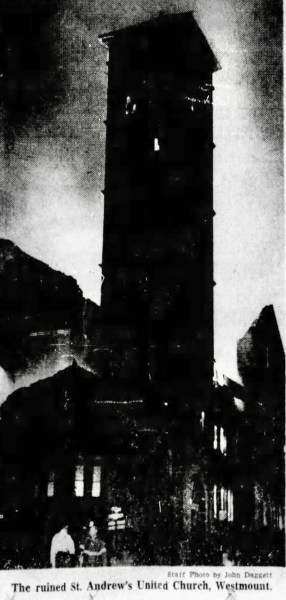
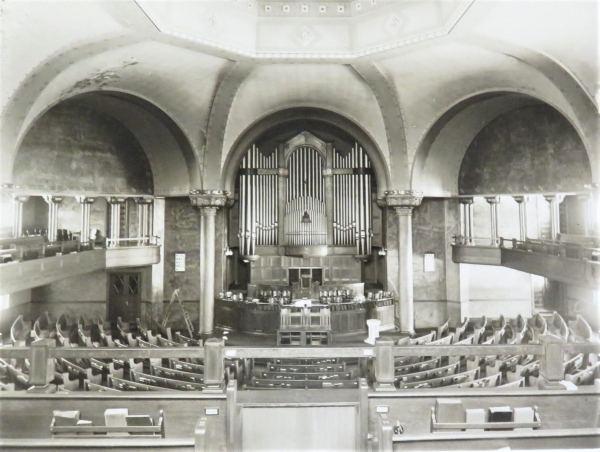
The night St. Andrews United Church, Westmount was razed by fire in 1965, I was thirteen. The whole sanctuary gone. Stained glass windows, memorials to many, melted, the organ burned and the small tower toppled. Charred red bricks littered Staunton Street. Only the tall tower and walls remained of the 57-year-old church.

Montreal Star Aug 4, 1965

This devastating fire occurred, even though the church sat just across the street from the Westmount fire station. The caretaker lived in the back of the building and when he smelled smoke in the afternoon, he went across the street to the fire station. The firemen looked through the whole church without finding anything amiss. They closed the fire doors to the Sunday School and left. Around midnight the church was engulfed in flames and all the firemen in the city couldn’t save the building. It was determined that the fire started in the basement under the sanctuary and hidden there, smouldered for hours. The minister, Reverend D.M. Grant holidaying in Nova Scotia was awakened with a telegram saying his church was burning.

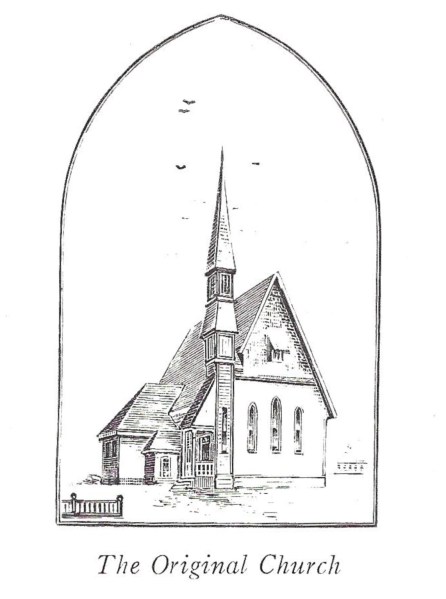
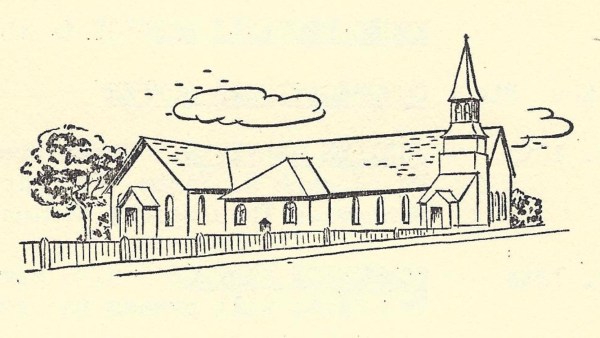
My family was not some of the early Westmount Presbyterians who worshiped in the Mission School from 1869 until 1886. They weren’t even members when a small frame church, Melville Presbyterian, was built on the corner of Cote St Antoine and Stanton St.

According to the booklets written for the Church’s golden and diamond Jubilees, St Andrew’s Church in Westmount was formally founded in 1900. “A difference of opinion caused the division of the members. One group retained the name of Melville Presbyterian Church and moved to Melville Ave where they built a new church. The other group, retained the present church site and became St Andrew’s Church.” In the newspapers of the day I found the reason for the split, alcohol consumption! When Rev. T. W. Winfield was hired, “a promise was extracted from the Reverend gentleman that he would refrain from intoxicating liquors while pastor of Melville Church.” Some members accused him of breaking that promise. The minority moved with the Minister and took the Melville name while the majority stayed in the building and chose the new name St Andrews Presbyterian. 

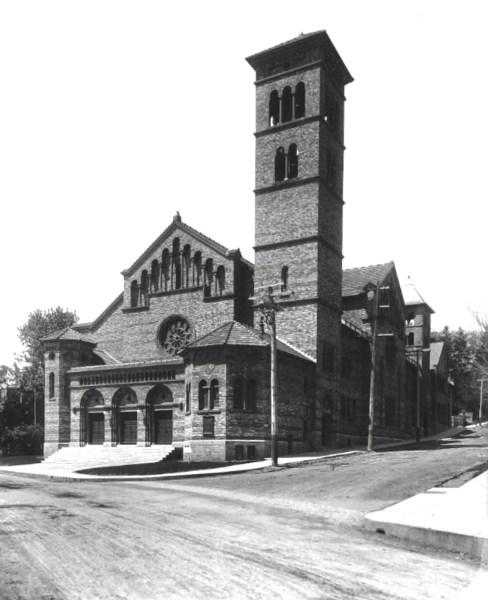
This congregation continued to grow, so in 1908 the red brick church was built. The large sanctuary, surrounded on three sides with balconies held 1100 worshipers. There was a rose window over the front doors and many other stained glass windows on the side walls. It was one of the Presbyterian churches that united with the Methodists and the Congregationalists in 1925 and became St. Andrews United Church.

St Andrew’s Church 1908-1965

I spent many hours in St Andrews Church growing up, as did my father. My grandparents joined the church when they moved from Chomedy Street to Grosvenor Ave in 1912. My grandfather, William Sutherland was a church elder and later so were both my parents. My grandmother Minnie Eagle Sutherland was very involved in church life being president of the Women’s Missionary Society and the Women’s Christian Temperance Union. My mother taught Sunday School and was the head of the Primary department for many years.

Church Interior photo by Alfred Peter Jorbes

We went to Church and Sunday School every week and won prizes for attendance. It was a church of many staircases. The hall behind the church had three sets and before and after church children would run around, up and down the stairs and through the halls. A back staircase off the kindergarten room led down to the basement. It was dark and gloomy and we would only venture down a few stairs before running somewhere else.

I remember Christmas pageants with Roman soldiers in costumes, clanking down the aisle with swords, helmets and leather skirts. I so admired the angels in their light blue satin dresses with wings that I wished I could be one. I was promised I could be an angel the next time they had a pageant but before that happened, the church burned including all the costumes stored in the basement.

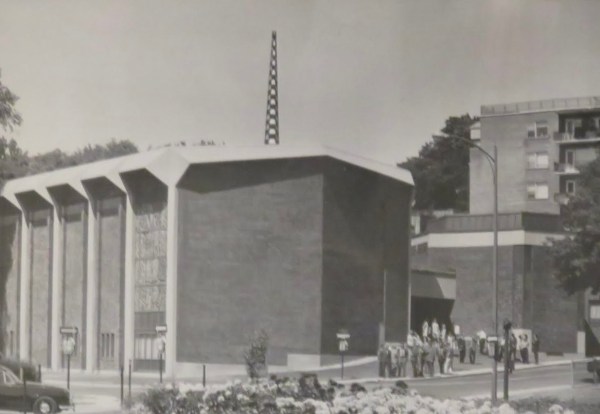
After the fire, the Church was rebuilt although with some controversy and another split. Some of the congregation left because they thought the million-dollar insurance money should be put to better use than having three underused United Churches in Westmount. They were out-voted and the new modern church opened in October 1967. It only held 500 people.

The rebuilt Church 1967

The congregation continued to age, fewer young families joined and people such as myself attended irregularly. St Andrews and Dominion Douglas United, amalgamated in 1985. The committee discussed which church to keep. Dominion Douglas, an old stone church on The Boulevard became the new home with the St Andrew’s congregation moving up the hill. Selwyn House School, across the street, bought St. Andrews. for their expansion. The chapel, including stain glass windows was deconstructed and rebuilt in the Dominion Douglas basement. In 2004 Erskine American United Church, on Sherbrooke Street joined St. Andrews-Dominion Douglas and another name was needed. The congregation became Mountainside United Church.

In less than twenty years Mountainside United Church became impossible to maintain and heat with a diminishing congregation. That building was sold to a developer and the congregation moved to the Birks Chapel on the McGill Campus. I have not attended a service there.

References:

Church Fire: The Montreal Star; Aug 4, 1965 page 3. Downloaded from newspapers.com Dec 29, 2022.

Westmount Mayor Praises Firemen: Montreal Star; August 10, 1965 page 6. Accessed from Newspapers.comDecember 29, 2022

Rising from its Ashes: Montreal Star; June 3, 1967 page 58 Accessed from Newspapers.com December 29, 2022.

Melville Church Difficulty: Montreal Gazette; 28, March 1900 page 10. Accesses from Newspaper.com January 25, 2023.

Date of Separation: Montreal Star; 12 May 1900 page 10. Accessed from Newspapers.com January 26, 2023.

Melville Presbyterian Church: https://cac.mcgill.ca/maxwells/details.php?recordCount=165&Page=4&id=155&pn=&cn=All&pr=All&ct=All&str=&mj=All&mn=All&sta=Built

St Andrew,s Church Golden Jubilee Celebration Bulletin November 5th to 12th 1950. IN the hands of the author.

Our Heritage St Andrew’s Church Diamond Jubilee 1900-1960 booklet. In the hands of the author.

Notes:

The back annex which housed the Sunday school was saved by the fire doors. Books and papers recovered from the Sunday school were stored in our basement for a time but they continued to smell of smoke and were later discarded. The manse next door was also saved but torn down for the new church. 

After the church fire may local churches and synagogues offered the congregation space to worship including Melville Presbyterian Church. I went to confirmation classes at Melville but we had Sunday services in the auditorium of Westmount High School.

Melville Presbyterian Church was built on Elgin Avenue later changed to Melville Avenue, facing Westmount Park. It is now Holy Trinity Serbian Orthodox Church. After the founding of the United Church in 1925, Melville Presbyterian Church amalgamated with Westmount Methodist to form Westmount Park-Melville United Church. The combined congregation worshipped in the Melville Church building for two years, until it was sold [back] to former members who remained with the Presbyterian Church. Victoria Hall served as a temporary site while the new Westmount Park-Melville Church, which is now known as the Westmount Park United Church was built on the western edge of Westmount Park.

Letters

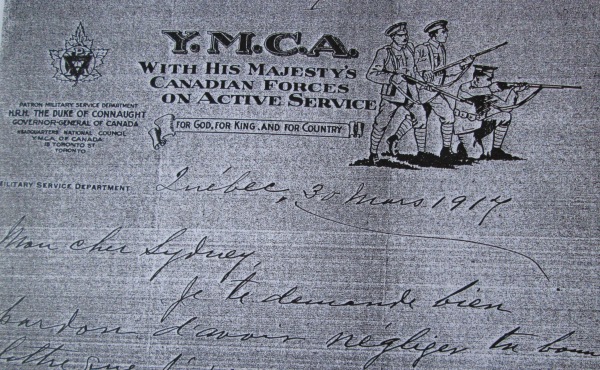
Nothing gets a genealogist’s heart beating faster than finding an old letter written by an ancestor. These are as close as we come to knowing what they really thought, gleaning a little bit of an ancestor’s character. “Thank you very much for your good wishes for my 65th birthday and it seems to me only yesterday that I was your age. Oh! Life goes fast; we should use it well so as not to have one regret on reaching the end.”¹ I am lucky as I have a number of family letters but one always wishes for more.

Many of the letters are somewhat disappointing. People seem to be just filling the page. How are you? We are all fine and the neighbours too, unless of course they aren’t and then the neighbours ailments are itemized. They often finish with please write soon as we have waited such a long time to hear back from you. Other than knowing the letter writer is still alive not much other information is given. Still the recipient was happy to receive the note.

Letter written by Ismael Bruneau

Before the telephone became ubiquitous people would just drop a note in the mail. It might just be a postcard with thanks for a visit, even to a neighbour around the corner. They used the post as a means of keeping in touch.

Some letters are heartfelt, such as a father wishing his sons wouldn’t go to war. “ I am sorry to tell you that I do not approve of your plans to go to war. Alas I certainly had greater and nobler ambitions for my boys than to make simple soldiers of them.”² If they did go he prayed that God would keep them safe. All his congregation was praying for them. My great-grandfather Ismael Bruneau wrote many letters to his son Sydney during the First World War. He signed most, “ton père affectionné I.P. Bruneau”. Sydney kept the letters and his daughter translated some. I only have photocopies which are hard to read.

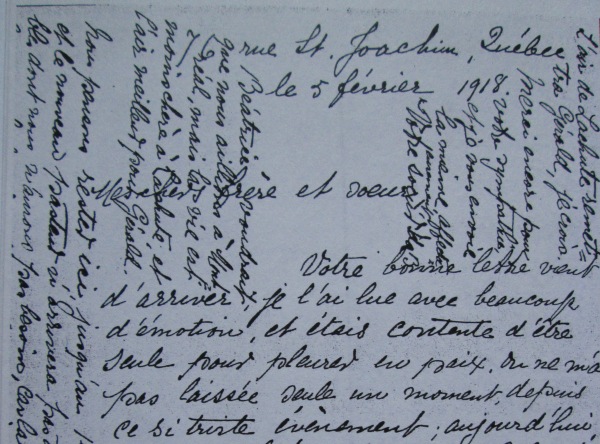
These letters have only snippets about the family as he writes, “Your mother told you about the family so I won’t.” Only one letter written by Ida Bruneau survives and that was written just after Ismael’s death.

Letter written by Ida Girod Bruneau

Handwriting can be difficult to decipher and letters written in other languages make them even harder to read. Some people had beautiful even cursive script and their letters are still a pleasure to read. They learned “real writing” in school with much practice. Other letters are covered in tiny script as they didn’t want to waste the paper. Most difficult to read are those with writing perpendicular to the first lines, again to save paper or a just remembered thought.

Unfortunately, there are also some letters you wished you had never found as they say things you didn’t want to hear. Letters from people recounting their hard times and mental struggles you never heard about and negative opinions about people you thought you knew.

Did those who saved the letters ever think someone would read them many, many years later? Most often there is just one side of the correspondence. I have a series of letters my grandfather wrote to my grandmother before they were married. He mentions often rereading her letters so he didn’t immediately discard them but they didn’t survive. Were they too personal or showed too much anger or just stupid thoughts? I imagine my grandmother found them and was embarrassed by her openness and she threw them out.

What will future generations find? Nothing? Emails and texts they can’t access, Facebook pages that have disappeared or meaningless tweets but almost no letters. There will be no papers touched by a loved one’s hand to find, tied with a ribbon or tucked into a fancy box. So after reading this, go and write someone a letter. They just might keep it!

Notes:


  1. Letter from Ismael P. Bruneau to his son Sydney Bruneau: Y.M.C.A., Quebec, 30 March 1917. Ismael died before his 66th birthday.
  2. Letter from Ismael P. Bruneau to his son Sydney Bruneau: Cornwell, ONT, 15 March 1915. Both Sydney and his brother Edgar survived the war.
  3. Letter from Ismael P. Bruneau to his son Sydney Bruneau: Cornwall, Ont, 18 July 1915.

These letters were translated by Sydney Bruneau’s daughter Ida Bruneau.

Bon Soir et Dors Bien – Good Night Sleep Well

Rene Raguin & Beatrice Bruneau Wedding 1912

“Bonsoir et dors bien”, is how my mother ended her nightly phone calls with her parents. These were some of the few French words I ever heard her speak, which was strange as French was both her parent’s mother tongue. Why did we only speak English?

René Raguin my grandfather, was from Fleurier, Switzerland and came to Canada to teach at the French Protestant school in Pointe aux Trembles, Quebec. He later taught in Trois Rivieres and finished his career at Baron Byng, a school of the English Protestant School Board of Greater Montreal. He also taught teachers how to teach French at McGill University’s summer school.

Beatrice Bruneau met René Raguin when they were both teaching at the Pointes aux Trembles school. This was the one French Protestant school in the Montreal area. Grannie as we called her, descended from French Canadian stock, although born in Green Bay Wisconsin. Her father Ismael Bruneau was a French Presbyterian minister. Her mother Ida Girod was a French speaker from Switzerland and also a Protestant.

René spoke English fluently but with a heavy accent. He always used English when talking with us, his grandchildren and we called him Grandfather. I always wondered why he never communicated with us in French as a French teacher. One much older cousin Don Allchurch, always referred to him as Grandpère as he did speak to him in French.

Beatrice’s father Ismael Bruneau, was “pure laine”, French Canadian through and through. His early ancestors arrived in Quebec from France in the 1630s. His family of Catholics converted to Protestantism in the 1850s and that is where the English crept in. Ismael wasn’t thrilled to speak English as he wrote to his youngest sister Anais, “I write to you in English, dear sister, not to show you I can write a few words in that barbarous language, but for your good as well as mine, for practice makes perfect.” Many of Ismael’s siblings moved to the United States, spoke English and married English speaking spouses.

French was spoken in his home but Ismael’s children all went to English Protestant schools as the French schools were all Catholic and they didn’t even allow Protestants to attend. In the family, religion trumped language. Most of his children also married English-speaking people. His two sons continued to speak to each other in French.

Beatrice Bruneau Raguin

My mother grew up in Dixie on the border of what is now Lachine and Dorval. It was then an English community. Because her father Rene Raguin taught for the English board they didn’t have to pay school fees and so attended English Protestant schools. The children didn’t want to speak that other language. Some evenings her father would say that only French would be spoken at the dinner table. The children wouldn’t say a word and only eat what they could reach.

Rene Raguin

The Scots and Irish immigrants who were my father’s family settled in Toronto and spoke only English. I don’t remember him speaking French to anyone. He always regretted that he couldn’t speak French. He too went to English Protestant schools.

Dorothy, Beatrice, Rene & Mary

We were schooled before French Immersion and though there was some talk about sending us to French Schools, they were still all Catholic and not a choice, so we also attended English Protestant schools.

So in a generation, the French family became English. We didn’t call my mother every night but as we left after a visit she had a new English saying, “Safe home.”

Notes:

A Short History of the Bruneau-Girod Families: Ida Bruneau Ste. Agathe des Monts, Quebec May 1993. Forbes Publications Ltd. Calgary, Canada.

My sister remembers the phrase as “Bonsoir et dors bien Maman” but I said sometimes she was talking to her father.

Mathilde Bruneau Career Woman

Marie Mathilde Bruneau

I never expected to find much information about my great-grandfather’s sister, Mathilde Bruneau. I knew her name, dates, the fact she had a twin brother and that she never married. That was all. Then when searching Newspapers.com, Mathilde, born on a farm in southern Quebec appeared on the social page of the Fall River, Massachusetts Daily Herald. It was reported that she had been visiting her brother Aimé Bruneau and then returned to her teaching duties at the Rhode Island Institute for the Deaf in Providence, Rhode Island, only twenty miles from her brother’s home.

Sophie, Helene & Mathilde Bruneau in New York

Mrs. Mary Ann Lippitt founded the school in 1876. Her daughter Jeanie became deaf after a bout of scarlet fever so her mother taught her daughter to speak and read lips, as no schools for the deaf existed at that time. Mary Ann’s husband Henry Lippitt was the Governor of Rhode Island and had political influence, so he persuaded the state to take over the operation of the school. In 1893 the school moved to a large new building which could hold 60 students. This might have been the time Mathilde began teaching there. The school is still operating today.

I don’t know how Mathilde ended up teaching deaf students. Did she answer a newspaper ad while visiting her brother? Before teaching the deaf, Mathilde had been a French teacher in New York City along with her sister Virginie. Virginie didn’t stay there but returned to Quebec to marry.

Mathilde had not yet moved to Rhode Island 1887 when the social page reported on an earlier visit to her brother Aimé, in Fall River. I don’t know where Mathilde obtained her teaching credentials as I haven’t found records of her training. Her sister Virginie attended McGill Normal School. Did Mathilde begin her teaching career in Montreal before moving to New York?

Mathilde was one of thirteen children of Barnabé Bruneau and Sophie Marie Prudhomme, born in St-Constant, Quebec, south of Montreal, in 1844. She had a twin brother Napoleon, one of very few twins in my family tree. In the 1871 Canadian census, she was listed as living with her parents in St-Constant (and two years older than her twin brother), so she was at least 27 when she moved to New York City. Napoleon stayed on the farm but he also had a career as a veterinarian and a Justice of the Peace.

Sisters Sophie, Mathilde& Elmire with Washington Huntley

Although some of her siblings became American citizens, it seems she never did. After Mathilde retired from teaching, she moved back to Quebec. She maintained her independence and didn’t live with her twin brother in St-Constant or even with one of her sisters, instead she was a lodger in John Dooley’s house on Bordeaux Street in Montreal.

Mathilde Bruneau

She appeared again in a newspaper in April 1912, “Miss Matilda Bruneau 68, 1149 Bordeaux St. fell on the sidewalk corner of Mary Ann and Erables last night and broke her left leg. She was taken to the Royal Victoria Hospital” reported the Montreal Gazette. The weather the day before, Easter Sunday, had been very rainy and well above freezing so an icy sidewalk probably wasn’t the cause of her fall.

She died only four months later. PerhapsHer her leg never healed. I didn’t find a death certificate or cause of death, just a certificate of burial signed by two of her sisters. Marie Mathilde Prud’homme Bruneau was buried with her parents in the Baptist cemetery in Grande-Ligne, Quebec.

Notes:

Rhode Island School for the Deaf https://rideaf.ri.gov/AboutUs/index.php

Mabel Hubbard, who later became the wife of Dr. Alexander Graham Bell was deaf and also taught by Mrs. Lippitt. Jeanie Lippitt later went to Dr. Bell for voice training lessons. Dr. Bell had to discontinue these lessons to devote himself full-time to the development of the talking machine.

Fall River Daily Herald June 30 1898, Page 7. Newspapers.com accessed Jan 12, 2023. Miss M P (Prudhomme) Bruneau was an instructor at RI School of the Deaf.

The Providence News February 21, 1893 Newspapers.com accessed Feb 17, 2023. A new school building was dedicated. 35 pupils enrolled with a capacity for 60. 

In the 1911 Canadian census, Matilde was living on Bordeaux Street in the Maisonneuve district of Montreal as a lodger with a Mr John Dooley and his family.

Fell and Broke Leg: Montreal Gazette April 8, 1912, page 3. Newspapers.com accessed Jan 23, 2023.

Her sisters Virginie and Sophie signed her burial record. There is no cause of death April 15, 1912.

Virginie Bruneau Dutauld The Protestant Teacher

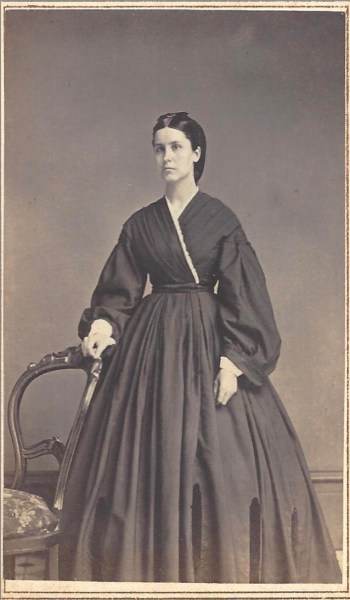
Virginie Bruneau in New York City

Virginie Bruneau, born in St. Constant, Quebec in 1840, became a teacher. “She enjoyed the distinction of being one of the group of teachers to receive the first French Canadian diplomas from the McGill Normal School.”

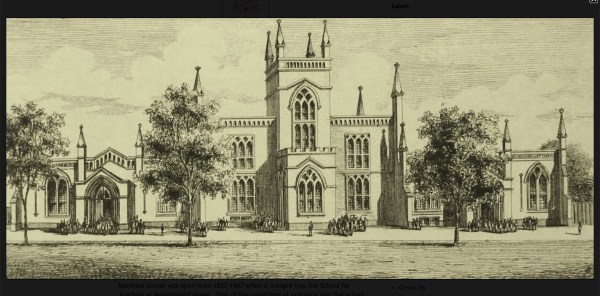
The school was established in 1857 by John William Dawson, McGill’s first Principal with an agreement between the university, the government and the Colonial Church and School Society to educate Quebec’s protestant public elementary and secondary school teachers and produce teachers who could turn young minds into university material. The Colonial Church and School Society had been dedicated to the maintenance and financing of Anglican schools.

McGill Normal School 30 Belmont Street, Montreal

Applicants to McGill’s Normal School were examined in reading, writing, the elements of grammar and arithmetic and “needed to produce certificates of good moral character from their clergyman or minister of religion under whose charge they have last been.” The earlier schools judged teachers qualifications only on their common sense and reputation. The one-year course earned an elementary diploma and students attended for two years for a Model School diploma required to teach higher grades. Students had to be at least 16 years old and teach at least three years after graduating.  The first class contained 35 women and five men. So Virginie, born in 1840 could have been in the first class.

The school opened at 30 Belmont Street in downtown Montreal. In 1907 it moved to the west of the island and became part of MacDonald College.

After graduating, Virginie first taught in Montreal and then later, of all places, New York City. She was my great grandfather Ismael’s sister, the third child and second daughter of Barnabé Bruneau and Sophie Marie Prudhomme. Like many of her siblings, she looked for a life beyond the farm in St Constant.

I don’t know how or where she met her husband Francois Dutaud. He was from the same region of Quebec, born in Napierville, to Joseph Dutaud and Isabelle Cyr but he also spent time in the United States. He lived in Boston for several years. There, he worked for the Tuft Brick Company. He returned to Canada in 1875, where he farmed and had a successful grain business in Grande-Ligne, Quebec.

Francois Dutauld

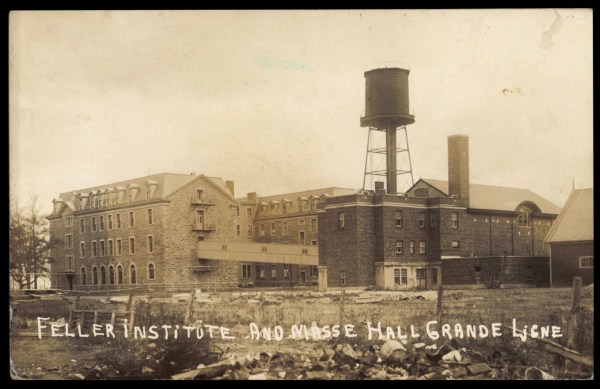
Did Virginie give up the bright lights of New York City to teach at the Feller Institute in Grand-Ligne? Is that where she met Francois? Henriette Feller was a Baptist missionary from Switzerland who came to Quebec to convert Catholics to Protestantism. The hostility of Catholics in Montreal forced her to move south. Madame Feller’s first school was in the attic of her log cabin but eventually a large stone building was constructed. She and Charles Roussy her colleague, were responsible for the conversion of Virginie’s parents in the 1850s.

Virginie was 38 when she married and she and Francois had only one child, Gustave Dutaud, born in Grand Ligne in 1879.


The couple moved to Montreal to live with their son when Francois became ill. He died a year later. Virginie continued to live with Gustave until her death in 1926 from arteriole sclerosis. Her obituary said she was of proud Huguenot stock but I don’t think this was necessarily true. Yes, she was a French Protestant but her Bruneau line had been practising Catholics for centuries.

Notes:

Picture of Virginie by S.A. Thomas 717 Sixth Ave New York. He was a photographer from 1853 to 1894 when he died at 71.

https://numerique.banq.qc.ca/patrimoine/details/52327/4280081

The Educational Record of the Province of Quebec April – June 1964 Vol LXXX No. 2

McGill Normal School: https://education150.mcgill.ca/images/MNS-dOC20.pdf

McGill.ca/about/history/features/dawson accessed September 12, 2022.

Virginie Bruneau Dutaud Obituary. Montreal Star, Montreal, Quebec. April 28, 1926 page 31. Newspapers.com accessed April 19, 2022.

https://numerique.banq.qc.ca/patrimoine/details/52327/1955334 Picture of Feller Institute

Walter N. Wyeth D.D. – Madame Feller and the Grande Ligne Mission, Philadelphia Pennsylvania. WN Wyeth 1898

https://archive.org/details/henriettafellerg00wyetuoft

Gustave Dutaud The Lawyer

Gustave Dutaud, a member of the Bruneau family, was my grandmother, Beatrice Bruneau Raguin’s first cousin. I hope they knew each other as both lived in Montreal and from what I have found out, Gustave was worth knowing!

He was well-liked and well-respected as per messages in newspapers after his death. “There is a sense of loss when good men die, something goes from the richness of the world, something we can ill spare. Such is the feeling aroused by the death of Gustave Dutaud.” according to Marguerite Cleary.

“ If he was not conventionally religious he was a fine example of a French Canadian Christian, whom to know was a rare privilege.” said George Hosford.

His mother Virginie Bruneau, was 38 when she married Francois Dutaud and they only had one child. Gustave attended the Feller Institute, in Grande Ligne, Quebec south of Montreal, the school founded by Henriette Feller for French Protestants. She along with Louis Roussy came to Canada from Switzerland as missionaries, to convert the French Catholics. Gustave’s grandparents, Barnabé Bruneau and Sophie Marie Prudhomme heard their gospel and converted in the 1850s along with their children.

Gustave later entered McGill University where he obtained a BA in 1903 and a Bachelor of Civil Law (BCL) in 1909. He worked as a reporter for the Montreal Gazette while completing his law degree. He was a KC (Kings Consul), an official interpreter for the Court of Kings Bench and practised from his own law firm.

“He had a lion’s heart for anyone who suffered under injustice.” Much of his legal practice concerned a number of social welfare organizations including the Society for the Preservation of Women and Children. He was interested in the troubles of the poor and used his legal training to help them out of difficulties. Gustave won a case for a woman hit by a car on Sherbrooke Street and McGill College, where the driver blamed the pedestrian for the accident.

He lead a busy life. He was a member of the Montreal Reform Club, the goal of which, according to its 1904 constitution, was “the promotion of the political welfare of the Liberal party of Canada.” Also a member of the Knights of Pythias organization which believed, “It is important to promote cooperation and friendship between people of goodwill. One way to happiness is through service, friendship, charity, benevolence and belief in a supreme being.”

In 1923 Gustave took his first trip to Europe. He accompanied the Montreal Publicity Association to a London convention as their honorary legal adviser. Aside from his time in England he also toured France and Scotland. “He returned to Canada more than ever convinced of the desirability of this country as a place in which to live.” He was amazed at the poor living conditions of the French peasant farmers. He described the French Chateaux as, “picturesque but uncomfortable, much nicer in pictures than as places to live.” The French wanted to replace war-damaged stone buildings with the same and not live in stick-built houses common in Canada.

Europe was still suffering after World War I. The group visited the battlefields of France. Gustave found “Verdun a sinister expanse of horrors surrounding a miserable medieval town, which had been destroyed by shell fire. There were still many ghastly reminiscences of the war. A trench where many of the French troops had been buried alive and where the soldiers still stood buried, with the tips of their riffles and bayonets protruding from the ground.”

“The finest things he saw in Europe were the masterpieces at the Louvre while the beauty of Scotland entranced him, as quite the most lovely country visited, more so even than his ancestral France.”

His compassion for people included his parents. They moved to Montreal to live with him after his father became ill. His mother stayed with him after his father’s death, until she died in 1926. Unfortunately, Gustave never married or had children, so when he died in 1949, another line of the Bruneau family ended.

Notes:

Montreal Star, 11 July 1949 page 10. Newspapers.com accessed April 22, 2022. George Hosford. George Hosford roomed with Gustave and later was warmly received at his home and office.

Montreal Star July 7. 1949 Letters to the Editor page 10. Newspapers.com accessed April 22, 2022. Marguerite Cleary. She recalled Gustave Dutaud as a man with a mind that was noble, not conventionally religious, a lover of Anatole France, he expected little from humanity and sided by nature with the underdog, a gentleman.

Gustave Dutaud Obituary: Gazette, Montreal Quebec, Canada. June 25, 1949. Page 15. Accessed from Newspapers.com April 19, 2022.

Old World Living Conditions Poor: The Gazette (Montreal, Quebec, Canada) · 12 Mar 1925, Thursday, Page 6. Accessed from Newspapers.com April 19, 2022. Gustave’s trip to Europe.

McGill Year Books: https://yearbooks.mcgill.ca/browse.php?&campus=downtown&startyear=1901&endyear=1910 Accessed November 21, 2022. Gustave Dutaud McGill BA 1903. He was also in the Drama club while obtaining his BA, and one of only seven students in third year law. Gustave advertised in the 1916 year book as Barrister and solicitor.

Quebec Heritage News: 

The Montreal Reform Club, at 82 Sherbrooke St West, used the building as its city headquarters for half a century. Established on June 17, 1898, the Reform Club was the social wing of the Liberal Party of Canada, and its provincial wing in Quebec. By 1947, the club counted a remarkable 850 members, 670 French-speaking and 180 English-speaking. 

The irony, of course, is that since April of 1973 the building has belonged to the nationalist and pro-independence Société Saint-Jean-Baptiste de Montréal. On May 17, 1976, the SSJB renamed the property La Maison Ludger Duvernay, in honour of the founder of the Society. The Société Saint-Jean-Baptiste de Montréal has never complained of the presence of frightening federalist ghosts within its walls!

https://en.wikipedia.org/wiki/Anatole_France accessed November 27, 2022.

Anatole France: French poet, journalist, and novelist with several best-sellers. Ironic and skeptical, he was considered in his day the ideal French man of letters. He was a member of the Académie Française, and won the 1921 Nobel Prize in Literature, in recognition of his brilliant literary achievements, characterized by a nobility of style, profound human sympathy, grace, and a true Gallic temperament.”