Category Archives: Canadian Province

Great Granny Bagg (Kittens on the Wedding Dress)

Mary Heloise Bagg Lindsay (1854-1938)

The Anglican Church and her philanthropy were most likely what grounded Mary Lindsay and enabled her to properly cope with her family. It is my belief that as the educated daughter of a wealthy Montreal family, the wife of a successful Montreal stockbroker and a busy mother – she appreciated the solitude of her Sunday morning church service and the rewarding challenges of her chosen charities. Her obituary, in 1938, summarized Mary Heloise Bagg Lindsay’s life as having “been a life member of the Women’s Auxiliary of the Church of England, Governor of the Royal Victoria Montreal Maternity Hospital and Children’s Memorial Hospital and greatly involved in a great many charities. She also regularly attended services at The Church of St. John the Evangelist1.

My great grandmother, Mary, was one of four surviving daughters of Stanley Clark Bagg and Catherine Mitcheson. Born in 1854 at the Fairmount Villa, in the Golden Square Mile of Montreal, she grew up to marry Robert Lindsay in 1881. Her only brother, Robert Stanley Bagg, was heir to the family fortune, her two older sisters married men in the clergy and her younger sister married a scandalous real estate tycoon who mysteriously disappeared when his debts caught up with him.

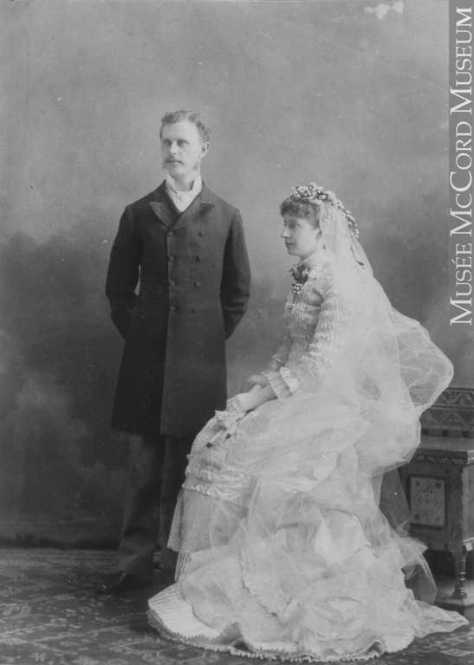
Robert and Mary Heloise Wedding day
Mr and Mrs Robert Lindsay -1881

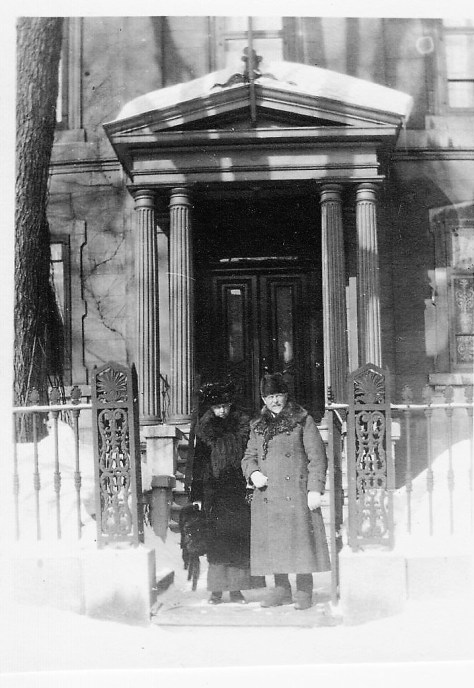
Her first matrimonial home, in 1881, was located at 436 St-Urbain2, which was a subdivision of a very large villa lot stretching down to Sherbrooke, near the Fairmount Villa where her mother still lived. Eventually she and Robert moved to 6 Prince of Wales Terrace3, at 455 Sherbrooke Street West (the address later became 1009 Sherbrooke Street West) where she raised her family and lived there until she died in 1938 at age 84.

Mr & Mrs R Lindsay - 6 Prince of Wales Terr -1917
Mr & Mrs R Lindsay – 6 Prince of Wales Terrace – 1917

Although Mary was petite in size and considered “frail” she and Robert had six healthy children.

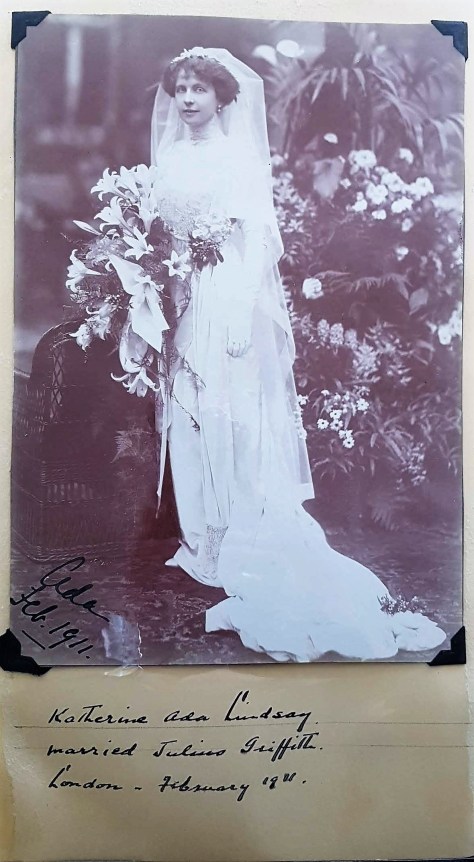
Ada was her firstborn child. On her wedding day, it was discovered that the family cat had had her litter of kittens on the wedding dress that had been laid out on the bed!4 Somehow they were able to acquire another dress.  

This still remains one of my favourite family tales.

Ada - wedding - 1911
Ada Lindsay Griffith – 1911

Lionel, her eldest son, studied medicine all over Europe and became a well-loved family doctor in Montreal after he retired from the Canadian Army Medical Corps in 1915. Her second son, Sydenham, (my grandfather) The Priest became a well known Anglican Priest in the Montreal area, despite the warning from his stockbroker father that there was “Not much money in it!”

Her last three children did not marry.

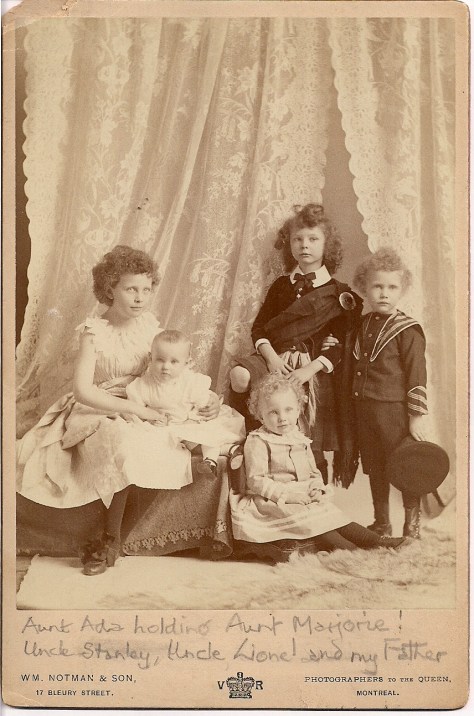
1891-Children of RobertLindsay&MaryHBagg
Ada, Marjorie, Lionel, Stanley and Sydenham – 1891 (Marguerite was born in 1896)

Stanley served as a captain in WWI and survived the Battle at Ypres in 1915. Afterward he returned home to follow in his father’s footsteps and became another successful Montreal stockbroker. He remained the bachelor uncle who enjoyed doting on his nieces (especially my mother) and nephews. Beautiful Marjorie, however, remained a spinster when permission to marry her one true love across the Atlantic was denied for her own safety5. And sadly, Mary’s youngest child, Marguerite, died at age 26 as a summer volunteer with the Grenfell Mission in Labrador.Miss Lindsay – Part 1

Mary must have drawn great strength and comfort from her faith to support her adventurous children in their respective challenging worlds.

Updated and edited – 2023-03-27 by author

1 The Montreal Gazette, August 15, 1938.

2 Lovell’s 1890 – 1906.

3Commissioned 1860 to honour the Prince of Wales, Prince of Wales Terrace consisted of a row of nine houses which presented a unified, Montreal limestone facade in the Classical Greek style.

4 As told to me by my aunt, Katharin Lindsay Welch, telephone conversation – June 2013

5 As told to me by my aunt, Katharin Lindsay Welch, telephone conversation – June 2013

The German Presence in the Montreal Region

The first German-speaking families probably came to Montreal around 1700. While this community has never been large, it has been well-organized: the German Society of Montreal was set up in 1835 and St. John’s Lutheran Church was established in 1853. Many families of German origin attended Protestant and Catholic churches along with their English, Scottish and French Canadian neighbours. This compilation lists many of the city’s churches and the repositories where their birth, marriage and burial records are kept.

German Presence in Montreal Feb 1

Poor Little Children

IMG_0424

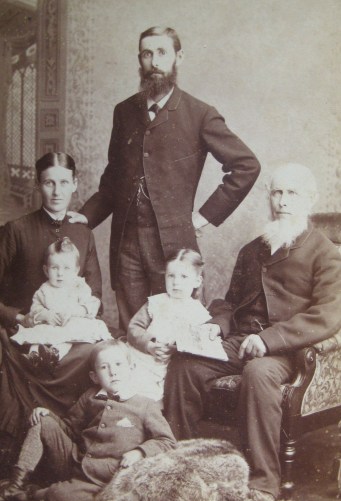
I always thought that my grandfather, William Sutherland was one of three children. He and his brother Wilson died before I was born and his sister Mary when I was a baby, so I never heard any information first hand. There is a picture of the family with three children, parents and grandfather. I always assumed the baby sitting on Alice Dickson Sutherland’s lap was Wilson, until one day I realized the eyes were light coloured. Wilson the youngest son definitely had brown eyes confirmed in many other pictures.

Thinking this was a child who had died, I searched through the Ontario Birth, Marriage and Death indexes. I found a James Dickson Sutherland who died at fourteen months, in January 1886, of bronchial pneumonia and thought he was a possible match. This was confirmed in a letter from Alice to a cousin Jessie McIntosh, where she mentioned little James Dickson. “Baby is growing he is pretty plump but not so big and fat as Willie was when he was his age. We call him James Dickson, he has dark hair, blue eyes and a deep dimple in his chin.”

It was certainly not unusual for young children to die before the discovery of antibiotics and vaccines. In my search I had noticed a Mowat Sutherland, who had died of diphtheria in 1891. Unfortunately, Ontario death certificates don’t give the parents names. No one else in the family had been called Mowat, but that was my great great grandmother’s maiden name. Then a “Knowat” Sutherland age two, was found in the 1891 census living with my great grandfather’s brother William and his wife Jessie Sutherland.

There was also an Elizabeth Mowat Sutherland, who died in 1890. I thought she was probably Mowat’s sister but hadn’t found any birth record. Then, in the LDS database I found both Mowat, Elizabeth Mowat and James Dickson buried in Mount Pleasant cemetery, plot M5120 owned by my great great grandfather William Sutherland.

I kept looking through the records. I searched through the birth records putting in different parents names and then just Sutherland, as I knew the death date and age, 9 months. I finally found a record of the birth of an Elizabeth Maud Sutherland whose parents weren’t William and Jessie Sutherland but rather Donald Sutherland and Alice Dixon (Dickson). This little girl was my great great aunt. She was born July 26, 1888 and died of bronchial pneumonia, April 22, 1889.

Imagine, three babies buried in plot M 5120 with their grandparents, but then there were four. Recently a Dickson baby boy was found to be buried in this plot. He was still born and probably the son of Alice’s brother James Dickson.

Donald and Alice lost two children before the youngest, Wilson was born. As the baby of the family he was spoiled according to all sources. His mother babied him and the explanation was undoubtedly the two children she lost. It was said he never had to learn the value of money and would buy a newspaper every day!

There was one more baby who was never mentioned. My grandmother Minnie Eagle Sutherland and her sister Amy had another younger sister. Elizabeth Martha Eagle, known as Bessie was born October 1, 1886 and died July 18, 1887 of cholera . Her mother Eliza Jane Eagle said, “God knew she could only cope with two children and took Bessie to heaven.”

Are there other little children to find so they too will be remembered?

IMG_3854
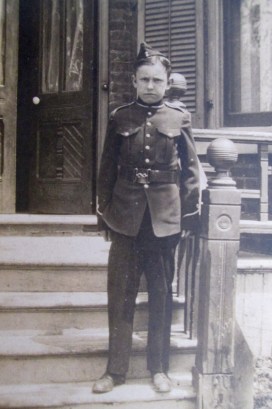
Robert Wilson Sutherland          Abt 1905
IMG_3866
Robert Wilson Sutherland                  Abt. 1920

Bibliography:

Ancestry.com. James Dickson Sutherland – Archives of Ontario. Registrations of Deaths, 1869-1938. MS 935, reels 1-615. Series: MS935; Reel: 45

 Year: 1891; Census Place: St Johns Ward, Toronto City, Ontario; Roll: T-6371; Family No: 3.

Archives of Ontario. Registrations of Births and Stillbirths – 1869-1913. MS 929, reels 1-245. Toronto, Ontario, Canada: Archives of Ontario.

“Ontario, Toronto Trust Cemeteries, 1826-1989,” index and images, FamilySearch (https://familysearch.org/pal:/MM9.1.1/KH6C-BDS : accessed 07 Mar 2014), Elizabeth Mowat Sutherland, 1889.

“Ontario, Toronto Trust Cemeteries, 1826-1989,” index and images, FamilySearch (https://familysearch.org/pal:/MM9.1.1/KH6C-FP9 : accessed 07 Mar 2014), Mowat Sutherland, 1891.

“Ontario, Toronto Trust Cemeteries, 1826-1989,” index and images, FamilySearch (https://familysearch.org/pal:/MM9.1.1/KH6H-378 : accessed 05 Apr 2014), Eliza M Eagle, 18 Jul 1887; citing Toronto, Ontario, Canada, section and lot T 94, line 11917, volume Volume 07, 1883-1891, Superintendent of Administrative Services; FHL microfilm 1617041.

Ontario, Toronto Trust Cemeteries, 1826-1989,” index and images, FamilySearch (https://familysearch.org/pal:/MM9.1.1/24MZ-7G5 : accessed 19 May 2014), Wm Sutherland in entry for Dickson, 05 Oct 1888; citing Toronto, Ontario, Canada, section and lot M 51 20, line 5000, volume Volume 01, 1876-1896, Superintendent of Administrative Services; FHL microfilm 1617049.

Personal communication with Elizabeth Sutherland Van Loben Sels. 2000.

Family letters from Carol MacIntosh Small. All the original letters were donated by Carol to the Bruce County Archives in Southampton, Ontario.

Letter from Alice Sutherland to Jessie McIntosh March 18, 1885.

Germanic Presence in Quebec City

The 2015 German Christmas Market in Quebec City, http://www.noelallemandquebec.com/
The 2015 German Christmas Market in Quebec City

Jacques begins his latest compilation, The German Presence in Quebec City, with a translated quote by German Quebec expert University of Montreal Professor Manuel Meune. In this quote, Meune describes the context of German immigration to Quebec over the years.

The circumstances Meune describes challenge family researchers with ancestors from Germany who might wonder where original records might be stored. To help sort out the information, Jacques has highlighted books and document collections in churches, libraries, schools and societies in and around the Quebec City area.

He’s also included Facebook or other contact information for each repository so researchers can visit these locations to explore what might be available.

Difficult holiday for two families

The plane crashed just after one in the afternoon Eastern Time on December 22, 1944. He probably died right then, or soon after.

Devittphoto2

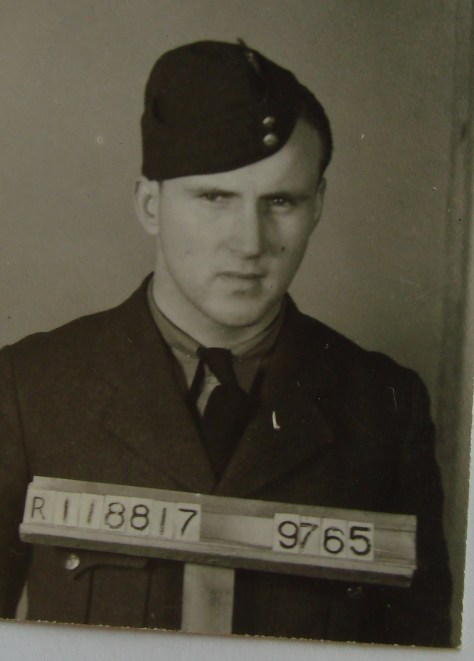
James Frederick (Fredrick or Federic) Devitt left at least two families mourning for him, one in the United Kingdom and his own in Ontario.

His service file shows that the man was 22 years old when he died. His birth had been a Valentine’s Day gift for his parents. Prior to joining the Air Force, he worked for the Canada Bread Company in Peterborough as a driver and route manager. He played hockey and softball and owned a motor boat.[1]

His last trip as a flight engineer/pilot officer left from Gransden Lodge just prior to 4 p.m. in the afternoon, December 22, 1944, exactly 71 years ago yesterday.

His Lancaster and 13 others were on a Pathfinder mission to mark a small railway freight yard in Germany’s Rhine Valley. He was in Lancaster 405/D, which was seen crashing about three hours later by four pathfinders at 50:02 N. 06:25 E., southwest of Leimbach.

Blind Sky Marker failed to return from this operation and nothing has been heard from any member of the crew since time of take-off. This was F/O Tite’s 35th operation.” [2]

His mother’s notes to the Air Force show how difficult these situations were for families.

The telegram and letter reporting him going missing within a month of the crash was the only official news, but she still had hope that he had lived in May.

Can nothing be done to locate my son Fred? I have waited for days thinking some message would come through. I had word from two of the fathers from two of his crew saying their sons were prisoners of war. This was some time ago. Try and help a heart-broken mother please.”

Henrietta was 65 when her Devitt died, but she had already known great loss. His father Robert Campbell Devitt had already died of complications following a stomach ulcer operation when he was three years old, his older brothers were  five, 15 and 21 and his five sisters were eight, 11, 14, 17 and 19.

When she got news about her youngest son going missing, she was already dealing with the death of his elder brother Alexander, who had died the previous January in the Battle of Ortano, Italy.[3]

She wrote the Royal Air Force a second note three months later:

I have not heard any further word about my son Jas Fredric Devitt except what the three members of his crew who came back told me by letter. They said the plane burst into flames. One bailed out and two were blown out and what happened the rest is not known. Surely some identification marks were found. If he was killed and buried like my other son I wouldn’t take it so hard.

Two of the boys were taken as prisoners and the other wounded and put in a German hospital. All any one says is missing.”

A month later she wrote again.

Surely you can tell me something of my son Pilot Officer Jas Fud shot down over Germany December 22…If I know he was died and his body found my mind would be at rest—as it is I’m afraid of results.”

Another woman who loved him also worried. Eight months after his plane went down, a Mrs. S. Hitchings wrote the Royal Air Force from 111 Connaught Road, Roath Park, Cardiff. She too had heard that two airmen from his plane were taken prisoner and she hoped that perhaps they provided the Red Cross with information about Devitt.

I feel sure that if he was alive we would have heard from him, since he became part of our family whilst he was stationed in this country.”[4]

It would take another three years to be sure about what happened to the Lancaster, but Devitt’s service record indicates that:

This 4 engined aircraft fell 60 or 70 yards behind the fam of MARTIN STOMMES in WIERSDORF (L.0357). It was shot down by a German night fighter and was burning in the air, it hit the ground, turned on its back and burned for 3 hours. One engine and the tail unit fell off before it crashed.”

Three bodies and the remains of a fourth were buried in an unmarked grave.[5]

Devitt’s remains have since been moved to Rheinberg War Cemetery in Germany. For more information, refer to his Veterans Affairs Canada memorial page.

Sources:

[1] Devitt, James Frederick; Library and Archives Canada, RG-24, volume 25203, General Information.

[2] No. 405 R.C.A.F. Squadron (P.E.F.) Operations Record Book, Gransden Lodge, photocopies of secret book, December 22, 1944, Appendix 212.

[3] Devitt, James Frederick; Library and Archives Canada, RG-24, volume 25203, National Estates Branch, form C92768FD269, October 29, 1945.

[4] Devitt, James Frederick; Library and Archives Canada, RG-24, volume 25203, report from Officer Commanding No 2, MR&E Unit RAF, dated January 17, 1947.

[5] Devitt, James Frederick; Library and Archives Canada, RG-24, volume 25203, letter from S. Hitchings, received August 25, 1945.

Note: This article was also published on http://www.Arialview.ca today.

Granny-Lin

Millicent Thorpe Hanington (1895-1982)

Millicent’s one indulgence in later life was watching “Hockey Night in Canada” on television.  She was a committed fan and watched every game without fail.  One night during the game, Sydenham, her husband, felt light headed and fainted.  She gave him a gentle slap to wake him up, got him to swallow a couple of aspirins and warned him with:  “Don’t you dare die during my hockey game!”[1]

The birth of this sixth daughter, Millicent, in 1895, could have been in celebration of James Peters Hanington ’s graduation from McGill Medical School a year earlier, at the ripe old age of 49.  Millicent (my grandmother) was the baby of this family of girls, and eventually looked after all her sisters in their old age.

The Hanington family had strong roots in Shediac, New Brunswick, given that William Hanington (Millicent’s great grandfather) founded the town in 1784.  Millicent grew up spending the summers at her father’s cottage in Shediac Cape and soon after she married, she bought her own summer cottage there and named it “Iona Cottage”.  The family story told was that she was so thrilled, that the name was really code for “I own a cottage”!

Sydenham Bagg Lindsay, an Anglican priest in Montreal, actively pursued Millicent with marriage proposals until she finally accepted him ….on the condition that he look after all her sisters as well.[2]  Poor guy got six women for the price of one! Two of her sisters, however, were married and only three were spinsters.

Married in 1918, Millicent was a young bride of 23 years and Sydenham, a frail young man of 29.  She led a demanding life as a full time minister’s wife in addition to having four children of her own.  Their first child was born in 1920, a frail little girl called Mary Thorpe who strengthened as she grew and was talented in art and theatre.  In 1923, their son, Paul, was born, a jolly little fellow who was to be their life long tower of strength.  In 1926, their daughter Ann (my mother) appeared, a sweet tranquil baby, who was to become a marvellous mother.  Finally, in 1930, came Katharin, a whirlwind if there ever was one. [3]

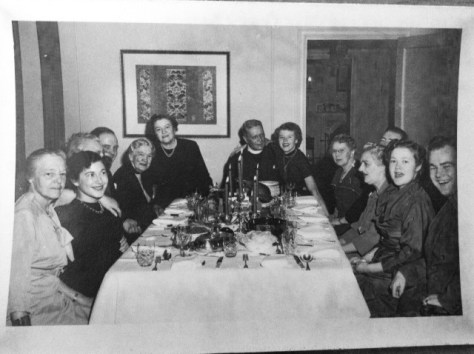
Millicent’s lively spirit and sense of humour carried her through many a trial. As they moved from parish to parish, her fame preceded her.  Her superb cooking kept the whole family well and strong, including their parents and all her sisters!  There are photos galore of a dozen or so family members around her Sunday table. When Sunday lunch after church became too much for her to manage, the family began a new tradition of eating Sunday lunch regularly at Murray’s Restaurant, which she thought was the closest thing to her own cooking.Dodo, Mary, Bob, Mrs JP Hanington, Granny, Grampa, Kay, guest, Tom, Tootie, Ann, friend Bobby

She kept an eye on her mother and her sisters as they aged and needed attention.  In 1950, her mother died in her 99th year and Millicent missed her terribly the rest of her life.

With the strain of WWII, parish duties and his family, Sydenham’s health suffered.  As his strength waned so did that of his daughter, Ann, who had developed Hodgkin’s disease.  Both parents suffered through her illness and death and the problems that beset her grieving husband and their four children.

Seven years after Sydenham died in 1975, Millicent felt ill and didn’t know why.  She had leukemia.  Six weeks later she died, still the gallant lively Spirit she’d always been.

[1] Personal recollections in a telephone interview October 2013 – with Katharin Lindsay Welch. (her youngest daughter)

[2]Personal recollections in a telephone interview October 2013 – with Katharin Lindsay Welch. (her youngest daughter)

[3] Personal recollections by Mary Thorpe Kerr – Victoria, BC – 1993

French Protestant Churches in Quebec

Among the first European settlers who came to Quebec in the 1600s were some 300 Protestants, most of them fleeing religious persecution in France. If they hoped to find religious freedom on this side of the Atlantic, they were disappointed: the Catholic Church controlled all religious matters in New France and Protestants could not even baptize their children or buy land.

Many quietly gave in and became Catholic, and families forgot that their ancestors had been Calvinists or Huguenots. Those who maintained or adopted Protestant beliefs were discriminated against by both their English-speaking neighbours and by French-speaking Roman Catholics. Many of them left Quebec. For those who remained, their churches became the centers of their lives.

This compilation includes a list of books and articles about the history of French-speaking Protestants in Quebec and a list of Protestant churches, chapels and missions in Quebec since 1600. It tells you where to find the records of these institutions and how to contact the archives of the Anglicans, Presbyterians and other denominations.

French Protestant Churches in Quebec)


Remembering Ed Johnson, the visionary behind the North Wall

Ed Johnson and Ric Gidner, July 2005

As I watch the memorial service today, I’ll be thinking of my friend Ed Johnson, the visionary behind the North Wall.

Ed and I met first late in 1995, six months or so after the North Wall (officially known as the Canadian Vietnam Vet Memorial) was erected in Windsor, Ontario. We met again the following July and then again ten years later during the tenth anniversary of the monument.RicEdWindsorWall

In our first meeting, Ed told me how a chance meeting with a woman at the Wall in Washington in 1986 led him on a long journey to create the North Wall. The Canadian woman told Ed that she served as a nurse in Vietnam. Later he found out she lied about that, but her comments made him curious about all Vietnam veterans from Canada. He remembered serving with a Canadian in 1969/70 with the 2/47 Mechanized Infantry.

“During that time, it just never registered,” he said. “I didn’t know what that would mean or where it was. I mean, how many American lives did they save? I’m forever grateful for what they did.”

Johnson began looking for information about Canadian Vietnam Veterans. He found out that some associations existed in Canada, but that most veterans in our country were still isolated and on their own. He learned that many had to cross the border multiple times a year to get health treatment for injuries received during the Vietnam War.

“So I organized a committee here in the Detroit area and called it the Canadian Vietnam Veterans’ Welcome Home Committee. We began working to organize a Welcome Home event for them. The event took two years in the planning and I personally went out and signed a contract with the Michigan State Fair Grounds for $48,000.”

The Welcome Home party took place on July 4, 1989, but internal fighting between veteran’s organizations meant that two other similar events took place in Michigan the same weekend. The pressure also caused fighting at home. By Sunday night that weekend, Johnson had lost $12,000, his house, his credit rating and his wife.

Despite the turmoil, Johnson continued his efforts to bring the Canadians home. He, his buddy Ric Gidner and his brother-in-law Chris Reynolds began building a mini-version of the Washington monument for the Canadians. With the help of the associations in Canada, they researched 100 names to inscribe on the granite.

In March 1993, Johnson and Gidner started a non-profit association called the Michigan Association of Concerned Veterans to offer their monument to the Canadians.

Both the National Capital Commission and the City of Ottawa refused the offer, as did the ministries of Veteran’s Affairs and Public Works.

That led the Americans to split with the Ottawa and Toronto groups that wanted an Ottawa site and look for an alternate site instead.

In the end, the City of Windsor offered land in Assumption Park, right next to the Ambassador Bridge. The monument was dedicated on July 2, 1995 and continues to be dedicated annually every year.

Ed attended all of those dedications until he died from cancer on August 24, 2010. He was only 61 years old. There’s a neat memorial postcard in his memory.

I tried to find an official death notice for my friend, and found one for Edward George Johnson IV, who also lived in Farmington Hills and was born and died on the same dates as the Ed I knew. The picture looks like Ed to me. If this is indeed Ed, it’s nice to see that he built a strong relationship with family before dying despite his commitment to leaving a legacy for Canadian Vietnam Veterans.

Call Me Ismael

IMG_7917
The Bruneau family in Montreal about 1899

 He arrived when the service was almost over. He walked to the pulpit and announced the last hymn “Seigneur Tu donne Ta Grace.” As the organ played he collapsed to the floor. So ended the life of Ismael Bruneau, my great grandfather.

His life began in 1852 as Ismaer Bruneau in St-Constant Quebec, just south of Montreal. Ismaer was the eleventh of thirteen children and the youngest son of Barnabé Bruneau and Sophie Prudhomme. He attended the French Protestant school in Pointe aux Trembles and one summer went to West Randolph, Vermont to work in the mills. He spent a lot of time thinking about his future. He had written for advice to the principal of the school, Dr. Tanner who encouraged him to return to his studies and take the classes for those considering the ministry.

He was not sure of that path. One day he was out walking in the woods and climbed to the top of a hill. He sat facing Canada and prayed to God about the decisions he must make. As he reported, there was a dark cloud on the horizon and a voice spoke to him as if from the sky, telling him to return home and study, then travel and spread the gospel.

Ismaer continued his studies at Pointe aux Trembles and was then admitted to the Presbyterian College in Montreal, which had begun teaching subjects in French. At this time he changed his name from Ismaer to Ismael which he thought was more biblical and added Prudhomme as a middle name in honour of his mother.

After graduating, he was sent to Saint-Anne’s Kankakee County, Illinois to work with Father Chiniquy. Father Chiniquy was a Catholic priest who had left Quebec in the wake of several scandals. His zeal for God remained intense but not his feelings for the Catholic Church, which he renounced. He made his beliefs known to his congregation and they all chose to follow him and convert to Protestantism.

One family living in Kankakee was the Girods, who had recently immigrated from Switzerland. When their daughter Ida, a teacher in Baltimore came to visit, she was introduced to their minister. Ismael had been very homesick and often wrote letters home. He began writing about the lovely woman he had met. Then in one letter, he wrote to his sister Anais, “ Wouldn’t you like to come out after the harvest and see my wife. It would be worth it for without a doubt she is one of the beauties of the world in my eyes.” Ismael and Ida were married June 12, 1886.

The Bruneaus had three children in Green Bay, Wisconsin, one in Holyoke, Massachusetts, three in Quebec City and the last three in Montreal. Ismael had wanted a biblical family, a child for each of the 12 tribes of Israel but in the end had only 10. Nine of the children survived. He continued moving and preaching, taking a charge in Cornwall, Ontario and finally in 1917 back to Quebec City.

In Quebec, he had a church in the Old City as well as a congregation in Portneuf. He would conduct the morning service, catch the train to Portneuf for an afternoon service and be back in Quebec City in time for the evening service. On January 27, 1918 the train was delayed because of a troop train. Arriving late in Quebec City he ran up the hill from the station. He entered the church before the service ended but while his spirit was still willing his heart was weak. His family suffered financial hardships after his death as there were no pensions and the Presbyterian Church sent his widow one cheque for the days he had worked that month and nothing more.

Bibliography:

Bruneau, Ida. A Short History of the Bruneau – Girod Families. 1993.

Duclos, Rieul P. Histoire Du Protestantisme Français Au Canada Et Aux États-Unis. Montreal, Canada: 1912. Print

Villard, Paul. Up to the Light: The Story of French Protestantism in Canada. Toronto: Issued for the Board of Home Missions of the United Church of Canada by the Committee on Literature, General Publicity and Missionary Education of the United Church of Canada, 1928. Print.

Here is a link to a story about Ismael’s wife Ida Girod.

https://wordpress.com/post/genealogyensemble.com/3674

Sister Pilgrimage

Early Sunday morning, dressed in our special t-shirts, we left in plenty of time for the morning church service at St Martin’s-in-the-Woods.  The greeter welcomed us warmly, and we asked if there might be any Haningtons at church that day.  She beckoned down the aisle to her husband who then introduced himself as Allen Hanington. 4-1StMartin-Haningtons (9) Overjoyed, we threw our arms around our surprised distant cousin and snapped a commemorative photo.  And so our journey began.

4-1StMartin-Haningtons (8)

My 3x great grandfather, William Hanington, was the first English settler in Shediac, New Brunswick, in 1785.  He was an amazing fellow who emigrated from England at the age of twenty-six, built a whole community, set up lumber exports, built ships, married a PEI girl and had a family of thirteen.   Later in life, in 1823, he donated a piece of land and built St Martin’s-in-the-Woods Anglican Church, where he was buried in 1838.St Martin's in the Woods

4Shediac (23)
Front: Sister Pilgrimage July 2015 Back: William Hanington – 3x Great Grandfather 1759-1838

This past July, my sister and I decided to go on a one week “sister pilgrimage” to explore our family history in Shediac from 230 years ago.  We ordered our specialized t-shirts and planned our family-and-friends-fun-filled trip to the Maritimes. A very special trip for us both.  We hadn’t travelled together before and my sister, recently widowed, was embracing a “carpe diem” attitude.

Peggy’s Cove was our first  tourist attraction and we enjoyed a stroll around the lighthouse and its spectacular rocks overlooking the ocean. The quaint little shops were charming and the local afternoon tea was delicious.

On our way to Shediac, NB, we visited my sister’s friend Helen who was new to the area and provided us with a hearty lunch.  We checked into our B&B in Shediac, and set off to explore the delightful little town.  On the waterfront, we climbed onto the famous giant lobster to pose for the ultimate tourist photo.  4Shediac (17)Afterwards, while strolling along the boardwalk, we came upon a historical monument dedicated to our 2x great grandfather Daniel Hanington, a famous politician in his time. What a terrific surprise!

6AppleBlossomCafe (4)
The Anglin Sisters meet the Wallace Sisters.

Hopewell Rocks was our second tourist attraction with its incredible change in tides.  That morning, we walked along the “beach”.  Then we lunched nearby at the Apple Blossom Café, run by three retired schoolteacher spinster sisters.  What a hoot they were!  After lunch, we returned to find high tide had completely transformed the whole bay.  Amazing!

The next morning, our GPS helped us find our way to tiny Clairville, NB, to visit my friends Carol and Bruce.  Their cozy place was beautifully perched up on a hill overlooking a vast field.  After a tour of their house and garden, we had a delicious lunch and then set out for Charlottetown, PEI.

While driving across the spectacular Confederation Bridge, it was difficult to imagine how William and his Indian guides paddled across the Northumberland Strait in 1792 to claim his bride in Summerside, PEI (then known as Ile-St.Jean).

We checked into our B&B in Charlottetown and headed off to meet Anne of Green Gables, our third tourist attraction.  Luckily for us, there weren’t many visitors that day and she was able to personally fill us in on all the latest town gossip.

On our last day, we visited our mother’s best childhood friend. who is living with her son and family just outside Charlottetown.  Our mother passed away when we were very young, and AuntJean“Auntie Jean” has been a precious source of their childhood tales. It was such a thrill to see her again.

Later on that Sunday after the morning service at St Martin’s-in-the-Woods, we visited with Allen’s charming sister Lillian, the family historian who knew our exact location in the Hanington family tree!

And just down the lane from the church, off  Hanington Street, was our grandmother’s summer cottage.  Our grandfather, Canon Lindsay, would fill in as their pastor from time to time over the summers and several people at church that morning remembered him fondly.

Finally, as we drove down the driveway to visit with Allen and his wife Willa, there they were sitting on the porch swing waiting to welcome us into their home. 4-1StMartin-Haningtons (18)The afternoon flew by with lemonade and homemade treats and eventually we bid farewell to our cousins with heartfelt promises to keep in touch.

PS  The August 2015 family newsletter, the Hanington Herald, just arrived by mail! Included in the comments from the President’s Desk (that would be our cousin Allen!), it says: “We just experienced a lovely visit from the Anglin sisters; Lucy (Montreal) and Margaret (Ottawa) who were visiting in the area and attended morning service at St Martin’s-in-the-Woods Anglican Church on Sunday, July 5th 2015.  We had a very nice visit on Sunday afternoon.  They are descendents of Daniel Hanington.”