Category Archives: Genealogy

The House on Main Street

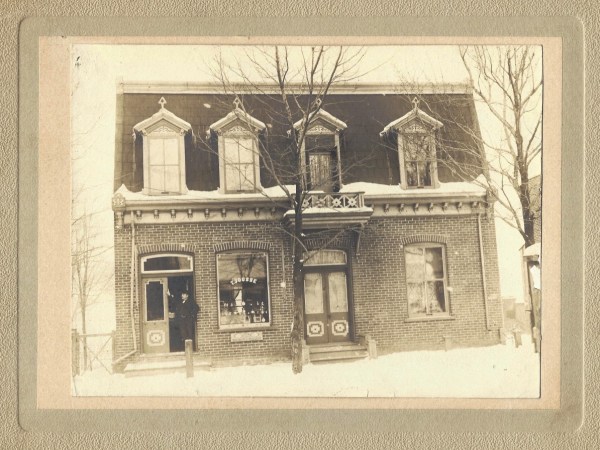
There is a house on Main Street (now Rue Principale), in Lachute, Quebec that my mother said had ties to our family. We would drive by it on most shopping trips to Lachute from our summer cottage. Mom said her Aunt Helvetia and Uncle Eugene Jousse had lived there and for a short time her grandmother Ida Bruneau. I thought it was a different house but old pictures clearly show which was the house. It now looks out on a Canadian Tire gas station and a Tim Horton’s.

Eugene’s father Theophile Jousse, had the house built in 1887, as a copy of his family home outside of Paris destroyed by a fire during the Paris Commune of 1870-71.

The house, built in the French style, right on the street with a small overhead balcony and dormer windows stands out. To the west of the house was a croquet lawn. A small cottage was built behind for his parents.
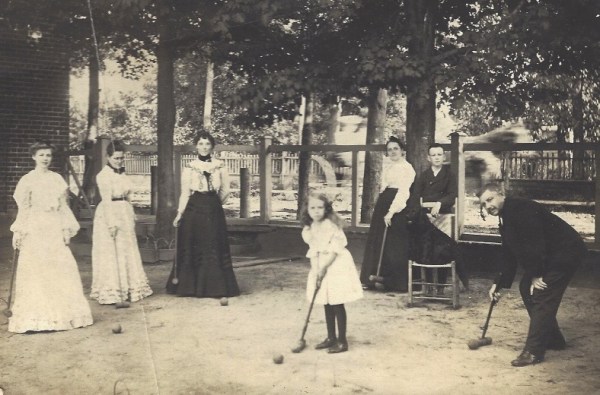
Theophile Jousse was born in 1855 in Vincennes, a commune in the Val-de-Maren department in the eastern suburbs of Paris. His father the Reverend Jean Felix Jousse, his mother Gorgette Haerrig and the family lived through the Prussian War, only to be caught up in the Paris Commune of 1870-71. Soldiers of the National Guard had seized control of Paris, refusing to accept the authority of the French government and tried to establish an independent state.

Felix and Theophile immigrated to Canada around 1874 with the rest of the family coming soon after. When Theophile first saw Ephyse Piché at L’Oratoire, the French Baptist Church in Montreal he knew right away that she was the woman he would going to marry and they did in 1876.

Theophile, an apprentice watchmaker moved from Montreal to Waterloo, Quebec and opened a jewellery store. When his business failed he moved his family to Lachute as his wife Ephyse was originally from nearby Saint Scholastic. There he opened another jewellery store and his parents moved into the cottage behind. Felix Jousse died in 1890 while his wife Georgette lived in the cottage for almost 20 years.
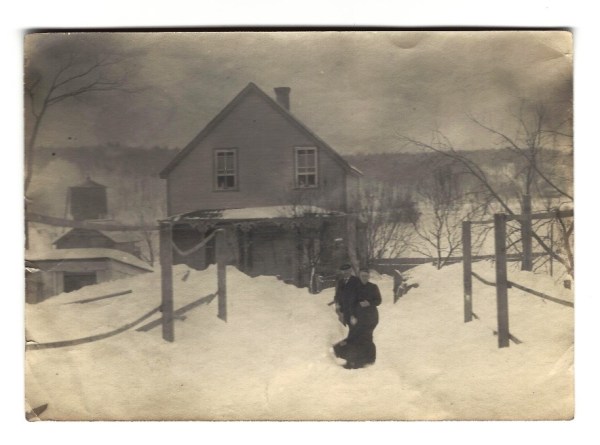
Theophile and Ephyse had three sons, Paul, Albin who died as a child and Eugene 13 years younger than Paul. Both sons apprenticed as watchmakers and jewellers under their father. Paul moved to Vankleek Hill, Ontario, just west of Lachute and opened his jewellery shop while Eugene inherited the Lachute house and business from his father. This caused some family problems.

When Eugene Jousse married Helvetia Bruneau they moved into the small house behind the store as both Theophile’s parents had died. They lived there until Eugene’s mother Ephyse died and then moved into the big house to look after Theophile. While Helvetia had furnished and redecorated the cottage she wasn’t allowed to move or change anything in the big house. It had to remain as Ephyse had left it.
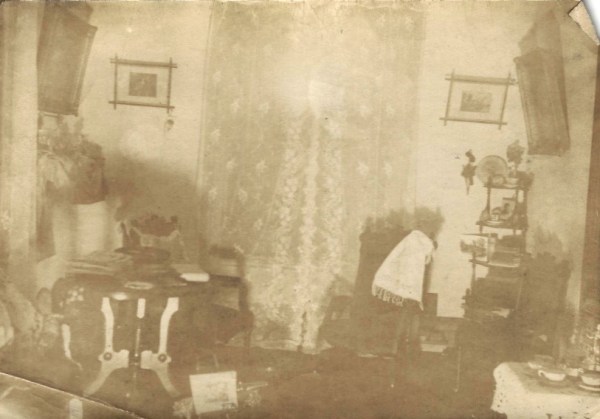
Helvetia and Eugene had two children, Eugene Theophile and Ephyse Marie. Theophile insisted his granddaughter be called Ephyse after his wife. When Helvetia’s father died in 1918 her mother Ida Bruneau and two younger brothers Herbert and Gerald came to live with them. They had the space as Theophile died in 1916 and they still had the two houses. Herbert finished high school in Lachute and Gerald was still living there in 1921.

In the twenties the jewellery business in Lachute couldn’t support the family so in 1927 they moved to Montreal and Eugene went to work at Birks.
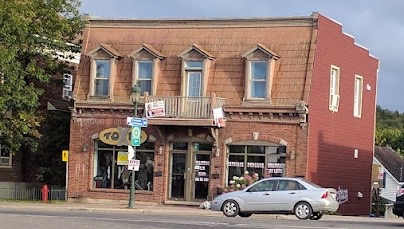
The house is still there. It must have had many owners as the businesses have changed over the years. It has recently been renovated and a tattoo parlour and a clothing shop called Toxic have been replaced by a children’s clothing boutique. The grandmother’s cottage still sits behind but the croquet lawn is long gone.

Notes:

Letter from Ephyse Jousse Hawks to Donald Walcot October 10, 1986. Copy in author’s possession.

The Walcots of Montreal West by Donald T. Walcot. Toronto 1984.

Lachute Chapter IV The Period of Expansion. 1876- 1900.

The house was built in 1887 by a local builder Riddell and Sutherland but designed by Theophile Jousse.

In 1921 the house was number 57 and now it is number 601, 603 and 603A Rue Principale

In 1986 Ephyse Jousse Hawkes said the house housed a delicatessen. She looked through the window and didn’t recognize her old home.

The Jousses:

Jean Felix Jousse: 1825 -1890 He was a Limonadier and an evangelist

Georgette Caroline Eve (Mimi) Haerrig 1827 – 1908

Jean Theophile Jousse: 1855 – 1916

Ephyse Piché Jousse: 1858 – 1914

Eugene Marcelin Jousse: 1890 -1954

Helvatia Bruneau Jousse : 1891 – 1970

Eugene Theophile Jousse: 1913 -1992

Ephyse Marie (Fee) Jousse Hawkes: 1915 – 2008
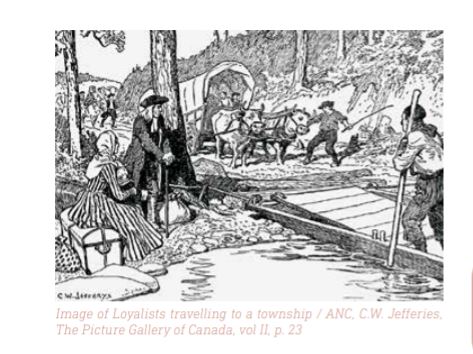
The Loyalists at BAnQ Numerique

Loyalists of the Province of Quebec

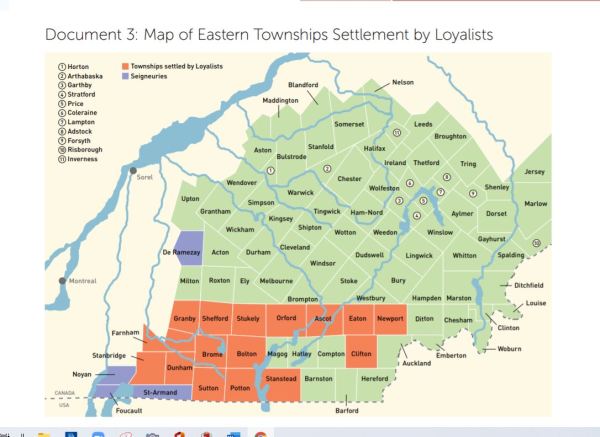
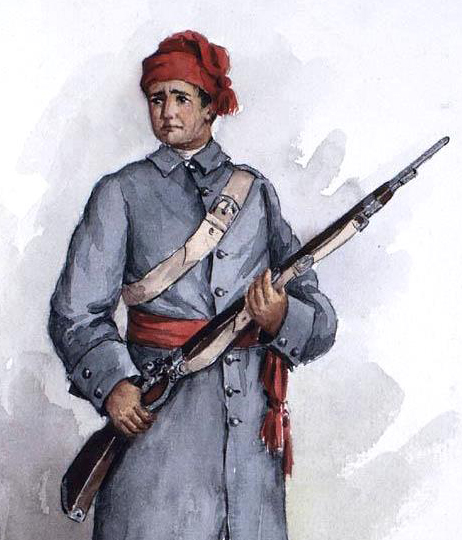
Following the American War of Independence, the Thirteen Colonies became the United States. Those who wished to remain faithful to the British Crown were obliged to leave their home to reach British territory. Consequently, following the 1783 Treaty that ended the War of Independence, Loyalists moved to British-occupied territories. Fifty thousand Loyalists reached British territories. Today, these territories make up Ontario, Quebec and New Brunswick. Of these 50 000 Loyalists, 500 fled to the Upper Richelieu Valley, to Noyan, Focault and St. Armand, unoccupied seigneuries of the Province of Quebec. These lands were ideal for clearing and their geographical location facilitated trade with the United States.

Excerpt from: https://www.etrc.ca/wp-content/uploads/2019/04/Loyal_cahier_documentaire_prim_ENG.pdf

Various online databases at BAnQ (Bibliothèque et Archives nationales du Québec) list books, papers, original documents, government decrees, proclamations by the British authorities during the British Military period and during the Lower Canada time frame about who the Loyalist people of Québec were.

Click the link below to access the database. Open link in a new window.

Claude Jutras dit Lavallée

Soldier – Farmer – Bourgeois

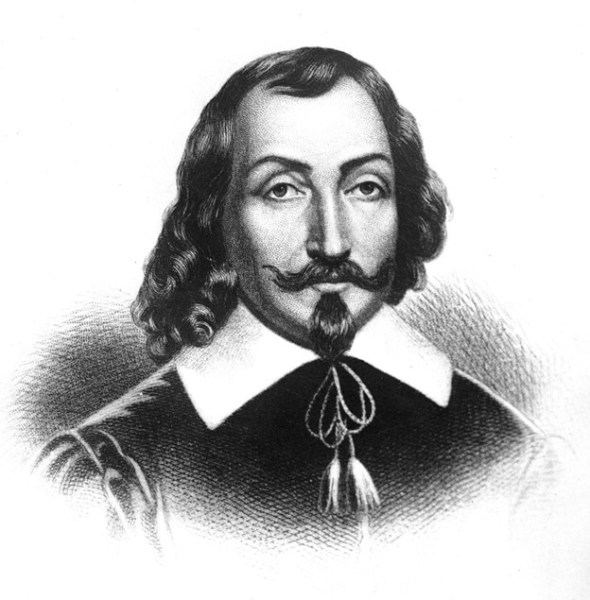
Samuel de Champlain was a man with a plan; actually, many plans. His explorations of New France began in the early 1600s. Along the way he set his sites on Trois Rivieres, given its strategic location at the mouth of the St. Maurice River where it flows into the St. Lawrence River.1.

Samuel de Champlain
An early view of Trois Rivières

Trois Rivières derived its name from the delta at the mouth of the river where there are two islands that separate the river into three branches as it flows into the St. Lawrence. “… the Three Rivers name is used for the first time in 1599 by Sieur François Gravé Du Pont, a geographer under Champlain, whose records confirmed the name in 1603”.  2.

             Map of Trois Rivieres

The area was settled by a small group of colonists on July 4th, 1634. At the time it was the second largest New France settlement, the first being Quebec City in 1608. Montreal would follow about 8 years after Trois Rivières in 1642. 3.

The young colony of Trois Rivières was constantly under attack by the Iroquois.4.

“Under the orders of Champlain, LaViolette, (a commander) travels to the mouth of the Saint-Maurice River to found a fur trading post and build a fort on ‘le Platon’, a plateau situated on a hillock of land along the St. Lawrence River.  The fort would enclose a few homes and shops, and the settlement would become known as Trois-Rivières. For a long time, this site will be one of the most advantageous for the activities of fur traders.” 5.

In 1656, Claude Jutras dit Lavallée, a young 29-year-old soldier arrived in Trois Rivières and was stationed at the garrison. One of his first transactions was to purchase land. This was the first of many transactions he would be involved in over the years.

Soldier

What is a ‘dit/dite’ name?  When the first settlers came to Québec from France it was a custom to add a ‘dit’ nickname to the surname. The English translation of ‘dit’ is ‘said’. The Colonists of Nouvelle France added ‘dit’ names as distinguishers. A settler might have wanted to differentiate their family from their siblings by taking a ‘dit’ name that described the locale to which they had relocated. The Colonists of Nouvelle France added ‘dit’ names as distinguishers6.

Within a year of his arrival Claude married Elisabeth Radisson, my 7th great-grandmother, the sister of Pierre Esprit Radisson, the famous explorer and coureur de bois. (see previous blogs:   A Very Marriageable Young Girl and Allegiances)

https://genealogyensemble.com/2021/10/06/a-very-young-marriageable-girl/ 7.

 https://genealogyensemble.com/2020/03/11/allegiances 8.

Nos origines

Claude was born in  the parish of Saint Severin, Paris, Ile de France, France in about 1627. He was the son of Pierre Jutras dit Lavallee Desrosiers and Marie Claude Boucher d’Avancon. They were married in Paris and there are questions about the date of the marriage. Little is known or written about the family or about Claude’s early years.

We do know that  Claude Jutras dit LaVallée owns five cattle and sixteen arpents of land in value in 1667. 10. Élisabeth Radisson and Claude Jutras dit LaVallée residing in Trois-Rivières in 1681 3 . Claude Jutras dit LaVallée owns a gun, four horned animals and thirty arpents of land in value in 1681. 10. 

Claude Jutras dit LaVallée is a bourgeois in 1699. This fact is noted frequently in the many BanQ NUmerique records shown in the documents below.11.

Eventually, the King of France realized that the young colony needed better protection if they truly wanted to establish a permanent settlement. The Carignan-Salieres Regiment consisting of 1,500 regular soldiers arrived in New France in 1663. 12.

Claude did not remain in the garrison for very long. The Talon census of 1666 indicated that he was living in Trois Rivières and had become a settler, a habitant, with a growing family.13.

After serving time as a soldier, he became a farmer. The family settled in the community and prospered and was recognized in 1679 as a member of the ‘bourgeoisie’. This is also noted in many of the court records and that both Claude and Elisabeth could sign their names.

Above is a sample of Claude’s signature and that
of Medard Chouart DesGroseilleurs, a brother-in-law.

Claude died on the 28th of November 1710 and was laid to rest in the cemetery in Trois Rivières. Elisabeth lived another twelve years surrounded by her extended family

While researching records at BanQ Numerique for information on Claude Jutras, it was interesting to note that Claude and Elisabeth had many irons in the fire. He had a variety of requests both as a plaintiff and a defendant.

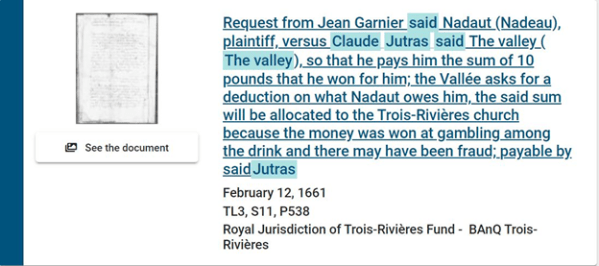
One can glean glimpses into the insights of these settlers, how they lived, and the issues that were important to them:  land purchases, settling of accounts, being dismissed from duties, gambling issues, and damages to property. Example: one’s ox, just to name a few. In the case of the Jutras family there are 195 records during a period of nearly fifty years.14.

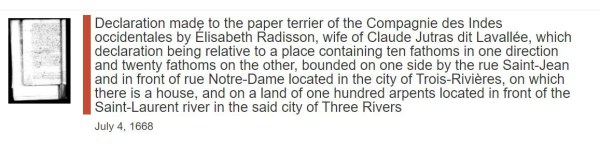
Below are three records of transactions by Claude Jutras dit Lavallée.

Results of the research

  1. results   Keyword : Claude Jutras dit Lavallée  – Quebec heritage– Judgment referring Claude Jutras dit Lavallée, elected tutor of the minor children of Marguerite Hayot, widow of sieur Grandmesnil, now wife of Medard Chouart DesGroseilliers before the judge of Trois-Rivières, to be discharged from the guardianship. Quebec heritage. New France. Sovereign Council. September 3, 1664

Transcription of the text with modernized spelling: “On what was represented by the Attorney General of the King. Translated by DeepL

  • Marguerite Hayet Des Groseilliers was the half-sister of Elisabeth Radisson.

2.      Request from Claude Jutras (Jutrat) dit Lavallée (La Vallée), plaintiff, to be compensated by master Guillaume Pépin for an ox which was mistreated by his people who would have inflicted a wound on his hip by blows. Said Pépin is ordered to dress and medicate the beef in order to cure it. Quebec heritage -New France. Royal jurisdiction of Trois-Rivières. August 31, 1669 . Translated by DeepL

3.

Translated by Google

Footnotes:

1.https://www.britannica.com/biography/Samuel-de-Champlain

2.https://www.ancestry.ca/mediaui-viewer/tree/39302317/person/272193920234/media/5d3178d4-2044-4abf-b8c0-2e4de406efbf?_phsrc=SzZ578&_phstart=successSource

3.https://en.wikipedia.org/wiki/Trois-Rivi%C3%A8res#History

4.lhttp://www.apointinhistory.net/trois-rivieres.php

5.http://www.biographi.ca/en/bio/laviolette_1E.html

6.http://www.afgs.org/ditnames/index1.html

7.https://genealogyensemble.com/2021/10/06/a-very-young-marriageable-girl/

8.https://genealogyensemble.com/2020/03/11/allegiances  

9.https://www.nosorigines.qc.ca/GenealogieQuebec.aspx?genealogy=Jutras_Claude&pid =24684&lng=en

10.https://genealogie.quebec/stemma4web/info/14372

11.http://www.apointinhistory.net/jutras.php

12.https://www.canada.ca/en/department-national-defence/services/military-history/history- heritage/popular-books/aboriginal-people-canadian-military/arrival-europeans-17th-century-wars.html

13.http://www.genealogie.umontreal.ca/Membership/en/PRDH/famille/85718  16 Jul  2015

14.https://numerique.banq.qc.ca/resultats

Premiere Nation Malecite de Viger

Maliseet Viger First Nation

Maliseets.net

Maliseet Viger First Nation / Première Nation Malécite de Viger

A people who are still residing in 2021 in Lower St. Lawrence – Bas Saint-Laurent, Western New Brunswick at the junction with the Maine / Quebec borders, Northwestern Maine at same USA-Canada border.

A number of First Nation families resisted living among the  families in traditional First Nation Reserves organized by the Federal Government and the Quebec Government. This was the main reason, why so many villages, towns, and cities are listed in the links.

They are a peaceful people who fully integrated with the descendants of European nations  who had settled in said Lower St. Lawrence, Northwestern Maine and Western New Brunswick.

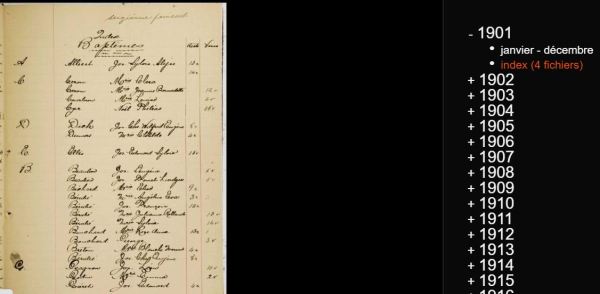
Example: In this database the following link on page 14 for Saint-Mathias-de-Cabano  – consists of 4 pages of lists of baptisms, marriages and deaths.

There are many  pages like the example above  which also contain lists of baptism, marriages and deaths for the parish wherever the https://numerique… followed by Documents online is indicated.

Click the above link and open in a new window.

She Owned A Cottage

Seventy years ago in 1951, my grandmother Millicent (1895-1982) Granny-Lin finally got the cottage she had always wanted. My grandfather Sydenham (1887-1975)The Priest had it built for her on the waterfront of Shediac Bay in New Brunswick.

Truly a dream come true, she aptly named it “Iona Cottage” for “I own a cottage”!

Iona Cottage 1955

The person who designed their simple cottage somehow knew exactly what they wanted. A small eating nook off the kitchen led into the living room with a fireplace and the three small bedrooms branched off from there. A simple door leading to the patio enticed family and guests outside to enjoy the view of the Bay.

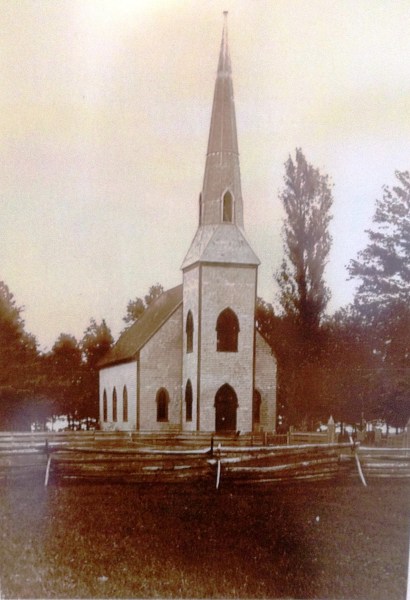
Just around the corner from Iona Cottage stands St. Martin’s-in-the-Woods Anglican Church built almost 200 years ago by Millicent’s great grandfather, and the founder of Shediac, William Hanington. There is a huge monument beside the church where he and some of his family are buried. On Sunday mornings during their summers, Millicent and Sydenham would stroll down the lane to church. Sydenham was an Anglican priest and would sometimes hold the summer church services thereby giving the local priest a break.

St Martin’s-in-the-Woods Anglican Church est.1822

Millicent grew up in Montreal as the youngest of six girls. Her pharmacist father moved the family from Shediac to Montreal in 1890 to study medicine at McGill…at the age of 45! During the summer breaks, the family returned “home” to Shediac. After completing his degree in 1894, Dr. Hanington Pharmacist then Doctor and family remained in Montreal where he set up a practice… but they always spent their summer holidays in Shediac.

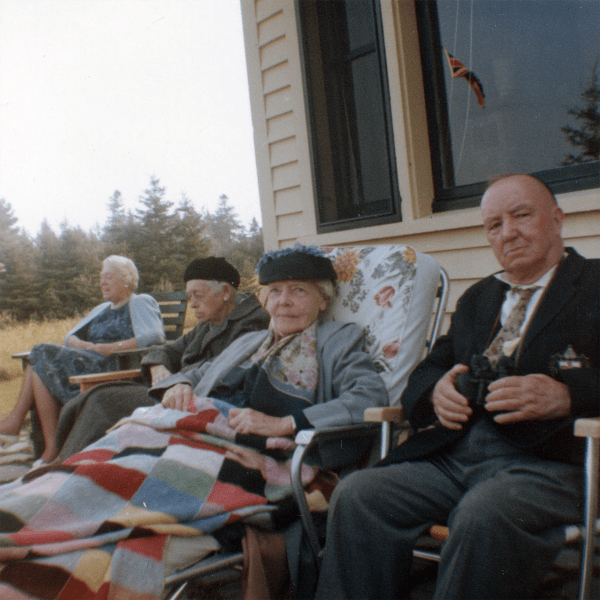
Millicent and Sydenham hosted many summer family gatherings at their Shediac cottage over the years. There are numerous photos taken on the patio in front of the impressive red brick chimney. An endless assortment of Millicent’s sisters (and sometimes their husbands) would line up along the side of the house enjoying the sun and cool breeze off the water. A few photos have captured some of the bravest taking an icy cold dip in the bay.

Millicent’s sisters and brother-in-law circa 1965

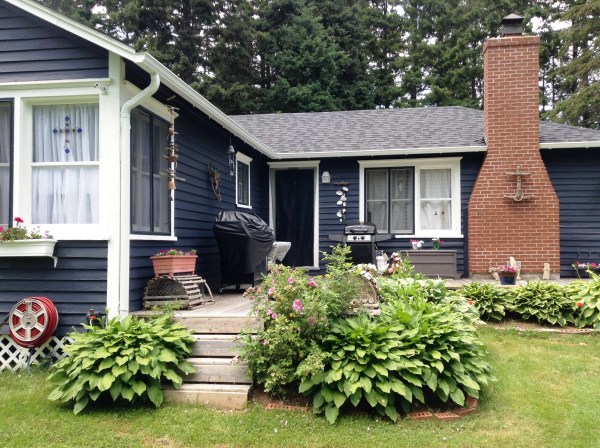
In July 2015, my sister and I took a “sister pilgrimage” trip to the New Brunswick area, and finding Iona Cottage was the top priority. We recognized it immediately even although the light yellow cottage from our memories had been painted a lovely country blue. The surrounding grounds looked immaculate and a quick peek in the window assured us that it was well loved inside and out. What a terrible disappointment when no one answered our knock at the door. We snapped a few photos of house and garden (and us!) for our travel album and to share with the rest of the family.

Iona Cottage – July 2015

Upon my return home, I wrote a short story about our “sister pilgrimage” and published it on the Genealogy Ensemble website Sister Pilgrimage. A year ago, the current owners of Iona Cottage read my story and contacted me by email. They are the fourth owners (since 2018) and are thrilled to share my scanned copies of the old photos of their cottage.

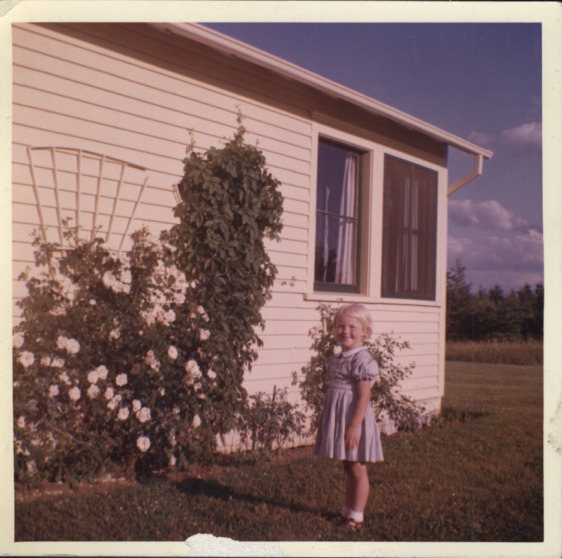
How surprising to learn that they already had a copy of my favourite photo… a gift from their neighbour. It captured four-year old me in front of Iona Cottage during the summer of 1961 when I visited with my mother shortly before she died of cancer that November.

Here I am at Iona Cottage – Summer 1961

My only other stay at Iona Cottage was some twenty years later when my cousin and I flew into Moncton to spend a long weekend with our grandmother. In an era before highways, two lane roads between Quebec and New Brunswick made the drive impossibly long, which might explain the lack of visits over the years

Notes for Blueprints for Iona Cottage – Feb 1951 – by Tom Anglin

Recently my cousin unearthed a real treasure in his inherited boxes of memorabilia – an envelope marked: “Blueprints – Iona Cottage”. I took a quick look before sending them off to the current owners and to my utter amazement I saw that MY FATHER had drawn up the plans for his in-law’s cottage! I had no idea. What a joy for me to see his handwritten notes in the lower right-hand corner…and no wonder the cottage was so perfect for Millicent and Sydenham.

Happy 70th Anniversary Iona Cottage!

L to R – Neighbour, Sydenham and Millicent (Iona cottage at the right)

The Courtship of Ann and Tommy – Part 1

The Courtship of Ann and Tommy – Part 2

The Courtship of Ann and Tommy – Part 3

Atikamekw Nations of Québec

Atikamekw Nations of Manawan (Manouane) of Québec

The Atikamekw of Central Quebec is the smallest First Nation in Quebec regarding the number of residents within their territory. Authors and historians have researched the Atikamekw. They have written numerous articles.

https://numerique.banq.qc.ca/patrimoine/details/52327/3961544?docsearchtext=La%20Tuque

Included within this database one can access numerous Parish Church Register documents as noted in the example below. BanQ numerique documents of baptism, marriage and deaths are accessible through the many BanQ numerique links throughout the database.

Click the above link and open in a new window

The Harvester Scheme

When I was a little girl, I would spend hours with my grandfather in his home workshop. He would make all kinds of things and I used to love watching him at work. I still have some of the tools he made, as well as a cribbage board and a turntable that swings the Scrabble board around to face each opponent. He crafted a complete house of Barbie furniture for my dolls and, to my delight, he asked me my opinion about every single piece. I felt both the weight of responsibility for deciding what each bed and chair would look like, and pride in participating in this project with him.

My grandfather, George Deakin (1901 -1983,) born in Sheffield, England, learned these skills when he was a young man. His father was a miner and George also worked for the coal mining companies of Sheffield, which were significant employers in the early 1900s. Gramps was a fitter which means that he made parts either for piping or for equipment and machinery.1, 2

I used to ask my grandfather why he came to Canada and the answer was always the same and always emphatic. “I did not want to work in the mine.” Sometimes he would go on to explain that, when he left, he still worked above ground for the mining company. However, he was a very short man and he knew that it was a matter of time before he would be required to work underground. Small men were valuable in the low tunnels of the coal mines, but the work was dangerous and unhealthy. Gramps had no intention of ever working underground.

So in 1923, he came to Canada as part of the Harvester Scheme. That year, Canada had a bumper wheat crop and North America could not provide the labour needed to harvest the crop.  Under the Harvester Scheme, the two major Canadian railway companies entered into an agreement with the British government to transport 12,000 workers out west where they would earn $4.00 per day plus board. 3

He ended up in Manitoba and the Canadian west must have suited him because he used to enjoy talking about his time on the farm. The days were long and the men worked hard but Gramps found it satisfying to work so hard.  And how the workers enjoyed the hearty meals that the women of the farm prepared for them!

He only stayed one harvesting season in Manitoba because, once that bumper crop had been harvested, there was no more work. He took the train to Montreal and easily found work as a draftsman at the Northern Electric plant. He had learned to read and draft drawings in Sheffield and his skills were in high demand. He worked at the Northern Electric plant in Lachine all his life, even during the Great Depression.

When Gramps first arrived in Canada, he was not sure he would stay.4 But after he met and married my grandmother in 1925, they settled in the Montreal suburb of Verdun and raised two children.

Here, he was able to work all his life in a job that he loved. He especially enjoyed the attention to detail that went into designing. And when he wasn’t designing at work, he was making tools, games, and Barbie furniture for the family.

1 Canada. “Immigration Records (1865 – 1935)” Database. Library and Archives Canada.  BAC-LAC, http://www.bac-lac.gc.ca/eng/discover/immigration/immigration-records/passenger-lists/Pages/introduction.aspx#d: 2017.

2 http://www.occupationsguide.cz/en/POVOL/148.htm

3 Foster, John Elgin, The Developing West:  Essays on Canadian History in Honor of Lewis H. Thomas, Edmonton: University of Alberta Press, 1983

4 Canada. “Immigration Records (1865 – 1935)” Database. Library and Archives Canada.  BAC-LAC, http://www.bac-lac.gc.ca/eng/discover/immigration/immigration-records/passenger-lists/Pages/introduction.aspx#d: 2017.

Refugees in Quebec

https://www.canada.ca/en/immigration-refugees-citizenship/services/refugees/history.html

Canada: A History of Refuge

What Does “Refugee” Mean?

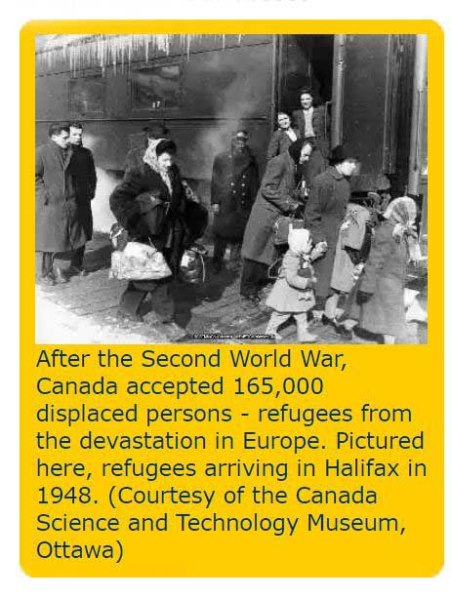
It is not as easy to define “refugee” as one might expect. In its simplest meaning, a refugee is a person who flees his or her home country because of fears of persecution or abuse, particularly by their own government. However, the meaning is affected by political change, public perception and history. According to Immigration, Refugees and Citizenship Canada and the United Nations High Commissioner for Refugees, refugees are people who have been forced to leave their country and who are afraid to return because of war, violence or persecution based on race, religion, nationality, political opinion or membership in a particular social group.

Navigate through the exposition to learn more about refugees in Canada.

This above database prepared by Jacques Gagné consists of books, articles and theses written by numerous authors on the subject of refugees that have come to Quebec and their contributions.

Open the link in a new window.

A VERY YOUNG MARRIAGEABLE GIRL

Church of Saint Sulpice in Paris, France

Over the years many authors have written about ‘les filles du roi, otherwise known as the King’s (Louis XIV’s) daughter’s. Eight hundred young women were part of a settlement scheme from 1663 -1674 in New France, now Quebec, Canada.

Much less was written and noted about a group of women who ventured into the new world. Prior to the King’s daughter’s arrival, the Company of One Hundred Associates between the years 1634 and 1662 recruited tradesmen, labourers and 262 young women. The purpose was to create a French settlement.

Elisabeth Radisson, my seventh great grandmother, along with her sister, Francoise and her half-sister Marguerite all signed contracts. What prompted them to sign these contracts, particularly when they were so young?
Elisabeth Radisson was born in about 1637 in St. Sulpice, Paris, Ile de France, France.

Pierre Esprit Radisson Sr, their father was a well-to do bourgeois. He owned a clothing store in Paris. He married Madeleine Henault, the widow of Sebastien Hayet, who died leaving his young wife with a year-old daughter, Marguerite, born in 1632. Several documents have indicated that the marriage of Pierre and Madeleine took place in 1635. Together the couple had 3 children, Francoise about (1636) and Elisabeth about (1637) and Pierre, the famous explorer. The dates of his birth vary. There are discrepancies indicating that it was sometime between (1636 -1640)

There are several dates given for the passing of Pierre Senior. There is a document explaining an inventory upon his death dated 1641.3. The year of his demise seems most likely to be is 1646. Most documents give his date of birth as 1590 and it appears he died at the age of fifty-six, on November 25, 1646, in Paris leaving Madeleine to care for four young people between the ages of 15 and 9. 4.

In 1646 these three young girls, Elisabeth, age 9, Francoise about 10 years old and Marguerite at 15 each signed a contract as ‘filles à marier’. They set sail for New France. 5. After a lengthy crossing they arrived and settled in Trois- Rivières. Pierre may have come with them although a document indicates “he immigrated from France to Canada on the 24th of May, in 1651”.6.

After her arrival little is written about Elisabeth settling in her new home. We do know Elisabeth was able to sign her name. During a ten-year period in Trois-Rivières very little is known about where she lived as a young girl. One might presume that she was with her siblings. The first record other than her arrival in Canada is 8-7-1657 in Trois Rivières when she was the godmother of Marie-Anne Chouard or Chouart. This child might have been the daughter of Elisabeth Radisson’s half-sister. Marguerite.

Later that year there was a notarial contract signing on October 8, 1657, before her marriage to Claude Jutras. At that point she would have been 19 years old.7.

Her husband to be, Claude Jutras dit Lavallée was also born in Paris about 1627 and he arrived in Trois-Rivières 1656 as a soldier. He was stationed at the garrison in Trois Rivières. 8.

Elisabeth Radisson and Claude Jutras dit Lavallée were married on November 05, 1657, 9. at the Church of the Immaculate Conception in Trois-Rivières.10.

Within the first year of their marriage Elisabeth gave birth to a daughter, Madeleine. Over a period of twenty years, the couple had nine children, 6 girls and 3 boys. Most of the children lived to adulthood. Sadly, Marguerite died at the age of nineteen giving birth to twin boys. Young Claude was sixteen at the time of his death.11.

Five of the daughters married and Marie Joseph chose to enter the Ursuline convent. Pierre became a voyageur and acquired a seigneury.

The census of 1671 noted that Claude Jutras was no longer a soldier, but rather had become a habitant or settler. Life appears to have been kind to the family. By the year 1679 after a number of land transactions the Jutras had acquired wealth and were now considered members of the bourgeoisie, among the well to do families.12.

The above document is only one indication of the many financial contributions Elisabeth’s made to the Jutras family wealth.13.

Claude Jutras dit Lavallée died the 28th of November 1710 and was buried that same day in Trois-Rivières, Québec, Canada.14.

Elisabeth Radisson lived for nearly twelve years after Claude’s passing. She died on the 11th of May 1722 and is also buried in Trois-Rivières.15.

Below is the church record of Elisabeth’s burial.

  • Sources:

1.https://www.wikitree.com/wiki/Project:Filles_%C3%A0_marier# Bilingual_Biographies

2.https://www.worldcat.org/title/before-the-kings-daughters-the-filles-a-marier-1634- 1662/oclc/50411950?referer=di&ht=editionGAGNE, PETER J. Before the King’s Daughters: The Filles a Marier, 1634-1662. Pawtucket, RI: Quintin Publications, 2002. Pages 303-316. 

Maple Stars and Stripes — Click and open in a new window

3.https://www.sgq.qc.ca/images/_SGQ/BD_web_libre/Actes_notaries_des_pionniers_de_Paris.pdf  page  169

4.https://www.geni.com/projects/Marriageable-Girls/14207

5.https://www.amazon.ca/Histoire-Nouvelle-France-3-Marc-Lescarbot/dp/114403213X

6.https://en.wikipedia.org/wiki/Pierre-Esprit_Radisson#Birth_and_emigration_to_New_France

7.https://www.geni.com/projects/Marriageable-Girls/14207

  https://genealogie.quebec/stemma4web/info/index.php?no=37300

8.http://www.apointinhistory.net/jutras.php

   9.http://www.migrations.fr/FILLE_A_MARIER/fm_mariage_R.htm

10.https://huntingtonfamily.org/genealogy/getperson.php?personID=I3940&tree=johnandtuly

11.http://www.migrations.fr/FILLE_A_MARIER/fm_mariage_R.htmIbid

https://numerique.banq.qc.ca/patrimoine/details/52327/3313859?docsearchtext=ELisabeth%20Radisson

12.http://www.apointinhistory.net/jutras.php

13.https://numerique.banq.qc.ca/patrimoine/details/52327/3313859?docsearchtext=ELisabeth%20Radisson

14.https://greenerpasture.com/Ancestors/Details/31555  & https://www.myheritage.com/names/claude_jutras

15.http://www.migrations.fr/ACTES_SEPULTURES_FM/sepultures_filleamarier.htm#R

Plaisance (Placentia) 1655-1713 & Le French Shore 1713-1783

The European presence in Newfoundland goes back to the early 16th century. In their autobiographies, John Cabot and Jacques Cartier, explorers, both indicated the presence of Basque fishermen along the shores of the Gulf of St. Lawrence, the Strait of Labrador, the southern and northern regions of the Island of Newfoundland.

The extraction of oïl from whales caught off the coast of the Gulf of St. Lawrence and the cod fish industry along the coasts of Newfoundland and Labrador were major industries with market places in Continental Europe, the British Isles.

This database contains a selection of authors who have written books, articles, and dissertations about the great fishing era off the Grand Banks of Newfoundland.

Plaisance
(Placentia)
1655-1713
&
Le French Shore
1713-1783