Category Archives: Genealogy

FamilySearch indexing – How you can become involved

The following article was written for Genealogy Ensemble by Marian Bulford, a genealogist from the West Island of Montreal who has been indexing for many years. She gives us valuable insight about indexing and how we all benefit from the contributions of those who index the records we use in our genealogical pursuits.

Indexing is the data entry of human records worldwide in any language you choose. If you can type, then you can index, so why not get started today?!

Keyboard01_MicrosoftThe FamilySearch website has provided a way for anyone with an internet connection to assist in the monumental task of indexing world genealogical records. It is run by the Church of Jesus Christ of Latter-day Saints, more commonly known as The Mormons.

The Church of Jesus Christ of Latter-day Saints is in the process of digitizing the bulk of their genealogical records, as well as partnering with genealogical societies and other groups to digitize other records of genealogical value. Most of the websites today have obtained their records from this church.

As indexing is entered, the records are checked and arbitrated a few times. Then these digitized records are uploaded to the online FamilySearch Indexing project site for anyone, including you, to view free of charge.

Easy to download software and index
The indexing software is free and easy to download, and the online tutorials should get you started quickly. There is also an online help desk if you have questions.

You do not have to be a church member to index or search this free website. To start, simply go to the website link here. It takes only a few minutes to download your selected batch of records — in any language and in any part of the world you choose — and transcribe the entries using the provided software you will find on the web page.

Alternatively, if you just want to research a wonderful database for free with no obligation or fees, go to https://familysearch.org.

If you volunteer to index for FamilySearch, just remember, you are helping to add millions of data for us genealogists to find plus, as a side benefit, indexing can help you become a better researcher as you become more familiar with the wide variety of historical documents available to you and the type of information each contains. You can choose a beginner, intermediate, or advanced batch to index.

Where to start?
Indexing consists of births, deaths, marriages, banns, obituaries, christenings, or baptisms. In addition, there are historical records consisting of many other interesting items worldwide. For instance, how about indexing the following databases?

  • France, Diocèse de Coutances et Avranches – Registres Paroissiau from 1796 to 1880
  • UK Sussex Church of England Parish Records from 1538 to 1910
  • US Louisiana WW2 Draft Registration cards from 1940 to 1945
  • South African Free State, Estate Files from 1951 to 1980
  • Polska, Radom Roman Catholic Church Books from 1733 to 1868
  • Brazil, Pernambuco Recife Registro Civil from 1900 to 1920

All of the above databases, and many more, now await us to index them and provide a name or a lead for someone who is searching for their ancestors.

To help you through the indexing process, there are Help fields on the right of every batch you download. You never know, you may even come across some of your family names whilst indexing.

Once records have been indexed through FamilySearch Indexing, the new indices (and sometimes the document images) are posted online for free access at FamilySearch.

How I started
Because I am originally from the UK, I usually go to the UK batches for my indexing as I love history and I find so much of interest there, but I also like to mix it up and, as long as it is in English, I will index it.

Last year, I helped index the US 1940 Census. (As you well know, the census is usually the first place we go to find an ancestor’s name.) That monumental task was also completed well within the time range expected and up and running far sooner than anticipated.

Tremendous response to call for volunteers last month
Last month the FamilySearch website asked for volunteers for two days of indexing by asking everyone you know to join in. This, in part, is their response after that weekend. “We hoped to have an unprecedented 50,000 contributors in a 24-hour period. FamilySearch volunteers excelled, surpassing that goal by 16,511! That’s right—66,511 participants in one day! Incredible! We are grateful for the patience and persistence of many volunteers who faced technical difficulties due to an overwhelming response.” To read more, visit the blog post, FamilySearch Volunteers Set Historic Record.

According to some sources, volunteers participating in online indexing projects are adding over a million names a day in total.

Once records have been indexed through FamilySearch Indexing, the new indices (and sometimes the document images) are posted online for free access at FamilySearch Record Search.

So, log on and go see what you get back for a few hours, or even minutes, of indexing. Why not try a test drive on the above links and be part of the many people proud to add to the billions of records that amateur and professional genealogists like us search for daily.
Indexing Records for LDS

Have you ever wondered who does some of the indexing for the Mormon Church in Salt Lake City? The Church of Jesus Christ of Latter Day Saints is actively involved in a very unique program in conjunction with the Utah State Prison. “Inmates who volunteered at the Utah State Prison Center last year indexed more than 2 million records…..They put approximately 50,000 hours of personal family research in the project.” This recent article in The Huffington Post  http://www.huffingtonpost.com/2014/04/03/utah-prisoners-mormon-genealogy_n_5079776.html was like a breath of fresh air to learn that these prisoners are contributing in a very positive way to help genealogists. Perhaps the next time you access familysearch. org  you might think about many of those prisoners who  are involved in preparing the records we as genealogist  so often seek .

Canada’s Forgotten Slaves: Two Centuries of Bondage – Marcel Trudel

Canada’s Forgotten Slaves: Two Centuries of Bondage

Author: Marcel Trudel

English translation by: George Tombs

http://www.vehiculepress.com/q.php?EAN=9781550653274

The attached deals with a book at the QFHS Library in Pointe-Claire, Québec within theEstelle Brisson cabinet by Marcel Trudel entitled L’esclavage au Canada français“. This book of 324 pages has been translated into the English language by George Tombs and based from comments from reviewers, George Tombs did a well done translation.

Based on the writings of the late Marcel Trudel, there were 4,185 legally owned slaves in Nouvelle France from 1689 to 1759.

Governor Jacques-René de Brisay, Marquis de Denonville, governor of Nouvelle France from 1685 to 1689, had secured from King of France Louis XIV permission for some of the privileged “Seigneurs of Nouvelle France” to keep slaves in the French North American colony – France itself had abolished slavery but allowed the practice in its colonies.

Many family researchers in Québec are not aware of the content of Marcel Trudel’s book about slavery in New France, perhaps to be associated somehow with slavery might not be a subject we care to explore too deeply.

We might not like what we may find about our ancestors in Nouvelle France.

Book in question, English language version, translated by George Tombs, available at Véhicule Press

255 pages –

ISBN10: 155065327X

ISBN13:  9781550653274

CDN $27.95


In Consequence of Loyalty – A pioneer history – John and Kay Chesser

QFHS Library book # UEL-HG-157.9 C5 2002

Book donated by the authors in 2005

This book of 177 pages deals with a young Scottish soldier who fought with the British Army in 1757 during the Seven Years War.

The flight of his family from New York State to Canada.

A son of this Scottish soldier prospered and raised a large family in the bicultural surroundings of Lower Canada.

The authors describe the exodus routes taken by hundreds of Loyalists from 1783 onward from Albany, New York, through Saratoga, Fort George, Lake George, Fort Anne, Ticonderoga, Crown Point, Plattsburgh to Québec.

A second exodus route originated in Bennington, Vermont, through Fort Edward, Skenesborough, Burlington, Milton to Québec.

The authors describe the hamlets in which the Loyalists settled into; Hemmingford, St-Jean-sur-Richelieu (St. John’s), Chateauguay, Chambly, Sorel, Saint-Eustache, Pointe Fortune, L’Orignal, Papineauville.

Other books within the United Empire Loyalist section at QFHS describe the exodus routes taken by other families to regions such as Machiche (Yamachiche), Berthierville, Sorel, Brandon (Saint-Gabriel-de-Brandon), Three Rivers (Trois-Rivières)

Other books describe the exodus routes from Stanford County of the region of Fairfield in Connecticut.

Other books describe the exodus routes from Rhode Island to the Yamachiche (Machiche) region of Québec and subsequently to the Gaspé Peninsula.

Other books describe the exodus routes from a region described at the time as the Catskill State of New York, the latter group of Loyalists appear to have settled hamlets along the shores of the Richelieu River and Missisquoi Bay.

This precious collection of books within the United Empire Loyalist section contains dozens of books about the Loyalists of Québec.

Jacques Gagné’s book review

M Jacques Gagné est un chercheur en généalogie, bénévole depuis plus de dix ans à la Quebec Family History Society.  Il a compilé plusieurs dizaines de listes de ressources pour les chercheurs.  On en retrouve en ligne,  dans la section des membres de la QFHS, certaines de ses nombreuses compilations.  On en nretrouve en bibliothèque aussi à la société.  Il a travaillé, entre-autres, sur les actes manquants des églises protestante du territoire que couvre le Québec contemporain pour la période 1759-1899.  Il a travaillé sur maints projets, dont les églises des missions des premières nations, sur les Huguenots, tant en Europe qu’en Amérique, sur les missionnaires itinérants, sur les ressources disponibles sur les Acadiens, les Canadiens- Français et en ce moment  sur les départements français.

M Gagné a écrit une série de critiques de livre dont voici la première que nous vous présentons.

Members of QFHS know him, and in the members only section of the QFHS you find some of his compilations.  Many of his works are available at the QFHS library.  He has been working hard for years to provide tools to help us look up and find genealogical information on French, Huguenots, First Nations….

”Jacques Gagné has been a volunteer genealogical researcher at the Quebec Family History Society for the past ten years, handling a wide variety of genealogical cases. For several years, Jacques has conducted in-depth research on the missing Protestant Church Registers for what is now the province of Quebec, from 1759 to 1899. To date, more than 1,000 churches are listed. Now he has provided an extensive guide to Family Searches on the Internet.”

Here is one of a series of book reviews he has prepared for the French Research Group at QFHS.

Marcel Trudel
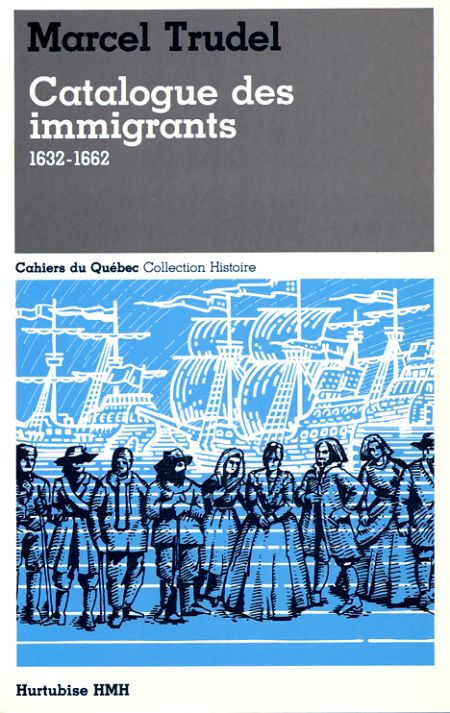
Catalogue des immigrants 1632-1662
569 pages
QFHS #REF HG-150.99 T7

Trudel

Marcel Trudel (1917-2011) was a longtime professor at the Université Laval in Québec City and at the University of Ottawa. Recipient of many awards during his lifetime as an historian. In 1971 he was made Officer of the Order of Canada – In 2004 he was made a Grand Officer of the National Order of Québec.

Within this 569 pages detailed research guide, Marcel Trudel has addressed 3,000 immigrants from 1632 to 1662 who had settled in Nouvelle France.

Monsieur Trudel in comparison to Marcel Fournier and René Jetté has taken a different approach in his work.

All three historians in my opinion are offering a different perspective to the research process of one’s ancestor in France.

I have never taken the time to compare the results posted by Marcel Trudel or by René Jetté or by Marcel Fournier, but in my opinion, all three have researched and compiled superb material.

Marcel Trudel as part of is excellent dictionary has spent considerable time in offering his readers, precise details such as the age of an immigrant, the type of work he or she did in France, from where they came from, were these immigrants capable of signing their names to documents such as acts of baptism, marriage, death or notarial records and what type of work they did once they settled into Nouvelle France.

Jacques Gagné


French and French-Canadian resources at QFHS

L’association Quebec Family History Society, à Pointe -Claire dans l’ouest de l’ile de Montréal, a une groupe de recherche francophone en plus de toutes les activités orientées vers les recherches anglophones.  M Jacques Gagné, un membre de la société et chercheur chevronné du côté de la recherche française, nous offre quelques mots et conseils:
” En plus de posséder un des plus grands dépôt de revues et publications anglophone des iles britanniques et du Canada, à part de celui du BAnQ sur Viger  à Montréal, la société reçoit plusieurs publication en français.  Le plus importantes étant:
>> Mémoires de la Société généalogique canadienne-française
>> L’Ancêtre de la Société de généalogie de Québec
>> L’Entraide généalogique de la Société de généalogie des Cantons de l’est
Les membres de la QFHS qui désirent devenir des experts en recherches d’ancêtres de France, devraient commencer par les publications à la QFHS.
C’est en fait comment j’ai débuté il y a plusieurs années”
Jacques Gagné
La QFHS a même un spécial pour nouveaux membres jusqu’en juillet 2014
QFHS_Logo

The Quebec Family History Society in Pointe-Claire (West Island of Montreal) has a wonderful library that is opened quite a few hours a week, and from which members from out of town may even borrow books by mail.

Jacques Gagné, one or our members for quite a few years, our local French research expert supports the  France Research Group at

QFHS.  Here’s his two cents worth about starting some French Quebec research:

”Periodicals at QFHSOver the years under the leadership of Claire LindellMary Plawutsky, Daphne PhillipsBruce HendersonTed Granger, Diane Bissegger, the QFHS Library has been a primary repository of periodicals from the British Isles and from most provinces of Canada.To my knowledge, only the Archives nationales du Québec on Viger has a larger collection of genealogical magazines.This article will only address the aspect of research tips dealing with France.

Three periodicals in Québec, all three kept at the QFHS Library are superior to others in regard to the French Canadians and Acadians;
>> Mémoires de la Société généalogique canadienne-française
>> L’Ancêtre de la Société de généalogie de Québec
>> L’Entraide généalogique de la Société de généalogie des Cantons de l’est

Others revues (periodicals) dealing with the French Canadians and Acadians are also stored within the shelves of the QFHS Library.

QFHS members who wish of becoming experts in the research process of ancestors in France, should begin their expertise journey with the French language periodicals kept at the QFHS Library.

This is basically how I started a number of years back.”

Jacques Gagné

The QFHS is even having a new-members special until July 2014

The Gift


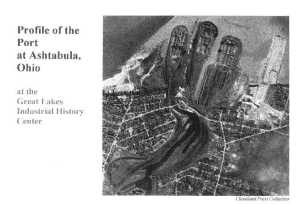
Ashtabula Harbor


While checking my mailbox recently a much anticipated envelope  finally arrived. Although I was expecting it, when seeing the contents  I was blown away.

Genealogists are often  faced with brick walls. Sometimes it’s a date, other times a  change in a family name or the spelling of that family name, and often a  language problem.

Catherine Lev, a cousin I have never met,  had sent the envelope. She spent her early years living in Ashtabula, Ohio  where the ore boats would be filled with coal from the neighboring states. They would make their way up the Great Lakes. My father and his seven siblings grew up in that large Finnish community on the shores of Lake Erie. Catherine’s mother, Aunt Helen, a nurse, Dad’s sister had always maintained contact over the years. So too, did Catherine keep in touch with her Uncle Karl.

Facebook brought Catherine and me together. We communicate regularly using email. In one of the messages we came to the conclusion that we both had an interest in our families’ histories and genealogy. She shared the fact that she had done the family tree on the Lindell – Karhu families.

When I opened the envelope and glanced through it I was delighted. It contained a Compact disk, neatly labelled GEDCOM lindell karhu.ged 12/24/2013.  Christmas Eve! What a gift!   Although I was eager to check  out the CD,  time did not permit, so I set it aside with the hopes of viewing it later in the day. When I finally put it in the computer and opened  it I couldn’t believe  my eyes!  There were  over four hundred family members going back to Finland in the early 1800’s.  Births, marriages, deaths and places all neatly organized. Catherine used the program Roots Magic. Indeed it was and is all very magical for the neophyte genealogist who knew so little about her father’s side of the family. As Paul Harvey at the closing of his radio broadcasts would say ” Now you know the whole story.”

Catherine Lev lives in Missoula, Montana close to her daughter Harlean. We are about the same age, give  or take a couple of years.  We continue to maintain contact using email. If she did not live so far away I would give her the biggest hug. Someday perhaps we will meet.

Message in a web bottle

You may approach genealogical research like you would fishing — and just to bring it back to French-Canadians — ICE-fishing (OK I wrote the ICE word, but it’s going to warm up today!).  Instead of fishing with one rod, you set up as many lines as you can. The limit is how many you can check at a time… and how many holes you can dig before you are so hot you strip down to your t-shirt.

This is just what  a cousin did:

2001, Welland, Ontario: she sends on RootsWeb * a querry about my great-aunt Simone Viau-McDuff.  And waits.

2011, Laval, Québec: I’m poking around the web, put in Simone’s name into Google and find her message. Wow! For sure it’s the same person, but… the message is 10 years old!  No one keeps their e-mail address for that long. Too bad!

Still, I send my line to the water and reply. Next day, I get a reply.

Geraldine, daughter of my grandfather’s cousin, was jumping up and down in her living room when she got my message (just like I was when I got hers).

Like many Quebecers during the 20th century, her grandfather Philias Viau , had moved from Lachine to work in the Niagara region around 1904. He was my great-grandfather J. Francis Viau’s brother. They lost their French, but there are still some Wellanders that don’t speak English. The Welland canal was of great importance as a link between Lakes  Erie and Ontario. Many industries flourished along the canal, like The Electro Metallurgical Company unit of Union Carbide where Philias worked.

I went to visit Geraldine by train, learned about the region, met some great people. Among them, Renée Tetrault, a founding member of the Welland Branch of the Franco Ontarien Society of History and Genealogy now known as the Réseau du patrimoine franco-ontarien. Renée has served for more than thirty years as the expert who assists researchers at their Centre for Research in the Welland Public Library. She will describe the extensive holdings of their library in and offer suggestions for researching in Quebec.

Which leads me to introduce this French-Canadian resource: there are six regional centers in Ontario.  Three times a year they publish Le Chainon (paper or digital).  They have quite a few online resources (Ontario and other provinces including Quebec, and even American parishes) available to members, among which transcribed notarial records, BMS, cemetaries, family histories, cities and towns, census, archive guides, and a lot more.

Two things to remember:

When part of a family moves away, news and pictures are exchanged to keep in touch. Geraldine had pictures of my Montreal family that I had never seen and letters writen by my direct ancestors. The jewel: a cash book kept when Philias’ father Onesime Viau died in Lachine, where all spendings (lots of prayers in church) and income (rents) were described along with after-death inventory  and each child’s share of inheritance. The two of us were able to piece together family stories that individually we couldn’t figure out and dentify people on each other’s pictures.  Finding cousins will help you go up your tree in surprising ways.

Viau p
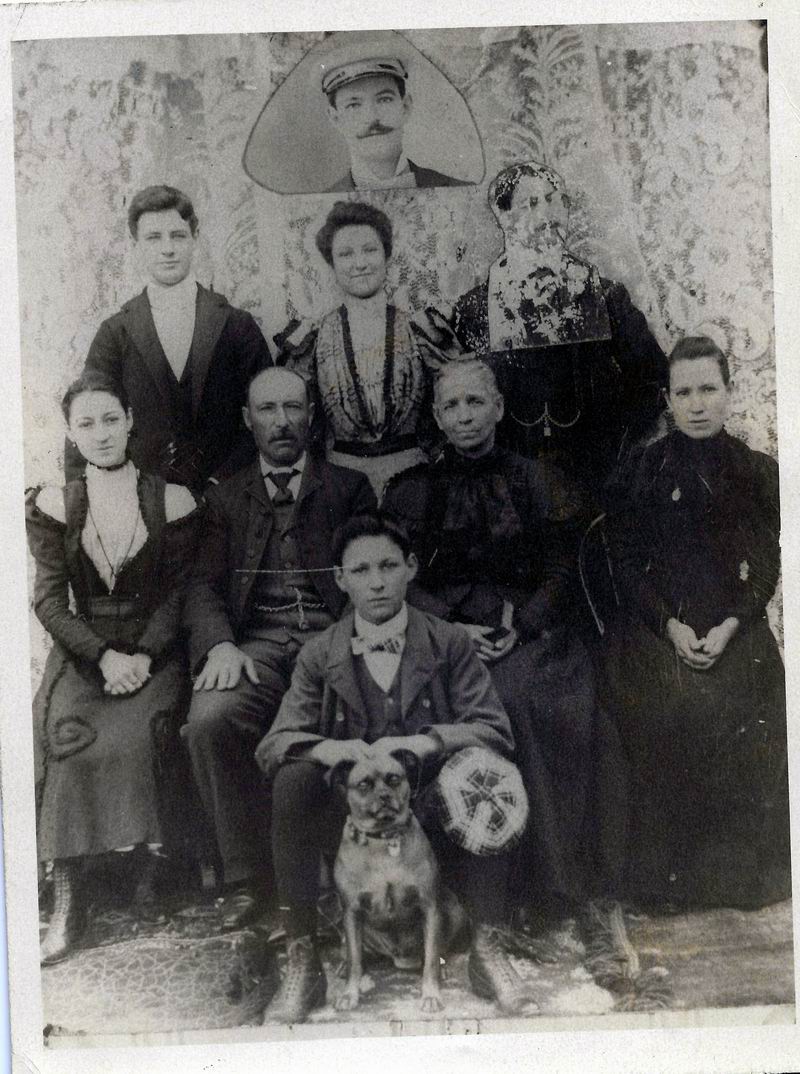
Onésime Viau and Antoinette Dorais with their children, Lachine, Québec

The other, send a lot of lines out, keep a log, follow up, but be patient. Be courteous, some will never bite, some are not interested. But dream big, don’t be stopped by logic and expect anything…fish come in many shapes and sizes, and even as messages in bottles.

* Rootsweb was one of the first online free cooperative genealogical resources. Ancestry has picked it up, but we can still go into archives or free.

Free public archives

No, it’s not just to get your attention, Archives publiques libres  is a group of people who believe archives should be free to search to all, and that, by the same token, if you put your information online to share with others, it is not so a company grabs your info to sell to others.

gratuit genealogieFollow them on Facebook 

On their webpage, they explain their position, list actions they take or that we can take to maintain a genalogical world accessible to all…

I really appreciate their inventory of free genealogical resources: simply click on maps and access lists fromFrance and around the world.  You can also find press releases, tips for using internet etc.