Category Archives: genealogy

Dear Miss Bulford …

With the following letter, so begins the most exciting period of my life.
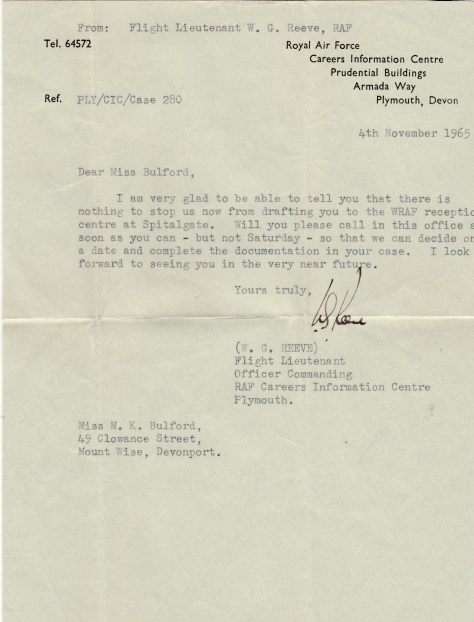
It came to a 19 year-year old me still living in Plymouth, Devon England the town of my birth. That version of me wanted something new. Having left school at 15 years and one month hardly qualified me for anything other than low-paid dead-end jobs, until, like most girls around me, marriage beckons.  Such was NOT the life I wanted, so I applied to join the Women’s Royal Air Force (WRAF). To my amazement, I got in.

Initially, it seemed a lark and a good way to show off to my friends. Still, joining up offered a chance to leave home with accommodation, a job and an ability to feed myself all at the same time. I had to take the chance!

Soon after the initial interview in Plymouth with Flight Lieutenant W. G. Reeve – above – As the letter states, my acceptance was based on passing a medical examination and a selection interview at RAF Spitalgate, In Lincolnshire. To travel there I was issued with travel documents and a kit list including an apron! Stockings! Suspender belt!.
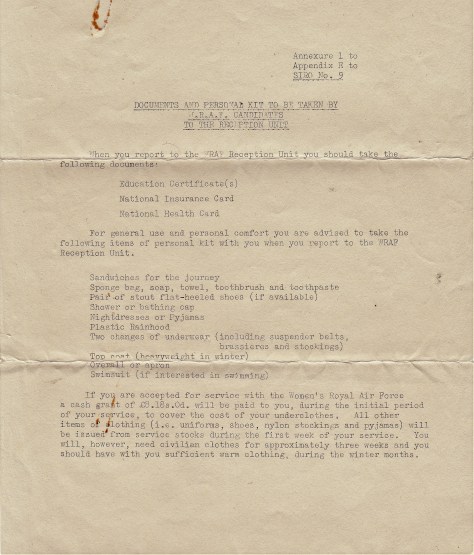
Travel Warrant and Kit List for the journey. 

I left my home in Plymouth to Kings Cross railway station in London then a 4 and 3/4 hour journey. From there, another train from Kings Cross to Grantham, Lincolnshire railway station to join several other nervous-looking girls. We discovered a phone on the wall with the first order of our careers. It read:

“RAF SPITALGATE

NEW RECRUITS

PHONE FOR CAR”

Once on ‘camp’, our Corporal introduced herself and we were ushered into a room in a large building known as the barracks. This is where we would sleep and live together, for the next six weeks. It was a vast room with 10 beds either side spaced out with a locker and a wardrobe. Once we had deposited our luggage in our space, the Corporal took us to a cafeteria-like place called a mess for our tea and the food was really good!

The next day the medical assessments began. We had medical exams, Xrays, general fitness tests dental examinations and vaccinations. We started out with about 22 girls which whittled down to 17 after that first day. The next day, those of us who were formally accepted began our training. First, we were taught how to make a bed the RAF way, keep our ‘space’ clean and tidy enough to pass inspections every day.

Our bathrooms and toilets were at the end of the room. For many of us, this was the first experience of hot running water, baths every day plus central heating. After a few days, several of us developed sinus problems. Our bodies were used to cold houses, fires and baths only once a week.

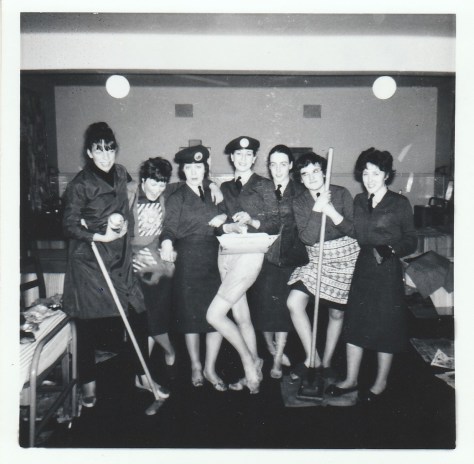
We soon developed a routine. Every Wednesday, we deep cleaned in a tradition called ‘bull night’. We pushed a large heavy flat ‘buffer’ side to side to polish the floors, A cumbersome task but good for the stomach muscles! We finished by putting newspapers on the floors because nobody was allowed to walk on those perfectly polished floors! We wanted everything shiny and bright the next morning at 6 a.m. inspection. Despite the hard work and need to adapt to new realities, we managed to have a lot of fun. 

We had parts of our uniforms issued over the next few days, including the laughable ‘passion killer’ knickers. We were each issued three pairs, pale blue, down to the knee and  I don’t think anyone wore them at all, except here, for one night only as a giggle. The photo below shows the ‘buffer’ we used to polish the floors to a high gloss. I’m the one holding the dustpan and a cigarette wearing the pale blue ‘passion killers’
For the next 6 weeks, we learned to wear our uniforms properly, tie our ties, make sure hair was off the neck and how to wear our berets and best blue hats. Most importantly, we learned how to salute an officer. That lead to discovering various badges and who to salute and who not to salute.

We were shown the NAAFI (Navy Army Air Force) shop where we were ordered to buy shoe polish, then taught how to clean our shoes to a very high gloss with spit and polish and repeated for hours on end

We learned how to march together, in order. That’s not as easy as it sounds. A few girls began as ‘camel marchers’  They were girls who just could not march at first. They tended to march with the left arm and left leg together, instead of the opposite.

We marched every day, and everywhere from day one, chanting left-right-left-right, halt out loud as we went! Each day we practised marching on the parade ground for one hour, then off to classes.

In class from 9am to 5pm we learned all about the history of the RAF, and the trades available, which uniforms to wear on which occasion (such as ‘fatigues’ and ‘best blue’) and how to keep our ‘kit’ clean. We had hygiene classes informing us how and when to brush our teeth, take a bath and keep ourselves clean. We had Pt classes to keep fit. It was exhausting and exhilarating. The morning after our first bull night, an officer inspected us the next morning with white gloves and ran her fingers along every surface. We had to stand at attention together, whilst she inspected our quarters. The first few weeks everything had to be ‘done over again’ as she ripped out sheets and blankets and shouted at us saying the beds were not made properly. She complained about the dirty surfaces and how dirty the bathrooms were. We could no nothing right those first three weeks. We had no uniforms yet, so every day we marched in ‘civilian’ clothing with just a beret on. We felt silly. 

It was a great day when we were eventually issued with our uniforms and full kit.
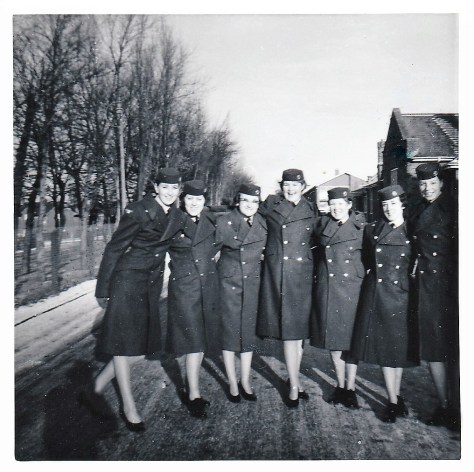
Our best blue uniforms at last! Me on the left.

After six weeks of basic training came our ‘Passing Out Parade’ and the next day, after our goodbyes, we were all posted to our various trade training camps, but that is another story!


Miss Lindsay – Part 3

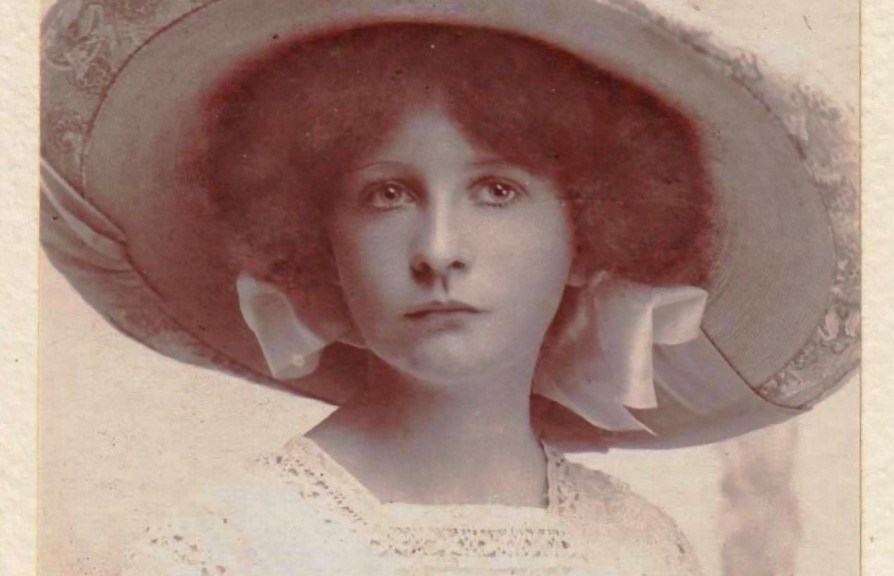
Miss Marguerite Lindsay, working as a summer volunteer teacher, went missing from the Grenfell Mission in Cartwright, Labrador, in August 1922. Her body was finally discovered four months later, in December 1922.

The nearby authorities in Battle Harbour were notified immediately, as was her family in Montreal. When her body was gently pried loose from its frozen grave, they were stunned to discover a bullet wound in Miss Lindsay’s chest.

John Martin, the young trapper who found her body, was unable to provide any more information upon further questioning. When interviewed over 50 years later, he recalled his sad discovery that day by remarking: “Twas a remarkable place where she was found. There was a pool (Salt Water Pond) with two big junipers beside it. It was only about 15 minutes walk from the (Muddy Bay) boarding school.”1

Journalists suddenly had ample new fodder for their newspapers, and the story of Miss Lindsay dramatically bounced back into the headlines. Murder? Suicide? Accidental death?

In no time at all, a bullet wound in her chest evolved into riveting stories of “foul play,” a “love affair gone wrong,” or “shot through the heart” and other sensational headlines that sell newspapers. However, the possibility of a tragic and fatal accident was barely mentioned, as that version wouldn’t satisfy scandal hungry readers.

After three inconclusive investigations, Detective Head Constable Byrne was dispatched to Cartwright nine months later, in September 1923. Twenty-two local Cartwright people were interviewed in an effort to gather more information and rule out the rumours of foul play and murder.

Fifty years later, in 1976, Ida Sheppard recalled that time in another interview “I was workin’ at the Muddy Bay School when Miss Lindsay got lost. We were all cryin’ for her ‘cause we fair loved her, she was such a nice person.” This poignant statement seems to echo the sentiment of the people of Cartwright even to this day.2

Eventually Detective Byrne concluded the following in his statements to the press:

          “The presumption is that Miss Lindsay on her way to take a bath in Salt Water Pond into which the brook flows, stopped to shoot some muskrat which abound in the river, and that she fell on the firearm which she was known to have carried.”3

           “The postmortem examination held at Cartwright showed that a bullet had entered the left side, passed through the heart and out on the other side of the body. From this it is concluded that Miss Lindsay must have fallen on the weapon as it was almost impossible to turn it on herself in the direction.”4

In her coat pocket were a dozen bullets that would fit her Browning pistol, also supporting the accidental death theory.5

Detective Byrne terminated his investigation with the statement: “The postmortem disclosed nothing which would tend to indicate deliberate suicide.”6

Once the sea ice had melted in June 1923, permitting navigaton once again, Miss Lindsay’s body (preserved in salt) was transported to St. John’s, Newfoundland. There a funeral was held for Miss Lindsay before her body was taken by train back to her family in Montreal.

           “As the cortege wound its way to the railway station, citizens stood with uncovered heads evidencing their respect for the departed heroine and sympathy for the sorrowing relatives at home. Marguerite Lindsay will rank with the great women of the world who have given their lives for others”. 7

She was finally laid to rest in the family plot in the Mount Royal cemetery in Montreal where, as it happens, I went to visit her recently.

So whether someone today strolls by “Miss Lindsay’s Marsh,” fingers her name on the local church’s plaque8, listens to a song written in her honour9 or reads a poem written by school children… the Cartwright community continues to honour Marguerite’s memory almost 100 years after her death.

Now that’s a legacy!

The grave of Helen Frances Marguerite Lindsay

1“I found Miss Lindsay,” John Martin, 1976, Cartwright, Labrador. Researcher Doris Saunders.

2“We Fair Loved Her,” Ida Sheppard, 1976, Happy Valley, Labrador. Researcher Doris Saunders.

3Evening Telegram, “Miss Lindsay’s Death Accidental,” September 24,1923.

4Evening Telegram, “Miss Lindsay’s Death Accidental,” September 24,1923.

5Evening Telegram, “Miss Lindsay’s Death Accidental,” September 24,1923.

6Evening Telegram, “Miss Lindsay’s Death Accidental,” September 24,1923.

7Evening Telegram, “Miss Lindsay’s Death Accidental,” September 24,1923.

8St. Peter’s Anglican Church, Cartwright, Labrador

9“Somewhere Beyond the Hills,” words and music by Harry Martin

Notes:

Miss Marguerite Lindsay 

By: Adam Dyson and Brandon Cabot (Grade 4 – Henry Gordon Academy, Cartwright, Labrador)

Once on a summer day in 1922,

A fine young lady died and only a few know.

What happened to her is a mystery,

And will every be part of Cartwright’s history.

Harry Martin wrote a song, we really thank him.

They know that the chance she was alive was very slim.

The newspaper says a mystery was found,

The dogs found her body in a snowy mound.

She went for a walk 15 minutes away,

From a land she loved called Muddy Bay.

She never came back, not even the next day,

She was supposed to catch a boat heading far far away.

She was found by the edge of a big marsh,

The winters were violent an her death was harsh.

Miss Lindsay and her life at Muddy Bay,

Is a mystery that is unsolved today.

Somewhere Beyond the Hills 

Words and Music – Harry Martin of Cartwright, Labrador

Have you ever wondered, as you listened to the wind,
What secrets does she carry, what sad things had she seen?
Well, I’ve listened to her stories a thousand times before,
But still, I have to question her once more.

What happened on that summer’s day in 1922?
Has been talked about by many but the truth is known by few;
And those who knew the answer have been silenced by the years,
But suspicion on the wind have reached my ears.

Someone said somebody knew but when he spoke he lied,
Others said they saw them talking on the day she died;
When the darkness found her she was silent, cold and still,
And her body lay somewhere beyond the hill.

Somewhere in some city a grey-haired mother prays,
Please, God, protect my angel in that land so far away;
But tonight her youngest daughter lies asleep beneath the snow,
In a winter land so far away from home.

Then one cold December day a mystery was unveiled;
They found the poor young maiden there beside a trapper’s trail;
Her body, cold and lifeless, had a bullet through the breast,
Now, the reason why won’t let this poor soul rest.

I have often wondered, as I listened to the wind,
What secrets did she carry, what sad things had she seen?

But those who knew the answers are no silent, cold and still,

And the secret lies somewhere beyond the hill.

Protestants in Quebec

Recently, the news media reported that Quebec Premier François Legault stated that “all” French Canadians are Catholic. While it is true that, historically, almost all francophone Quebecers were Catholic, today many are lapsed Catholics while others are atheists. There are also those who, for a variety of reasons, switched from the Catholic Church to a Protestant religion.

In my own case, I became a Protestant in my mid-forties. My father, Lionel Gagné, was also a Protestant. At a young age, he lost both his Catholic parents and was placed in a Catholic orphanage in east-end Montreal. At about the age of seven or eight, he was taken in by a Huguenot teacher and his wife, a Presbyterian from Massachusetts, who were teachers at a bilingual Protestant College in Pointe-aux-Trembles. This college was operated and financed at the time by McGill University and the Presbyterian Church of Canada.

Like many people, Premier Legault is probably not aware that a small minority of French Quebecers had Protestant ancestors, many of whom were forced to give up their religion when they settled here. Genealogist Michel Barbeau has estimated that about 320 Huguenots, or French-speaking Protestants, settled in New France between 1634 and 1763. See the database of names he identified as Huguenots: http://pages.infinit.net/barbeaum/fichier/index.htm). You can read more about the history of the Huguenots on Barbeau’s website Our Huguenot Ancestors, http://pages.infinit.net/barbeaum/huga/index.htm

Many of these people came to North America to escape from persecution in Europe, however, they did not find life much easier in New France. Many were forced to abjure, or renounce, their religion and others became Catholic after marrying in the Catholic Church. Those who remained Protestant were banned from certain trades, while some had their possessions confiscated.

Here are links to two of my research guides to the Huguenots of New France:

https://genealogyensemble.com/2014/04/02/huguenot-refugees/

https://genealogyensemble.com/2015/02/03/register-of-abjurations/

The following article describes the early Protestant churches of Quebec City:

https://genealogyensemble.com/2019/02/03/the-protestant-churches-of-quebec-city-1629-1759/

In addition to being a list of French-language Protestant churches and their ministers, the research guide below includes an excellent article by Réne Péron about the lives of Protestants in New France, a list of books and authors who have written on the subject, and contact information for the archives of Protestant churches where you can find church registries:

https://genealogyensemble.com/2015/11/22/french-protestant-churches-in-quebec/

The following research guide is a list of villages, towns and townships across Quebec where people from a variety of origins, including Huguenots, settled:

https://genealogyensemble.com/2015/04/08/british-irish-scottish-loyalist-american-german-scandinavian-dutch-huguenot-families-in-lower-canada-and-quebec-1760/

In 2020, I will be posting a series of articles about the Huguenots in Europe. The first will focus on the Protestants of Paris and surrounding region in the 16th and 17th centuries.

Miss Lindsay – Part 2

In June 1922, Miss Marguerite Lindsay arrived as a summer volunteer with the Grenfell Mission in Cartwright, Labrador. Two months later she went missing.

When Miss Lindsay didn’t return from her afternoon walk that fateful day, an extensive search took place immediately. All of Cartwright took part and did their utmost to find her.

Indeed, Marguerite was held in such great affection by the local children and their families that a thorough search of the area was made by her boy pupils, who combed the shoreline and nearby woods inch-by-inch.

Reverend Gordon, with several others, took a motorboat and cruised along the Cartwright shore without luck. They concluded that she must have drowned, perhaps by hitting her head while swimming or falling down some cliff into the fast tidal currents, which then carried her away.

It wasn’t long before the news got out. On August 15, 1922, The Evening Telegram in St. John’s, Newfoundland, published the first of many articles about the fate of Miss Marguerite Lindsay with the headline: “Tragedy at Cartwright – Volunteer Teacher Supposed Drowned.” This was the type of sensational story that sold newspapers and, for the next year, the media worldwide went wild with it.

In one extreme case of yellow journalism, several American tabloids published an article which originated in Britain, devoting an entire page to an appalling story with this ridiculous headline:

“Kidnapped by Savage Eskimos – Beautiful Canadian Girl Suffers As Tragic a Fate As Ever Befell a White Woman; Carried Off by the Dreaded “Fish Fang” Tribe Into the Trackless Wastes of Labrador.” 1

IMG_1576

The article described, in horrific fictional detail, Miss Lindsay’s new life as the captive wife of one of the imaginary savages. One can only hope that her family didn’t read these newspapers.

A month after her disappearance, in September 1922, my great uncle Stanley Lindsay, another of Marguerite’s brothers, arrived in Cartwright by ship. Unfortunately, nothing was accomplished by his northern trip except the melancholy satisfaction of learning firsthand that no effort was spared to trace his sister. He simply thanked the good people of Cartwright for all they had done.

Imagine their relief at his kind words.

Upon Stanley’s return, the Lindsay family held a memorial service in Montreal at the Church of St John the Evangelist in October 1922. Reverend and Mrs. Gordon attended the “impressive ceremony” on behalf of The Grenfell Mission and the people of Cartwright.

Helen Frances Marguerite Lindsay 1896-1922

On December 13, 1922, four months after her disappearance, Marguerite’s body was discovered by John Martin, one of two trappers whose dogs dug deep into the snow by the shoreline. The frost had heaved her body upward out of the bog.

Sadly, Miss Lindsay’s boy pupils had been searching within ten yards of her body but the Indian Tea bushes native to the area had hidden her.2

She was fully clothed, her exposed frozen face was disfigured and… she had a bullet hole in her chest.

Miss Lindsay – Part 1

Miss Lindsay – Part 3

how i came to write miss lindsay’s tale

1 The Springfield News Leader 10 Dec 1922 – https://newpapers.com/newspaper/39664723

2The Evening Telegram 24 Sept 1923

A Furious Bombardment: WW 1 Battlefields Tour

Canada did not repatriate its close to 61 thousand dead service men and women during WW1. Throngs of Canadians did not line highways as they do today, paying their respects as hearse after hearse carries bodies home to cities and small towns across the country. The overwhelming number of dead made repatriation virtually impossible.

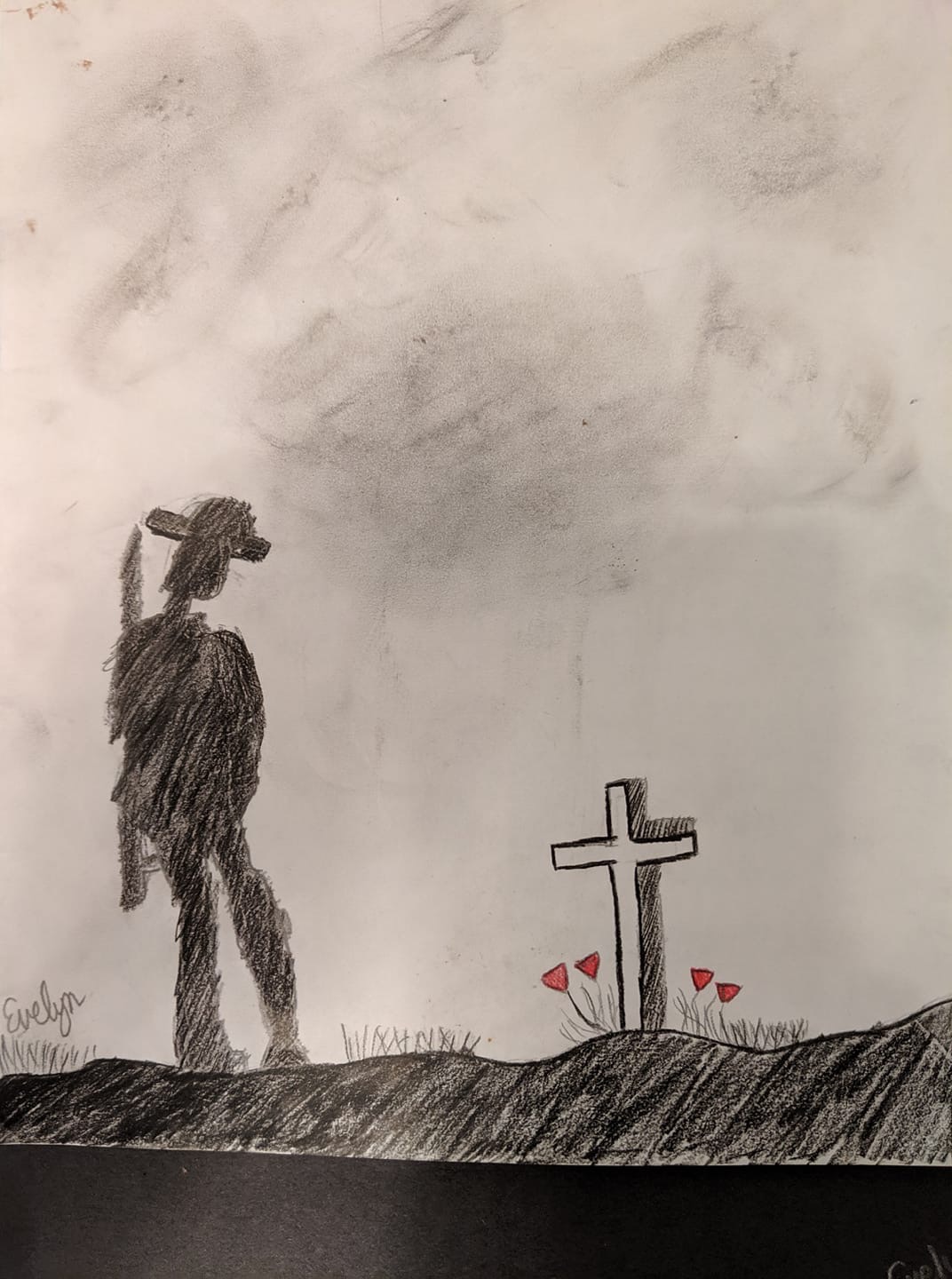
Initially the dead of the First World War were buried on or near the battlefields where they fell, often in mass graves, marked with simple wooden crosses.

IMG_3731

In May of 1917 the Imperial War Graves Commission was established to design and construct cemeteries and memorials. The war dead are now commemorated on white headstones, uniformly and equally, irrespective of military or civil rank, race or creed. Red roses, not poppies, decorate the graves.

In the summer of 2019, my husband and I, together with, my husband’s cousins Elaine and Max Shane , took a coach tour from England to visit the Western Front Battlefields in France and Belgium. Knowing so little of WW I battles, this tour was an eyeopener for me. But any tour to the battlefields inevitably meant visits to cemeteries.

The tour stopped at the largest cemeteries and memorials such as Tyne Cot Cemetery, the Ploegstreert Memorial, Newfoundland Park and even a German cemetery at Langemark. It was the small cemeteries, however, that captured my attention. Hundreds can be found in towns and villages and along the roads and highways we travelled. Some gravestones appear to be right in the backyards of the homes of the living.

My son’s great uncle, Lloyd William Tarrant, is buried in the small cemetery of Bedford House in Belgium, 2.5 km south of Ypres on the road to Armentieres. It was not a scheduled stop but the tour guide kindly pointed it out to me.

Lloyd died at Mount Sorrell sometime between June 2nd and June 3rd, 1916. (see Boy Soldier of The Great War at http://www.genealogyeemsemble.com) The mount was the only high ground retained by the Allies from the fighting of the previous year. It was of strategic importance and a key target for the Germans. On the morning of June 2nd, a furious bombardment was unleashed against the Canadian Third Division defending Mount Sorrell and simultaneously four huge mines were exploded under the mount.

Trenches and their defenders vanished.  Only 76 of the 702 men of the 4th Canadian Mounted Rifles, Lloyd’s regiment, survived. It was not before several more battles over a two weeks period with a total of 8 thousand casualties that, on the 13th of June, the Allies regained their lost positions.

It is assumed that, as the bodies of those slain at Mount Sorrel were found and identified, they were buried nearby, their graves marked with the ubiquitous wooden crosses.  Many bodies, or pieces of bodies, likely shared a common grave.

In 1923, Lloyd’s mother received a letter telling her that her son’s body had been reburied at Bedford House Cemetery.

Bedford House was the name given by the army to Chateau Rosendal, a country house in a small wooded park with moats, that was confiscated to use as a clearing station for men wounded at the front. Those who died at the station before they could be moved on to hospitals for further treatment were buried there. More bodies were added, particularly between 1916 and 1918. Enclosure #4 where Lloyd is buried is the largest of six enclosures. Three thousand bodies were brought in from other burial grounds and from the battlefields of the Yves Salient, battlefields like Mount Sorrell.

Almost two thirds of the graves at Bedford House are unidentified. Lloyd’s family is one of the lucky ones in that they know where his body lies. The saddest words on a gravestone are A Soldier of the Great War Known only to God.


Notes:

Remembrance Day drawing by Evelyn Tarrant (age 9),  great great niece of Private Lloyd William Tarrant

Service file of Lloyd William Tarrant

The Wedding Trip

The itinerary of my grandparents’ 1906 honeymoon sounds more like a business trip than a romantic get-away, nevertheless, they both seemed to enjoy their trip to Chicago, Toronto and Montreal.

The bride and groom were Dr. Thomas Glendenning Hamilton 33, a Winnipeg physician (usually known by his initials, T.G.,) and Lillian May Forrester, 26, a nurse. Lillian trained at the Winnipeg General Hospital, graduating in May, 1905, but she resigned from nursing when they became engaged.

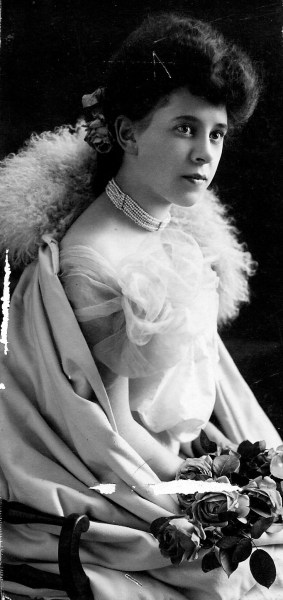
The bride, Lillian Forrester
Lillian on her wedding day.

The wedding took place at the Winnipeg home of the bride’s uncle, lawyer Donald Forrester, at 4:30 p.m. on Nov. 26, 1906: According to the newspaper, “The bride, who wore a pretty gown of white net over taffeta and carried bride’s roses, was given away by her father, Mr. John Forrester, of Emerson…. There were no attendants, only the immediate relatives of the happy couple being present.” Following the brief Presbyterian service, the bride changed into a red and grey travelling outfit and they left for their honeymoon on the 5:20 train.

Lillian kept a diary of the wedding trip, leaving out any romantic details. They spent their wedding night on the train to St. Paul and reached Chicago late the following evening. Staying at the 16-story Great Northern Hotel, they visited Marshall Field’s department store, viewed the impressive tower of the Montgomery Ward Building and attended a play. They also visited the 1,400-bed Cook County Hospital which, Lillian noted, treated 25,000 patients a year and did an average of 10 operations per day. They then headed to Detroit for a brief stopover, and Toronto, where they began by exploring the area around Queen’s Park and the University of Toronto.

Niagara Falls was on their honeymoon bucket list. T.G. and Lillian spent a snowy day there, seeing both the Canadian and American falls. They dressed in waterproof clothing to access the back of the falls, and took a cable elevator car to view the Whirlpool Rapids.

After several nights in Toronto with T.G.’s Aunt Lizzie Morgan, they boarded a train for Montreal. Lillian noted some of the towns they passed through en route, including Belleville, where she was born.

It was now early December, and there was a heavy snowfall in Montreal, nevertheless they took the street car to Notre Dame Cathedral, which they found to be “as grand and beautiful as we anticipated.” Lillian ordered 50 visiting cards – she would need them in her new social role as the wife of a busy physician – and she visited several stores “and spent her first pin money.”  She described Morgan’s department store as “the most beautiful store we have ever seen. The art gallery, glass room, electrical room and furniture department are all exceedingly fine.”

T.G. was planning on running for election to the school board in Winnipeg, so he took advantage of the trip to do some research. While Lillian was shopping, he interviewed the Superintendent of Schools.

No visit to Montreal is complete without a trip up Mount Royal. T.G. and Lillian went to the top in a sleigh and enjoyed “a splendid view of city, canal, river and Victoria Bridge.” On the way back downtown, they visited the Royal Victoria Hospital, ”a beautiful, well equipped building” with 300 beds.  The next day they explored the Redpath Museum, had dinner at the Windsor Hotel (one of the city’s best) and took the overnight train back to Aunt Lizzie’s in Toronto.

It was a Sunday so, after church, T.G.’s cousin accompanied them to visit relatives. The following day, T.G. met with the Superintendent of School Buildings in Toronto and with a former principal of Wellesley Public School, said to be the most handsome and modern school building in Toronto.

Over the next few days they visited more family members and St. Andrew’s Presbyterian Church in Scarborough, where T.G.’s father and grandparents were buried, as well as the farmhouse where T.G. spent his childhood. On their final day in the city, they attended a lecture on new developments in vaccines.

Finally, they headed west to Chicago and Minneapolis. Back in Winnipeg, Lillian’s brother picked them up at the train station and they went to buy furniture.

The last entry of the trip diary was dated almost a month after their wedding: “Dec. 22. Had tea at 8 a.m. in our own house.”

Note: a slightly longer version of this article is posted on my family history blog, writinguptheancestors.blogspot.com.


Visit Picton for insight into military ancestors from WWII

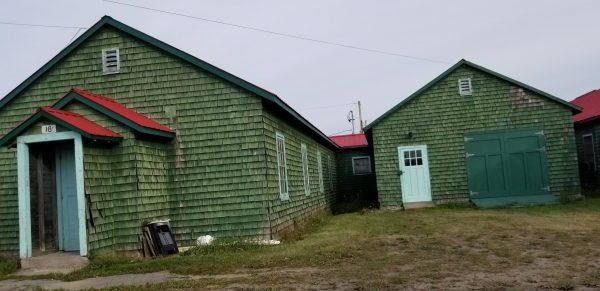
Imagine turning a corner and seeing rows upon rows of green painted wooden buildings as far as the eye can see. One minute, there was nothing. The next minute, an entire town appeared in front of me.

For just a moment, I shared a bit of the awe my ancestors must have felt on day one of their military training during WWII.

The experience took place while I was touring wineries near Picton Ontario last summer.

A former airfield and military base on County Road 22 operates as the Picton Airport and Loch-Sloy Business Park. It includes 54 historic buildings and six airplane hangars on 701 acres of land.

Local businesses rent space

The Prince Edward Flying Club offers “prior permission required” landing services for pilots.

Fifteen other business tenants rent space there too. I saw listings for carpenters, furniture makers, glass manufacturers, landscapers, mechanics, and stone distributors. There’s even a yoga studio on site.

Driving and walking through the park feels like taking a step back in time.

The Picton airfield originally opened on April 28, 1941 as a bombing and gunnery school for the war effort.

Canada, with the support of Britain, built new or expanded existing fields into more than 100 such facilities in less than four years.

The effort became known as the British Commonwealth Air Training Plan.

Looking back it is difficult to grasp the BCATP in all its dimensions,” wrote J.F. Hatch, in his 1983 book describing the project. “In themselves, the statistics are impressive: 131,553 [plus 5,296 RAF and Fleet Air Arm personnel trained prior to July 1, 1942] aircrew trained for battle, through a ground structure embracing 105 flying training schools of various kinds, 184 support units and a staff numbering 104,000. When war was declared the RCAF had less than two hundred aircraft suitable for training, many of them obsolete. In December 1943 there were 11,000 aircraft on strength of the BCATP.” [1]

My ancestors Paul Emile Hurtubise, Jean Charles Mathieu and Richard Himphen all trained at Ontario-based military installations just like this one, although the ones they went to were in Camp Borden, Dunnville and St. Thomas rather than Picton.

Camp Borden still operates as an active military training facility. The ones in Dunnville and St. Thomas are long gone.

Picton is probably the last BCATP centre in existence—with original buildings and triangle airfield layout intact—anywhere in the world.

Heritage Structures Intact

The Royal Canadian Air Force (RCAF) used the buildings and hangars for storage and equipment maintenance after WWII.

After that, the Royal Canadian School of Artillery (anti-aircraft) moved in to train anti-aircraft gunners, gunnery radar operators, technical assistants and artillery instructors. The first battalion Canadian Guards infantry unit also used the site for a while.

During part of that time, AVRO Arrow test models could be found in some of the hangars.

In 1969, the Department of Defense closed down CFB Picton and the H.J. McFarland Company purchased the land and buildings.

Loch-Sloy bought the site from the McFarland family in 1999.

Dreams for a Period Museum

That’s when the company began a slow challenging effort of reconstructing the former buildings into a period museum that they hope will eventually open full-time. They produced a fun video describing their dreams in April 2013.

Until that happens, you can arrange private tours of the site or contact them for upcoming public events.

I highly recommend the experience. It connects you to the past in a way that reading documents just can’t achieve.

– 30 –

If you want to read more about my WWII military ancestors and the British Commonwealth Air Training Plan, refer to the following stories:

Fairwell Sergeant Himphen

Evening Serenade

Shot Down Three Times

Vincent Massey and the BCATP


[1] Hatch, F. J. The Aerodrome of Democracy: Canada and the British Commonwealth Air Training Plan, 1939-1945. Ottawa: Directorate of History, Dept. of National Defence, 1983, 222 pages.

Cutting and Pasting

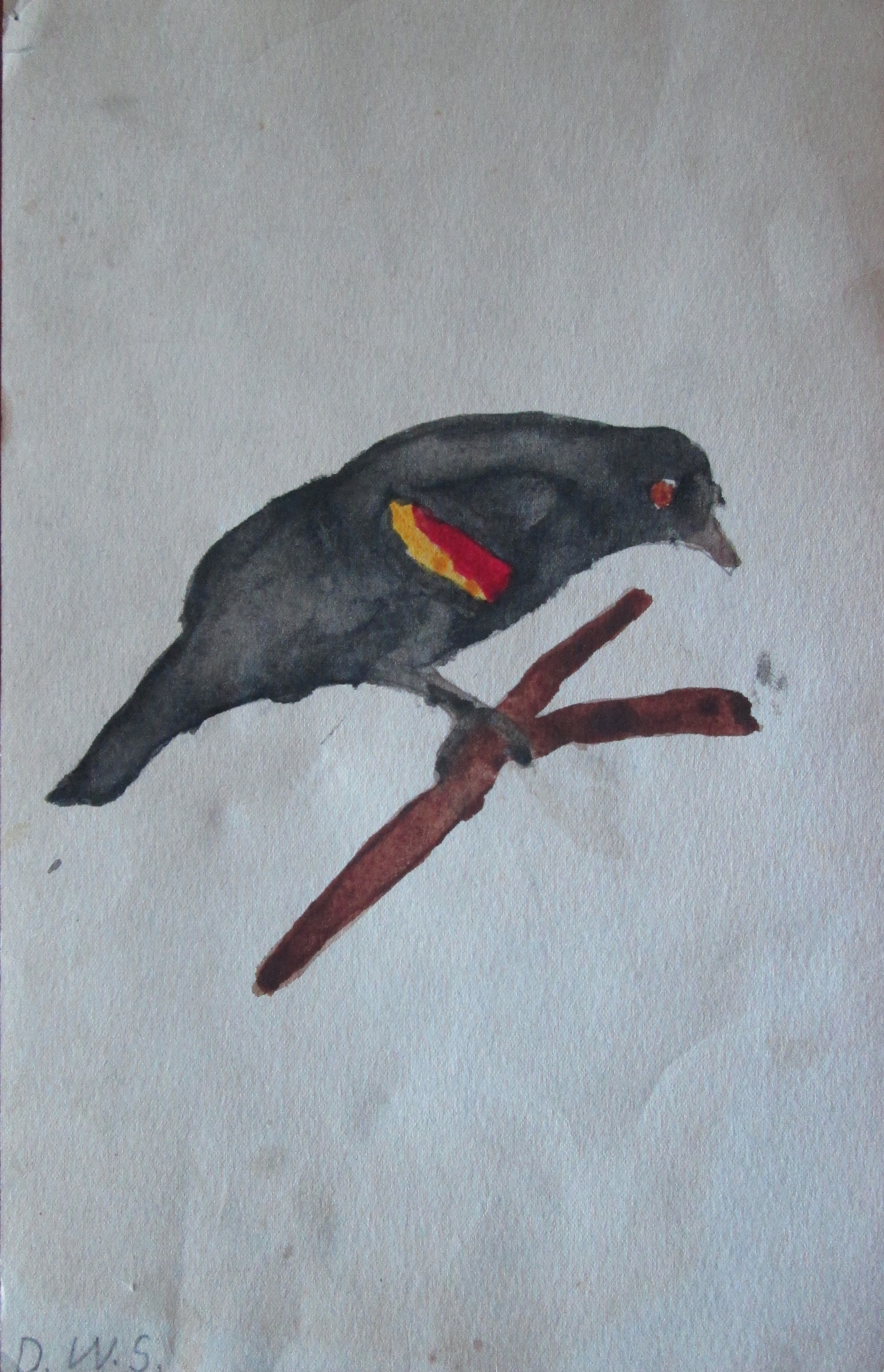
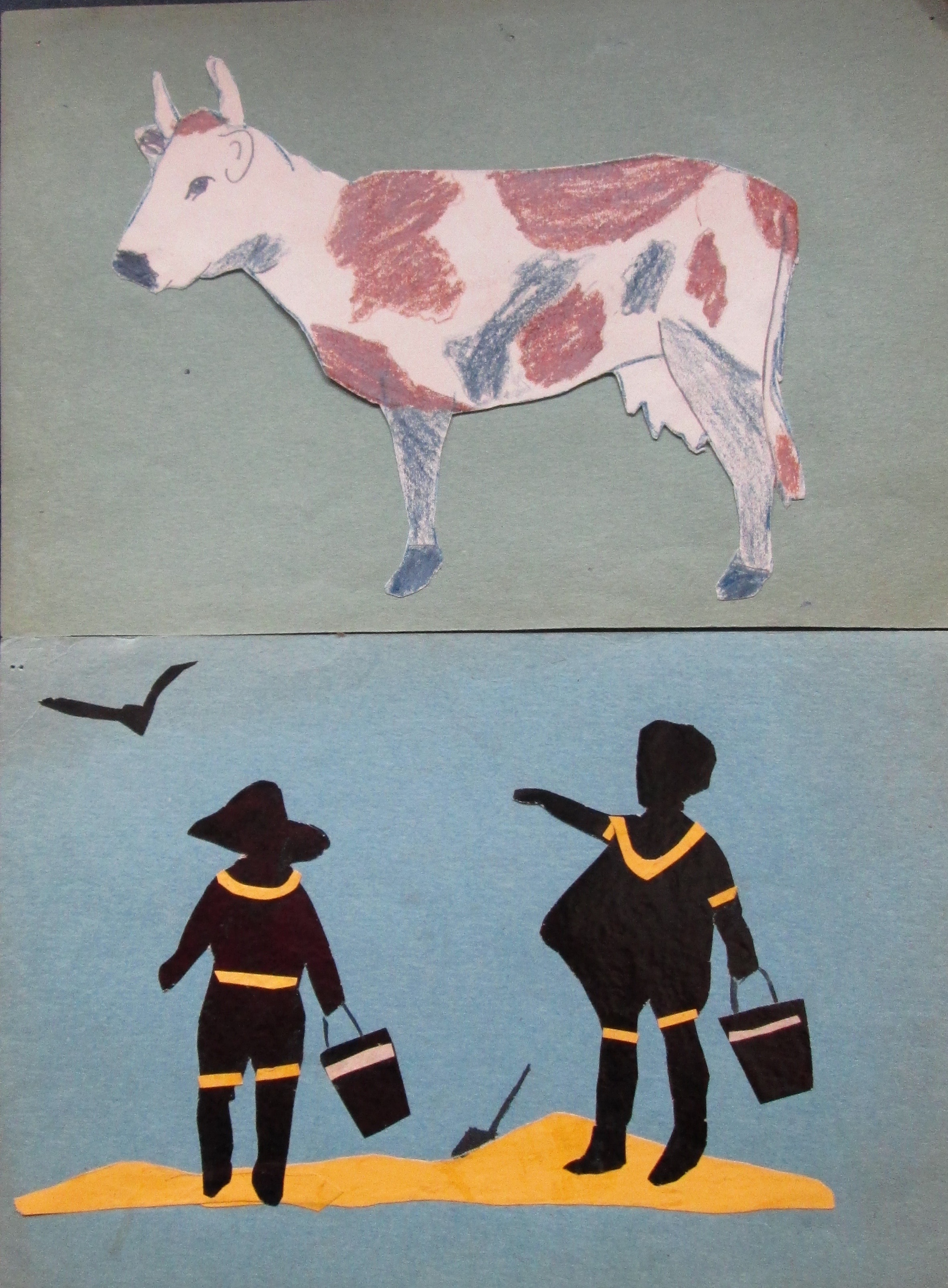
My father Donald Sutherland certainly wasn’t an artist, he was a numbers guy. I was recently reading an article about downsizing all the things collected in pursuit of one’s family history. It suggested actually throwing some things out and giving other things to family members. This really struck home as I had once again unearthed a large brown envelope containing my father’s artwork. These were not drawings that showed his view of the world but mostly coloured paper shapes cut out by the teacher when he was in kindergarten and grade one. He had done the glueing. My grandmother saved them all.

I had looked through them before and was going to throw them out but just couldn’t. I didn’t think they had much connection to my father but they were in an envelope from Frank W. Horner Inc., where he worked and written in his hand “ Donald, School Hand Work.” They were from an era before children’s artworks were displayed on refrigerators. These papers were brought home from school and safely put away. He obviously found them at some point and decided to keep them.

Why didn’t I just chuck them? My siblings would have if they had seen them first, or so I thought.

He did not create much with his hands. He did a little carpentry in school and a telephone table he made stood in our hall. His mantra was a place for everything and everything in its place. He continued to make a few useful items. I have a little box, a record stand, and a speaker stand that he made. The woodbox and washtub stand are at the cottage. My brother-in-law thought my father’s most creative work was the wasp’s nest he had cut out of a tree and hung over the fireplace.

Dad spent more time thinking than doing. I have some letters he wrote but mostly what he got down on paper wasn’t exactly what he wanted to say. He would rewrite and rewrite and never finish so some letters never got mailed.

He was interested in photography as his father had been but more for the technical aspect. Dad was very particular when setting up to take family portraits. The lighting, the exposure and the composition had to be perfect, which was hard with four squirming children. After the long set up he would be annoyed with our “fish face” expressions.

Black and white pictures were developed in our basement. It was his quiet time. He would sometime let a child in with him to watch the images develop. In his meticulous way, he would keep notes of the apertures and exposures. With the advent of colour film, he tried developing his own pictures but didn’t have the time to create perfect colour images. Each time he started a session he felt he was starting at the beginning and was never happy with the results, so he stopped. He did use slide film and these pictures were are organized in boxes and catalogued.

In the pile of papers, there was a pumpkin, a turkey and other fall pictures. I took them to our cottage for Thanksgiving table decorations. We all looked at them, talked about Dad and then I thought we would throw them out, but no! There was a chorus of, “Daddy did them, they have to be kept, they are folk art and almost 100 years old.” So, as no one else volunteered to take them, I brought them home, put them back in the envelope and they are back in the file.

IMG_9920

IMG_9974

I Remember Maman: Montreal’s Film Row Circa 1940

rkobuilding

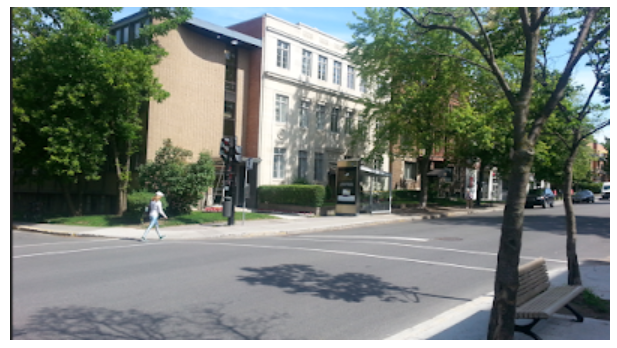
The white building is United Amusements’ former address on Monkland, now a lovely condo. My mother’s uncle, Isadore Crepeau, was VP Of this company in the 1920’s and 30’s. 

I have only recently discovered that Monkland Avenue in Notre Dame de Grace was once Montreal’s movie Mecca, referred to in industry circles as “Film Row.”

In the 1960’s, as a school girl, I lived in adjacent Snowdon  and I often saw second-run movies at the Monkland Theatre – and yet no one told me this.

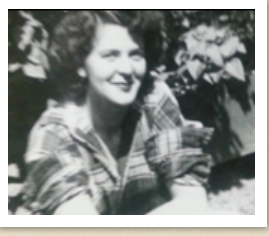
On top of that,  my mother, grandmother and aunts all lived a few blocks away during the 1940’s, in a large second story flat at the corner of Oxford and Monkland. My mom worked at RKO Motion Picture Distributing just a few blocks away.

In the 1960’s, when my Mom and I passed by the building in our tiny Austen Cambridge car on visits to see our cousins who lived on the corner of Monkland and Montclair, she would often tell  me, “You were born right there, over a shoe shop.’

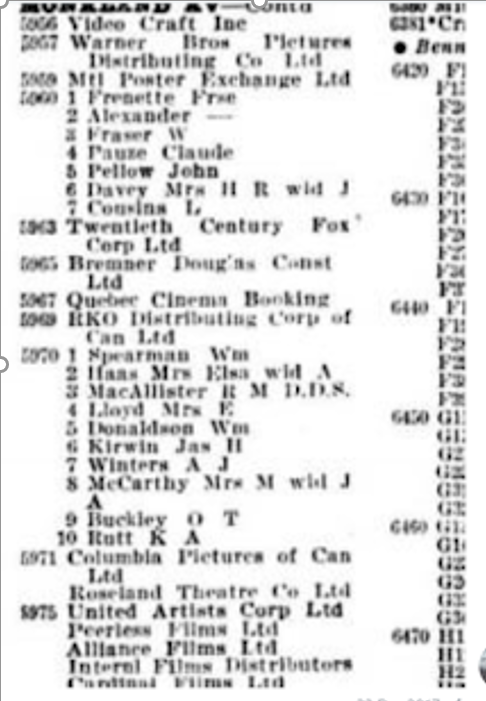
I can see from Lovell’s Directory, online, the place was Eddy’s Shoe Shop, later to become Patisserie de Nancy.

Over the years, my mother only occasionally mentioned her past employment at RKO and I never asked for more information because I was not at all interested.  In the 1960’s, RKO was out of business, although it had been one the top five studios in the 1930’s and 1940’s.

filmrow

Lovell’s reveals the truth about Monkland in the 1940’s. Movie Distribution Mecca!

In the 70’s, I studied Film and Communications at McGill and still I never asked my mother about working at RKO.

In class we studied Eisenstein’s montage method and D.W. Griffith’s short and long silent films and even deconstructed Citizen Kane scene-by-scene, (a movie made by RKO and Orson Welles who later bought the studio and drove it into the ground) but those other classic RKO Films, Bringing Up Baby, It’s a Wonderful Life, or I Remember Mama* with Irene Dunn were not on the syllabus.

The RKO brand, for the most part, sounded so far away, in the Dark Ages of the 1940’s, when my mother was young and a working woman.

These days, I spend a lot of time watching Turner Classic Movies and I am now very familiar with the RKO ‘radio signal’ logo and their classic as well as their all-but-forgotten movies. I am also researching more about my mother’s Crepeau family.

I think I know how my mother got the RKO job.

Her father, Jules Crepeau, was Director of City Services in the 1920’s and her uncle, Isadore, was VP of United Amusements, the local movie distribution concern that built the grand Monkland Theatre with its signature ornate plaster work, as well as a score of other Montreal movie palaces , including the Rialto on Park Avenue, the Rivoli on St. Denis and the Strand, where well-known pianist Willie Eckstein tickled the ivories.

Famous Players owned United Amusements as well as RKO Canada  from the late 1920’s. 

My mother was a secretary or ‘stenographer’ as they called it back then, even though she had studied classical literature, Greek and Latin, at College Marguerite Bourgeois and was perfectly bilingual in English and French.

Were my mother alive today I would ask if it was fun and exciting or even ‘glamourous’ working on Monkland back in those days. Or was it tedious. Did she have to put up with sexist behavior at work? (I bet she did.)

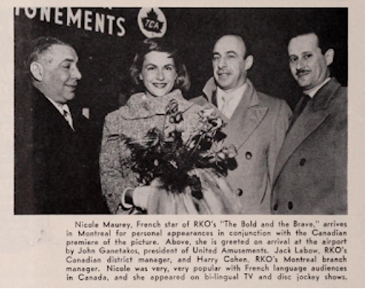
Her bosses, according to the industry rags, got to party once a year at the Waldorf Astoria in New York City at the annual RKO sales meeting and  Montreal’s Film Row regularly welcomed visitors from all over, including Hollywood.

And the big question I’d like to ask, if I could go back in time: “Did you get free movie tickets?

mummyrkodays

Marie-Marthe Crepeau Nixon

filmrow

george

From Box Office magazine, 1940. c/o Digital Media Library.

  • I Remember Mama is a film about a struggling immigrant couple who raised their children without ever letting on that they are very poor. My mother raved about this film when it came on TV in the 1960’s. The movie was made by RKO in 1948 and she would have worked on publicity.

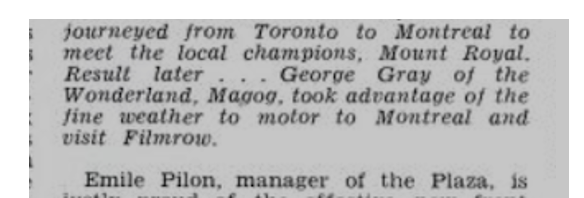
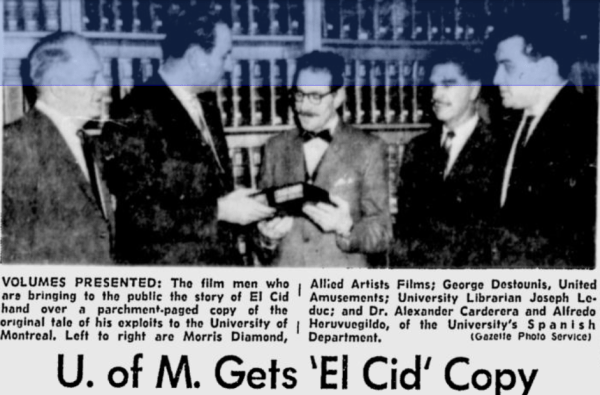
I bet she did get free tickets. During the 1940’s, a young man around her age named George Destounis was Manager of the Monkland Theatre. He would go on to be Booker at United Amusements in the 1950’s and later the President as well as the President of Famous Players headquartered in Toronto. Destounis was a big promoter of Canadian film and Famous Players funded lots of those early English Canadian made films (with US stars) in the 1970’s and 80’s none of which were very good, but you could get tax break and of course Canadians got some work. (Well, there were a couple of movies that were OK. Ginger Coffey, Duddy Kravitz and a movie Going Down the Road that got a lot of praise. Meatballs made a lot of money. ) I would be surprised if my mother and her sisters and niece didn’t know him in Monkland Village where they lived. Destounis apparently worked his way up from Usher in the United Amusements Company, but I can see from online genealogy records that George Destounis is related to many of the Greeks in the early Montreal Movie Industry, including Pergantis, Lerakos and Sperdakos. His father was from Kefalonia, like many of the NDG Greeks, including Farandatos, Moschonas (Moshonas) and Maroulis. His mom from Sparta, like Ganetakos and the rest.

A Time of Prosperity

Asbestos Part 2

by Claire Lindell.

The Asbestos Strike of 1949 was a major historical event, that touched the lives of many. In a recently posted blog on Genealogy Ensemble, ‘A Turning Point in Quebec History, reflects the turning point through the eyes of a nine-year-old living in the town during the strike”. At the end of WWII created a huge boom in construction. There was a great demand for asbestos fibre products. These products were. fire-resistant. Insulation, outside shingles, roofing tiles, floor tiles and a myriad of other products were being used in construction. The company was thriving and continued to do so throughout the next twenty years.

My Dad, Karl Lindell, played a minor role behind the scenes throughout the five months the workers were off the job. When the strike was over and the workers resumed working in the pit, underground and the mill, management realized that changes in their operations were necessary.

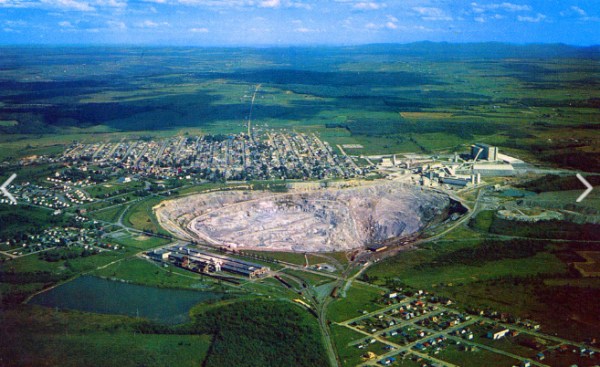
The Canadian Johns-Manville Company (CJM)developed a long-term plan to enlarge the open pit. In doing so, they expropriated large portions of the town and expanded in new directions. Underground operations continued. As part of these changes, in January of 1950 Dad took on a major role and was named Mine Manager of Jeffrey Mine, the largest open pit in the Western hemisphere. His responsibilities within the company were to bring stability between the workers, the union and management while producing enough asbestos to meet customer’s orders.

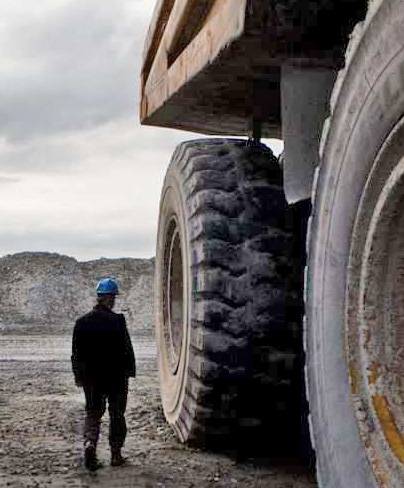
         Hitachi advertisement for a 200 ton truck 

 Enormous tires                                

Some of the major changes within the operations revolved around phasing out the old railway system that had been in use for many decades. The company invested in an efficient roadway within the pit and purchased several humungous 200-ton trucks to haul the crushed rock, the results of the blasting that took place several times each day. The trucks hauled their loads to the new Mill #5 to be processed removing the valuable veins of fibre in the mill where the company installed a huge dust filtration system that monitored the air quality. The fibre was extracted from the rock, bagged, ready for shipment to factories and countries around the world. The trucks were also used to haul away the residue (leftover crushed rock) often referred to as ‘tailings’, to a site outside of town.

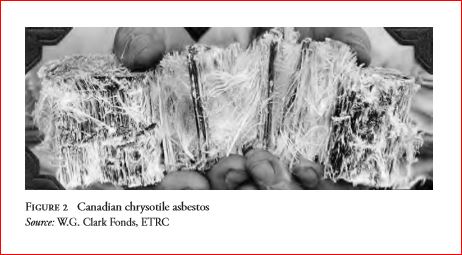
ETRC Townshipsarchives.ca Asbestos fibres

Dad was responsible for the many changes and the daily operations. It was noted in the minutes of a National Employees of the Mining Industry meeting in January of 19501. That at one of his first meetings with the employees after taking on his new position, he assured them that every employee was equal, no matter their position in the company. He noted that there were errors committed by both the company and the union during the strike.

He earned the respect of the workers and the Union. throughout his working days with CJM.

Operations ran smoothly. As time went on, there was a need to develop a specific division relating to the sale of products. The company created the Asbestos Fibre Division and Dad headed that operation. At the time he had an opportunity to move his family to Montreal where the Division had offices. He chose to remain in Asbestos. This permitted him to maintain a good relationship with the workers.

Aerial view of Asbestos circa 1980 Flickr

Dad retired after 25 years (1945-1970) of devotion to CJM and the Asbestos community. He had traveled the world on behalf of the Asbestos industry. His contributions to its growth and development were recognized by the industry and the citizens of Asbestos.

In the latter years of Dad’s time with the company, there were deep concerns about asbestos fibre being a health hazard. By the 1980s the industry declined at a rapid rate. For a time, the Quebec Government was supportive of workers, however, over time there was an outright ban on the production of asbestos fibre. This left may workers without jobs.

How would the town survive? Could the town survive?

Part 3 will highlight some of the ways the community coped with the lost jobs and the numerous strategies that have been used since the 70’s . Did Asbestos become a ghost town? Did it find new ways and means for those who lost their jobs when all operations shut down?

Sources:

1. SAHRA. Fonds de la Federation de la Metallurgie P5. Cahiers des process-verbeau des reunions de la federation Nationale des Employees de l’Industrie Miniere. Janvier 1950, p.99-100, Asbestos filons d’histoire 1899-1999, Lampron, Rejean, Cantin, Marc, Grimard, Elise, Imprimeries Transcontinental inc., Metrolitho 1999

www.mindat.org/loc-581.html Jeffrey Mine, Asbestos, Les Sources RCM, Estrie, Québec, Canada The geological map is copied from Horváth et al. (2013) Local Geology: .

www.ubcpress.ca/asset/13390/1/9780774828413… A Town Called Asbestos – UBC Press

https://www.thefreelibrary.com/%22A+faire+un+peu+de+poussiere%3a%22+Environmental+Health+and+the+Asbestos…-a0315506063

https://carnetsce2015.wordpress.com/category/1950-a-1960/

https://www.townshipsarchives.ca/etrc-p031-photographs-001-jpg      asbestos fibres

https://store.cim.org/fr/application-of-air-to-jeffrey-mill-of-the-asbestos-canadian-milling-johns-at-the-new-manville-company-limited-asbestos-que CIM Bulletin, 1955

Click to access 3r.pdf

https://www.thecanadianencyclopedia.ca/en/article/asbestos-que?fbclid=IwAR0305fX1YrnIFB2qyU0oXBBEQSHZg6JvUFTykpKoFqwYQUn0pSS0uVf8e0

https://www.asbestos.com/news/2016/11/07/asbestos-mining-town-canada-new-identity/