By René Péron
Religious history tells us that what we call The Reformation was indeed part and parcel of several attempts to reform certain aspects of the once dominant Roman Catholic Church. Be it under the influences of Francis of Assisi, Erasmus, Waldo, Hus, most prior moves towards reform from within said Church lasted but short periods of time. It remained for two convinced and strong willed men, namely Martin Luther and Jean Chauvin (whom we know best as Jean Calvin or John Calvin) to found separate though like-intentioned movements for deep and exacerbating reform.
Out of these said movements there was born a surge of people who became followers of the revised theological thinking as promulgated by each of the above named men, each in his own right and own sphere of influence. Thus the followers of the one became known as Lutherans and those of the other as Calvinists.
As is also well known, homo sapiens being a questioning animal, even the followers of the above two men started questioning some of their theological pronouncements. Over the years, much to the dismay of many, such questionings became points of division within the very core of the first Lutherans or Calvinists. These divisions on doctrinal or other issues within “reformed” Christianity over the last several centuries have led to a multitude of groups, such bearing names which they gave themselves or were given by others to differentiate, separate them from other believers in Christianity. Some of these names were outright fanciful whilst others were based on their beliefs or organizational set-ups. Thus Lutherans, Calvinists, Baptists, Pentecostals, Presbyterians, Brethren, to name a few.
As North America as we know it today was founded by members of these diverse religious groups said members formed communities of like minded folk and their religious entities bore, bear, names borrowed, adopted, from the movements found in the country of origin, be it the British Isles or the European continent. . Canada, particularly after the Conquest, inherited similar religious names through the migration of people from the British Isles as well as Europe. To these was the added influence of those U.S. citizens known to us as (a) Loyalists, or more simply as (b) people who crossed back and forth over the common border between Canada and the U. S. A., loosely guarded and even more loosely observed or recognized. Some of these latter individuals belonged to splinter religious entities, thus forming dissentient groups in Canada, keeping their identifying religious nomenclatures. Needless to say, further dissenting members of the established groups perpetuated the practice of adopting names to identify themselves.
In all of this one must not lose sight of the historical fact that in the early days, after the conquest, non-French speaking immigrants were most apt to affiliate, join, with the then official state church, namely the Church of England. However many areas soon saw the arrival of itinerant preachers of the then established denominations, some originating in the British Isles, others in the U.S.A., ; these men would often visit communities which were not, or at least not well, served by the state church. Thus there soon were pockets of folk who formed Baptist, Methodist, or other church groups as they gathered around the said itinerant preachers, adopted their way of expressing their religious beliefs and took on the nomenclature which defined their particular approach to “religion”.
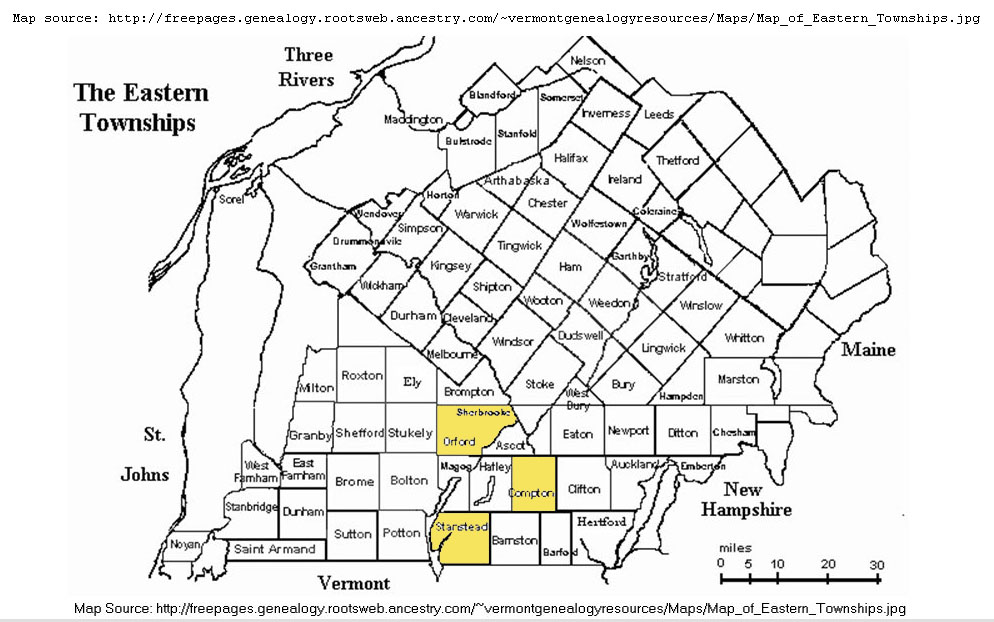
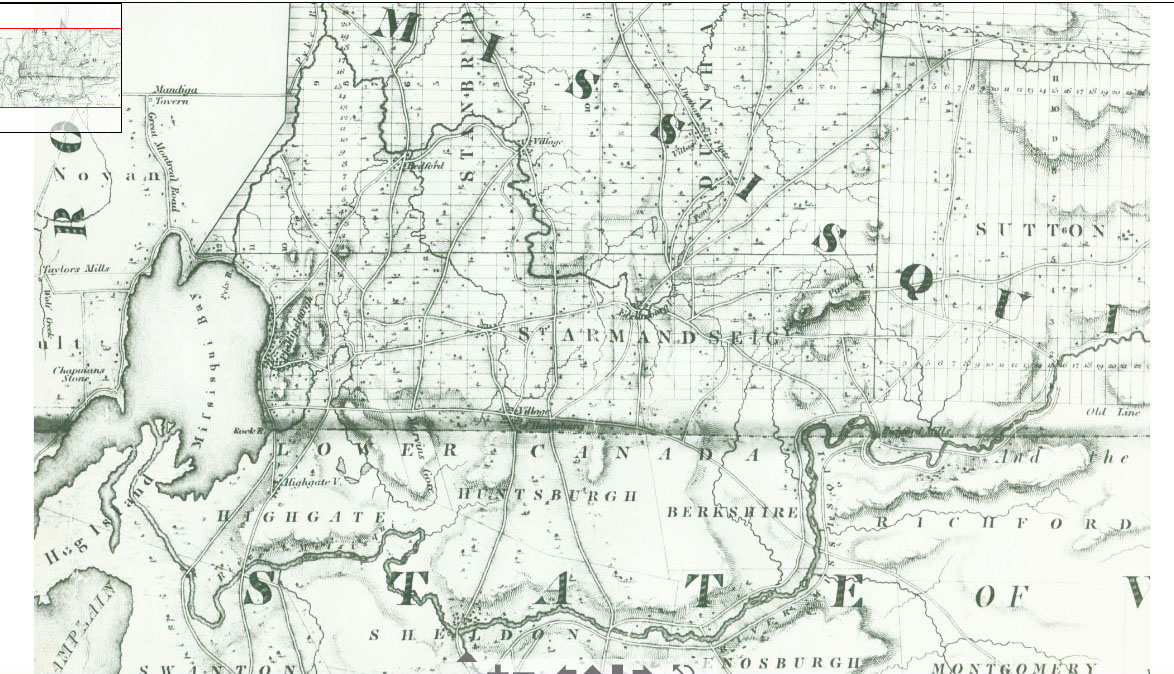
Perhaps this modus operandi was most noticeable in those geographical areas where the established state church had not found it expedient to send representatives. Understandably such areas were in the undeveloped hinterland. Those places, distant from the large centres, such as along the U.S./Canada border, were most susceptible to experience this phenomenon.
All of which leads one to remark or note that when the Province de Québec saw the beginnings of its own “reform” movement amidst the French speaking population in the early 1800s the people who converted to Protestantism were apt to follow the same pattern in joining one particular religious denomination or the other. One can cite as an example the group which many historians recognize as the first to firmly put down roots and later affiliate itself with a recognized denomination, namely the Baptist one. Its founders, from “la Suisse” (Switzerland), namely Louis Roussy and Mrs Henriette (née Odin) Feller had felt a spiritual calling to come to Québec to evangelize. Supported by a non-conformist missionary /religious society, La société des missions évangéliques de Lausanne, in Suisse, encouraged by a fellow Christian, namely Henri Olivier, who was already trying to evangelize French language Canadians in the Montréal region, they briefly came to that city and endeavoured to convert the local folk to their view or approach to the Protestant faith.

 Genealogy Ensemble