Category Archives: United States

The Great Central Fair of Philadelphia, 1864

Philadelphia lawyer McGregor J. Mitcheson (1829–1886) had a reputation as a passionate and eloquent defender of his clients’ interests in the courtroom, so it comes as no surprise that he was also a persuasive fundraiser. In 1864, he was one of many volunteers who helped to raise money to improve sanitary conditions, food and medical care for government soldiers during the American Civil War.

When the Civil War broke out in April 1861, thousands of men signed up to fight for the Union army. Soon, however, the filth and poor diets in the camps where the soldiers were housed led to outbreaks of disease. People realized that the government was not equipped to shelter and feed so many soldiers.

Civilians in the northern states responded by founding the United States Sanitary Commission (USSC) in the summer of 1861, as well as other charitable relief organizations. These groups raised money for the Union cause and distributed supplies, including food, clothing and bandages, to military camps and hospitals. A branch of the USSC was set up in Philadelphia by some of the city’s leading male citizens, while the women set up their own organization to receive donations from church groups and other small, local aid societies2.

The Great Central Fair in Logan Square, Philadelphia, 1864.

These organizations held a variety of fundraising events, including concerts, plays and floral fairs, but the biggest and most successful event In Philadelphia was the Great Central Fair. It was held for 21 days in June, 1864 at downtown Logan Square. Volunteers built a vast central hall featuring Gothic arches, outbuildings, interconnecting corridors and a 216-foot flagpole. A range of donated goods were for sale including fine arts, lingerie, umbrellas and canes, arms and trophies and children’s clothing, while available services included a horse shoe machine and a button-riveter.

A number of northern cities hosted sanitary fairs between 1863 and 1865, but the only one that raised more money than Philadelphia was New York City. In total, the Philadelphia Great Central Fair raised more than a million dollars – $20 million in today’s money.

This huge endeavor required many hours of organization by hundreds of volunteers. An executive committee oversaw dozens of smaller departments and committees that were in charge of soliciting contributions of goods, money and services from members of every trade, profession and business in the city.

My three-times great-uncle McGregor J. Mitcheson dedicated many hours to the cause as secretary of the fair’s Department of Labor, Income and Revenue. Involvement in that department was something of a family affair: at one time, McGregor’s brother Duncan M. Mitcheson was assistant treasurer, and his sister Mary F. Mitcheson was a member of the women’s committee. McGregor was also chairman of a hard-working sub-committee, the Committee on Organization.
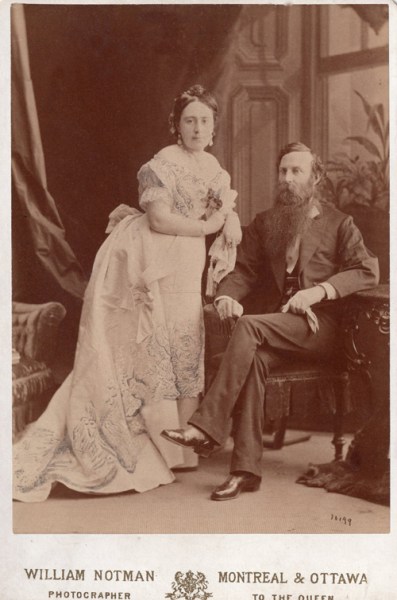
McGregor J. Mitcheson and his wife Ellen Brander Alexander, probably taken when they were visiting his sister Catharine Mitcheson Bagg in Montreal.

The Department of Labor, Income and Revenue was one of the busiest of the Sanitary Fair organization, and it succeeded in raising nearly a quarter of a million dollars, or one-fourth of the fair’s proceeds. Its goal was to raise donations equivalent to the wages of one day’s labor from working people in every branch of industry, one day’s income from their employers, and one day’s revenue from all corporations. Railways and coal mining companies proved to be the most generous donors. This committee also had a large table at the fair where a variety of goods were sold, bringing in $7228.

Committee members personally visited company worksites such as iron works and large mills. Owners would tell their employees to stop work and call them together to hear a speech about the need to help the soldiers. Most employees were so inspired that they agreed to donate a full day’s wages, and their employers also gave generously. Official fair historian Charles J. Stille credited this success with the fact that the organizing committee had nothing to do with partisan politics, and had no specific religious affiliations. Everyone was free to give or not to give.

The committee raised funds in Philadelphia, in smaller Pennsylvania cities such as Bethlehem, Harrisburg and Reading, in rural parts of the state and in neighbouring New Jersey. Members of this committee were so hard-working that it acquired the nickname the laborious committee.

Stille singled out McGregor J. Mitcheson for his hard work. “Through spirited explanatory addresses by Mr. Mitcheson, at the invitation of the proprietors of the leading establishments, six eight, and even twelve manufacturers have been thus visited by the officers and committee; the works stopped, the people collected and addressed, as we have stated, within one day.”3

McGregor also played a memorable role in the fair’s closing ceremony. A large crowd turned out on the evening of June 28 to watch as members of the fair’s executive committee marched onto a platform in the square. The bishop offered a prayer of thanksgiving, then McGregor J. Mitcheson led the singing of the Doxology,4 a hymn of praise. After that, McGregor invited the crowd to sing the Star-Spangled Banner, and finally the crowd broke into an enthusiastic rendition of Yankee Doodle.

Photo Sources:

Queen, J. F. (1864) Buildings of the Great Central Fair, in Aid of the U.S. Sanitary Commission, Logan Square, Philadelphia, June. United States of America Philadelphia Pennsylvania, 1864. Philadelphia: P.S. Duval & Son Lithography, -07. [Photograph] Retrieved from the Library of Congress, https://www.loc.gov/item/2021670451/

Cabinet card photo by William Notman, Montreal. #70199. Bagg family collection.

Notes and Sources

  1. McGregor J. Mitcheson (born Joseph McGregor Mitcheson) was the youngest son of English-born merchant Robert Mitcheson and his Scottish-born wife Mary Frances McGregor. His older sister, Catharine Mitcheson Bagg, was my direct ancestor. McGregor grew up in Philadelphia and practised law there for many years. He married Ellen Brander Alexander Bond, a widow, in 1869, and they had three children.  
  • The Doxology is a four-line hymn often sung during church services The version sung at the fair’s closing ceremony: Praise God, from whom all blessings flow; Praise him, all creatures here below; Praise him above, ye heavenly host; Praise Father, Son, and Holy Ghost. Amen.

This article is also posted on my personal family history blog, http://www.writinguptheancestors.ca
A Picture of Annie

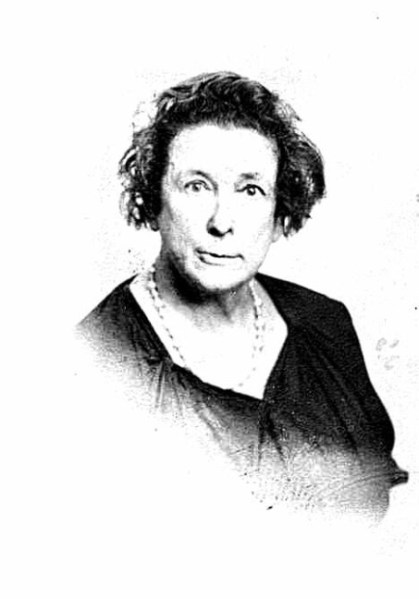
For many of my ancestors, I have a name, a date of birth and sometimes a death date. That doesn’t tell you much about their lives, who they were or what they looked like. Who resembles them? Having a picture that you can document of them is a treasure. I still have many images of unidentified people. Some you can guess at but still you aren’t sure.

I have no pictures of Annie Sutherland (1878-1953) or much information about her except for one entry in my grandfather William Harkness Sutherland’s diary, “ Annie visiting from New York”. Annie was his first cousin, the daughter of his uncle William Sutherland and Jessie Johnston.

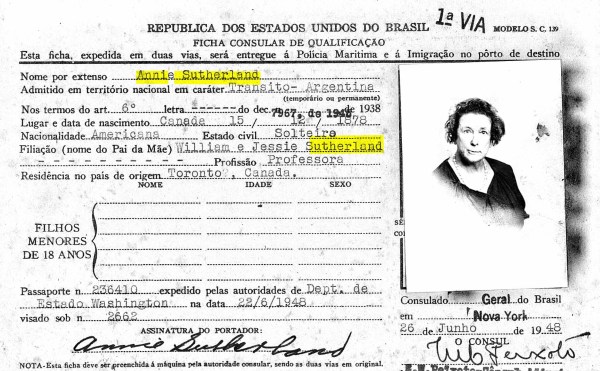
I thought I would try again to find Annie after researching her brother William. Annie is not a unique name so I didn’t have many expectations when I entered her name, birth year, and parent’s names in Ancestry. Up popped her visa for entry into Brazil in 1948! This document had her date of birth, her nationality, her parent’s names, her occupation and her picture! There she was for all to see at 69 years of age.

Annie Sutherland disappeared from Canadian records after the 1901 census when she was living with her parents at 21 Rose Ave along with her sisters Agnes, Isabel and Jessie and her brother Davison. 

Single women at the turn of the century had few career choices open to them, one being a teacher. Annie and two of her sisters taught school. I imagine Annie wanted a little excitement in her life, so she immigrated to New York City in 1902 and moved in with her brother William. She continued to teach school.

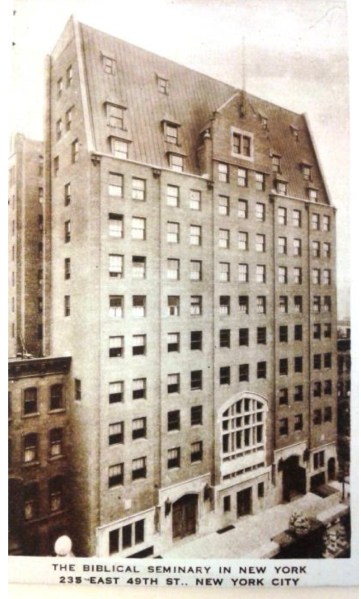
She originally taught at regular public schools. Religion was important in the family, like many Scottish Presbyterians at the time. They attended services regularly and were involved in the church life. The males, like my grandfather, were encouraged to become ministers but none had the calling. So, it is not surprising that at some point Annie began teaching at the Biblical Seminary of New York (which became the New York Theological Seminary). 

Wilbert White founded the Prostatant nondenominational school to train Bible teachers, missionaries and YMCA (Young Mens Christian Association) workers. This was a ministry for the “real world” with the Bible being the centre of the curriculum. Women formed a large part of the diverse cultural student body and the staff. In 1921 the school moved downtown to East 49th Street. There, in a nine-story building, students, staff and other borders lived together. Annie lived at the school and according to the 1940 census was a teacher making $4,764 a year, a large salary for anyone at the time.

Teachers have the advantage of summers off, and Annie Sutherland travelled the world. While she taught others to be missionaries, perhaps she did missionary work herself during her vacations. She can be found on many ship manifests as she sailed to Brazil, Argentina, Mexico, England, France and the Mediterranean, being away for two months at a time.

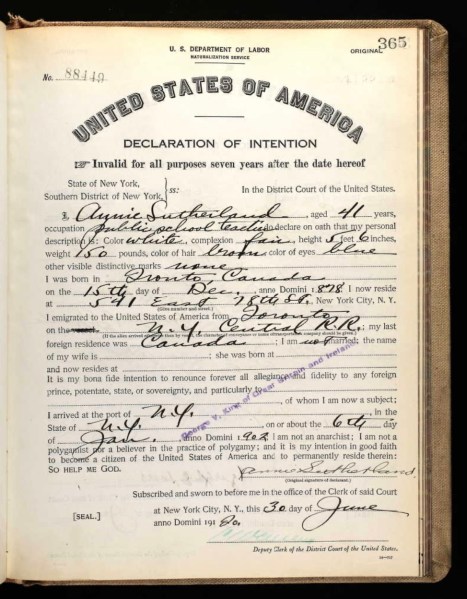
She, like her brother, decided to become an American citizen. She filed her declaration of intention in 1920, which included her renouncing her allegiance to George the V, King of Great Britain and Ireland. She received her naturalizing certificate five years later.

I last found her alive in New York City in 1950, living at the Prince George Hotel, having returned from another trip.

There is an Annie Sutherland buried in Mount Pleasant Cemetery in Toronto, who died in 1953 at 74 years of age. Is that Annie’s final resting place? Did she eventually return home from her travels?

Notes:

“Rio de Janeiro Brazil, Immigration Cards, 1900-1965”. Family Search, Salt Lake City, Utah, 2013. Index entries derived from digital copies of original and compiled records. Accessed on Ancestry March 10, 2020. 

Mount Pleasant Cemetery: Annie Sutherland age 74 died 1953. Land, Section 33 lot 2650. accessed October 18, 2024.

New York Theological Seminary Records 1895-2005-https://library.columbia.edu/content/dam/libraryweb/locations/burke/fa/misc/ldpd_11693150.pdf

Year: 1901; Census Place: 
Toronto (Centre) (City/Cité) Ward/Quartier No 3, Toronto (Centre) (City/Cité), Ontario; Page: 2; Family No: 17 Ancestry.com. 
1901 Census of Canada [database on-line]. Lehi, UT, USA: Ancestry.com Operations Inc, 2006. Original data: Library and Archives Canada. 
Census of Canada, 1901. Ottawa, Ontario, Canada:

Year: 1940; Census Place: New York, New York, New York; Roll: 
m-t0627-02648; Page: 61A; Enumeration District: 31-1008 Ancestry.com. 1940 United States Federal Census [database on-line]. Provo, UT, USA: Ancestry.com Operations, Inc., 2012.

The National Archives at Philadelphia; Philadelphia, PA; NAI Title: 
Declarations of Intention For Citizenship, 1/19/1842 – 10/29/1959; NAI Number: 4713410; Record Group Title: 
Records of District Courts of the United States, 1685-2009; Record Group Number: 21 Ancestry.com. New York, U.S., State and Federal Naturalization Records, 1794-1943 [database on-line]. Lehi, UT, USA: Ancestry.com Operations, Inc., 2013.

More William Sutherlands

There are many William Sutherlands in my family. My great-great-grandfather William Sutherland ( 1816-1887) son of William Sutherland (1749-1840) came to Canada in 1845 with his wife Elizabeth Mowat. They followed the Scottish naming pattern of calling the first son after the husband’s father so his eldest son was William and then his eldest son was also William.

My grandfather, son of Donald was also named William. He thought the family had way too many Williams, Willies, Wills and even a Bill so he took the second name, Harkness, after his mother. There was just one mention of his first cousins, William Sutherland and his sister Annie in my grandfather’s diary. “Went to Rose Ave, Annie was there from N.Y. but Willie away in Florida.” That’s all I knew.

Luckily, cousin William also seemed to have added a middle name maybe Everard or Ewart. So instead of the thousands of William Sutherlands, he can be found as William Everard or William E Sutherland.

William first crossed the border into the United States in 1889 when he was just 16. He probably went for a job or maybe an adventure. He was born in Mildmay, Bruce County, Ontario. His grandfather and then his father owned the family farm which his father sold and moved the family to Toronto when he was a child.

William is then found in New York City, where his sister Annie later joins him.

William married Ida Priscilla Sterne in New York in 1913. Priscilla was also a Canadian from Carrick, Bruce County. She and William must have known each other growing up. Priscilla immigrated to the US by herself in 1899. She was a milliner and had her own business making hats. After her father’s death in 1905, her mother came to the US, along with a sister and a brother.

The couple didn’t have any children, having married later in life. William was 39 and Priscilla 35.

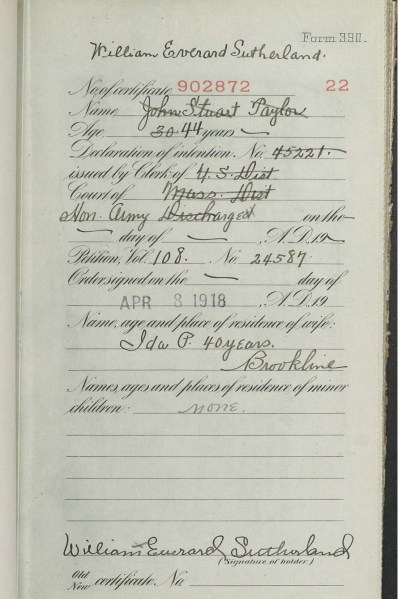
William became a naturalized American in April 1918 through the Alien Soldier’s Naturalization Act. He joined the US Army in 1899 during the Spanish-American war. Any alien who enlists in the US armed forces and is honourably discharged could apply for citizenship without a previous declaration of intention and with only one year of residence. His proof of service and discharge is the strangest document I have ever seen. It had a name crossed out and William Everard Sutherland written above. Other information was also crossed out. This document was accepted as there is a copy of his Naturalization certificate. I don’t know why he never made a declaration of intention as he had been in the US for almost 40 years. Priscilla also became an American.

This was the proof that he was honorably discharged from the US Army which allowed him to become a Naturalized US citizen under the Alien Soldiers Naturalization Act; Section 2166.

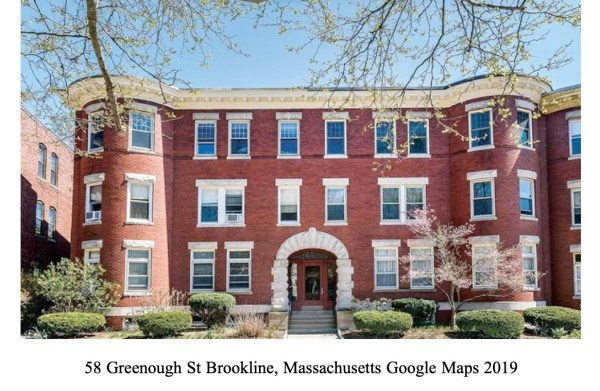
Around 1917, he and Priscilla moved to Brookline Massachusetts, They lived at 58 Greenough Street. A three story apartment (now condo) building is at that address according to Google maps. It is a very nice red brick building with bay windows. The condos now sell for a million dollars. The couple had done well as Priscilla was no longer working and William was the boss working in construction as an electrician. They even had room for Priscilla’s mother to spend time with them.

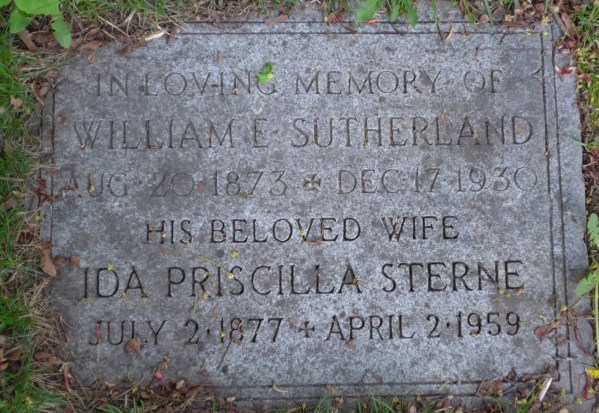
They finally ended up in Florida, around Miami and Palm Beach. William was president of a building company so they were not early retirees. He later had health problems, stopped working and applied for an invalid’s pension from the US Army. When William died of heart disease in 1930 his body was sent back to Canada for burial. Priscilla applied for a widow’s pension and continued to live in Palm Beach until her death 29 years later. Her body was also returned to Canada and is buried with her husband in Toronto’s Mount Pleasant Cemetery.

Now I have to find his sister Annie.

Notes:

William’s parents William Sutherland and Jessie Johnson lived at 21 Rose Ave in Toronto. His siblings, Agnes, Isabel, Jessie and Davison were all living at home in the 1920s.

William H. Sutherland’s diary 1920-1924 in the hands of the author.

William registered for the draft during the First World War even though he was 45 years old. I don’t think he served again, as the war ended less than three months later.

My grandfather William Harkness Sutherland called his only son Donald after his father but added William as a second name!

Year: 1910; Census Place: Boston Ward 24, Suffolk, Massachusetts; Roll: T624_625; Page: 13a; Enumeration District: 1634; FHL microfilm: 1374638Ancestry.com. 1910 United States Federal Census [database on-line]. Lehi, UT, USA: Ancestry.com Operations Inc, 2006. Mar 20, 2020.

Year: 1920; Census Place: Brookline, Norfolk, Massachusetts; Roll: T625_721; Page: 4A; Enumeration District: 172 Ancestry.com. 1920 United States Federal Census [database on-line]. Provo, UT, USA: Ancestry.com Operations, Inc., 2010. Images reproduced by FamilySearch.

Ancestry.com. U.S., City Directories, 1822-1995 [database on-line]. New York City 1922. Lehi, UT, USA: Ancestry.com Operations, Inc., 2011.

National Archives and Records Administration (NARA); Washington, D.C.; Index to Naturalization Petitions and Records of the U.S. District Court, 1906-1966, and the U.S. Circuit Court, 1906-1911, for the District of Massachusetts; Microfilm Serial: M1545; Microfilm Roll: 24Ancestry.com. U.S. Naturalization Records Indexes, 1794-1995 [database on-line]. Provo, UT, USA: Ancestry.com Operations, Inc., 2007. Accessed March 20, 2020.

National Archives and Records Administration (NARA); Washington D.C.; NAI Number: M1368Ancestry.com. Massachusetts, State and Federal Naturalization Records, 1798-1950 [database on-line]. Provo, UT, USA: Ancestry.com Operations, Inc., 2011. accessed March 20, 2020.

New England Historic Genealogical Society; Boston, Massachusetts; Massachusetts Vital Records, Marriage Record 1911–1915; Volume: 621 accessed on Ancestry March 20, 2020. 

Sophie Bruneau Huntley Not Camera Shy

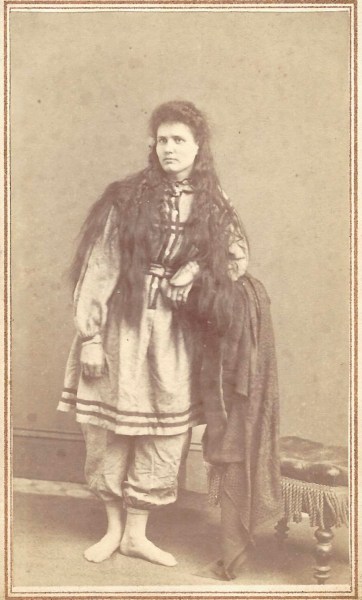
Sophie Bruneau Bathing Beauty

Would my 19th-century ancestor Sophie Bruneau Huntley be posting pictures on social media, taking selfies and showing off her new purchases if she were alive today? I think the answer is, maybe yes!

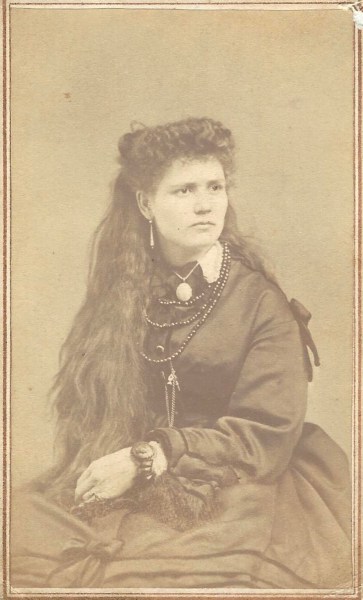
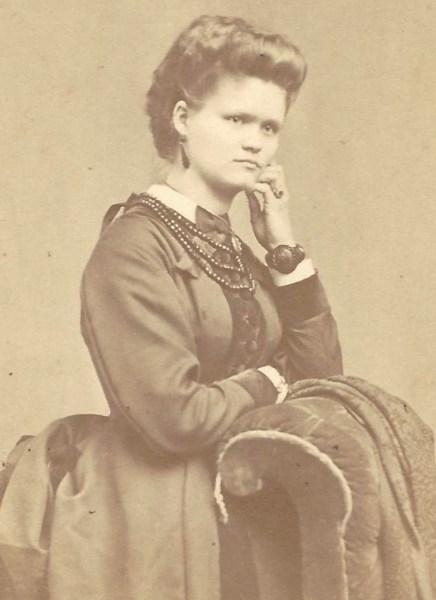
Sophie was born in 1847, so all her early pictures were taken in photographic studios. These were not spontaneous pictures but rather specific setups with long exposures. There are several pictures of Sophie in the family photo albums. Many were taken in New York. My favourite is Sophie in a bathing costume displaying her very long hair and bare feet. There were no mischievous smiles but rather hard stares. Still, it appears she had fun during her photo shoots.

Sophie Bruneau

My great-great grandparents Barnabe Bruneau and Sophie Marie Prudhomme had 13 children and Sophie was number eight. She lived with her parents on their farm in St. Constant, Quebec until after the 1871 census. Pictures from New York studios came soon after. I assume Sophie worked in New York as a teacher or a French governess like her sisters, Virginia and Elmire, when she arrived in the United States in 1875 at 27 years old.

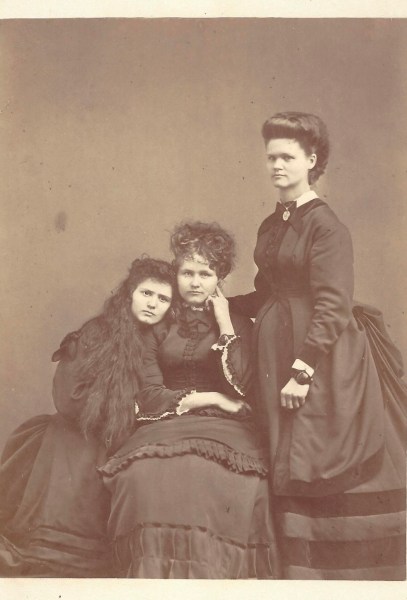
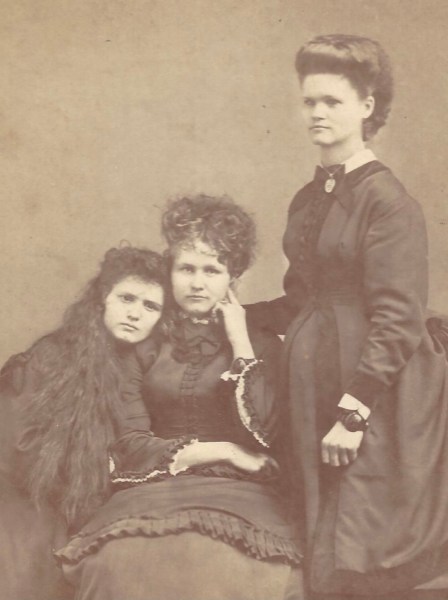
Sisters: Sophie, Helene & Mathilde
Sophie in New York

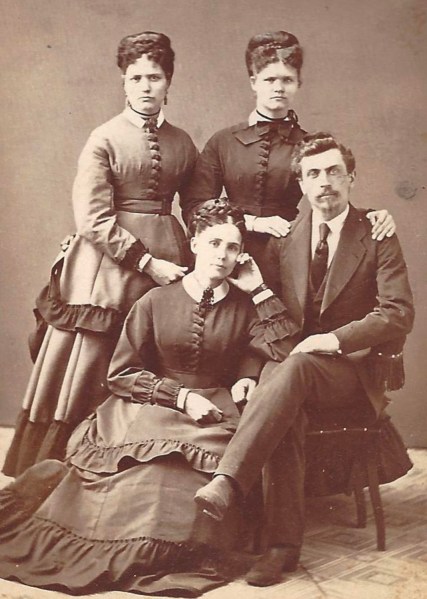
Sophie and her sister Elmire, married two Huntleys, Washington and Wallace? (Walworth). I assumed that they were brothers who married sisters. On family trees and photos he was called Wallace but it seems he was George Walforth Huntley (1854-1933), Washington’s younger brother and seven years younger than Sophie.  Andrew Washington Huntley Elmire Bruneau’s husband was born in Mooers NY to Andrew Huntley and Calista Blodgett and there was a George Walworth Huntley in the family. If this is Sophie’s husband, they could also have met because her sister Aglae was living in Mooers Forks, New York with her husband.

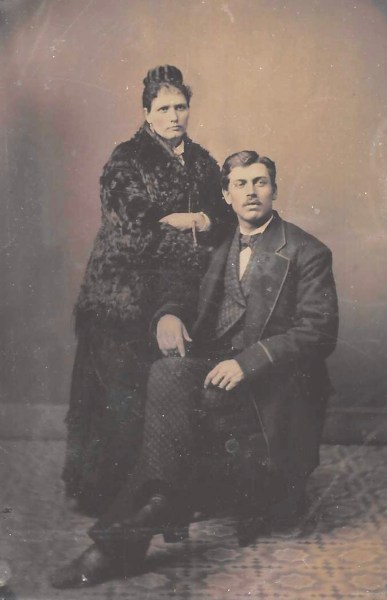
Sophie and George W. Huntley

Sophie, Elmire, and their husbands lived in several places in the United States but ended up in Los Angeles.

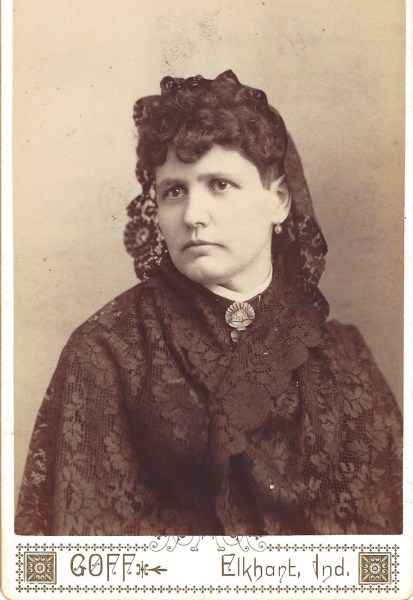
Sophie and Walworth lived in Elkhart, Indiana as Sophie is mentioned in the Personal and Society column of the Indianapolis Journal, “Mrs. George W. Huntley is spending a month in Montreal.” The beginning of the column discussed women’s dress which probably interested Sophie. 
“What with shirtwaist blazers, neckties and caps the women, middle-aged and young are fast becoming what Light facetiously denominated “self-made men.” George was a railroad conductor and owned his own house according to the 1900 census. 

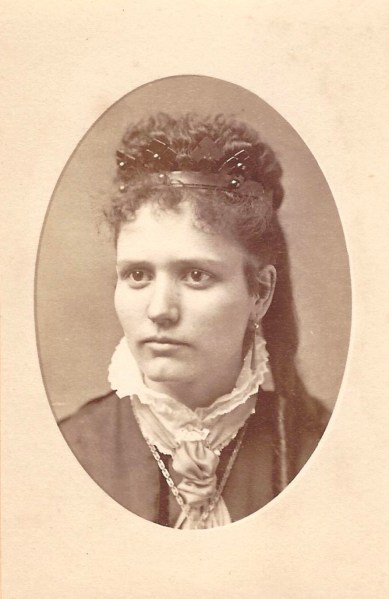
Sophie Huntley

They later lived in Toledo, Ohio where George was a customs collector and finally moved to Los Angeles, California. Sophie became a naturalized American because her husband was a US citizen.

They never had any children.

Sophie Bruneau Huntley

Her age was fluid in all the documents. Her husband was seven years younger but sometimes she was younger and sometimes the age difference was much smaller. Her death record in December 1921 said she was 68; in the 1920 census, she was only 63 while actually being 74.

A death notice in a Los Angeles paper, “Sophie B. Huntley died December 28, 1921, beloved wife of George W. Huntley, funeral from residence La Veta Terraces.” Her death notice was also in Elkhart, Indiana and Toledo, Ohio newspapers. George continued to live in Los Angeles with his housekeeper Mary Dietrick until his death in 1933.

Notes:

“Canada Census, 1871”, , FamilySearch(https://www.familysearch.org/ark:/61903/1:1:M4KT-F5V : Sun Mar 10 23:41:04 UTC 2024), Entry for Barnabe Bruneau and Sophie Bruneau, 1871. Sophie 23 at home no occupation.

“United States Census, 1900”, , FamilySearch(https://www.familysearch.org/ark:/61903/1:1:MMBY-BMK : Thu Apr 11 19:55:49 UTC 2024), Entry for George W Huntly and Sophie B Huntly, 1900 Dubois Indiana.

United States Census, 1910″, , FamilySearch(https://www.familysearch.org/ark:/61903/1:1:MLFZ-MKV : Thu Mar 07 18:33:20 UTC 2024), Entry for George W Huntley and Sophie B Huntley, 1910.Toledo, Ohio. 

United States Census, 1920″, , FamilySearch(https://www.familysearch.org/ark:/61903/1:1:MHQD-HJK : Fri Mar 08 21:37:57 UTC 2024), Entry for George W Huntley and Sophie B Huntley, 1920.

California, County Birth and Death Records, 1800-1994″, , FamilySearch(https://www.familysearch.org/ark:/61903/1:1:QG49-NZN3 : Sat Mar 09 23:29:28 UTC 2024), Entry for Sophie B Huntley and Barnabee Barneau, 28 December 1921.

Sophie was said to be 68 in Norwalk Los Angeles.

“United States Census, 1930”, , FamilySearch(https://www.familysearch.org/ark:/61903/1:1:XC8Z-8NW : Sun Mar 10 08:02:55 UTC 2024), Entry for George W Huntley and Mary Dietrick, 1930.

“California Death Index, 1905-1939”, , FamilySearch(https://www.familysearch.org/ark:/61903/1:1:QKS9-QWHL : Sun Mar 10 22:34:41 UTC 2024), Entry for George W Huntley, 7 1933.

“United States Census, 1850”, , FamilySearch(https://www.familysearch.org/ark:/61903/1:1:MCT1-9GL : Sat Mar 09 13:02:44 UTC 2024), Entry for Andrew Huntley and Calista Huntley, 1850.

Indiianapolis Journal Sunday Aug 31, 1890 page 3 in Personal and Society for Elkhart, Indiana Newspapers.com April 22, 2024.

First Deguerreotype in 1837

William Henry Talbot patents the Calotype process, the first negative-positive process making possible the first multiple copies in 1841. 

When the first mass-produced cameras were available in 1900 people started taking snapshots.

Her Name was Aglae

Aglae Bruneau Paumier

What is in a name? Aglae Bruneau (1837 – 1906) was the oldest of 13 children in my great-grandfather’s family. How did her parents Barnabe Bruneau and Sophie Marie Prud’homme come up with that name? Aglae is a name of Greek origin meaning splendour, brilliance and the shining one. She was one of Zeus’s three daughters, with her sisters Euphrosyne and Thalia known as the three graces. Apparently, it is not as strange a name as I thought, as the BAnQ (Bibliothèque et Archives nationales du Québec) website has many references to Aglaes even other Aglae Bruneaus.

Aglae seated and her youngest sister Anais

Aglae was born on her parent’s farm in St. Constant, Quebec. The family was Catholic as recorded in the 1851 census but converted to Protestantism soon after. Aglae married Pierre Charles Paumier (1828 – 1914) in the First Baptist Church in Montreal in 1860. He was born in France and immigrated to the United States in 1856. He had a farm in Mooers Forks, New York close to the Quebec border. It is possible that they met at religious services held at the Felleur Institute in Grande Ligne, Quebec as French Protestants often moved back and forth across the border for religious events.

Pierre Charles Paumier

On many of the US census, Pierre Paumier is listed as a farmer but was he originally a Baptist minister from France? My great uncle, Sydney Bruneau, wrote in his recollections “One of my aunts had married a Baptist minister from France, a man who made no secret of loving his pipe and his homemade brew of well-fermented cider, to the no small scandal of his congregation. When he was informed of complaints which had reached the higher authorities, he lost no time in preaching his farewell sermon, flaying his listeners without mercy for their narrowness of mind and their intolerance of the harmless pleasures of life, and retired to a farm where he grew his own tobacco and lived to a ripe old age.” 

Like many of Aglae’s siblings, they only had one child Sophie F. Paumier. The family continued to live on their farm which Pierre owned outright and Aglae “kept house” until she died in 1906.

It appears that after Aglae died Sophie and her father sold the farm, packed up and moved to California, as they were living in Los Angeles according to the 1910 census. Two of Aglae’s sisters had also moved west to California. Pierre owned the house and neither he nor his daughter had an occupation listed so he continued to be a man of some means. In some directories, he is listed as Rev. Peter Pomier. Sophie died in LA only five years after her father.

The name Aglae has not been used again in our family. Aglae herself called her daughter Sophie after her mother rather than naming her after another Greek goddess.

Notes:

Census of 1851 (Canada East, Canada West, New Brunswick and Nova Scotia) for Image No.: e002302444 Archives Canada.

“United States Census, 1870”, , FamilySearch(https://www.familysearch.org/ark:/61903/1:1:M8FF-5DS : Tue Mar 05 04:26:42 UTC 2024), Entry for Peter Pa?mier and Aglae Pa?mier 1870.

“United States Census, 1900”, , FamilySearch(https://www.familysearch.org/ark:/61903/1:1:MS65-NLR : Thu Apr 11 19:59:05 UTC 2024), Entry for Charles Paumier and Aglaia Paumier, 1900.

1910 Census: “United States Census, 1910”, , FamilySearch(https://www.familysearch.org/ark:/61903/1:1:MV2R-4HP : Sun Mar 10 05:36:01 UTC 2024), Entry for P C Paumier and S F Paumier, 1910.

Bruneau A. Sydney. Walking With God in Dequen. Page 6. A memoir of his early childhood through the summer of 1910. Written by A. Sydney Bruneau in the late 1960s and transscribed by his granddaughter Virginia Greene, in January 2017. The author has a copy.

Tobacco was grown in Upstate New York and in Quebec and Ontario in the mid to late 1800’s. This shade tobacco was used commercially as cigar wrappers.

Selene Joseph Bruneau – Romantic Disease

Selene Bruneau in Fall River MA

“Selene J. Bruneau brother of A.B. Bruneau who has been visiting at his mother’s, in St. Constant, near Montreal, Canada, for the past six weeks returned home this morning. His many friends will be glad to hear his health is much improved.” as reported in the Fall River Evening Daily News 1880. Unfortunately, two years later Selene died at only 31 years of age.

Selene (1850-1882) was the first of Barnabé Bruneau and Sophie Marie Prudhomme’s 13 children to die. According to his obituary, he died of consumption, at his mother’s in St-Constatnt. What used to be called consumption is tuberculosis or TB. It became known as the wasting disease as those afflicted seemed consumed by their disease as bacteria grew in their lungs and digestive tract. They lost energy, coughed up blood and slowly died. “The slow progress of the disease allowed for a “good death” as those affected could arrange their affairs.”

Most typical 19th-century victims of TB lived in tenements and or worked in factories, places where the disease spread quickly because of close contact and poor hygiene. Even when TB was known to be a contagious disease, people ignored public health campaigns to quarantine the sick and continued to spit on the streets. Selene, not a typical victim, lived in Fall River Massachusetts in a house with his brother Amie’s family. Although some of his older brothers had come to the US earlier and worked in factories, Selene worked in Aime’s jewellery store as a watchmaker.

He seemed content living in the United States as he had the support of some family, friends and a good job although he never married. Selene petitioned for naturalization and took his oath allegiance in 1879 with Aime and his wife Mary as witnesses.

Selene Bruneau in Montreal QC

It appears Selene went home to his mother’s to try and recuperate from his illness. This was before there were any sanitoriums for TB patients. The first one in the US opened in Saranac Lake, New York in 1884 and the first one in Canada, Muskoka Cottage Sanitorium, Ontario in 1897. These sanitoriums isolated infected patients and provided nutritious food, plenty of rest and fresh air. Selene undoubtedly was given this treatment by his mother but at this time 80% of those who developed active TB died from it

The BCG vaccine against TB (Bacille Calmette-Guérin) was first used in humans in 1922. In Canada, only Quebec and Newfoundland had mass vaccinations of school children from the 1950s to the 1970s. In 1944 streptomysin was isolated, the first antibiotic effective against tuberculosis. Medical professional’s hopes that the disease could be eliminated were dashed in the 1980s with the rise of drug-resistant strains. Surgery was also used where infected portions of the lungs were cut out which produced some cures, relieved pain and various anatomic obstructions. Still today, worldwide, there are over ten million new cases of TB a year. 

Selene’s burial place is in the St Blaise Sur Richelieu Cemetery, the Baptist Cemetery in Grande Ligne associated with the Feller Institute, alongside his parents and some of his siblings. His mother outlived him by ten years.

Selene wasn’t a lucky name. His brother Ismael called one of his sons, Selene Fernand and this child died early, in his first year of life. My grandmother told us it was his strange name that killed him although he was called Fernand and not Selene. This from a family with girls called Helvetia, Hermanie and Edmee. Little did she know it was the Selene that was the problem!

Notes:

Fall River Daily Evening News; Publication Date:11/ Aug/ 1880; Publication Place:Fall River, Massachusetts, USA; URL:https://www.newspapers.com/image/589977928/?article=01a0ff3e-4f23-11ed-b80e-4af2d760f135&xid=4635 &terms=Selene_J_Braneau

Fall River Daily Evening News 14 August, 1882 Monday Page 2. Selene J Bruneau Obituary.

United States, New England Petitions for Naturalization Index, 1791-1906″, , FamilySearch(https://www.familysearch.org/ark:/61903/1:1:VXRD-LZ2 : Tue Nov 14 02:51:28 UTC 2023), Entry for Selene J Bruneau.Oath of Alliengence to the US Oct 11, 1879 Bristol County Superior Court, Taunton, Massacheuttes.

Find a Grave, database and images https://www.findagrave.com/memorial/243595198/selene-joseph-bruneau: accessed 23 January 2024. 

https://www.who.int/teams/global-tuberculosis-programme/tb-reports/global-tuberculosis-report-2023

The promotion of Christmas Seals began in Denmark in 1904 as a way to raise money for tuberculosis programs. It expanded to the United States and Canada in 1907–1908 to help the National Tuberculosis Association (later called the American Lung Association).

https://en.wikipedia.org/wiki/History_of_tuberculosis#:~:text=In%20the%2018th%20and%2019th,like%20London%2C%20Stockholm%20and%20Hamburg.

In Canada, vaccinations of all children 10-14 continued until 2005 when it was decided the TB rates in the general population had fallen to such a low level that universal BCG vaccination was nolonger needed.

M. tuberculosis infection is spread almost exclusively by the airborne route. The droplets may remain suspended in the air and are inhaled by a susceptible host. The duration of exposure required for infection to occur is generally prolonged (commonly weeks, months or even years). The risk of infection with M. tuberculosis varies with the duration and intensity of exposure, the infectiousness of the source case, the susceptibility of the exposed person, and environmental factors. Although treatment courses are prolonged, effective treatment of the individual with active TB disease can reduce the infectiousness after two weeks.

Where Are All The Cousins?

Some branches of family trees flourish while others wither and die out. I have traced one branch of my tree back to Pierre Gadois and Louise Mauger, two of my one thousand and twenty four 8th great-grandparents who arrived in Quebec in 1636. This couple has many thousands of descendants alive today, probably even more. But even though some of my great-grandparents had many children there aren’t the expected number of cousins. I have only seven first cousins while a friend says she has more than fifty. My granddaughter has only two so far.

Barnabé Bruneau and Sophie Marie Prudhomme my two-times great-grandparents had 13 children. They all survived to adulthood. One would have expected that they would all marry and have a number of children. Even if they each had only four children, that would be 52 cousins but that is not what happened.

Barnabe & Sophie Marie Bruneau

These 13 siblings only had 17 children with 10 of the children born to Ismael Bruneau and Ida Girod. Seven of their ten children have descendants alive today. I haven’t counted up how many relatives this is but quite a number. It is hard to keep track of your second and third cousins and those once removed as they marry and have children.

When my great uncle Herbert Bruneau, Ismael’s son, drew up a family tree in the 1960s, he wasn’t able to find a record of any of his cousin’s children. He thought that he and his sibling’s descendants were the only branches.

When I had my DNA analyzed by Ancestry, one of my matches, “Shedmore” rang a bell. Ancestry said he was a 4th – 6th cousin but in fact, his great-grandmother Elmire Bruneau was my great-grandfather Ismael’s sister and so we are third cousins. The tree did have another branch.

Elmire Bruneau Huntley

Elmire, born in St-Constant, Quebec, immigrated to the United States in 1864 and worked in New York City as a French governess. She is said to have met Andrew Washington Huntley around 1867 in the choir of the Plymouth Church in Brooklyn Heights. His family lived in Mooers, New York. He was a veteran of the Civil War having served in a number of units from 1862-1865. This couple moved many times during their marriage according to census records. First to Wells, Minnesota, then to Bridport, Vermont to farm, then Chicago, Illinois where he was a ticket agent on the Electric Railroad and finally to Los Angeles, California. Elmire died there in 1922. Her body accompanied by her daughter Faith, went by train back to Bridport, Vermont where she was buried beside her son Howard.

Andrew Washington Huntley

Howard died at 18 without children. It was her daughter Faith, who married Smith C. Shedrick and had four children, Etta Elmere, Howard S., Helena F. and Howard H. who kept the family tree growing. “Shedmore” turned out to be Etta’s son. He does not have any children but his brother had three children, five grandchildren and some great-grandchildren so Elmire’s Bruneau line lives on. Both Helena and Howard also married so there might be even more twigs on those branches.

Faith and Howard Huntley

It is nice to have cousins. Some might not be close but you do have a family connection. Reach out to your cousins, you never know who you will find or what they may know.

Notes:

All photographs are from Ismael Bruneau and Ida Girod’s albums in the possession of the author.

Elmire Huntley Obituary: Middlebury Register, Middlebury Vermont. Dec. 1 1922, Friday page 7. Newspapers.com accessed Mar 29, 2022.

Year: 1870; Census Place: Clark or Wells, Faribault, Minnesota; Roll: T132_3; Page: 1440 Ancestry.com. 1870 United States Federal Census [database on-line]. Lehi, UT, USA: Ancestry.com Operations, Inc., 2009. Images reproduced by FamilySearch.Accessed Nov 22, 2021.

Year: 1880; Census Place: Bridport, Addison, Vermont; Roll: 1340; Page: 20A; Enumeration District: 002Ancestry.com and The Church of Jesus Christ of Latter-day Saints. 1880 United States Federal Census [database on-line]. Lehi, UT, USA: Ancestry.com Operations Inc, 2010. 1880 U.S. Census Index provided by The Church of Jesus Christ of Latter-day Saints © Copyright 1999 Intellectual Reserve, Inc. Accessed Nov 22, 2021.

Year: 1900; Census Place: Chicago Ward 21, Cook, Illinois; Roll: 271; Page: 17; Enumeration District: 0638 Ancestry.com. 1900 United States Federal Census [database on-line]. Lehi, UT, USA: Ancestry.com Operations Inc, 2004. Accessed Mar 29, 2022.

Year: 1910; Census Place: Oak Park, Cook, Illinois; Roll: T624_239; Page: 21b; Enumeration District: 0077; FHL microfilm: 1374252 Ancestry.com. 1910 United States Federal Census [database on-line]. Lehi, UT, USA: Ancestry.com Operations Inc, 2006. AccessedNov 22, 2021.

Year: 1920; Census Place: Los Angeles Assembly District 73, Los Angeles, California; Roll: T625_114; Page: 17A; Enumeration District: 393 Ancestry.com. 1920 United States Federal Census [database on-line]. Provo, UT, USA: Ancestry.com Operations, Inc., 2010. Images reproduced by FamilySearch. Accessed Nov 22, 2021.

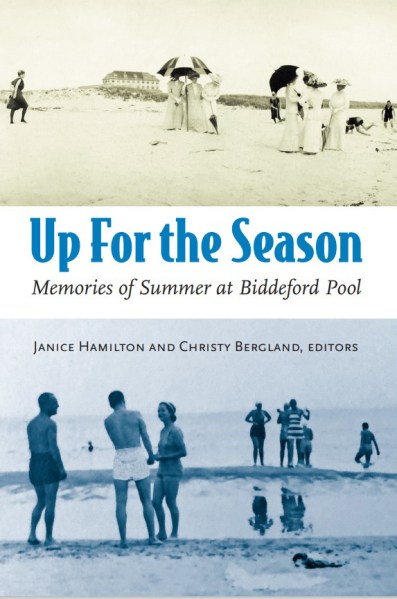
Launching “Up for the Season”

I was a journalist and magazine writer for many years, and I have written dozens of articles about my ancestors, but none of these projects has been as well received as the small book I recently co-edited about the small coastal community where I spend my summers.

Biddeford Pool, Maine has been welcoming summer residents for several generations. My mother came here as a child, and I have summered here since I was four.  Now, only a few long-lived members of my mother’s generation are still with us, and stories from the past are disappearing.

So in 2019, inspired by the success of my family history blog, I started a blog about the Pool’s summer community. I wrote some of the articles, but the main goal was for people to write their own stories.  My friend Dabney described the Sunday mornings of her childhood when everyone went to church wearing their Sunday best, then returned home to enjoy roast beef or fried chicken for lunch. Jesse told readers what he learned about life while racing his sailboat in the mid-1960s. Lisa recalled the 1950s when Mr. Anderson, dressed in a summer suit and straw hat, delighted the neighbourhood children by taking out his false teeth and giving them a toothless smile.

These were great stories, but the blog was a failure. Nobody noticed the publicity flyers I made up, and the posts were not frequent enough to land on people’s radar. When one friend asked, “what is a blog?” I knew the project was doomed.  

Upon our return to Maine in 2022, after a two-year absence due to Covid, I asked some friends what they thought I should do with the blog: delete it as a failed experiment, try to revive it, or turn it into a book? We decided on a book. We included all the articles from the blog and added many new stories.

The book is called, Up for the Season: Memories of Summer at Biddeford Pool, edited by myself and Christy Bergland, an artist from Baltimore whose grandfather first came to the Pool as the summer doctor in 1907. The title is a quote attributed to a local lobster fisherman who knew many of the summer residents in the 1950s. When he saw a cottager for the first time each summer, he would ask, “Up for the season?”

co-editors Janice Hamilton, left, and Christy Bergland, right. photo by Richard Levy

The theme of the book is, when and why did your family first start coming to Biddeford Pool? It turns out that many of the men who started coming to the Pool in the late 1800s and early 1900s lived and worked together in mid-western cities such as Cincinnati and St. Louis, and they recommended it to their friends as a good place to bring their families.

The book is probably a hit for several reasons. First, people love to hear these stories about the days when men wore tuxedos to the annual Labour Day dance at the golf club and children got their first taste of freedom as they explored this safe little peninsula. unsupervised by parents.

The quality of the writing is another reason. While most of the contributors are not professional writers, they are nevertheless gifted storytellers. Eagles Nest, a turreted house overlooking the rocky shore, came to life when LeeLee mentioned the seagull who arrives for cocktails on the porch. This was a perfect example of “show, don’t tell.”

For me, putting this project together was a lot of fun because it was a group effort. Christy and several other friends helped with all the important decisions, such as the title choice.

A fun book launch. photo by Harold Rosenberg.

We hired a copy editor to catch the typos and a book designer to do the layout. The printing was done by Rapido Books, a Montreal printing company that I had previously used for a family history book. They shipped two boxes of 50 books seamlessly across the border, and they have an online bookstore for print-on-demand copies. Over the course of this summer, Christy and Mary handled the book sales and accounting with Jo’s assistance. As of the end of August, we have sold more than 100 copies and accumulated a profit of several hundred dollars that we donated to the Biddeford Pool Community Center.

Marketing in a small community where everyone knows everyone is not complicated. We put up posters in key locations advertising an early July book launch, and an announcement appeared in the Community Center newsletter. The launch, held at Lisa’s old shingled family cottage by the bay, was an overwhelming success. We also held a smaller event at the end of the summer where several of the authors read their stories aloud.

Today, many family historians are taking the next step beyond researching their ancestors’ BMDs , and they are writing about their families. Writing about the individuals, families and businesses in a community is not very different from writing about ancestors, and the sources of information — interviews, newspaper articles, city directories, census data and so on – are also the same.

Now that Up for the Season has been so well received, we are hoping that people will be inspired to start writing volume two. Many stories are waiting to be told.

Mathilde Bruneau Career Woman

Marie Mathilde Bruneau

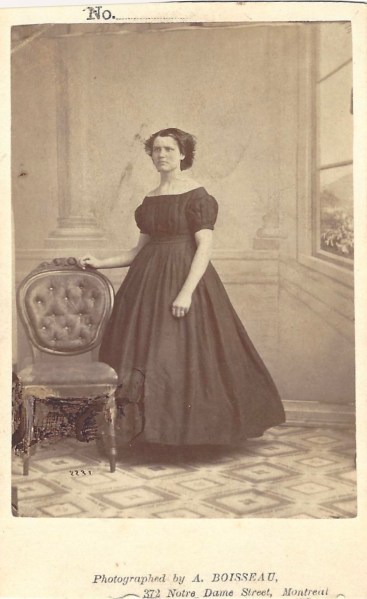
I never expected to find much information about my great-grandfather’s sister, Mathilde Bruneau. I knew her name, dates, the fact she had a twin brother and that she never married. That was all. Then when searching Newspapers.com, Mathilde, born on a farm in southern Quebec appeared on the social page of the Fall River, Massachusetts Daily Herald. It was reported that she had been visiting her brother Aimé Bruneau and then returned to her teaching duties at the Rhode Island Institute for the Deaf in Providence, Rhode Island, only twenty miles from her brother’s home.

Sophie, Helene & Mathilde Bruneau in New York

Mrs. Mary Ann Lippitt founded the school in 1876. Her daughter Jeanie became deaf after a bout of scarlet fever so her mother taught her daughter to speak and read lips, as no schools for the deaf existed at that time. Mary Ann’s husband Henry Lippitt was the Governor of Rhode Island and had political influence, so he persuaded the state to take over the operation of the school. In 1893 the school moved to a large new building which could hold 60 students. This might have been the time Mathilde began teaching there. The school is still operating today.

I don’t know how Mathilde ended up teaching deaf students. Did she answer a newspaper ad while visiting her brother? Before teaching the deaf, Mathilde had been a French teacher in New York City along with her sister Virginie. Virginie didn’t stay there but returned to Quebec to marry.

Mathilde had not yet moved to Rhode Island 1887 when the social page reported on an earlier visit to her brother Aimé, in Fall River. I don’t know where Mathilde obtained her teaching credentials as I haven’t found records of her training. Her sister Virginie attended McGill Normal School. Did Mathilde begin her teaching career in Montreal before moving to New York?

Mathilde was one of thirteen children of Barnabé Bruneau and Sophie Marie Prudhomme, born in St-Constant, Quebec, south of Montreal, in 1844. She had a twin brother Napoleon, one of very few twins in my family tree. In the 1871 Canadian census, she was listed as living with her parents in St-Constant (and two years older than her twin brother), so she was at least 27 when she moved to New York City. Napoleon stayed on the farm but he also had a career as a veterinarian and a Justice of the Peace.

Sisters Sophie, Mathilde& Elmire with Washington Huntley

Although some of her siblings became American citizens, it seems she never did. After Mathilde retired from teaching, she moved back to Quebec. She maintained her independence and didn’t live with her twin brother in St-Constant or even with one of her sisters, instead she was a lodger in John Dooley’s house on Bordeaux Street in Montreal.

Mathilde Bruneau

She appeared again in a newspaper in April 1912, “Miss Matilda Bruneau 68, 1149 Bordeaux St. fell on the sidewalk corner of Mary Ann and Erables last night and broke her left leg. She was taken to the Royal Victoria Hospital” reported the Montreal Gazette. The weather the day before, Easter Sunday, had been very rainy and well above freezing so an icy sidewalk probably wasn’t the cause of her fall.

She died only four months later. PerhapsHer her leg never healed. I didn’t find a death certificate or cause of death, just a certificate of burial signed by two of her sisters. Marie Mathilde Prud’homme Bruneau was buried with her parents in the Baptist cemetery in Grande-Ligne, Quebec.

Notes:

Rhode Island School for the Deaf https://rideaf.ri.gov/AboutUs/index.php

Mabel Hubbard, who later became the wife of Dr. Alexander Graham Bell was deaf and also taught by Mrs. Lippitt. Jeanie Lippitt later went to Dr. Bell for voice training lessons. Dr. Bell had to discontinue these lessons to devote himself full-time to the development of the talking machine.

Fall River Daily Herald June 30 1898, Page 7. Newspapers.com accessed Jan 12, 2023. Miss M P (Prudhomme) Bruneau was an instructor at RI School of the Deaf.

The Providence News February 21, 1893 Newspapers.com accessed Feb 17, 2023. A new school building was dedicated. 35 pupils enrolled with a capacity for 60. 

In the 1911 Canadian census, Matilde was living on Bordeaux Street in the Maisonneuve district of Montreal as a lodger with a Mr John Dooley and his family.

Fell and Broke Leg: Montreal Gazette April 8, 1912, page 3. Newspapers.com accessed Jan 23, 2023.

Her sisters Virginie and Sophie signed her burial record. There is no cause of death April 15, 1912.

Robert Mitcheson, Philadelphia Merchant

When my English-born three-times great-grandfather Robert Mitcheson arrived in Philadelphia from the West Indies in 1817, he was a 38-year-old unattached merchant. Within two years he was married and had started a family, established a new career and was on the way to becoming an American citizen.

Robert (1779-1859) grew up in County Durham, England, where his father was a farmer and small-scale landowner. Robert became an iron manufacturer as a young man, then spent some time in the West Indies. Family stories say he was largely occupied in the West Indies trade. In 1817 he sailed from Antigua to Philadelphia with the intention of settling in the United States. He applied for naturalization – a first step towards citizenship — in July, 18201 and took an oath of citizenship on Sept. 12, 1825.

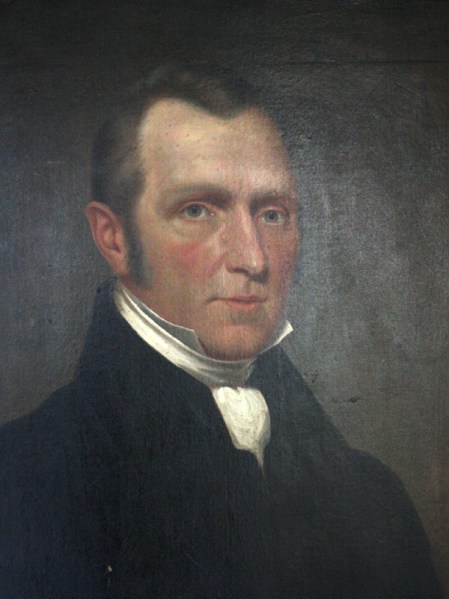
Robert Mitcheson, portrait probably painted in Philadelphia in the 1830s. Artist unknown. Bagg family collection.

Perhaps he had met his future wife, Scottish-born Mary Frances (Fanny) MacGregor, on a previous trip to the city. I have not found a record of their marriage, but it probably took place in Philadelphia. The couple’s first child, Robert McGregor Mitcheson, was born on August 15, 1818 and baptized at St. John’s Episcopal Church in north-end Philadelphia.2

In 1819 Robert was listed in a city directory as a distiller, and the following year’s directory clarified that he made brandy and cordials. The business was located at 275 North Third Street, in the Northern Liberties area of the city. The distillery continued to appear in each annual directory until 1835, when Robert was simply listed as “gentleman”, with his home address on Coates Street.

The family appeared in the U.S. census for the first time in 1830,3 living in Spring Garden, then a largely rural part of Philadelphia. Robert owned a large lot bounded by Coates (later renamed Fairmount Street) and Olive Streets, between Eleventh and Twelfth Streets. There, he and Fanny raised their five children: Robert McGregor (1818-1877), Catharine (my two-times great-grandmother, 1822-1914), Duncan (1827-1904), Joseph McGregor (1828-1886) and Mary Frances (1833-1919). Two other children, Sarah and Virginia, died as babies. Two of their sons graduated from the University of Pennsylvania. Robert M. became an Episcopal minister, and Joseph, who went by the name MacGregor J. Mitcheson, was a lawyer.

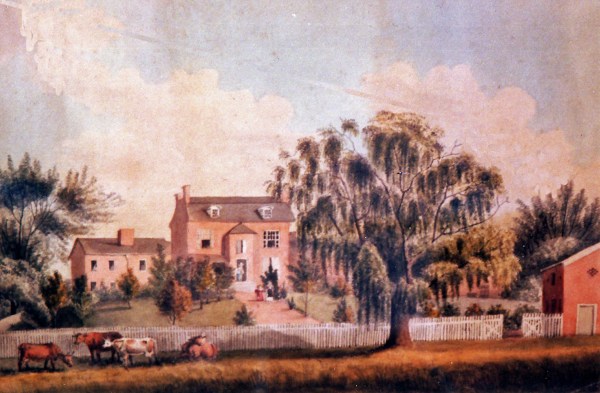
This painting of Monteith House, the family home in Spring Garden, was painted by daughter Catharine Mitcheson. Bagg family collection.

Robert never became part of city’s elite, despite his financial success. For one thing, he was a newcomer living in an old city. Founded in 1682, Philadelphia was the birthplace of the United States and many of its citizens were known as the descendants of colonial and revolutionary families. Also, Robert appears to have been a low-key person. A search for his name in local newspapers brought up only one article that named a long list of people involved in establishing a refuge for boys.

The only obituary I was able to find appeared in a Montreal newspaper, where daughter Catharine Mitcheson Bagg and her husband, Stanley Clark Bagg, lived.4 It said: “As a citizen of Philadelphia for more than 40 years, he has done much, in a quiet and unostentatious manner, for the advancement of her interests and the relief of the distressed. He enjoyed a well-earned reputation for unwavering integrity in all the transactions of his long life – prolonged almost to his 80th birthday — and his remarkable urbanity of manner which the firm, yet elastic step of his manly person, were but slightly impaired up to the period of his dissolution. He was universally respected and died serenely, with a Christian’s hope and faith.”5

Robert appears to have travelled back to England at least once, probably to visit family members and take care of some business, as he had inherited property in Durham when his father died in 1821. A land transfer document dated September 16, 1835 described him as “Robert Mitcheson, iron manufacturer, late of Swalwell, now of Philadelphia”.6 Several weeks later Robert Mitcheson, gentleman, appeared as a passenger on the Pocahontas, sailing from Liverpool to Philadelphia.7  

Perhaps he also visited his brother William, an anchor maker and ship owner in London. A short biography of his son published by the St. Andrews Society in Philadelphia described Robert as a “retired merchant and shipowner,”8 however, I cannot confirm whether Robert owned any ships or perhaps invested in his brother’s business.

After Robert left the distillery business he reinvented himself again, this time as a landlord. The city was rapidly expanding and there was a need for housing. Many people lived in boarding houses and Robert saw rents from boarders as a way to generate income for his grown children after he died. In his will, he left 14 “dwelling houses” located near his house, as well as several nearby other buildings, in trust to sons Robert M. and MacGregor J..9 They were to collect the income and pay certain sums every year to their other three siblings, and to look after repairs to the buildings.

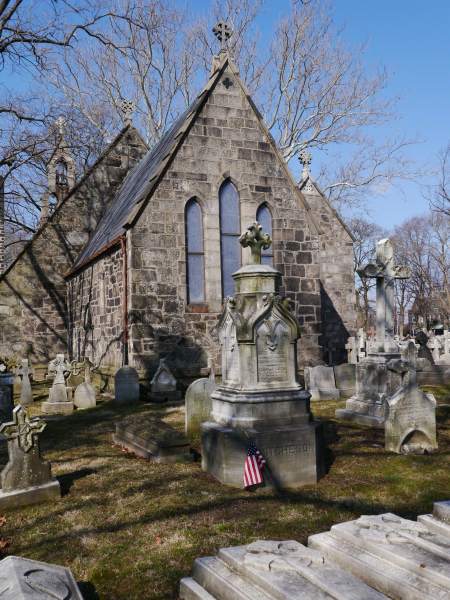
This large monument in the cemetery of St. James the Less Episcopal Church is in memory of Robert Mitcheson, his wife and several other family members. JH photo, 2013.

Robert died at age 79 and was buried in the cemetery at St. James the Less, a small, Gothic-style Episcopal church built around 1846 as a chapel of ease for wealthy families in the area. Robert is said to have helped found that church.

His story doesn’t end there, however. Sadly, his estate was the focus of a court battle that took almost 30 years to resolve, by which time both executors had also died. In addition to a dispute between the brothers, the case focused on a legal error in the way the trust was set up10 and who was to inherit the final balance of income.11  

To Learn More: Robert Mitcheson’s younger years are the subject of “A Restless Young Man,” Writing Up the Ancestors, Jan. 24, 2023, https://www.writinguptheancestors.ca/2023/01/a-restless-young-man.html. You can also search for articles about Robert’s parents and grandparents in England, his wife, sister Mary and other siblings, and some of his descendants on http://www.writinguptheancestors.ca.

Notes and Sources

1. Ancestry.com. Pennsylvania, U.S., Federal Naturalization Records, 1795-1931 [database on-line]. Original data: Naturalization Records. National Archives at Philadelphia, Philadelphia, Pennsylvania. Accessed Feb. 15, 2023.

2. I found records from St. John’s Church at the Historical Society of Pennsylvania, Philadelphia in 2013.

3. “United States Census, 1830,” database with images, FamilySearch (https://familysearch.org/ark:/61903/1:1:XH5W-MC3, accessed Feb. 16, 2023), Robt Mitchinson, Spring Garden, Philadelphia, Pennsylvania, United States; citing 323, NARA microfilm publication M19, (Washington D.C.: National Archives and Records Administration, n.d.), roll 158; FHL microfilm 20,632.

4. Stanley Clark Bagg (SCB) was Robert’s son-in-law and also his nephew: Robert’s older sister, Mary Mitcheson Clark, was SCB’s maternal grandmother.

5. Montreal Herald and Daily Commercial Gazette, 28 March 1859, p. 2, Bibliothèque et archives nationale du Québec, https://numerique.banq.qc.ca/patrimoine/details/52327/3169230, accessed Feb. 17, 2023.

6. Clayton and Gibson, Ref No. D/CG 7/379, 16 September 1835, Durham County Record Office, https://www.durham.gov.uk/recordoffice.

7. “Pennsylvania, Philadelphia Passenger Lists Index, 1800-1906,” database with images, FamilySearch (https://familysearch.org/ark:/61903/1:1:QV9Y-VXJ9, accessed Feb. 17, 2023), Robert Mitcheson, 1835; citing ship Pocahontas, NARA microfilm publication M360 (Washington, D.C.: National Archives and Records Administration, n.d.); FHL microfilm 419,525.

8. Biography of MacGregor Joseph Mitcheson in An Historical Catalogue of the St. Andrews Society of Philadelphia with Biographical Sketches of Deceased Members, 1749-1907, printed for the Society 1907; p. 287, Google Books, accessed July 19, 2013.

9. Will of Robert Mitcheson, March 5, 1859. Philadelphia County (Pennsylvania) Register of Wills, 1862-1916, Index to wills, 1682-1924. Volume 41, #105, FamilySearch, (https://www.familysearch.org/ark:/61903/3:1:3Q9M-C9B2-5S45-H?i=190&cat=353446, image 191-194, accessed Feb. 18, 2023.)

10. Mitcheson’s Estate, Orphan’s Court. Weekly Notes of Cases Argued and Determined in the Supreme Court of Pennsylvania, the County Courts of Philadelphia, and the United States District and Circuit Courts for the Eastern District of Pennsylvania by Members of the Bar. Volume XI, December 1881 to August 1882; p. 240. Philadelphia: Kay and Brother, 1882. Google Books, accessed Feb. 17, 2023.

11. Mitcheson’s Estate, Pennsylvania Court Reports, containing cases decided in the courts of the several counties of the Commonwealth of Pennsylvania, Vol. V, p. 99. Philadelphia, T. & J.W. Johnson & Co., 1888. Google Books, accessed Feb. 17, 2023.

This article is also posted on my family history blog, www.writinguptheancestors.ca